Amalfi compresses an entire coastline's worth of drama into one vertical town: a cathedral square, a harbour full of ferries, lemon terraces and a coast road stacked above it all. Where you sleep decides whether your evenings are a two-minute stroll from dinner or a hundred steps and a crowded bus ride away. This guide splits the town into the areas that genuinely change your trip.
Amalfi in Three Layers: How the Town Is Actually Built
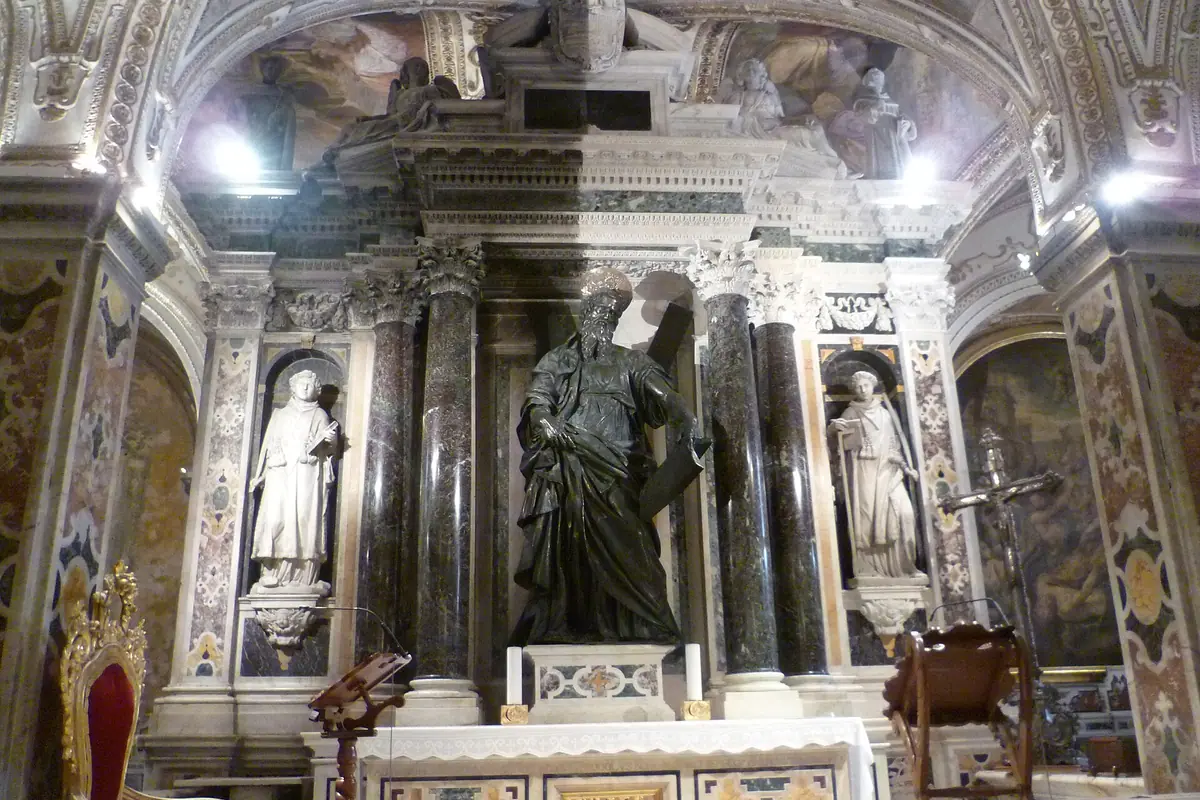
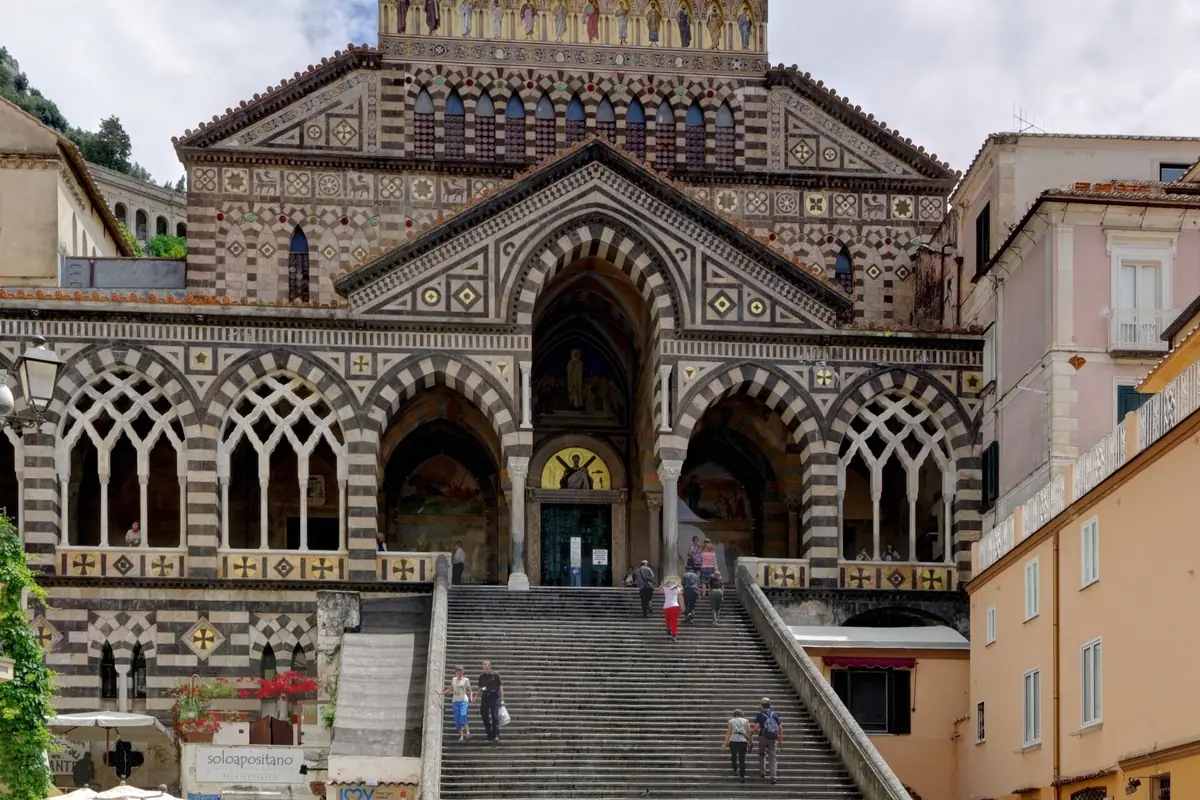
Amalfi sits where the Valle dei Mulini funnels down to the sea, and everything about the town follows that geometry. The historic core around Piazza del Duomo is flat and pedestrian: the cathedral of Sant'Andrea with its long flight of steps, the cloister beside it, cafés spilling out under the arcades, and the old paper mills further up the valley where the Museo della Carta still shows how the town once made the stuff. Below and around it, the buildings climb in terraces, connected by staircases rather than streets.
That means a hotel address matters more here than in most Italian towns. Listings fall into three broad bands: the seafront and lower lanes within a few minutes of the harbour; the cliffside hotels strung along the coast road above town; and the hillside hamlets on the slopes, which may be five kilometres away and 300 metres higher.
A practical warning before you book: plenty of accommodation advertised as being in Amalfi is in Atrani, Pogerola, Lone, Tovere, Vettica or Pastena. Some are an easy walk; others require a bus that stops running in the evening. Always open the map pin and check the distance on foot, including how many steps are involved.
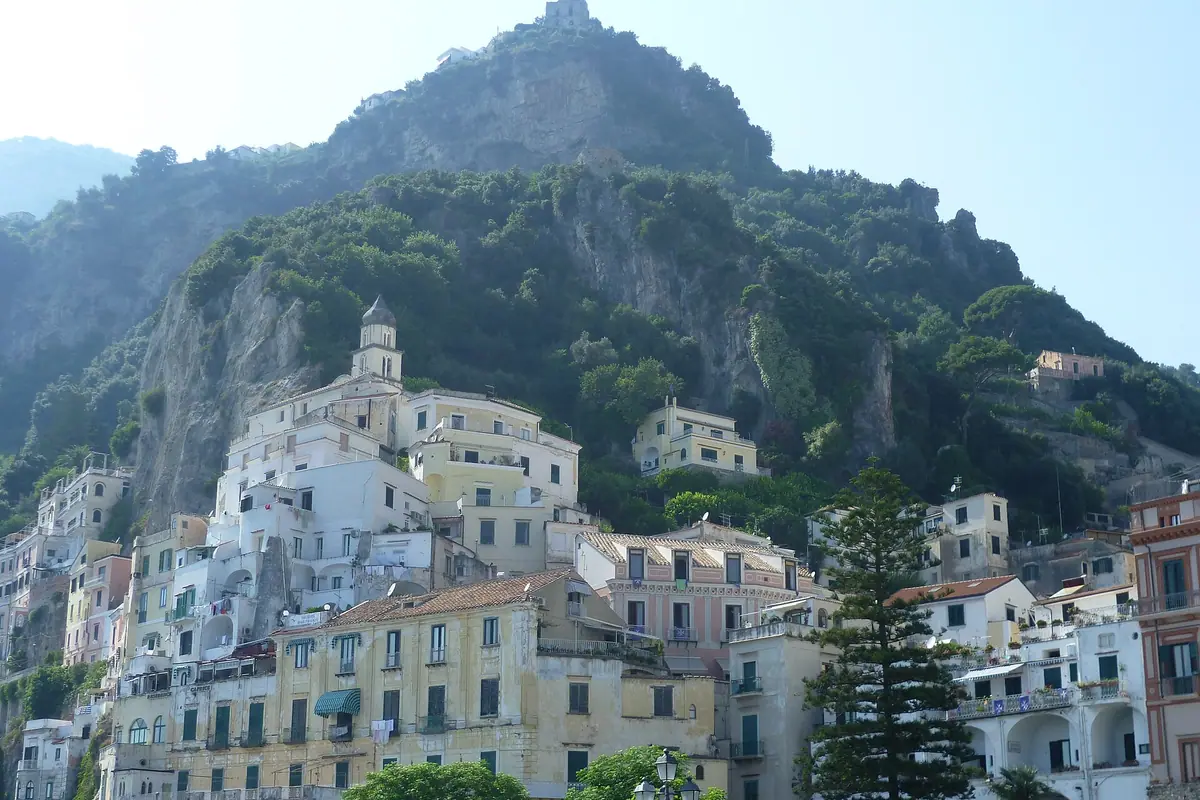
Seafront Stays: Marina Grande, the Lungomare and the Lower Lanes
Staying at the water level is the simplest way to enjoy Amalfi. You step out of your room onto the Lungomare dei Cavalieri, where fishing boats and the occasional yacht bob beside the beach at Marina Grande, and the old Arsenale della Repubblica — the medieval shipyard, now a small museum — sits just behind. Ferries to Positano, Salerno, Capri and the rest of the coast leave from a dock you can reach in five minutes, which matters enormously if you plan day trips by sea.
The trade-offs are noise and privacy. In July and August the promenade stays busy well past midnight, ferry horns start early, and the beach clubs fill with day-trippers. Rooms billed as 'partial sea view' often look onto a wall or an alley, so ask exactly what you'll see from the window and request a top floor with a balcony if the view is the point of the trip.
This is the right zone for first-timers, families with young children, and anyone who would rather not tackle stairs after dinner. It's also the best choice for travellers with limited mobility, since the cathedral square, restaurants and the ferry dock are all reachable without a single flight of steps.
Cliffside Terraces Along the Coast Road
Above the town, the coast road snakes east and west, and a string of hotels is carved directly into the rock face. These are the properties with the postcard views: terraces hanging over the water, pools that appear to spill into the Tyrrhenian, glass lifts and tunnel corridors cut through the stone to reach reception. From up here you look down on the harbour lights, across to the Torre dello Ziro on its headland, and over the rooftops of Atrani after dark.
The price of that panorama is access. Many of these hotels sit 10 to 20 minutes uphill from the centre, sometimes via a staircase with several hundred steps. Good ones run a shuttle, but the schedule rarely matches a late dinner, and taxis along this stretch are expensive after midnight. Parking, if a hotel has a garage at all, is limited and rarely cheap — a serious consideration if you're driving the coast road in high season, when 10 kilometres can take an hour.
Choose a cliffside stay if you're celebrating something, want a pool and a view more than a short walk, or plan to spend most of your time on your own terrace. Skip it if you like wandering into town spontaneously for coffee and a pastry.
Historic Conversions and Lemon-Grove Hideaways
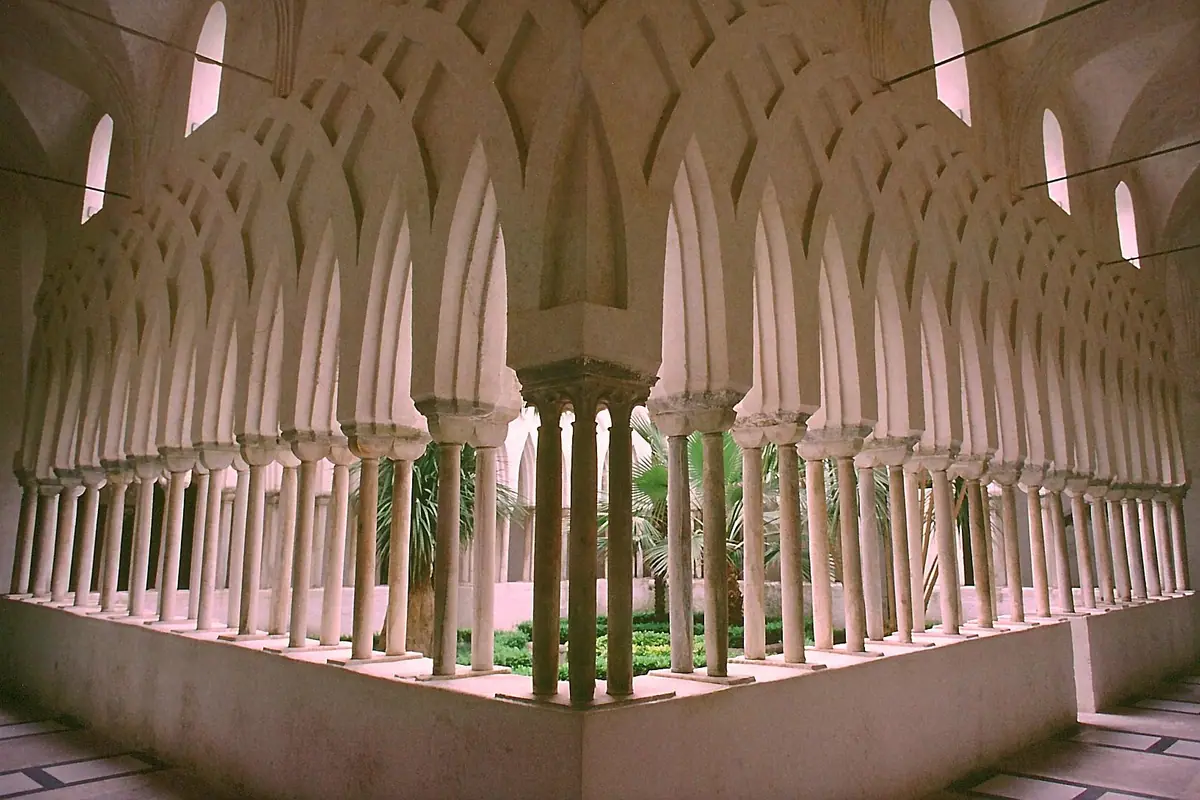
Some of Amalfi's most atmospheric rooms are inside buildings that were never meant to be hotels: former convents and monasteries with cloister gardens, and 18th-century paper mills up the Valle dei Mulini, where the sound of water still runs through the valley. These places tend to be family-run and small, with thick stone walls that stay cool in August, vaulted ceilings, and breakfast served under lemon trees — often with marmalade and cakes made on site.
Higher up the valley and on the terraces above town, farmhouses converted into guesthouses sit among the lemon groves that give the coast its fragrance. They're quiet, deeply green, and a good base for walkers heading towards the Ferriere nature reserve and its waterfalls, one of the few genuinely shady hikes in the area.
Expect character over convenience: narrow lanes, staircases, limited parking, and sometimes a 15-minute walk to the nearest restaurant. In return you get birdsong instead of scooters, and a sense of the working landscape that the seafront hides.
Hamlets Within Reach: Atrani, Pogerola, Lone and Tovere
Atrani is the smart compromise for many travellers. Tucked around the headland just east of Amalfi, it's one of Italy's smallest towns, with a pocket-sized piazza, its own beach and church, and a footpath into Amalfi that takes about 15 minutes through a tunnel and over the hill. Rooms cost noticeably less than in Amalfi proper, the evenings are calmer, and you're still close enough to walk to dinner in town.
Higher up, Pogerola sits roughly 350 metres above Amalfi, reached by local bus or a long, steep staircase. It's cooler, cheaper and very much a lived-in village, with views down over the whole bay. Lone, Tovere and Vettica sit along or just above the coast road, offering similar value for anyone with a car or patience for buses.
The catch is transport. Buses along the coast are frequent in summer but pack out, and the last evening services are early; a missed bus often means an expensive taxi. Ferries connect Amalfi with Atrani? No — Atrani has no ferry dock, so plan on walking. If you want somewhere with its own evening life and easy access to both gardens at Ravello and the beaches at Praiano, base in Amalfi itself and visit the rest.
When to Go, What to Book and What to Expect
The sweet spots are late May to mid-June and September into early October: warm sea, long light, and enough breathing room on the promenade to actually enjoy it. July and August bring heat, crowds and the steepest room rates, peaking around Ferragosto on 15 August. Late October through March is quiet and frequently damp; many hotels close entirely from November to March, though Amalfi town keeps more life in winter than the smaller villages, and its feast of Sant'Andrea on 27 June, plus the periodic historic regatta of the old maritime republics, are the two dates worth planning around.
Getting here shapes your stay as much as your hotel does. Ferries run from Salerno in around 35 minutes and from Positano in roughly 25, with seasonal links to Capri and Ischia — by far the most pleasant arrival. Buses from Sorrento take one and a half to two hours in summer traffic, and the nearest large airport, at Naples, is a 90-minute to two-hour transfer by road. Driving brings you into the limited-traffic zone in the centre, where fines are automatic: park outside and use porters or a hotel shuttle for bags.
Book three to six months ahead for June to September, and earlier for August. Give Amalfi at least two or three nights — the day-trippers drain away by late afternoon, and the town's real charm shows up in the evening, when the cathedral steps cool down and the square fills with locals.
Frequently asked questions
Which part of Amalfi is best for a sea view?
The cliffside hotels along the coast road above town have the most spectacular panoramas, looking down over the harbour and across to the Torre dello Ziro. Near the water, Marina Grande and the Lungomare offer direct sea views from front-facing balconies, but check exactly what your window faces — 'partial sea view' can mean a narrow slice between buildings.
Do I need a car to stay in Amalfi?
No, and most visitors are happier without one. The centre is pedestrian, parking is scarce and costly, and the limited-traffic zone is camera-enforced. Ferries and buses cover the coast, though evening buses are limited. If you do drive, choose a hotel with a guaranteed garage space and confirm it in writing.
How many nights should I spend in Amalfi?
Two to three nights is the minimum to enjoy the town without rushing. That's enough for the cathedral and cloister, the paper museum, a ferry trip to Positano or Ravello's gardens, and an evening in the square after the day crowds leave. Four or five nights lets you add hiking in the Valle delle Ferriere.
Is Amalfi a good base for visiting Positano, Ravello and Capri?
It's the most central of the three main towns. Ravello is a short bus or taxi ride up the hill, Positano is 25 minutes by ferry, and Capri is reachable by seasonal boat. Salerno, with its train station, is about 35 minutes by sea.
What's the cheapest way to stay near Amalfi?
Look at Atrani, a 15-minute walk around the headland, or the hillside villages of Pogerola and Lone, where guesthouses and family-run B&Bs cost considerably less than the seafront. In exchange you'll deal with buses, stairs, or both — and in winter, some of these places go very quiet.
Sort the rest of your trip
Everything for Amalfi, in one place
Transfer in Amalfi
Private driver waiting on arrival — no queues, no surprises.
Book a transfer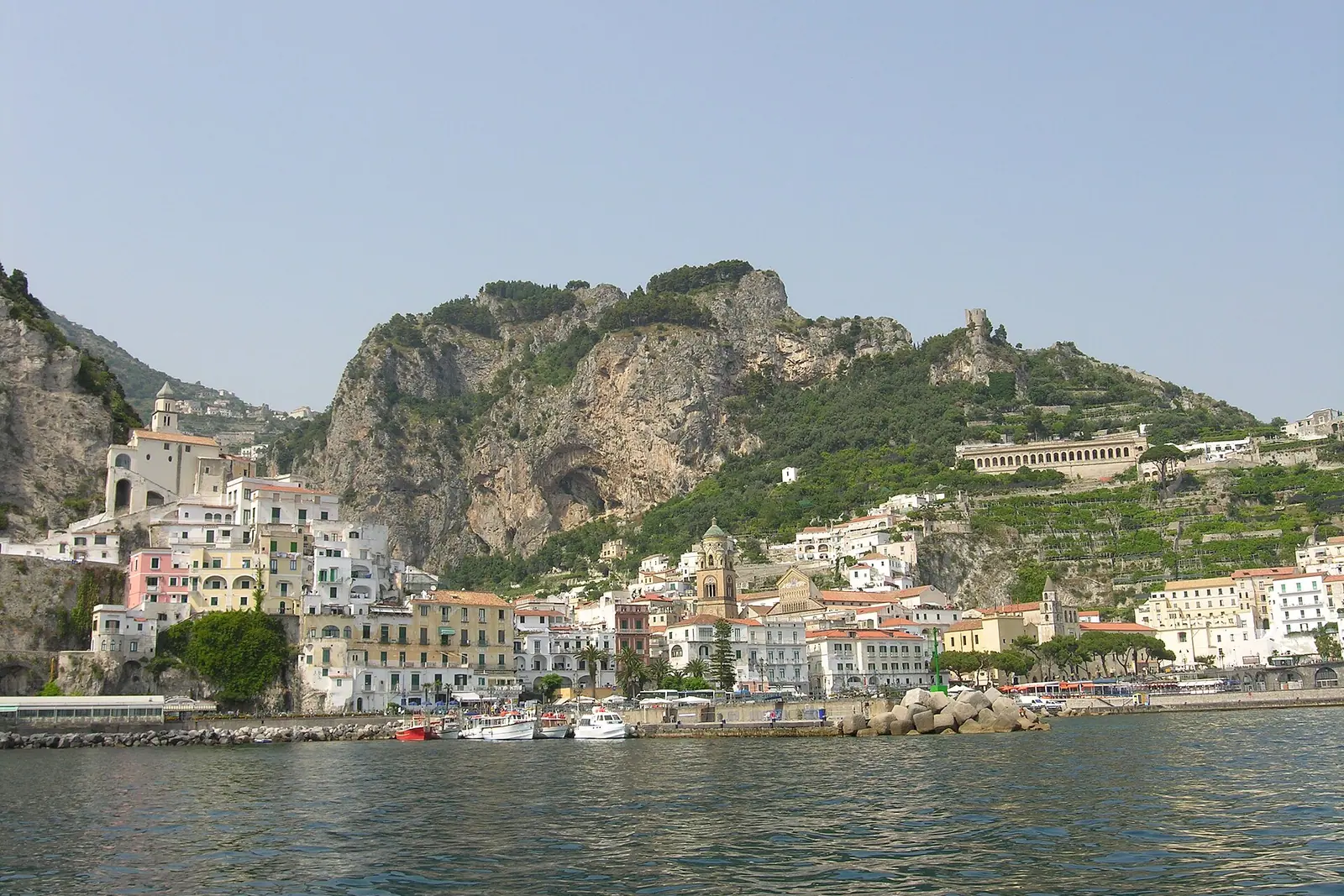
Things to do in Amalfi
Skip-the-line tickets, guided tours and standout experiences.
See experiences
Stay online in Italy
Travel eSIM — data the moment you land, no roaming bills.
Get an eSIM