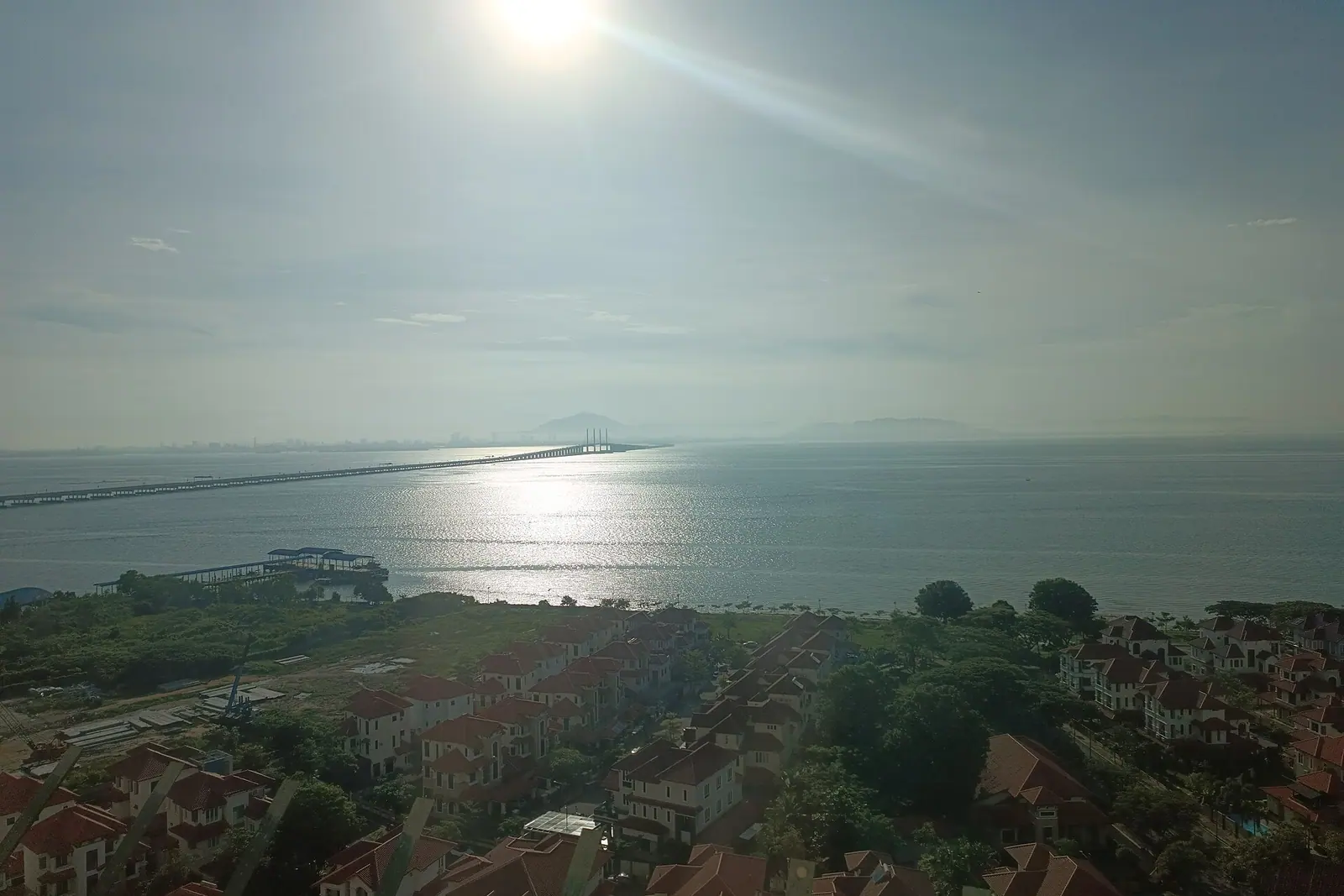
Malaysia is two countries folded into one — a peninsula of hawker smoke, colonial squares and island ferries, and a Borneo half of misted peaks, orangutans and cathedral-sized caves. It rewards travellers who resist the beach-only itinerary and move between its cities, highlands and rainforests. Give it two weeks and you can stand on a Kuala Lumpur skybridge at dusk, eat laksa in a George Town back lane, and watch the sunrise from a 4,095-metre summit.
Kuala Lumpur: Twin Towers, Colonial Squares and a Skyline Built for Sunset
No first trip to Malaysia makes sense without time in Kuala Lumpur, a city that swings from glass-and-steel canyons to shophouse lanes within a single block. The Petronas Twin Towers remain the emblem: 452 metres of stainless steel and glass, linked by a double-decker skybridge on the 41st and 42nd floors, with an observation deck on the 86th that unfolds the entire Klang Valley beneath you. Timed entry slots sell out, so reserve in advance and choose either the first morning session or a late-afternoon one — the latter pairs perfectly with the water-and-light show in the park at their base.
For the definitive postcard view, climb Menara KL, the telecommunications tower rising out of Bukit Nanas forest reserve. Its observation level and revolving restaurant look straight back at the twin towers, which is exactly the angle you want. Below, the colonial core survives around Merdeka Square, where independence was proclaimed in 1957: the copper-domed Sultan Abdul Samad Building, the mock-Tudor Royal Selangor Club and a suitably enormous flagpole all face the same green. Wander ten minutes further to the Central Market and the old shophouses along the river.
Culture hounds should carve out time for the Islamic Arts Museum Malaysia near the Lake Gardens, the Thean Hou Temple with its tiered red roofs on Robson Heights, and the National Mosque with its sweeping 18-pointed dome. Finish at Jalan Alor, where from late afternoon the street becomes a theatre of folding tables, roaring woks and charcoal smoke.

Batu Caves and the Sacred Sites Around the Capital
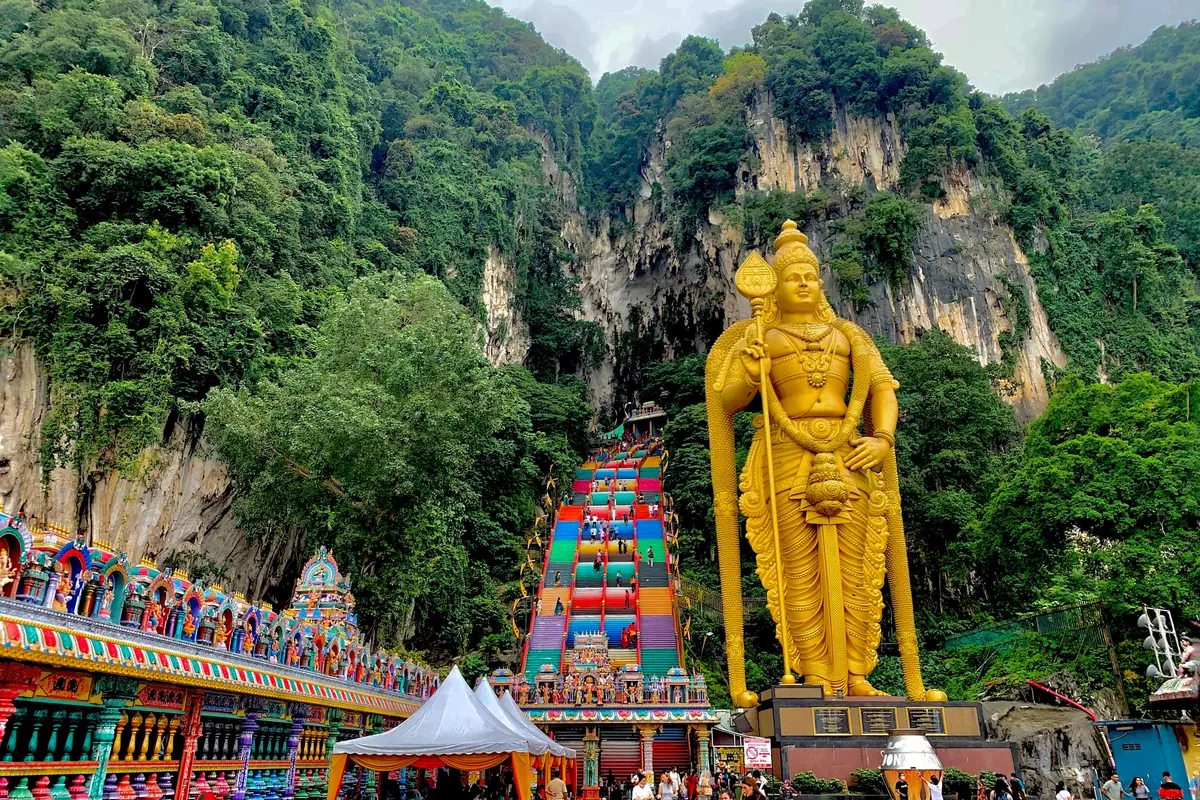
Half an hour north of the city, Batu Caves is the country's most theatrical natural landmark: a limestone hill pierced by caverns, reached by 272 steps painted in vivid rainbow shades. At the foot stands a 42-metre golden statue of Lord Murugan, and inside the Temple Cave the ceiling soars roughly 100 metres above your head. Arrive by 8am to climb before the heat and crowds build, wear something covering knees and shoulders, and keep a tight grip on bags, sunglasses and water bottles — the resident macaques are brazen and quick.
The site transforms during Thaipusam, usually falling in January or February, when hundreds of thousands of devotees converge and kavadi bearers ascend the steps in a spectacle of drums and devotion. If your dates align, it is unforgettable; if not, the caves are still worth a half-day.
Beyond Batu Caves, Malaysia's religious architecture rewards a slow loop around the capital region. Putrajaya's Putra Mosque floats in pink granite beside its artificial lake, while the Blue Mosque in Shah Alam, with its four slender minarets and vast blue dome, can hold thousands of worshippers. Both welcome respectful visitors outside prayer times.
Penang and George Town: Heritage, Street Art and a Hilltop Escape
George Town is the country's most rewarding city for walking, a UNESCO-listed grid of Straits Chinese shophouses, Hindu temples, mosques and clan jetties jutting over the sea. The interactive murals scattered around Armenian Street draw the crowds, but the real pleasure is drifting past the indigo-washed Cheong Fatt Tze Mansion, the crumbling battlements of Fort Cornwallis and the Chew Jetty stilt village where families still live above the tide.
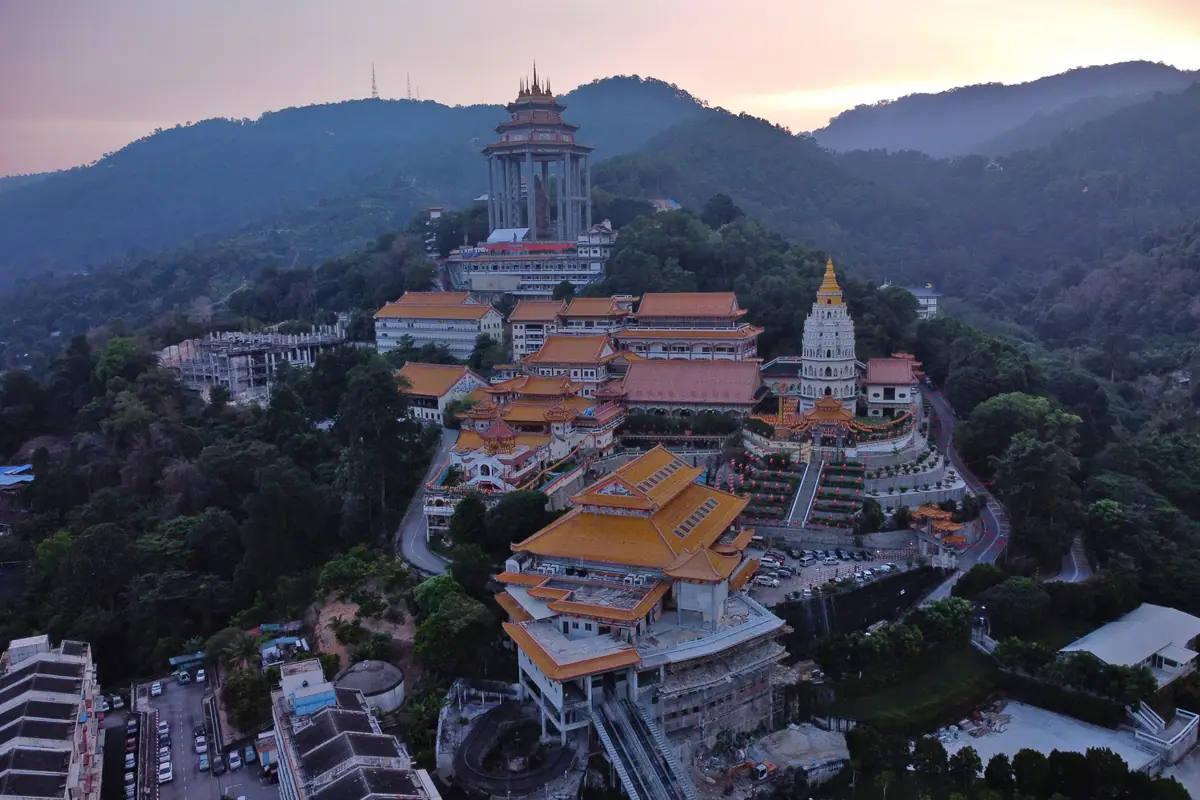
Above town, Kek Lok Si is the largest Buddhist temple complex in Malaysia, a hillside of prayer halls, a seven-tier pagoda blending Chinese, Thai and Burmese styles, and a colossal bronze statue of Kuan Yin. Combine it with the funicular railway up Penang Hill for cooler air and a panorama over the island and mainland.
Then eat. Penang is widely considered the food capital of Malaysia: char koay teow seared over ferocious heat, assam laksa sharp with tamarind and mackerel, cendol heaped with shaved ice and palm sugar. Hawker centres around Gurney Drive and New Lane fill from early evening — go hungry, order small plates, and share.
Island Escapes: Langkawi, the Perhentians and Sipadan
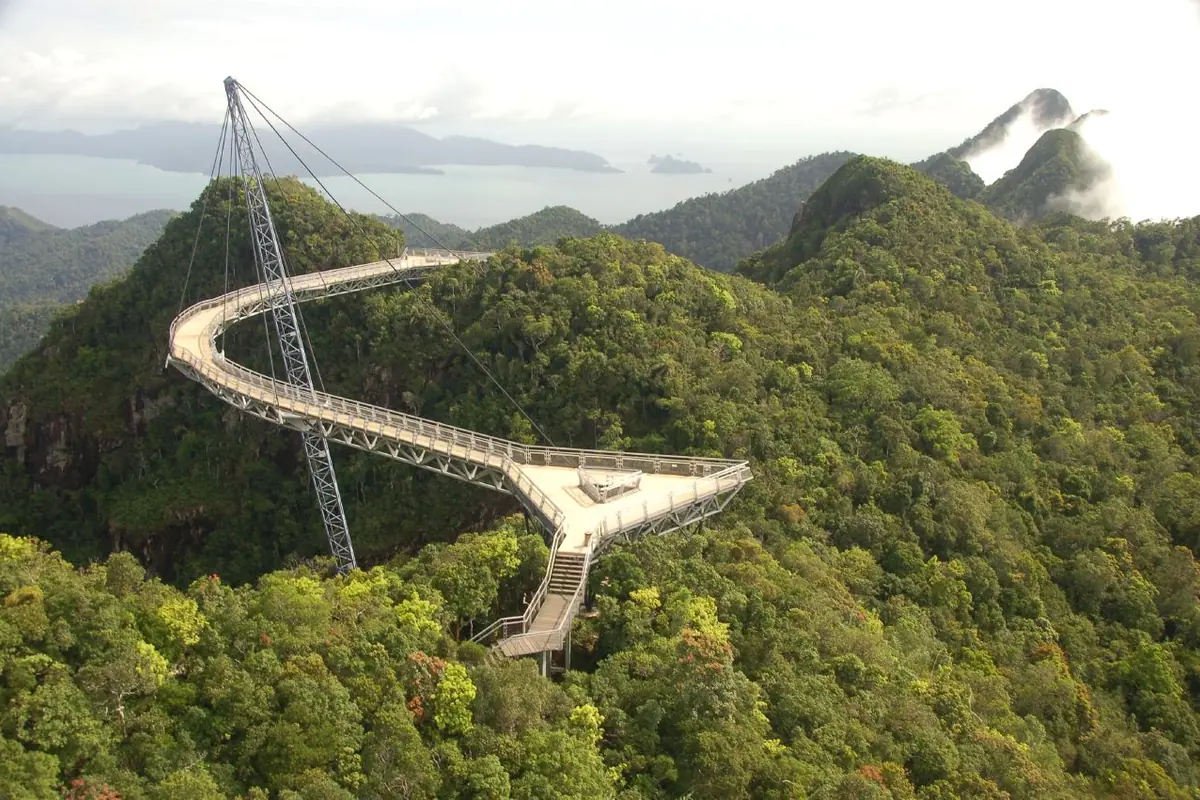
Langkawi, an archipelago of 99 islands off the northern coast, mixes rainforest with duty-free ease. The cable car from Oriental Village climbs Gunung Mat Cincang to a curved Sky Bridge suspended some 125 metres above the canopy, with views across to Thailand on clear days. Pair it with a boat trip through Kilim Karst Geoforest Park, where mangroves, limestone spires, sea eagles and monitor lizards share the same waterways, or a ferry to Pulau Payar for easy snorkelling.
On the east coast, the Perhentian Islands and Tioman offer the peninsula's clearest water and best budget diving. Sea turtles graze on shallow reefs, and beach chalets run on generator power and island time. Time your visit between March and October; from roughly November to February the northeast monsoon shuts many resorts and cancels boats.
For serious divers, Sipadan off Sabah is the pilgrimage: a volcanic cone dropping into blue, with swirling barracuda, reef sharks and turtles in abundance. Daily permits are strictly capped, so arrange your place weeks or months ahead rather than hoping to walk in.
Borneo's Wild Heart: Kinabalu, Orangutans and the Mulu Caves
Mount Kinabalu in Sabah is Southeast Asia's most accessible big summit at 4,095 metres, climbed over two days with a night at Laban Rata resthouse before a pre-dawn push to Low's Peak for sunrise above the clouds. Permits and mountain huts are limited and released months ahead, so book early and train for the granite slabs near the top. Even without climbing, the surrounding Kinabalu Park, a UNESCO site, has excellent trails through pitcher plants and cloud forest.
Near Sandakan, the Sepilok rehabilitation centre lets you watch orphaned orangutans arrive at twice-daily feedings — visit the morning session for the best odds and add the neighbouring sun bear centre. Afterwards, drift down the Kinabatangan River at dawn and dusk for proboscis monkeys, hornbills, kingfishers and, if you are lucky, a herd of pygmy elephants on the bank.
In Sarawak, Gunung Mulu National Park protects some of the largest cave passages on earth. Walk into Deer Cave, big enough to hold a cathedral, then wait at dusk as millions of bats spiral out in a ribbon across the sky. Clearwater and Lang caves, plus the UNESCO-listed Niah Caves, round out a Borneo itinerary that feels genuinely wild.
Melaka, the Cameron Highlands and the Rainforest in Between
Compact Melaka is the country's living museum of Portuguese, Dutch and Peranakan history. Walk Jonker Street on a Friday-to-Sunday evening when the night market takes over, climb St Paul's Hill for the old chapel ruins, photograph the salmon-pink Christ Church and the surviving gate of A Famosa, then tour the Baba & Nyonya Heritage Museum to understand the Straits Chinese world that shaped this coast.
If you need relief from the humidity, the Cameron Highlands sit cool and green at around 1,500 metres, where tea estates ripple across the hillsides between Tanah Rata and Brinchang. Tour a tea factory, walk the Mossy Forest boardwalk through elfin woodland, and pick strawberries in air that drops to 15°C at night — bring a fleece.
Finally, Taman Negara claims one of the oldest rainforests on earth, with a 530-metre canopy walkway strung between towering trees, the Bukit Teresek viewpoint, night jungle walks alive with insects and civets, and boat rides through rapids. Three to four days gives you time to slow to forest pace. Ten days to two weeks is a realistic span for Kuala Lumpur, Penang, Melaka and one island; add a week for Borneo. The peninsula's west coast is driest from December to February, the east coast islands from March to October.
Frequently asked questions
What is the best time of year to visit Malaysia?
Malaysia is warm year-round, so plan around monsoons rather than temperature. The west coast — Kuala Lumpur, Penang, Langkawi, Melaka — is generally driest from December to February. The east coast islands such as the Perhentians and Tioman are at their best from March to October, with many resorts closing during the northeast monsoon. Borneo can be visited all year, though the wettest months tend to fall between November and January.
How many days do you need to see Malaysia properly?
Ten days to two weeks covers Kuala Lumpur, Penang, Melaka and one island comfortably. Add at least five to seven more days if you want Borneo, since flights between the peninsula and Sabah or Sarawak plus a Kinabalu climb or a river safari eat up time. Trying to do both halves in under ten days means spending most of your trip in transit.
Do I need to book Mount Kinabalu and Sipadan in advance?
Yes, and well ahead. Kinabalu climbs are limited by permits and resthouse beds, which are often released months in advance and disappear quickly in peak season. Sipadan diving works on a strict daily permit cap, so arrange your spot weeks or months before you travel rather than assuming you can join a boat on arrival.
What should I wear at Malaysia's temples and mosques?
Cover shoulders and knees, and remove your shoes before entering prayer halls or temple interiors. Many sites, including Batu Caves and the major mosques, lend sarongs or robes at the entrance for visitors who arrive in shorts or sleeveless tops. Women are usually asked to cover their hair inside mosques, and it is polite to speak quietly and avoid pointing your feet at altars or statues.
Is Malaysia easy to get around without a car?
Very. Kuala Lumpur has an extensive rail and monorail network, and intercity trains, long-distance buses and budget flights link the main towns cheaply. On Peninsular Malaysia you can travel Kuala Lumpur to Penang or Melaka by bus or train in a few hours. On the islands and in Borneo, local ferries, shuttles and organised transfers handle the rest.
Plan it — experiences in Malaysia
Live search, booked directly with trusted providers.
Sort the rest of your trip
Everything for Malaysia, in one place
Stay in Malaysia
Hotels, guesthouses and apartments — compared in one search.
Search hotels
Transfer in Malaysia
Private driver waiting on arrival — no queues, no surprises.
Book a transfer
Stay online in Malaysia
Travel eSIM — data the moment you land, no roaming bills.
Get an eSIMMore guides in Malaysia
Best Places to Visit in Malaysia: Twin Towers, Temples, Rainforest and Reef
A One-Week Malaysia Itinerary by Flight: Kuala Lumpur, Penang and Langkawi
Malaysia Food and Culture Tours: Local Experiences Worth Planning Around
Best Time to Visit Malaysia: When to Book Hotels, Island Resorts and Rainforest Lodges
Where to Stay in Kuala Lumpur: The Best Neighbourhoods for Every Kind of Trip