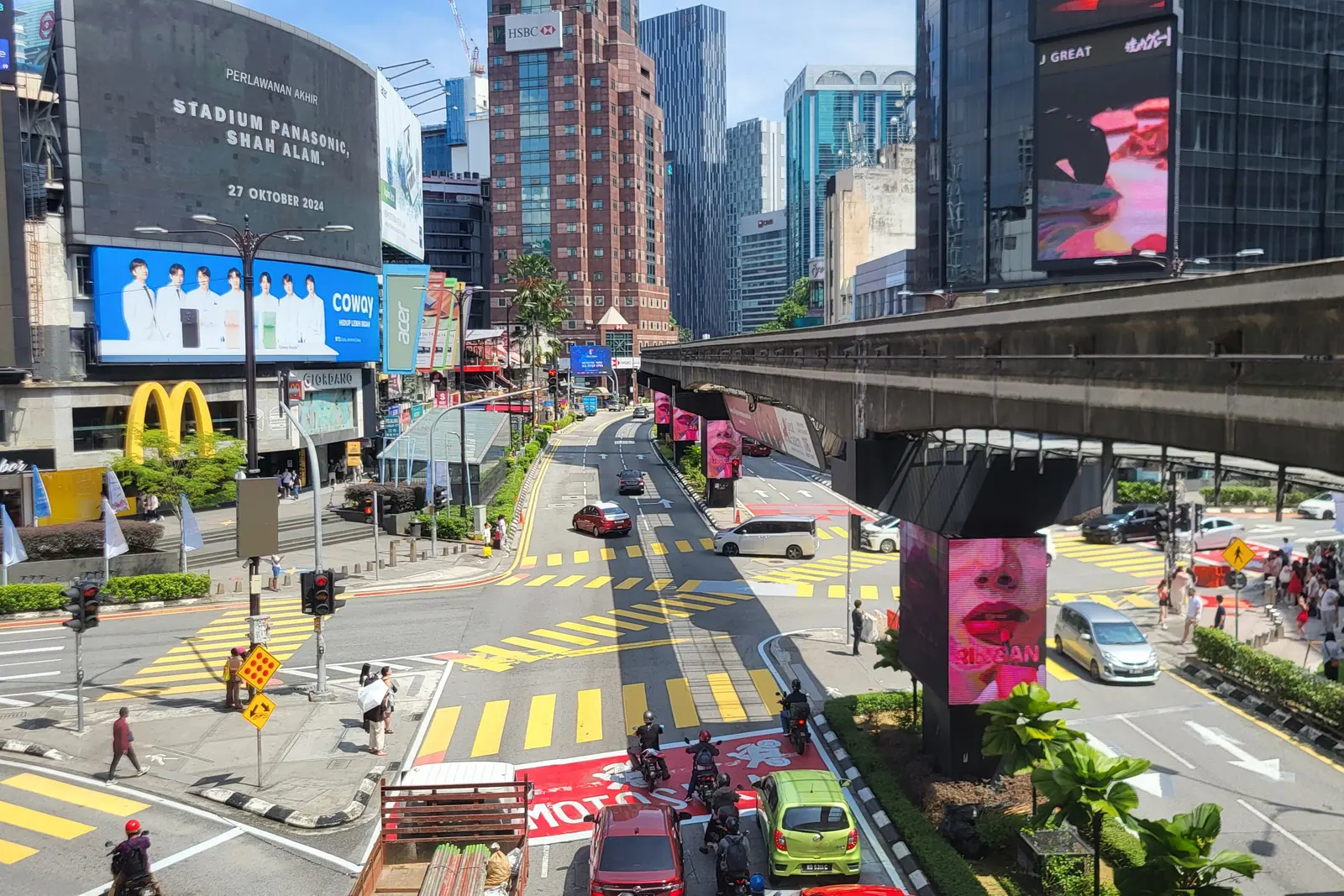
Nearly every visitor to Penang lands at the same low-slung terminal on the island's southeastern edge, ten minutes from Bayan Lepas and a whole mood away from the shophouse streets of George Town. The trick to a smooth arrival is understanding that Penang is really two places — an island and a mainland — joined by two bridges, one passenger ferry and a road network that can stretch a 20-minute hop into an hour once the afternoon rain hits.
Landing at Penang International Airport: What Happens After Baggage Claim
Penang's airport sits in Bayan Lepas, roughly 16 to 18 kilometres south of the George Town heritage core. It is a compact single-terminal affair where arrivals and departures share the same building, so once you clear immigration and grab your bags you can be standing at the kerb within 15 to 25 minutes of touching down. Two exits matter. Inside the arrivals hall is the fixed-fare taxi coupon counter, where you name your destination, pay, and hand the printed voucher to a driver waiting outside. Beside it, further along the kerbside or one level up in the car park, is the designated pickup bay for ride-hailing cars. Drivers usually message the exact pillar or bay number, so get outside first — indoor mobile signal is patchy and you will otherwise be wandering.
If you are travelling light and want to save money, the island's public bus network stops at a shelter a short walk from the terminal, with services running north towards George Town's Komtar transport hub. Expect 45 to 70 minutes depending on traffic, no luggage racks, and a fare paid in small notes or with a stored-value tap card. Late-night arrivals change the maths entirely: after around 11pm buses thin out, ride-hailing can surge with fewer drivers online, and a pre-booked private transfer with a name board becomes the calmest option, especially if you are heading to a small guesthouse up the coast.
One quirk worth knowing: because the airport sits on the island side, anyone continuing to Butterworth or the mainland — including rail passengers — must cross a bridge or take the ferry. Build that into your timing rather than assuming the airport is the halfway point.
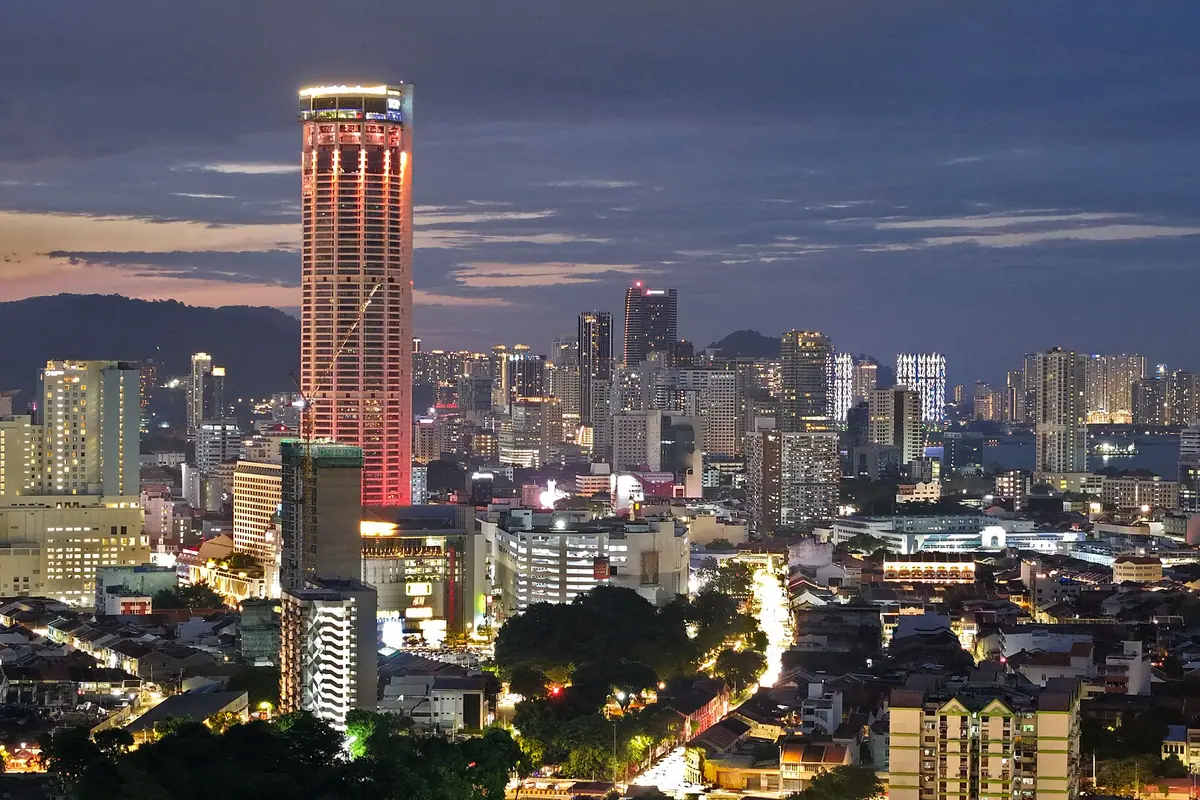
Taxis, Ride-Hailing and Pre-Booked Transfers: Which Ride to Choose
The airport taxi coupon system is the no-surprise option. Fares are zoned by destination, so the price to George Town is the same whether the driver takes the coastal expressway or gets stuck on Jalan Sultan Ahmad Shah. Cars are air-conditioned, drivers generally know the well-known hotels and the heritage zone's one-way maze, and you do not have to negotiate after a long flight. Bring cash in smaller notes; change for large bills is not guaranteed.
Ride-hailing is usually the cheaper choice outside peak hours and the more flexible one, but surge pricing kicks in hard during rain, on Friday evenings and across public holiday weekends. The pickup bay is also a short walk with your luggage, which matters more than people expect in Penang's humidity. Pre-booked private transfers sit in the middle: a driver meets you in the arrivals hall, helps with bags, and is comfortable with addresses that are not on any map — a homestay in Teluk Bahang, a villa off Jalan Batu Ferringhi, a boutique property tucked inside a heritage lane.
Whichever you pick, expect a chilled car, unhurried driving and, often, an offer to hire the driver for a day. A full-day loop covering Kek Lok Si temple, the Penang Hill funicular base at Air Itam and a beach stop can work out well for two or three people, and it solves the problem of getting between attractions that public transport links poorly.
Routes Into George Town, Batu Ferringhi and the Rest of the Island
To George Town, the drive is 25 to 40 minutes on a good run via the coastal expressway. In the weekday evening crush, or during one of Penang's sudden tropical downpours, allow an hour. The heritage core itself is slow going: narrow streets, one-way loops, trishaws, tour buses and delivery vans all competing for the same few metres.
Batu Ferringhi, the island's main beach strip, is a further 20 to 25 kilometres around the northwest coast, which means 50 to 75 minutes from the airport depending on how the coast road behaves. There is no fast direct public transport link, so most people arrive by taxi, ride-hailing car or pre-arranged transfer. Air Itam, home to Kek Lok Si and the lower station of the Penang Hill funicular, sits inland on the east side and typically takes 40 to 60 minutes. The Bayan Lepas and Queensbay area, by contrast, is barely ten minutes from the terminal.
Festival days rewrite all of this. The Thaipusam procession in January or February, the Nine Emperor Gods observances in September or October, Chinese New Year and the George Town Festival in July and August all bring road closures and one-way diversions through the heritage zone. If your arrival coincides with any of them, treat your transfer time as a rough minimum.

Buses, the Free Heritage Shuttle and Two-Wheeled Sightseeing
Penang's public bus network is far better than its reputation suggests, especially along the main corridors. Komtar in central George Town is the hub, with routes radiating to the beaches at Batu Ferringhi and Teluk Bahang, inland to Air Itam, and south to the airport and Queensbay. Fares are cheap and paid in exact change or by tapping a stored-value card — drivers do not give change, which catches out a lot of first-timers.
The free city shuttle that loops the heritage core is the single most useful service for sightseeing. It runs a one-way circuit through the UNESCO zone, passing close to Armenian Street, the Clan Jetties and the Khoo Kongsi area, and you simply hop on and off. Pair it with the double-decker hop-on hop-off loop, which covers a wider circuit including the coast, takes around two hours end to end if you stay aboard, and offers commentary and a top-deck view that is genuinely worth the fare.
Trishaws are the romantic option and best at dusk, when the shophouse facades glow and the heat finally breaks. Agree on a price and a duration before you climb in — a short heritage loop is the standard ask. Renting a scooter gives you real freedom for the beaches and the hill roads, but only take one if you are confident about left-hand traffic, monsoon-slick tarmac and Penang's habit of merging without signalling. Bicycles work nicely on the flat heritage grid, less so on the coastal highway.
Crossing the Water: Ferries, Bridges and the Mainland Connection
The passenger ferry between George Town's waterfront terminal and Butterworth on the mainland is one of the great cheap thrills of a Penang trip. The crossing takes roughly 10 to 20 minutes, costs very little, and gives you a skyline view of the island you cannot get from the road. Note that the old car-carrying vessels have been retired; these days the ferry moves people and two-wheelers, while vehicles use the bridges.
Butterworth matters because it is the mainland railhead. Long-distance trains from Kuala Lumpur and from the Thai border terminate there, making ferry-plus-train the classic overland route in and out of Penang. If you are arriving by rail, simply walk from the station to the ferry terminal and sail into George Town.
By road there are two crossings: the original Penang Bridge, about 13.5 kilometres long, and the Second Bridge to the south, which is longer and further out. Tolls are charged in one direction, towards the island. The bridges are usually efficient, but they back up badly on Sunday evenings and at the end of long public holiday weekends. If your destination is on the mainland side, the Second Bridge is generally the faster approach from the airport.
Timing, Weather and Local Habits That Save You an Hour
Penang's rush hours bite from roughly 7.30am to 9.30am and 5.30pm to 7.30pm on weekdays, concentrated on the routes into and out of George Town. The inter-monsoon weeks around September and October are the wettest of the year, and the northeast monsoon from November to January brings heavy afternoon showers, while December to February is generally the driest and most comfortable window for a visit. Practical rule: when the sky turns grey, ride-hailing surge spikes within minutes, so either leave early or wait it out over a coffee.
Heat and humidity are constant, so dress light, carry water and never underestimate what ten minutes of walking with a suitcase does to you. Air conditioning in cars is fierce, so a light layer is useful. Cash still rules for trishaws, small coffee shops, market stalls and some taxi counters, though cards are fine at malls, hotels, the larger restaurants and along Gurney Drive.
A few habits go a long way. Dress modestly and remove shoes at temples and the state mosque. Tipping is not expected, but rounding up a fare is appreciated. And if you only have 48 hours, base yourself in George Town and use a single pre-arranged car for one efficient loop — hill, temple, beach — rather than trying to stitch together buses across the island.
Frequently asked questions
How far is Penang airport from George Town, and how long does the transfer take?
The airport at Bayan Lepas is roughly 16 to 18 kilometres south of central George Town. Expect 25 to 40 minutes in normal traffic and up to an hour during weekday peak hours or heavy rain. The heritage core itself is slow going, so add a few minutes if your hotel sits inside the one-way grid.
Can I get from Penang airport to Batu Ferringhi by public transport?
You can, but it involves a change in George Town and takes well over an hour and a half with luggage. Most travellers take a taxi, a ride-hailing car or a pre-booked transfer instead, which covers the 20 to 25 kilometre coast run in 50 to 75 minutes depending on traffic.
Is there a train from Penang airport?
No. Penang's rail connections are on the mainland, terminating at Butterworth, which is reached from the island by passenger ferry or by one of the two bridges. Ferry plus train is the standard overland route to and from Kuala Lumpur and the Thai border.
Do I need cash for taxis, buses and trishaws in Penang?
Yes, for most of them. Airport taxi coupons are paid at a counter, buses need exact change or a tap card, and trishaws are almost always cash. Keep small notes handy — drivers rarely carry change for large bills. Cards work at malls, hotels and bigger restaurants.
What is the best time of year to visit Penang, weather-wise?
December to February is generally the driest and most comfortable stretch, though it is also the busiest. September and October are the wettest months, and the northeast monsoon from November to January brings short, heavy afternoon downpours. Whatever the season, plan outdoor sightseeing for the morning.
Sort the rest of your trip
Everything for Penang, in one place
Stay in Penang
Hotels, guesthouses and apartments — compared in one search.
Search hotelsThings to do in Penang
Skip-the-line tickets, guided tours and standout experiences.
See experiences
Stay online in Malaysia
Travel eSIM — data the moment you land, no roaming bills.
Get an eSIM