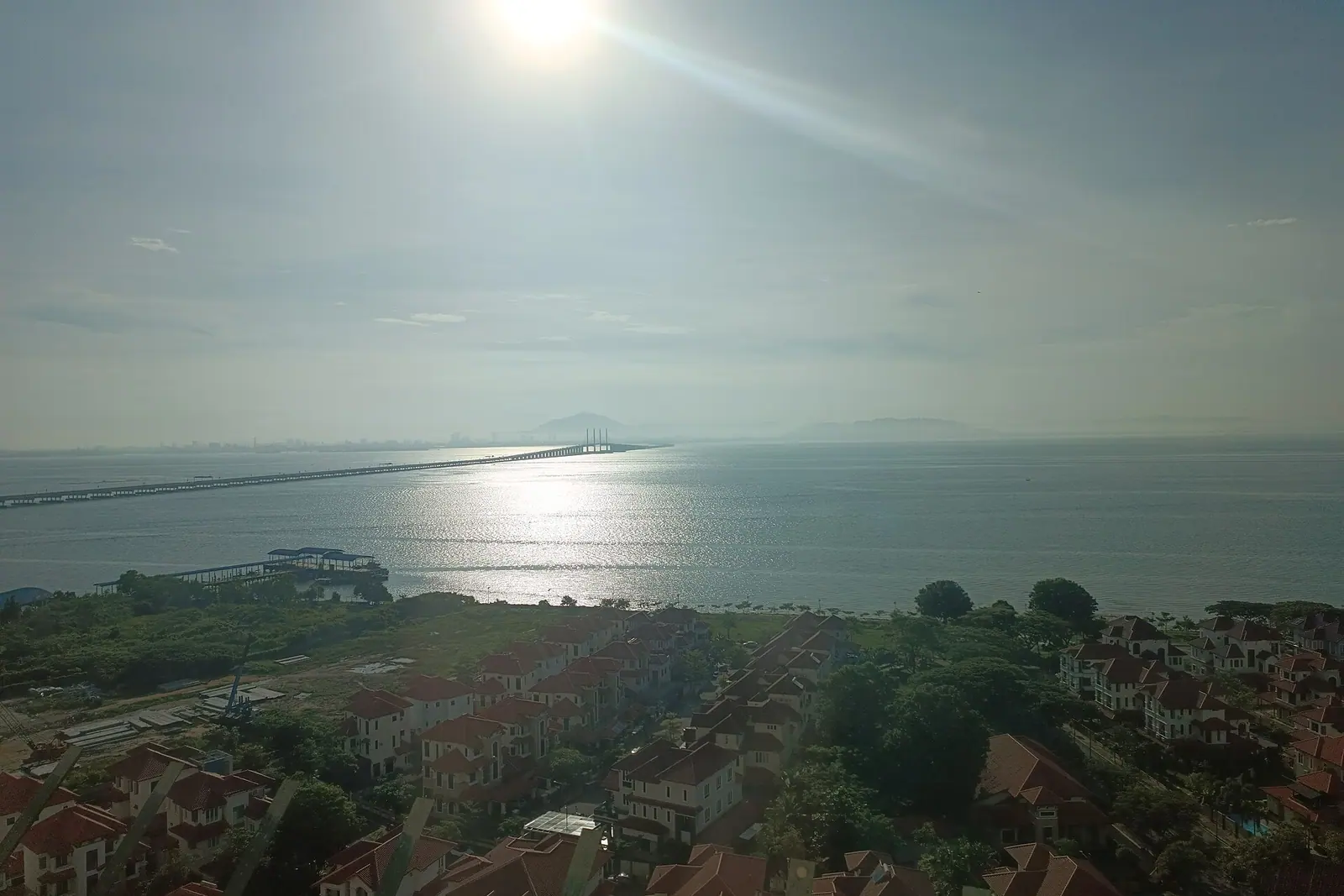
Malaysia is two countries stitched into one passport stamp — a peninsula of straits and tin-town shophouses, and a Borneo half of orangutans and granite peaks — and the fastest way to taste both is to spend your week above the clouds. Short domestic hops of 35 to 60 minutes turn a sprawling nation into a tight, thrilling loop. Here is how to fly it well.
Designing the Route: Why Malaysia Rewards a Week of Short Hops
Malaysia's geography is the reason flying makes sense. The peninsula stretches roughly 740 kilometres from the Thai border down to Singapore, while Sabah and Sarawak sit across the South China Sea, a two-and-a-half-hour flight from the capital. Roads and coaches will get you between Kuala Lumpur, Melaka and Penang, but once islands and Borneo enter the plan, the air network becomes the itinerary. Domestic hops between Kuala Lumpur, Penang and Langkawi rarely exceed an hour gate to gate, and there are usually several departures a day on each route.
The classic one-week loop is Kuala Lumpur for two days, Penang for two, Langkawi for two, then a final night back in the capital before flying home. Book internal legs three to six weeks ahead if your dates are fixed — island services fill quickly around Malaysian school holidays and long weekends. Almost every domestic flight departs from Kuala Lumpur International Airport or, for some short-haul services, the older city-side airport at Subang, which is far quicker to clear if your hotel is in the Klang Valley.
Timing matters more than most travellers expect. December to February brings the driest, sunniest weather to the west coast — perfect for Penang and Langkawi — while the northeast monsoon soaks the east coast and parts of Borneo. If Mount Kinabalu and the reefs of Sabah are your priority, aim for March to September instead, when seas calm and summit trails are at their most reliable.
Days 1–2: Kuala Lumpur, the Landing Pad With the Skyline
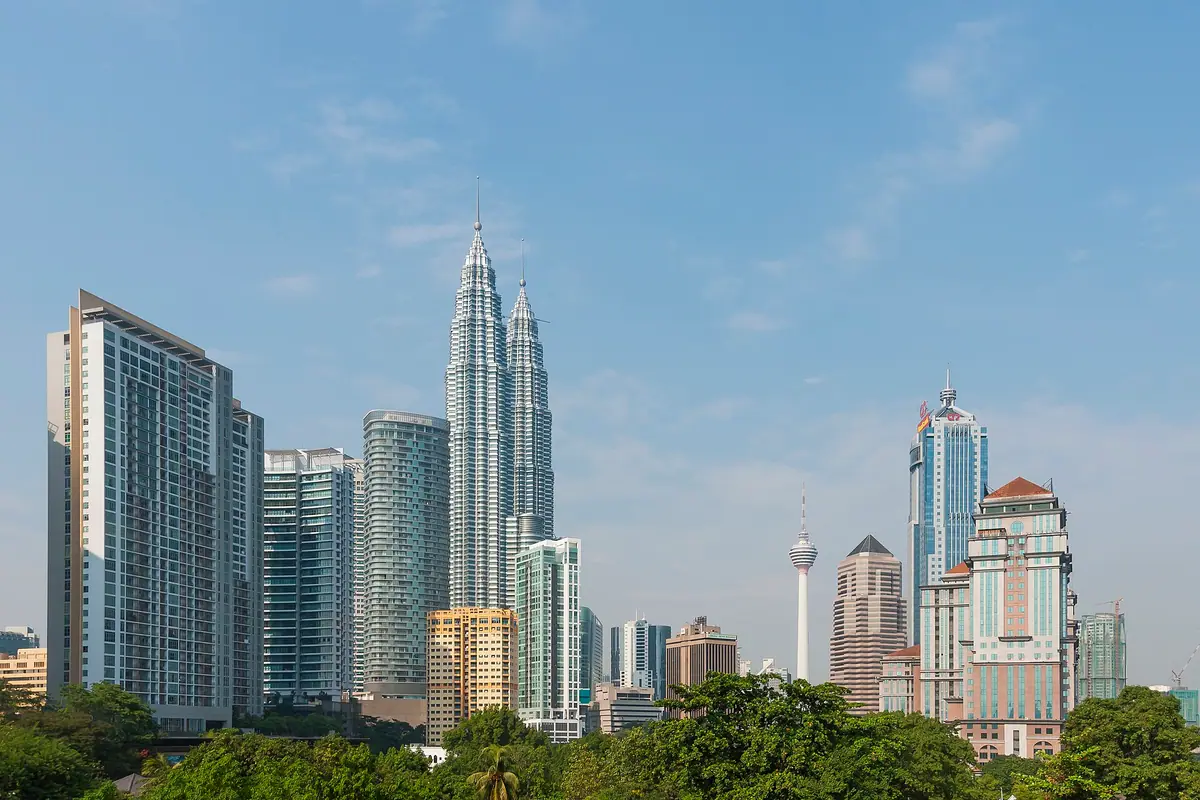
Start with the sight that defines modern Malaysia: the Petronas Twin Towers, 451.9 metres of stainless steel and Islamic geometry, linked by a double-decker skybridge on the 41st and 42nd floors and topped by an observation deck on level 86. Timed tickets sell out, so reserve a morning slot and arrive early enough to walk the surrounding KLCC Park before the heat builds. Come back after dark, when the towers glow and the Lake Symphony fountains run their evening shows.
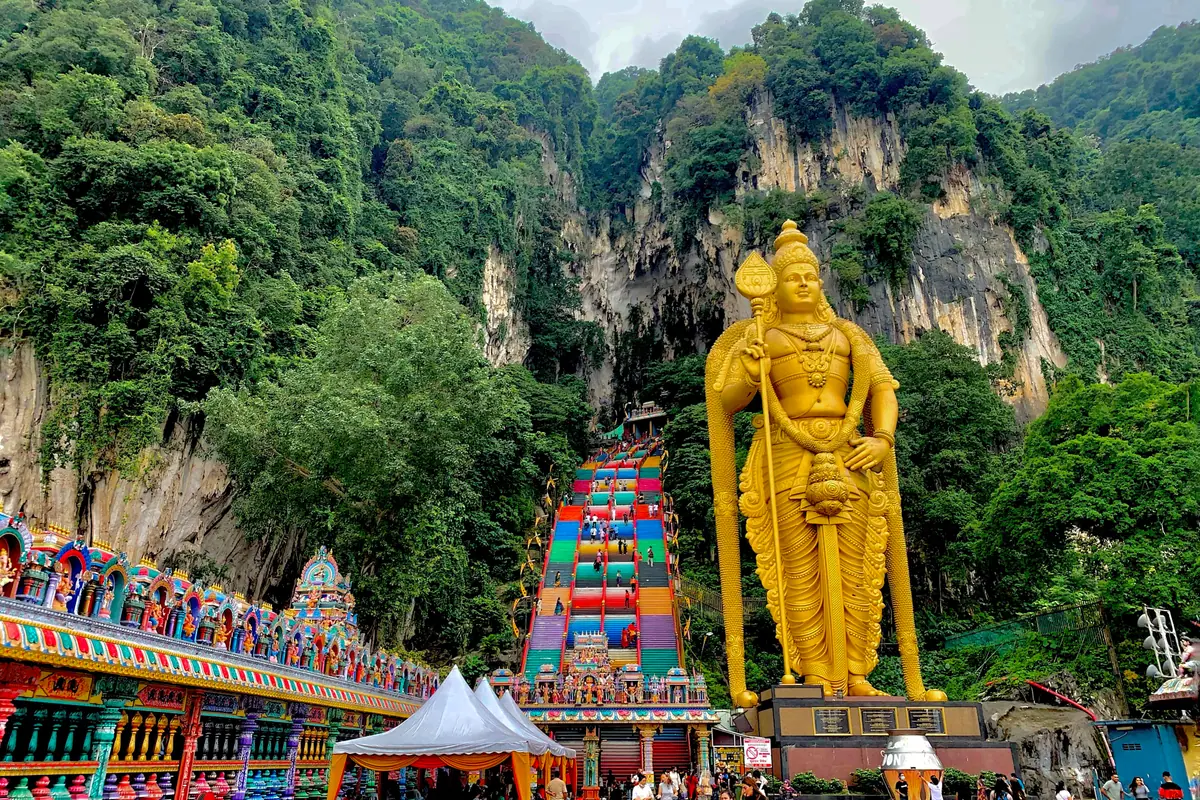
Give your second day to the city's older soul. Batu Caves, a limestone outcrop 13 kilometres north, is reached by a flight of 272 rainbow-painted steps guarded by a 42-metre golden statue of Lord Murugan — go before 8am to beat both the tour buses and the sun. Back in the centre, Merdeka Square and the copper-domed Sultan Abdul Samad Building recall the colonial era, while the six-tiered Thean Hou Temple on Robson Heights offers one of the best free views over the city.
Eat your way through the evening along Jalan Alor in Bukit Bintang, where the street becomes an open-air grill of satay, grilled stingray and durian stalls, or head to Central Market for Peranakan crafts and a cool break from the humidity. Two nights is enough for the highlights, but keep the second night free of a dawn flight — you will want the sleep.
Days 3–4: Penang and the Living Museum of George Town
A 55-minute flight puts you on Penang, and the taxi from the airport to the UNESCO-listed core of George Town takes about half an hour. This is Malaysia's most atmospheric city: shophouses with air wells and five-foot ways, clan jetties where families still live on stilts over the water, and the ornate Khoo Kongsi clan temple hidden behind a row of ordinary shopfronts. Walk Armenian Street to find the famous painted murals, including the one of children on a bicycle, and duck into the Peranakan mansion museums to see how the Straits Chinese elite once lived.
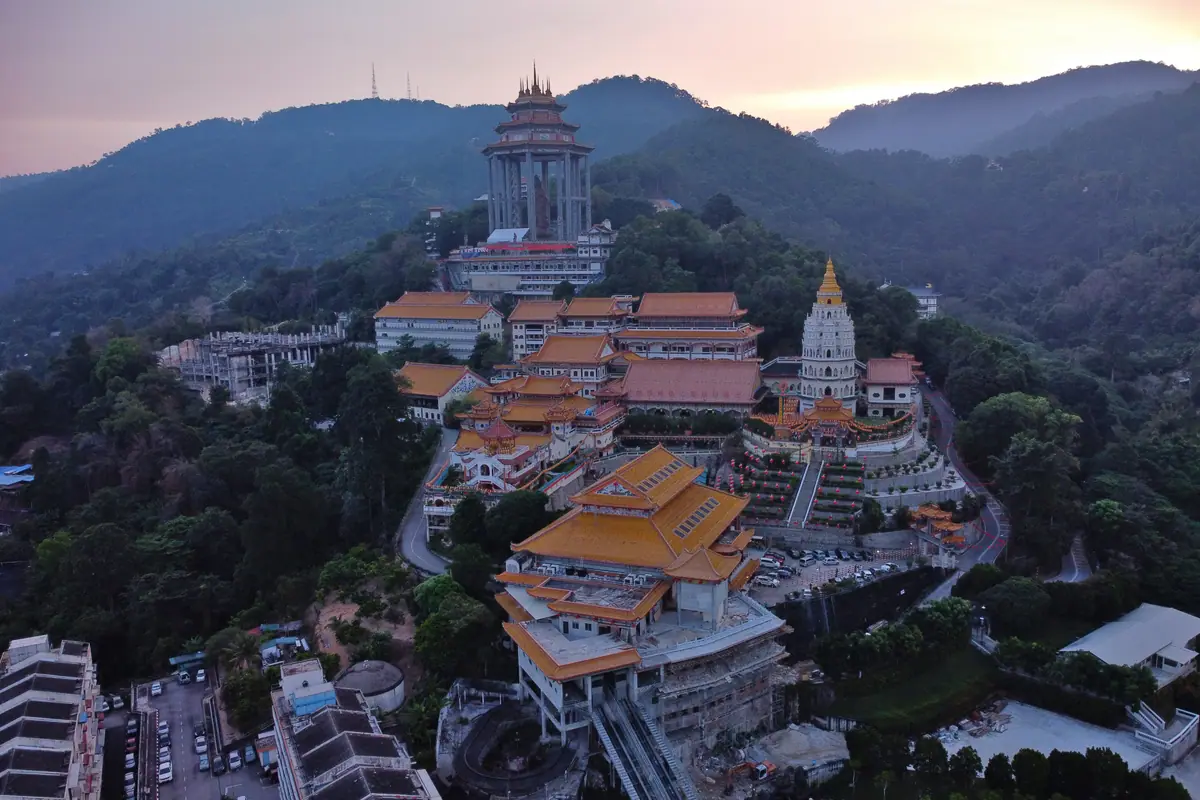
Ride the funicular up Penang Hill, 833 metres above the heat, for panoramas across the island and over to the mainland — the rail line has been climbing since 1923. Combine it with a stop at Kek Lok Si, the largest Buddhist temple complex in Malaysia, a terraced hillside of prayer halls, a seven-storey pagoda blending Thai, Burmese and Chinese styles, and a colossal bronze statue of Kuan Yin.
The rest of your time is for food and beach. Penang is arguably the street-food capital of Southeast Asia: char kway teow, assam laksa and cendol are best hunted at the New Lane and Gurney Drive hawker centres after 6pm. If you want sand between your toes, Batu Ferringhi is 30 minutes north, with night markets and water sports along a long curve of coast.
Days 5–6: Langkawi From the Air and From the Cable Car
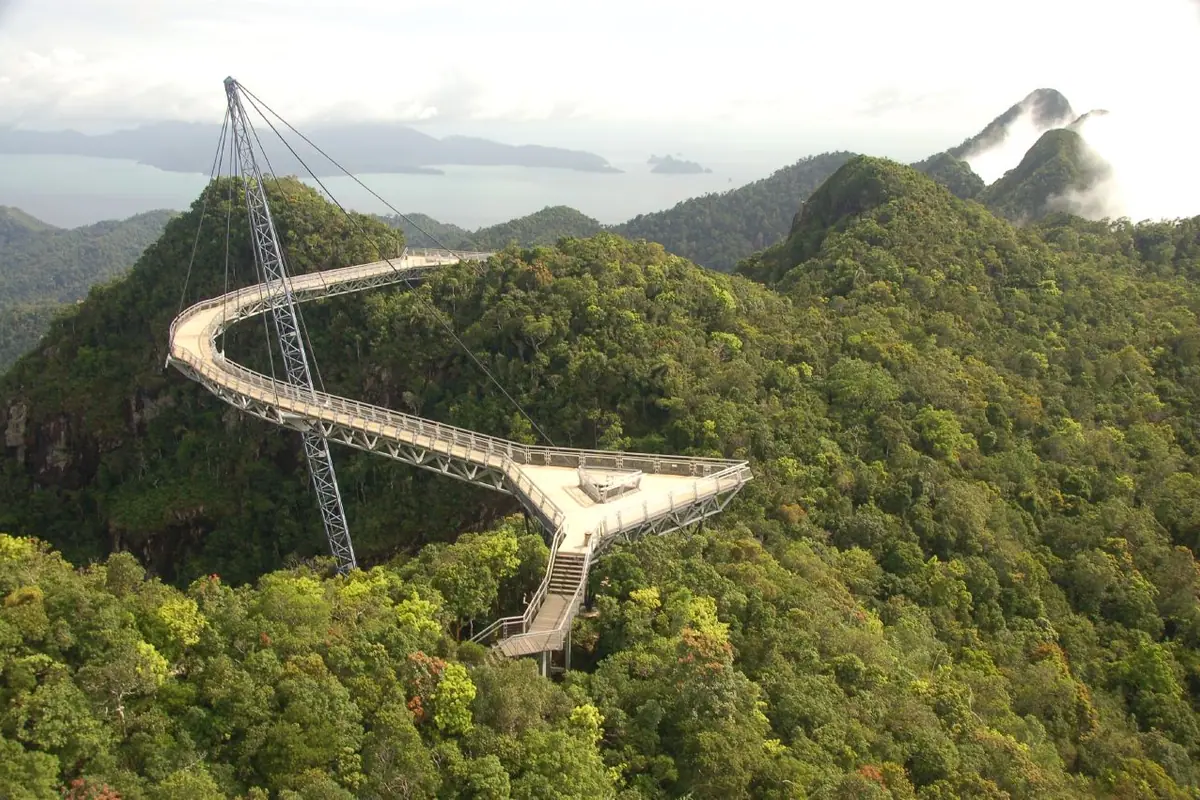
From Penang it is barely 35 minutes in the air to Langkawi, an archipelago of 99 islands where the jungle runs straight into the Andaman Sea. The signature experience is the cable car from Oriental Village up Gunung Machinchang, which climbs to a ridge where the Langkawi Sky Bridge — a 125-metre curved pedestrian span suspended some 700 metres above the forest — hangs over the treetops. Buy the package that includes the bridge and go on the first gondola of the day, before clouds swallow the view.
Spend your second day on the water in Kilim Karst Geoforest Park, a maze of mangroves, sea caves and jagged limestone towers where boat trips glide past eagles, monitor lizards and floating fish farms. Afterwards, swim at Telaga Tujuh, the Seven Wells waterfalls tumbling down Machinchang's slope, or laze on Pantai Cenang, the island's liveliest beach strip, bookended by the giant red eagle statue at Dataran Lang.
Langkawi is duty-free, so hotel prices and drinks are gentler than elsewhere in Malaysia — a pleasant surprise after two cities. For snorkelling, day boats run out to the Pulau Payar marine park. Keep your last evening loose; the flight back to Kuala Lumpur is short but you will want a buffer if the afternoon monsoon rolls in.
Day 7: Return to Kuala Lumpur — or Trade the Beach for Borneo
Fly back to Kuala Lumpur on the morning of day seven, drop your bags, and use the final hours for whatever you missed: the observation deck of KL Tower, the riverside temples of the old quarter, or a last bowl of noodles in Petaling Street's covered market. If your flight home leaves after midnight, a day room near the airport saves a scrambled transfer.
If beaches matter less to you than wildlife, swap Langkawi for Sabah. Kota Kinabalu is around two and a half hours from Kuala Lumpur, and two days there buys you the Sunday market on Gaya Street, a sunset at Tanjung Aru, and a boat hop through Tunku Abdul Rahman Park to the islands of Sapi, Manukan and Mamutik. Mount Kinabalu itself, at 4,095 metres, is a two-day climb — but even a day trip to Kinabalu Park, a UNESCO site, gives you the mountain's granite face and cloud forest trails.
For orangutans, fly instead to Sandakan and base yourself near the Sepilok Orangutan Rehabilitation Centre, where morning and afternoon feeding sessions bring the apes swinging in from the reserve. Pair it with a Kinabatangan River cruise at dawn, when proboscis monkeys and hornbills crowd the banks. Closer to the capital, Melaka makes an easy two-day road detour, with the ruins of A Famosa, the red-painted Stadthuys and Christ Church, and the Friday-to-Sunday night market along Jonker Street.
Flying Malaysia: Airports, Transfers and What to Expect
Domestic terminals in Malaysia are efficient but not instant. Allow two hours before departure at Kuala Lumpur International Airport and 90 minutes at Penang or Langkawi, where check-in desks close 45 minutes before wheels-up. Low-cost carriers are strict about cabin bags — typically one piece of seven kilograms — and weigh them at the gate, so pack a soft bag you can compress. Checked allowances of 20 kilograms are usually plenty for a week in the tropics.
Getting into Kuala Lumpur from the airport is straightforward: the dedicated rail link runs to the central station in about 28 minutes, while taxis and ride-hailing cars take 45 to 70 minutes depending on traffic. Most island airports are 20 to 40 minutes from the main resort strips, and fixed-price taxi coupons are sold inside the arrivals hall — often cheaper than queuing outside.
Expect short delays during the inter-monsoon months, when afternoon thunderstorms sweep across the peninsula; building a two-hour cushion before any international connection is wise. Highland destinations such as the Cameron Highlands and Taman Negara have no airport at all, so they belong on a longer trip reached by road. For a single week, the golden rule is simple: fly the long distances, drive the short ones, and never schedule a dawn departure after a night of hawker food.
Frequently asked questions
Is one week enough to see Malaysia by air?
Yes, if you limit yourself to three bases. Two nights in Kuala Lumpur, two in Penang and two in Langkawi covers the headline sights with a short domestic flight between each. Adding Borneo or the east coast on the same week means cutting one of those stops or accepting a rushed pace.
When is the best time to fly around Malaysia?
December to February suits the west coast — Kuala Lumpur, Penang and Langkawi — when skies are driest. March to September is better for Sabah, Sarawak and the east coast islands. April and October are the inter-monsoon months and bring the most frequent afternoon storms and short flight delays.
How far in advance should I book internal flights?
Three to six weeks ahead is the sweet spot for price and availability. Book two to three months out if you are travelling during Malaysian school holidays, around Hari Raya, or over a long weekend, when island routes to Langkawi and Penang sell out first.
Do I need to recheck bags when connecting between Malaysian cities?
If your domestic leg is on a separate ticket, yes — collect your bags, clear arrivals and check in again. On a single through-ticket, bags are usually tagged to the final destination. Always confirm at the first check-in desk, especially when connecting in Kuala Lumpur from an international arrival.
Which Malaysian destinations are not reachable by plane?
The Cameron Highlands, Taman Negara and much of the interior have no commercial airport, so they are reached by road from Kuala Lumpur or Ipoh. Melaka also lacks a major airport, though it is an easy two-hour drive from the capital and an ideal add-on if you extend your trip.
Sort the rest of your trip
Everything for Malaysia, in one place
Stay in Malaysia
Hotels, guesthouses and apartments — compared in one search.
Search hotels
Transfer in Malaysia
Private driver waiting on arrival — no queues, no surprises.
Book a transfer
Travel insurance
Medical cover, delays and lost baggage — sorted before you go.
Get coveredMore guides in Malaysia
Best Places to Visit in Malaysia: Twin Towers, Temples, Rainforest and Reef
Top Things to Do in Malaysia: Landmarks, Islands and Wild Borneo
Malaysia Food and Culture Tours: Local Experiences Worth Planning Around
Best Time to Visit Malaysia: When to Book Hotels, Island Resorts and Rainforest Lodges
Where to Stay in Kuala Lumpur: The Best Neighbourhoods for Every Kind of Trip