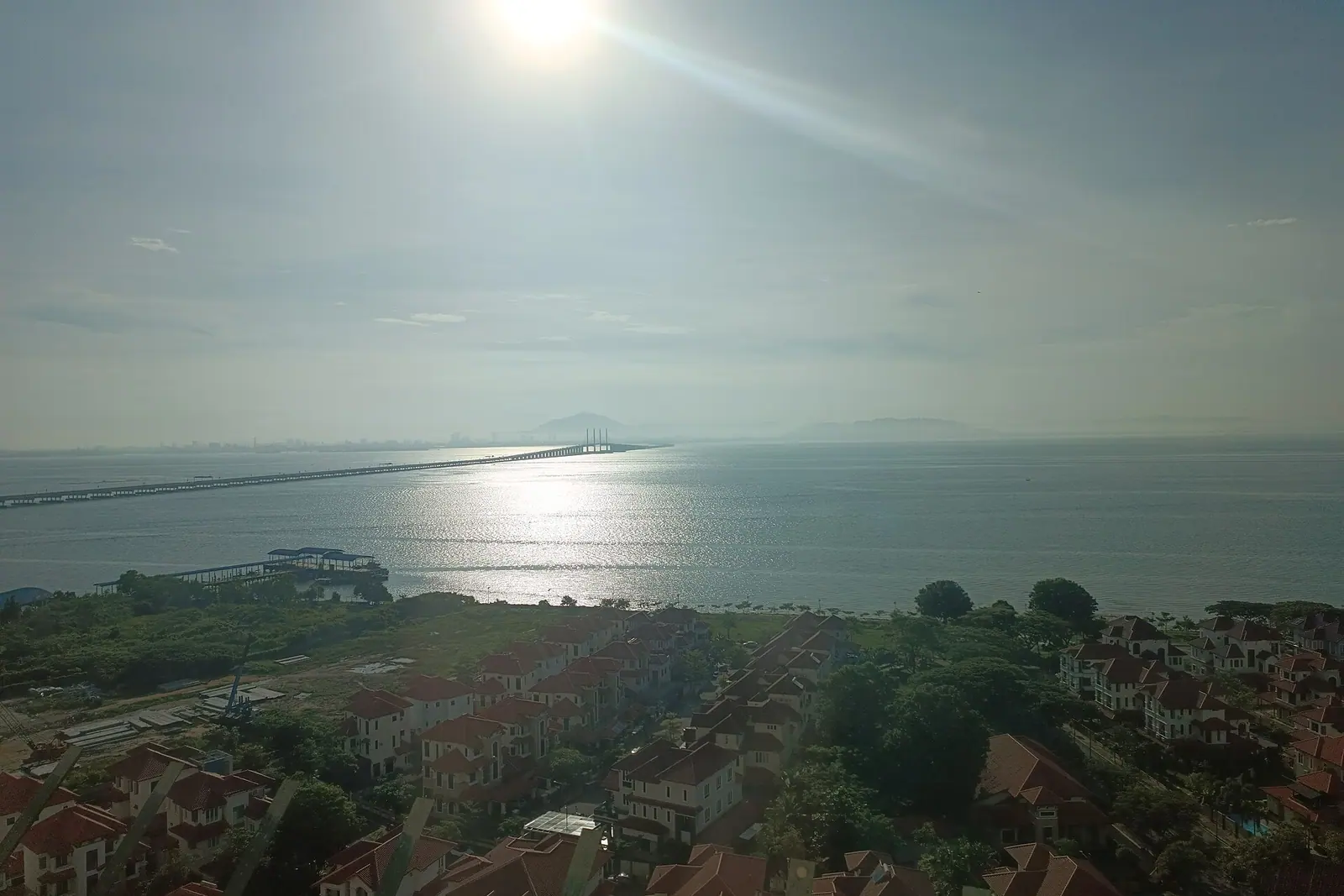
Malaysia compresses Southeast Asia's flashiest skyline and one of its oldest rainforests into a single, easy-going country. You can ride a lift up the Petronas Twin Towers in the morning, eat charred satay off a night-market grill by dusk, and be watching orangutans swing through the canopy in Borneo the following afternoon. The only real challenge is matching the right corner of the peninsula, or the right Bornean state, to the season you happen to be travelling in.
Kuala Lumpur: Petronas Twin Towers, Batu Caves and a Tropical Skyline
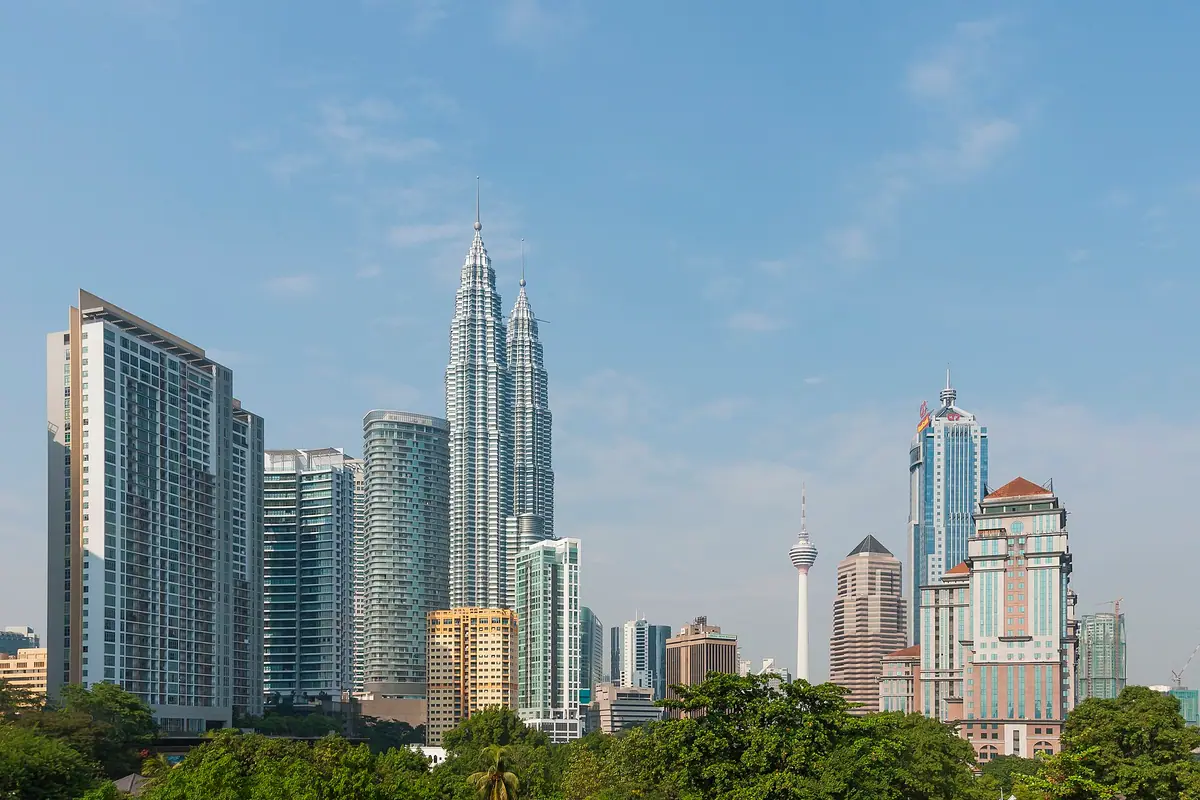
Kuala Lumpur is where most trips begin, and it earns more than a quick stopover. The Petronas Twin Towers are the city's defining silhouette — 451.9 metres of stainless steel and glass, joined by a double-decker skybridge on the 41st floor and topped by an observation deck on the 86th. Timed entry slots sell out, especially the late-afternoon ones that catch the sunset, and the towers close on Mondays. Below them, KLCC Park's fountain lake is the classic spot for the full-height photo once the towers light up after dark.
Allow three to four days to work through the rest. Start early at Merdeka Square, ringed by the copper domes and clock tower of the Sultan Abdul Samad Building, then walk five minutes to Masjid Jamek, the city's oldest mosque, sitting where the Klang and Gombak rivers meet. Batu Caves, 13 kilometres north, is the other unmissable sight: 272 rainbow-painted steps climbing into a 400-million-year-old limestone cavern, guarded at the bottom by a 42-metre gold statue of Lord Murugan. Go at 7am to beat both the heat and the tour buses, and keep an eye on the macaques, which are bold and fast with anything edible. During Thaipusam in January or February, hundreds of thousands of devotees turn the cave complex into one of the most remarkable spectacles in the country.
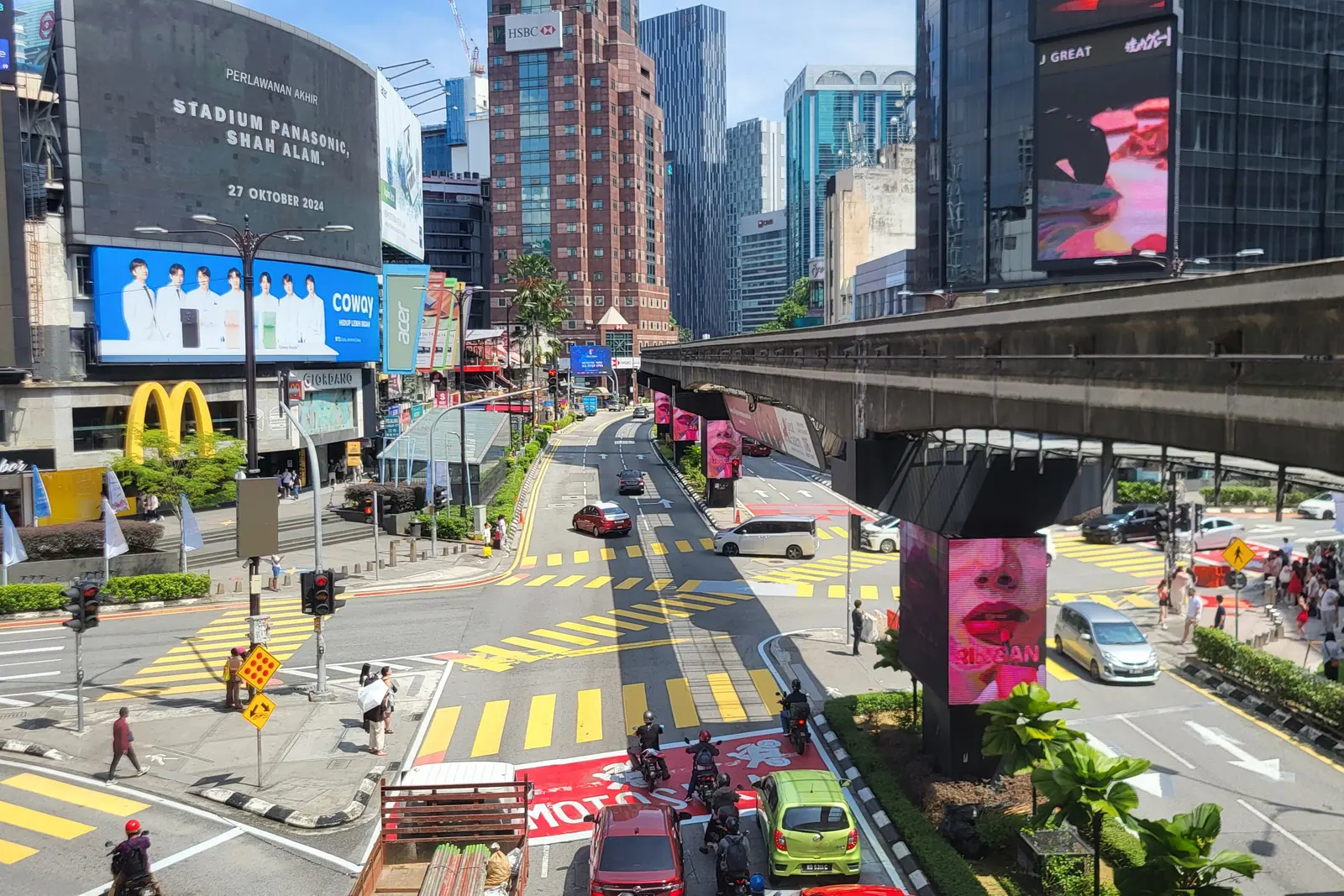
Then eat. Jalan Alor in Bukit Bintang is a wall of woks and smoke after 6pm — look for nasi lemak, grilled stingray, and the noodle stalls with the longest local queues. The city is hot and humid year-round, 30–33°C most afternoons, with afternoon downpours heaviest from March to April and September to November. Public trains and light rail cover most tourist districts cheaply; ride-hailing apps handle everything else.
Penang and George Town: Heritage Shophouses and the Best Street Food in the Country
George Town, on Penang island, is a UNESCO-listed maze of arcaded shophouses, clan temples and faded murals, and many travellers rate it above the capital. The heart of it is Armenian Street and the Clan Jetties — Chew Jetty is the most visited, a stilted village of wooden walkways that has been home to Chinese fishing families for generations. Don't miss Khoo Kongsi, an ornate Hokkien clan temple with carved granite columns, the pinang Peranakan Mansion on Church Street, or the indigo Cheong Fatt Tze Mansion, a restored 19th-century courtyard house that is the finest surviving example of its style in the country.
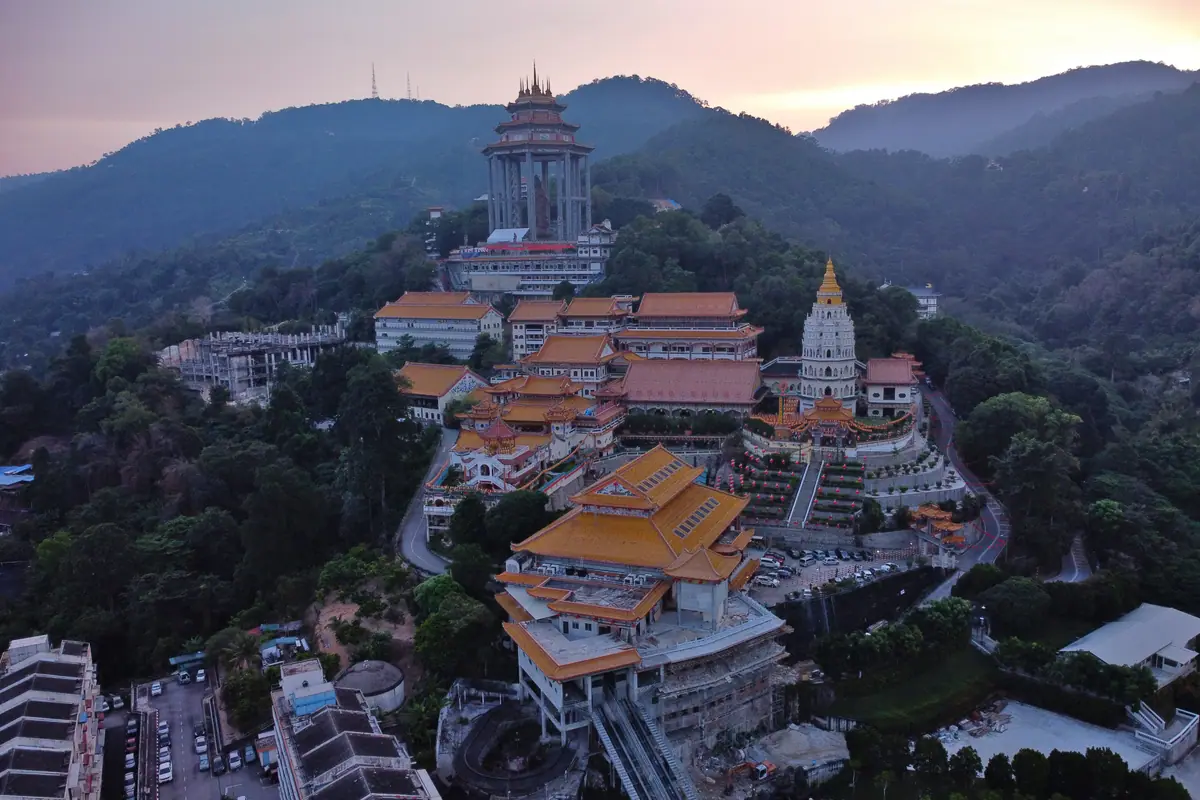
Two excursions round out the island. Kek Lok Si Temple, climbing a hillside above Air Itam, is Malaysia's largest Buddhist temple complex, crowned by a seven-storey pagoda and a colossal bronze Kuan Yin statue; the lantern-lit walk up is best between December and February. Penang Hill, reached by a steep funicular railway to 833 metres, is several degrees cooler than the coast and gives a panorama over the whole island — go on a clear morning before the cloud builds. Afterwards, Batu Ferringhi's beach strip is the place to swim and watch the sunset.
Penang's reputation rests on its food, and it holds up. Char kway teow, assam laksa, hokkien mee and cendol are all local specialties, sold from hawker centres that come alive in the evening around New Lane and Gurney Drive. Two to three days is enough to see the heritage core properly and eat extremely well.
Langkawi and the Northwest Islands: Cable Cars, Karst and Duty-Free Beaches
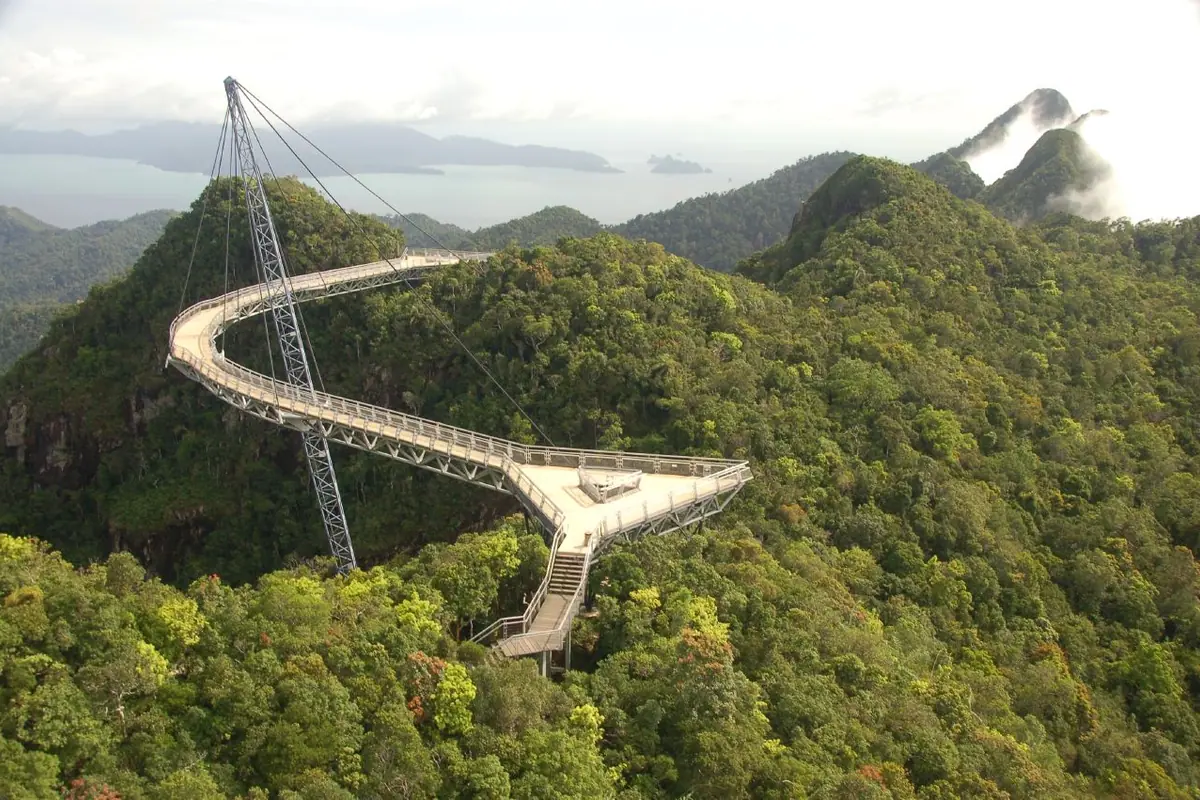
Langkawi is an archipelago of around 99 islands off the Kedah coast, and it is the most resort-friendly corner of Malaysia. The headline experience is the sky cable car up Gunung Machinchang, which climbs at a nerve-testing angle to a summit ridge where the Langkawi Sky Bridge — a 125-metre curved pedestrian span — hangs above the jungle canopy. Nearby Telaga Tujuh, the Seven Wells, drops through a series of natural rock pools that are a cool swim after the climb.
On the water, the Kilim Karst Geoforest Park is a maze of limestone cliffs, sea caves and mangrove channels best explored by small boat, with eagles, monitor lizards and occasional otters along the route. South of the main island, Pulau Payar Marine Park offers the region's clearest snorkelling, while the giant reddish-brown eagle statue at Dataran Lang in Kuah is the island's much-photographed emblem.
Langkawi is at its driest and sunniest from December to March, which makes that window the best time to visit; expect some rain and rougher seas in the shoulder months. Four to five days lets you combine the cable car, a mangrove or island-hopping boat trip, and unhurried beach time on Pantai Cenang or the quieter northern coves.
Melaka: Colonial Ruins, Peranakan Culture and Jonker Street
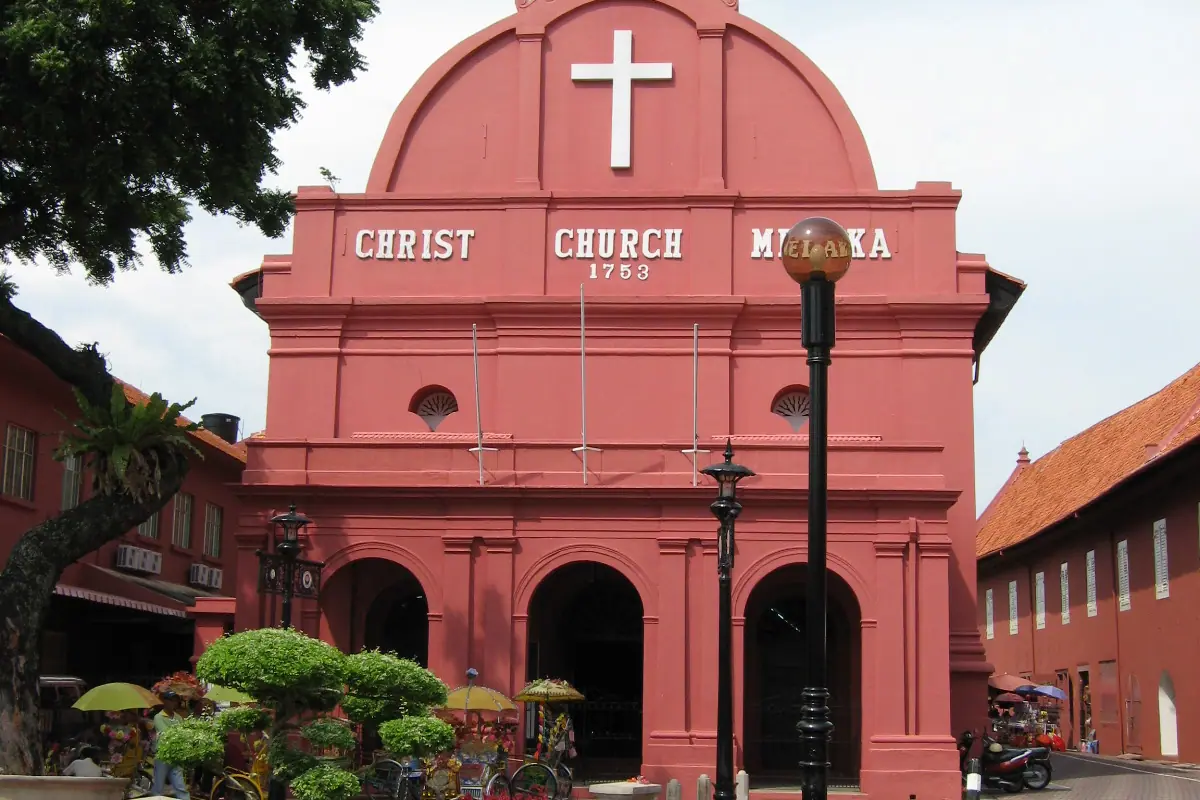
Melaka, two hours south of Kuala Lumpur, wears four centuries of Portuguese, Dutch and British rule on its sleeve. The A Famosa gate is the surviving fragment of a 16th-century Portuguese fortress, and a short climb behind it brings you to St Paul's Hill, where the ruined church looks out over the strait. Down in the red-painted Dutch Square, Christ Church and the Stadthuys — now a history museum — form the most photographed corner of the city.
The real texture of Melaka is Peranakan: the Baba and Nyonya culture born of Chinese traders marrying local Malay women. The Baba and Nyonya Heritage Museum preserves a family home full of carved teak, blackwood furniture and hand-painted tiles, while the Cheng Hoon Teng temple is the oldest functioning Chinese temple in the country. On Friday to Sunday evenings, Jonker Street closes to traffic for a night market of antiques, snacks and loud, cheerful chaos; a Melaka River cruise after dark is a gentler way to see the old warehouses and murals from the water.
Melaka suits two days and pairs well with a stop en route to or from Kuala Lumpur. The Portuguese Settlement, east of the centre, keeps a distinctive Eurasian community alive — and its seafood stalls are worth the detour.
Malaysian Borneo: Mount Kinabalu, Orangutans and the World's Oldest Caves
Across the South China Sea, Sabah and Sarawak occupy the northern slice of Borneo and feel like a different country: bigger, wilder, and far less developed. In Sabah, Mount Kinabalu rises to 4,095 metres inside Kinabalu Park, a UNESCO World Heritage site of orchid-rich cloud forest. The summit climb is usually done over two days with an overnight stop at Laban Rata, starting from Timpohon Gate, and permits are limited, so book months ahead. Climbers who want an easier reward should head to the Poring hot springs and the canopy walkway nearby, or snorkel the reefs of Tunku Abdul Rahman Marine Park just off Kota Kinabalu.
Wildlife is the other draw. The Sepilok Orangutan Rehabilitation Centre near Sandakan lets you watch orphaned and rescued orangutans at close range during twice-daily feeding sessions, and the Kinabatangan River is one of the best places in Asia for a dawn or dusk cruise past proboscis monkeys, hornbills and pygmy elephants. Divers rate Sipadan among the finest sites on the planet, though daily permits are strictly capped, while the remote Danum Valley Conservation Area offers leech-sock-and-headlamp jungle trekking in primary rainforest.
Sarawak, to the southwest, centres on Kuching, a laid-back river city with excellent food and a handsome colonial waterfront. From there you can visit the Semenggoh Wildlife Centre, where semi-wild orangutans come to supplementary feedings, or Bako National Park, home to proboscis monkeys and sea stacks carved by the tide. The showstopper, though, is Gunung Mulu National Park: the Deer Cave and Clearwater Cave system includes some of the largest cave chambers ever surveyed, reached by plankwalk through the forest and, if you're adventurous, a longboat ride upriver. Borneo is best visited from March to October, when rainfall eases and trails and dive sites are at their most reliable — budget five to seven days for one state done properly.
East Coast Islands, Taman Negara and the Cameron Highlands
Peninsular Malaysia's east coast is a different monsoon zone from the west, and that shapes everything. The Perhentian Islands, Redang and Tioman offer clear water, coral gardens and turtles, but the northeast monsoon from roughly November to February closes many resorts and cancels ferries. Travel between March and September for calm seas, and book early for the Perhentians, where accommodation ranges from backpacker A-frames on the beach to comfortable dive resorts.
Inland, Taman Negara is a 130-million-year-old rainforest and the country's premier trekking destination. The 530-metre canopy walkway, one of the longest in the world, puts you at eye level with hornbills and gibbons; night jungle walks reveal stick insects, flying squirrels and luminous fungi. A guided trek up Bukit Teresek takes a few hours from the Kuala Tahan river entrance, and the rapids at Lata Berkoh make a good half-day outing.
For a complete change of climate, head to the Cameron Highlands, a colonial-era hill station at around 1,500 metres where daytime temperatures sit pleasantly between 15 and 25°C. Rolling tea estates, strawberry farms, the mossy, mist-wrapped forest boardwalk and trails through montane woodland make it a refreshing two-day break from the heat — and the tea-room scones and local strawberries are as much a part of the visit as the views.
Frequently asked questions
How many days do I need to see Malaysia properly?
Two weeks is the realistic minimum for a first trip that combines the peninsula and Borneo. A common split is three to four days in Kuala Lumpur, two to three in Penang or Melaka, three to four on Langkawi or an east-coast island, and five to seven in Sabah or Sarawak. If you only have a week, stay on the peninsula and do Kuala Lumpur, Melaka and Penang — the connections are short and frequent.
When is the best time to visit Malaysia?
Malaysia has two monsoon patterns, so there is no single bad month for the whole country. The west coast — Kuala Lumpur, Penang, Langkawi, Melaka — is generally driest from December to March. The east coast islands (Perhentian, Redang, Tioman) are best from March to September, when many resorts reopen. Borneo's Sabah and Sarawak are most reliable from March to October. Expect heat and humidity year-round regardless, with short, heavy afternoon downpours.
How do I get between Kuala Lumpur, Penang, Borneo and the islands?
Long-distance buses and trains link Kuala Lumpur with Penang, Melaka and the east coast, while budget airlines make the hop to Kota Kinabalu, Kuching or Langkawi quick and often very cheap. Island resorts are reached by scheduled ferries or speedboats from the mainland jetties, and those services are the first thing to be suspended in bad monsoon weather. Within cities, trains, light rail and ride-hailing apps cover almost everything.
Is Malaysia good for first-time or solo travellers?
Yes — it is one of the easier introductions to Southeast Asia. English is widely spoken, transport is well organised, food is cheap and plentiful, and independent travel is normal rather than unusual. Solo travellers, including women, generally report feeling comfortable in cities and on the main tourist islands, though the usual precautions apply after dark and in quiet areas. Dress modestly when visiting mosques and temples, and remove shoes where indicated.
What should I pack for Malaysia?
Light, breathable clothing for 30°C-plus heat and near-constant humidity, plus a compact rain jacket or umbrella for sudden downpours. Bring reef-safe sunscreen, insect repellent, and sturdy shoes if you plan to climb Mount Kinabalu or trek in Taman Negara. For Borneo's highlands and hill stations like the Cameron Highlands, add a fleece — nights at altitude get genuinely cool. A sarong or light scarf is useful for temple visits and doubles as a beach cover-up.
Plan it — experiences in Malaysia
Live search, booked directly with trusted providers.
Sort the rest of your trip
Everything for Malaysia, in one place
Stay in Malaysia
Hotels, guesthouses and apartments — compared in one search.
Search hotels
Transfer in Malaysia
Private driver waiting on arrival — no queues, no surprises.
Book a transfer
Stay online in Malaysia
Travel eSIM — data the moment you land, no roaming bills.
Get an eSIMMore guides in Malaysia
Top Things to Do in Malaysia: Landmarks, Islands and Wild Borneo
A One-Week Malaysia Itinerary by Flight: Kuala Lumpur, Penang and Langkawi
Malaysia Food and Culture Tours: Local Experiences Worth Planning Around
Best Time to Visit Malaysia: When to Book Hotels, Island Resorts and Rainforest Lodges
Where to Stay in Kuala Lumpur: The Best Neighbourhoods for Every Kind of Trip