Greece looks impossibly large on a map until you realise its islands are strung across the Aegean like stepping stones — and that a 45-minute hop by air can replace an overnight ferry. This one-week route uses short domestic flights to link Athens' ancient heart with Santorini's volcanic cliffs and Crete's Minoan palaces, so you spend your days among ruins and caldera views instead of in a seat.
Days 1–2: Athens — the Acropolis, Plaka and the Ancient Agora
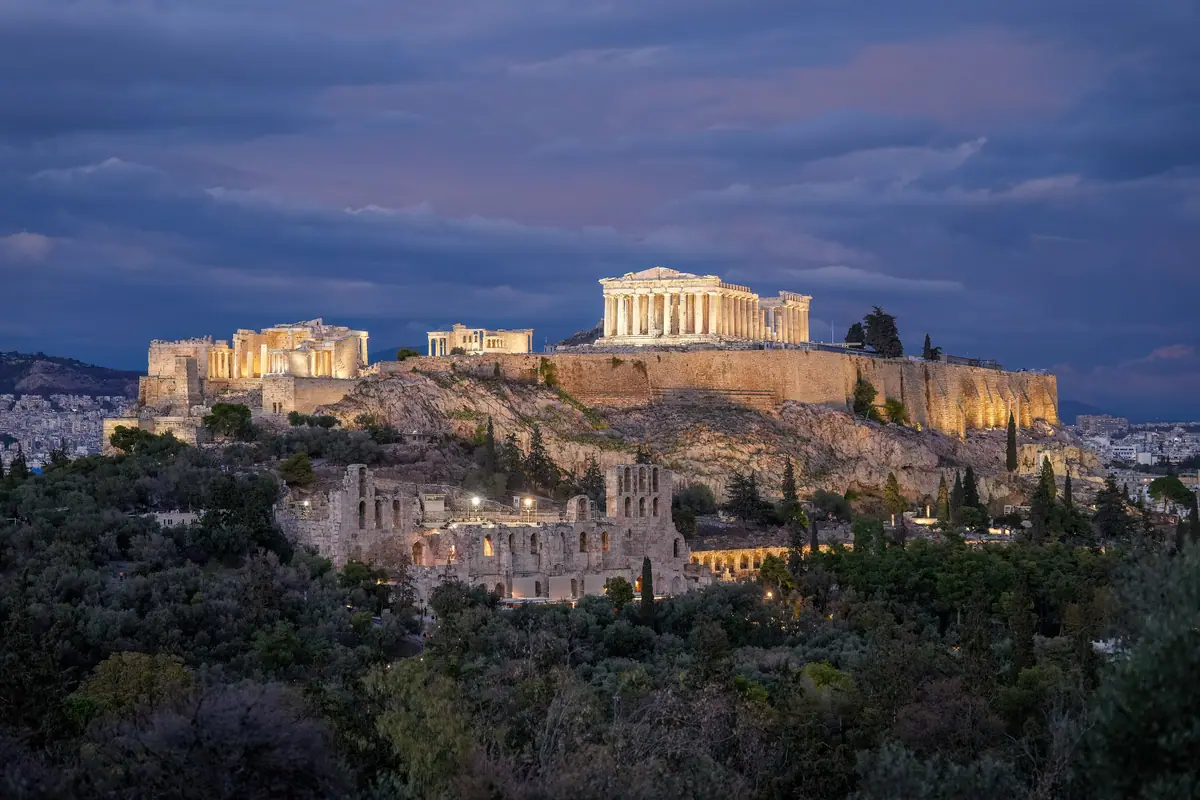
Start where the country starts. Beat the heat and the tour groups by entering the Acropolis gate as it opens in the early morning; the climb past the Theatre of Dionysus and the Odeon of Herodes Atticus ends at the Propylaea, and then the Parthenon itself, its columns still carrying the faint scorch marks of centuries. Give the plateau two hours, then walk down through the Ancient Agora, where the remarkably intact Temple of Hephaestus stands above a site where Socrates once argued.
Afternoon belongs to the streets below. Wander the whitewashed lanes of Plaka, cut through to the Roman Agora and the Tower of the Winds, and stop at Hadrian's Library before following the crowds into Monastiraki's flea market. A short walk east brings you to the Temple of Olympian Zeus and the Panathenaic Stadium, a horseshoe of marble where the first modern Olympics were held. Finish the day on Lycabettus Hill — walk it or ride the funicular — and watch the sun drop behind the Parthenon.
On day two, catch the changing of the guard at Syntagma Square before the pavement heats up, then spend the middle of the day in the National Archaeological Museum, home to the gold Mask of Agamemnon and the bronze Artemision Jockey. If you have energy left, take the coastal tram to Piraeus or a sunset trip to the Temple of Poseidon at Cape Sounion. Book your onward flight for the morning of day three; Athens' airport is about 45 minutes from the centre by metro and you'll want buffer time.
Day 3: Fly to Santorini — Fira, the caldera and an Oia sunset
The flight from Athens to Santorini takes under an hour, and the reward comes about ten minutes before landing, when the plane banks over a crescent of black rock and white villages balanced on its rim. Seat choice matters here: sit on the right flying out, the left flying back. From the tiny airport, buses and taxis run to Fira in roughly 20 minutes, though a pre-arranged transfer is easier if you're carrying luggage.
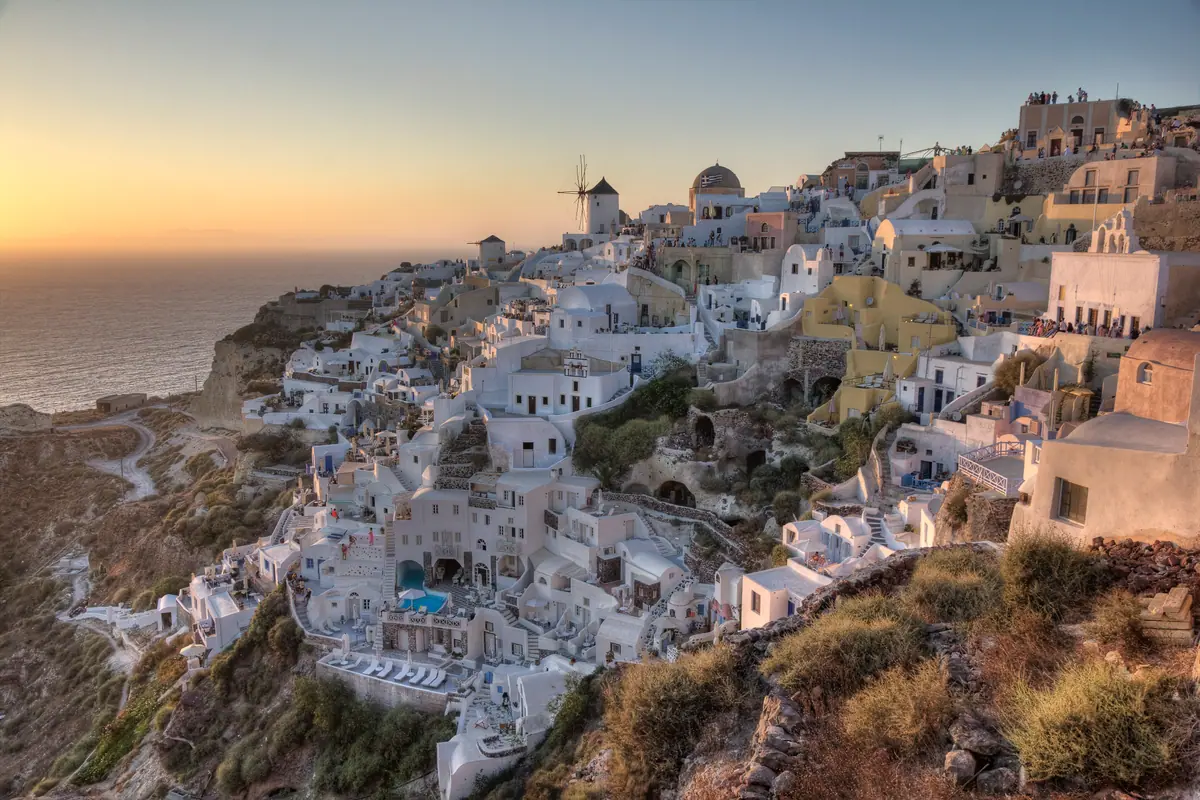
Fira is the island's busy capital, a town of zigzagging steps, blue domes and cable cars dropping to the old port where donkeys once did the work. Walk the caldera path north towards Firostefani and Imerovigli — roughly two hours of cliff-edge trail with the best views on the island — and resist the temptation to photograph every doorway. Below you, the sea floor is the flooded crater of a volcano that erupted around 1600 BC and buried the Bronze Age town at Akrotiri.
For sunset, everyone aims for Oia, and yes, the ruins of the Byzantine castle there are worth the crush — but go early, claim a spot an hour ahead, and then stay for the blue hour when the crowds drain away. If the idea of shoulder-to-shoulder viewing appals you, book a caldera-view terrace in Imerovigli instead, or head up to Pyrgos, a hill village with ruined Venetian walls and a fraction of the people. Book dinner before 9pm in high season or expect to wait.
Day 4: Santorini beyond the postcard — Akrotiri, Red Beach and the wineries
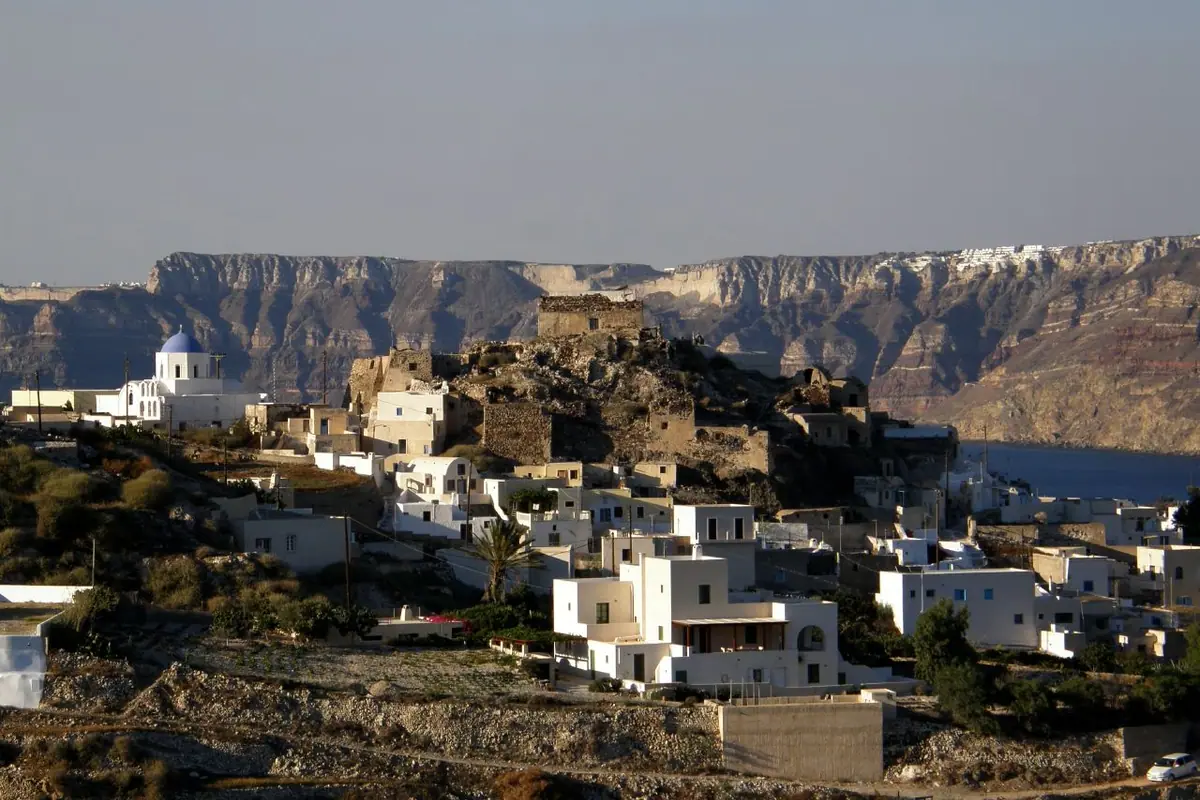
Away from the caldera, Santorini gets quieter and stranger. The archaeological site at Akrotiri is the island's great underrated treasure: a Minoan town sealed under volcanic ash, with three-storey houses, frescoes and storage jars still standing along paved streets. It's roofed, which makes it a perfect midday stop, and it takes about 90 minutes to walk properly. Nearby is the Red Beach, a startling cliff of iron-rich volcanic rock above rust-coloured sand, and the quieter white-and-black beaches at Vlychada further east.
Climb to Ancient Thera, perched on the ridge of Mesa Vouno above Kamari, where the remains of a Greco-Roman city — temples, a theatre, a paved road — face the sea on both sides. Wear proper shoes; the path is exposed and the meltemi wind blows hard here in July and August. Afterwards, head inland to Pyrgos or Megalochori for a long lunch in a vine-shaded square.
Santorini's volcanic soil makes distinctive dry white wines, and several family-run wineries around Pyrgos and Megalochori offer tastings with caldera views at sunset; book ahead in summer. Then pack for the morning flight to Crete. The hop from Santorini to Heraklion runs about 40 minutes and operates mainly in the warmer months, so if your dates fall outside the seasonal window, fly back through Athens or take the high-speed ferry instead.
Day 5: Fly to Crete — Knossos, Heraklion and the Venetian harbour
Crete is a different scale of place: 260 kilometres long, with mountains in the middle and two airports at either end. Land at Heraklion and you're 20 minutes from Knossos, the Bronze Age palace complex excavated at the turn of the twentieth century and the centrepiece of Minoan civilisation. Arrive right at opening — by 10am the site bakes and the corridor of tour groups thickens. Allow two hours for the Throne Room, the reconstructed Grand Staircase and the vivid frescoes, and understand that much of what you see is partial reconstruction.
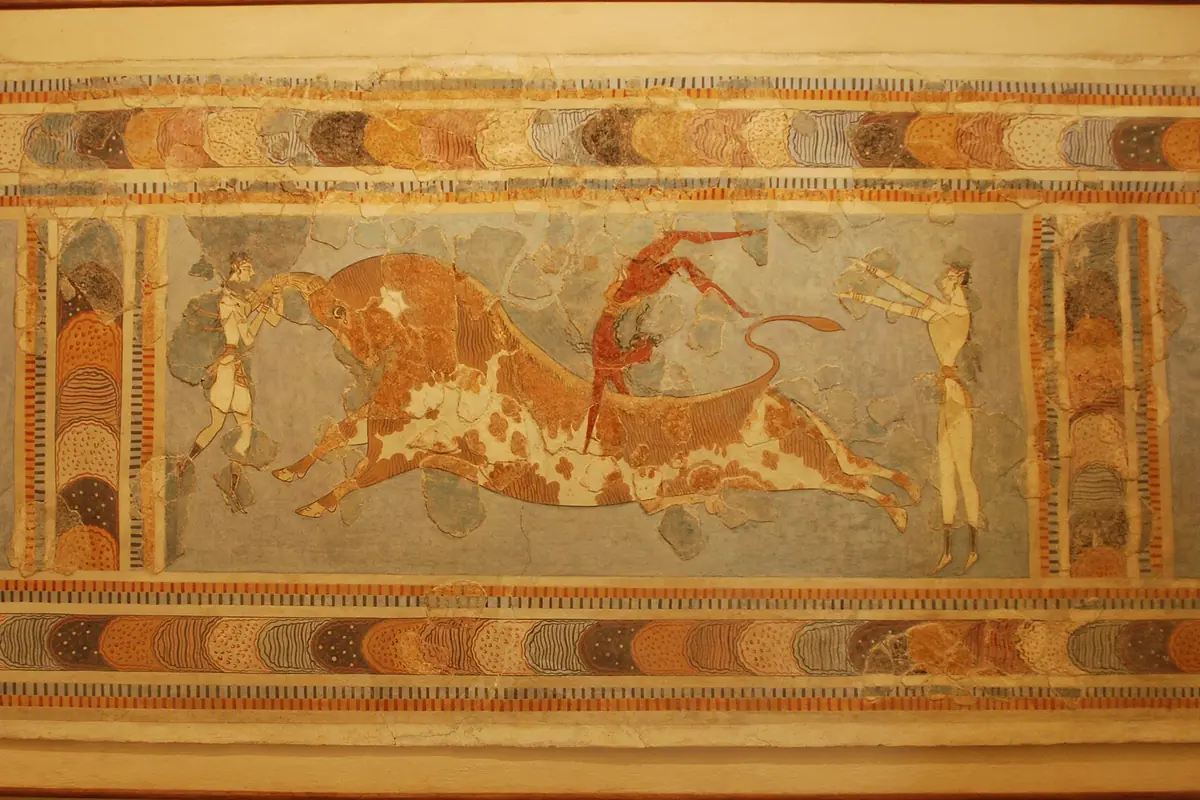
Afterwards, the Heraklion Archaeological Museum is the essential companion, holding the originals: the bull-leaping fresco, the Phaistos Disc replica displays and the tiny, haunting Snake Goddess figurines. Spend the afternoon wandering Heraklion itself — the Venetian Loggia, the Morosini Fountain in Lions Square, and the Koules Fortress guarding the old harbour, where you can walk the breakwater as the fishing boats come in. Eat at a taverna near the port; Cretan cooking is the richest in Greece, heavy on olive oil, wild greens and sheep's cheese.
Practical notes: rent a car at Heraklion airport if you plan to explore, since public buses are slow and rural services thin out after September. Roads on the north coast are fast but winding, and mountain routes like the Omalos plateau road are not for nervous drivers. If you'd rather not drive, base yourself in Heraklion or Chania and take organised day trips instead.
Day 6: West Crete — Chania's old town, Balos and the Samaria Gorge
Drive west on the new national road — about two hours — to Chania, the most beautiful city on the island. Its old town wraps around a Venetian harbour dominated by a 16th-century lighthouse, with a mosque-turned-gallery on the waterfront and a maze of alleys behind it leading to the covered market and the Byzantine church of San Salvatore. Stay overnight here if you can rearrange your flight; Chania rewards an evening, when the day-trippers leave and the harbour lights come on.
For a full day out, choose one: the Samaria Gorge, a 16-kilometre walk through a national park that opens from roughly May to October and takes five to six hours, ending at the coastal village of Agia Roumeli where a boat takes you back; or the lagoon at Balos, reached by a rough dirt track or by boat from Kissamos, with shallow turquoise water and a rocky islet at its centre. Elafonissi, on the south-west coast, is the easier alternative — pink-tinted sand and warm, knee-deep water, though it fills up fast in August.
Whichever you choose, start before sunrise and carry more water than feels sensible; Cretan heat in July is genuinely punishing on exposed trails. Book gorge and boat trips a day or two ahead in peak season, and check whether wind has cancelled sailings.
Day 7: Fly back via Athens and a last Greek evening
Crete's airports at Heraklion and Chania both connect to Athens in about 50 minutes, with dozens of daily departures; from there, international connections fan out across Europe. If your flight home leaves late, check your bag at Athens airport and take the metro back into the city for a final few hours: a last stroll through the Anafiotika quarter clinging to the Acropolis' northern slope, an iced coffee in a Plaka courtyard, a plate of grilled octopus near the Central Market.
Domestic Greek flights are frequent but not infallible. Small island airports have limited runways and can be disrupted by the strong summer meltemi winds, so build a buffer day before any long-haul departure and never schedule a tight same-day connection between an island and an intercontinental flight. Ferries are the reliable fallback — slower, but far less likely to be cancelled by weather.
Timing your trip matters more than your route. Late April to mid-June and September to mid-October bring warm seas, thinner crowds and comfortable walking temperatures; July and August deliver 35°C days, packed caldera viewpoints and peak fares. Book domestic flights two to three months ahead for summer travel, watch the hand-luggage limits on small aircraft, and keep your plans flexible enough to swap an island if the wind has other ideas.
Frequently asked questions
How many Greek islands can I realistically visit in one week by plane?
Two, comfortably — three if you keep Athens to a single night. Each domestic hop takes 35 to 55 minutes, but check-in, transfers and packing eat roughly half a day. A workable rhythm is two nights in Athens, two on Santorini, two or three on Crete, which is exactly what this itinerary does.
When is the best time of year for a flying itinerary in Greece?
Late April to mid-June and September to mid-October. You get 22–28°C days, open archaeological sites without queues, and full domestic flight schedules. July and August are hottest and busiest, and the meltemi winds can disrupt small-island flights. Winter is quiet but many seasonal inter-island routes stop entirely.
Are domestic flights in Greece expensive?
Short hops between Athens and the islands are usually affordable when booked two to three months out, and prices climb steeply within the final fortnight. Fares vary hugely by date, so treat flights as a variable cost and lock them in as soon as your dates are firm. Small aircraft often have tighter cabin baggage rules than you'd expect.
Do I need to rent a car on Santorini and Crete?
On Santorini, no — buses and taxis cover Fira, Oia and the main beaches, though a car helps for Akrotiri and the wineries. On Crete, yes, unless you base yourself in one city. Distances are long, buses are infrequent outside the north coast, and the best beaches and gorges are reached by road.
What happens if my Greek island flight is cancelled?
Wind is the usual culprit, particularly in July and August. Airlines typically rebook you on the next available service, but that can mean a day's wait on a small island. Always leave a spare day before an international departure, keep ferry timetables in mind as a backup, and buy travel insurance that covers domestic disruption.
Sort the rest of your trip
Everything for Greece, in one place
Stay in Greece
Hotels, guesthouses and apartments — compared in one search.
Search hotels
Transfer in Greece
Private driver waiting on arrival — no queues, no surprises.
Book a transfer
Travel insurance
Medical cover, delays and lost baggage — sorted before you go.
Get coveredMore guides in Greece
Greek Food, Culture and Local Experiences: A Tour of Greece Worth Taking

Where to Stay in Greece: Hotels by Region and the Must-See Sights Nearby

One Week in Greece by Flight: An Island-Hopping Itinerary

Best Activities in Greece: From the Acropolis to the Santorini Caldera

Top Things to Do in Greece: Must-See Landmarks and Islands