Greece changes character completely with the calendar, from almond blossom on the Peloponnese hillsides in March to the copper light that falls across the Parthenon in late October. Choose the right window and you get warm seas, quiet archaeological sites and a room with a view you actually want to open the shutters for.
How Greece's Seasons Decide What Your Holiday Actually Feels Like
Greece is not one climate but several. The mainland and Athens bake in a dry Mediterranean summer, the Cyclades are cooled by the meltemi wind that funnels through the Aegean from July onward, the Ionian islands are greener and rainier, and Crete's south coast stays warm almost year-round while its mountain villages see snow. Add more than 200 inhabited islands, most of them reached only by ferry, and timing stops being a minor detail — it decides whether you get a beach to yourself or share a strip of sand with a thousand others.
Hotel supply follows the same rhythm. On Santorini, Mykonos, Naxos and Milos, many properties open around Greek Easter and close in November, so choosing a date outside that window can mean a shuttered village rather than a quiet one. Athens, Thessaloniki, Crete and Rhodes keep hotels running all year, which is why a city-and-island combination trip works well in spring and autumn but needs more planning in the depths of winter.
The broad answer most travellers arrive at: mid-May to late June and September to mid-October are the sweet spots, with warm water, comfortable walking temperatures and rooms that are still bookable without a year of foresight. July and August reward you with festival energy and guaranteed sun, but demand the highest rates and a tolerance for crowds at the headline sights.
Spring: The Smartest Window for Ancient Sites and City Hotels
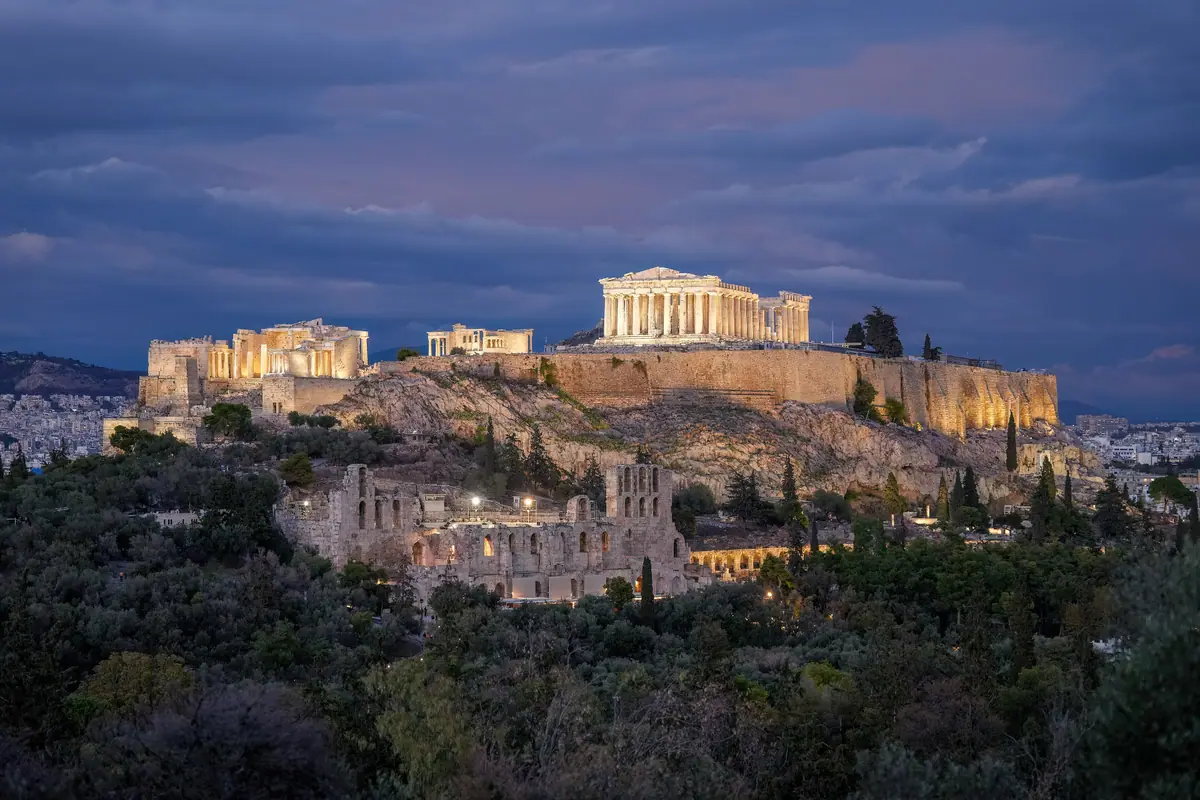
From late March through early June, Greece is at its most forgiving. Athens hovers in the low twenties, the slopes of the Acropolis are dusted with poppies, and you can walk the Panathenaic Way through the Ancient Agora without hunting for shade. The Acropolis and its museum, the Temple of Olympian Zeus and the marble stadium are all far more pleasant before the heat arrives, and Plaka's tavernas spill onto the streets without the crush of high summer.
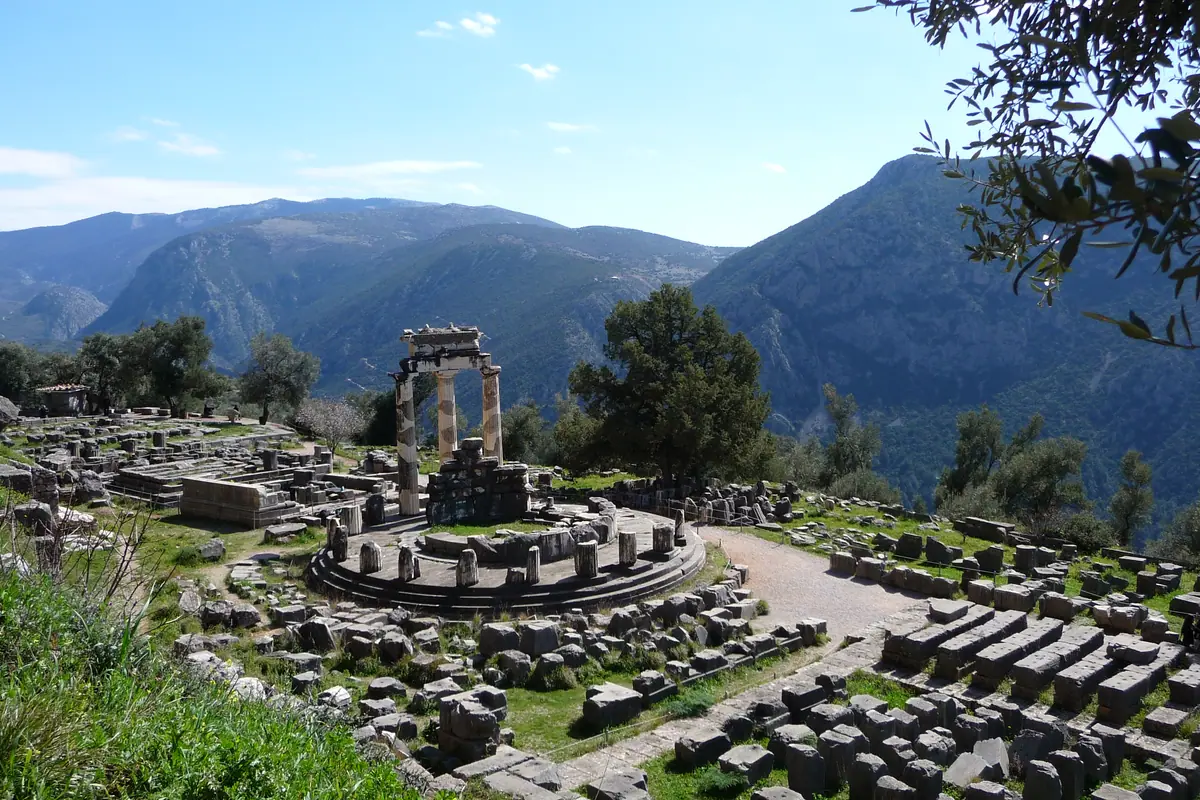
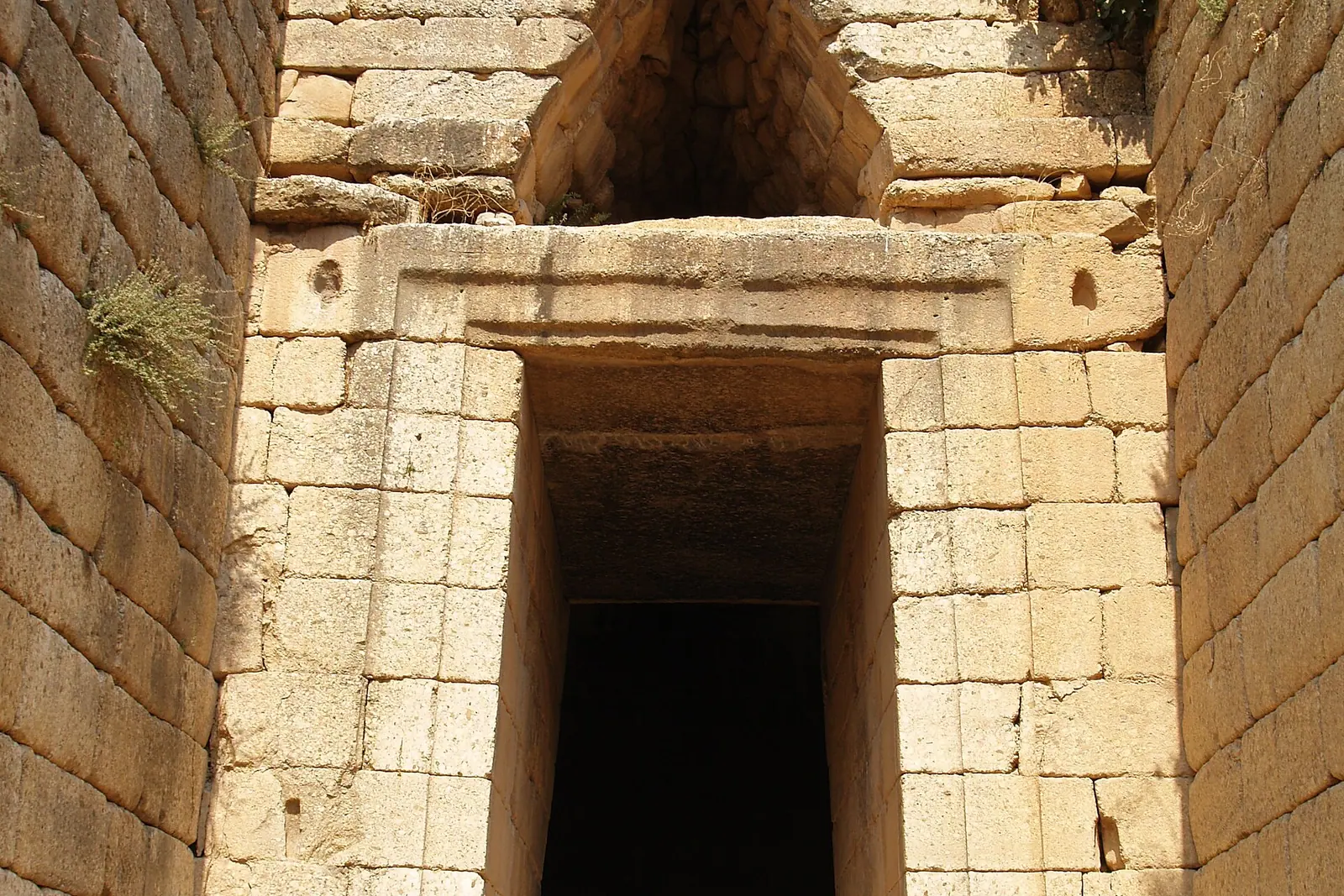
This is also the season for the classical circuit beyond the capital. Delphi, set on the slopes of Mount Parnassos, is often misty and dramatic in April; the theatre of Epidaurus and the Lion Gate at Mycenae are walkable without wilting; and Nafplio, Greece's elegant first capital, makes a perfect overnight base with its Venetian fortress of Palamidi above the harbour. Orthodox Easter, which usually falls in April or early May, brings candlelit processions and roast lamb, but also packed ferries — book island hotels well ahead if your dates overlap.
One trade-off: the Aegean is still bracing until late May, so swimming is for the hardy. Choose a hotel with a heated pool or head south to Crete, where the Libyan Sea side warms up first.
Peak Summer: Island Life, Meltemi Winds and the Price of Popularity
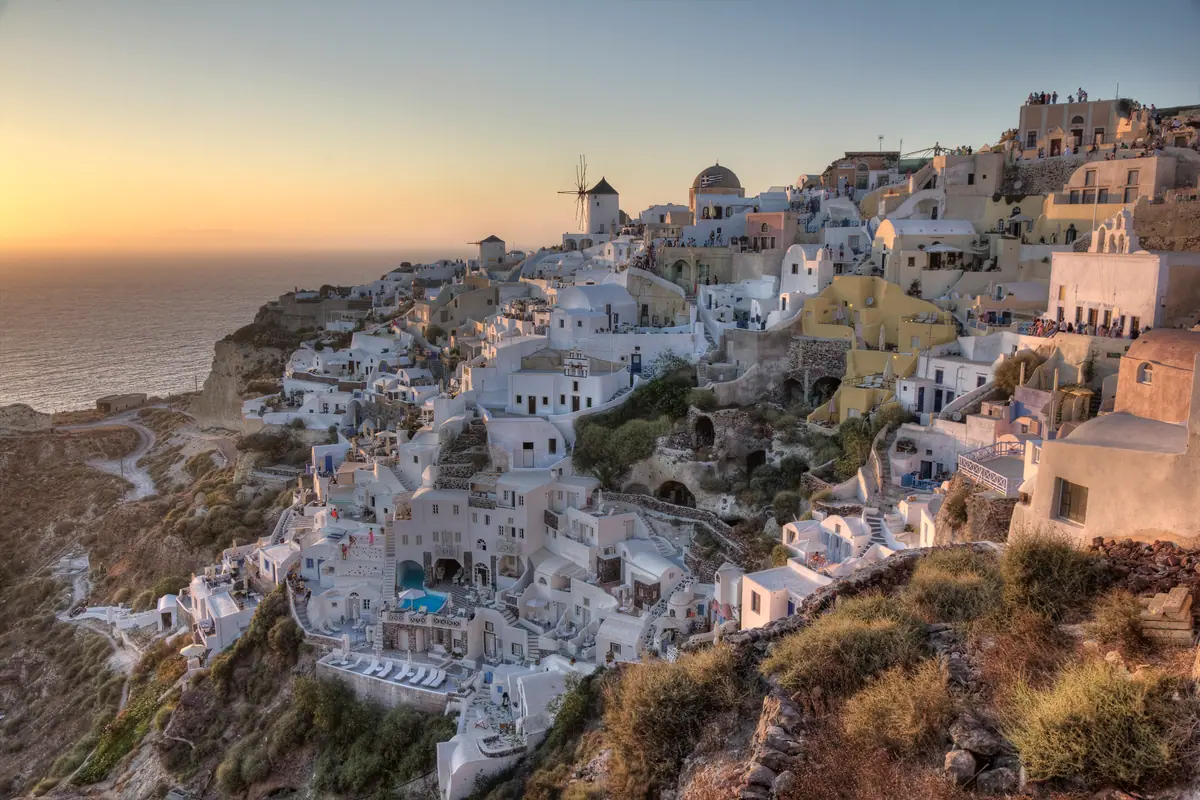
Late June to the end of August is Greek summer in full voice. Mykonos and Santorini operate at maximum volume, Delos — the sacred island of Apollo and one of the most important archaeological sites in the Aegean — fills with day-trippers, and the caldera villages of Oia and Fira deliver the sunsets that made them famous, watched by several hundred people at once. Ferry timetables are at their densest, which makes multi-island hopping easiest now, even as cabins and deck seats sell out days in advance.
Heat is the real consideration inland. Athens can touch the high thirties, so the pattern that works is early mornings at the Acropolis and the National Archaeological Museum, a long shaded lunch, then an evening trip out to Cape Sounion, where the Temple of Poseidon stands above the sea and the light turns gold around sunset. On the islands the meltemi keeps things bearable and makes the northern beaches of Naxos, Paros and Mykonos ideal for windsurfing, while southern coves stay calm.
If you want this season, book accommodation three to six months out — especially for cave rooms and caldera-view terraces on Santorini, where the best rooms simply do not exist at short notice in August. The week around 15 August, the Assumption of the Virgin, is the busiest of the entire year for domestic travel.
Autumn: Warm Seas, Olive Harvest and the Best All-Round Conditions
September and October are when Greece quietly outperforms itself. The meltemi fades, the sea reaches its warmest — often 24 to 26°C, warmer than in June — and the crowds thin noticeably after the first week of September. Santorini's caldera paths become walkable again, Mykonos regains its whitewashed calm, and Crete's Lasithi and Chania regions are perfect for exploring the Palace of Knossos, the Venetian harbour of Chania and the pink sands of Elafonissi.
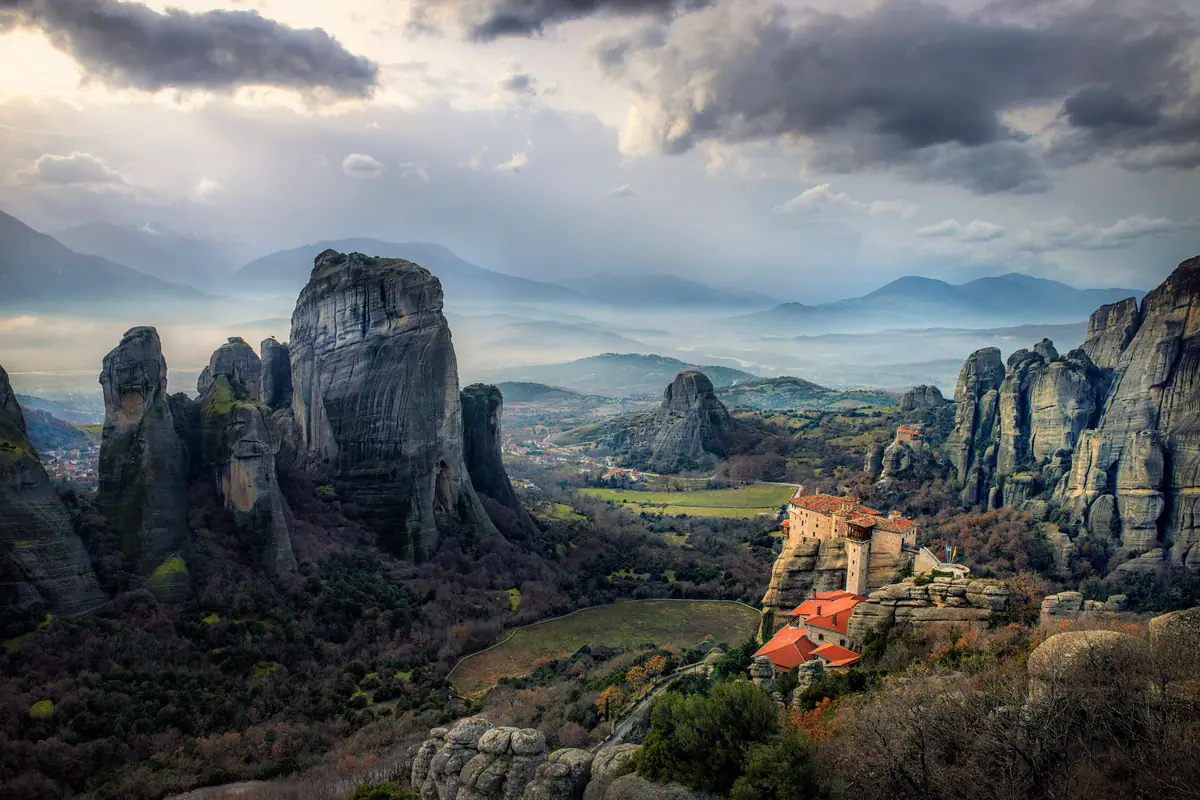
The season suits hiking too. Samaria Gorge usually stays open into mid-October, the Zagori stone villages and the Vikos Gorge are lovely in autumn colour, and Meteora's clifftop monasteries — Agios Nikolaos Anapafsas, Varlaam, the Great Meteoron — are far more atmospheric without tour buses idling below. In Nafplio and the Peloponnese, the olive harvest begins in late October, and village guesthouses start offering rooms at rates that would be unthinkable in July.
By early November, many Cycladic hotels close for winter, so aim to travel before the last week of October if island-hopping is the plan. Athens and Thessaloniki, however, are just coming into their own as city-break destinations.
Winter: City Breaks, Low Rates and Snow on the Monasteries
From November to March, Greece turns inward and becomes a very different country — and a wonderfully cheap one for hotels outside the ski resorts. Athens stays mild enough for sightseeing in a jacket, with the Acropolis almost to yourself, unhurried mornings in the Benaki and Cycladic museums, and long evenings in the tavernas of Psyrri and Exarchia. Syntagma Square's changing of the guard, the Roman Agora and the café culture of Kolonaki all work perfectly in winter light.
Further north, Thessaloniki offers a superb food scene around the Modiano and Kapani markets, the landmark White Tower on the waterfront, and the Byzantine churches of Ano Poli. Meteora is genuinely magical after snowfall, though access roads can close briefly. In the Zagori, the arched stone bridges of Kipi and the Vikos Gorge are quiet and dramatic, and Crete's south coast — Chania, Rethymno, the Messara plain — remains mild enough for coastal walks and visiting Phaistos.
Expect reduced ferry schedules and closed island hotels in the Cyclades, but Athens, Thessaloniki, Crete, Rhodes and Corfu keep full service. Carnival season in February and March brings parades and masked traditions, particularly in Patras and on Skyros.
Matching Your Hotel to the Season You Choose
The single most useful rule is to match your accommodation type to the month. Island cave rooms, infinity pools and open-air tavernas with sea terraces belong to the May–October window. In winter, favour mainland city hotels or Cretan properties with indoor facilities, heating and reliable year-round staffing — an unheated Cycladic room in a November wind is no bargain.
Check three practical things before booking: whether the pool and beach bar are actually open on your dates, whether the property has both air conditioning and heating, and how you will reach it. Island hotels often require a ferry plus a taxi, and shoulder-season sailings are fewer and more weather-dependent than in August. For Santorini and Mykonos, ask about steps — caldera views come with a lot of them, and some rooms are inaccessible to anyone with limited mobility.
Finally, think about what you want the trip to be. If it is ancient sites and museums, aim for April, May, late September or October, when Athens, Delphi, Olympia and Mycenae are comfortable. If it is beach time and island nightlife, July and August deliver — provided you book early and embrace the heat. If it is a city break on a budget, January to March gives you Greece at its most local and its most affordable.
Frequently asked questions
What is the best month to visit Greece overall?
May, June, September and October are the strongest all-round months. You get reliable sunshine, comfortable temperatures for visiting the Acropolis, Delphi and Meteora, warm enough seas — especially in September and October — and far more choice of hotel rooms than in high summer.
Is July and August too hot for sightseeing in Greece?
It is hot, particularly in Athens, where temperatures can reach the high thirties. The workable routine is to visit archaeological sites and museums before 10am, rest through the afternoon, and explore in the evening. The Aegean islands are softened by the meltemi wind, so beaches and coastal walks stay pleasant.
When is the sea warmest in Greece?
The Aegean and Ionian typically peak in September and early October, often reaching 24 to 26°C after a long summer of heating. June swimming is possible but cooler, and the water is bracing until late May on most islands.
Do Greek island hotels close in winter?
Many do. On Santorini, Mykonos, Naxos, Paros and Milos, a large share of hotels and tavernas shut from November until around Greek Easter. Athens, Thessaloniki, Crete, Rhodes and Corfu maintain year-round accommodation and flights.
How far in advance should I book a hotel in Greece?
For July and August, especially on Santorini and Mykonos, book three to six months ahead — the week around 15 August is the busiest of the year. In May, June, September and October, four to eight weeks is usually enough, though Easter and shoulder-season weekends fill quickly.
Sort the rest of your trip
Everything for Greece, in one place
Transfer in Greece
Private driver waiting on arrival — no queues, no surprises.
Book a transfer
Things to do in Greece
Skip-the-line tickets, guided tours and standout experiences.
See experiences
Stay online in Greece
Travel eSIM — data the moment you land, no roaming bills.
Get an eSIMMore guides in Greece
Greek Food, Culture and Local Experiences: A Tour of Greece Worth Taking

Where to Stay in Greece: Hotels by Region and the Must-See Sights Nearby

One Week in Greece by Plane: Athens, Santorini and Crete Itinerary

One Week in Greece by Flight: An Island-Hopping Itinerary

Best Activities in Greece: From the Acropolis to the Santorini Caldera