Greece is a country you eat your way through, one long table at a time. Between the marble of the Acropolis and the black-sand coves of Santorini, meals stretch for hours, villages throw festivals for their patron saints, and strangers are handed a shot of raki before they have finished sitting down. This guide is about travelling Greece the way Greeks do it — slowly, seasonally and with a second helping.
Start in Athens: Marble, Noise and Koulouri in Hand
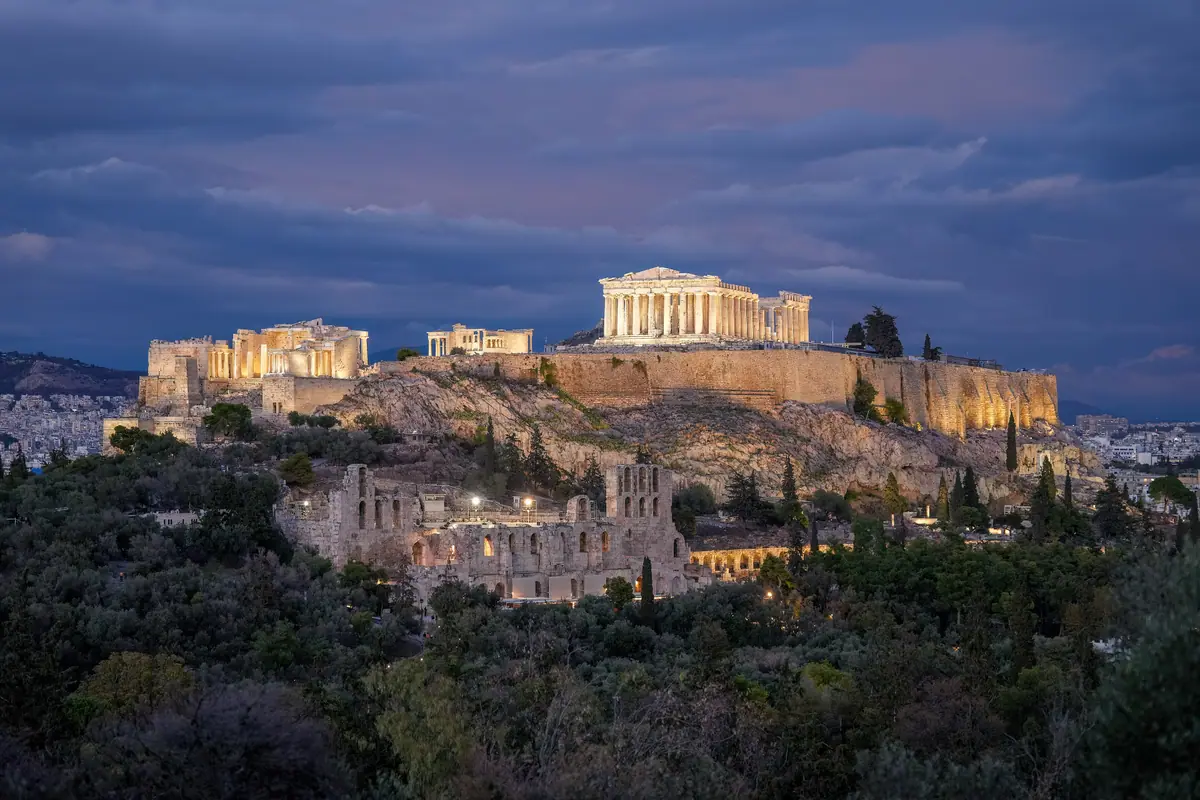
Almost every Greek journey begins on the Attic plain, and Athens rewards anyone who fights jet lag for a single morning. The Acropolis rock lifts straight out of the modern city, crowned by the Parthenon, the Erechtheion with its Caryatid porch and the little Temple of Athena Nike. Go up early through the south slope, past the Theatre of Dionysus and the Odeon of Herodes Atticus, because by mid-morning in July and August the marble radiates heat and the pathways fill. Below it, the Ancient Agora, the Temple of Olympian Zeus and Hadrian's Arch stitch the ancient city to the modern one, and Syntagma Square hosts the changing of the guard at the Tomb of the Unknown Soldier, done with slow, ceremonial precision.
Then surrender to the neighbourhoods. Plaka's stairways lead up into Anafiotika, a whitewashed jumble of island houses built by Cycladic craftsmen, while Monastiraki Square and Adrianou Street hum with stalls, musicians and the smell of grilling meat. The Acropolis Museum at the foot of the rock is worth a full two hours, and the rooftop view back up at the Parthenon is the best free seat in the city.
Eat like a local while you walk: koulouri, the sesame bread ring sold from carts, is breakfast on the move; a paper-wrapped gyros or souvlaki with tomato, onion, tzatziki and a scatter of fried potatoes is the correct late-night meal; and a freddo espresso, shaken over ice, is sipped for an hour in the shade of a plane tree. Nobody hurries you off a table here.
The Taverna Table: What a Greek Meal Actually Looks Like
Forget courses. A Greek meal arrives as a spread — mezze first, then a wave of shared plates, then whatever the kitchen has that day. Expect tzatziki thick with strained yoghurt and garlic, taramasalata whipped pale pink, melitzanosalata smoky with aubergine, and saganaki: firm cheese fried golden and squeezed with lemon at the table. Grilled octopus, hung to dry in the sun before it hits the coals, is a coastal staple; horta, boiled wild greens dressed with olive oil and lemon, appears everywhere; and a proper horiatiki salad has no lettuce at all — just tomatoes, cucumber, onion, capers, olives and a slab of feta on top.
Mains depend on the region and the season. Moussaka and pastitsio are Sunday food, baked in deep trays; gemista stuffs tomatoes and peppers with herbed rice; lamb kleftiko is wrapped and roasted until it collapses. Along the coast, fish and shellfish are sold by weight and grilled simply, and the arrival of bread, olive oil and a carafe of house wine is not a service — it's a signal that the evening has begun. On Crete, look for dakos: a barley rusk rubbed with tomato, salted, and crumbled with mizithra cheese.
The rhythm matters as much as the menu. Lunch runs from about two until four, dinner rarely starts before nine, and a table is yours for the whole evening. Say 'kali orexi' before you eat. Meals end with something free and small — a spoon of preserves, a slice of watermelon, yoghurt with honey — and on Crete, with a shot of raki that will be refilled if you make eye contact. Vegetarians eat extremely well here: giant baked beans, artichokes, okra in tomato, spinach pie, fried courgette.
Island Flavours: Santorini, Crete and the Cyclades
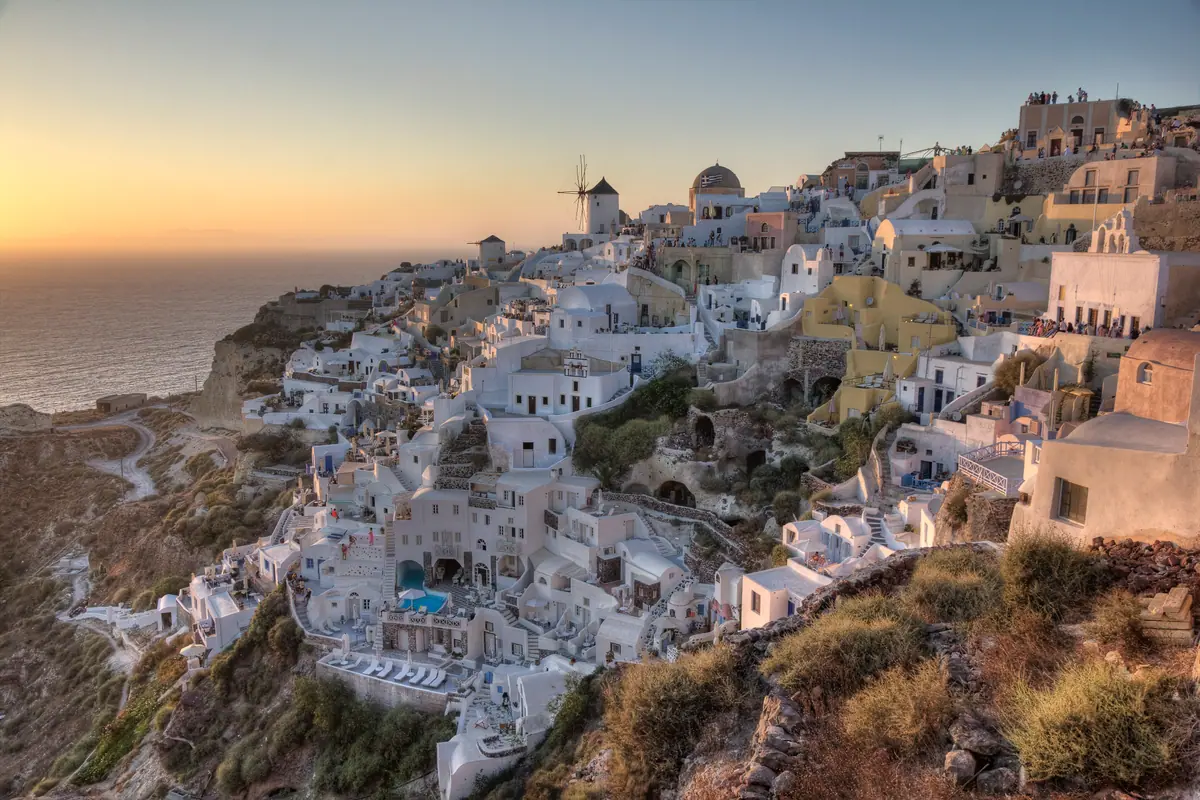
Volcanic soil gives Santorini a flavour you can taste. The island's cherry tomatoes are tiny and sweet, its white aubergine is prized, and its fava — yellow split pea purée — is the dish to order with a glass of Assyrtiko, the steel-dry white grown in ash. Walk the ten-kilometre caldera path from Fira to Oia, which takes around three hours and passes the bluest water in the Aegean, then cool off at the black-sand beaches of Perissa or Kamari. Above the cliffs sit the Bronze Age ruins at Akrotiri and the hilltop village of Pyrgos, both far quieter than the sunset crowds in Oia, where dinner tables with a caldera view are booked weeks ahead.
Crete runs on its own culinary clock. Near Heraklion, the Palace of Knossos spreads across a hillside of reconstructed frescoes and storerooms, and the archaeological museum in town holds the originals. West, Chania's Venetian harbour and Rethymno's old lanes are made for grazing: snails stewed with rosemary, lamb cooked with staka cream, wild greens gathered from the hillside, and endless raki. The Samaria Gorge, open roughly from May to October, is a sixteen-kilometre downhill walk that takes five to seven hours and ends at the Libyan Sea.
Elsewhere in the Cyclades, Mykonos pairs its windmills at Kato Mili and the balconied houses of Little Venice with a maze-like old town built to confuse pirates; Naxos grows the potatoes and graviera cheese that other islands import; Sifnos is famous for chickpea stew baked in a clay pot; and Milos has beaches at Sarakiniko that look carved from the moon, plus a fisherman's stew, kakavia, that is worth the ferry ride on its own.
Festivals, Name Days and the Local Calendar
If you can time a trip around Orthodox Easter, do it. It moves with the church calendar, falling anywhere from late March to early May. Good Friday brings candlelit processions of the Epitaphios through the streets; at midnight on Saturday, church bells and fireworks announce the resurrection, and families carry their lit candles home to mark the doorframe before sitting down to magiritsa, a lemony soup of spring lamb and rice. Sunday is the feast: lamb on a spit, kokoretsi, red-dyed eggs cracked against each other for luck, and sweet tsoureki bread.
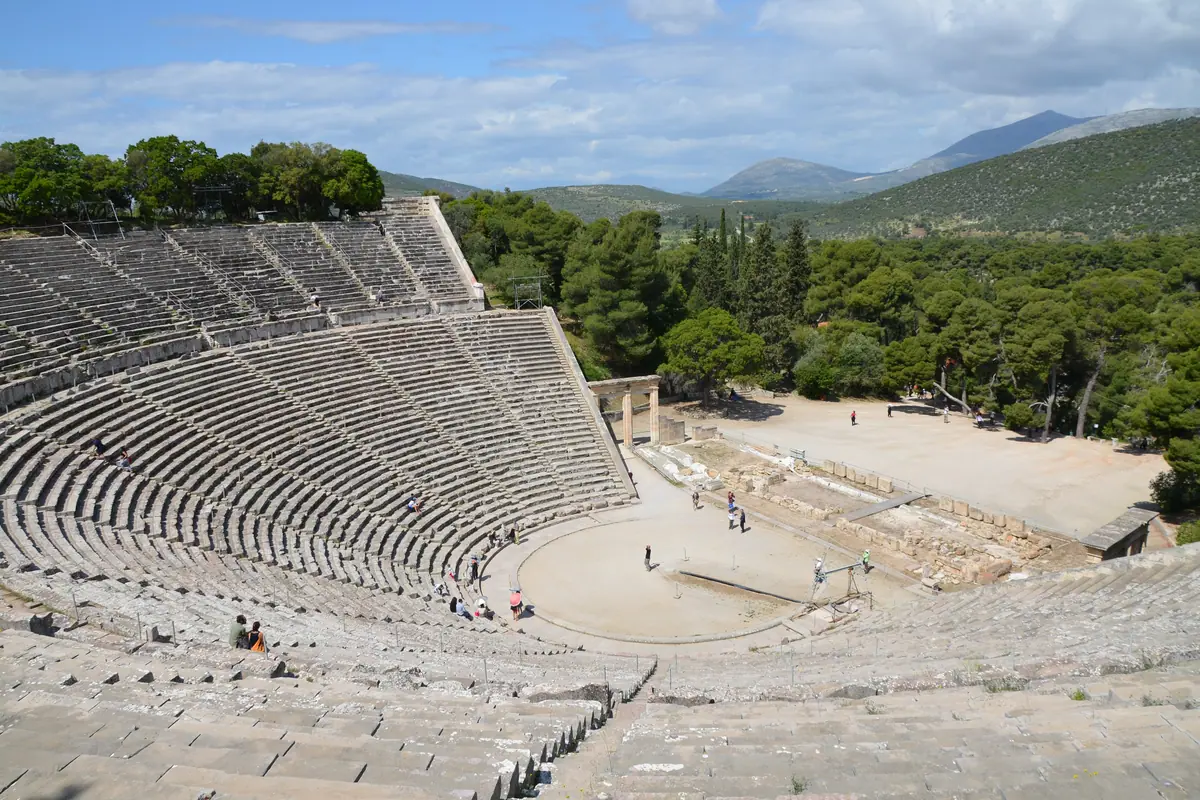
Outside Easter, the calendar is full of panigyria — village festivals held for a patron saint, with long tables, roast meat, clarinet and violin, and circle dancing that will absorb you whether or not you know the steps. Patras throws the country's biggest carnival in the weeks before Lent, with floats and costumed parades. Summer's full moon is marked by concerts in ancient theatres, most famously at Epidaurus, where the acoustics of the stone auditorium are the stuff of legend, and at the Odeon of Herodes Atticus beneath the Acropolis.
Seasons shape everything else. Grapes are picked in late August across Crete and the Nemea wine country; olives are harvested from November to January around Kalamata; chestnuts and wild mushrooms appear in the Zagori villages in autumn. Name days are celebrated more seriously than birthdays — if you're invited to a home, bring a small sweet or flowers rather than a bottle, and arrive ready to stay late.
Beyond the Islands: Mountains, Monasteries and the North
Mainland Greece is where the country gets quiet and strange. Two and a half hours northwest of Athens lies Delphi, where the Temple of Apollo, the Athenian Treasury and the Tholos at Marmaria sit on a slope above a valley of olive trees, with the bronze Charioteer waiting in the site museum. Further north, Meteora's monasteries balance on sheer rock pillars above Kalambaka — modest dress is required, skirts are lent at the door, and each monastery keeps its own visiting days, so plan around them.
Thessaloniki is Greece's second city and its best eating city, with the White Tower on the waterfront, the lanes of Ano Poli climbing to the Byzantine walls, Aristotelous Square facing the gulf, and the Rotunda and Roman Forum in between. Order bougatsa — filo filled with warm semolina cream — for breakfast, and spend the evening in the covered markets and mezedopolio where the city eats late.
Further out are the Zagori stone villages and the Vikos Gorge, one of the deepest gorges in the world relative to its width, crossed by old arched bridges at Kipi. Mount Olympus rises above Litochoro, the Pelion peninsula hides chestnut villages and tsipouro distilleries between beaches, and in the Peloponnese, Nafplio's Palamidi fortress and offshore Bourtzi castle sit within an easy drive of Mycenae, Epidaurus and ancient Olympia. A rental car turns all of this into a single, unhurried loop.
Practical Culture: How to Eat, Travel and Behave Like a Local
Timing is the single biggest decision. Late April to June brings wildflowers, mild walking weather and a sea that warms by the end of May; September and October bring warm water, the grape and olive harvest and softer light with fewer people. July and August are hot — often 35°C and above — and the meltemi wind keeps the islands bearable, but ferries, rooms and sunset tables sell out weeks in advance. August 15, the Assumption, is the absolute peak: island villages fill with returning families and parts of Athens quietly shut.
On the water, high-speed and conventional ferries connect Piraeus and Rafina to the islands; book well ahead for summer weekends and holiday periods, expect occasional weather delays, and be at the port 45 to 60 minutes before departure. Archaeological sites generally open early and close around sunset in summer, with shorter hours from November to March, and some smaller museums shut one weekday — usually Monday or Tuesday — so check before you build a day around one.
At the table, the etiquette is relaxed but real: don't arrive early for dinner, don't rush the bill, and leave a small tip on top of the total rather than splitting hairs. Tap water is drinkable in Athens and most mainland and island towns, though some small islands rely on desalinated or shipped water and locals drink bottled. Cover shoulders and knees in churches and monasteries, carry cash for village bakeries and island taxis, and pack swim shoes for pebble beaches. Learn 'kali orexi' and 'efharisto', and you'll be treated as a guest rather than a customer.
Frequently asked questions
What is the best time of year to visit Greece for food and local culture?
Late April to June and September to October are ideal: mild weather, harvest season, fewer crowds and village festivals still in full swing. Orthodox Easter, which falls between late March and early May, is the single most atmospheric week of the year for food, processions and family celebrations. Avoid mid-August unless you have booked everything months ahead.
How many days do I need to combine Athens with an island?
Allow three or four full days in Athens for the Acropolis, the Acropolis Museum, the Ancient Agora, Plaka and Monastiraki, then four or five days per island if you want to eat and swim properly rather than sprint. A realistic minimum is ten days for Athens plus two islands. Ferries from Piraeus take roughly three to five hours to Mykonos and five to eight hours to Santorini, depending on the vessel.
What should I eat in Greece beyond moussaka and souvlaki?
Look for saganaki fried cheese, grilled octopus, horta greens, gemista stuffed vegetables, slow-roasted lamb kleftiko, Cretan dakos, Santorini fava, Sifnos chickpea stew and Mykonos kopanisti. Finish with loukoumades honey doughnuts, galaktoboureko custard filo or a scoop of spoon sweets. Drink Assyrtiko wine, ouzo with ice, or the local tsipouro and raki that arrives unasked.
Do I need to book ferries, sites and restaurants in advance?
In July and August, yes. Reserve ferry tickets, island accommodation and any caldera-view or harbour-front dinner table weeks in advance, and buy timed entry for the Acropolis early in the morning. In spring and autumn you can be far more spontaneous, though Easter week and the August 15 holiday still require planning because domestic travel peaks sharply.
What are the key etiquette points for tavernas, churches and village festivals?
Dinner starts around nine and the table is yours for the night, so don't ask for the bill mid-meal. Leave a small tip on top of the total, accept the complimentary dessert or raki, and say 'kali orexi' before eating. Dress modestly in churches and monasteries, keep your voice low, and if you're invited to a panigyri or a name-day celebration, bring a small sweet and be ready to dance.
Sort the rest of your trip
Everything for Greece, in one place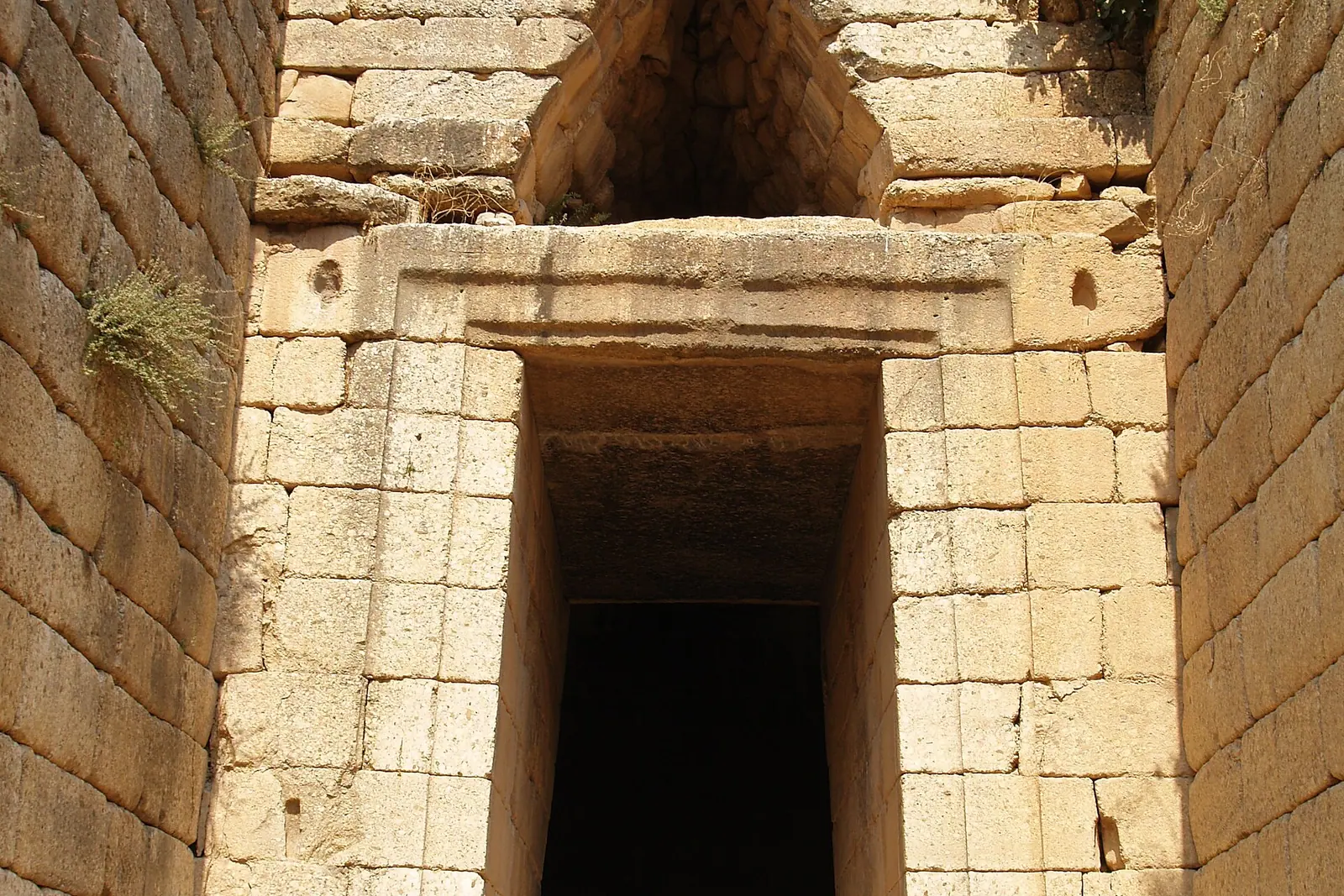
Stay in Greece
Hotels, guesthouses and apartments — compared in one search.
Search hotels
Transfer in Greece
Private driver waiting on arrival — no queues, no surprises.
Book a transfer
Stay online in Greece
Travel eSIM — data the moment you land, no roaming bills.
Get an eSIMMore guides in Greece

Where to Stay in Greece: Hotels by Region and the Must-See Sights Nearby

One Week in Greece by Plane: Athens, Santorini and Crete Itinerary

One Week in Greece by Flight: An Island-Hopping Itinerary

Best Activities in Greece: From the Acropolis to the Santorini Caldera

Top Things to Do in Greece: Must-See Landmarks and Islands