Iran is a country you taste before you fully understand it — saffron-steeped rice, smoky aubergine, cardamom tea poured into tiny glasses in a tiled tea house. Travel here with an appetite and the landmarks become a backdrop to something warmer: long meals, louder conversations and hospitality that refuses to be rushed.
The Persian Table: Why Every Meal Feels Like a Ceremony
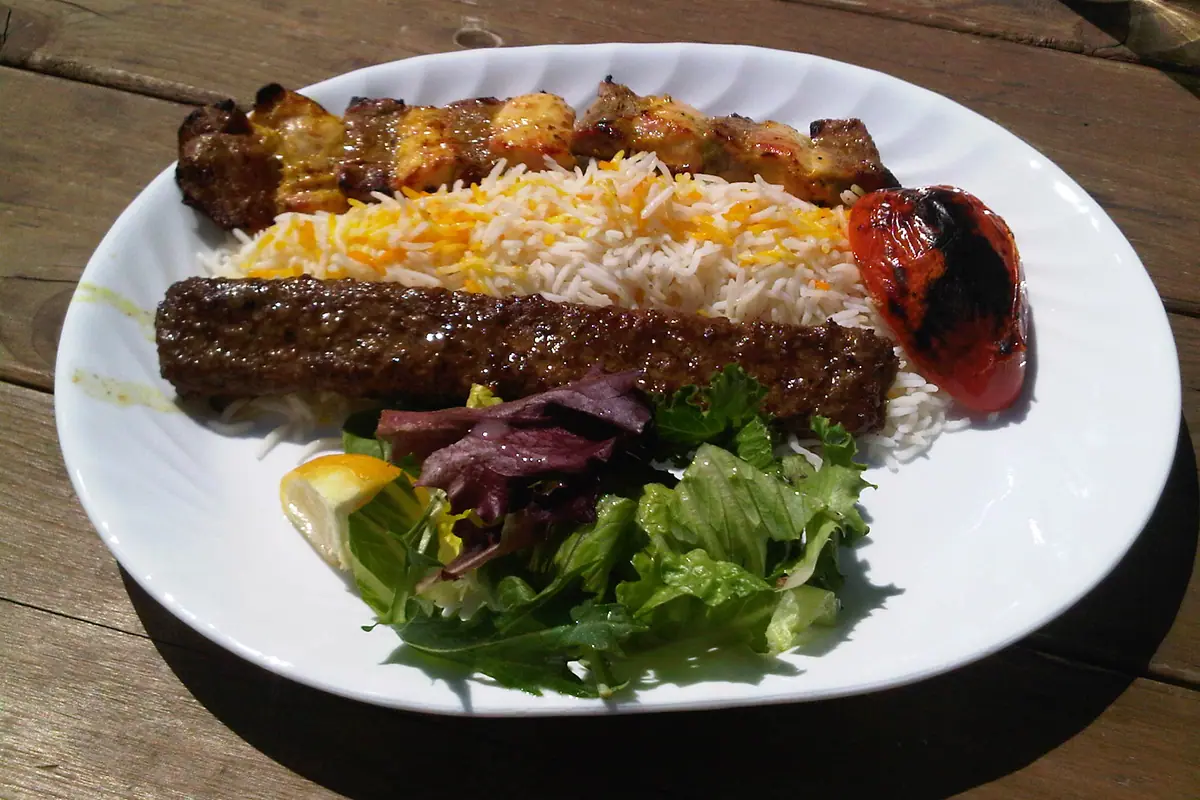
Persian cooking is built on rice, and rice here is an art form. Chelow arrives as a mound of long, separate grains, perfumed with saffron and butter, with the golden crust called tahdig lifted out of the pot like a prize and fought over politely. It comes under stews — khoresht-e ghormeh sabzi, a dark tangle of herbs, kidney beans and dried lime; fesenjan, ground walnut and pomegranate molasses simmered with poultry until it turns almost black; gheymeh, yellow split peas in tomato with a crown of crisp fried potatoes. Order a mixed grill and you meet koobideh, minced meat wrapped around flat skewers, and jujeh, saffron-marinated chicken, both charred over open coals and served with grilled tomatoes that you mash into your rice yourself.
Lunch is often the main event, taken between one and three in the afternoon, and it can stretch for two hours. In traditional dining rooms you sit on carpeted platforms around a spread of sabzi khordan — herbs, radishes, feta and walnuts — plus torshi pickles, yogurt with cucumber, and stacks of flatbread. Sangak, baked on a bed of hot pebbles, comes out blistered and slightly smoky; barbari is softer and sesame-topped, bought warm from a neighbourhood bakery on the walk home.
Then there is tea. Chai is served constantly, in small flared glasses with sugar cubes you hold between your teeth rather than stir in, and it is rarely drunk alone — with gaz from Isfahan, qottab from Yazd, or pistachios and dried mulberries. In summer, locals switch to doogh, a salted yogurt drink that sounds strange and tastes exactly right, or faloodeh, frozen starch noodles in rose water and lime. A tour of Iran that skips these small rituals is only half a tour.
Tehran: Grand Bazaars, Tea Houses and a City That Eats Late
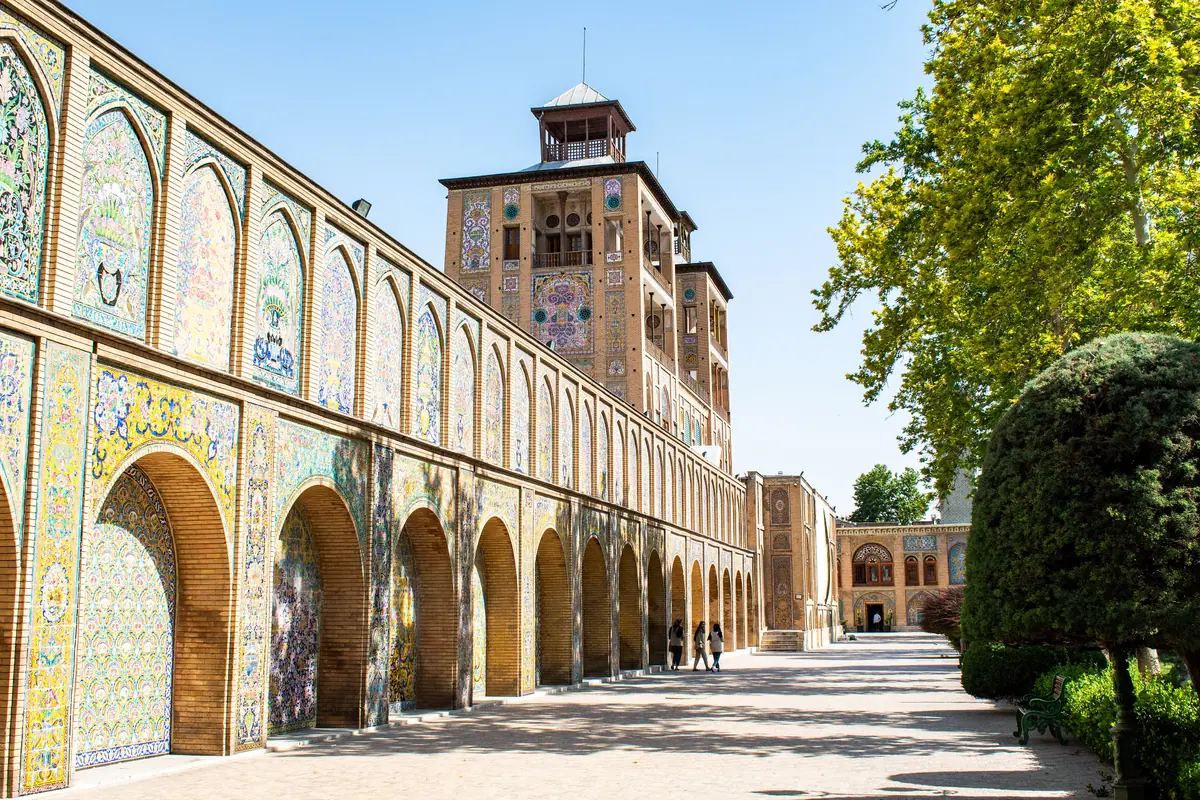
Start in the capital, where the old and the new sit shoulder to shoulder. The Grand Bazaar is a covered city of brick vaults and caravanserais, its spice corridors smelling of dried lime, turmeric and rose petals, and it spills out near Golestan Palace, a Qajar complex of mirrored halls, tiled courtyards and the marble throne. Give the bazaar two to three hours; give Golestan at least ninety minutes, ideally in the morning when the light hits the tiles.
For a different slice of Tehran, head north to Tajrish Bazaar, where the crowd is younger and the stalls pile up sour cherries, fresh walnuts and sacks of saffron. Nearby, the lanes of Darband climb into the foothills of the Alborz, lined with open-air restaurants where families sit cross-legged on carpets until midnight over kebab, tea and bubbling water pipes. Farther into the city, the National Museum of Iran gives the archaeology that makes sense of everything you'll see later in Persepolis, and the Tabiat Bridge offers a nighttime view of the whole sprawling metropolis.
Tehran is also where you'll first meet the chaykhaneh, the traditional tea house. Some are tucked into bazaar corners, others into converted bathhouses and garden pavilions. Order dizi — a stone pot of lamb, chickpeas and broth that you mash with a pestle, then eat in stages with bread, raw onion and pickles — and you'll understand why the meal is a performance as much as a dish.
Isfahan and Kashan: Safavid Splendour, Rose Water and Gaz
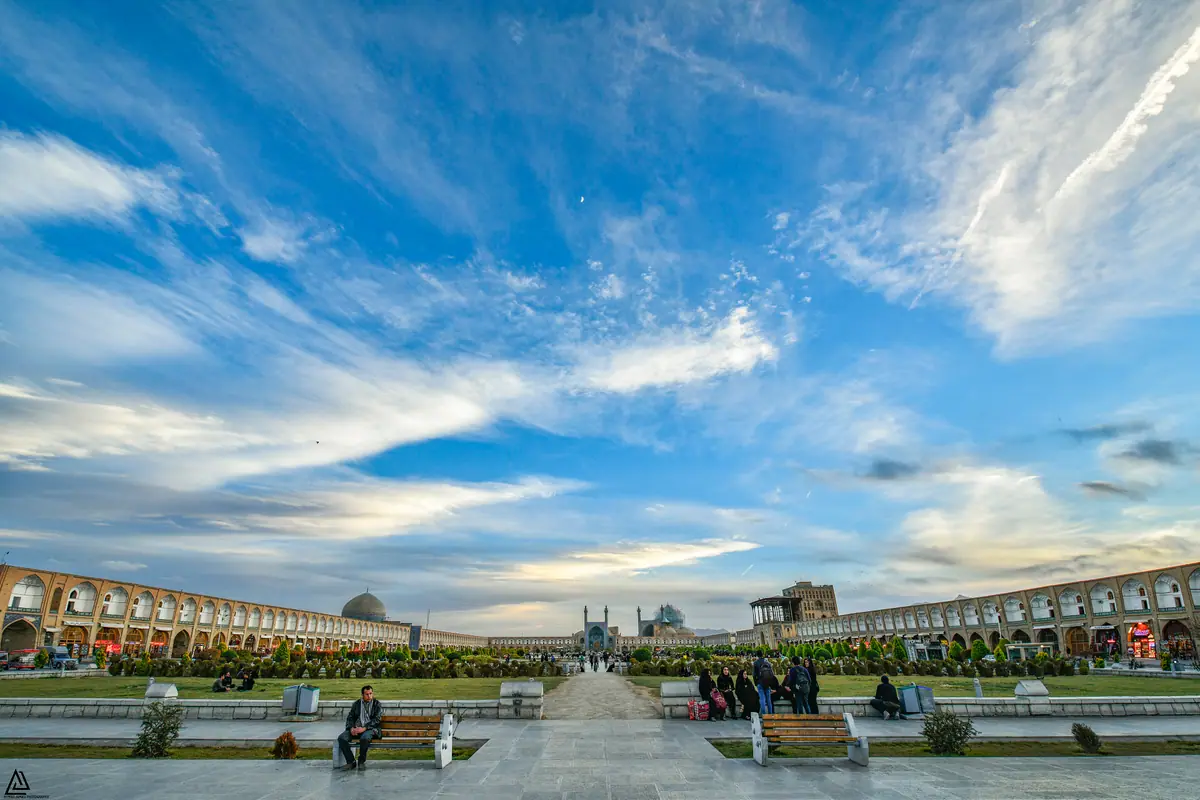
Isfahan is the showpiece, and Naqsh-e Jahan Square is its stage — a vast UNESCO-listed plaza framed by the Imam Mosque with its towering turquoise portal, the smaller, more intimate Sheikh Lotfollah Mosque whose interior dome changes colour through the day, and the Ali Qapu Palace, where you climb to a music room of carved plaster niches to look out over the square. Wander the Qeysarieh Bazaar at the square's northern edge for miniature painting, copperwork and the almond-and-rosewater confection called gaz.
Come evening, walk the Zayandeh River's bridges: Si-o-se-pol, with its 33 arches, and the older Khaju Bridge, where groups gather on the stone steps to sing. Across the river in the Armenian quarter of Jolfa, the Vank Cathedral mixes Persian tilework with frescoes and runs a small museum; the neighbourhood's cafés are a good place to slow down. Isfahan deserves two full days minimum, three if you want to add the Chehel Sotoun pavilion and the Jameh Mosque, one of the most important in the country.
Kashan, a few hours north on the road to Tehran, is the counterpoint. Its merchant houses — the Tabatabaei House, the Borujerdi House — are masterpieces of badgir windcatchers, stained glass and sunken gardens; the Sultan Amir Ahmad Bathhouse shows what a hammam looked like when bathing was a social occasion; and Fin Garden, with its cypress-lined water channels, is the classic spot for a late-afternoon stroll. If you come in May, the nearby village of Qamsar distils rose water in copper stills, and the whole valley smells like the inside of a perfume bottle.
Shiraz and Persepolis: Poetry, Gardens and Ancient Stone
Shiraz is the city of poets and gardens. The Nasir al-Mulk Mosque, known for its stained-glass windows that flood the prayer hall with colour at sunrise, is best visited early before the light softens. Hafez's tomb sits under a tiled canopy in a garden where locals gather to read verse aloud; Saadi's tomb is quieter but no less loved. The Eram Garden, with its cypress avenue and orange trees, and the walled Vakil Bazaar, where you can buy dried limes and hand-woven rugs, round out a day or two in the city.
About an hour outside Shiraz, Persepolis is the reason many people come to Iran at all. The ceremonial capital of the Achaemenid empire, its stairways are carved with processions of delegates bringing tribute — Lydians, Ethiopians, Bactrians — while the Gate of All Nations and the tomb of Darius at nearby Naqsh-e Rostam complete the picture. Budget three to four hours on site, and go early: by midday the stone radiates heat. Pasargadae, the older capital and resting place of Cyrus the Great, is a further hour north and works well as a stop en route to Yazd.
Shirazi food has its own personality. Try kalam polo, rice cooked with cabbage and herbs, and ash-e sabzi, thick with greens and beans. Finish with faloodeh in a garden café — rose water, lime and thin noodles, the most refreshing thing you will eat in a hot country.
Yazd, Kerman and the Desert: Windcatchers, Sweets and Silence
Yazd is the desert made habitable by cleverness. Its skyline is a forest of badgirs, windcatchers that pull cool air down into houses and water reservoirs, and the Jameh Mosque of Yazd carries the tallest pair of minarets in the country above a portal of blue tilework. The Amir Chakhmaq Complex, with its three-storey facade lit at night, anchors the old town, while the Dowlat Abad Garden keeps a tower of windcatchers above a long reflecting pool. Just outside the city, the Towers of Silence and the fire temple of the Zoroastrian community explain a faith that shaped this region long before Islam arrived.
Eat your way through the old town's confectioners: qottab, a crescent-shaped pastry stuffed with almond and cardamom, and pashmak, spun sugar that dissolves the moment it touches your tongue. Local bakeries also produce a dense, slightly sweet bread that keeps for days — useful if you're heading further into the desert.
Kerman, a day's drive south, adds the Ganjali Khan Complex, a bazaar-and-bathhouse ensemble around a lively square, and the Shazdeh Garden at Mahan, an oasis of cypress and cascading water that looks impossible in its surroundings. Farther out lie the mud-brick citadel of Rayen and, when restoration allows, the vast Arg-e Bam. Winter, roughly November to February, is the season for this region; summer here is punishing.
Festivals, Seasons and the Etiquette of Hospitality
Time your trip around a celebration and Iran becomes a different country. Nowruz, the Persian New Year at the spring equinox in late March, empties offices and fills roads for two weeks — families travel, historic sites get busy, and every home sets out a haft-sin table of seven symbolic items. Chaharshanbe Suri, the fire-jumping night before Nowruz, is street theatre at its most joyful. In late December, Yalda Night marks the longest night with pomegranates, watermelon and poetry readings. Autumn brings the saffron harvest in Khorasan, when fields turn violet for a few weeks in late October and November; May belongs to the rose-water distilleries around Kashan.
The best months overall are March to May and September to November: mild in the central cities, pleasant in the desert, and far kinder than the July heat of Isfahan or Yazd. Winter is the moment for the south — the Persian Gulf islands and the warmer coast — while the northwest around Tabriz turns genuinely cold. Build in rest days. Distances are long, internal flights save a lot of time, and a route of Tehran, Kashan, Isfahan, Yazd and Shiraz usually needs ten days to two weeks to feel unhurried.
On etiquette: dress modestly, with women covering hair and arms and everyone avoiding shorts in public. Alcohol is not available, and pork is absent from menus. Expect taarof, the elaborate courtesy that means a shopkeeper may refuse payment two or three times before accepting it. Accept tea when it's offered, take your shoes off when you enter a carpeted dining platform, and photograph people only after asking. Do that, and the hospitality you've read about turns out to be entirely real.
Frequently asked questions
When is the best time to visit Iran for food and culture?
March to May and September to November are ideal — mild weather in Tehran, Isfahan, Shiraz and Yazd, and a full calendar of harvests and festivals. Late March coincides with Nowruz, which is spectacular but crowded. Late October and November is saffron harvest season in Khorasan; May is rose-water season around Kashan. Winter suits the Persian Gulf coast, while midsummer in the central desert cities is brutally hot.
Which dishes should I not leave Iran without trying?
Chelow kabab with saffron rice and tahdig, ghormeh sabzi, fesenjan, dizi eaten with bread and raw onion, ash reshteh in winter, and mirza ghasemi from the Caspian region. For sweets, look for gaz in Isfahan, qottab in Yazd, and faloodeh in Shiraz. Drink doogh with grilled meat and finish every meal with tea and dried fruit.
How many days do I need for a first food and culture tour?
Ten days is the practical minimum for Tehran, Kashan, Isfahan, Yazd and Shiraz, with a half-day at Persepolis. Two weeks lets you slow down, add a desert stay, spend an evening at the Khaju Bridge in Isfahan and still have time for a hammam and a proper bazaar wander. Domestic flights cut the long desert drives considerably.
What should I know about dress and local customs?
Women cover their hair with a scarf and wear loose clothing over arms and legs; men should avoid shorts. Alcohol and pork are not available, and handshakes between unrelated men and women are often avoided. Remove shoes before stepping onto carpeted dining platforms, ask before photographing people, and accept offered tea — refusing outright can read as rude.
Can I travel independently or should I join a guided tour?
Both work. Guided tours handle language, transport and the small courtesies of taarof, and often arrange home-cooked meals, carpet workshops and rose-water distillery visits you would struggle to find alone. Independent travellers manage fine on internal flights, shared taxis and long-distance buses, but a local guide is genuinely worth it for Persepolis, the Yazd old town and any Zoroastrian or nomad site.
Sort the rest of your trip
Everything for Iran, in one place

More guides in Iran
Top Things to Do in Iran: Landmarks from Persepolis to Isfahan
Hotels in Iran: Where to Stay and the Sights You Shouldn't Miss
One Week in Iran: The Perfect 7-Day Itinerary from Tehran to Shiraz
One-Week Iran Itinerary by Plane: Tehran, Shiraz, Isfahan & Yazd
Best Time to Visit Iran: A Season-by-Season Guide to Weather, Sights and Hotels