Zambia is enormous, and its wildest corners sit a day's hard drive apart — which is why so many travellers see it from the air. This is a one-week loop that threads bush planes between Mosi-oa-Tunya, the Lower Zambezi, South Luangwa and the Busanga Plains, so your days go to game drives rather than gravel roads.
The week at a glance: a flying loop through Zambia's wild heart
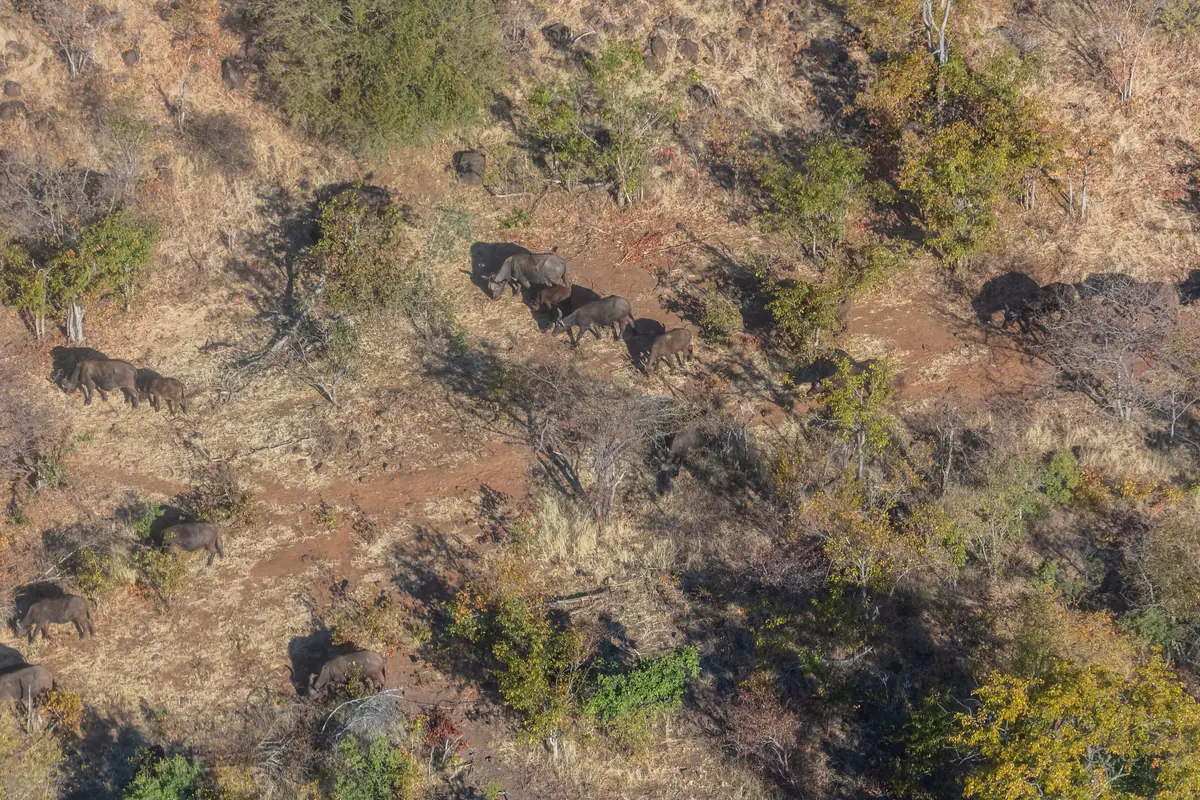
Zambia covers a chunk of southern Africa roughly the size of Türkiye, and its headline parks are flung far apart: Victoria Falls in the far south-west, the Lower Zambezi near the Zimbabwean border, South Luangwa in the east, and the vast Kafue system in the centre-west. A road transfer between two of them can swallow eight to ten hours, and after a rough stretch of tarmac you arrive too tired to enjoy the golden hour. Light aircraft compress those journeys into forty-five minutes of low-level scenery, often with elephants or herds of buffalo visible from your window as you come in to land.
The classic seven-day shape uses Lusaka as the hinge — Kenneth Kaunda International Airport takes the regional jets, while Harry Mwanga Nkumbula International Airport at Livingstone handles the falls end. From there, charter links run onward to the Royal and Jeki airstrips in the Lower Zambezi, Mfuwe for South Luangwa, and the dirt strip that serves the Busanga Plains in Kafue National Park. Flights are short, unpressurised hops in single- or twin-engine aircraft, usually with a pilot and a handful of other passengers, and they almost always depart in the cooler morning hours.
Plan the loop so you fly roughly in a circle rather than doubling back: Livingstone for two nights, the Lower Zambezi for one or two, South Luangwa for two, and a final flourish in Kafue or a green-season wetland. It sounds rushed on paper, but because the flying replaces the driving, each move costs you half a morning instead of a whole day.
Days 1–2: Livingstone and the thunder of Mosi-oa-Tunya
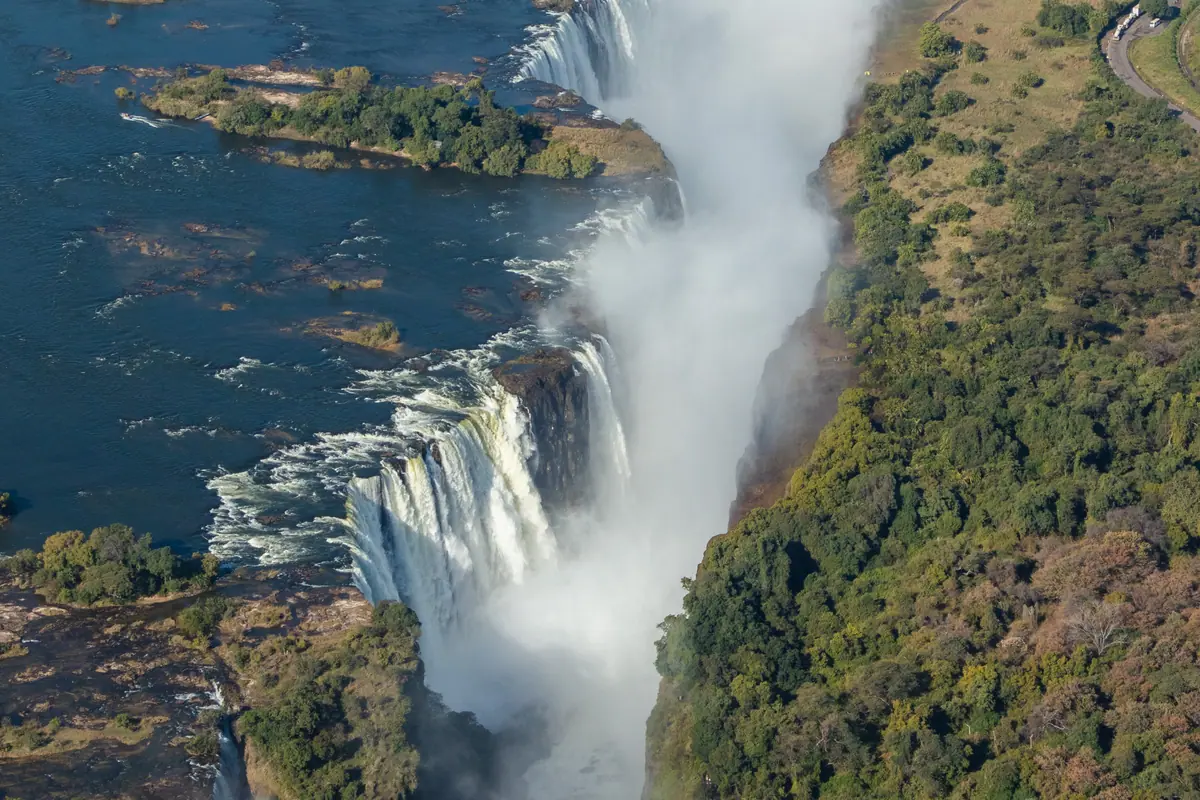
Your week opens with the biggest set piece in the country. Victoria Falls — Mosi-oa-Tunya, 'the smoke that thunders' — pours the entire Zambezi over a basalt ledge barely a mile wide, and the Zambian side puts you almost on top of it. Walk the network of paths through Mosi-oa-Tunya National Park from the Knife Edge Bridge past the Eastern Cataract, where the spray soaks you within seconds and rainbows hang in the mist. Peak flow from roughly February to May is a full-throated roar; from September to December the river drops and Livingstone Island trips reopen, letting you swim in the Devil's Pool right at the lip of the falls while the water slides past a few feet away.
Leave the second half of your stay for the things beside the falls. The national park on the Zambian bank protects a small population of white rhino, tracked on foot with a guide — one of the few places in the region where you can walk up to one. A late-afternoon cruise on the Zambezi above the falls brings hippos, fish eagles and a very good sundowner, and Livingstone Museum, the country's oldest, holds the personal papers and memorabilia of the explorer the town is named after. Mukuni Village, just outside town, offers a genuine look at local craft and daily life rather than a staged performance.
Two nights is the right amount: one for the falls themselves, one for the river and the rhinos. Sleep in or near Livingstone, where lodges range from riverside tented camps to colonial-style hotels, and keep your first morning free — the walk through the rainforest is best before the tour buses arrive around mid-morning.
Day 3: into the Lower Zambezi by bush plane
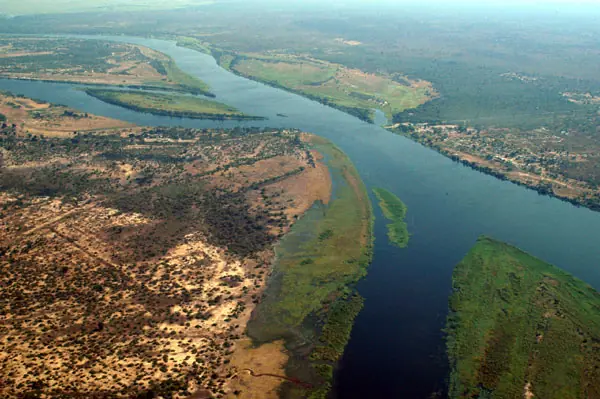
From Livingstone you fly north-east, usually touching down briefly in Lusaka before a short hop east to the Lower Zambezi, where the aircraft settles onto the Royal or Jeki airstrip and the escarpment rises behind you like a wall. This is Zambia's water park: the Zambezi, broad and slow here, forms the border with Zimbabwe, and across the channel you can see the floodplain of Mana Pools on the far bank. The national park and the adjoining Chiawa Conservancy protect big concentrations of elephant, buffalo, hippo and lion, along with a healthy population of leopard along the wooded ridges.
Do this section from a canoe rather than a vehicle. Multi-hour paddles drift downstream past grunting hippo pods while elephants cross in front of you and fish eagles call from the treeline — it is the closest thing in Africa to being inside the landscape rather than watching it through a windscreen. Back on land, night drives are permitted here, so spotlighting after dinner adds genets, civets and hunting lions to the list, and the fishing for tigerfish in the channels is legendary among anglers.
One night works if you fly in early and out late, but two nights is far better: it lets you split your time between a morning on the water and an afternoon game drive, and gives weather a chance to settle before the next leg. Stay in one of the small riverside camps strung along the bank, most of which are reached by boat from the airstrip.
Days 4–5: South Luangwa, where the walking safari began
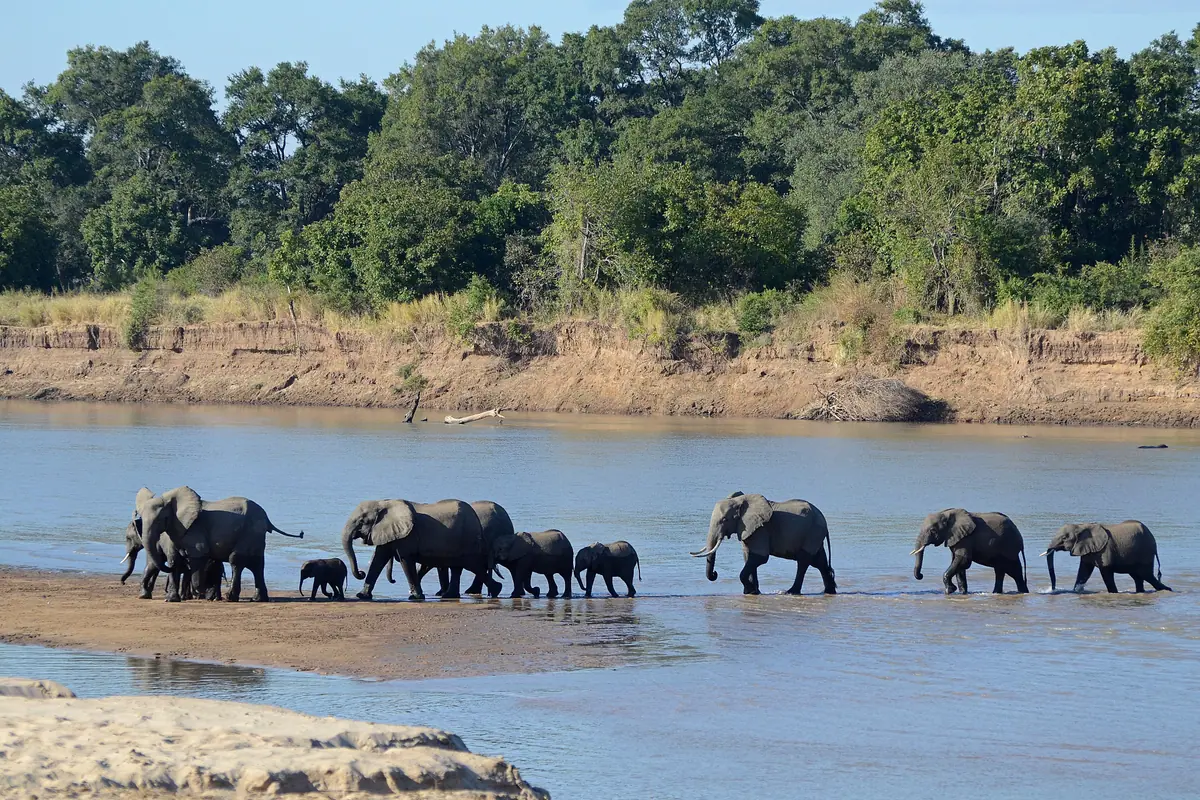
A forty-five-minute flight east brings you to Mfuwe, the gateway to South Luangwa National Park — the place where the guided walking safari was pioneered, and still the finest place on the continent to do one. The Luangwa River meanders across the valley floor in great oxbow loops, and as the dry season bites from July onwards, the lagoons shrink and the animals gather: elephant herds in the hundreds, buffalo in the thousands, and one of the densest leopard populations anywhere in Africa.
Spend your mornings on foot. Walking with an armed scout and a guide, you read the ground — hyena tracks, a genet's latrine, the alarm call of a puku — in a way that is impossible from a vehicle. Afternoon and evening drives take over for the big sightings, and after dark the park reveals genets, white-tailed mongoose and, if you are fortunate, a leopard draped along a branch. Keep an eye out for the subspecies found only here: Thornicroft's giraffe, Crawshay's zebra and Cookson's wildebeest, none of which you will see elsewhere.
Base yourself in or around Mfuwe, or push further north into the quieter Nsefu Sector for a wilder feel, and allow two nights minimum. The dry months from July to October deliver the best game viewing; the emerald season from January to March turns the valley green, fills the lagoons and brings in migratory birds, but many walking camps close.
Days 6–7: the Busanga Plains — or a green-season wetland finale
Your final leg heads west into Kafue National Park, Zambia's oldest and largest, and specifically to the Busanga Plains in the north. For a few months each year, from roughly July to October, this floodplain dries into a patchwork of grassy islands and channels where red lechwe wade in their thousands, roan and sable antelope graze the woodland edges, and lions — including the famous tree-climbing prides of the Busanga — hunt across open ground that looks more like the Okavango than anything in East Africa. A dawn hot-air balloon over the plains, if you can arrange one, is the single most spectacular way to end the week.
If your dates fall outside the dry season, swap Kafue for one of Zambia's astonishing green-season spectacles. Between roughly October and December, Kasanka National Park hosts the largest mammal migration on earth — several million straw-coloured fruit bats streaming out of a small patch of mushitu forest at dusk. Over the same months, Liuwa Plain in the far west fills with wildebeest moving across the grassland, and the Bangweulu Wetlands become the best place in Africa to find the shoebill, a grey, statue-still giant of a bird that lurks in the papyrus.
Note that North Luangwa, the country's other great wilderness, runs on walking safaris alone, with no game drives permitted — worth knowing if you are tempted to add a third park to a week that is already full.
Flight logistics, luggage and timing your week to the season
Charter flights are arranged through the camps and lodges you are staying with, and they are sold per seat on scheduled shuttle runs or as private hops, so your itinerary has to be built around their departure times rather than the other way round. Baggage is the thing that catches people out: the standard allowance is around 15 kilograms per person in a soft-sided duffel bag, because there is simply nowhere to stow a hard-shell suitcase in the hold. Pack accordingly and leave anything extra in storage at a Lusaka or Livingstone hotel. Flights are visual-only, so they do not operate after dark and can be delayed by storms or thick haze; build a buffer night in Lusaka before any long-haul connection home.
For timing, the sweet spot for this loop is the dry season from June to October, when the bush thins, animals crowd the remaining water, and mosquitoes are at their least troublesome. July to October is peak, so book camps and charter seats six to twelve months ahead. The emerald season from November to April brings dramatic skies, newborn animals and lower rates, but some bush camps close and dirt airstrips can turn sticky — which is precisely when you should be pointing at Kasanka, Liuwa Plain or Bangweulu rather than the Busanga Plains.
Finally, sort the paperwork early. Zambia issues visas electronically and on arrival for many nationalities, but the rules shift, so confirm your own status with the Zambian authorities before you fly. A yellow fever certificate is required if you are arriving from a country where the disease is present, malaria prophylaxis is advisable for all the parks on this route, and comprehensive travel insurance — including cover for light aircraft and medical evacuation — is non-negotiable in a country where the nearest hospital can be an hour's flight away.
Frequently asked questions
Do I really need internal flights to see Zambia's parks in a week?
You do not need them, but the alternative is spending two full days of a seven-day trip on the road. Zambia's parks sit hundreds of kilometres apart, and transfers between Livingstone, the Lower Zambezi and South Luangwa routinely take eight hours or more on mixed tarmac and gravel. Short charter hops turn those into thirty- to sixty-minute flights, which is why a flying itinerary can fit four distinct regions into one week.
What is the luggage limit on Zambia's bush flights?
The standard allowance is around 15 kilograms per person, packed in a soft-sided duffel bag rather than a rigid suitcase, plus a small day pack. Because the aircraft are small, weight is distributed carefully and heavier passengers may be seated forward. Most travellers leave a second bag in storage at their hotel in Lusaka or Livingstone and collect it on the way home.
When is the best time of year for this itinerary?
June to October is the classic window: the bush thins, game concentrates around shrinking water sources, and the risk of rain delays on dirt airstrips is low. July to October is the busiest and most expensive stretch, while November to April suits travellers chasing green-season spectacles such as the Kasanka bat migration, the Liuwa Plain wildebeest movement or shoebill sightings in the Bangweulu Wetlands.
Can you combine Victoria Falls with a safari in a single week?
Easily. Two nights in Livingstone covers the falls, the rainforest walk, a Zambezi sunset cruise and a rhino-tracking excursion, and the following morning's flight north takes under two hours to reach the safari circuit. The main thing to watch is water levels at the falls: February to May delivers maximum volume and spray, while September to December is better for Livingstone Island and the Devil's Pool.
Are bush flights in Zambia subject to delays?
Yes, occasionally. The aircraft fly under visual flight rules, so departures are grounded after dark and can slip during heavy rain, haze or strong winds. Morning departures are generally smoother and less likely to be disrupted, and most operators simply reshuffle the day's schedule as conditions change. A spare night in Lusaka before an international flight home is a sensible precaution.
Sort the rest of your trip
Everything for Zambia, in one place
Stay in Zambia
Hotels, guesthouses and apartments — compared in one search.
Search hotels
Transfer in Zambia
Private driver waiting on arrival — no queues, no surprises.
Book a transfer
Travel insurance
Medical cover, delays and lost baggage — sorted before you go.
Get covered