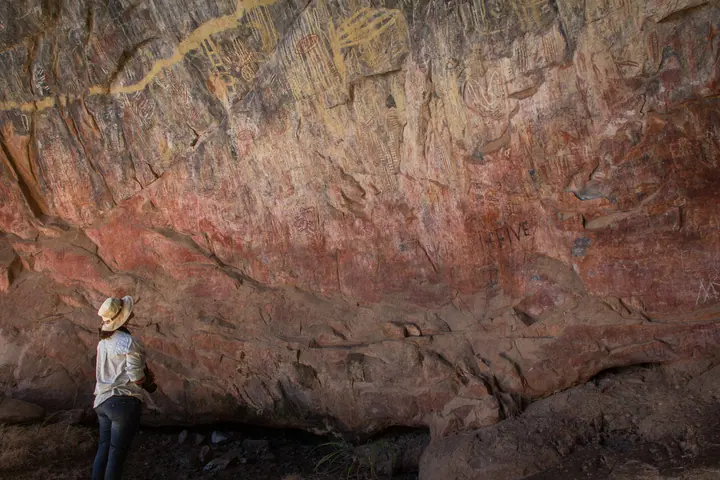
Zambia is the Africa that still feels unhurried: a country where a plume of spray rises a kilometre high above the Zambezi, where leopards pad past your tent on a night drive, and where entire plains flood with water, birds and a million fruit bats. It rewards travellers who go further and stay longer.
Victoria Falls and the Zambezi Gorge
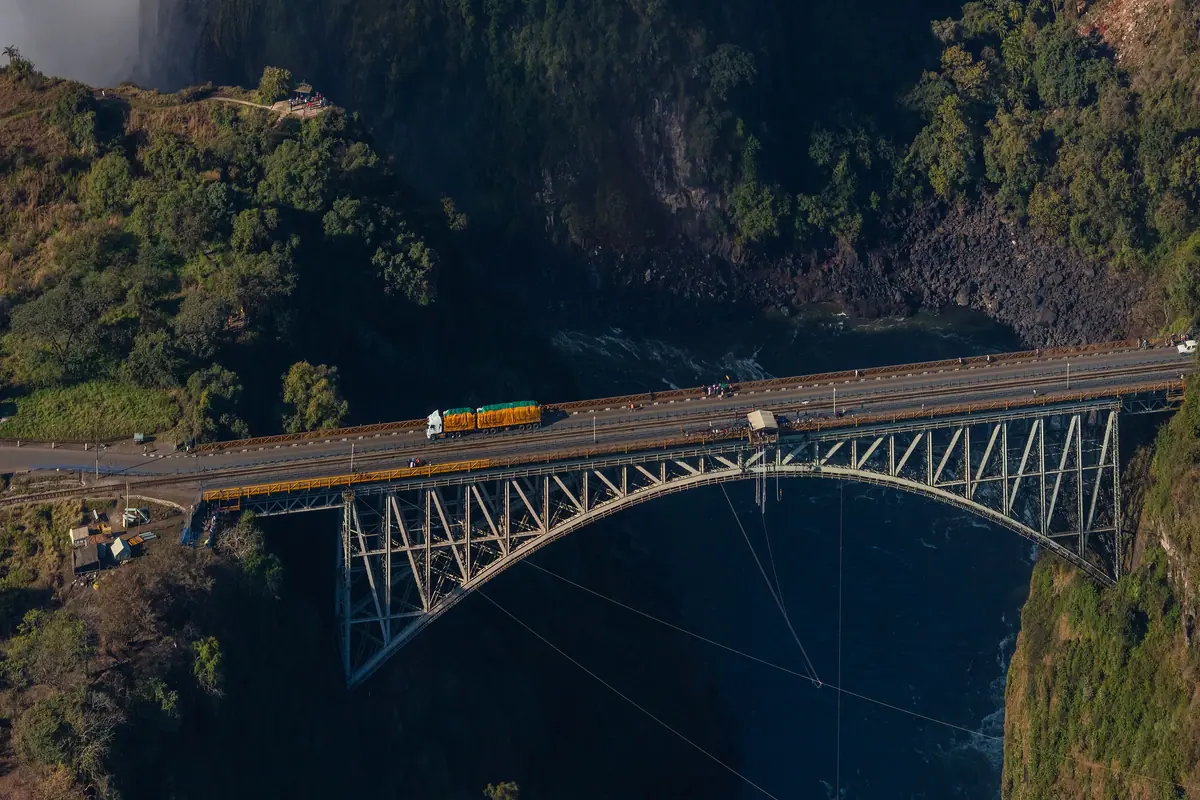
No first visit to Zambia is complete without Mosi-oa-Tunya — "the smoke that thunders" — the local name for Victoria Falls, which the Zambezi pours over in a curtain roughly 1,700 metres wide. The Zambian side puts you on the lip of the falls rather than opposite them: walk the paved trail from the entrance to the Knife Edge Bridge, where spray soaks you to the skin in high water and the gorge below opens into a green chasm of basalt and rainforest. Allow two to three hours to walk the full circuit properly, and come early — the light is best before 10am and the crowds thin out considerably.
The Zambezi's seasonal rhythm dictates everything here. From roughly February to May the river is at its fullest and the spray can rise hundreds of metres, often obscuring the falls themselves; bring a waterproof cover for your camera and expect to get drenched. From September to December the flow drops and the rock face is revealed in full — this is when Livingstone Island trips run and when the famous Devil's Pool, a natural rock lip right at the edge of the cascade, becomes accessible with a guided swim. It is genuinely thrilling, and only permitted with a licensed guide who times the currents.
Adrenaline is the other currency of the gorge. The stretch of the Zambezi below the falls is one of the world's great white-water rafting runs, with big-volume rapids graded up to Class V, typically offered as a full day with a steep hike in and out of the canyon. If you prefer your thrills horizontal, microlight and helicopter flights lift off from the nearby airfield and give you the one view you cannot get from the ground: the full zigzag of the gorge and the falls steaming into it. Sunset cruises on the river above the falls, gin and tonic in hand as hippos yawn along the bank, are the gentle counterpoint.
South Luangwa National Park: The Home of the Walking Safari
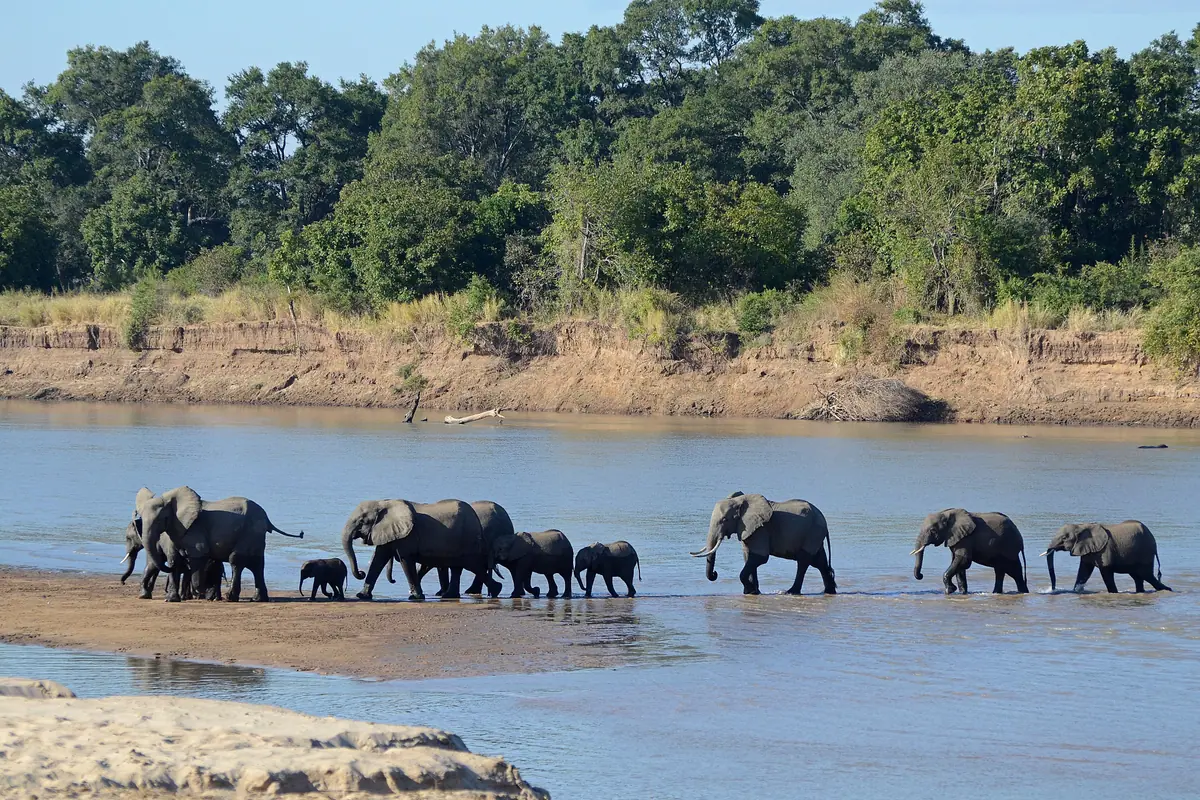
South Luangwa is where the walking safari was pioneered, and it remains the finest place in Africa to leave the vehicle behind. The park runs along the Luangwa River, whose oxbow lagoons and sandbanks concentrate wildlife into a strip that is almost impossibly productive: elephant herds crossing in slow procession, Thornicroft's giraffe — found nowhere else on earth — and buffalo in the hundreds. Between roughly June and October, as the bush dries and thins, sightings become almost absurdly easy.
The signature experience is a multi-day walking trail: four to six hours on foot each morning with an armed guide and a scout, tracking lion spoor, learning which tree the elephants stripped last night, and approaching a pod of hippos from the bank rather than the water. Because you are on foot, the small things matter — a colony of carmine bee-eaters nesting in a river cliff, a genet's tracks in the sand. Night drives are the other South Luangwa speciality; the park permits them, and the spotlight regularly picks out leopard, which the valley is famous for, plus bushbabies, genets and hunting lions.
Base yourself around Mfuwe, the main gateway, where the airport strip takes light charter flights from Lusaka in about an hour. Accommodation ranges from simple riverside camps to very luxurious bush camps deep in the park, and the northern Nsefu sector is quieter and more exclusive. The green season, roughly January to March, is a different world: emerald grass, newborn antelope, migrant birds and dramatically lower rates, though many dirt tracks become impassable and some camps close.
Lower Zambezi and Lake Kariba
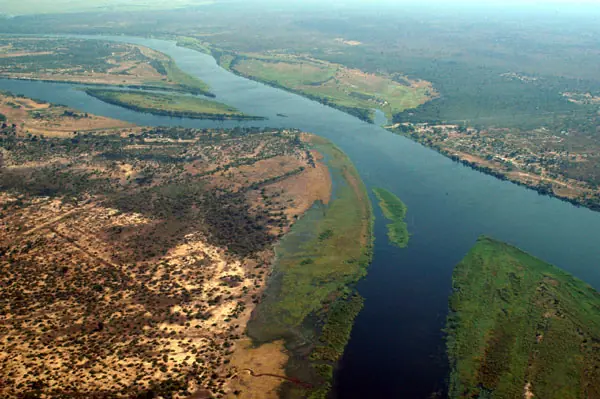
South of the Luangwa, the Zambezi broadens into a slow, island-studded river, and the national park on its northern bank — Lower Zambezi — is arguably the most scenic safari destination in the country. The escarpment rises behind the floodplain, winterthorn trees crowd the water's edge, and the wildlife comes to you: elephants wading between islands, buffalo drinking in long files, and huge concentrations of hippo and crocodile. Because the park sits on the Zambian side, you can canoe downstream in a guided group, paddling past elephants standing knee-deep, with a guide reading the currents and the moods.
Canoe safaris usually run three to four hours in the morning or late afternoon, with a motorised support boat shadowing the group. It is quiet, close and slightly nerve-racking in the best way — you are eye-level with the water and there is no engine to fall back on. Fishing for tigerfish on catch-and-release, mostly from September to November, is another reason anglers come here.
Downstream is Lake Kariba, one of the largest man-made reservoirs in the world, created where the Zambezi was dammed at Kariba Gorge. The Zambian shore around Siavonga is the accessible end: houseboats drift into drowned valleys where dead trees still stand in the water, fish eagles call from the skeletons of mopane, and sunsets turn the lake copper. It is a relaxed, family-friendly contrast to the intensity of the bush — swimming (in the safe, croc-free zones near the dam), boat cruises and lakeside lodges.
Kafue National Park and the Busanga Plains
Kafue is Zambia's oldest and largest park, a sprawling mosaic of miombo woodland, riverine forest and open grassland the size of a small country, yet it receives a fraction of the visitors that crowd better-known reserves. The star turn is in the far north: the Busanga Plains, a vast seasonal wetland that floods in the rains and then dries into a patchwork of grass and shallow channels, drawing red lechwe, puku, wildebeest, zebra and roan. Lion prides here are famous for hunting in the open, and cheetah and wild dog are regularly seen.
Busanga is only reachable in the dry season, usually from around June to October, and only by light aircraft or a serious 4x4 expedition — which is precisely why it stays wild. Days are spent on game drives across the plains, with hot-air balloon flights available from some camps in the early dry season, drifting over herds of lechwe with the mist still lying in the channels. Nights are cold on the plains in June and July; pack a fleece.
The rest of Kafue is a patchwork of quieter sectors: the Kafue River itself, where boat safaris and fishing are on offer, and the southern grasslands around the Nanzhila area. Access roads can be rough, and self-drivers should carry fuel, water and a satellite communication device. For travellers with time, Kafue is the place to feel like an explorer rather than a passenger.
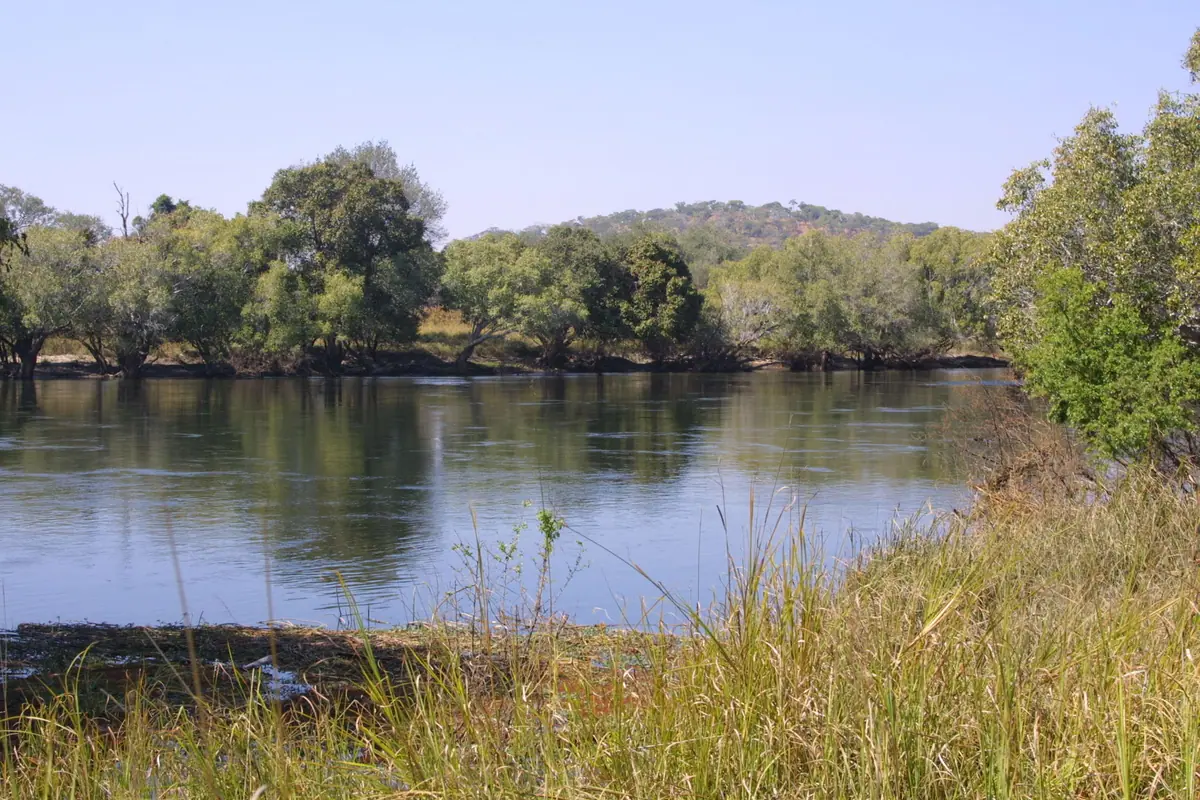
The Far Corners: Liuwa Plain, Kasanka and Bangweulu
Zambia's remotest spectacles are also its most extraordinary. On the Liuwa Plain in the far west, a vast flat grassland floods each year and then hosts one of Africa's great migrations — tens of thousands of blue wildebeest moving across the plain, shadowed by spotted hyena and a pride of lions that has become legendary for its resilience. Access is by light aircraft to Kalabo and then by boat and vehicle; the season runs roughly from November to June, with the wildebeest movement typically peaking late in that window.
In Kasanka National Park, a small and otherwise unassuming patch of woodland, something stranger happens each November and December: several million straw-coloured fruit bats arrive to roost in a few hectares of evergreen swamp forest. At dawn and dusk they pour out in ribbons across the sky, and visitors watch from hides and a canopy platform. It is one of the largest mammal gatherings on the planet, and the season is short — book many months ahead.
To the north-east, the Bangweulu wetlands are a maze of papyrus, lagoons and grass islands best known as one of the few reliable places to see the shoebill, a prehistoric-looking bird that stands over a metre tall and hunts lungfish in the shallows. Local guides pole canoes through the channels at dawn in search of it. Further north still, North Luangwa National Park offers walking-only safaris in genuinely unfenced wilderness, while Shiwa Ngandu — an eccentric English-style manor house built in the bush in the 1920s — and the roadside cascade of Kundrila Falls make rewarding stops on a self-drive loop.
Lusaka, Livingstone and the Human Story
Zambia's towns are worth more than a transit stop. In Livingstone, the museum beside the falls holds the country's best collection on the Zambezi, David Livingstone's expeditions and the pre-colonial history of the region, and it takes about ninety minutes to see properly. Nearby, Mukuni Village welcomes visitors on guided walks that explain Leya customs, craftwork and the chief's residence — go with a local guide and treat it as a real community, not an exhibit. The Livingstone railway museum, with its vintage locomotives, is a charming hour for anyone travelling with children.
In the capital, Lusaka, spend a morning at the Lusaka National Museum for Zambian art and ethnography, then browse Kabwata Cultural Village for carvings, chitenge fabric and basketwork straight from the makers. The Freedom Statue, commemorating the country's independence struggle, is a short stop, and the city's markets — Soweto Market in particular — are loud, colourful and best visited with a local friend.
Zambian food is hearty and worth seeking out: nshima (a stiff maize porridge) eaten with relish, ifisashi (greens in peanut sauce) and grilled tilapia from the Zambezi or Lake Kariba. Tipping is customary in the safari industry, US dollars are widely accepted alongside the local kwacha, and English is the official language, so travelling independently is straightforward. Allow at least two weeks if you want the falls, one major park and one of the far corners — flights between them are usually by small charter aircraft, and roads, while improving, still make long drives slow.
Frequently asked questions
When is the best time to visit Zambia?
For wildlife, the dry season from June to October is unbeatable — vegetation thins, animals concentrate at water and the walking and night-drive circuits in South Luangwa and the Busanga Plains are fully open. For Victoria Falls at full power, come February to May, though the spray can hide the view; September to December gives the clearest sight of the rock face and access to Devil's Pool. The green season, January to March, brings lush scenery, newborn animals, lower rates and birdlife, but some camps close and tracks flood.
How long do I need for a Zambia trip?
Ten days to two weeks is the sweet spot. Three or four nights at Victoria Falls covers the falls, a gorge activity and a river cruise; four or five nights in South Luangwa allows a walking trail plus game drives; and the remote corners such as Liuwa Plain or Kasanka need at least three nights each because of charter flights. Trying to combine too many regions turns the trip into an airport-hopping exercise.
Is Devil's Pool safe, and when can you swim in it?
Devil's Pool is only accessible on an organised trip to Livingstone Island, and only when the Zambezi is low enough — typically from around mid-August to early January, and always at the guide's discretion. You swim a short distance across a rock shelf with a current guide who positions you against the natural lip. It is exhilarating but not for weak swimmers or young children, and it closes entirely when the river is high.
Do I need malaria tablets or vaccinations for Zambia?
Zambia is a malaria-risk country, including in the safari parks and around Victoria Falls, so most visitors take antimalarials and use repellent and long sleeves at dusk. Yellow fever vaccination may be required if you are arriving from a country with transmission risk, and routine boosters should be up to date. Consult a travel health clinic at least four to six weeks before departure, and carry your certificate with your passport.
How do you get between Zambia's parks and landmarks?
Most travellers fly into Lusaka or Livingstone and then take small charter aircraft to airstrips at Mfuwe (South Luangwa), Jeki or Royal (Lower Zambezi) and Kalabo (Liuwa Plain), which keeps travel times to under two hours instead of many hours of driving. Self-drivers should plan on slow going, fill up whenever they can, avoid driving after dark and carry water and a satellite communication device on remote routes. Distances on the map are deceptive; a 300-kilometre drive can easily take a full day.
Plan it — experiences in Zambia
Live search, booked directly with trusted providers.
Sort the rest of your trip
Everything for Zambia, in one place
Stay in Zambia
Hotels, guesthouses and apartments — compared in one search.
Search hotels
Transfer in Zambia
Private driver waiting on arrival — no queues, no surprises.
Book a transfer
Stay online in Zambia
Travel eSIM — data the moment you land, no roaming bills.
Get an eSIMMore guides in Zambia
Best Places to Visit in Zambia: Victoria Falls, South Luangwa and Beyond
Zambia Tour Guide: Food, Culture and Local Experiences
One Week in Zambia: A Flying Safari Itinerary from Victoria Falls to the Busanga Plains
Best Time to Visit Zambia: Seasons, Safaris and Where to Stay