Zambia is the country where a safari is done on foot, where a waterfall is loud enough to be seen from kilometres away as smoke, and where a meal begins with a bowl of water poured over your hands. Come for the wildlife, stay for the nshima, the drums and the long, slow river evenings.
Nshima First: How Zambia Eats
Every serious conversation in Zambia eventually arrives at nshima. Made from white maize meal cooked into a stiff, smooth porridge, it is not a side dish but the centre of the plate, with everything else — called relish — arranged around it as a companion. You eat with your right hand: pinch off a walnut-sized piece, roll it lightly in your palm, press a hollow into it with your thumb, and use that hollow to scoop up sauce, greens or fish. Before any of this happens, someone will carry round a basin and a jug so everyone can wash their hands, and that small ritual sets the tone — eating here is shared, unhurried and generously repetitive, since your host will keep urging more on you long after you are full.
The relishes are where Zambian cooking gets quietly brilliant. Ifisashi, greens simmered in pounded groundnuts, is the classic, made with whatever leaf is in season: pumpkin leaves (chibwabwa), cassava leaves (katapa), sweet potato leaves, or amaranth (bondwe). Small dried fish appear everywhere — kapenta from Lake Kariba and Lake Tanganyika, fried hard with tomato, onion and a hit of chilli — while the Zambezi and Kafue rivers supply bream and the famously toothy tigerfish, best simply grilled over coals. In the rainy season, mopane worms (vinkubala) are dried and fried until crisp, a protein-rich snack sold in paper twists. And then there is chikanda, a dense sliceable cake of pounded orchid tubers and groundnuts, nicknamed African polony, eaten cold from market stalls with a dab of chilli.
If you are invited into a Zambian home, arrive with something small — sugar, tea, fruit, a packet of biscuits — and greet everyone properly before sitting down. A few words go a long way: "Muli bwanji?" works in Nyanja in Lusaka, "Muli shani?" in Bemba on the Copperbelt, and "Zikomo" or "Natotela" covers thank you. Compliment the food, accept a second helping even if you only manage a little of it, and expect the meal to last far longer than the eating itself.
Market Mornings: Lusaka, Livingstone and the Craft Trail
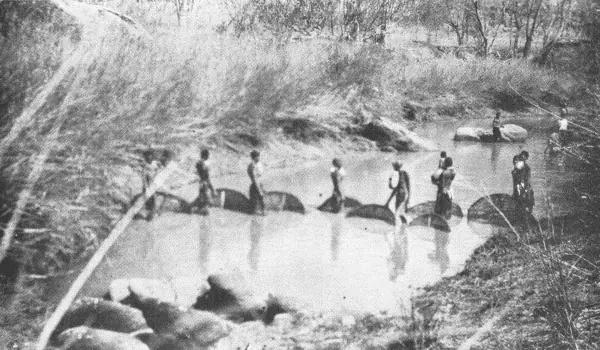
The quickest way into Zambian daily life is a market at eight in the morning. Soweto Market in Lusaka is an entire district of noise and colour — mountains of tomatoes and dried kapenta, sacks of maize meal, secondhand clothing, hardware, tailors at treadle machines, women selling chikanda in neat pink slabs. Go with small notes and an unhurried attitude; there is no browsing quietly here, and the banter is half the experience. Nearby produce markets in the capital are better for fruit and vegetables, while Livingstone's Maramba Market does the same job for the tourist town: wooden carvings, beaded jewellery, chitenge fabric by the yard and a lot of cheerful negotiation.
Craft in Zambia is regional, and the best souvenirs are the ones that trace back to a specific place. Tonga women around Choma weave tight, patterned baskets and the Choma crafts centre is a good, honest place to see the work before you buy it. From Mongu in the west come Barotse baskets and carved canoes; from the Copperbelt come malachite and copper trinkets; from the north-west come the extraordinary makishi masks, carved for ceremonies and, increasingly, for collectors. A length of chitenge cloth — two metres, wax-printed, in a colour you would never pick at home — is the cheapest and most useful thing you will carry home.
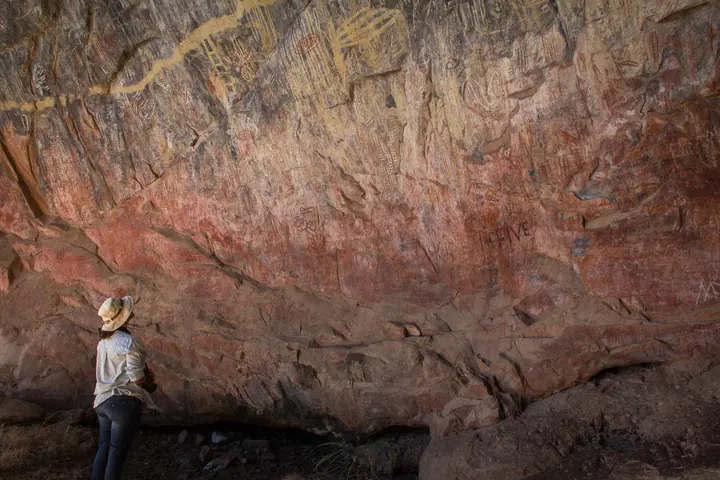
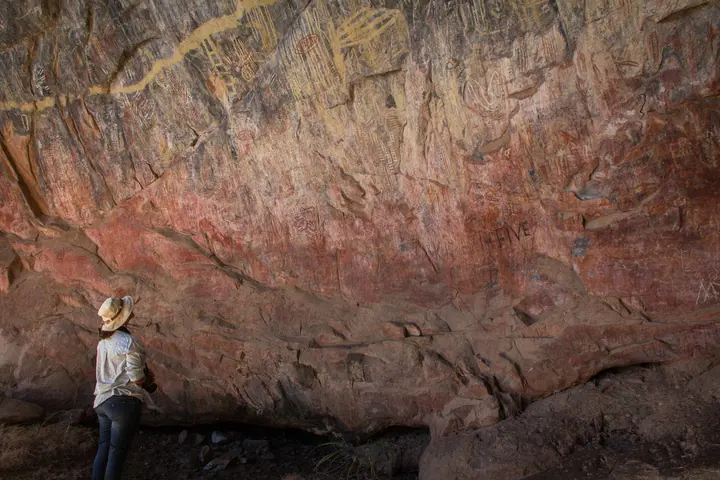
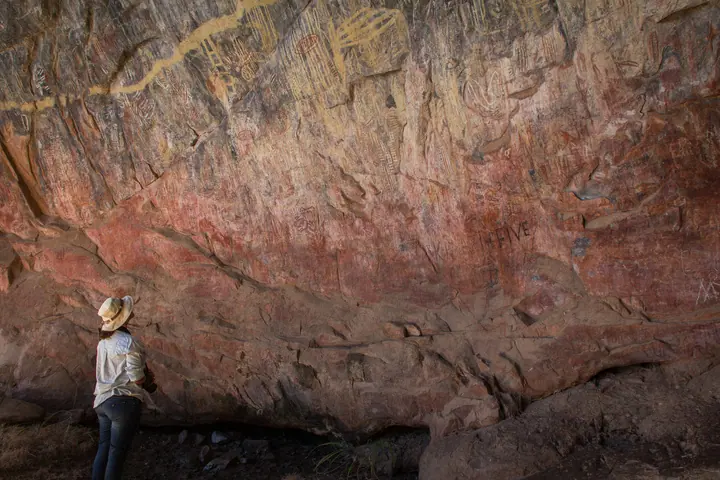
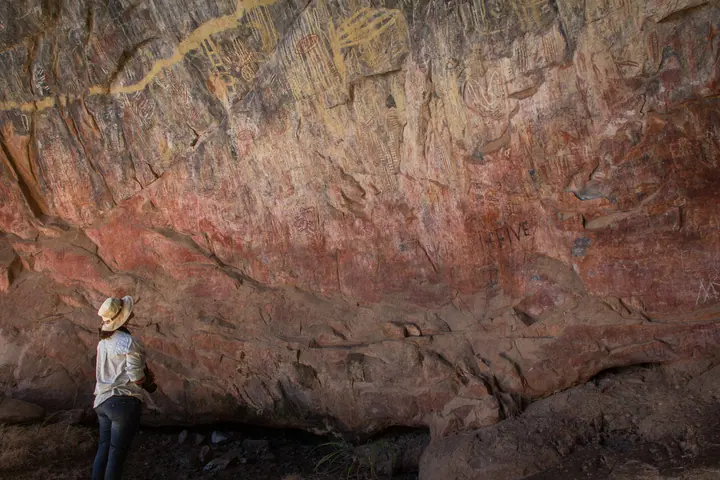
For a longer cultural day out, the Livingstone Museum holds the country's best collections of archaeology and ethnography, plus rooms devoted to the explorer whose name the town still carries, and the Copperbelt Museum in Ndola covers the mining story that built modern Zambia. Near Kasama in the north, Mwela Rock Art and the shelters at Nsalu Cave preserve paintings and engravings that are thousands of years old — one of the most significant rock-art concentrations in southern Africa, and almost always visited in complete solitude.
Ceremony Season: Kuomboka, Ncwala and the Drinks That Go With Them
Zambia's ceremonial calendar is one of the great reasons to travel outside the dry-season safari window. The most spectacular is Kuomboka, staged on the Barotse floodplain around the end of the rains, usually in March or April, when the Litunga — king of the Lozi — travels by barge from his flooded palace at Lealui to higher ground at Limulunga. The royal barge, Nalikwanda, is rowed by dozens of paddlers in black-and-white striped costumes and crowned by a huge black-and-white bird effigy; drumming, singing and thousands of spectators line the water. It is a genuine state occasion, not a show, and it is worth building a western-Zambia itinerary around.
Other ceremonies are just as rooted. Ncwala, near Chipata in late February or March, is the Ngoni first-fruits ritual, with warriors in animal skins, spear dances and the tasting of the new harvest. In August, Kulamba gathers Chewa chiefs and Nyau dancers at Mkaika in the east. Likumbi Lya Mize in the Zambezi district, in July or August, is the great Luvale festival of the makishi masks, while Shimunenga, held by the Ila on the Kafue floodplain near Namwala around September, celebrates cattle and ancestors with long-horned herds driven to the river. Ask locally for exact dates, because they follow the moon and the water rather than a printed brochure, and dress modestly out of respect.
The drinks that accompany this hospitality are worth seeking out. Munkoyo is a gently sour, low-alcohol brew of pounded maize fermented with the root of the munkoyo plant, sold in buckets and drunk from shared cups. Chibuku, a commercial sorghum beer, comes in a waxed carton and absolutely must be shaken before drinking — locals call it shake-shake. Maheu is the family-friendly version: a sweet, faintly grainy maize drink, often with lemon, sold chilled at roadside stalls and perfect on a hot afternoon.
Mosi-oa-Tunya and the Mighty Zambezi
Victoria Falls, Mosi-oa-Tunya — the smoke that thunders — is Zambia's unavoidable headline act, and the Zambian side gives you the drama of the Eastern Cataract and the spray-soaked walkways that face the full curtain of water. The falls drop roughly 108 metres across a width of about 1,708 metres, making this the largest sheet of falling water on earth. Walk the Knife Edge Bridge, where the mist can soak you to the skin in seconds, look for the rainbows that hang in the gorge, and if your timing is lucky — a full moon in high water — stay late for a moonbow. Water volumes swing hugely through the year: the spectacle peaks from roughly February to July, while the quieter months reveal the bare rock face and the plunge pools below.
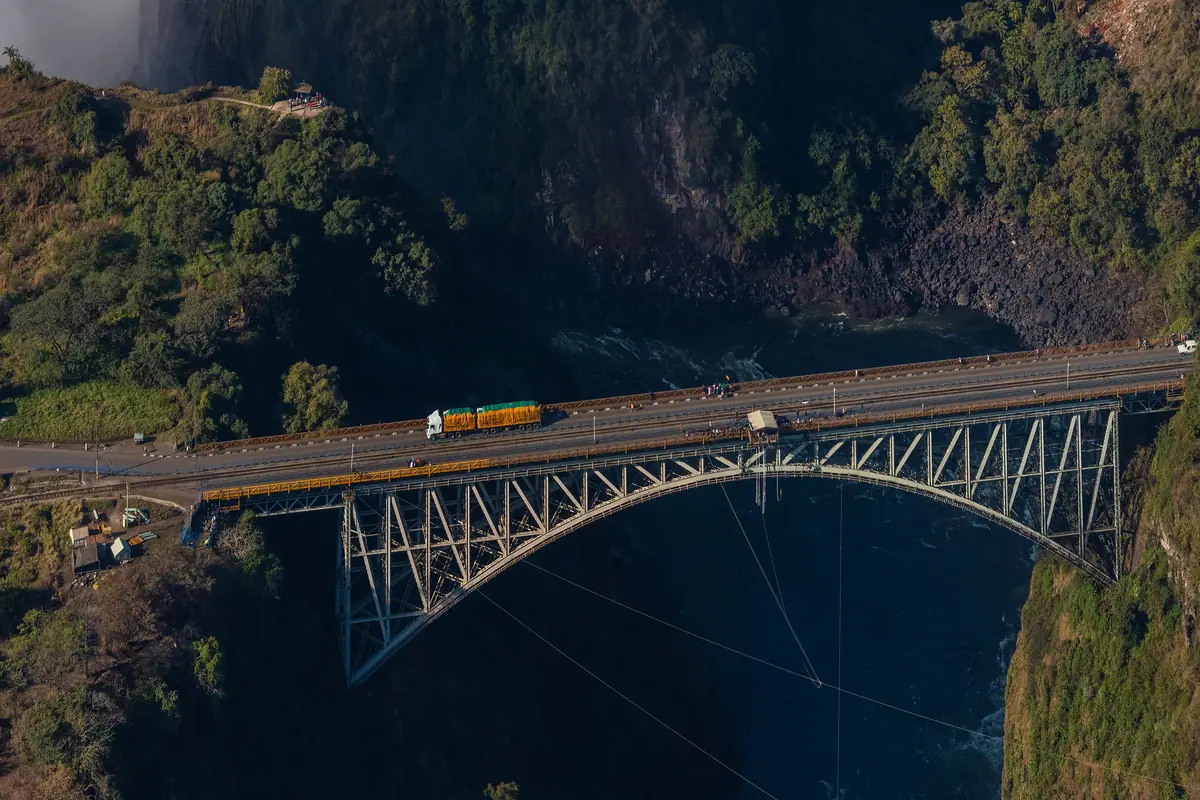
The best experiences around the falls are on the water itself. In low water, usually from around August to January, guided trips cross to Livingstone Island for the notorious Devil's Pool, a natural rock pool right at the lip. Below the falls, the Zambezi runs through a deep zigzag gorge, and white-water rafting here is among the most intense day trips in Africa, with sections opening and closing depending on the season. Above the falls, sunset cruises drift past hippos and fish eagles, gin and tonic in hand, and multi-day canoe safaris paddle downstream through quiet channels. The Victoria Falls Bridge, built in the early twentieth century and still carrying road and rail across the gorge, is the place for gorge views, a walking tour of its history, and — for some — a very long bungee jump.
Stay a little longer in Livingstone and the culture around the falls opens up. Mukuni Village, home to the Leya people and their chief, welcomes visitors on guided walks through its lanes and craft workshops; the Livingstone Museum is a good rainy-afternoon stop. Further afield, Zambia hides waterfalls most travellers have never heard of: Kalambo Falls near Lake Tanganyika, one of the continent's tallest uninterrupted drops and an important early-human archaeological site; Chishimba Falls outside Kasama; Kundalila Falls tumbling off the escarpment beside the Great North Road; and the remote Lumangwe and Kabwelume falls in the far north-west.
Walking Safaris and Wild Zambia: South Luangwa, Lower Zambezi and Beyond
Zambia is the birthplace of the walking safari, and South Luangwa National Park is where it still feels most natural. Out of Mfuwe, camps run on a rhythm of dawn walks, long siestas and afternoon game drives that stretch into night drives with a spotlight. The valley's oxbow lagoons pull in elephants, buffalo, lions and leopard, plus species you will not see in most of southern Africa: Thornicroft's giraffe, Crawshay's zebra and Cookson's wildebeest. The dry season, from June to October, concentrates everything around shrinking water; the emerald season from January to March turns the park green and cinematic, though many camps close.
The Lower Zambezi National Park offers a different safari altogether — by canoe. Drifting silently past dozing hippo pods and elephant herds coming down to drink, with the Zambezi escarpment rising behind, is one of Africa's great low-key thrills. Far west, Kafue National Park is Zambia's largest protected area, and its northern Busanga Plains flood annually into a vast grassland where lions hunt lechwe across open floodplain. In the remote north, North Luangwa remains a walking-only wilderness with a quietly successful black rhino reintroduction programme, reachable only on long, rough drives or light aircraft.
Beyond the big names are the spectacles that make Zambia feel secret. Kasanka National Park hosts the world's largest gathering of straw-coloured fruit bats, millions of them roosting in a small patch of mushitu forest from around October to December; watch from the Fibwe hide at first light as they return. In November, Liuwa Plain in the far west sees wildebeest moving across the grassland in their thousands. And in the Bangweulu Wetlands, poled canoes glide through papyrus to find the shoebill, a prehistoric-looking bird that draws birders from across the world, alongside black lechwe grazing the floodplain.
When to Go, What to Say and How to Travel Well
Zambia has two rough halves. The dry season, May to October, is prime game-viewing: vegetation thins, animals crowd the water, days are warm and nights genuinely cold, so pack a fleece for early drives. July to October is the peak, and the heat builds through September and October until the rains break in November. The green season, November to April, brings afternoon storms, dramatic skies, newborn animals, migrant birds and much lower rates — plus the best light for photographers. Time your trip around what you want to see: Victoria Falls at its thunderous best from about February to July, Devil's Pool in the low-water months, bats at Kasanka from October to December, wildebeest on Liuwa Plain in November, and ceremonies in February, March, July, August and September.
Zambian etiquette is warm and fairly formal, and a little effort is repaid many times over. English is the official language, but greetings in Bemba or Nyanja are appreciated: "Muli shani?" and "Muli bwanji?" both mean how are you, answered with "Ndili bwino" or similar. Always ask before photographing people, and never photograph a ceremony's sacred regalia without permission. Tipping is customary — around ten per cent in restaurants, and a daily thank-you for guides, trackers and camp staff, usually pooled. Carry Zambian kwacha in small notes for markets, drinks and tips; cards work in lodges and larger hotels but not at a roadside table selling roasted maize.
Most trips follow a simple loop: two or three nights in Livingstone for the falls and the Zambezi, then a short hop to Mfuwe for four nights in South Luangwa, and if time allows, three more in the Lower Zambezi. Lusaka is the hub for regional flights and long-distance buses, while the good surfaced highways make road transfers feasible, if slow. Take malaria precautions, drink bottled or filtered water, and budget eight to twelve days to see the country properly — Zambia rewards travellers who slow down, sit longer by the fire, and let the river set the pace.
Frequently asked questions
What is the best time of year to visit Zambia?
For wildlife, the dry season from June to October is best, with September and October delivering the most concentrated game viewing but also the hottest temperatures. For Victoria Falls at full force, aim for February to July. For lower prices, green landscapes and superb birding, travel in the wetter months from November to April, accepting that some bush camps close.
How do I eat nshima correctly?
Wash your hands in the basin offered before the meal, then use only your right hand. Break off a small piece of nshima, roll it into a ball, press a hollow into it with your thumb, and use it to scoop up relish. It is fine to leave food; it is not fine to refuse a second helping outright — accept a small portion and keep the conversation going.
Do I need a guided tour to see Zambia, or can I travel independently?
Cities and major roads are easy to handle independently, and Livingstone works well as a base for the falls, museums and river activities. National parks are a different matter: most remote camps are reached by light aircraft or long 4x4 drives, and walking safaris legally require an armed guide. Self-driving is possible for confident travellers, but a small-group or private guided trip is far simpler for a first visit.
Which Zambian souvenirs are worth buying?
Tonga baskets from the Choma area, Barotse baskets and carvings from Mongu, malachite and copper pieces from the Copperbelt, Luvale-style makishi masks from the north-west, and lengths of bright chitenge fabric. Buy direct from makers at cultural villages and regional craft centres rather than airport shops, and remember that genuine ceremonial items may not be appropriate to export.
Is Zambia a good destination for a first safari?
Yes, particularly if you want walking, night drives and fewer vehicles. South Luangwa and the Lower Zambezi offer big-cat sightings and superb guiding without the crowds of better-known parks, and the combination of Victoria Falls, river canoeing and bush camps makes an easy, varied first itinerary. Allow eight to twelve days to cover two or three areas without rushing.
Sort the rest of your trip
Everything for Zambia, in one place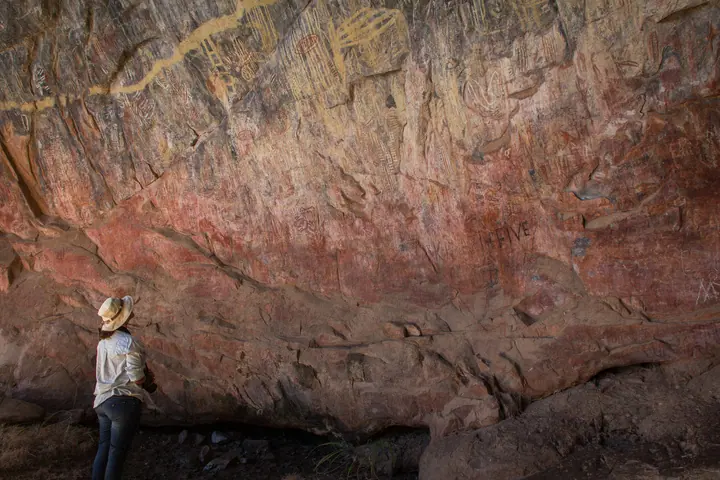
Stay in Zambia
Hotels, guesthouses and apartments — compared in one search.
Search hotels
Transfer in Zambia
Private driver waiting on arrival — no queues, no surprises.
Book a transfer
Stay online in Zambia
Travel eSIM — data the moment you land, no roaming bills.
Get an eSIM