Lombok hands you a volcanic skyline, a coast of empty horseshoe bays and three car-free islands a short boat ride offshore — so where you sleep changes the whole trip. Pick a base that matches your mornings and you will spend less time in a car and more time in the water.
Getting Your Bearings: How Lombok's Geography Shapes Your Booking
Lombok is roughly the size of Bali but wears it very differently: a dry, spiky volcanic spine down the middle, a busier green west, and a scalloped south coast of headlands and bays that could keep you occupied for weeks. Nearly every accommodation decision comes down to which slice of that you want outside your window — surf and café culture, sunset calm, reef diving, or a cold night under Mount Rinjani.
The airport sits in the south-central rice belt near Praya, and that single fact drives most transfer maths. Kuta and the Mandalika resort zone are only 20 to 30 minutes away. Senggigi and the northwest coast take about an hour. The boat harbour at Bangsal, the stepping-off point for the three Gili islands, is closer to 90 minutes to two hours depending on traffic, and the trekking villages of Senaru and Sembalun at the foot of the volcano are two to three hours by road. Distances look tiny on a map; winding, patched roads full of scooters make them feel longer.
Timing matters as much as location. May to September is the dry season, with the clearest water and the most dependable sun, while July and August are peak — Kuta villas and Gili beach bungalows can sell out weeks ahead. April, June, September and October are the sweet spots: good weather, thinner crowds, softer rates. From November to March expect humid nights, heavy afternoon downpours and the occasional cancelled boat crossing, balanced by a green, lush island and low-season prices.
Kuta Lombok and Mandalika: Surf, Dry Hills and Boutique Villas
First-timers often assume Kuta is a Bali replica. It is not. This is a low-rise surf town of dusty lanes, roasted coffee, board rental racks and small hotels built around courtyards and pools, backed by scrubby hills that turn gold at dusk. The beach in town is better for sunsets than swimming, but within a 20-minute scooter ride you have Tanjung Aan's twin curving bays, Mawun's sheltered cove, and Seger, where the cliff viewpoint at Bukit Merese draws a nightly crowd for sunset.
Accommodation splits neatly in two. Staying in the village centre means walking to breakfast, yoga and warungs, with hostels and small boutique villas from budget to mid-range clustered within a few blocks. Staying out along the coast road — Selong Belanak, where the waves are forgiving for beginners, or the headlands towards Torok — buys you space, infinity pools and quiet, at the cost of needing a scooter or a driver for everything.
The Mandalika area east of Kuta brought big international-style resorts, a convention centre and a motor racing circuit to what was farmland. That is a bonus if you want full-service comfort with beach clubs and kids' facilities, but check the events calendar before booking: race weekends and major festivals fill every room in the region and send rates soaring.
Senggigi and the Northwest Coast: Classic Sunsets, Easy Day Trips
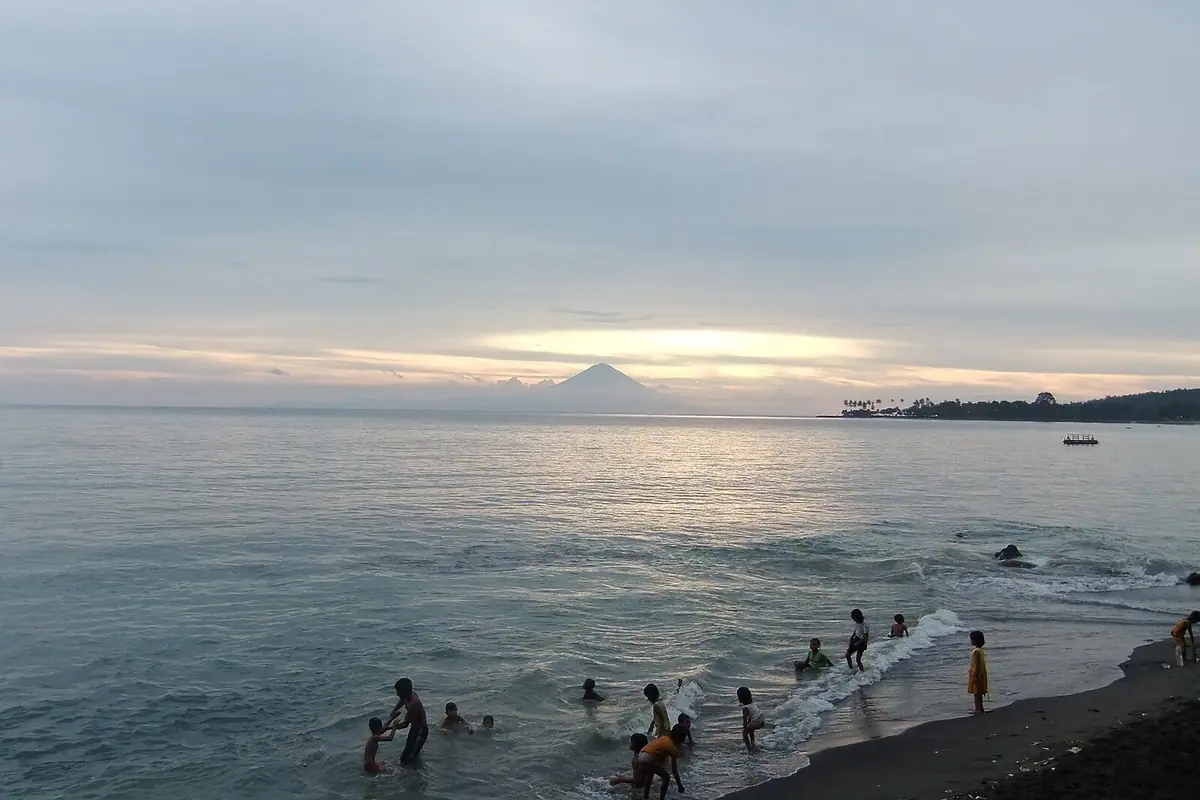
Senggigi was Lombok's original resort strip and still does easy holidays well. A palm-lined bay curves north for several kilometres, the water is calm enough for lazy swimming, and the headland temple of Pura Batu Bolong sits on a promontory where locals and visitors gather for sunset — on clear evenings you can make out the silhouette of Bali's Mount Agung across the strait.
The hotel mix here leans mid-range and older-style, with hillside guesthouses above the road and larger garden resorts closer to the sand. Mangsit and Batulayang, just north, are quieter versions of the same thing and often better value. Senggigi is the most convenient base if you want a mix of beach time and culture: the water palaces and temples around Mataram, the markets and the Lingsar temple complex are all within an hour, and Rinjani trekking operators are easy to reach.
Continue north and the coast changes character. Teluk Nare and Sire are home to polished, secluded resorts on black-sand coves, ideal if your plan is to do very little and take a short private boat to the Gilis. The trade-off is isolation — you will want the hotel restaurant or a taxi for anything else.
The Gili Islands: Car-Free Sand, Turtles and Dive Lodges
Three small islands sit off the northwest coast, and no motorised vehicles are allowed on any of them — transport is a horse cart, a bicycle or your own feet. Gili Trawangan is the biggest and liveliest, with dive schools, beach bars and a sunset scene on the west side. Gili Air is the middle child: enough restaurants and yoga to keep you busy, quiet enough to sleep. Gili Meno is the smallest and slowest, a honeymoon and hammock island with turtle-rich snorkelling straight off the beach.
Where you stay on each island matters more than which island you choose. Bungalows set back from the sand are cheaper and much quieter than beachfront rooms in the bar strip, and dive lodges are the obvious pick if you plan to spend your days underwater. Fresh water and electricity are scarce on all three, so expect generators, sometimes salty showers and budget places that only run fans at night. Book ahead for July, August and the Christmas period.
Boats run from Bangsal harbour, a short and often bumpy hop of 20 to 40 minutes, with speedboat services also leaving from Teluk Nare and from ports in Bali. Crossings can be rough or suspended during the December-to-February rains. Once you arrive, pack a torch, cash and reef-safe sunscreen — ATMs are unreliable and prices climb with every metre closer to the water.
Rinjani Foothills: Homestays in Senaru, Sembalun and Tetebatu
Mount Rinjani rises to 3,726 metres and its crater rim, smoking cone and milky-blue lake are the reason many travellers come to Lombok at all. Most summit treks run two to four days, usually starting from Senaru in the north or Sembalun in the east, and almost everyone spends the night before at the trailhead so they can set off at dawn. The national park generally closes during the wettest months, roughly January to March, for safety and for local ceremonies.
Senaru is the classic base: cool, green, with crater views from the ridge and two waterfalls — Sendang Gile and the taller Tiu Kelep — an easy walk from the village. Sembalun sits higher on the eastern side, surrounded by strawberry fields and savanna, and offers an easier first day of walking. Accommodation is simple and family-run: guesthouses and trekking lodges with hot water if you are lucky, blankets if you are not, and hearty dinners of rice, tempeh and chicken.
Further south, Tetebatu spreads across the southern slopes about 90 minutes from Mataram, all terraced rice paddies, tobacco plots and the black monkeys of the surrounding forest. Staying here is less about summiting and more about slow days: waterfall walks, village cooking, coffee drying in the yard. Homestays are cheap, genuinely local and best booked directly — English is often limited but hospitality is not.
The Quiet Southwest and Sekotong, Plus Practical Booking Sense
The Sekotong peninsula juts into the sea in the island's southwest and remains Lombok's least-developed coast. Sheltered bays hide tiny islands — Nanggu, Sudak, Kedis — that you can reach by local boat in minutes, and the snorkelling and beginner diving are excellent with almost no crowds. Inns here are simple beachfront bungalows and a handful of small dive resorts; bring cash, expect limited Wi-Fi and enjoy having the horizon largely to yourself.
On the south coast, hideaways around Selong Belanak, Torok and the remote Mekaki bay cater to surfers and honeymooners wanting cliff views and privacy. Roads have improved, but a private driver is still the sane choice for arriving at night, and many small places offer airport pickups if you ask in advance.
A few habits make a Lombok booking go smoothly. Cash is king: ATMs work in Mataram, Kuta and Senggigi but are scarce or empty elsewhere, so withdraw before heading to the Gilis or the peninsulas. Scooter hire is common but helmets, licences and insurance are your responsibility. Finally, plan around the calendar — the February-to-March sea-worm festival at Seger Beach, Balinese temple anniversaries in the Mataram area and Ramadan all shift opening hours, availability and the mood of the island in their own ways.
Frequently asked questions
Which part of Lombok is best for a first visit?
Kuta and the surrounding south coast suit beach lovers and surfers, with the widest choice of villas and cafés. Senggigi is the better base if you want calm swimming, sunsets and easy day trips into Lombok's cultural heartlands. If your dream is diving and a car-free island, head straight to the Gilis.
How far is the airport from the main hotel areas?
Kuta and Mandalika are 20 to 30 minutes away, Senggigi about an hour, Bangsal harbour for the Gili islands roughly 90 minutes to two hours, and the Rinjani trekking villages two to three hours. Traffic is slow, so add a buffer when planning a late arrival.
When should I book, and when should I avoid travelling?
Book well ahead for July, August and the Christmas holidays, when the island is busiest. April, June, September and October offer the best balance of weather and space. The November-to-March wet season brings heavy afternoon rain, rough seas and occasional cancelled boat crossings, while the Rinjani park is generally closed in the wettest months.
Do I need cash in Lombok?
Yes. Withdraw in Mataram, Kuta or Senggigi before travelling on. ATMs on the Gili islands and remote peninsulas are few, often empty, and card payments are rare at homestays, warungs and small boat operators.
Should I stay overnight on the Gili islands or just take a day trip?
Stay at least a night or two. Day trips arrive with the main boat crowds and leave before sunset, missing the island's best hours. Staying also gives you time for a morning dive or snorkel before the day-trippers get in the water.
Sort the rest of your trip
Everything for Lombok, in one place
Transfer in Lombok
Private driver waiting on arrival — no queues, no surprises.
Book a transfer
Things to do in Lombok
Skip-the-line tickets, guided tours and standout experiences.
See experiences
Stay online in Indonesia
Travel eSIM — data the moment you land, no roaming bills.
Get an eSIM