Indonesia stretches across more than 17,000 islands, so choosing a hotel is really choosing a version of the country: a colonial-era quarter in Jakarta, a rice-field villa outside Ubud, a caldera-rim guesthouse above Mount Bromo, or a dive resort a short boat ride from Komodo dragons. Get the base right and the temples, volcanoes and reefs arrange themselves around you.
Jakarta: Picking a Base in a Sprawling Capital
Jakarta rewards a strategic hotel choice more than almost any city in Southeast Asia, because its traffic can turn a five-kilometre errand into an hour. Business travellers gravitate to the towers of Sudirman and the SCBD district, where five-star hotels sit directly above malls and offices. Heritage-minded visitors prefer Kota Tua, the old Dutch quarter, while Menteng offers leafy streets, mid-range guesthouses and easy access to the centre.
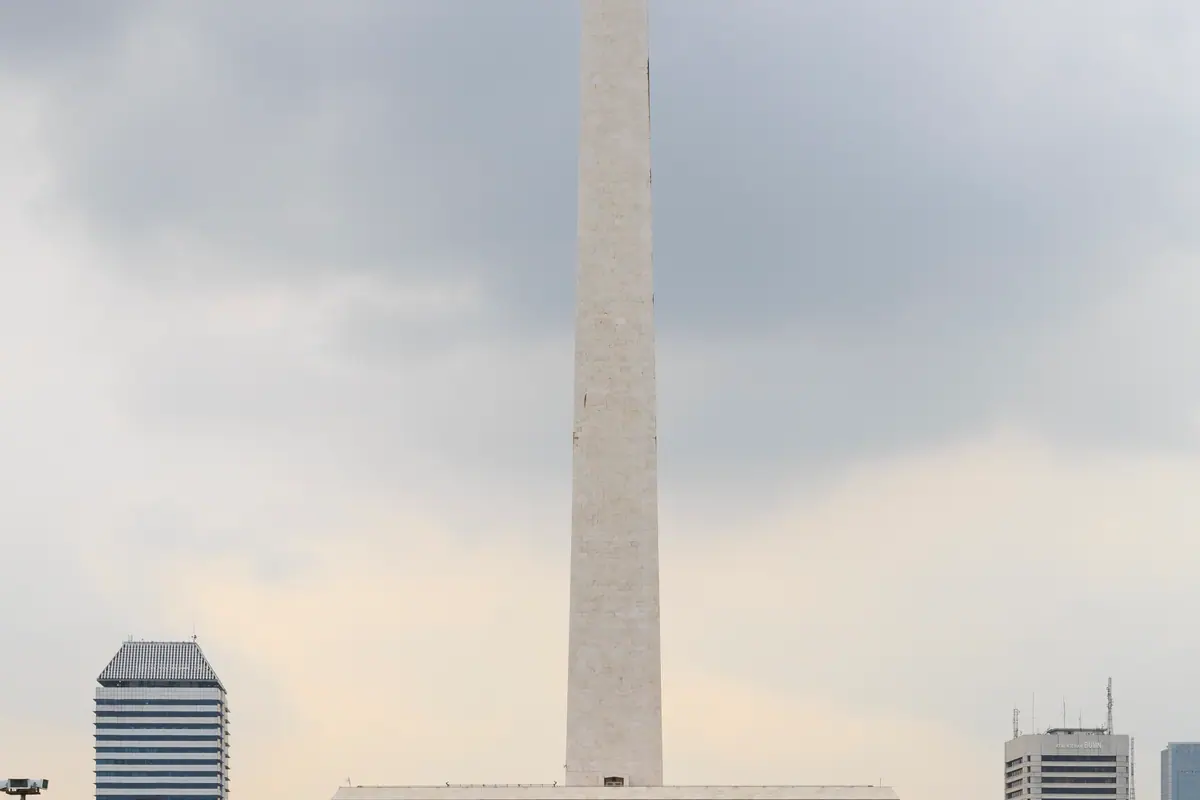
The unmissable sights cluster around Merdeka Square: the National Monument, or Monas, a 132-metre marble obelisk with a viewing platform and a small history museum in its base, and Istiqlal Mosque, the largest in Southeast Asia, facing the neo-Gothic Jakarta Cathedral across the road. A short drive north, Kota Tua preserves whitewashed warehouses around Fatahillah Square, and the old harbour of Sunda Kelapa still moors wooden pinisi schooners.
Two or three nights is enough for a first pass. Stay near Merdeka Square or Menteng if sightseeing is the priority, and near the airport corridor if you are only transiting to the islands. Afternoon downpours are common in the wet months, so plan indoor stops — the National Museum and the textile museum are good boltholes.
Yogyakarta: Temple Country and the Soul of Java
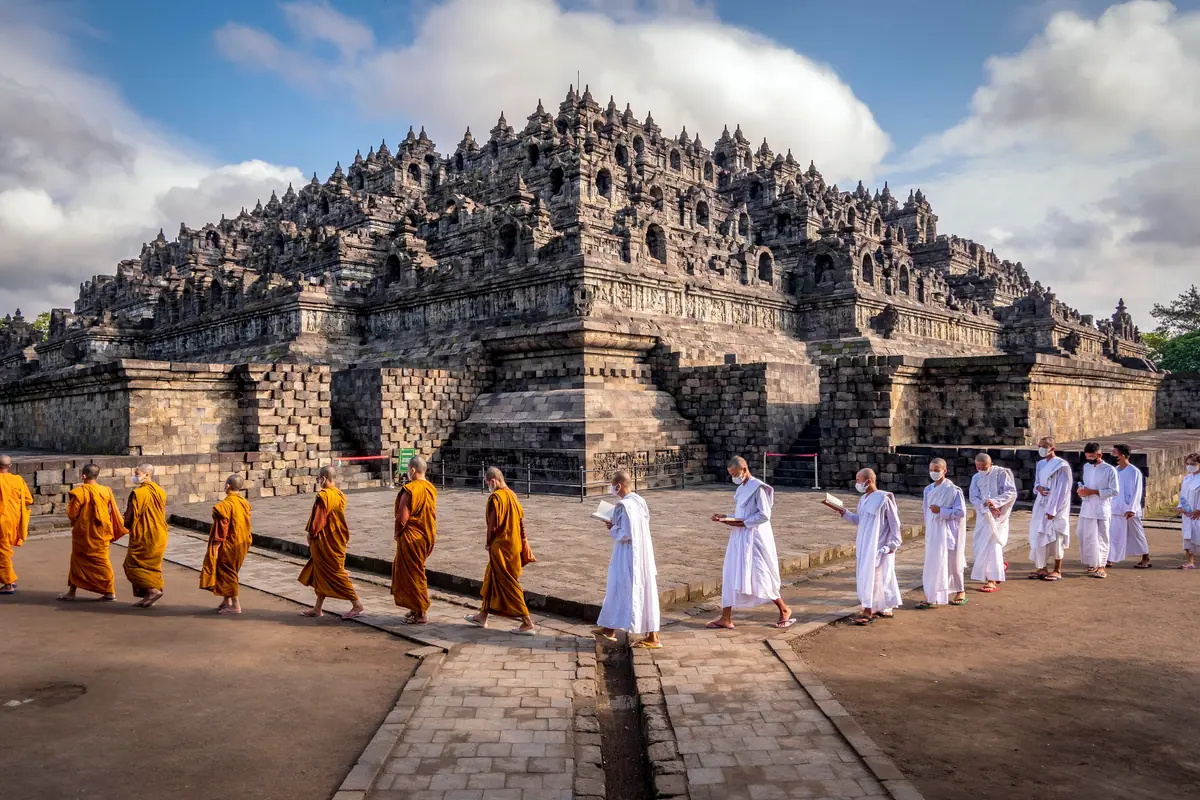
Yogyakarta is the cultural heart of Java and the best base for Indonesia's two greatest ancient monuments. Borobudur, a ninth-century Buddhist stupa the size of a small hill, is best seen at sunrise from the Manohara side or from the Setumbu hills nearby. Prambanan, its Hindu counterpart, is a forest of soaring stone spires that glows at dusk and stages open-air Ramayana ballet performances. Each is roughly an hour from the city.
In town, the Kraton — the Sultan's palace — is still a working royal residence, and the ruined Taman Sari Water Castle and its underground mosque lie a short walk away. Malioboro Street is the evening ritual: satay stalls, street musicians and batik shops. Prawirotaman, south of the centre, is the traveller quarter, full of small hotels with courtyards and pools; Jalan Malioboro suits anyone who wants everything on foot.
Give Yogyakarta three or four nights. Heritage boutique hotels and family homestays both work well here, and hosts often arrange temple transfers and Merapi volcano jeep trips. If you want Borobudur at dawn without a 3am drive, staying overnight in the village beside the temple is worth the trade-off in city conveniences.
Bali: One Island, Many Different Hotel Worlds
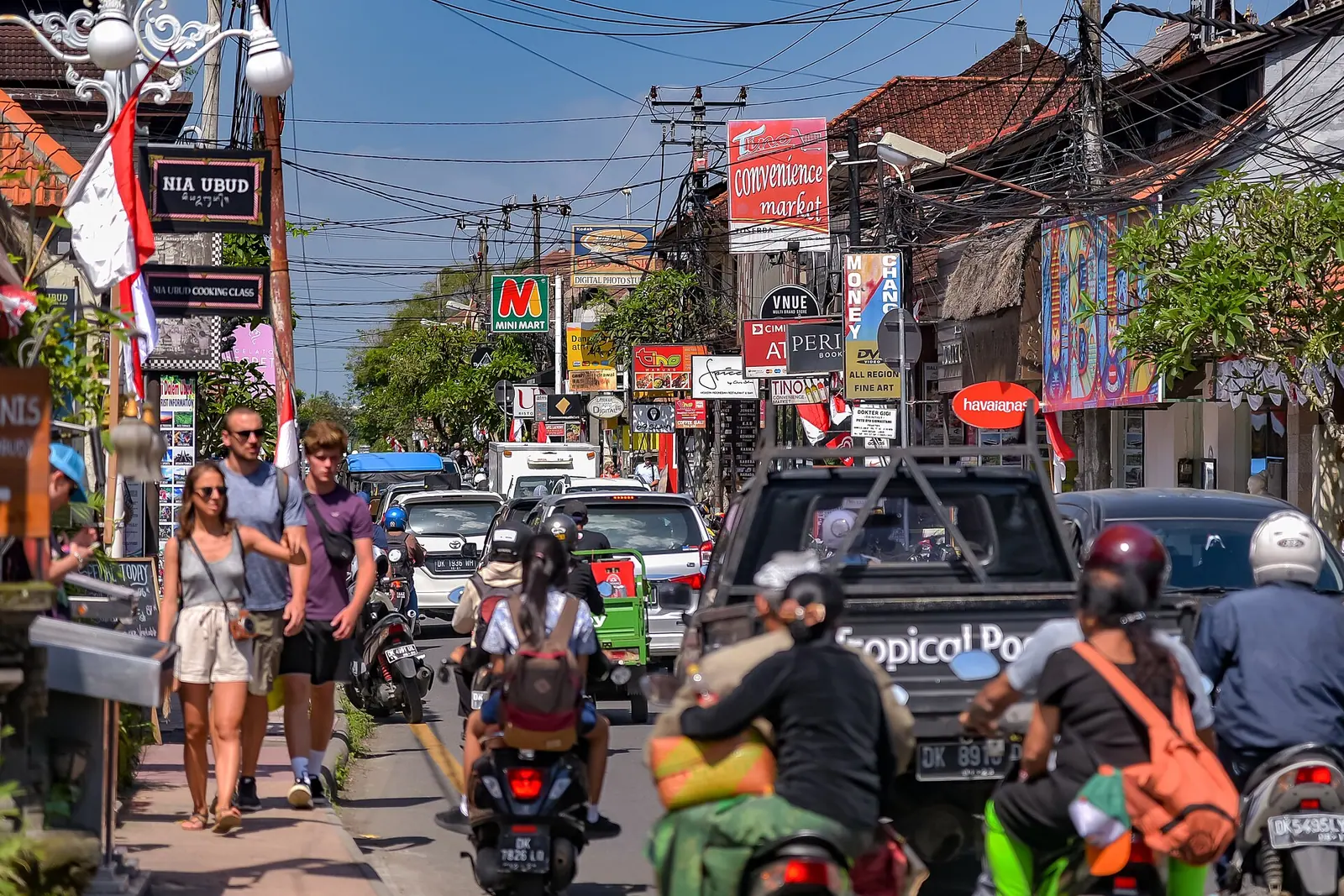
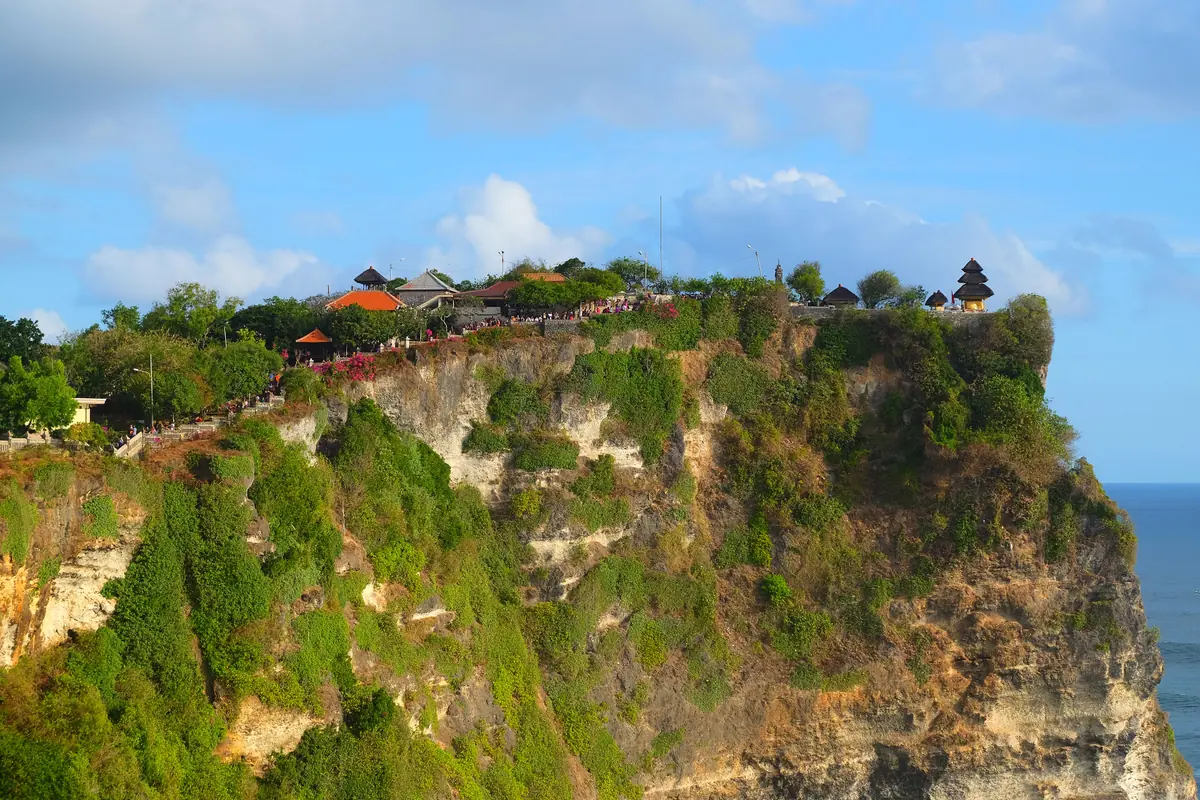
Bali does not have one hotel scene, it has a dozen. Seminyak and Canggu suit beach clubs, surf breaks and design-led boutique stays. Ubud, inland among the rice terraces, is where you find jungle villas, yoga shalas and riverside breakfasts. Uluwatu and the Bukit peninsula hold clifftop resorts with infinity pools above the surf; Nusa Dua is the gated, family-friendly resort zone; Sanur is calm and shallow, and Amed in the east is diving country.
The icons are spread all over the island: Tanah Lot, the sea temple perched on a tidal rock; Uluwatu Temple, where kecak fire dances are performed at sunset; the Tegallalang rice terraces; the Sacred Monkey Forest in Ubud; and Tirta Empul, a spring temple where Balinese Hindus purify themselves in the pools. Further east, Besakih sits on the slopes of Mount Agung, and a pre-dawn trek up Mount Batur rewards you with a caldera sunrise.
Timing matters more in Bali than almost anywhere in Indonesia. July and August bring crowds and peak rates; the dry-season shoulder months of April, May, September and October are the sweet spot. Be aware of Nyepi, the Day of Silence, usually in March, when the island shuts down for 24 hours: flights stop, streets empty, and hotels operate quietly with no check-in or check-out.
East Java: Volcano Bases at Bromo and Ijen
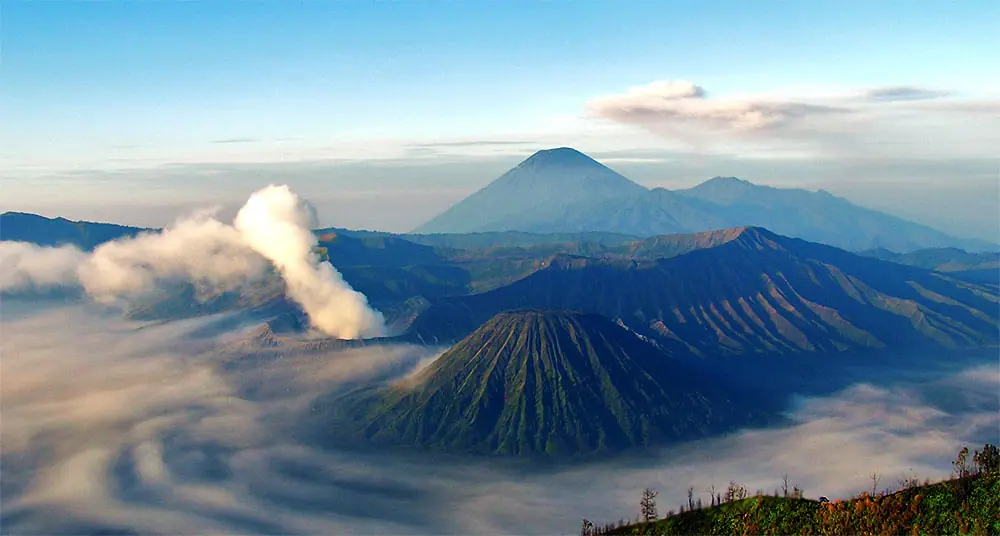
Surabaya, Indonesia's second city, is mostly a gateway, with a cluster of business hotels and a strong street-food culture. Most travellers push on to Malang, a cooler colonial-era hill town with wide avenues and comfortable boutique hotels, or straight up to Cemoro Lawang, the village on the rim of the Tengger caldera. Guesthouses there are simple — thin blankets, hot tea, 3am wake-ups — but you are minutes from the viewpoint.
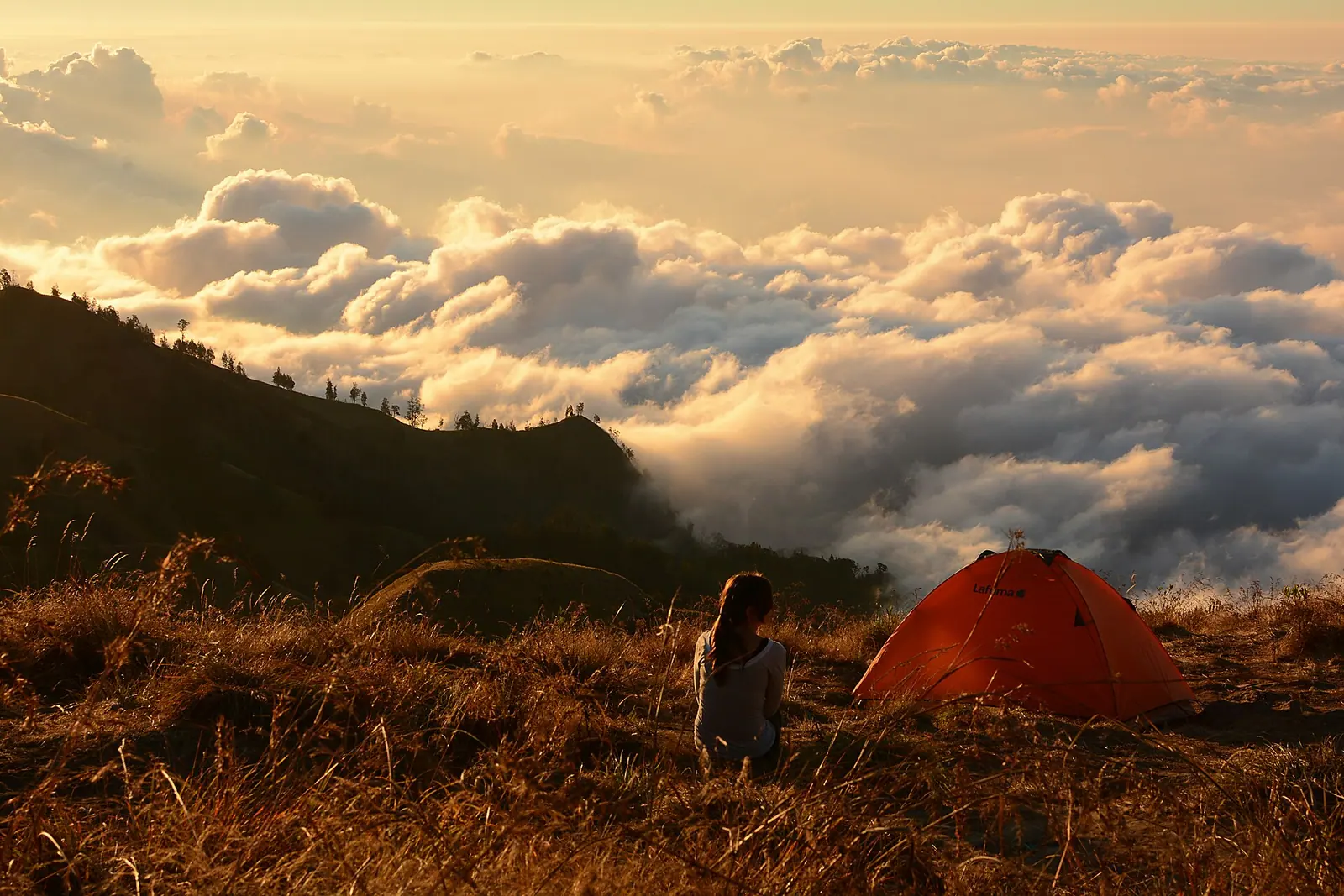
Mount Bromo is the classic East Java experience: a 4WD ride through the Sea of Sand, a short climb to the crater rim, and a sunrise from a ridge overlooking the smoking cone with Mount Semeru steaming behind it. Two hours west, Kawah Ijen offers a night hike to a turquoise acid crater lake and the electric-blue sulphur flames that only appear before dawn; you will need a gas mask, which guides supply.
Allow two to three days for both volcanoes, and pack layers — temperatures on the caldera rim can drop close to 5°C before sunrise. From Ijen it is a short drive to the ferry port at Banyuwangi for the crossing to Bali, which makes a neat overland link between the two islands.
Island Escapes: Lombok, Komodo, Lake Toba and Raja Ampat
Lombok is Bali's quieter sibling. The three Gili islands off its northwest coast — Air, Meno and Trawangan — are car-free or nearly so, with beach bungalows, dive schools and turtle-filled shallows. On Lombok itself, Senggigi has the established resorts, while Kuta Lombok in the south has a fast-growing strip of surf hotels. The two-day Mount Rinjani trek to the crater lake of Segara Anak is the island's serious hiking draw.
For Komodo National Park, base yourself in Labuan Bajo on Flores, where hilltop hotels look down over the harbour, or go further and sleep aboard a liveaboard boat. The rewards justify the journey: Padar Island's ridgeline viewpoint, Pink Beach, and the dragons themselves on Komodo and Rinca islands. Most trips run two to three days and include snorkelling stops.
Sumatra and West Papua take more effort and repay it. Lake Toba, the world's largest volcanic lake, has Samosir Island at its centre with Batak villages, waterfalls and lakeside guesthouses in Tuk Tuk. Far east, Raja Ampat is a maze of karst islets around Wayag and Piaynemo, served by homestays and dive resorts from Sorong and Waisai. In Indonesian Borneo, river lodges and klotok houseboats near Tanjung Puting put you within metres of wild orangutans.
When to Go and How to Book Your Hotel
Indonesia's dry season, roughly May to September, is the safest bet for beaches, temples and volcano treks, with April and October offering good weather and softer rates. From November to March, rain arrives in short, heavy afternoon bursts — still perfectly workable, and considerably cheaper, except over Christmas and New Year, when Bali and Jakarta fill up. Because the archipelago spans three time zones, always check your flight times against the local clock.
Book ahead for July, August and the Christmas period, and check the dates for Nyepi in Bali and for the end of Ramadan, when domestic travel surges and inter-island flights sell out. Indonesian hotels range from fan-cooled losmen and family homestays to private-pool villas, heritage properties in former colonial buildings and remote dive lodges; almost all can arrange airport transfers if asked in advance.
A few practical notes go a long way. Many smaller properties expect cash in rupiah, so carry some for warungs and village stays. Rooms near a mosque may hear the call to prayer before dawn — bring earplugs if you are a light sleeper. Ask whether breakfast is included, whether the room has air conditioning or just a fan, and whether the pool is private or shared, since listings can blur those lines.
Frequently asked questions
Where should I stay in Bali for a first visit?
Split your stay. Base yourself in Ubud for rice terraces, temples and culture, then move to Seminyak, Canggu or Uluwatu for beaches and sunsets. Nusa Dua suits families who want a self-contained resort zone, while Sanur is calmer and convenient for the boat to Nusa Penida.
How many nights do I need in Yogyakarta to see Borobudur and Prambanan?
Three nights is comfortable: one for the city's Kraton, Taman Sari and Malioboro Street, one for a Borobudur sunrise plus the surrounding villages, and one for Prambanan at sunset. Four nights lets you add a Merapi volcano jeep trip or the Ratu Boko plateau.
What is the best time of year to book hotels in Indonesia?
May to September is the dry season and the most reliable window. April, May, September and October balance good weather with lower rates. Avoid the Christmas and New Year peak unless you book months ahead, and check the Nyepi date if you are heading to Bali.
Do I need to book Mount Bromo or Komodo trips before arriving?
Not necessarily, but in July, August and December it helps. Bromo jeep tours are usually arranged through your Cemoro Lawang guesthouse the night before, and Komodo boat trips can be booked in Labuan Bajo harbour or through your hotel, with two- and three-day options.
Is a homestay or a hotel better in Indonesia?
Both have their place. Hotels offer consistent air conditioning, pools and English-speaking front desks, which helps in Jakarta and Surabaya. Homestays and losmen shine in Yogyakarta, Samosir and Raja Ampat, where hosts arrange transport, meals and local guides you would struggle to find otherwise.
Sort the rest of your trip
Everything for Indonesia, in one place
Transfer in Indonesia
Private driver waiting on arrival — no queues, no surprises.
Book a transfer
Things to do in Indonesia
Skip-the-line tickets, guided tours and standout experiences.
See experiences
Stay online in Indonesia
Travel eSIM — data the moment you land, no roaming bills.
Get an eSIM