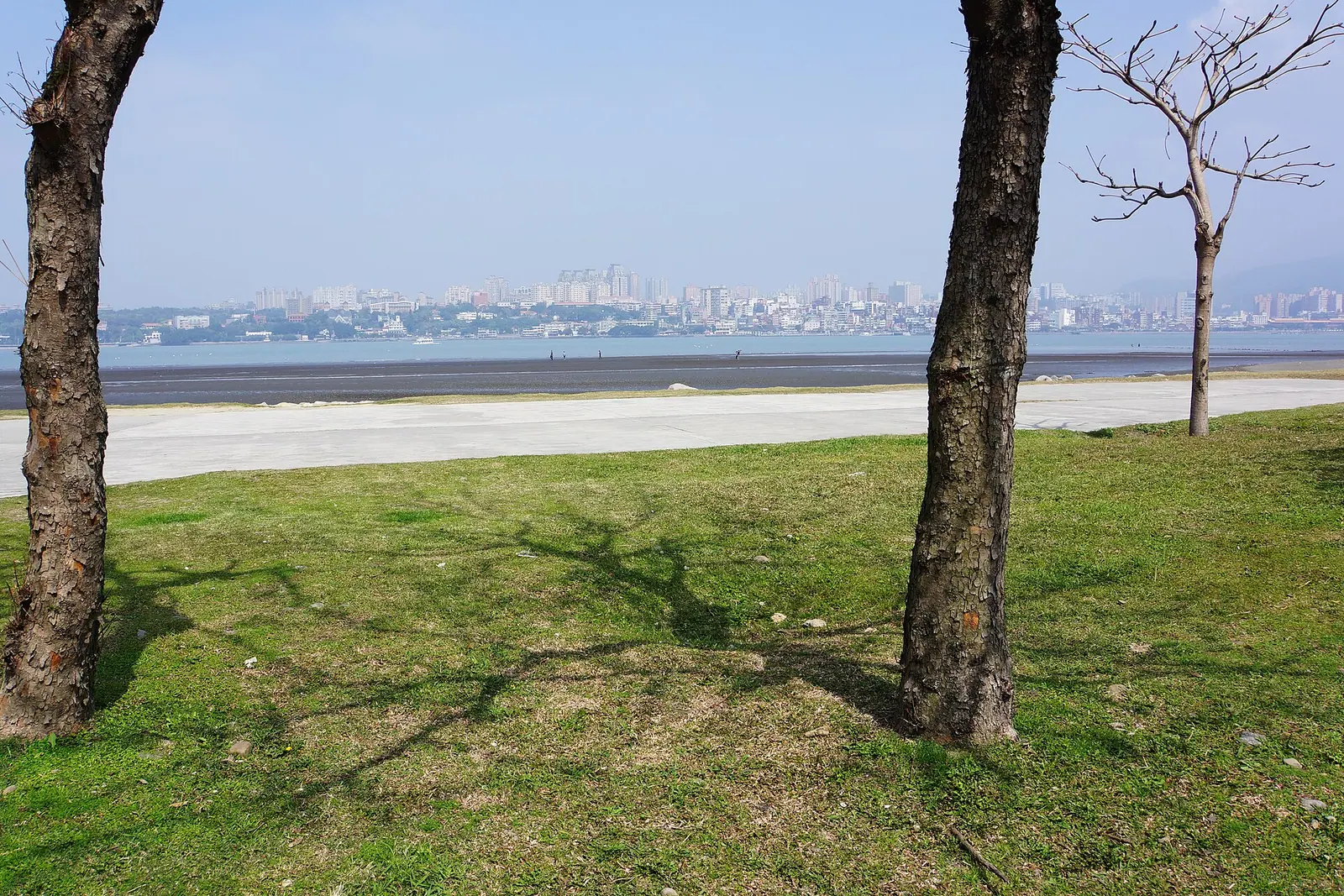
Indonesia is wider than Europe and holds more than 17,000 islands, so no road, rail line or ferry will carry you from Buddhist stupas to dragon-sized lizards in seven days. Flights are the skeleton of any one-week trip here: four short hops can put you on Borobudur's stone terraces at dawn, on the rim of a live volcano by breakfast, and on a boat bound for Komodo before the week is out. This is a realistic, flight-first route that trades breadth for the sights people actually cross the world to see.
Flying Is the Only Way to Cover Indonesia in a Week
Indonesia stretches roughly 5,000 kilometres from tip to tip, and nothing connects its islands except water and air. There is no rail link from Java to Bali, no bridge to Flores, and the ferries that do exist swallow entire days for distances a plane covers in an hour. Domestic aviation is not a luxury here — it is the itinerary. The practical gateways are Soekarno–Hatta in Jakarta, Yogyakarta's airport at Kulon Progo, Juanda in Surabaya, Ngurah Rai outside Denpasar, and Komodo Airport at Labuan Bajo. Flown in one direction, that chain forms an eastbound arc from temple-studded Java to the diving heart of the Lesser Sunda Islands, and you never have to retrace a single step.
Timing matters more than most travellers expect. The dry season runs roughly April to October, and it is the only sensible window for volcano sunrises and open-water crossings. July and August bring the biggest crowds and the highest domestic fares, while May, June and September deliver the same clear skies with noticeably calmer airports. November to March is the wet season: still workable in Bali and Yogyakarta, but boat trips around Komodo get rough and cloud often hides the volcanic views you came for.
Book domestic legs the moment your international dates are fixed, especially the Denpasar–Labuan Bajo route, which fills up weeks ahead in peak season. Low-cost carriers here typically include a small cabin bag of about seven kilograms and charge extra for checked luggage, so add a 20-kilogram allowance when you book rather than at the counter. Build at least three hours between separately ticketed connections, and never schedule a Komodo boat on the same day you land — afternoon weather delays are routine.
Days 1–2: Yogyakarta, Borobudur at Dawn and Prambanan at Golden Hour
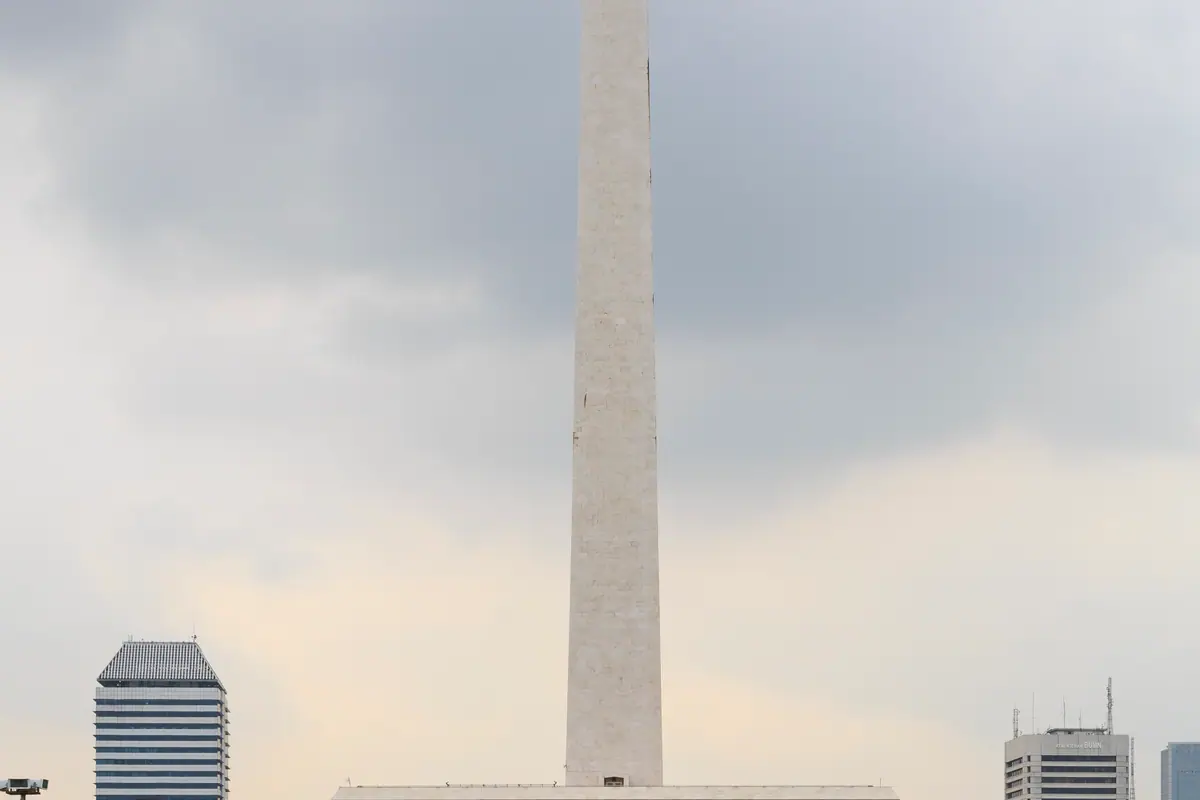
Fly from Jakarta to Yogyakarta in about an hour, or land directly if your international flight reaches the city. Give the whole first day to Borobudur, the ninth-century Buddhist monument that remains the largest of its kind on earth. Its stepped pyramid holds 504 Buddha statues and 72 perforated bell-shaped stupas, and the experience changes completely depending on the hour. Sunrise tickets are limited and sell out days ahead; you enter in darkness around 4:30am, climb while the mist sits in the surrounding palms, and watch Merapi's cone appear as the light rises. If sunrise slots are gone, the viewing platform at Setumbu Hill looks straight across the temple bowl at a fraction of the cost.
Spend the afternoon of day two at Prambanan, a ninth-century Hindu complex of soaring spires, the tallest of which reaches 47 metres above the plain. Arrive by mid-afternoon, when the stone turns honey-coloured, and stay for the Ramayana ballet staged beside the temples under floodlights. Between the two monuments, fill your remaining hours in the old city: the Sultan's Kraton with its gamelan pavilions, the sunken bathing pools of Taman Sari Water Castle, and the evening bustle of Malioboro Street, where you can eat gudeg — young jackfruit simmered for hours in palm sugar and coconut milk — straight from a roadside angkringan cart.
One extra half-day rewards anyone willing to go underground or uphill. Jomblang Cave drops you by rope some 60 metres into a collapsed cavern where a shaft of light falls onto a fossil-rich forest floor, while a dawn jeep run up Mount Merapi's ash slopes shows you the lava channels that shaped this entire plain. Two nights in Yogyakarta is the minimum; three makes the whole region feel unhurried instead of ticked off.
Day 3: East Java's Volcanoes, Bromo's Sunrise and Ijen's Blue Fire
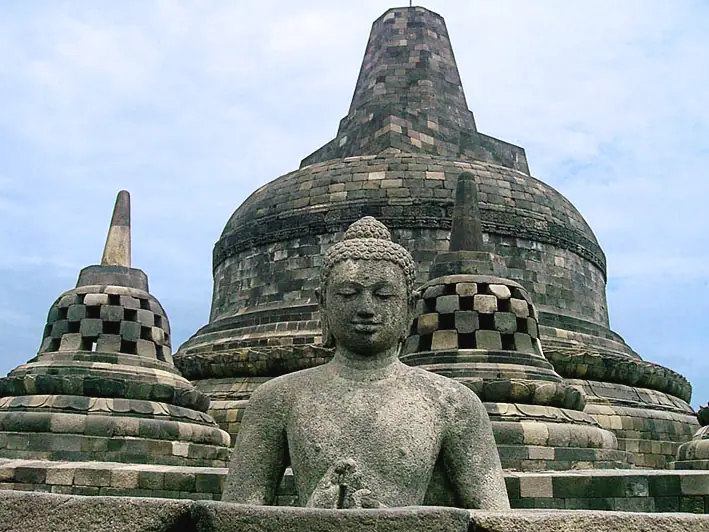
Fly from Yogyakarta to Juanda in Surabaya in roughly an hour, or into Malang if you can find a schedule that suits, then drive four to five hours to the highland village of Cemoro Lawang. The alarm goes off around 3am, and a four-wheel-drive hauls you up to the Mount Penanjakan viewpoint at about 2,770 metres. What unfolds below is a caldera floor of grey sand holding several cones, with Mount Bromo steaming sulkily inside it. Once the sun is up you cross the Sea of Sand on foot or by horse and climb roughly 250 concrete steps to the crater rim, where the ground vibrates and sulphur gusts over your shoulder. Allow an hour at the rim, and bring a mask and a windproof layer — the pre-dawn temperature here sits near freezing.
Serious itineraries then push east to Ijen, near Banyuwangi, for the blue-fire phenomenon that only appears in the hours before dawn. The hike is about three kilometres and takes 90 minutes to two hours, climbing steadily through pine forest and then down into a crater where sulphuric gases ignite with an electric blue flicker. You need a proper respirator; the plume will catch your throat otherwise. This is also a working mine, and you will pass men carrying 70 to 90 kilograms of sulphur up the crater wall in baskets — watch, do not obstruct, and tip if you take photographs.
Realistically, doing Bromo and Ijen back to back gives you a punishing 36 hours with very little sleep. If comfort matters more than bragging rights, choose Bromo and spend the freed time at Tumpak Sewu, a vast tiered waterfall an easy drive from Malang, or Madakaripura, where a canyon of water curtains soaks you from every side. From Banyuwangi you can either fly to Denpasar in under an hour or take the ferry across to Gilimanuk and drive into Bali.
Days 4–5: Bali's Cliff Temples, Rice Terraces and Volcanic Sunrises
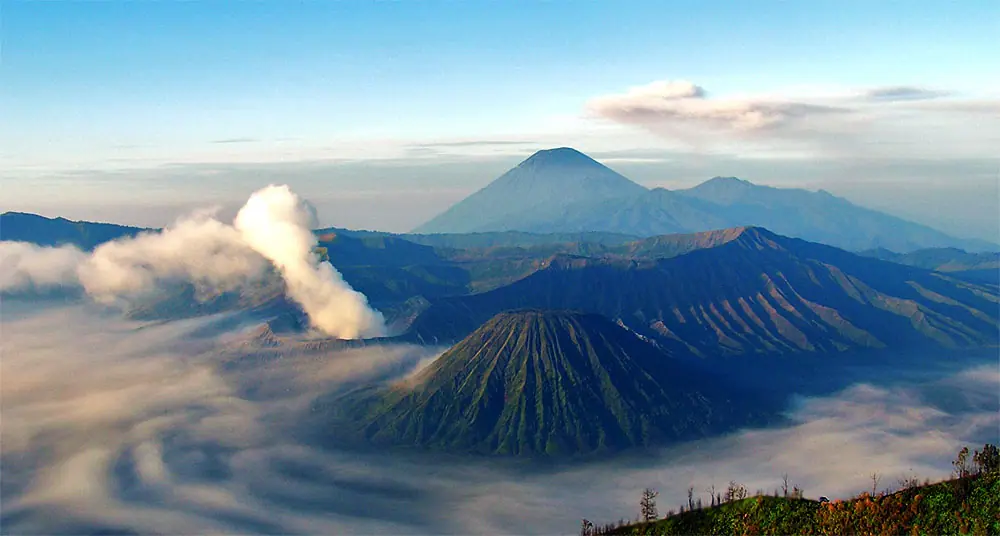
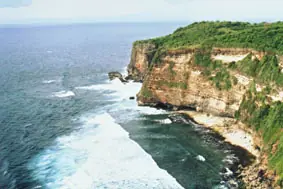
Bali packs an unreasonable amount into a small island, so resist the urge to see all of it. Base yourself in Ubud for culture and greenery, or on the Bukit peninsula for surf and sunsets. On the Bukit, Uluwatu Temple sits on a promontory roughly 70 metres above the Indian Ocean; come in the late afternoon, watch the Kecak fire dance in the clifftop amphitheatre, and keep a hand on your sunglasses because the resident macaques are professionals. Further north along the coast, Tanah Lot is a sea temple perched on a tidal rock, best reached at low tide with an hour to spare before sunset.
Inland, the Tegallalang Rice Terraces carve the valley outside Ubud into flooded green staircases that photograph best in early morning before the tour vans arrive. Nearby, the Sacred Monkey Forest Sanctuary protects a mossy temple complex tangled with banyan roots, and Tirta Empul's holy spring pools still draw Balinese families for purification rituals. If you want altitude, the Mount Batur sunrise trek starts around 3:30am and puts you above a caldera lake within two hours, while Besakih, the island's mother temple, spreads across the slopes of Mount Agung itself.
Build in more transfer time than seems reasonable. Ubud to Uluwatu can take anywhere from 90 minutes to two and a half hours depending on traffic, and the same goes for crossing to the airport. If you have a spare day, the fast boat to Nusa Penida and the viewpoint above Kelingking Beach delivers one of the most photographed landscapes in Southeast Asia, though the road down is steep and unapologetically rough.
Days 6–7: Fly to Labuan Bajo for Komodo Dragons and Padar's Viewpoint
The flight from Denpasar to Labuan Bajo takes about 75 minutes and ranks among the most scenic short hops anywhere, with the islands of Sumbawa and Flores scrolling beneath you. Book a morning departure — afternoon flights are frequently delayed by wind and cloud. From the harbour, most travellers choose between a long day trip by speedboat and a two-day, one-night liveaboard. The liveaboard is worth the extra time and money, because it lets you reach the outer sites before the day boats arrive and sleep under a sky with almost no light pollution.
The unquestioned highlight is Padar Island, where a 30- to 45-minute stair climb ends at a viewpoint overlooking three bays with sand in three different colours. From there, boats run to Komodo and Rinca islands, where rangers lead walks past the famous Komodo dragons — keep to the group, stay on the path, and do not wander with food. Elsewhere in the national park, Pink Beach gets its blush from crushed red coral, Manta Point at Karang Makassar is a reliable spot for reef mantas in the dry season, and Batu Bolong is a submerged pinnacle that divers describe in reverent tones.
Note that Komodo National Park charges entry and conservation fees that vary through the year, and rangers must accompany you on the islands. The dry season from April to October offers the calmest crossings and best visibility; January and February can bring swells that cancel boats entirely. If you fly back to Bali on day seven, take an evening departure and leave the morning free in case of weather disruption.
Making the Flights Work, and What to Cut if Plans Slip
Four domestic flights is the realistic maximum for seven days: Jakarta to Yogyakarta, Yogyakarta to Surabaya, Surabaya to Denpasar, and Denpasar to Labuan Bajo. Anything more and you spend your holiday in terminals. Volcanic ash from Java's active cones can ground flights with little warning, so if Komodo or Bromo is the centrepiece of your trip, keep a buffer day before your international departure. When booking separate tickets, treat each connection as fragile: three hours minimum, ideally more, and never with the last flight of the day.
Packing deserves thought, since low-cost domestic fares often include only a seven-kilogram cabin bag. Buy checked baggage when you book, keep a light jacket and a respirator in your day pack for volcano mornings, and carry reef-safe sunscreen and a rash guard for Komodo. Reusable water bottles and a sarong — required at Balinese temples, useful on cold boat decks — earn their place in any bag.
If this route feels too rushed, swap it wholesale rather than trimming it. Sumatra's Lake Toba and Samosir Island, reached via Medan, offer a slower week of Batak culture and volcanic scenery. Raja Ampat, accessed through Sorong and a ferry to Waisai, is a liveaboard week for divers. Lombok pairs a Mount Rinjani trek with the Gili Islands, and Pangkalan Bun in Borneo opens the door to riverboats and wild orangutans. Each is a genuine seven-day trip on its own — which is precisely why one week in Indonesia should never try to cover two of them.
Frequently asked questions
How many flights does a one-week Indonesia itinerary need?
Four domestic flights is the practical ceiling without spending your trip in airports: Jakarta to Yogyakarta, Yogyakarta to Surabaya, Surabaya to Denpasar, and Denpasar to Labuan Bajo. Each hop is roughly one to one and a half hours in the air, but allow half a day door to door once transfers and buffers are counted.
What is the best time of year for this route?
The dry season from April to October. May, June and September are the sweet spot: clear volcano sunrises, calm seas around Komodo and fewer crowds than July and August. From November to March expect afternoon downpours, rougher crossings around Flores and a real chance that cloud hides Bromo and Batur at dawn.
How far ahead should I book domestic flights?
Book the moment your international dates are locked, particularly Denpasar to Labuan Bajo, which sells out weeks ahead in peak season. Indonesian public holidays and school breaks push domestic fares up sharply, and seats on the Flores route in July and August can vanish months in advance.
Can I do this itinerary without joining organised tours?
Most of it, yes. Domestic flights, hotels and taxis are easy to arrange independently, and Yogyakarta's temples and Bali's sights can be visited on your own. The exceptions are East Java's volcano circuit, where shared jeep transfers are the norm, and Komodo National Park, where you need a licensed boat and an official ranger to land on the dragon islands.
Do I need a visa to enter Indonesia?
Many nationalities can enter visa-free or obtain a visa on arrival for a stay of around 30 days, but the rules change and depend on your passport. Check the current requirements for your nationality well before departure, and make sure your passport has at least six months of validity left, since airlines enforce this at check-in.
Plan it — flights in Indonesia
Live search, booked directly with trusted providers.
Sort the rest of your trip
Everything for Indonesia, in one place
Stay in Indonesia
Hotels, guesthouses and apartments — compared in one search.
Search hotels
Transfer in Indonesia
Private driver waiting on arrival — no queues, no surprises.
Book a transfer
Travel insurance
Medical cover, delays and lost baggage — sorted before you go.
Get coveredMore guides in Indonesia
Top Things to Do in Indonesia: Temples, Volcanoes and Island Escapes
A Tour of Indonesia: Food, Culture and Local Experiences Worth Building a Trip Around
Where to Stay in Indonesia: Hotels by City and the Sights That Justify Them
Where to Stay in Lombok: Beach Villas, Surf Towns and Rinjani Homestays
5-Day Ubud Itinerary: Flights, Rice Terraces and the Real Bali