Indonesia is less a single destination than a chain of thousands of islands strung across warm water, and the fastest way to understand it is through its kitchens, its temple courtyards and its markets. You can watch dawn break over Borobudur, eat rendang in a Padang warung before nine, and learn to draw batik wax by hand before sunset. This guide maps the food, culture and local experiences worth building a tour of Indonesia around.
Eating the Archipelago: Warungs, Padang Plates and Regional Kitchens
Indonesian cooking is not one cuisine but several hundred, and the regional differences are the point. In West Sumatra you eat rendang, beef braised for hours in coconut milk and a spice paste until the liquid disappears and the meat lacquers itself; in Central Java, gudeg — young jackfruit stewed slow with palm sugar and coconut — arrives sweet and dark beside rice. Bali gives you babi guling, spit-roasted pig served with lawar and crackling, and bebek betutu, duck wrapped in banana leaf and spice. Makassar has coto, a rich offal-and-peanut broth; Lombok has ayam taliwang, grilled chicken hammered flat and painted with chilli. Everywhere, sambal sits on the table like a condiment with an opinion.
The backbone of everyday eating is the warung, a family-run stall that might be a roadside shack, a cart or a front room. Look for lesehan, floor-seated dining where you take off your shoes and eat cross-legged at a low table. The rumah makan Padang is its own institution: dishes are stacked on your table before you order, and you pay only for what you touch. If heat worries you, say "tidak pedas" for the cooking itself, but keep the sambal on the side — it is usually the best thing on the table.
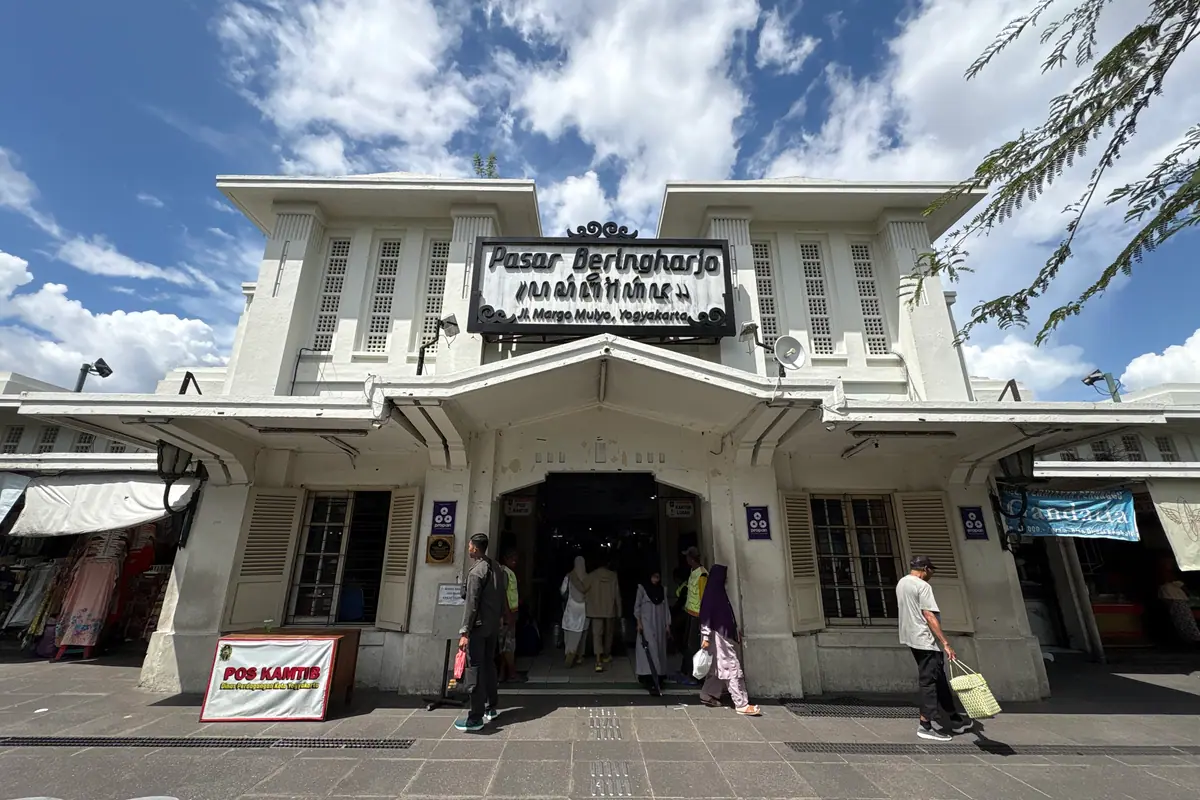
Markets are where the day starts and ends. Head to Pasar Beringharjo in Yogyakarta or Pasar Badung in Denpasar before seven in the morning for wet-market chaos, fresh tempeh and palm sugar; come back after dark for pasar malam night markets selling sate ayam, martabak and kerak telor. Bring small notes, expect to eat standing, and follow the longest queue — it is rarely wrong.
Java's Temple Heartland: Yogyakarta, Borobudur and Prambanan
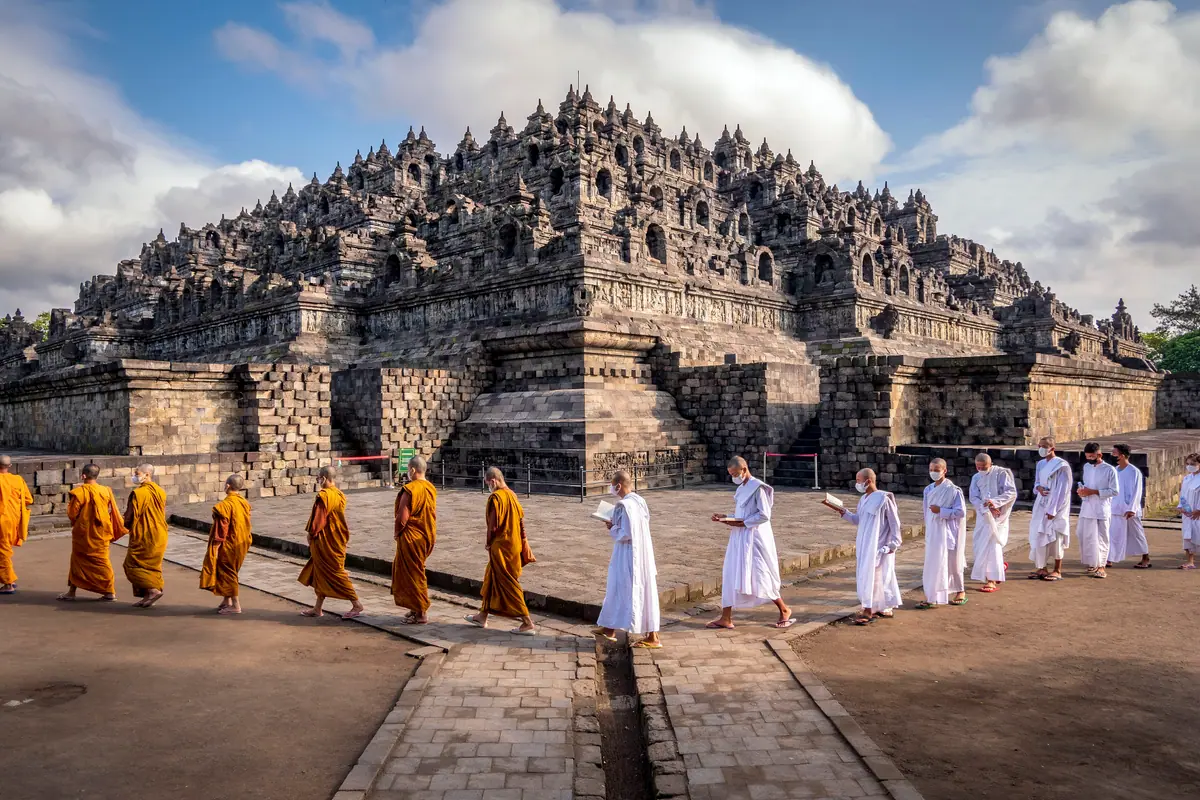
Yogyakarta is the cultural anchor of Java, and the reason most first-time visitors start here. Arrive at Borobudur before sunrise, when mist still sits in the Kedu Plain and the Buddha reliefs emerge tier by tier as the light climbs; the climb is a few hundred steps and takes about an hour at an unhurried pace. In May, the Waisak festival fills the monument with lanterns and chanting monks. An hour away, Prambanan's sharp Hindu spires glow orange at sunset, and a Ramayana ballet is staged outdoors beside them on dry-season evenings.
Inside the city, the Kraton — the Sultan's palace — still functions as a living court, with gamelan rehearsals you may be allowed to watch, and the Taman Sari water castle nearby hides bathing pools and underground passages behind a village of batik painters. Malioboro Street runs between them, half market and half stage, busy from late afternoon until well past midnight.
For hands-on culture, sign up for a batik workshop in the lanes around Kampung Taman, where you draw hot wax with a canting pen and dye your own panel over a few hours. In the evening, watch wayang kulit shadow puppetry — a full performance runs all night, but shorter tourist-friendly excerpts of one to two hours are common and just as atmospheric.
Bali: Temple Ceremonies, Rice Terraces and the Sound of Gamelan
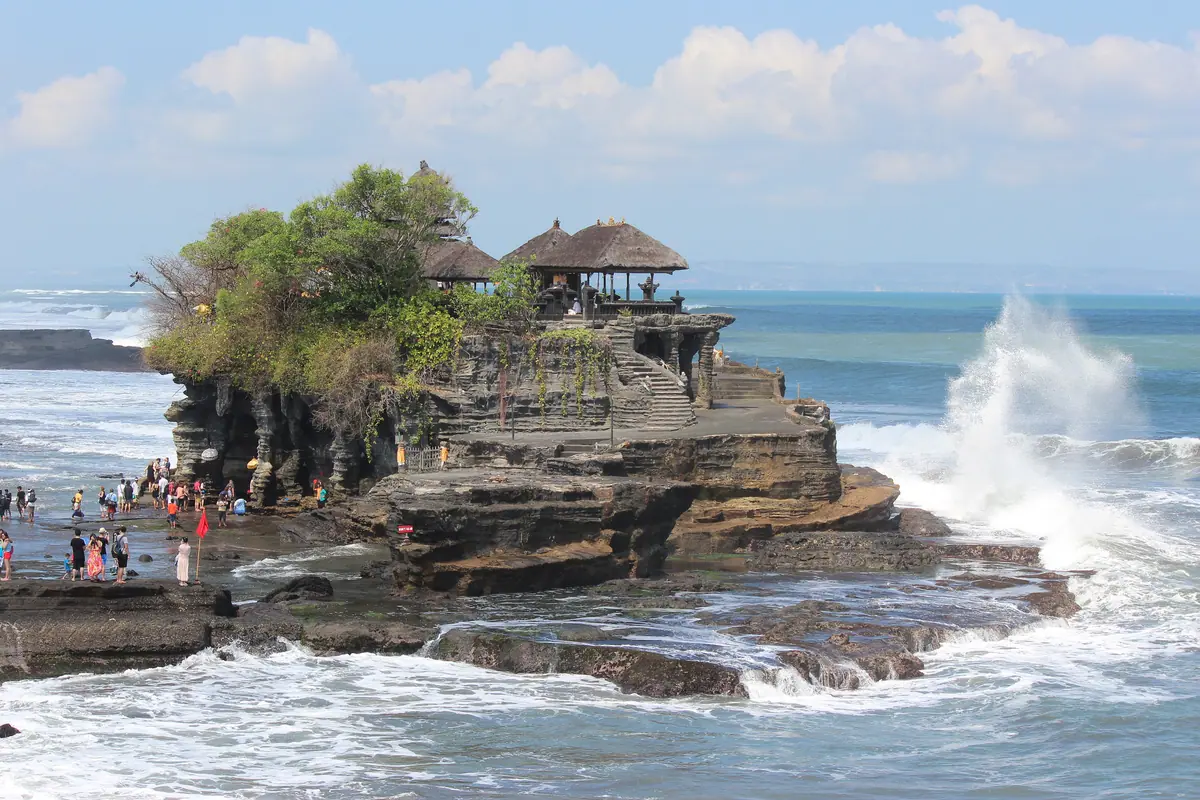
Bali rewards travellers who look past the beach clubs. Tanah Lot, a sea temple balanced on a wave-battered rock, is best at low tide near sunset; Uluwatu, perched on a clifftop in the south, hosts a Kecak fire dance at dusk that turns the whole horizon into a stage. At Tirta Empul near Ubud, visitors join locals in the purification pools, moving from spout to spout in a ritual that is centuries old — wear a sarong and a sash, and go early to avoid the crowds.
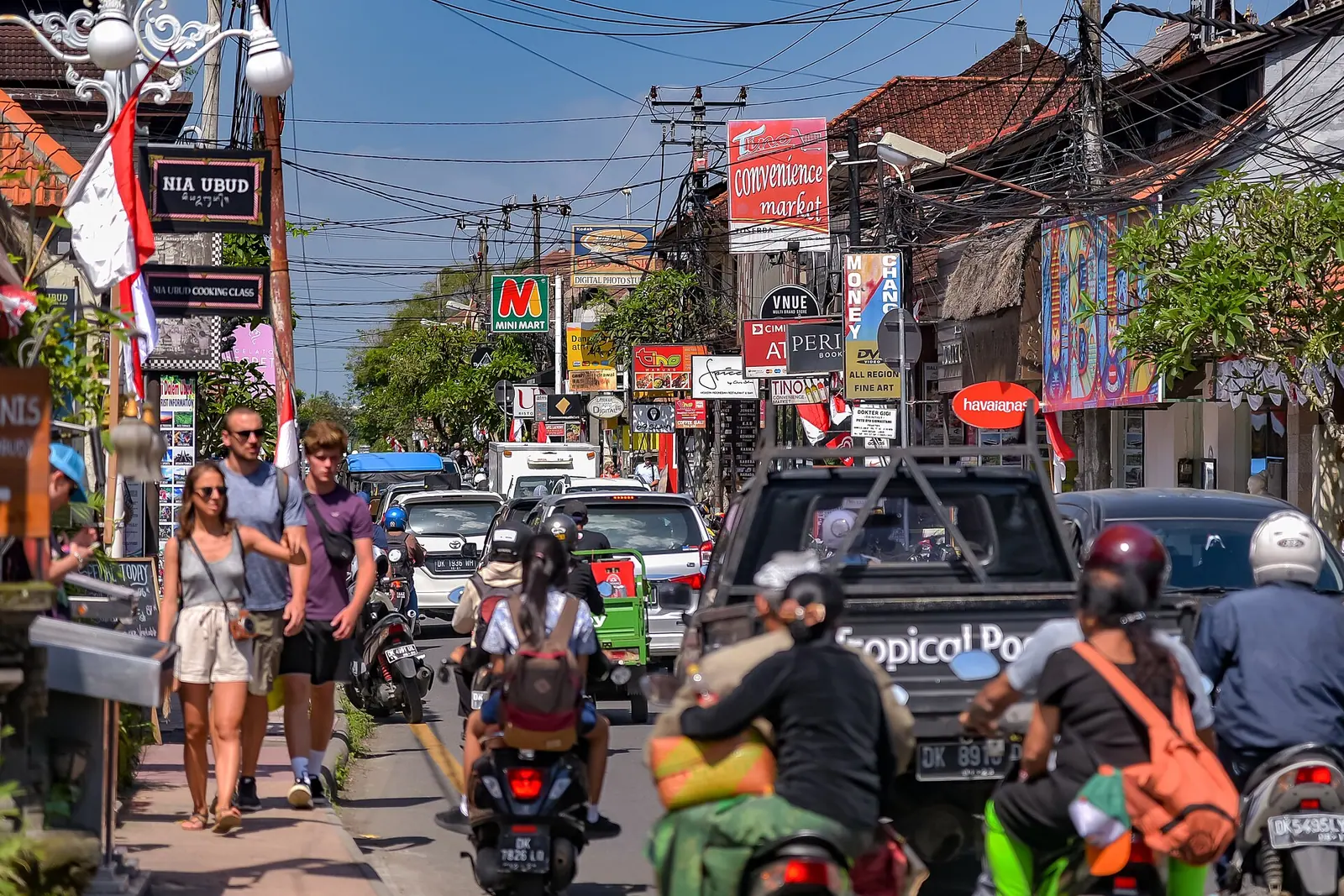
North of Ubud, the Tegallalang rice terraces show off the subak irrigation system, a cooperative water-sharing network so effective it has been recognised as a cultural landscape. Walk the terraces at first light, then visit the Ubud Monkey Forest, a temple complex wrapped in banyan roots and inhabited by hundreds of long-tailed macaques. Further east, Besakih sits on the slopes of Mount Agung, the island's mother temple and its most sacred site.
Time a visit around the Balinese calendar and you will see the island at its most alive. Nyepi, the day of silence, shuts down the entire island for 24 hours after a night of ogoh-ogoh effigy parades — airports close, lights stay off, and even tourists are asked to stay indoors. Galungan, which comes roughly every six months, fills every compound gate with tall bamboo penjor poles.
Volcanoes, Komodo Dragons and the Wild East
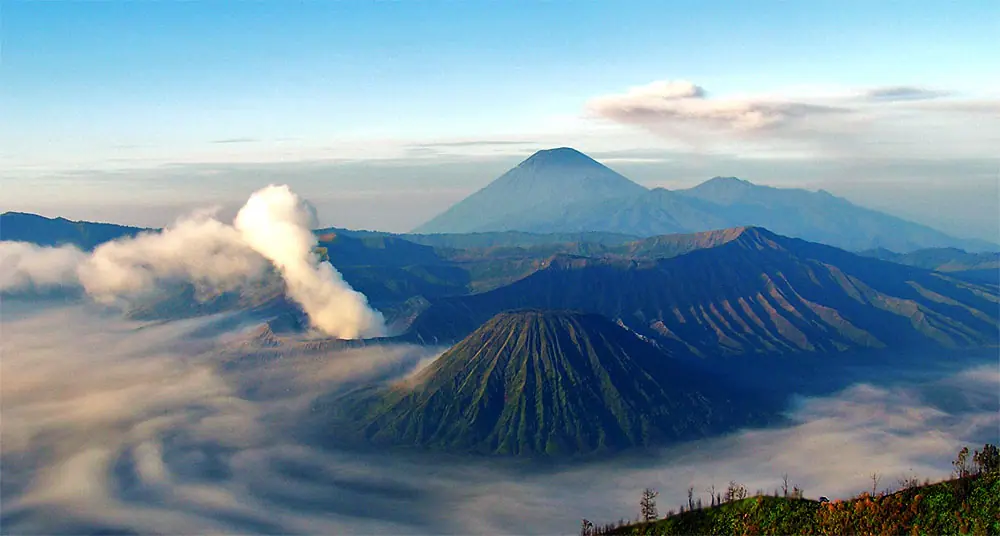
Mount Bromo is the classic Indonesian sunrise: a 4WD climb in the dark to a viewpoint over a smoking cone rising from a grey caldera sea, best between April and October. Nearby, Ijen's crater draws night walkers who descend before dawn to see the electric-blue flames of burning sulphur — a genuinely demanding hike of around three hours round trip with a gas mask, and not for anyone short on sleep or lungs.
Sail east and the wildlife changes entirely. Komodo National Park, reachable by boat from Labuan Bajo, is home to the only wild population of Komodo dragons, plus the pink beaches of Komodo and the ridgeline viewpoints of Padar Island. The dry season from April to December gives the calmest crossings and the clearest water for diving.
Further still, Raja Ampat in West Papua is the archipelago's great marine wilderness — thousands of limestone islets, coral gardens and manta rays, best visited in the calmer months from October through April. On a different scale entirely, Lake Toba in North Sumatra holds the Batak villages of Samosir Island, where you can hear centuries-old choral singing, and the Toraja highlands of Sulawesi stage elaborate funerary rites known as Rambu Solo, often between June and September.
Hands-On: Batik, Coffee, Jamu and Cooking Classes
The best souvenirs from Indonesia are skills. In Ubud, Yogyakarta and Solo, half-day cooking classes begin in the market, move to a family kitchen, and finish with you grinding a spice paste by hand for rendang, sate or nasi goreng. You will learn that kecap manis — sweet soy — is the quiet workhorse of the cuisine, and that a good sambal is built from shallots, chilli, terasi and lime rather than poured from a jar.
Coffee culture runs deep. Highland plantations around Kintamani in Bali and the Toraja highlands of Sulawesi produce some of the archipelago's most distinctive beans, often still roasted in a clay pan over an open fire. Ask for a cupping session rather than a tourist tasting, and you will taste the difference between washed, honey and natural processing in a single sitting.
For something gentler, seek out jamu, the herbal medicine tradition of Java: turmeric, ginger and tamarind pounded into bright yellow tonics and sold from baskets and small shops. Many cities also offer gamelan lessons, where you learn to strike a bronze key at exactly the right moment in a cyclic melody — harder, and more meditative, than it looks.
When to Go and How to Travel With Respect
The dry season, roughly May to September, is the safest bet for Java, Bali, Lombok and Flores: clearer skies, calmer seas and easier volcano access. The wet season from November to March brings heavy afternoon downpours, cheaper rooms and greener rice terraces, but can close boat crossings and hiking trails. Note that Muslim holidays shift each year — Ramadan brings daytime closures of some eateries, while Idul Fitri triggers the biggest travel surge of the year, so book transport and rooms well ahead.
Two to three weeks is the realistic minimum for a tour that covers two or three islands properly. Domestic flights and ferries link the main hubs, but distances are deceptive: crossing from Java to Flores can take the better part of a day once transfers are counted. Build in slower days rather than trying to tick off five islands in a fortnight.
Dress modestly at temples — shoulders and knees covered, a sarong and sash tied at the waist, which are usually available to borrow or hire at the entrance. Ask before photographing ceremonies or people; a smile and a gesture goes a long way. Drink sealed bottled water or filtered water, eat at busy warungs where the food turns over fast, and remember that patience, not speed, is the local rhythm.
Frequently asked questions
What should I eat first in Indonesia?
Start with nasi goreng or sate ayam at a busy warung so you have a baseline, then seek out regional specialities: rendang in a Padang restaurant, gudeg in Yogyakarta, babi guling in Bali and coto Makassar in Sulawesi. Keep sambal on the side until you know your heat tolerance.
How long do I need for a food and culture tour of Indonesia?
Two to three weeks lets you pair Java's temple heartland around Yogyakarta and Borobudur with Bali's ceremonies and rice terraces, plus one wildcard island such as Flores for Komodo or Sulawesi for Toraja. Anything shorter means a lot of airport time.
When is the best time to visit?
May to September is the dry season and the most reliable window for volcanoes, temple sunrises and boat trips. October to April is wetter and cheaper, with Raja Ampat at its best. Avoid the days around Idul Fitri, when domestic travel peaks and transport sells out.
Is Indonesia suitable for first-time solo travellers?
Yes, particularly Bali, Yogyakarta and the Labuan Bajo gateway to Komodo, where guesthouses, organised day tours and English-speaking guides are easy to find. Outside these hubs, local transport takes more planning; hiring a driver for a day is inexpensive and removes most of the friction.
What should I wear and how should I behave at temples?
Cover shoulders and knees, and tie a sarong with a sash at the waist — usually available at temple entrances. Step around offerings on the ground rather than over them, avoid pointing your feet at shrines, and always ask before photographing people or ceremonies. During Nyepi in Bali, stay inside your accommodation for the full 24 hours.
Sort the rest of your trip
Everything for Indonesia, in one place
Stay in Indonesia
Hotels, guesthouses and apartments — compared in one search.
Search hotels
Transfer in Indonesia
Private driver waiting on arrival — no queues, no surprises.
Book a transfer
Stay online in Indonesia
Travel eSIM — data the moment you land, no roaming bills.
Get an eSIM