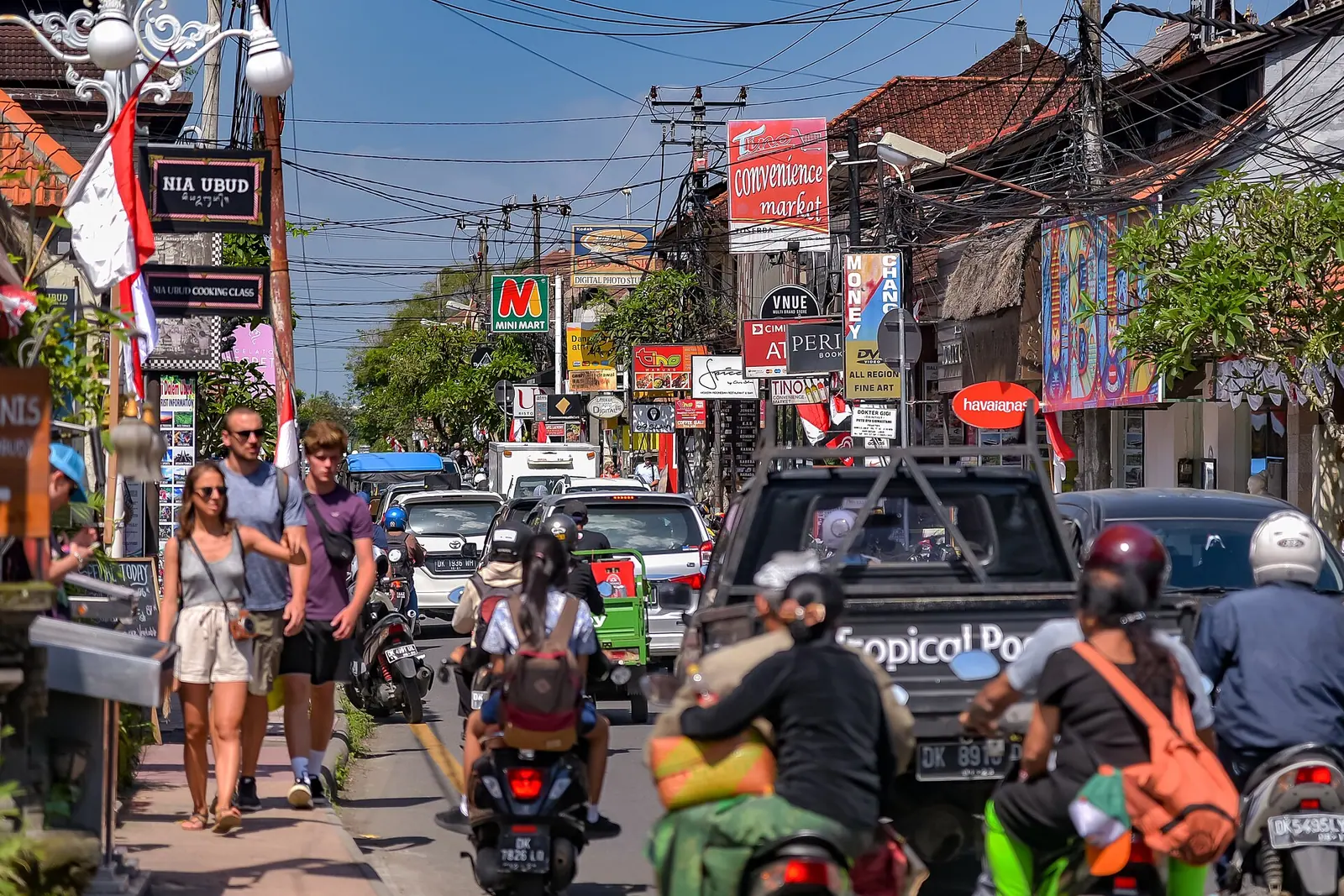
Ubud has no runway of its own — every journey here begins with a flight into Bali's southern coast and a winding climb into the island's green heart. Five days is just enough to settle into the rhythm of morning mist over the paddies, temple water on your skin, and a volcano glowing before dawn.
Flights Into Bali and the Road Up to Ubud
Almost every international arrival lands at Ngurah Rai International Airport on the southern isthmus near Kuta and Seminyak, roughly 35 to 45 kilometres from Ubud. That distance looks trivial on a map and rarely is on the ground: the drive takes anywhere from 75 minutes in the quiet hours to a sweaty two and a half hours when the afternoon traffic congeals around Sanur and Batubulan. Late-night and early-morning arrivals are the kindest — the road empties, the air cools, and you reach your guesthouse while the rice fields are still silver with mist.
If you are flying in from elsewhere in Indonesia, domestic terminals handle the short hops from the major Javanese and eastern islands, and those flights often land mid-morning. A pre-arranged private transfer is the smoothest option; metered taxis are scarce at the airport and app-based pickups are restricted in parts of central Ubud, so it pays to have something booked before you land. Bring a light layer for the car — the air conditioning is fierce after tropical humidity.
One flight-planning detail catches people out: Nyepi, the Balinese Day of Silence, usually falls in March and shuts the entire airport for a full 24 hours, with no arrivals, departures or ground transport. It is a beautiful, uncanny day to be in Ubud — everything closed, no lights, no traffic — but only if you are already here. Check the date before locking in flights, and keep a buffer day at the end of your trip for weather delays during the wet months.
Day 1: Land, Unpack, and Walk the Campuhan Ridge
Treat your first day as a soft landing. Drop your bags at a guesthouse tucked down a gang — one of the narrow lanes that hide gardens, warungs and family temples behind a plain wall — then walk into the centre along Jalan Raya Ubud. The main street is busier than the postcards suggest, but a few minutes north and the noise gives way to frangipani, incense and the clatter of a gamelan rehearsal drifting over a courtyard wall.
In the late afternoon, head for the Campuhan Ridge Walk, a paved path that climbs between two rivers from the edge of town out toward the village of Sayan. It takes about an hour each way at an easy pace, and the light turns honey-coloured around 5pm. Continue past the little cafes at the far end and you will find the quieter, less-photographed half of the walk, where rice terraces fall away in stepped green terraces.
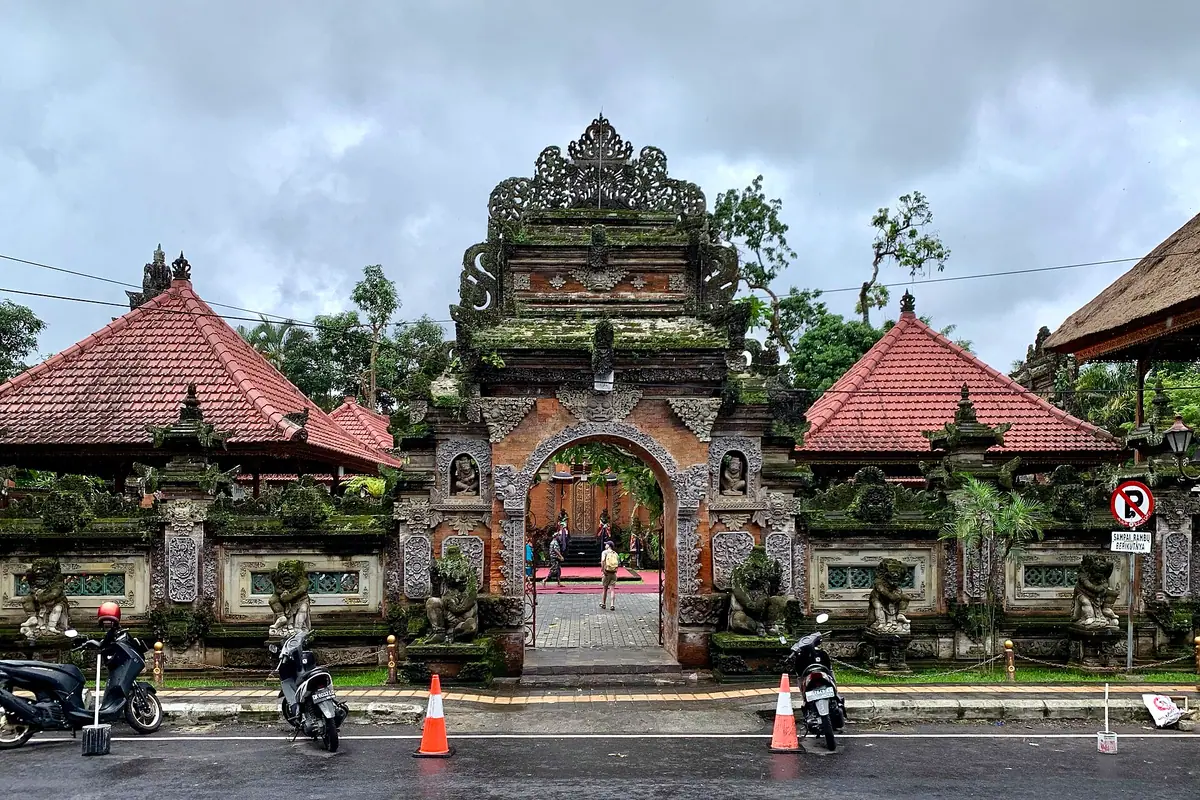
Finish the evening at Ubud Palace, where traditional dance performances are staged most nights in the open courtyard. Arrive early for a front-row seat on the stone steps; the legong and kecak pieces last roughly an hour and are a far better introduction to Balinese culture than any museum label.
Day 2: Rice Terraces, Waterfalls and Coffee Slopes
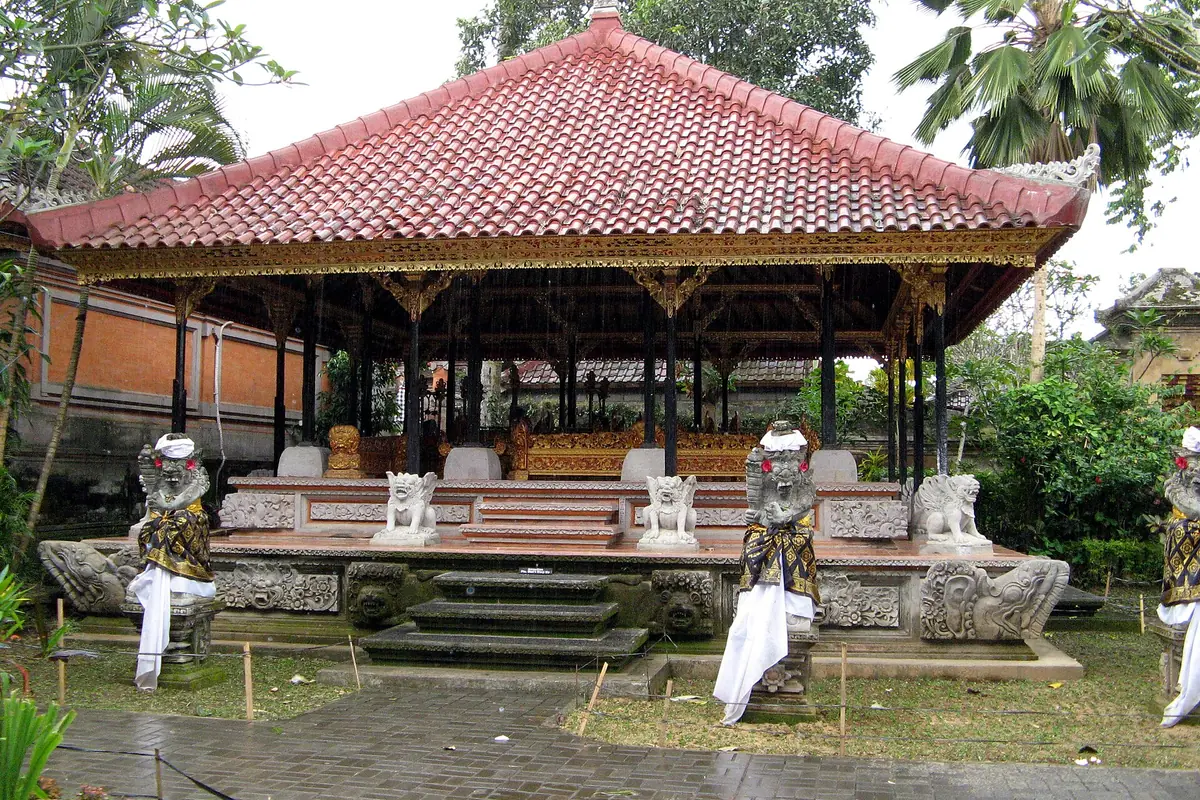
Go early. The terraces at Tegalalang, north of town on the road toward Kintamani, are at their best before 8am, when the mist is still caught in the paddies and the coaches have not yet arrived. The famous sculpted terraces are genuinely striking, but the surrounding valley rewards a longer wander: follow the farm paths down toward the river and you will pass farmers with scythes, ducks herded along bunds, and small shrines draped in checked cloth.
Midday heat is the cue to chase water. Tegenungan is the closest and most visited waterfall, with a wide swimming pool at its base; Tukad Cepung, further east, is a slot canyon where a shaft of light falls through a cave opening around mid-morning; Tibumana is the gentlest of the three, a slim curtain of water with a shallow pool that suits families. Wear sandals with grip — the steps are steep, wet and uneven.
On the way back, stop at a hillside plantation for a tasting flight of local coffee and cocoa, and walk the rows of coffee bushes, vanilla vines and clove trees. Luwak coffee is the tourist headline, but the real pleasure is sitting on a veranda above the valley with a cup in hand as the afternoon clouds stack up over the volcano ridge.
Day 3: Water Temples, Purification and a Dance at Dusk
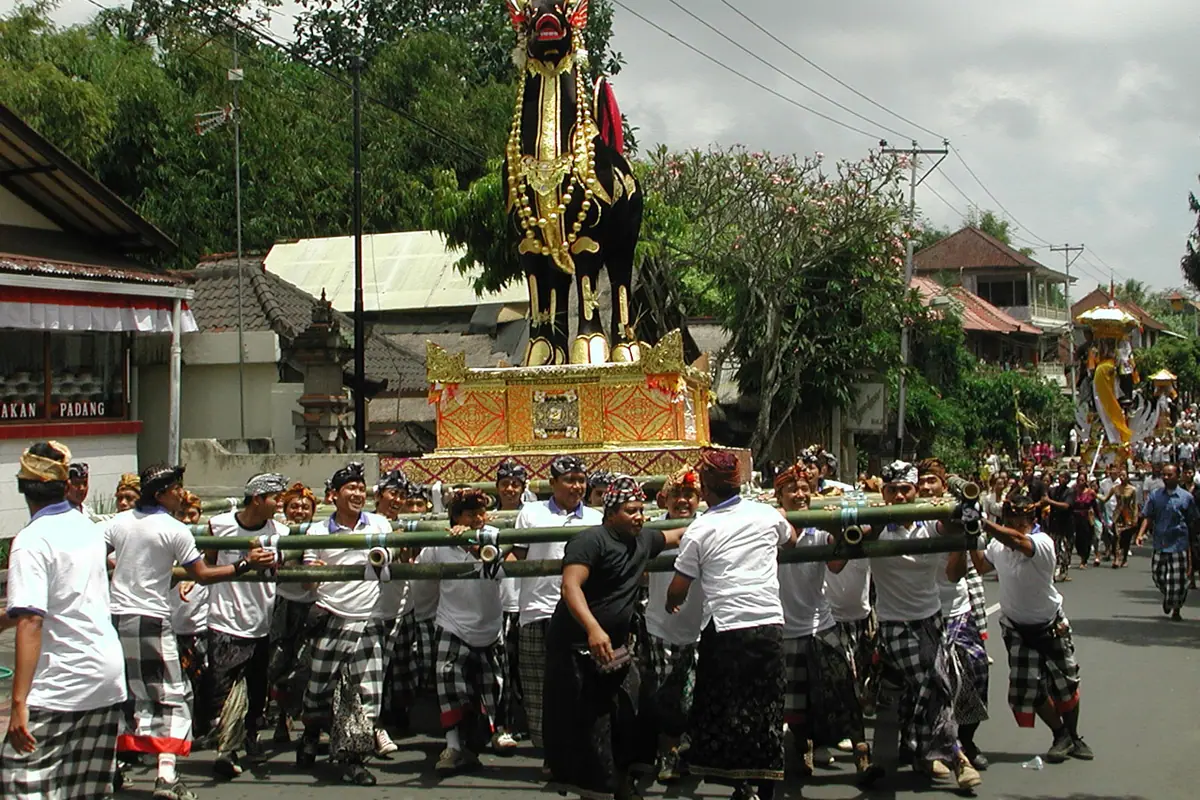
This is the day for the sacred side of Ubud. Start at Tirta Empul, the spring temple near Tampaksiring, where Balinese Hindus come to bathe under a row of spouts in a ritual of purification. Visitors are welcome to enter the pools if dressed respectfully — sarong and sash are available to borrow at the entrance — but keep to the second pool and follow the local sequence rather than posing for photos. The spring water is cold, clear and startlingly bracing.
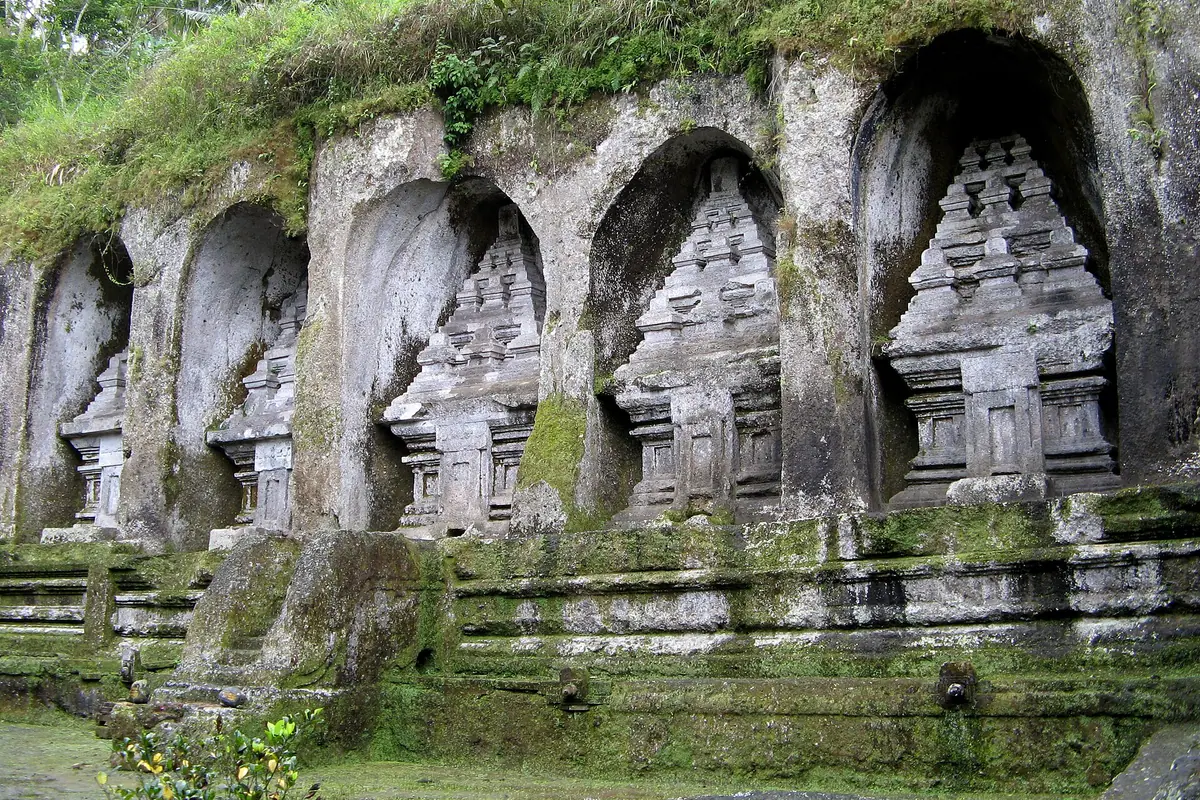
Pair it with Goa Gajah, the eleventh-century cave sanctuary with a carved demon's mouth for a doorway, a short drive south. The site is compact, so an hour is plenty, and it combines well with the rock-cut shrines at Gunung Kawi if you have the energy — a steep descent through rice paddies to ten monolithic tombs carved into a cliff face.
Back in town before dark, wander to the lotus pond at Saraswati Temple, where the water lilies close up in the late afternoon and the pavilions glow. Then take in a second dance performance or a shadow-puppet show; a short walk along Jalan Hanoman afterward for a plate of nasi campur or babi guling rounds off the day.
Day 4: Sunrise on Mount Batur — or a Slow Day in Town
The classic fourth-day splurge is the Mount Batur sunrise trek. Pickup is around 2am, the hike takes roughly two hours up a volcanic ash path, and you reach the rim before first light to watch the sun lift out of a caldera filled with cloud. It is cold at the top, so bring a fleece and a hat, and bring proper shoes rather than sandals — the descent is loose and slippery. On the way home, most drivers stop at the lakeside hot springs, where you can soak the ache out of your legs.
If a pre-dawn alarm sounds like punishment, stay local instead. The Sacred Monkey Forest Sanctuary sits at the southern end of Jalan Monkey Forest, a mossy ravine of banyan roots and old temples that takes about 90 minutes to walk slowly. The resident macaques are bold: keep bags zipped, sunglasses on your face and food out of sight. Afterward, book a Balinese massage in one of the garden spas along the ridge, or join a half-day cooking class that begins with a market walk and ends with a table full of satay, lawar and coconut desserts.
Either version of day four works well with an afternoon of rest, because Ubud's evenings are best spent doing very little: a glass of iced tea on a balcony, the sound of rain on a tin roof, and an early night.
Day 5: Markets, Museums and the Road Back to the Airport
Spend your last morning gently. The art market beside Ubud Palace opens early and is thick with sarongs, rattan bags and woodcarvings — bargain politely, and start around half the opening ask. If you want the art without the haggling, the Neka Art Museum and the Agung Rai Museum of Art both hold serious collections of Balinese and Indonesian painting set in gardens, and both are quiet before lunch. Time your visit for the sweet spot between April and June or September and October: dry, green, and noticeably less crowded than the July and August peak.
Leave for the airport at least four hours before an international departure, and five in the late afternoon, when the bypass toward the coast can seize up completely. The wet season, roughly November through March, brings heavy afternoon downpours that slow the roads further, so build in slack rather than sprinting for a check-in desk.
If your flight is late, ask your guesthouse to hold your bags and spend the gap over a long lunch in the rice fields north of town, watching the farmers and the herons. It is a far gentler farewell to Ubud than an hour stuck in a car with your luggage on your knees.
Frequently asked questions
Which airport do I fly into for Ubud, and how long is the transfer?
Ubud has no airport of its own, so you fly into the international airport on Bali's southern coast near Kuta. The drive inland usually takes 75 minutes in light traffic and up to two and a half hours at peak times, so arrange a private transfer in advance rather than relying on finding a taxi at the terminal.
What is the best month to visit Ubud?
April to June and September to October offer the best combination of dry, clear weather and manageable crowds. July and August are reliably sunny but much busier and pricier, while November to March is the wet season — still lovely, greener and cheaper, but expect heavy afternoon downpours and slower roads.
Do I need a car or scooter in Ubud?
For the town centre, no — it is compact and walkable, and the Campuhan Ridge Walk, palace, market and Monkey Forest are all within 20 minutes on foot. For day trips to the terraces, waterfalls and temples you will want a driver, a guided tour or a rented scooter if you are confident on narrow, busy roads.
Are there days when flights to Bali are cancelled for cultural reasons?
Yes. Nyepi, the Balinese Day of Silence, usually falls in March and closes the airport completely for 24 hours, with no flights and no road traffic anywhere on the island. Plan your dates around it, or embrace it if you are already in Ubud — it is one of the most memorable days to be here.
Is five days enough for Ubud?
Five days covers the essentials comfortably: a soft arrival day, the terraces and waterfalls, the water temples, a volcano sunrise or a slow spa day, plus time for markets and museums before you fly out. Add two or three more nights if you want to combine Ubud with the coast, the eastern temples or a side trip to the quieter Sidemen valley.

