Indonesia is less a country than an archipelago of separate worlds — 17,000-odd islands strung across three time zones, where a single trip can move from incense-heavy temple courtyards to sulphur clouds at dawn and reef gardens swarming with fish. The trick is knowing which handful of places deserve your days, and in what order to string them together.
Java's Temple Heartland: Borobudur, Prambanan and Yogyakarta
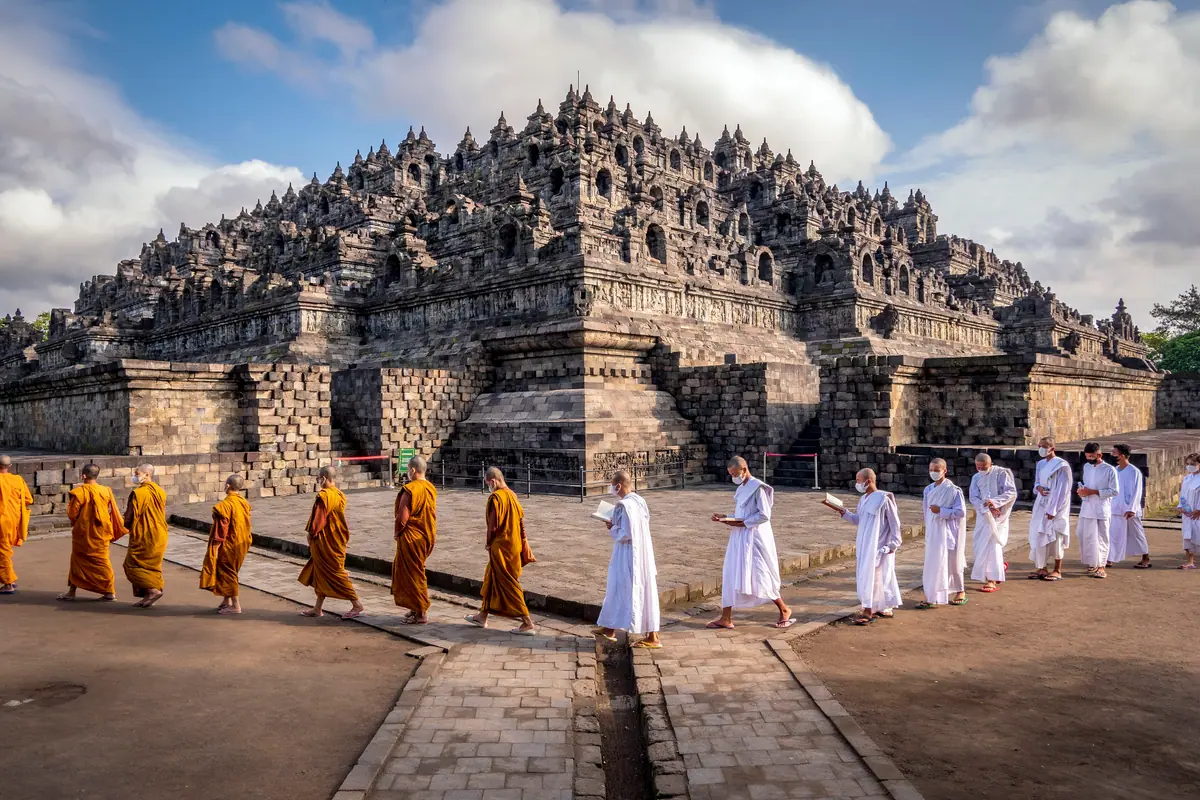
Start in central Java, where two of the ancient world's great monuments sit within an hour of each other. Borobudur rises out of the rice fields as a stepped stone mountain — nine stacked platforms, more than 2,600 carved relief panels and hundreds of Buddha statues, many still seated inside their perforated stupas. Come for first light, when mist sits in the surrounding palms and the volcano silhouettes sharpen behind the terraces; you'll want to be at the gate by 5am and to have booked a sunrise entry in advance. Circuiting the monument clockwise, level by level, takes about 90 minutes at an unhurried pace, and the upper terraces are where the views and the crowds both concentrate.
Forty minutes east, Prambanan is the opposite mood: a cluster of soaring Hindu spires in pale volcanic stone, the tallest of them reaching roughly 47 metres. Late afternoon is the sweet spot, when the stone glows gold and the day-trippers thin out — and if you time it right, the open-air Ramayana ballet performed nearby on selected evenings makes a memorable double bill.
Base yourself in Yogyakarta, the cultural capital that ties the region together. Spend a morning at the Kraton, the sultan's still-occupied palace compound, wander the sunken pools and underground passages of the Taman Sari water castle, then eat your way down Malioboro's evening street stalls. Allow three full days here if you want Borobudur, Prambanan, the Kraton and a jeep run up the slopes of volatile Mount Merapi without sprinting between them.
Volcano Sunrises: Mount Bromo and Ijen Crater
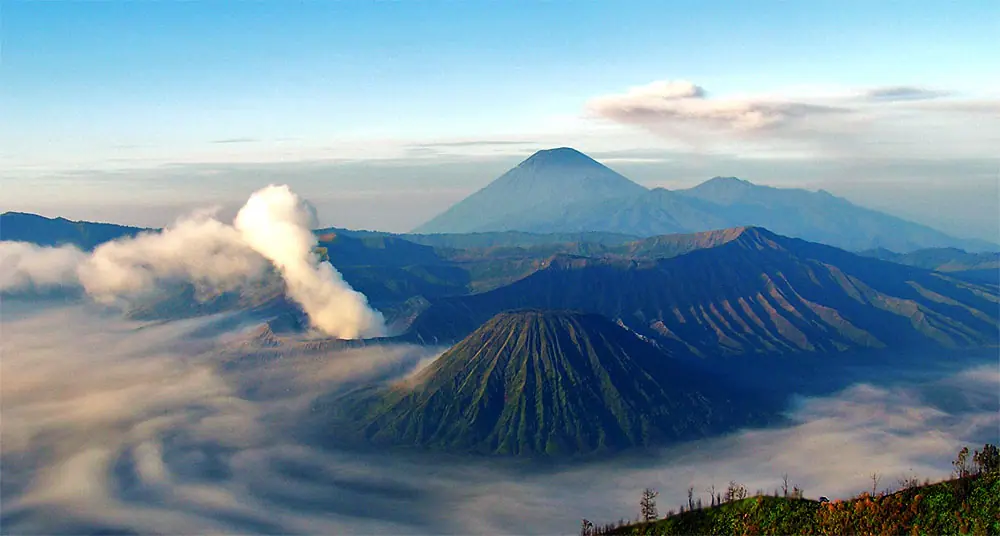
East Java delivers the country's most cinematic mornings. Mount Bromo sits inside a vast caldera known as the Sea of Sand, a grey plain that you cross by 4WD before climbing a staircase to the rim of the smoking crater. Viewpoints such as King Kong Hill and the Penanjakan ridge face the classic panorama: Bromo steaming, the higher cone of Batok beside it and Semeru puffing ash in the distance. It is genuinely cold up there before dawn — bring a fleece and a hat — and the roads into Cemoro Lawang village are best reached by private car or an organised overnight trip from Malang, Probolinggo or Yogyakarta.
Further east, Ijen is a different kind of spectacle. The hike up takes roughly 90 minutes to two hours in the dark, and the reward is the electric-blue flames of burning sulphur gas that flicker from the crater floor, plus a turquoise acid lake that looks almost artificial in daylight. Sulphur miners still haul baskets up and down the same path, so keep to the side and step aside for them. Gas masks are worth the small rental fee, and a 1am start is standard if you want the blue fire before the sky brightens.
The two volcanoes pair naturally with a transfer onward to the Bali ferry at Banyuwangi, making a three-day overland crossing that many travellers rate as the highlight of a Java itinerary.
Bali's Cliff Temples, Rice Terraces and Sunrise Treks
Bali rewards those who look past the beach clubs. Uluwatu Temple balances on a limestone cliff some 70 metres above the Indian Ocean, and the sunset Kecak performance in its amphitheatre — a chanting, fire-lit chorus — is worth planning your day around. Watch your sunglasses and water bottles; the resident monkeys are bold and organised.
Inland, the Tegallalang rice terraces near Ubud show off the island's sculpted landscape at its best in the early morning, before the light flattens and the coaches arrive. Nearby, Tirta Empul's holy springs draw Balinese families for purification rituals, and visitors in a sarong and sash can join respectfully. For something more physical, the pre-dawn trek up Mount Batur is a straightforward two-hour climb rewarded with a sunrise above a sea of cloud and Lake Batur below.
If you have a spare day, the Nusa Penida island hop delivers the postcards — the dinosaur-back ridge of Kelingking Beach and the limestone arch at Diamond Beach — though the descent to the sand is steep and the currents along the coast are strong, so treat swimming as optional and the viewpoints as the point.
Dragons and Pink Beaches: Komodo National Park and Raja Ampat
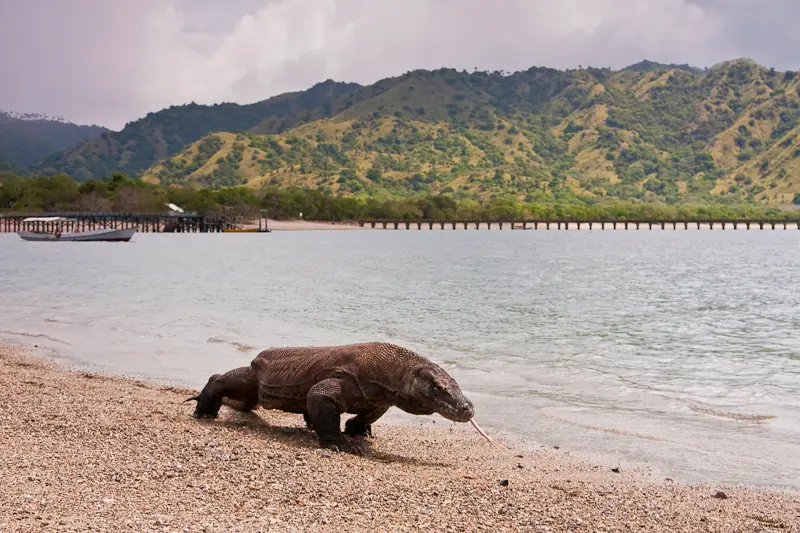
Fly to Labuan Bajo on Flores and you're at the doorway to Komodo National Park, a scattering of dry, rugged islands where the world's largest lizards still hunt. Ranger-led walks on Komodo and Rinca islands take an hour or two, and sightings are common — keep your distance, follow the guide and hold your stick. The surrounding marine park is arguably the bigger draw: manta rays gliding over cleaning stations, turtles on almost every shallow reef, and coral gardens that have made this one of the planet's great dive destinations.
The signature viewpoint is Padar Island, where a short, steep trail leads to a ridge overlooking three crescent bays of different coloured sand. Boat trips also stop at Pink Beach, tinted by crushed red coral, and at Batu Bolong for snorkelling. Most visitors see it all on a two- to three-day liveaboard or a fast day-boat from Labuan Bajo; if you have more time, a four-day sailing west toward Sumbawa is a much quieter experience.
For the ultimate underwater pilgrimage, Raja Ampat off West Papua is the one that divers plan years around. The karst islets of Wayag, the reefs of Misool and the sheer variety of life in the Coral Triangle are the reason people come. It's remote — expect flights via Sorong, then a boat — and the best conditions run roughly October to April, opposite to much of the rest of the country.
Sumatra and Borneo: Orangutans, Lake Toba and Jungle Rivers
North Sumatra swings from highland calm to serious rainforest. Lake Toba, the largest volcanic lake on earth, holds Samosir Island at its centre, where Batak villages, carved wooden houses and a cool, uncrowded pace make it easy to lose a few days. It's a two- to three-hour drive from Medan, and the highland air is a welcome break from coastal humidity.
Near Bukit Lawang, the forests of Gunung Leuser National Park protect critically endangered Sumatran orangutans. Two-day jungle treks with local guides include river crossings, night camps and, often, close encounters with semi-wild orangutans near the rehabilitation area — plus gibbons, hornbills and Thomas's leaf monkeys if you're quiet and lucky. Proper trekking here means sturdy shoes, leech socks in the wet months and a realistic attitude toward mud.
Over in Indonesian Borneo, Tanjung Puting National Park is explored by klotok, a wooden riverboat you sleep on as it chugs upstream. You'll stop at feeding stations to watch orangutans swing in, spot proboscis monkeys in the mangroves at dusk and fall asleep to cicadas. Three days on the river is the standard, booked from Kumai near Pangkalan Bun.
When to Go, How Long to Allow and How to Move Around
Indonesia straddles the equator, so it's warm year-round, but the dry season from roughly April to October is the most reliable window for volcanoes, treks and boat trips — May, June and September are the sweet spots for a balance of weather and crowds. The wet season from November to March brings afternoon downpours rather than washed-out days in most places, and it's often the only time to visit Raja Ampat or dive parts of Sulawesi. Altitude matters: Bromo, Ijen and the Toba highlands get genuinely chilly at dawn.
Distances are the real planning challenge. A domestic flight can save you two days of ferries and winding roads, and most travellers do well to pick two or three regions for a two- to three-week trip — for example Java's temples and volcanoes, then Bali, then a short hop to Flores or Lombok. Java alone deserves a week if you want Yogyakarta, Bromo and Ijen without rushing.
A few practical habits smooth the way. Carry a sarong for temple visits, dress modestly in conservative regions, accept offerings on the pavement rather than stepping over them, and use a reef-safe sunscreen on snorkelling days. Jakarta, with its old town quarter of Kota Tua and the Monas national monument, works fine as a 24-hour gateway city but rarely as a destination in itself. Roads in the big cities are slow at almost every hour, so build slack into any day that ends with a flight.
Frequently asked questions
What is the best time of year to visit Indonesia?
The dry season, roughly April to October, is best for temple touring in Java, volcano sunrises at Bromo and Ijen, and island hopping around Komodo. May, June and September usually combine good weather with fewer visitors. Raja Ampat and parts of Sulawesi are at their best from around October to April, so it depends which islands you're prioritising.
How many days do you need in Indonesia?
Two to three weeks is realistic for two or three regions, given the travel distances. A focused week works well for Yogyakarta plus the East Java volcanoes, or for Bali with a Nusa Penida day trip. Add at least three or four days if you want Komodo, and a week or more for a serious dive trip to Raja Ampat.
Do I need a visa to visit Indonesia?
Many nationalities can enter on a visa on arrival, typically valid for 30 days and extendable once. Rules and eligible countries change, so confirm the current requirements with an official Indonesian embassy or consulate before booking flights, and make sure your passport has at least six months' validity.
Is Indonesia suitable for first-time or solo travellers?
Yes, particularly Bali, Yogyakarta, Lombok and the Labuan Bajo area, where tourist infrastructure is well established and English is widely spoken in the travel industry. Solo travel is common, and guided treks and boat trips are easy to join. Take usual precautions with valuables, use trusted transport at night and check local advice before remote hikes.
How do you get between the islands?
Domestic flights are the fastest option and connect hubs like Jakarta, Yogyakarta, Denpasar, Labuan Bajo and Sorong. Ferries and fast boats link Bali, Lombok and the Gilis, and cross from Java to Bali at Banyuwangi. For Komodo and Raja Ampat, expect a combination of flight plus boat, and book liveaboard or multi-day boat trips well ahead in peak season.
Plan it — experiences in Indonesia
Live search, booked directly with trusted providers.
Sort the rest of your trip
Everything for Indonesia, in one place
Stay in Indonesia
Hotels, guesthouses and apartments — compared in one search.
Search hotels
Transfer in Indonesia
Private driver waiting on arrival — no queues, no surprises.
Book a transfer
Stay online in Indonesia
Travel eSIM — data the moment you land, no roaming bills.
Get an eSIMMore guides in Indonesia
One Week in Indonesia by Flight: Java, Bali and Komodo Itinerary
A Tour of Indonesia: Food, Culture and Local Experiences Worth Building a Trip Around
Where to Stay in Indonesia: Hotels by City and the Sights That Justify Them
Where to Stay in Lombok: Beach Villas, Surf Towns and Rinjani Homestays
5-Day Ubud Itinerary: Flights, Rice Terraces and the Real Bali