Amritsar eats the way it prays — generously, communally and without shortcuts. This is a city where a free kitchen feeds thousands around the clock and where a breakfast kulcha arrives with a slab of butter the size of your palm. Come hungry, come early, and plan your day around the tandoor.
Why Amritsar Cooks With Ghee, Charcoal and Colossal Generosity
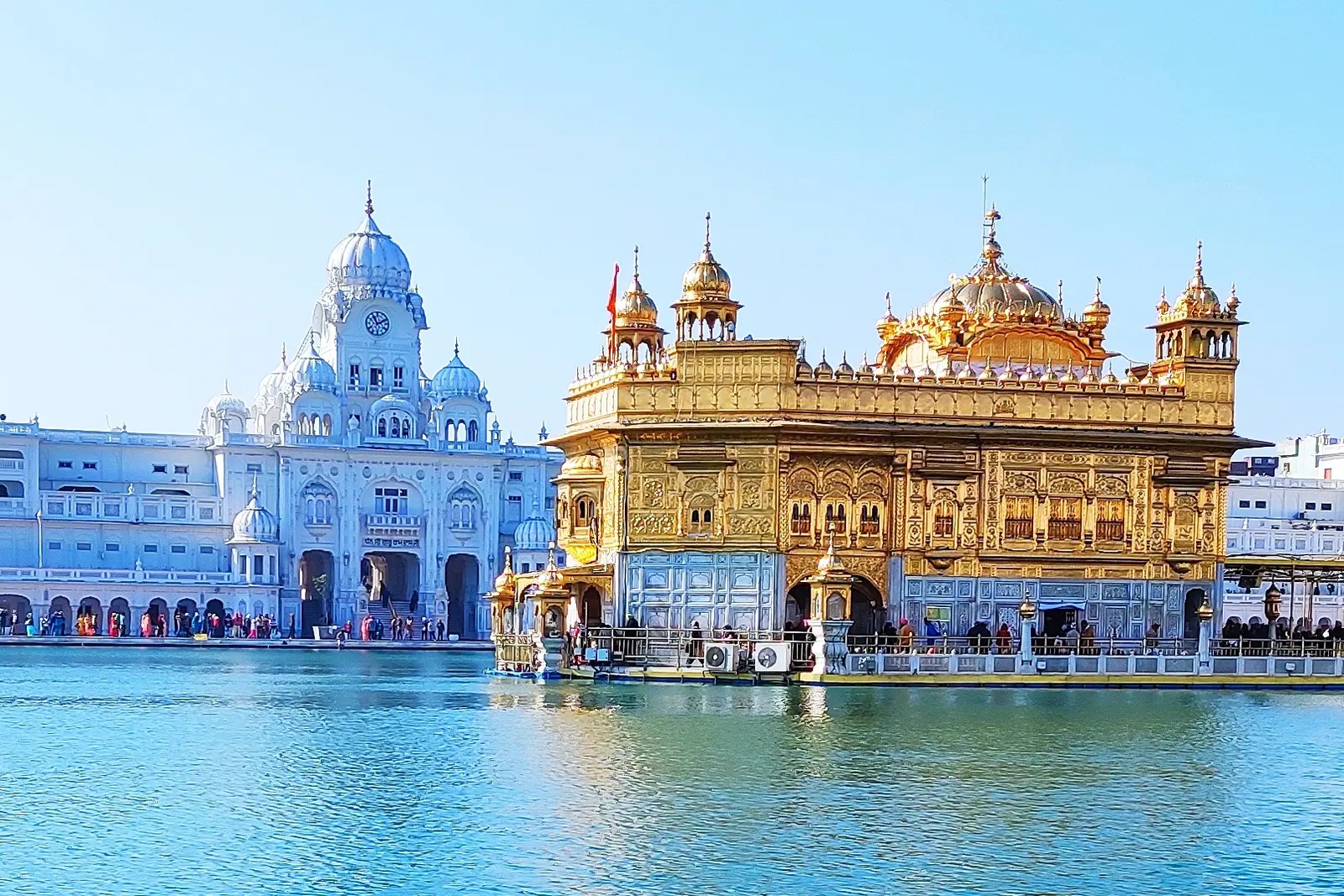
Amritsar's food is inseparable from the Golden Temple. The shrine's community kitchen runs around the clock, turning out dal, roti and rice for anyone who walks in, whatever their faith and whatever is in their wallet. Volunteers roll dough, stir vats and wash steel plates by the thousand, working in shifts so that no one is ever turned away. That idea — feeding people is a duty, not a transaction — quietly shapes everything else you'll eat here. Portions are enormous. Butter appears whether or not you asked. Nobody minds if you nurse one glass of lassi for an hour.
The cooking itself is old-school Punjabi: ghee rather than oil, charcoal and wood rather than gas, long simmers rather than quick fixes. Inside the walled city around the temple, the scene is overwhelmingly vegetarian — dhabas, chaat carts and sweet shops crammed into lanes barely wide enough for two people. Head out towards Lawrence Road, Majitha Road and the bus stand side and you hit the tandoor-and-fish belt, where river fish, chicken and kebabs take over after dark.
Seasons decide the menu. From late October to March the city cooks for winter: sarson da saag with makki di roti, gajar ka halwa, dense gond pinni. April turns warm, and May and June can climb past 40°C, when mornings and late evenings become the only civilised hours to eat. A well-run day here has its own rhythm — kulcha at eight, a dhaba thali at one, chaat at five, tandoor at eight.
Amritsari Kulcha: The Breakfast That Runs the Old City
A kulcha is a soft, leavened bread slapped against the inside wall of a clay tandoor until it puffs and blisters, then pulled out, crushed in a fist and brushed with ghee. The Amritsari version is stuffed before it goes in: spiced potato, crumbled paneer, onion, sometimes cauliflower or radish. It lands on your plate with a bowl of dark, tangy chole, a heap of sliced onion, green chutney, and — in the better places — a small dish of curd to cool things down. Crisp at the edges, molten in the middle, it is breakfast, lunch and a lesson in restraint all at once.
Timing matters more than location. The classic kulcha shops fire up their tandoors between 7.30 and 8.30am and sell out or wind down by about 11.30; many reopen in the evening from around 5pm to 8pm for a second shift. The strongest clusters are along Lawrence Road and around Ranjit Avenue, with a handful of legendary stalls tucked into the walled city near Hall Bazaar and Katra Jaimal Singh. There are no reservations, seating is shared and basic, and a ten- to twenty-minute wait at peak hour is normal.
Eat it with your hands: tear, scoop, add raw onion, dip into chole. Ask for extra butter — it's not considered greedy here, it's considered correct. Order a lassi or a small glass of hot, boiled milk tea to follow, and let the whole thing settle before you attempt to walk anywhere briskly. One kulcha is a full meal for most people; two is a declaration of intent.
Behind the Golden Temple: Dhabas, Dal Makhani and Lachha Paratha
The lanes that spill out from the temple — Chowk Passian, Katra Jaimal Singh, Guru Bazaar, the pedestrianised Heritage Street stretch — are where Amritsar's oldest kitchens still work the old way. Dal makhani here is not a side dish but the centrepiece: black urad and kidney beans left over a low flame overnight, finished with cream and a knob of butter so that it turns almost velvety. Alongside it come lachha parathas, layered and flaking, cooked in ghee until they shatter under a thumb.
A typical thali in these places is a lesson in abundance: dal, a seasonal vegetable, paneer bhurji, raita, salad, pickle, sometimes a bowl of kadhi and a piece of jaggery to finish. Everything is vegetarian, and the flavours lean on whole spices — cumin, black cardamom, dried fenugreek — rather than on heat. This is where to come if you want to understand what Punjabi home cooking tastes like when it's scaled up for a hundred hungry people at a time.
Practically, most dhabas serve from around 11am to 4pm and again from 7pm to 11pm, and the walled city empties fairly early — don't count on finding a feast at midnight. The lanes are tight, so park outside the gates and walk. Give yourself a good three hours for an old-city food wander: the distances are short but the stops multiply. Evening is the most atmospheric time, when the Heritage Street lights come on and the crowds thin out enough to actually see the shopfronts.
The Tandoor Trail: Amritsari Fish, Kebabs and Late-Night Chicken
Amritsari fish is the city's most famous export and the easiest dish to get wrong. River fish is cut into thick steaks, rubbed with lemon, ginger and garlic, then dipped in a gram-flour batter spiked with ajwain, carom seeds and chilli before hitting hot oil. Done well, the crust is lacy and shatteringly crisp while the fish inside stays moist and sweet. It arrives with onion rings, lemon wedges and a fierce green chutney, and it is best eaten standing up, within about ninety seconds of leaving the fryer.
The same belt covers tandoori chicken, seekh kebabs and chicken tikka, often rubbed with a similar carom-and-gram-flour mix that locals simply call Amritsari masala. Around Lawrence Road, Majitha Road and the streets near the bus stand, the grills and fryers start going at about 7pm and keep going until midnight; by nine the air smells of charcoal, lemon and hot oil. Order fish by weight and chicken by the plate, and expect plastic chairs, shared tables and a lot of noise.
Vegetarians are not left out — tandoori paneer tikka, mushroom tikka and spiced potatoes come off the same coals. But check before you sit: many stalls in this area are strictly meat-only, while others are strictly vegetarian, and the two rarely mix under one roof. If you're sensitive to spice, ask for the chutney on the side; it is usually hotter than the main dish.
Sugar, Cream and Cold Steel Glasses: Sweets, Lassi and Chai
Amritsar does sweets with the same unapologetic richness it applies to everything else. Jalebi is fried in ghee in fat coils, then either eaten straight — hot, crackling, syrup-heavy — or dunked into a bowl of thick rabri. The morning window, roughly 7 to 10am, is when you'll find it at its best. Winter brings the serious stuff: pinni, a dense ball of ghee, semolina and nuts; gajak and gachak made from sesame and jaggery; magaj; and rewri studded with seeds, sold from trays outside sweet shops in December and January.
Lassi is served in tall steel glasses so thick that a spoon will nearly stand up in it, crowned with a cap of malai and sometimes a sprinkle of pistachio. It comes sweet or salted, and one glass is effectively a meal. Round the same stalls you'll find chaat — dahi bhalla, papdi, golgappe with a bracingly sour water, aloo tikki — concentrated around Hall Bazaar and the lanes off Chowk Passian. In summer, swap the lassi for kulfi, falooda, aam panna or a bowl of thandai around Holi.
The everyday drink, though, is tea: kadak chai boiled hard with milk and sugar at tiny stalls, drunk standing, in small glasses, several times a day. Before you leave, buy dried lentil papad and warian — sun-dried lentil dumplings that cooks back home will thank you for. Sweet shops around Hall Bazaar generally shut by about 10pm, and the good gajak disappears well before the cold weather does.
How to Eat Amritsar Well: Seasons, Etiquette and Pacing
Plan your trip around the weather, not the calendar. October to March is the eating season — cool days, long evenings, saag and gur on every menu, and sweets that only make sense in the cold. Mid-April brings Baisakhi, when the city is loud, decorated and relentlessly hospitable. The Diwali and Bandi Chhor Divas period lights up the temple and the surrounding streets, and the November Gurpurab marking Guru Nanak's birth draws enormous crowds and endless free food. Late May and June are punishing; if you must come then, eat early, rest at midday and go out again after seven.
At the temple's community kitchen, a few rules make you a good guest: cover your head, leave your shoes outside, sit on the floor, eat with your right hand, and take only what you'll finish. Plates are washed by volunteers, often by you, and wasting food is the one real faux pas. In dhabas and stalls, sharing a table with strangers is standard, small tips are welcome but never demanded, and cash — or a mobile payment — is expected; don't assume every little shop takes a card.
Finally, pace yourself. Amritsar rewards grazing, not gorging: split dishes, walk between stops, and keep one meal a day deliberately light. Carry hand sanitiser, stick to bottled or filtered water, and be cautious with pre-cut fruit and unpasteurised dairy from carts that look quiet. Save your appetite for the places with a queue and a visible flame — turnover and heat are the two best indicators of a good, safe meal in this city.
Frequently asked questions
What food is Amritsar actually famous for?
Six things above all: stuffed Amritsari kulcha with chole, deep-fried Amritsari fish, slow-cooked dal makhani with lachha paratha, jalebi with rabri, thick malai-topped lassi, and the chaat of the old city. Tandoori chicken and seekh kebabs round out the late-night side of the menu.
Is Amritsari food very spicy?
It's medium-hot rather than brutal. The heat usually comes from the green chutney and the gram-flour masala used on fish and kebabs, not from the main dish. Ask for chutney on the side, order a lassi or curd alongside, and most things become very manageable.
How long do I need for a proper food trip?
Two full days is ideal: one for the walled city — kulcha breakfast, dhaba thali, chaat, sweets — and one for the evening tandoor-and-fish belt. With only half a day, do a temple visit plus one kulcha breakfast and one old-city meal, and accept that you're only scratching the surface.
Can anyone eat at the Golden Temple's community kitchen?
Yes. The langar is open to all visitors, day and night, regardless of faith or background, and it's always vegetarian. Cover your head, remove your shoes, sit on the floor, eat with your right hand and finish what you take. It's free, but donations and volunteer help are always welcome.
Is the street food safe for visitors?
Generally yes, if you choose well. Eat where there's a queue and food is cooked hot and fresh in front of you, avoid pre-cut fruit and dairy that's been sitting out, and drink bottled or filtered water. Carry hand sanitiser and give your stomach a day to adjust before you attempt three heavy meals in a row.
Plan it — experiences in Amritsar
Live search, booked directly with trusted providers.
Sort the rest of your trip
Everything for Amritsar, in one placeStay in Amritsar
Hotels, guesthouses and apartments — compared in one search.
Search hotels
Transfer in Amritsar
Private driver waiting on arrival — no queues, no surprises.
Book a transfer
Stay online in India
Travel eSIM — data the moment you land, no roaming bills.
Get an eSIM