Rishikesh is not one town but a string of riverbank villages strung along the Ganga where it leaves the mountains, and where you sleep changes your entire trip. Pick the wrong bank and you'll spend your holiday in traffic; pick the right one and you'll wake to temple bells, mist on the water and the smell of woodsmoke from a riverside café.
Tapovan and Laxman Jhula: Café Buzz and River-View Balconies
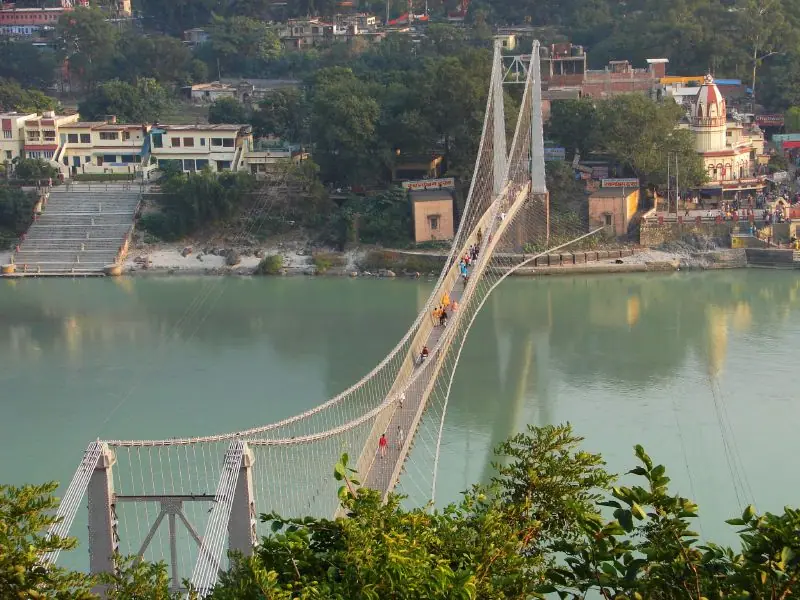
Tapovan climbs the eastern bank above the iron suspension bridge that gave Laxman Jhula its name, terraced into lanes of guesthouses, yoga shalas and rooftop cafés that lean out over the ravine. This is where most first-time visitors end up, and for good reason: you can walk to a 7am class, eat a decent breakfast overlooking the water, and be back in your room before the day-trippers arrive. Upper Tapovan, a steep ten-minute climb further up, trades foot traffic for quieter terraces and long views back to the bridge.
Expect narrow lanes shared with scooters, wandering cows and macaques that will absolutely take a bag of fruit off you. Rooms range from simple fan-cooled doubles in family-run guesthouses to mid-range boutique stays with river-facing balconies and hot showers; ask specifically for the view, because 'Ganga view' sometimes means a sliver between two buildings. Power cuts are common in high season, so a place with a backup generator matters more than you'd think.
Two practical notes: book a room set back from the main lane if you want sleep, since music from the cafés carries late, and plan your sightseeing for early morning or after 5pm — the lanes between Tapovan and the bridge become a slow crush through the middle of the day.
Swarg Ashram and Ram Jhula: Ashram Calm and Sattvic Simplicity
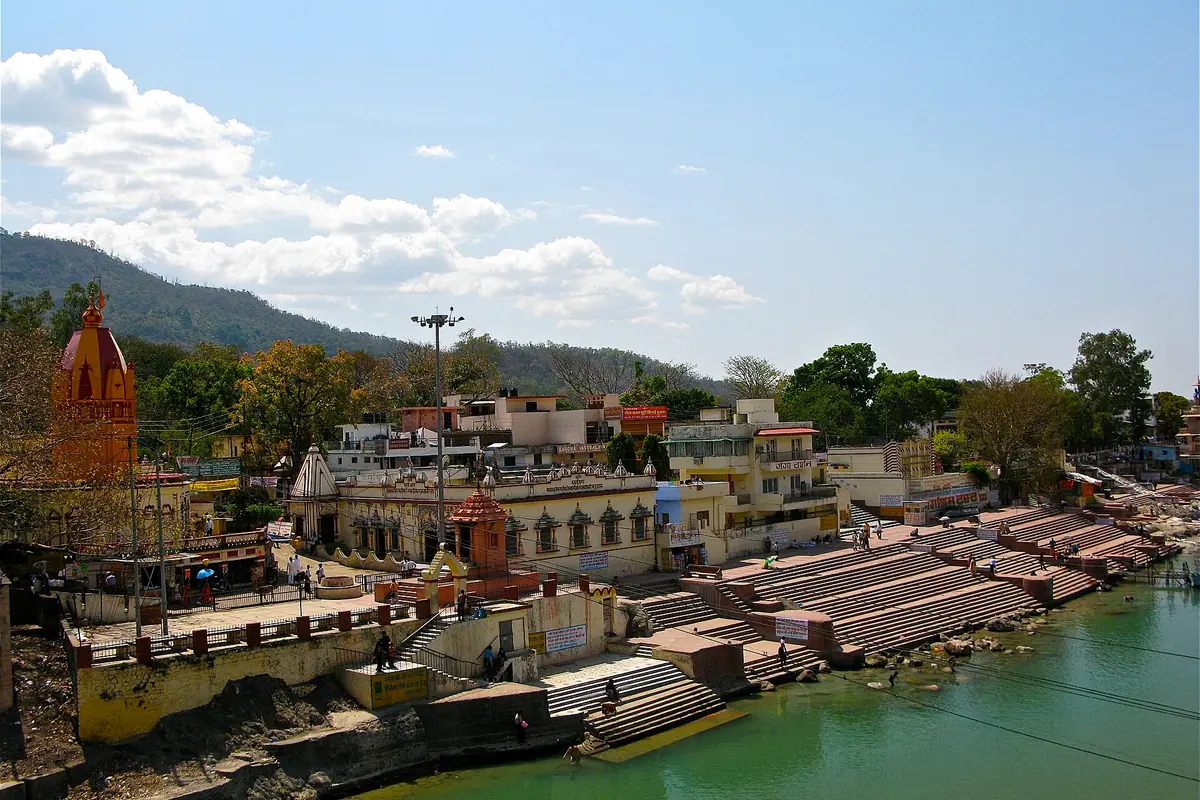
Between Ram Jhula and Swarg Ashram, the eastern bank belongs to the ashrams. This is the spiritual heart of Rishikesh: temple courtyards, Sanskrit study halls, a thirteen-storey temple tower, and long-running yoga schools whose students stay for weeks rather than nights. Accommodation is mostly ashram guesthouses and dharamshala-style rooms — plain, spotlessly kept and often bookable only by phone or on arrival. Many operate on a strict schedule with gates closed after 9 or 10pm.
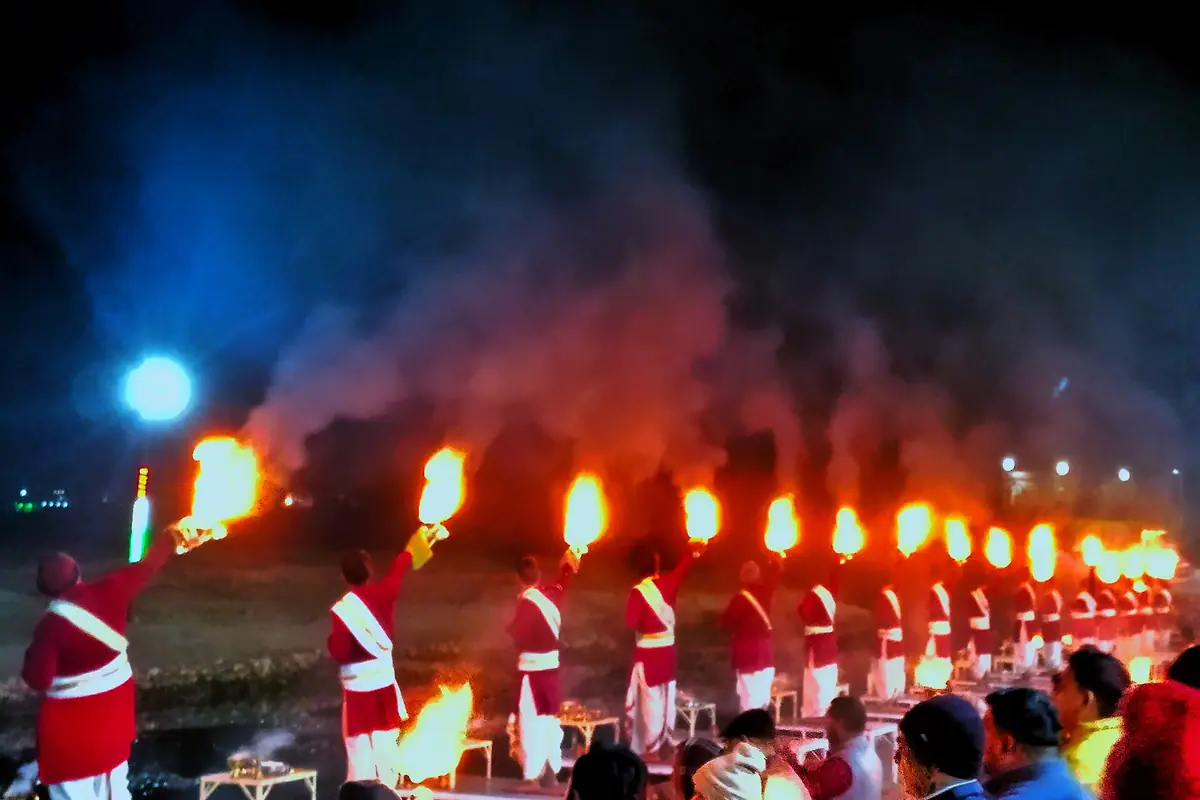
The area is strictly vegetarian and alcohol-free, and the pace slows dramatically after dark. Its great gift is the evening aarti on the ghats, when lamps are floated on the water and the chanting carries across to the far bank; arrive 30 to 45 minutes early to claim a step seat, dress modestly, and keep phones away. Sunrise is the other golden hour, when bathing ghats fill with pilgrims and the river runs silver.
Choose this neighborhood if you want routine, silence and a short walk to your teacher's door. Avoid it if you like late dinners, air-conditioned comfort or a drink at the end of the day — kitchens shut early and winter rooms can be genuinely cold, so pack layers and ask about hot water hours.
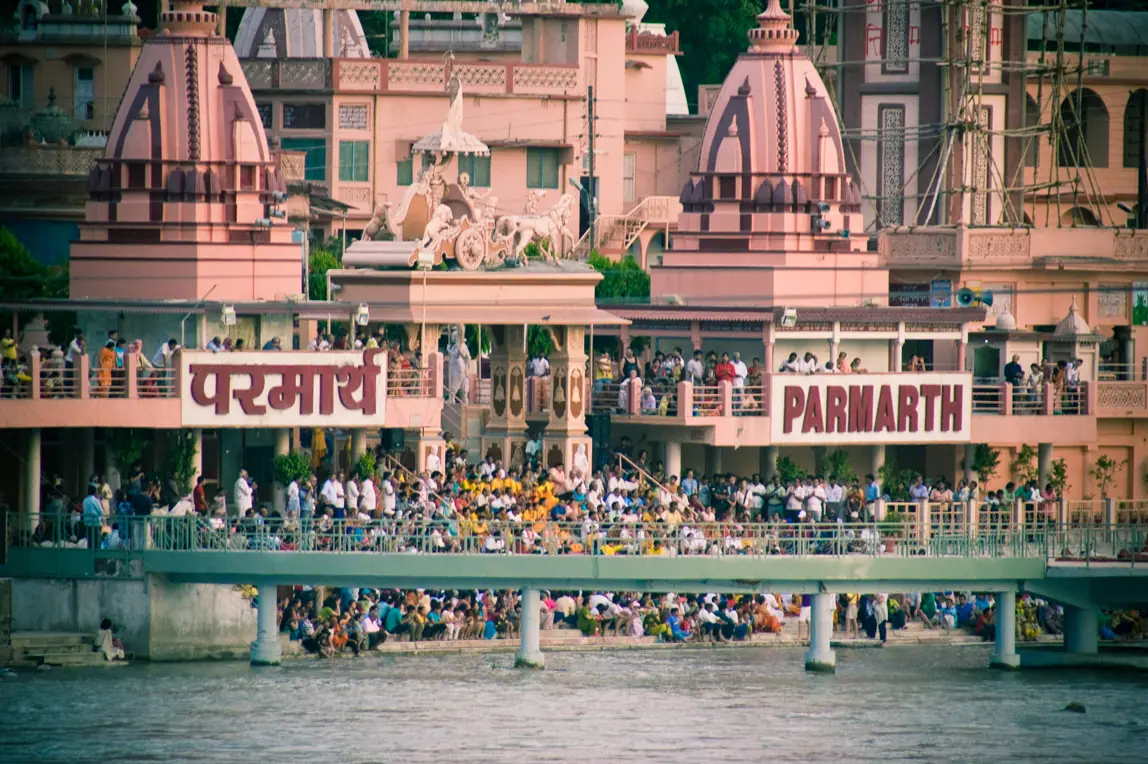
Muni Ki Reti and Triveni Ghat: Town-Side Convenience on the West Bank
Muni Ki Reti is the built-up strip on the western bank along the road toward Haridwar, and it behaves like a proper town: real hotels with lifts, parking, generators, spas and sometimes a pool, plus Triveni Ghat a short ride away for the town's own evening aarti. If you're arriving late, leaving early, or travelling with parents or heavy luggage, this is the least stressful base in Rishikesh.
The trade-off is noise. The highway runs right through it, and horns start before seven and continue past ten. Ask for a room on the river side rather than the road side, and check whether the property sits above a busy junction. On the plus side, you're closest to the railway station and bus stand, which makes 5am departures toward Haridwar, Dehradun or the airport genuinely painless.
It suits older travellers, families with small children, and anyone combining Rishikesh with a wider Uttarakhand itinerary. It's also the easiest place to find a room at short notice during festival weekends, when the riverside villages are booked solid months ahead.
Shivpuri, Byasi and the Rafting Belt: Tented Camps Upstream
Follow the river 16 to 35 kilometres upstream and the road threads through Shivpuri, Byasi and Kaudiyala, where the white water begins. This is camp country: safari tents on sandbanks, cliffside lodges with hammocks, bonfire dinners and volleyball between rafting runs. Days here are built around the water — most operators run a morning and an afternoon stretch, with grades ranging from gentle family floats to punchier rapids further up.
Rafting generally runs from mid-September through the end of June and shuts down for the monsoon, when the Ganga swells, beaches vanish and the road can slide. Camping peaks in October, November, March and April, so book well ahead for those windows; monsoon-season stays are limited and you should check river conditions before committing.
Bring a torch, mosquito repellent and cash, because signal comes and goes and ATMs are scarce. The forest edge here borders a tiger reserve, so no wandering after dark, and keep tents zipped. Best for groups, teenagers and anyone who'd rather fall asleep to running water than to temple loudspeakers.
Neelkanth Road and the Forested Uplands: Boutique Retreats in the Hills
The road that climbs toward the Neelkanth Mahadev temple leaves the valley behind and enters sal forest, passing waterfalls, a bungee jump site and small villages. Scattered along it, and on the side lanes around Mohan Chatti and Garud Chatti, are Rishikesh's most design-led stays: glass-fronted cottages, stone villas and retreat centres with infinity pools pointed at the Himalayan foothills. It's 30 to 45 minutes from Laxman Jhula by scooter or car.
You come here for birdsong, cold mornings and stars — not for walkability. You'll need your own wheels or a reliable driver, and the last stretch to some properties is a rough track. Mobile data is patchy, which is either the point or a problem, so confirm Wi-Fi before booking if you plan to work.
Monsoon is the caution here: the road to Neelkanth is landslide-prone in July and August, trails get slippery and leeches appear. Time your visit for the clear months, and pair a stay with a pre-dawn drive to the hilltop temple at Kunjapuri — leave by 4:30am to catch the sun rising over the high peaks.
Seasons, Crossings and Rules of Thumb
The sweet spots are mid-September to November, when the air clears after the rains, and February to April, when days sit in the comfortable twenties and the big yoga gathering fills the ashrams in early March. December and January bring cold, foggy mornings, but also bright afternoons and thinner crowds. April to June climbs toward forty degrees — book air conditioning and do your walking at dawn. July and August are monsoon: rafting stops, roads get unstable and the river turns brown and fast.
Getting in is straightforward. The nearest airport is about 20 kilometres away and roughly 40 minutes by taxi; Haridwar Junction, the main railhead, is around 25 kilometres and 45 to 60 minutes depending on traffic. Rishikesh has its own small station on a branch line. Book accommodation two to three months ahead for October, November, Diwali, New Year, Maha Shivratri and the June pilgrimage season, when the highway grinds to a halt.
Finally, the local rules: the municipal area is alcohol-free and overwhelmingly vegetarian, so don't count on eggs or meat. Cars can't reach most riverside lanes — expect a five- to ten-minute walk with your bags, and hire a porter for a few rupees if the climb is steep. Crossing between banks is on foot over the suspension bridges, which is slow but scenic, and a rented scooter solves almost everything else.
Frequently asked questions
Which neighborhood is best for first-time visitors to Rishikesh?
Tapovan, just above Laxman Jhula, is the easiest introduction — walkable cafés, yoga studios and river views, with a mix of guesthouses and mid-range hotels. If you prefer quiet and a spiritual routine, base yourself near Ram Jhula or Swarg Ashram instead.
Can you drink alcohol or eat meat in Rishikesh?
No — the town is officially alcohol-free and almost entirely vegetarian, with most kitchens avoiding eggs as well. If either is essential to your trip, plan day trips toward Haridwar or Dehradun, or choose a stay outside the municipal limits.
When is the best time to visit Rishikesh?
Mid-September to November and February to April offer the best weather for both sightseeing and rafting. Expect cold, foggy mornings from December to January and intense heat from April to June. The monsoon months of July and August close the rafting season and make hill roads unreliable.
How do I reach Rishikesh from the airport or Haridwar?
The nearest airport is about 20 kilometres away, a 40-minute taxi ride, and Haridwar Junction railhead is roughly 25 kilometres and 45 to 60 minutes by road. Rishikesh also has a small station on a branch line, though most travellers arrive via Haridwar.
Do I need a car or scooter during my stay?
Only if you're staying outside the main riverside villages. Tapovan, Swarg Ashram and Muni Ki Reti are walkable, and the suspension bridges link the two banks on foot. A scooter is genuinely useful for the Shivpuri rafting belt and the forested Neelkanth Road, where taxis are scarce and expensive.
Sort the rest of your trip
Everything for Rishikesh, in one place
Transfer in Rishikesh
Private driver waiting on arrival — no queues, no surprises.
Book a transfer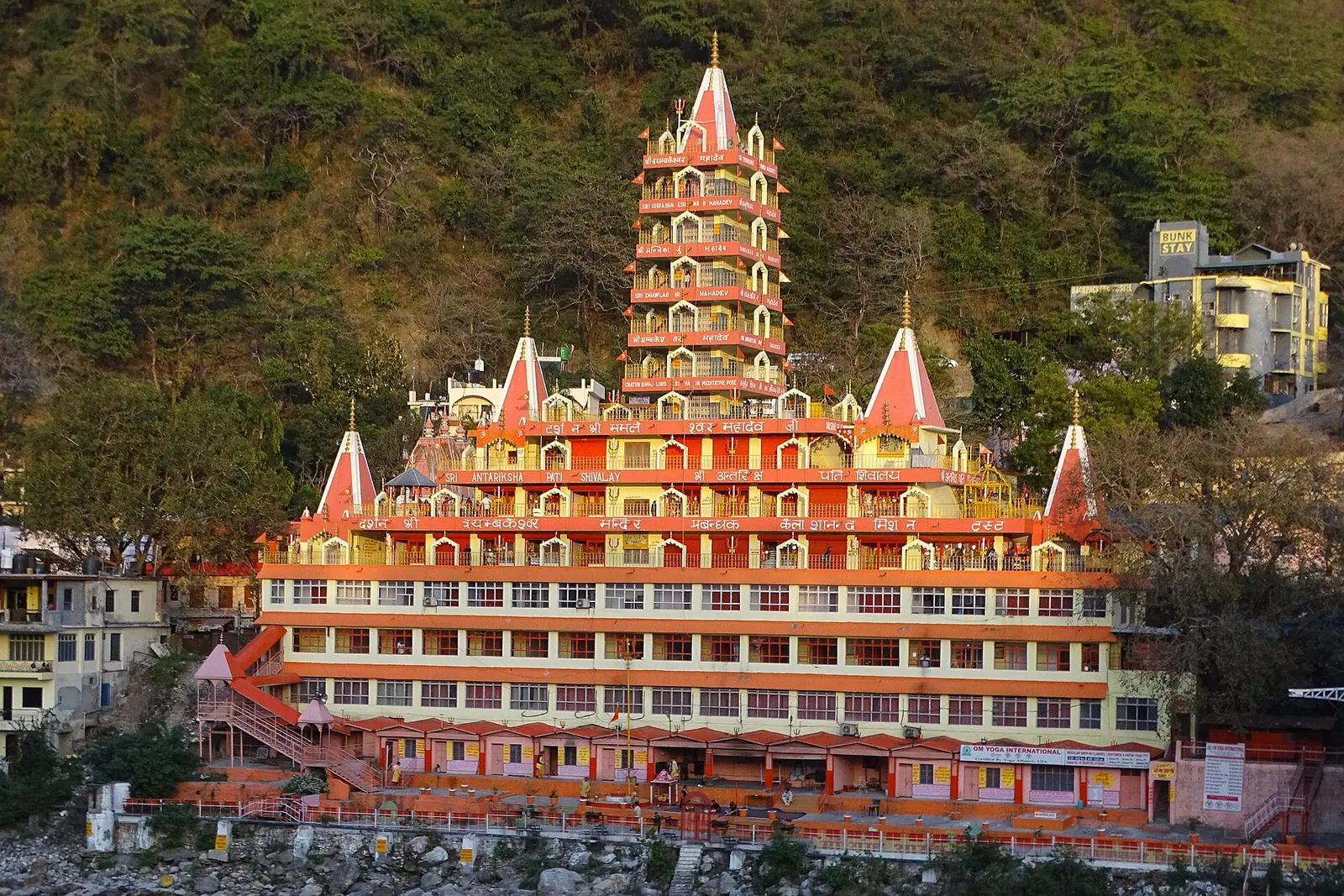
Things to do in Rishikesh
Skip-the-line tickets, guided tours and standout experiences.
See experiences
Stay online in India
Travel eSIM — data the moment you land, no roaming bills.
Get an eSIM