Zermatt is one of the rare mountain villages where the arrival itself sets the tone: the train slides into a valley where no private car is allowed, and the Matterhorn simply stands there at the end of the street. Two nights is enough to ride a cog railway into the high Alps, walk a lake trail with the peak reflected in it, and eat dinner under a larch-wood ceiling — provided you pick the right bed to come back to.
Why Zermatt Rewards a Two-Night Break More Than a Long Trip
The village is compact and entirely car-free, threaded with electric taxis, flatbed buggies and horse-drawn sleighs in winter. You arrive by rail, usually changing at Visp and again at Täsch, where cars are parked for the duration. Within twenty minutes of stepping off the train you can be on Bahnhofstrasse watching shopkeepers sweep snow off their awnings with the Matterhorn framed between the roofs. Everything a weekend needs — cable car stations, the cog railway, restaurants, ski hire, the church bridge — sits within a walk of maybe fifteen minutes end to end.
That compactness is what makes a short stay work. A well-planned 48 hours gets you one full day high on the mountain and one softer day closer to the valley floor, with both evenings spent over a long dinner. Trying to add a third or fourth day often just means repeating the same lifts, so a weekend genuinely feels complete rather than truncated.
One caution for first-timers: the altitude. The village sits at around 1,620 metres, and the lifts top out near 3,900 metres. Give yourself the first afternoon to wander rather than racing straight up to the glacier station, and drink more water than you think you need.
Choosing Your Quarter: Centre, Hinterdorf, Winkelmatten or the Sunny Slope
Zermatt is really four or five small neighbourhoods stacked along one valley, and where you sleep shapes your weekend more than the thread count does. The central strip around Bahnhofstrasse and the river puts you minutes from the station, the Gornergrat cog railway and the main shopping street — ideal if you have one night, arrive late, or hate walking uphill with luggage. It is also the busiest and the loudest, and rooms facing the street can catch early delivery noise.
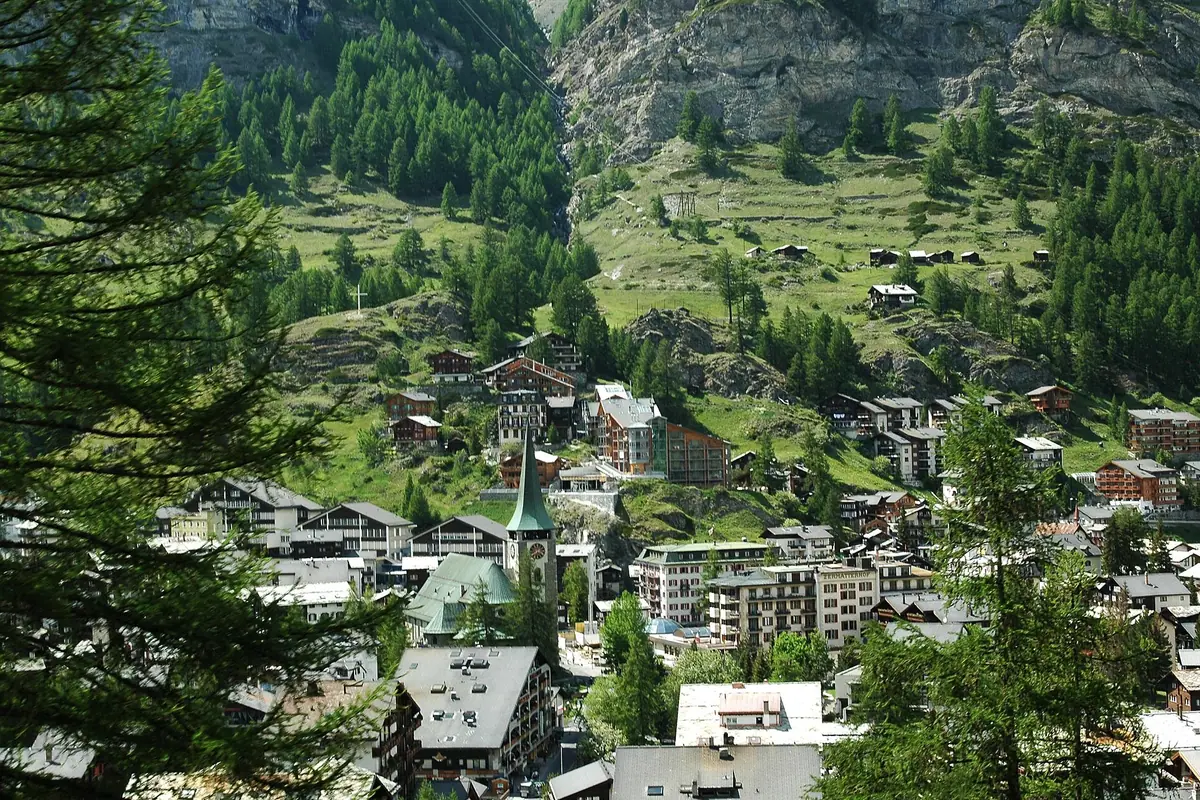
Hinterdorf, just behind the church, is the postcard quarter: a knot of dark, centuries-old timber granaries raised on stone discs to keep mice out, with lanes so narrow the snow stays packed between the walls. Hotels and guesthouses here are small and full of character, yet still only a five-minute walk from the centre. For most weekenders this is the sweet spot.
South of the river, Winkelmatten is quieter, greener in summer and popular with families; it is closest to the cable car that climbs toward Furi and the high glacier station, which saves a morning commute. Further up the eastern slope sit hotels on sun terraces with the widest Matterhorn views — spectacular at sunrise, but you will be walking downhill to dinner and uphill afterwards, or waiting for the little electric village bus.
The Grand Hotels and Their Glacier Spas
Zermatt's grande dame hotels date from the golden age of alpinism, when mountaineers and Victorian travellers arrived by mule track and stayed for the season. Several still occupy their original buildings: panelled lobbies, brass luggage trolleys, staircases wide enough for a ball gown, and a doorman who knows exactly which lift opens first. They are the obvious choice if your weekend is a celebration — an anniversary, a milestone birthday, a proposal at a viewpoint.
The real draw in winter is the spa. Expect indoor pools, steam rooms and, crucially, outdoor thermal pools or whirlpools positioned so you can float with the Matterhorn directly in front of you while snow lands on your shoulders. Some add ice grottoes, salt inhalation rooms and long treatment lists using alpine herbs. Book spa slots when you reserve the room; on peak weekends the good evening times vanish.
Almost all of these hotels work on half board, with a multi-course dinner included. That sounds restrictive until you realise how welcome it is after a day at altitude, and it removes the scramble for a table on a Saturday night when the village is full. Ask about the dress code for dinner and whether children are welcome in the spa — policies vary considerably.
Boutique Chalets and Design-Led Hideaways
Between the grande dames and the guesthouses sits Zermatt's most interesting category: converted chalets of six to twenty rooms, often family-owned and refreshed by a designer with a feel for larch, stone and wool. Rooms tend to be smaller but sharper — deep freestanding tubs, low-slung armchairs by a wood-burning stove, thick duvets, and a honesty bar in the lounge that becomes the social centre of the evening.
A few run as adults-only retreats or deliberately quiet houses, which makes them excellent for a couple's weekend and less suitable for young children. Breakfasts lean local: Valais rye bread, alpine cheese, honey from the valley, eggs cooked to order. Several have rooftop hot tubs or small saunas rather than full spas, which is often enough when the day's plan ends with a glass of something cold under the stars.
When you book, ask three practical questions: is there a ski or boot room with dryers, is there a shuttle to the lifts, and does the room face the Matterhorn or the valley? A 'mountain view' can mean a great deal of mountain and no peak at all.
Family-Run Guesthouses, Half Board and Honest Value
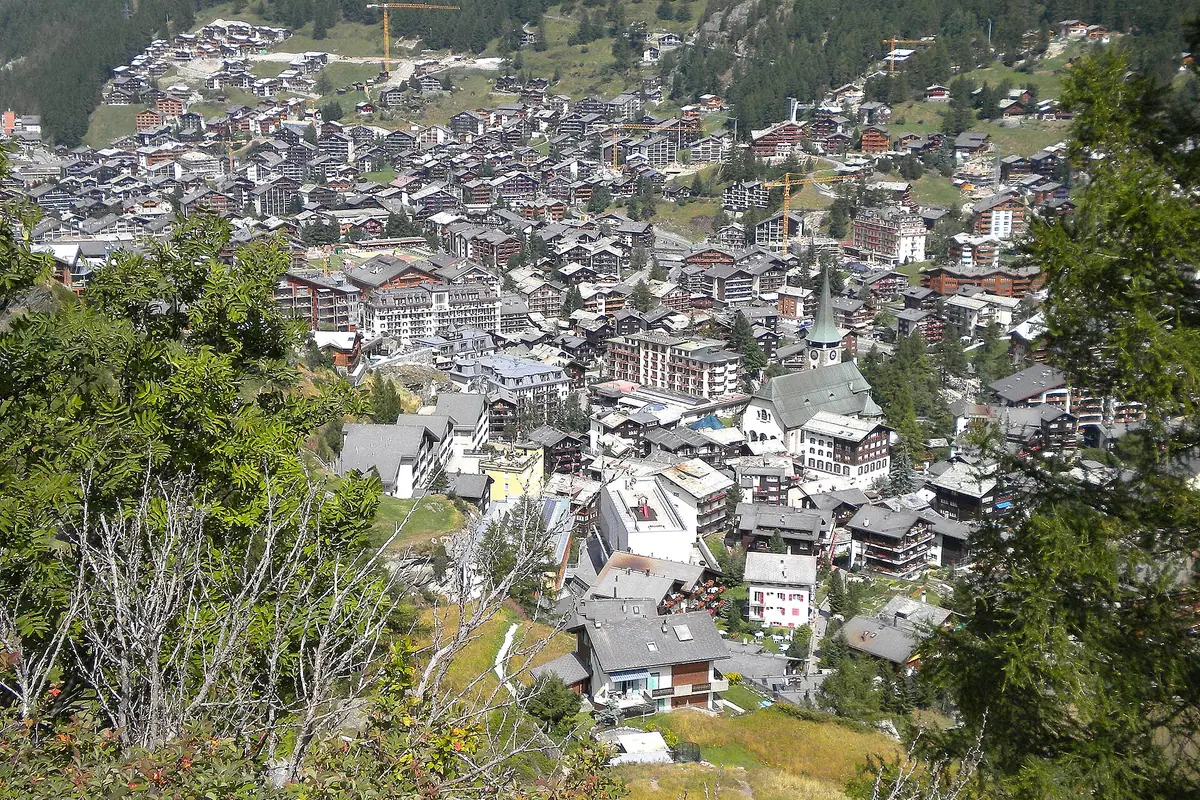
Zermatt has kept a deep bench of small, family-run houses where the same surname has been on the door for generations. Rooms are simple and immaculately kept: pine furniture, a balcony, a shared drying room, and a breakfast that arrives with more cheese, cured meat and bread than any reasonable person can finish. These are the best-value beds in the village, and they book out earliest for the Christmas and February weeks.
Half board is a Zermatt institution, and many guesthouses offer it as the default rate. It usually means a set four- or five-course dinner of regional cooking — think barley soup, rosti, slow-braised meats, apricot tart — served at a fixed hour. If you would rather eat out every night, say so at booking; some houses adjust the rate, others do not.
Value also comes from position as much as price. A guesthouse five minutes further from the station or a short climb above the main street can cost noticeably less for the same standard, and the walk back after dinner is a pleasant, lamp-lit one rather than a chore. Check whether the property is on the village bus route before you commit.
When to Go and How to Shape the Weekend
Winter runs roughly from early December to late April. January and early March usually deliver the most reliable snow and the clearest cold-blue skies; February is the busiest month because of European school holidays, so rates and availability tighten dramatically. Late March and early April bring longer days, softer snow and terrace lunches, at the cost of occasional slush at village level. The high glacier terrain stays skiable well into spring, and even in summer you can ski in the morning and hike in the afternoon.
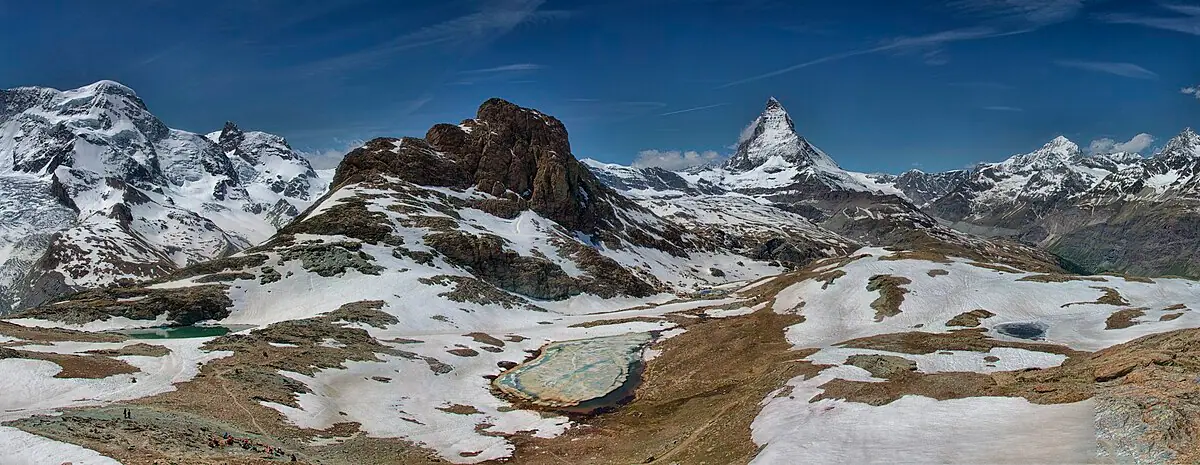
For walkers, mid-June to mid-September is the window, with wildflowers at their best in July and the trails above Sunnegga and Rothorn at their driest in August. The famous five-lake circuit takes around two and a half to three hours at an easy pace, and the reflection of the Matterhorn in the still water of the first lake is worth starting early for. Late September into mid-October turns the larches gold, though some mountain restaurants and lifts begin to close. November is the quiet gap when much of the village shuts down for maintenance — cheap, but limited.
A good weekend shape: arrive by early afternoon, settle in and walk the river path; on day one take the cog railway up to Gornergrat, walk down past the Riffelsee, and be back for a spa hour before dinner. On day two, ride high towards the glacier early for the clearest views, then spend the afternoon in the village — the mountaineers' cemetery, the old granaries, a long lunch. Book lifts and any popular dinner tables in advance, and check the last descent times the morning you travel.
Frequently asked questions
Can I drive to my hotel in Zermatt?
No. Zermatt is car-free, and private vehicles must be left in the covered car park at Täsch, about 6 km down the valley. From there a shuttle train runs to Zermatt roughly every 20 minutes and takes around 12 minutes. In the village you'll get around on foot, by electric taxi, by the small village bus, or by horse-drawn sleigh in winter.
Which side of the village has the best Matterhorn views?
The peak is best seen from the eastern and northern edges of the village and from rooms with a south- or east-facing balcony on the slopes above the main street. In the centre, buildings and the church tower often block the summit. If the view matters, ask specifically for a Matterhorn-facing room rather than a generic mountain view, and confirm it in writing.
Is half board worth taking in Zermatt?
Usually yes for a short break, especially in winter. Many hotels and guesthouses build dinner into the rate, which saves you hunting for a table when the village is full and keeps costs predictable. The trade-off is a fixed sitting time and less freedom to try different restaurants. If you'd rather eat out, ask whether a room-only or breakfast-only rate is available — not every property offers one.
How far ahead should I book a Zermatt hotel?
For January, February, Christmas and New Year, aim for four to six months ahead, and expect minimum-stay rules over the holidays. For late spring, summer and autumn, six to ten weeks is usually comfortable, with more choice in the first half of the week. If you are targeting a specific room type or a spa suite, book earlier still.
Is a weekend enough time in Zermatt?
Two nights gives you one full day on the mountain and one easier day in the village and lower trails, which suits most first-time visitors well. Three nights lets you add a second high route or a rest day without rushing. Bear in mind the altitude — pace your first afternoon and save the highest viewpoints for your second day.
Sort the rest of your trip
Everything for Zermatt, in one place
Transfer in Zermatt
Private driver waiting on arrival — no queues, no surprises.
Book a transfer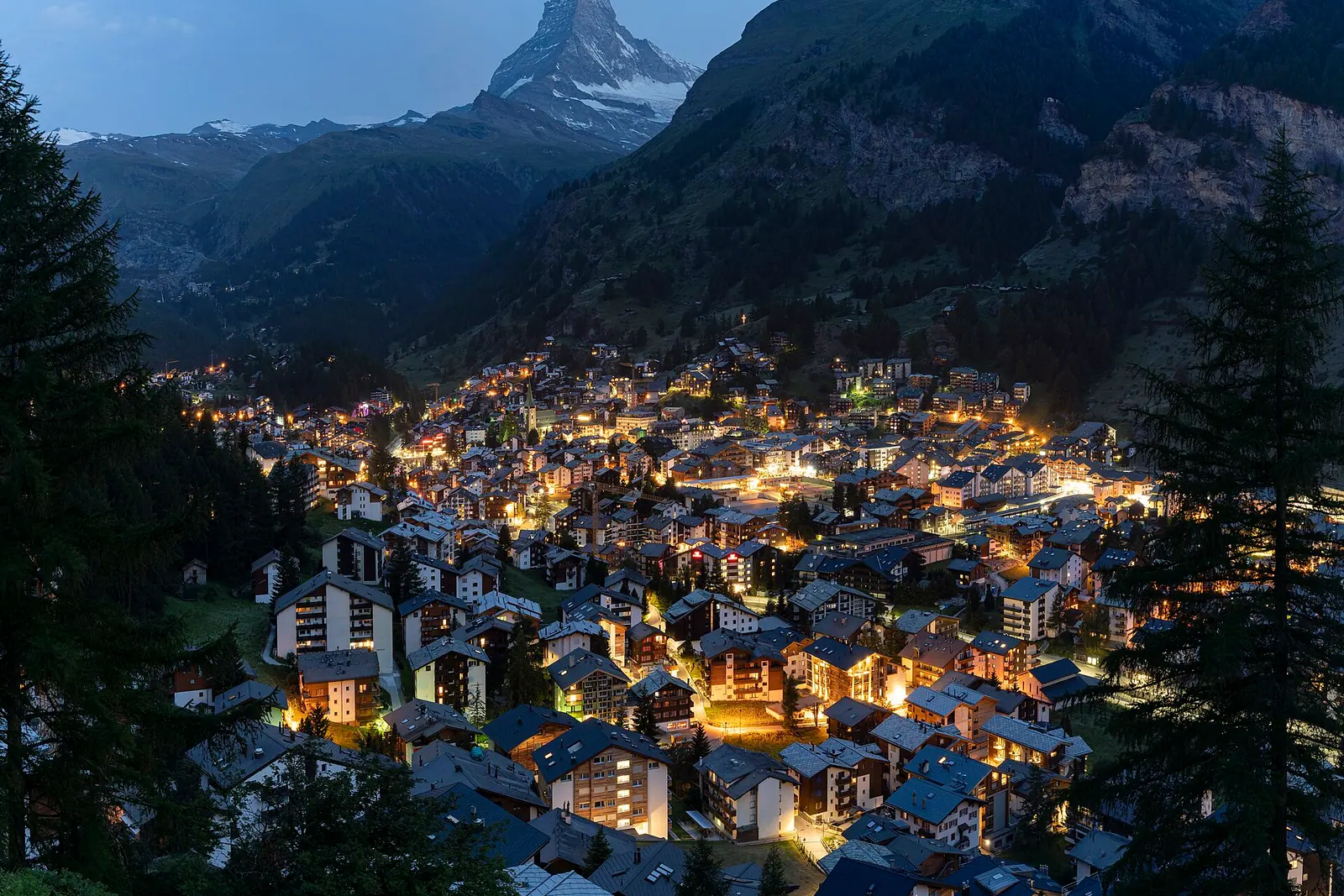
Things to do in Zermatt
Skip-the-line tickets, guided tours and standout experiences.
See experiences
Stay online in Switzerland
Travel eSIM — data the moment you land, no roaming bills.
Get an eSIM