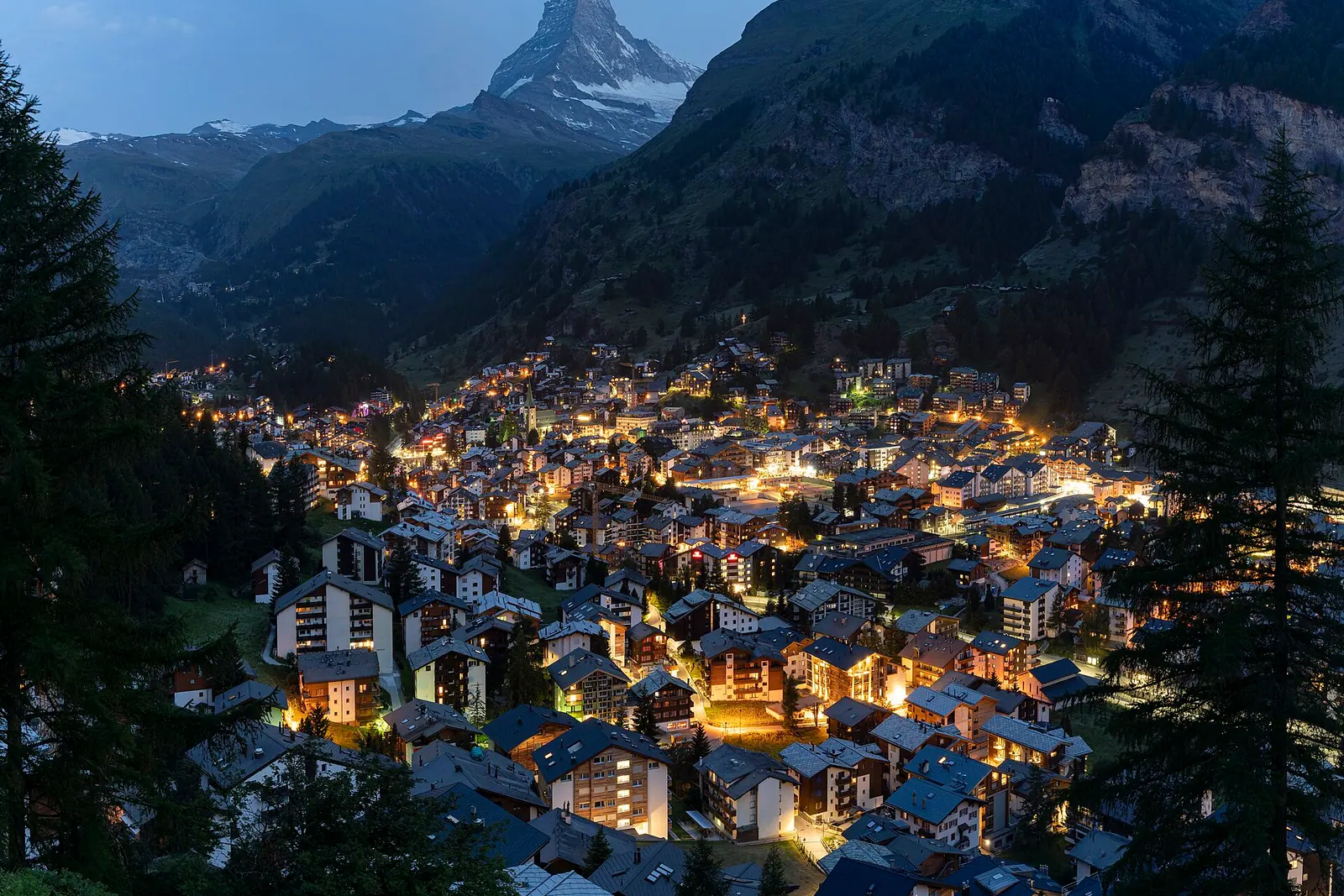
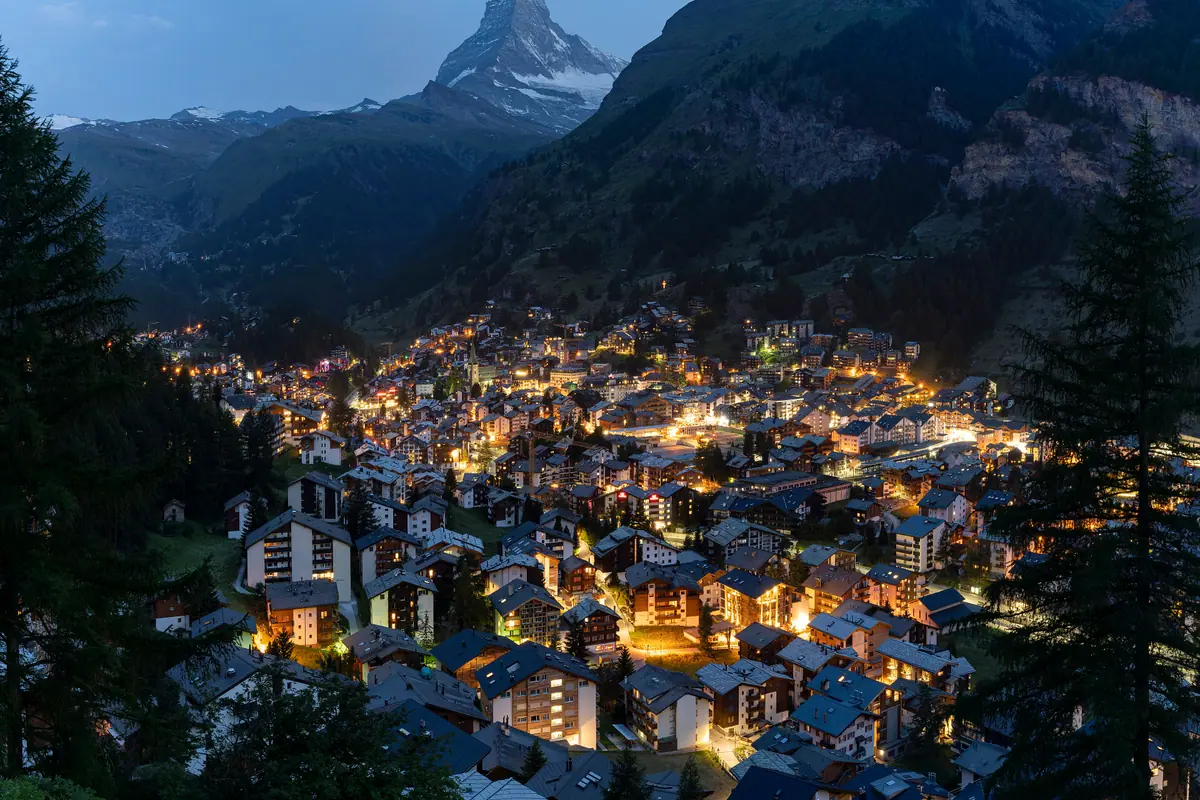
Switzerland changes character four times a year, and where you sleep decides which version of it you get. Book a timber balcony above the Lauterbrunnen Valley in July and you wake to cowbells and waterfall spray; book the same room in January and it is a snow-buried base camp for the Matterhorn. Timing is not a detail here — it is the whole trip.
Why Altitude, Not Just the Calendar, Sets the Season
Switzerland is small enough to cross in a few hours, yet the difference between a lakeside town and a mountain resort can feel like two different countries. Zurich sits at roughly 400 metres, Zermatt at about 1,620 metres and St. Moritz close to 1,800 metres, which means spring arrives weeks later the higher you climb and snow lingers on high passes well into June. A hotel terrace in Lugano may be warm enough for breakfast outdoors in March while the same week delivers blizzards to the Jungfrau region.
That altitudinal spread is why there is no single best month for the whole country. What there is instead is a set of windows that suit particular trips: deep winter for skiing and cosy chalet evenings, late spring and early autumn for lake towns, hiking and city culture, and high summer for glacier viewpoints and long alpine days.
It also affects availability. Many resort hotels in Zermatt, St. Moritz, Gstaad and the Bernese Oberland close entirely during the quiet between seasons — usually from just after Easter until early June, and again from late October until the first real snowfall in December. Coastal-feeling Ticino and the big cities stay open year-round, so if your dates are fixed and the mountain hotel you wanted is dark, a lake base such as Lucerne, Geneva or Lugano can rescue the itinerary.
Winter: December to March, Deep Snow and Resort Prices
Winter is Switzerland at its most cinematic. Zermatt puts you a few minutes from the Gornergrat railway and its head-on view of the Matterhorn, while St. Moritz in the Engadin pairs a frozen lake with some of the most polished hotel service in the Alps. Further west, Verbier and the Valais villages draw a younger, hard-skiing crowd, and Grindelwald gives easy access to the Jungfraujoch, the high saddle known as the Top of Europe, where you can stand on a glacier viewing platform above the clouds.
Expect peak rates and minimum-stay rules over Christmas, New Year and the February school holidays, and expect to book three to six months ahead for the famous addresses. Snow-sure resorts above 1,500 metres are the safest bet for a December trip; lower valley towns can be green and foggy while the peaks above them are brilliant. Early December and the first half of January are quieter, cheaper and often beautifully empty on the slopes.
Do not overlook the cities in winter. Basel's carnival, with its lantern-lit parades and masked drummers, is one of the country's great spectacles, and Lucerne's old town is atmospheric under frost, with the Chapel Bridge and the Lion Monument framed by low mist. Basel and Lucerne both fill fast during carnival week, so treat it like a ski holiday and reserve early. Pack layers rather than one heavy coat: you will move from heated trains to cold platforms several times a day.
Spring: April to Early June, the Shoulder That Rewards Planners
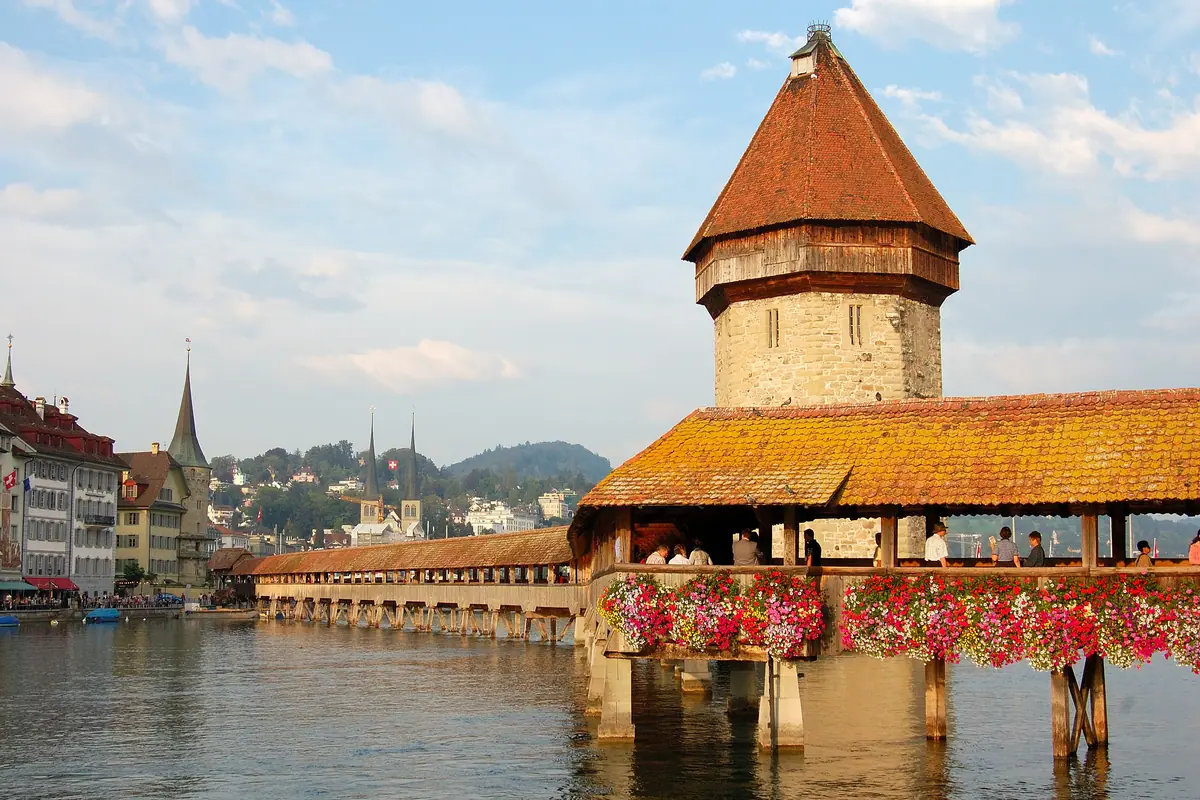
Spring is Switzerland's best-kept bargain. As the snowline retreats up the mountainsides, meadows around Interlaken and the Bernese Oberland turn white with wild narcissus, cherry blossom opens in the northern valleys, and hotel rates in the cities and lake towns drop to their lowest of the year. This is the season for Lucerne's Chapel Bridge and Water Tower, the poignant Lion Monument carved into a sandstone cliff, and the quiet lanes of Bern's UNESCO-listed old town, where the Zytglogge clock tower still performs its mechanical show for small crowds.
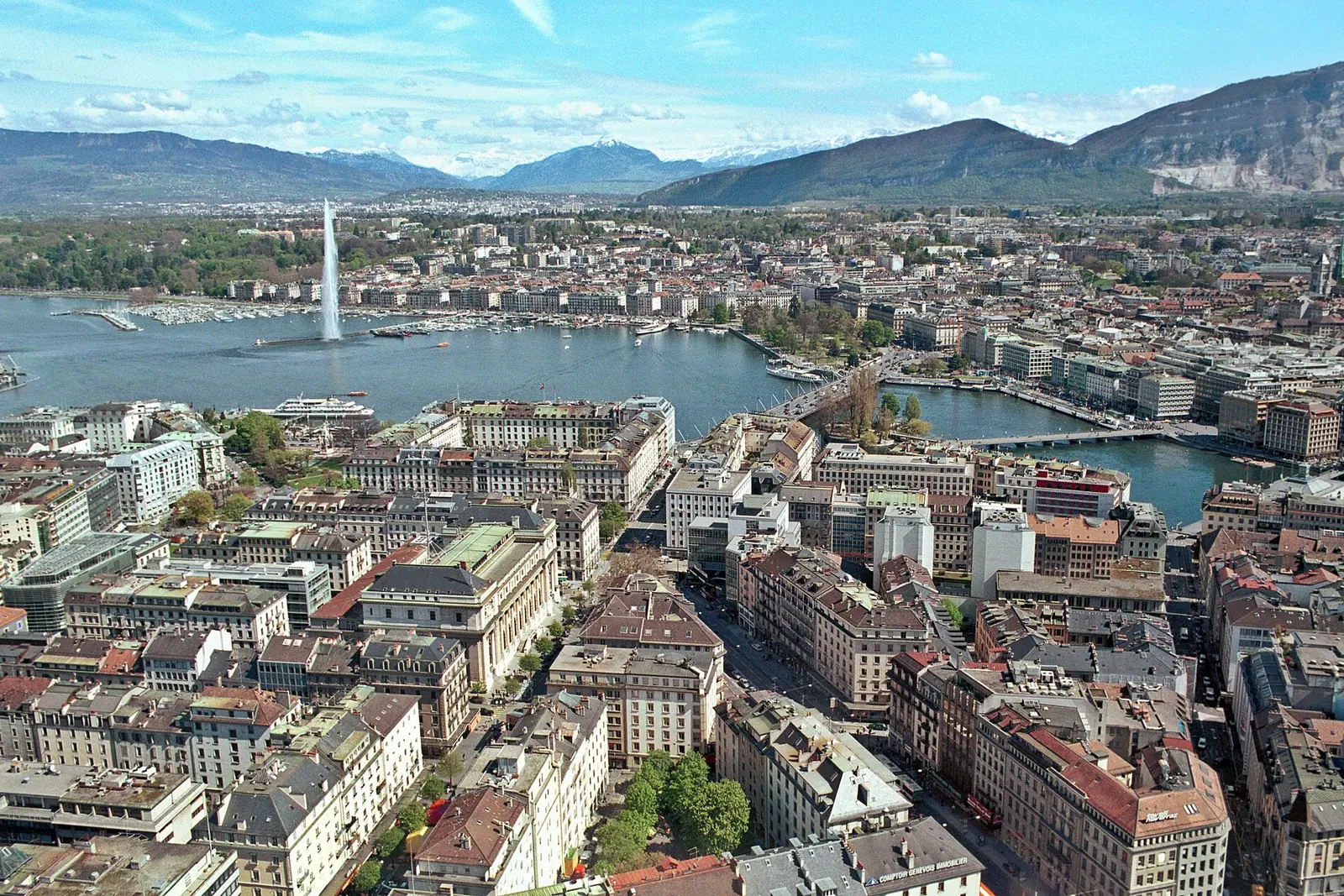
Geneva and the shores of Lake Geneva come alive in April, with the Jet d'Eau plume firing over the water and terraces reopening along the promenades. The Rhine Falls near Schaffhausen, the largest waterfall in Europe by volume, thunders hardest in late May and June as snowmelt swells the river — an easy day trip with a riverside hotel as a base.
The caveat is that high mountain passes and many cable cars remain closed until late May or June, and some alpine hotels simply shut. Restrict ambitious glacier plans to summer and use spring for valley walks, vineyards, museums and city culture. A light waterproof jacket earns its place in your bag; showers roll in quickly and clear just as fast.
Summer: Mid-June to August, Long Days and Alpine Hiking
Summer is when the whole country opens up. The Lauterbrunnen Valley becomes a green slot of cliffs and waterfalls, with the Staubbach Falls plunging nearly 300 metres opposite village hotels; Interlaken splits two lakes and acts as a hub for boats, funiculars and paragliders. In the south, Lugano and the Ticino lakes feel Mediterranean, with palm-lined promenades, swimming and a genuinely Italian rhythm to the evenings.
This is also the season for the high viewpoints. Cable cars to Titlis, Pilatus and Rigi run daily, the Gornergrat and Matterhorn glacier lifts give non-skiers access to big altitude, and the Jungfraujoch is at its most reliable in July and August, though morning departures beat both cloud build-up and crowds. Mountain huts and family-run guesthouses sell out weeks in advance, and larger hotels often impose five- to seven-night minimums in early August.
Heat is rarely a problem above 1,000 metres, but city hotels in Zurich, Basel and Geneva can be stuffy during July heatwaves — prioritise rooms with air conditioning or a garden wing. Afternoon thunderstorms are common in the Alps, so hike early, keep a waterproof shell and plan a museum or spa afternoon as backup. Swiss National Day on 1 August brings fireworks and celebrations, along with full hotels in every lakeside town.
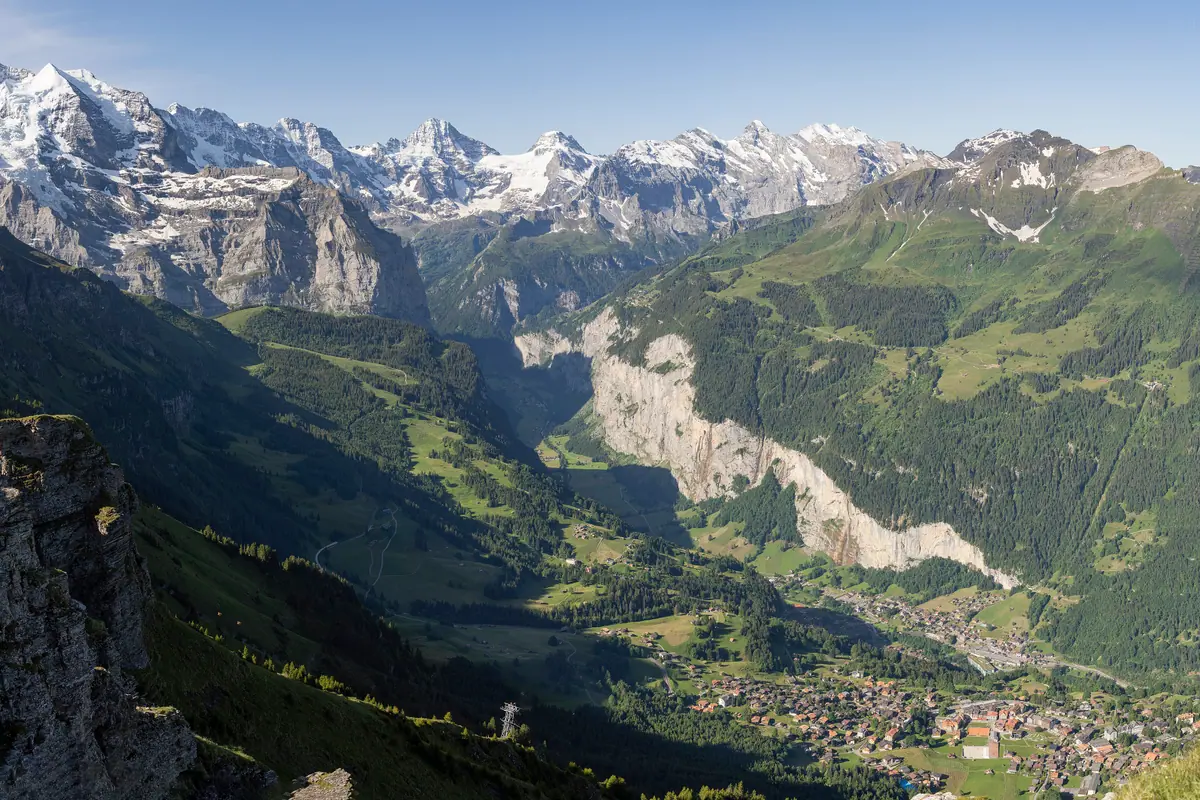
Autumn: September to October, Golden Larches and Empty Trails
Many seasoned visitors consider September and early October the finest weeks of the Swiss year. The summer crowds thin, the light turns honey-coloured, and hiking conditions are at their best with stable weather and cool, crisp air. The larch forests of the Engadin around St. Moritz blaze gold in mid-October, and the terraced vineyards of the Lavaux above Lake Geneva shift to rust and amber, with wine festivals in the villages along the slopes.
Autumn is also the season for the lake towns at their most relaxed. Montreux makes an elegant base for the fairy-tale Château de Chillon, a moated island castle on the lake, and for boat trips past terraced hillsides. Zurich's old town, with the Grossmünster's twin towers and the riverside lanes of the Niederdorf, is pleasant for wandering without summer queues, and Bern's arcaded shopping streets are ideal when the first chill arrives.
Timing matters: mountain hotels often close for the whole of November, and high cable cars shut for maintenance after mid-October. Aim for the last week of September through the third week of October if you want autumn colour and open mountain transport at the same time. This is the sweet spot for value too — four-star rooms in Zermatt or Interlaken can cost noticeably less than in July for the same view.
Festivals, Holidays and How to Play the Booking Calendar
Switzerland's calendar has a handful of spikes that dictate hotel prices and availability. Christmas and New Year are the busiest, followed by February half-term and the carnival weeks in Basel and Lucerne. Easter brings a second wave to lake towns, the summer holidays fill the Alps from mid-July to mid-August, and autumn trade fairs and events can briefly sell out Zurich and Geneva. Build your dates around these or deliberately avoid them.
The practical trick is to target the two shoulder windows: the first half of June, before school holidays begin but after the high passes open, and the last two weeks of September, when the weather is still generous and the crowds have gone. November and the weeks before Christmas are the cheapest of the year, ideal for city breaks and spa hotels, though many mountain villages will be half-shuttered.
Accommodation style matters as much as month. Half-board is standard in mountain hotels and often excellent value in winter; city hotels tend to be room-only and charge a small local visitor tax. If you plan to move around, choose bases near major rail hubs rather than remote valleys, and remember that Sunday opening hours are limited outside big resorts. Book ski-season rooms three to six months out, summer lakeside rooms two to four months out, and shoulder-season city rooms a few weeks before you travel — Switzerland rewards those who plan, but rarely punishes those who do not.
Frequently asked questions
What is the best month to visit Switzerland for good weather and fewer crowds?
Early to mid-June and the last two weeks of September are the sweet spots. High mountain passes and cable cars are open, hiking and lake towns are at their best, and hotel rates sit well below July and August levels. September in particular offers stable weather with far thinner crowds.
Do Swiss mountain hotels really close in the off-season?
Yes, many do. A large number of resort hotels in Zermatt, St. Moritz, Gstaad and the Bernese Oberland shut between the end of the ski season and early June, and again from late October until the first decent snowfall in December. Cities such as Zurich, Geneva, Basel, Bern and Lugano stay open all year.
How far ahead should I book a hotel in Zermatt or St. Moritz for ski season?
Three to six months in advance for most of January and February, and up to a year for Christmas, New Year or a specific famous property. Minimum-stay requirements of five to seven nights are common over the holidays, so check the small print before you commit.
Is summer or winter better for a first trip to Switzerland?
Choose winter if you ski or want a classic chocolate-box snow scene around the Matterhorn or the Jungfrau region. Choose summer if you want to hike, cruise the lakes and reach high viewpoints like Titlis, Pilatus or the Jungfraujoch without weather delays. Summer is generally easier for a mixed group of travellers.
When are Swiss hotels cheapest?
November, the first half of December and the weeks between the ski season and the start of June are consistently the least expensive, especially in cities and spa towns. Many mountain hotels are closed then, so pair low prices with a lake or city base if you travel in those windows.
Plan it — hotels in Switzerland
Live search, booked directly with trusted providers.
Sort the rest of your trip
Everything for Switzerland, in one place
Transfer in Switzerland
Private driver waiting on arrival — no queues, no surprises.
Book a transfer
Things to do in Switzerland
Skip-the-line tickets, guided tours and standout experiences.
See experiences
Stay online in Switzerland
Travel eSIM — data the moment you land, no roaming bills.
Get an eSIMMore guides in Switzerland
Switzerland in One Week: A 7-Day Itinerary by Flight, Rail and Cable Car
Best Places to Visit in Switzerland: Alpine Adventures and Iconic Landmarks
Switzerland Tour Guide: Food, Culture and Local Experiences
Best Time to Visit Geneva: A Season-by-Season Guide to Weather, Events and Hotel Rooms