Switzerland packs an astonishing range of experiences into a compact alpine canvas. From the jagged silhouette of the Matterhorn to the thundering Rhine Falls, and from cogwheel trains climbing to Jungfraujoch to vineyard terraces above Lake Geneva, every corner invites exploration. Whether you seek high-altitude hikes, winter sports, or cultured city strolls, these are the places that define a Swiss adventure.
Matterhorn and Zermatt: The Icon of the Swiss Alps
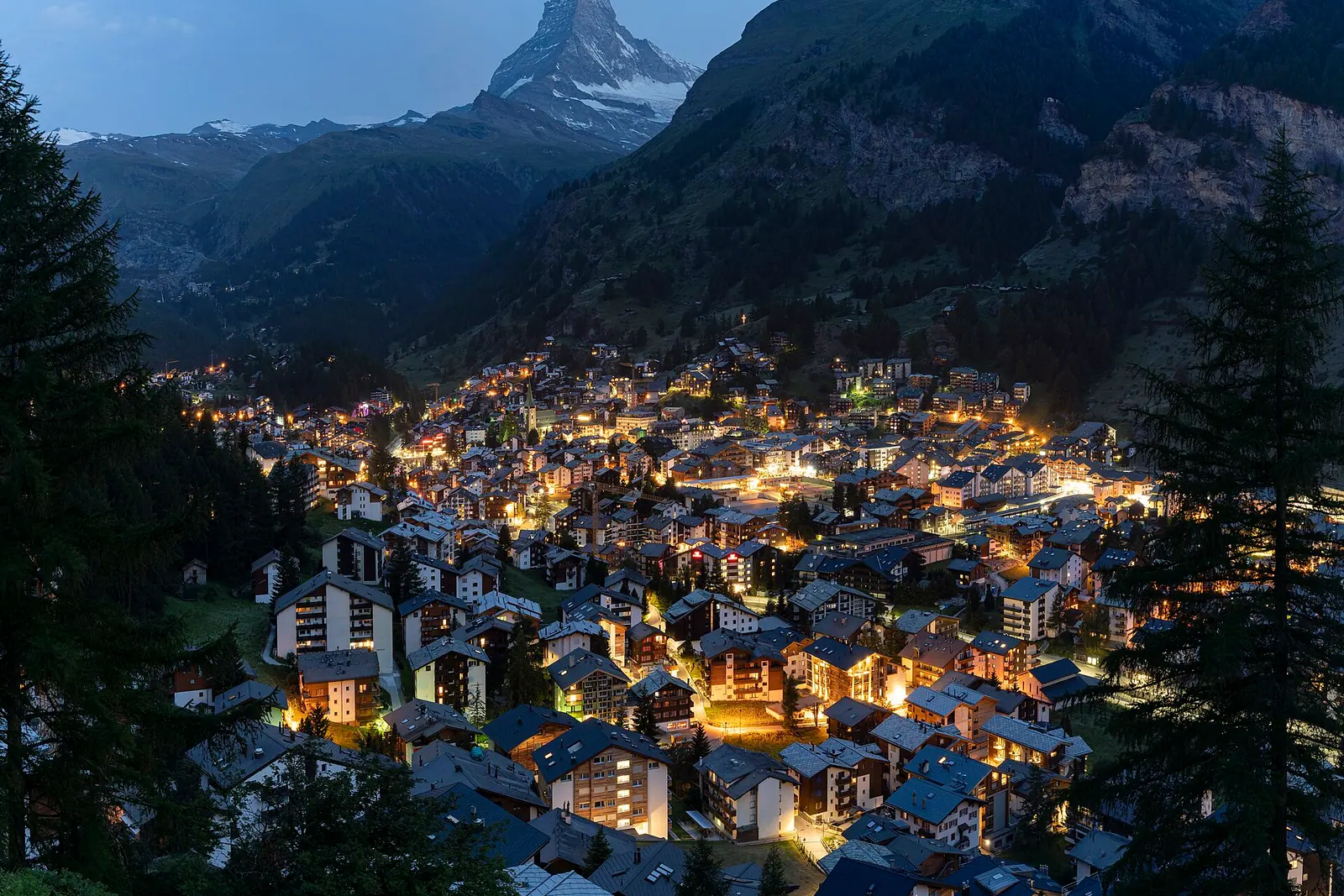
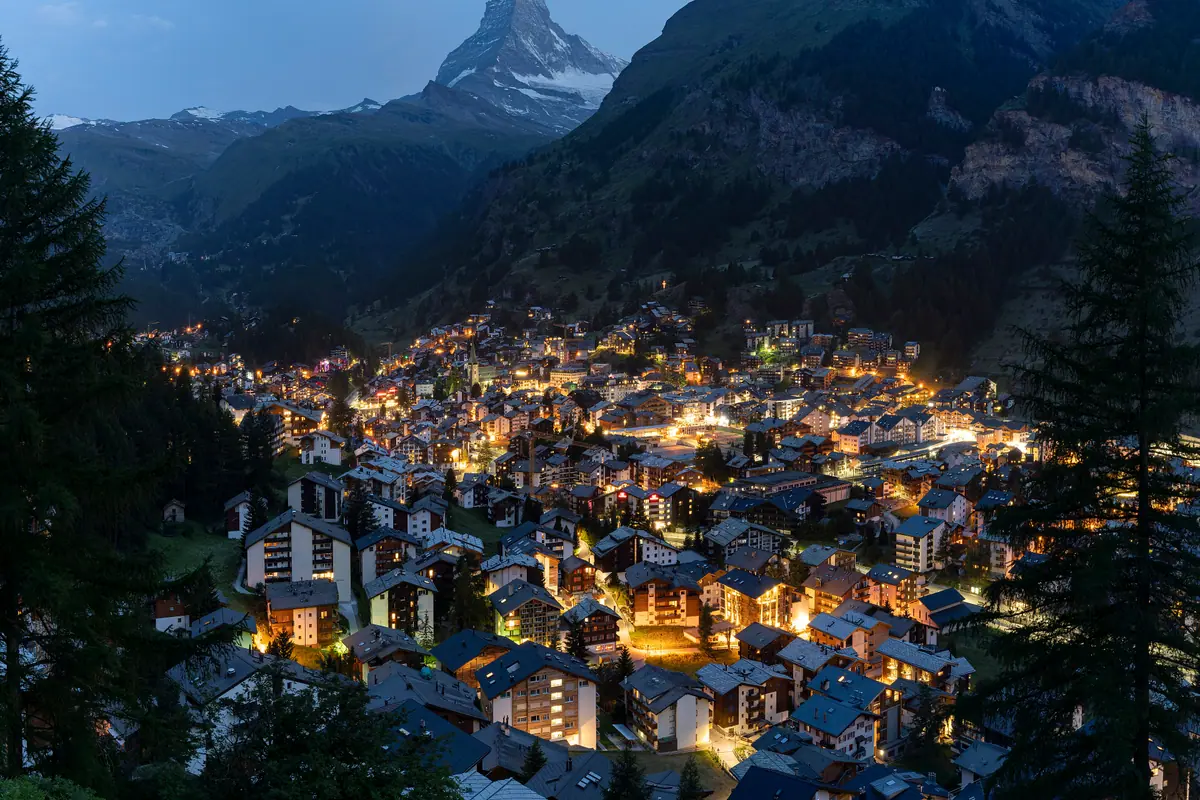
Zermatt is a car-free village at the foot of the Matterhorn, perhaps the most recognizable mountain in the world. The Gornergrat railway, Europe's highest open-air cogwheel train, climbs to 3,089 meters for a panoramic view of the Matterhorn and 29 other peaks over 4,000 meters. In summer, hundreds of hiking trails wind through meadows and past glacial lakes; the Five Lakes Trail is a classic. In winter, Zermatt shares a vast ski area with Cervinia, Italy.
For a closer look, the Klein Matterhorn cable car reaches 3,883 meters, the highest cable car station in Europe, with a glacier palace and views into Italy. The Matterhorn Glacier Trail is a relatively easy hike with dramatic views. Best months: July to September for hiking, December to April for skiing. Allow at least two to three days to acclimatize and explore.
The Matterhorn is best seen at sunrise or sunset when the peak glows. The village itself has charming wooden chalets, and the Matterhorn Museum tells the story of the first ascent in 1865.
Jungfrau Region: Jungfraujoch, Lauterbrunnen, and Grindelwald
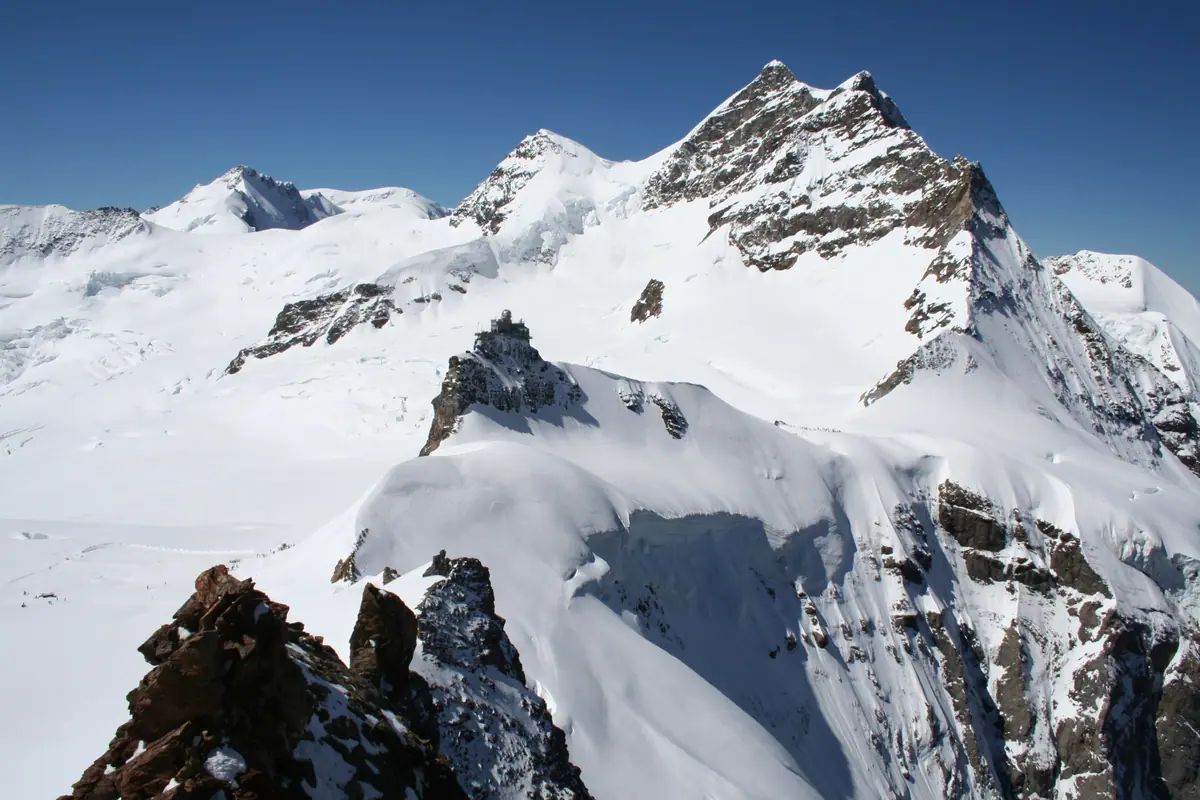
The Jungfrau region is a protected World Heritage site, home to the Eiger, Mönch, and Jungfrau peaks. The Jungfraujoch, known as the Top of Europe, is reached by a cogwheel train through the Eiger North Face to 3,454 meters, where you find the Aletsch Glacier, an ice palace, and panoramic viewing platforms. It's a full-day excursion from Interlaken or Grindelwald.
Below, the Lauterbrunnen Valley is a dramatic trough with 72 waterfalls, including the Staubbach Falls and the Trümmelbach Falls, carved inside the mountain. The village of Lauterbrunnen is a base for hikes to Obersteinberg or to the car-free village of Mürren, perched on a cliff. The Schilthorn cable car reaches Piz Gloria, famous for its revolving restaurant and panoramic views that starred in a classic spy film.
Grindelwald, another classic resort, offers the First Cliff Walk and summer sledding. Best months: June to September for hiking; December to March for skiing. The region is easily explored with a rail pass that covers trains, buses, and boats.
Lucerne and Central Switzerland: Chapel Bridge, Pilatus, and Rigi
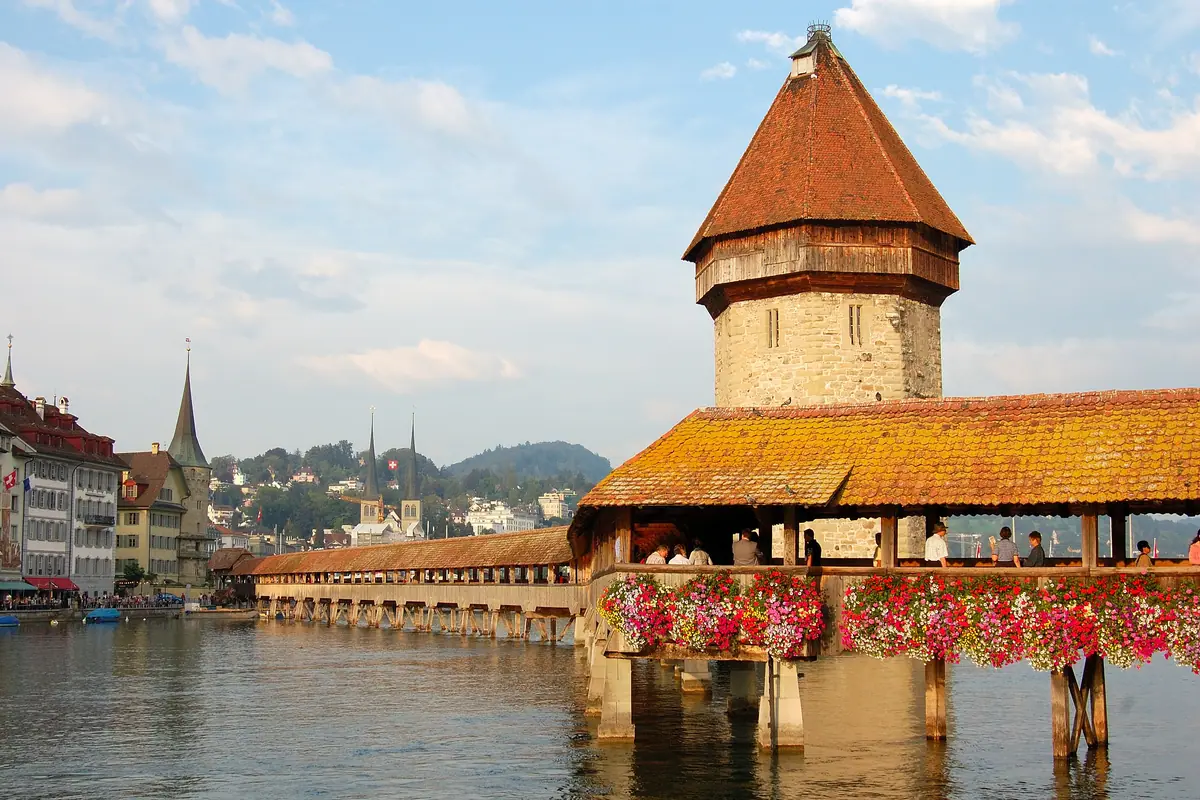
Lucerne is a storybook city on the shores of Lake Lucerne, with the Chapel Bridge (Kapellbrücke), a 14th-century wooden covered bridge with painted panels, and the Water Tower. The Lion Monument, carved into sandstone, commemorates Swiss Guards who died in the French Revolution. A boat trip on the lake leads to the cogwheel railways of Mount Pilatus and Mount Rigi, the Queen of the Mountains.
Mount Pilatus can be reached by the world's steepest cogwheel railway from Alpnachstad or by gondola from Kriens; the summit offers views over the lake and the Alps. Mount Rigi, accessible by Europe's oldest mountain railway, is a gentle option with spa facilities and sunrise hikes. For a glacier experience, Mount Titlis near Engelberg has a revolving cable car and a cliff walk.
Best months: May to October for mountain railways and lake cruises; winter offers snowshoeing and festive markets. Lucerne's old town is compact and walkable; allow a full day for the city and another for a mountain excursion.
Lake Geneva and the Swiss Riviera: Chillon Castle and Lavaux Vineyards
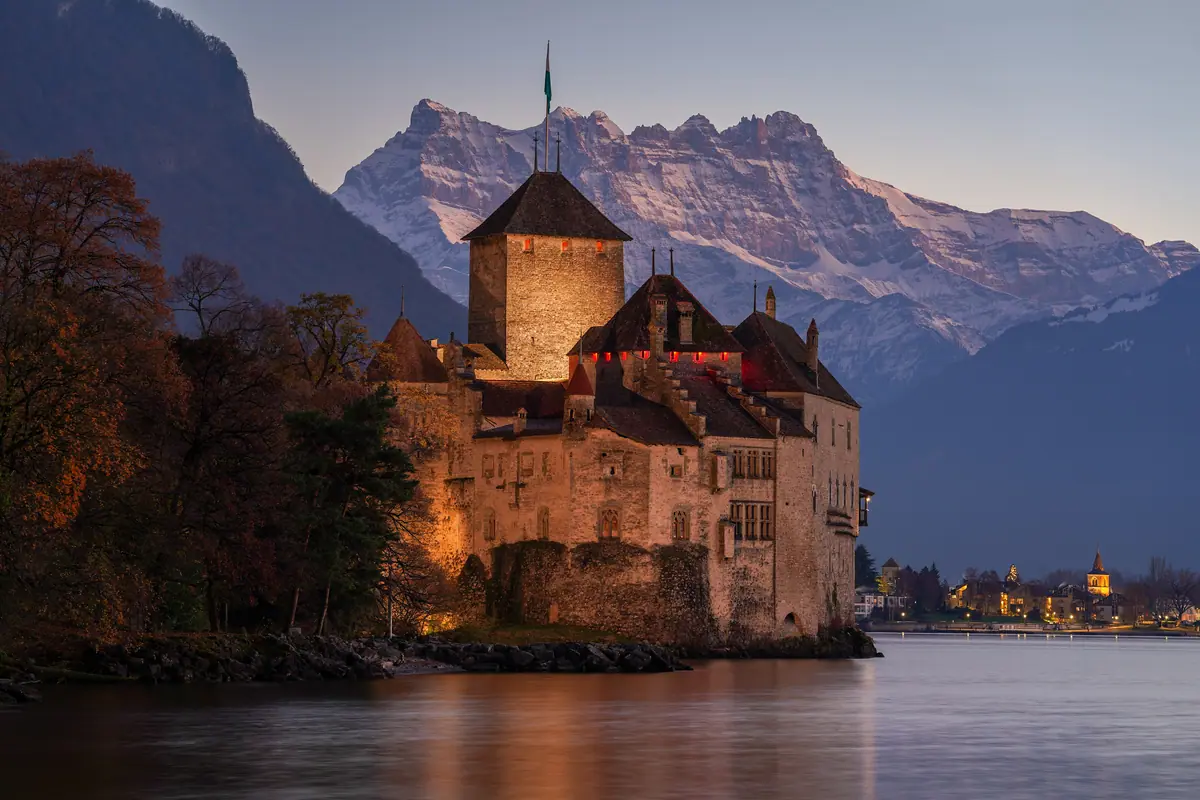
Lake Geneva, crescent-shaped and fringed by vineyards, is the largest alpine lake in Europe. At its eastern end, Montreux hosts a famous jazz festival and the Chillon Castle, a medieval island fortress that inspired writers. The castle is one of Switzerland's most visited historic sites, with vaulted dungeons and frescoed halls. Nearby, the Lavaux terraces, a protected World Heritage site, offer wine-tasting walks with views over the lake to the Savoy Alps.
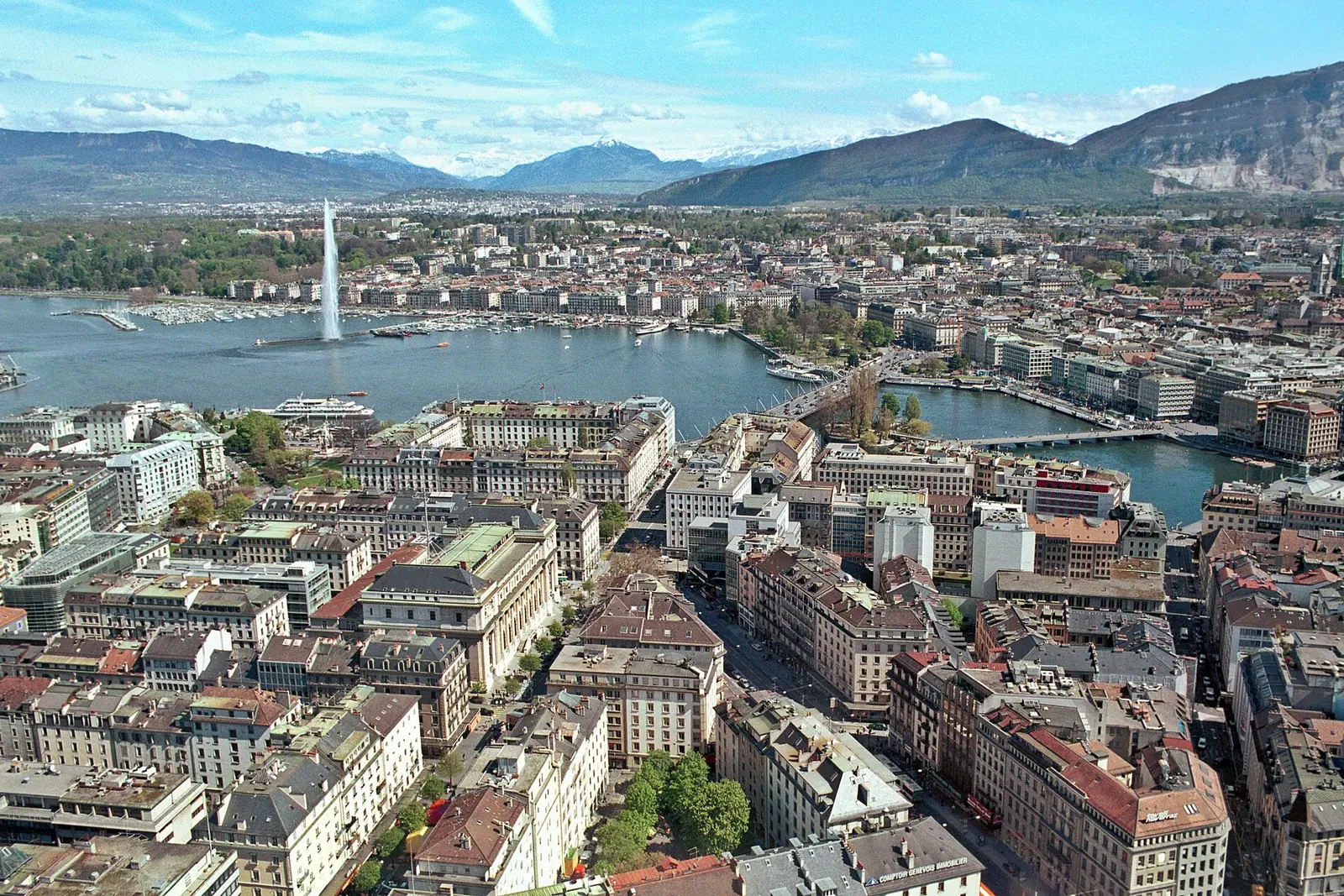
Geneva, at the western tip, is a global city with the Jet d'Eau, a 140-meter water fountain, and the Red Cross Museum. Lausanne, halfway along, is home to the Olympic Museum and a Gothic cathedral. Boat cruises connect the lakeside towns, and the vineyards can be explored on foot or by small train.
Best months: May to September for vineyard walks and lake swimming; the Montreux Jazz Festival in July draws crowds. Allow two to three days to explore the region, including a visit to Chillon and a wine tasting in Lavaux.
Scenic Rail Journeys: Glacier Express and Bernina Express
Switzerland is renowned for its panoramic trains, and the Glacier Express is the most famous, linking Zermatt and St. Moritz over eight hours through 291 bridges and 91 tunnels. The route crosses the Oberalp Pass and the Rhine Gorge, known as the Swiss Grand Canyon. The Bernina Express runs from Chur or St. Moritz over the Bernina Pass to Tirano, Italy, a protected World Heritage route that climbs to 2,253 meters and descends through the Brusio spiral viaduct.
The GoldenPass Line connects Lucerne and Montreux via Interlaken, with a mix of standard and panoramic carriages. The Gotthard Panorama Express combines a boat ride on Lake Lucerne with a train over the Gotthard Pass. These journeys are best enjoyed in spring through autumn, when the windows can be opened and the landscapes are green or golden.
Book seats in advance, especially in summer, and consider a rail pass that covers these routes. The trains have large windows and some offer dining cars with regional specialties. A journey on the Bernina Express can be combined with a bus to Lugano, offering a taste of Italian-speaking Switzerland.
Rhine Falls, Bern Old Town, and Aletsch Glacier: Other Must-See Gems
The Rhine Falls near Schaffhausen is Europe's largest waterfall by volume, with a width of 150 meters and a height of 23 meters. A boat trip takes you to a rock in the middle of the falls, and viewing platforms on both sides offer thrilling perspectives. The falls are especially impressive in May and June when snowmelt increases the flow.
Bern, the capital, has a beautifully preserved medieval old town, a protected World Heritage site, with the Zytglogge clock tower, arcaded streets, and the Rose Garden offering a panoramic view. The bear park, home to the city's heraldic animals, is a short walk from the center. For a natural wonder, the Aletsch Glacier is the longest in the Alps, a 23-kilometer river of ice best seen from the Jungfraujoch or the Bettmerhorn viewpoint.
Other highlights include Basel's art museums and Rhine promenade, Appenzell's traditional villages and cheese dairies, and the vineyards of the Valais. Best months vary: the Rhine Falls are powerful in spring, Bern is charming year-round, and the Aletsch Glacier is accessible from June to September for hiking.
Frequently asked questions
What is the best time of year to visit Switzerland?
It depends on your interests. Summer (June to August) is ideal for hiking, mountain railways, and lake cruises. Winter (December to March) is best for skiing and snow sports. Spring and autumn offer fewer crowds, lower prices, and pleasant conditions for scenic rail journeys and city visits.
How many days do I need to see Switzerland's main attractions?
At least seven to ten days to cover the Matterhorn, Jungfrau region, Lucerne, Lake Geneva, and one scenic train. A two-week trip allows a more relaxed pace with time for hikes and wine tasting.
Do I need a car to get around Switzerland?
No. The public transport network is exceptionally efficient, with trains, buses, and boats connecting nearly every attraction. Many mountain villages are car-free, and rail passes make travel easy and cost-effective.
What are the must-see landmarks for a first-time visitor?
The Matterhorn in Zermatt, Jungfraujoch (Top of Europe), the Chapel Bridge in Lucerne, Chillon Castle on Lake Geneva, the Rhine Falls, and a ride on the Glacier Express or Bernina Express.
Is Switzerland expensive for travelers?
Yes, it is one of Europe's pricier destinations, but you can manage by staying in hostels or mountain huts, preparing picnics, and using rail passes. Many hikes, viewpoints, and city walks are free.
Plan it — experiences in Switzerland
Live search, booked directly with trusted providers.
Sort the rest of your trip
Everything for Switzerland, in one place
Stay in Switzerland
Hotels, guesthouses and apartments — compared in one search.
Search hotels
Transfer in Switzerland
Private driver waiting on arrival — no queues, no surprises.
Book a transfer
Stay online in Switzerland
Travel eSIM — data the moment you land, no roaming bills.
Get an eSIMMore guides in Switzerland
Best Time to Visit Switzerland: A Season-by-Season Hotel Guide
Switzerland in One Week: A 7-Day Itinerary by Flight, Rail and Cable Car
Switzerland Tour Guide: Food, Culture and Local Experiences
Best Time to Visit Geneva: A Season-by-Season Guide to Weather, Events and Hotel Rooms