Switzerland is not a country you rush through — it is a country you taste slowly, one melted cheese, mountain railway and lakeside arcade at a time. Between the vineyard terraces of Lavaux and the car-free lanes of Zermatt, everyday life here is woven from dairy farms, market squares and a rail network that climbs into the clouds. This guide blends the plates, the traditions and the unmissable landmarks so your tour feels like a local's week rather than a checklist.
Swiss Food Beyond the Clichés: Fondue, Alpine Cheese and Mountain Kitchens
Fondue is not one dish but a family of them, and each region guards its own. Around Fribourg you will meet a moitié-moitié of Gruyère and Vacherin, silky and faintly sharp; in Vaud it is looser and more wine-scented; in the Valais the cheese is often simply melted over a fire and scraped onto boiled potatoes as raclette, served with pickled onions and gherkins. Order either in a low-beamed mountain inn after a morning of walking and you understand why the ritual matters: the pot is shared, the pace is slow, and losing your bread in the cheese comes with a forfeit decided by the table.
Away from the fondue pot, the country eats seasonally and locally. Bernese rösti arrives crisp and golden with bacon or a fried egg; Älplermagronen combines macaroni, potato, cream and apple sauce in a dish born in alpine huts; Zürcher Geschnetzeltes pairs sliced veal in a cream sauce with rösti. In Graubünden, air-dried Bündnerfleisch is sliced paper-thin, while Ticino leans Italian with polenta, risotto and its own Merlot. Cheese names are worth learning: nutty Gruyère, mild Emmentaler, herbal Appenzeller, and Tête de Moine, shaved into rosettes with a girolle and best eaten within minutes of cutting.
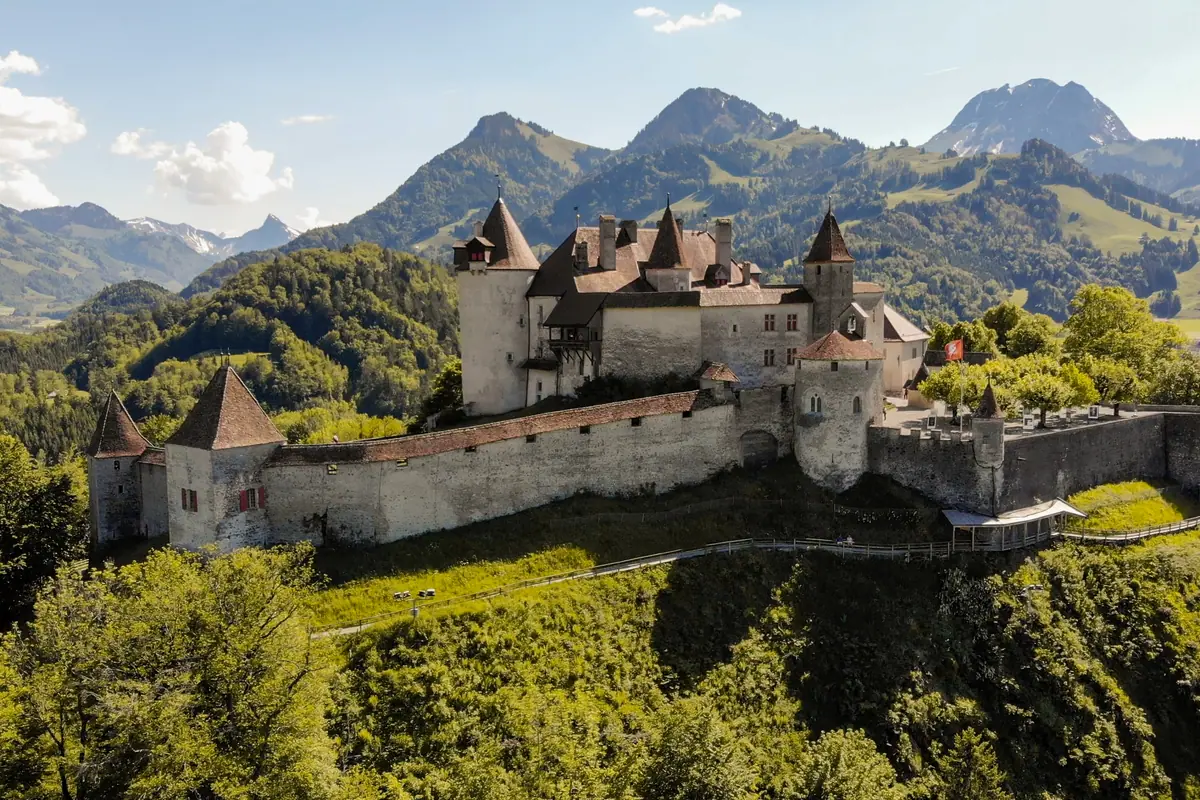
Sweet traditions are just as regional. Meringues with thick double cream are the classic finish in the Gruyère village, gingerbread-style Läckerli belong to Basel, and the Engadine is famous for its nut tart. Chocolate-making here is a craft with a long history, and small workshops in the Gruyère region still temper by hand. Plan your day around meal times: lunch is the main event, roughly between noon and half past one, and in villages many kitchens close mid-afternoon and reopen only for dinner, with Sunday and Monday closures common.
Markets, Arcades and City Tables: Zurich, Bern, Basel and Geneva
Zurich is the easiest introduction to Swiss city eating. The old-town lanes of Niederdorf hide taverns serving fondue and veal, while the market at Bürkliplatz fills with flowers, bread and alpine cheese on Tuesday and Friday mornings. Walk the elegant Bahnhofstrasse, climb to the Lindenhof viewpoint above the river, then join locals on the lake promenade, where on clear days the panorama runs from the water straight to distant snowfields. Sunday is a brunch day here, unhurried and sociable.
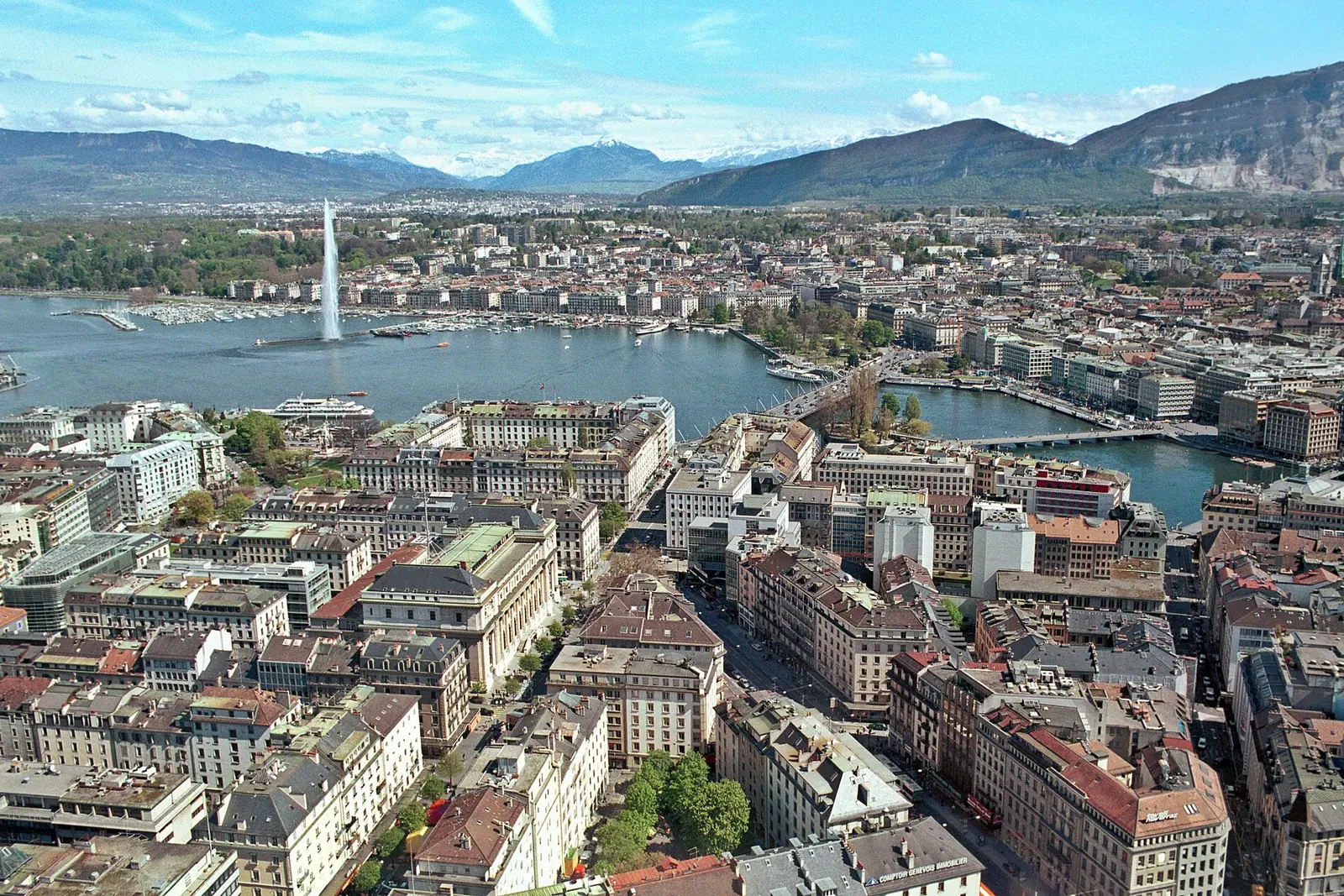
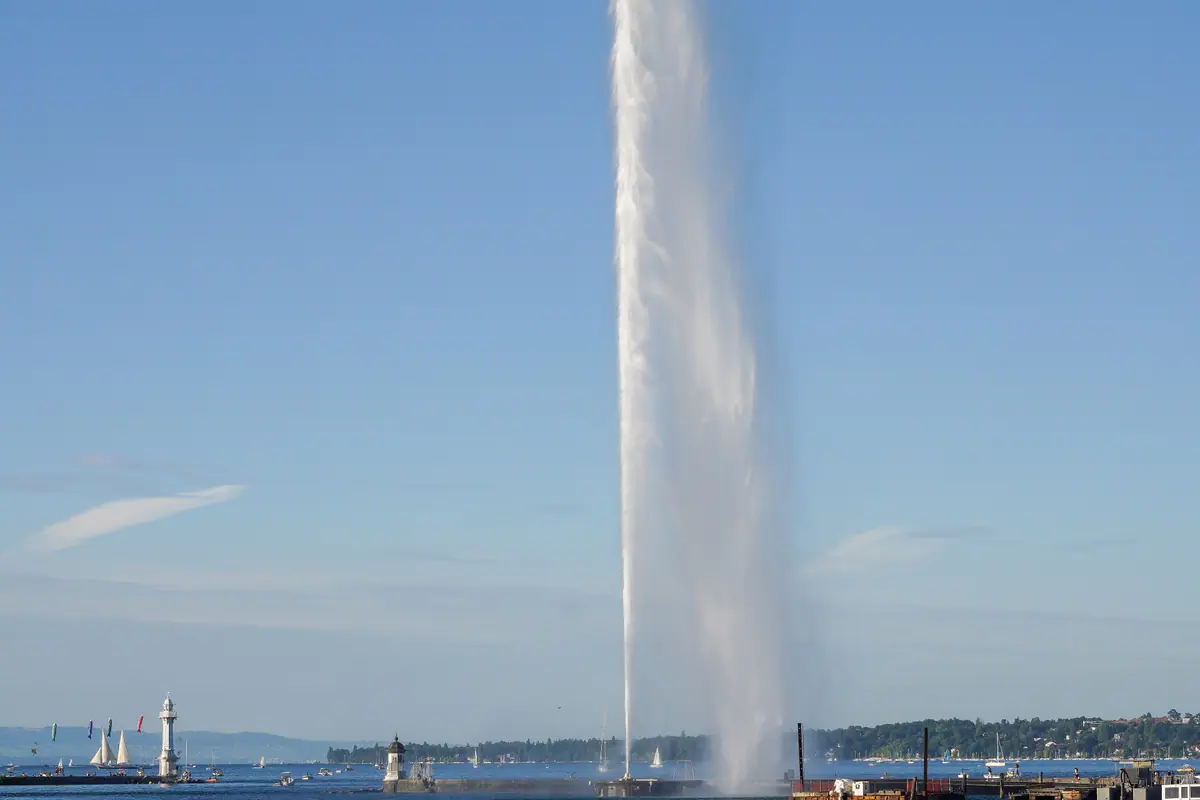
Bern rewards wandering under its arcades, the covered walkways that let you shop and shelter at once. The Zytglogge clock tower is the city's beating heart, its painted figures performing for the crowds on the hour, and the Rosengarten terrace gives the classic view over the river bend and the old roofs. Basel's Marktplatz is dominated by a red town hall and the scent of its spiced biscuits, and in summer locals float down the Rhine in waterproof bags to cool off, a pastime that looks eccentric and feels wonderful. Geneva offers the Jet d'Eau fountain jetting above the lake and a quieter, village-like quarter in Carouge with its own market rhythm.
Lake towns have their own table culture. Lucerne's riverfront market is a good place to assemble a picnic of bread, cheese and dried fruit before a boat trip, and café crème is drunk without haste at marble tables across the country. Wherever you are, eating well on a modest budget is entirely possible: bakery sandwiches, market produce, and lunchtime fixed menus are the local shortcuts, while the cheese counters in department-store food halls are a free education in regional dairy.
Must-Visit Landmarks: Matterhorn, Jungfraujoch and the High Alps
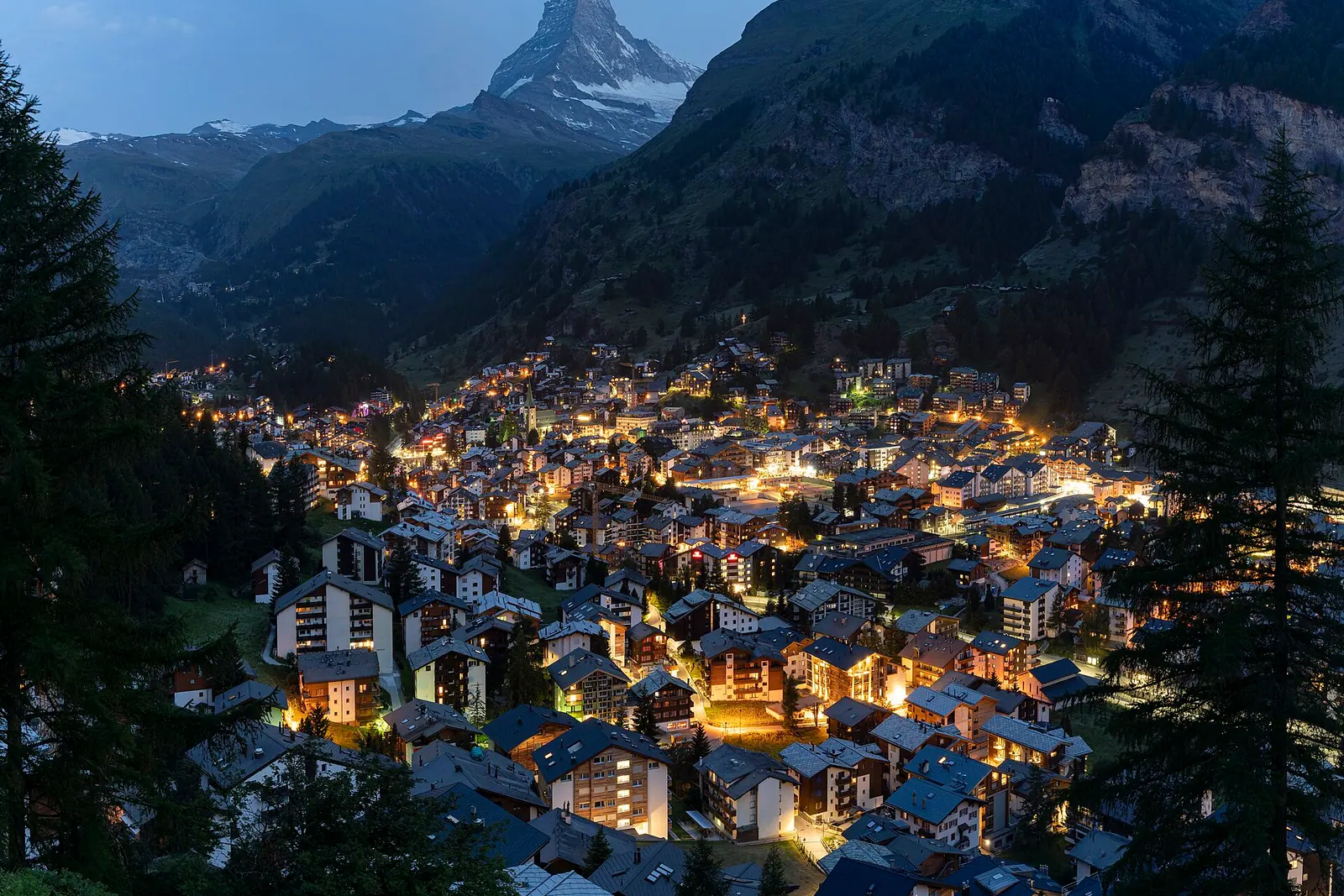
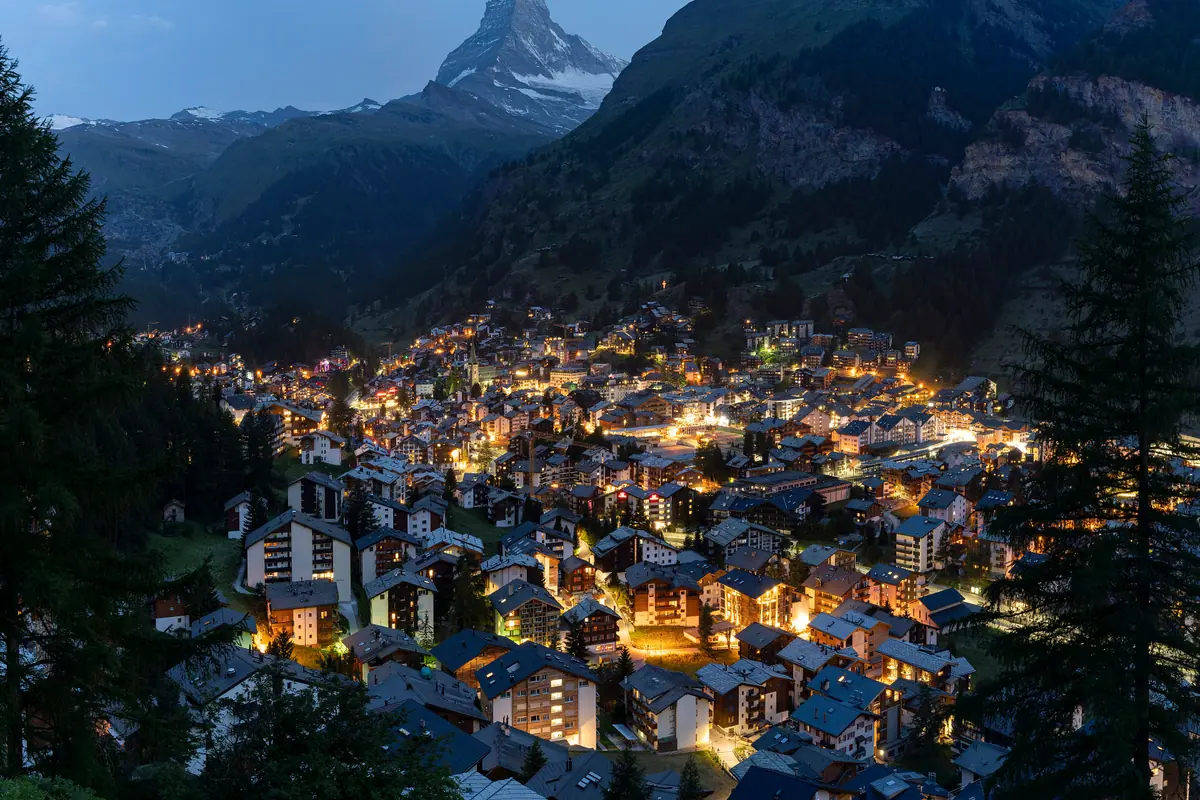
The Matterhorn is the image most people carry of Switzerland, and it delivers even in poor weather, rising above the car-free village of Zermatt. Ride the cogwheel railway to Gornergrat for the classic profile, walk down to Riffelsee where the peak doubles in the water on a still morning, or take cable cars to Matterhorn Glacier Paradise for year-round snow and a glacier palace carved into the ice. Early light and late afternoon give the sharpest views; summer brings hiking trails by the dozen, winter brings skiing on both sides of the valley.
Further north, Jungfraujoch is reached by a cogwheel train through the Eiger and Mönch, emerging at a saddle known as the Top of Europe with the Aletsch Glacier, the longest in the Alps, spilling below. Interlaken is the natural base, and the Lauterbrunnen valley nearby is a green cleft of waterfalls, including the free-falling Staubbach Falls and the subterranean roar of Trümmelbach Falls. The Schilthorn opposite gives a different angle on the same massif and an easier, quieter summit day.
Other peaks earn their place on a first tour: Pilatus and Rigi above Lake Lucerne, Titlis with its rotating cable car, and Säntis looking across to Austria and Germany. Mountain trips depend entirely on weather, so keep your itinerary flexible and swap summits if cloud rolls in. Cable cars and mountain railways fill quickly in July, August and the winter holidays, so book those specific journeys ahead and treat the rest of the day as yours to improvise.
Lake Towns and Castles: Lucerne, Chillon and St. Gallen
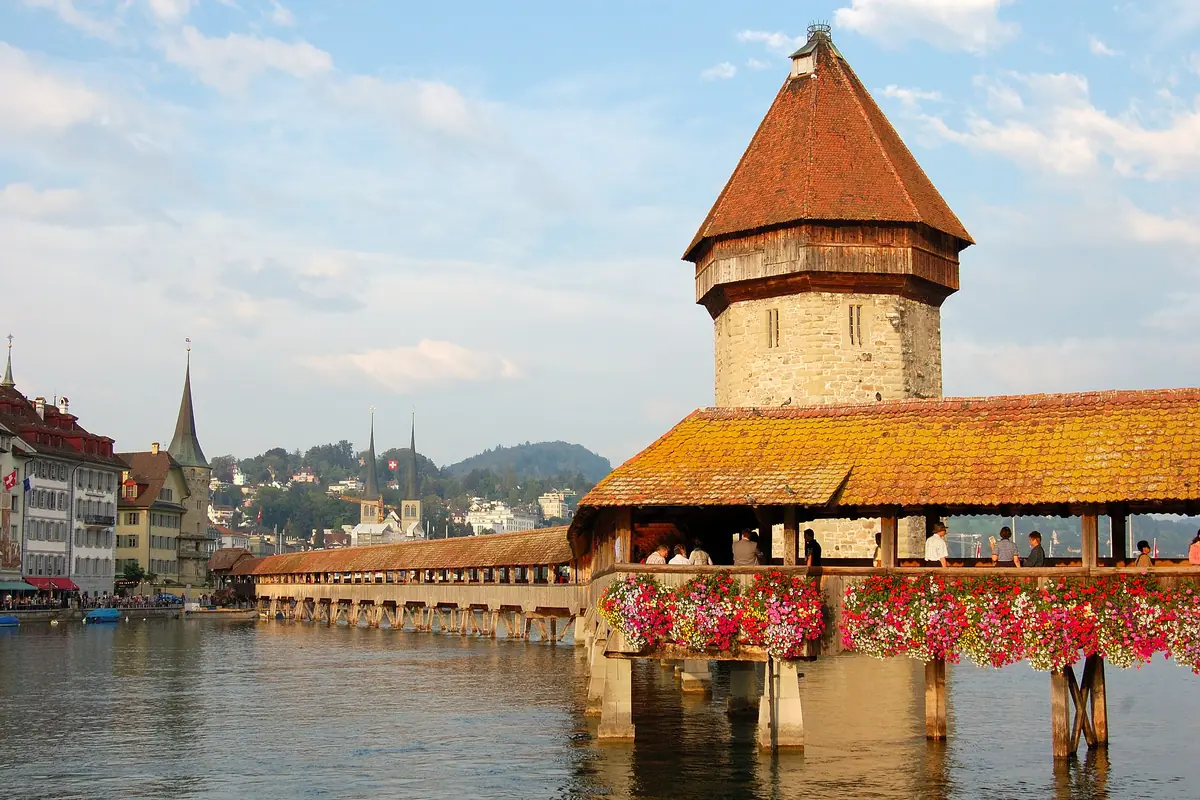
Lucerne is the most graceful of the lakeside towns. Its Chapel Bridge, a covered wooden crossing with a stone water tower, is one of the oldest of its kind in Europe, and the painted panels inside repay a slow walk. From there, follow the waterfront to the sorrowful Lion Monument carved into a sandstone cliff, then climb the Musegg Wall, whose towers you can walk along for a view over roofs and lake steamers. A boat across Lake Lucerne connects neatly with the cogwheel railways up Pilatus and Rigi.
On Lake Geneva, the Château de Chillon sits on a rocky island near Montreux, its courtyards, dungeons and lakeside windows open for a half-day visit. Continue along the shore into the Lavaux, terraced vineyards so steep and old they are protected as a cultural landscape; wineries in villages such as Rivaz and Epesses pour crisp Chasselas with a view over the water to the Savoy Alps. Lake steamers link the towns, making a car unnecessary.
Eastern Switzerland holds quieter treasures. St. Gallen's abbey district centres on a baroque library that is one of the country's most beautiful rooms, and Stein am Rhein has painted facades so complete it feels like an open-air museum. Near Schaffhausen, the Rhine Falls thunder over a wide ledge, best seen from a boat that takes you close to the spray, while in the south, Bellinzona guards the alpine passes with three medieval castles in a single afternoon's walk.
Local Experiences: Alpine Dairies, Appenzell Customs and Ticino Grotti
The alpine summer is the country's living calendar. In June, herds walk up to the high pastures in decorated processions with bells and flowers around their necks; in September they come down again in the désalpe, and villages turn out to watch. Working dairies in the Gruyère region and the Bernese Oberland open their doors so you can watch curds being cut and pressed, and a few alpine huts accept overnight guests, which means waking to cows, mist and a breakfast of cheese, butter and dark bread.
Appenzell feels like a place apart: painted houses, a square where open-air assembly still happens, and the Alpstein massif rising behind. Hikers head for the cliff-side guesthouse at Äscher, tucked beneath an overhang, and for the cable car to Ebenalp. Yodeling and the metallic ring of a coin spun in a bowl are genuine local pastimes rather than staged folklore, and the local cheese, sharp and herby, is eaten with the small spiced biscuits called biberli.
In the Italian-speaking south, the grotto is the place to eat: a stone cellar in a wooded valley, cool in summer, serving Merlot from nearby vineyards with salumi, polenta and cheese. The Valais has its own terraced wine villages around Sion, and carnival traditions bring Basel, Lucerne and Bern to life in February with masks, drums and confetti. Look for these events in local listings when you arrive — they are the moments when a tour turns into a memory.
When to Go and How to Travel: Seasons, Scenic Rail and Practical Tips
June to September is the season for high trails and mountain railways, though snow lingers on passes above two thousand metres into early summer. Late September and October are arguably the loveliest weeks: golden larches, dairy herds descending, clear air and noticeably smaller crowds. December to March is for snow, sledding and Christmas markets in Zurich, Basel and Bern, while April and May bring waterfalls at full volume, green valleys and lower prices — with the caveat that some high cable cars and passes stay shut.
The rail network is the country's finest attraction in itself. Trains reach almost every valley, and multi-day passes cover boats, buses and many mountain lines. The Bernina route crosses the Landwasser Viaduct and climbs over the Bernina Pass into Italy, the Glacier Express links St. Moritz and Zermatt in a long, panoramic day, and the GoldenPass line rolls between lakes and vineyards. Postbuses fill the gaps to villages, and luggage can be forwarded between hotels so you travel with a daypack.
Practical details make a difference. Tap water is excellent everywhere and public fountains are drinkable unless marked otherwise; rounding up the bill is thanks enough, and service is included. Shops close on Sundays outside stations and tourist hubs, and small mountain huts may prefer cash. Weather turns quickly at altitude, so carry a shell and check conditions before setting out, tell someone your route on long hikes, and try to ride the marquee cable cars midweek rather than on a crowded Saturday.
Frequently asked questions
What food should I try first in Switzerland?
Start with fondue in a mountain inn and raclette in the Valais, then branch out to Bernese rösti, Zürcher Geschnetzeltes and Ticino's polenta. Cheese is the thread running through all of it, so visit a working dairy in the Gruyère region to taste how much the alpine pastures change the flavour.
When is the best time to visit Switzerland for hiking and local traditions?
Late June through September for high-altitude trails and mountain railways, and late September into October for golden larch trees, quieter paths and the cattle descending from the summer pastures. Winter suits snow sports and Christmas markets, while April and May offer thundering waterfalls with fewer visitors.
Do I need a car to tour Switzerland?
No — the rail, boat and postbus network reaches almost every village, and scenic rail routes are attractions in their own right. Driving is only worth considering for remote side valleys, and even there a train plus a short bus often works better than finding parking in places like Zermatt, which is car-free.
How can I eat well in Switzerland without spending a fortune?
Use bakery sandwiches, market stalls and lunchtime fixed menus, which are far cheaper than dinner for similar cooking. Supermarket cheese counters and picnic spots beside a lake or a trailhead turn simple ingredients into one of the best meals of the trip, and tap water is free and safe to drink.
How many days do I need for a first Switzerland tour?
Allow at least a week to combine two mountain bases with two cities. A common shape is three nights in the Bernese Oberland or Zermatt, two in Lucerne or Bern, and two on Lake Geneva, adding a scenic rail journey between regions rather than doubling back.
Plan it — tours in Switzerland
Live search, booked directly with trusted providers.
Sort the rest of your trip
Everything for Switzerland, in one place
Stay in Switzerland
Hotels, guesthouses and apartments — compared in one search.
Search hotels
Transfer in Switzerland
Private driver waiting on arrival — no queues, no surprises.
Book a transfer
Stay online in Switzerland
Travel eSIM — data the moment you land, no roaming bills.
Get an eSIM