Uzbekistan is the rare Silk Road country where a short hop in the air can save you a full day of desert driving — and where four UNESCO-listed cities sit within one week's reach. This itinerary strings together Tashkent, Khiva, Bukhara and Samarkand using domestic flights where they genuinely help and rail or road where they don't, so you spend your hours in blue-tiled courtyards rather than on a bus seat.
Why Uzbekistan Rewards a Week of Short Flights
The country is far bigger than most first-timers expect. Tashkent sits in the east, Samarkand about 300 kilometres southwest of it, Bukhara roughly twice that, and Khiva another 450 kilometres beyond — a chain that stretches well over a thousand kilometres across desert and steppe. On a week-long trip, driving the whole loop would consume two or three precious days. Domestic aviation collapses those distances into hops of roughly one to two hours, which is what makes a four-city week realistic at all.
The seasonal window matters as much as the routing. April to early June and September to late October are the sweet spots: warm days, cool evenings, and long golden hours over the tilework. July and August push past 40°C in Bukhara and Khiva, turning midday sightseeing into a test of endurance, while December and January bring fog to the Tashkent and Urgench areas that can ground morning departures. Shoulder-season travel also means fewer tour groups crowding the Registan at sunset.
A practical rhythm for the week is to fly the long western leg early, then work your way back east by air and rail, ending in Samarkand with a short flight home from Tashkent or a direct departure from Samarkand's own airport. Book domestic seats as soon as your international dates are fixed — the aircraft on these routes are small, and holiday periods sell out well in advance.
Days 1–2: Tashkent — Land, Acclimatise, Then Fly West
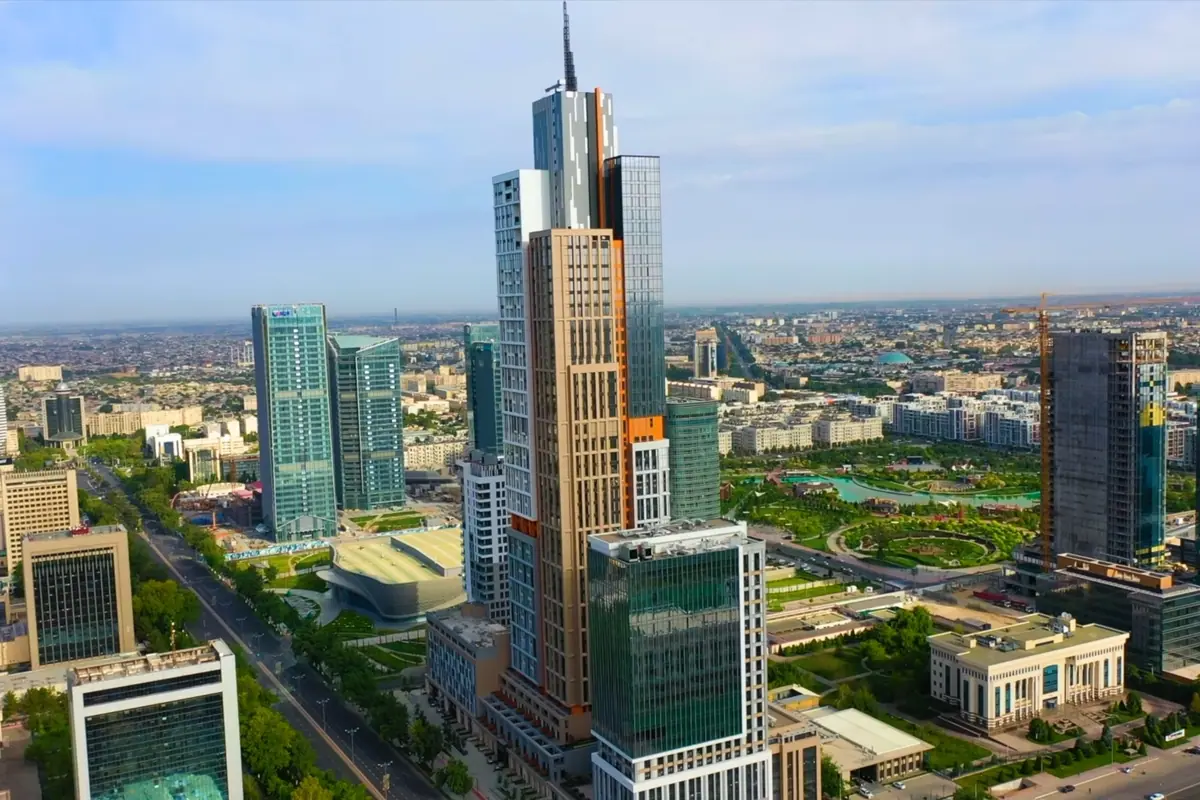
Most international arrivals touch down in Tashkent, and the capital deserves more than a rushed transfer. Spend your first morning on the city's extraordinary metro, where stations are decorated with mosaic, marble and chandeliers, then surface at Amir Timur Square and walk the tree-lined stretch toward Independence Square. The Museum of Applied Arts, housed in a carved 19th-century mansion, offers a gentle introduction to the ceramics, suzani embroidery and woodwork you'll see made across the country.
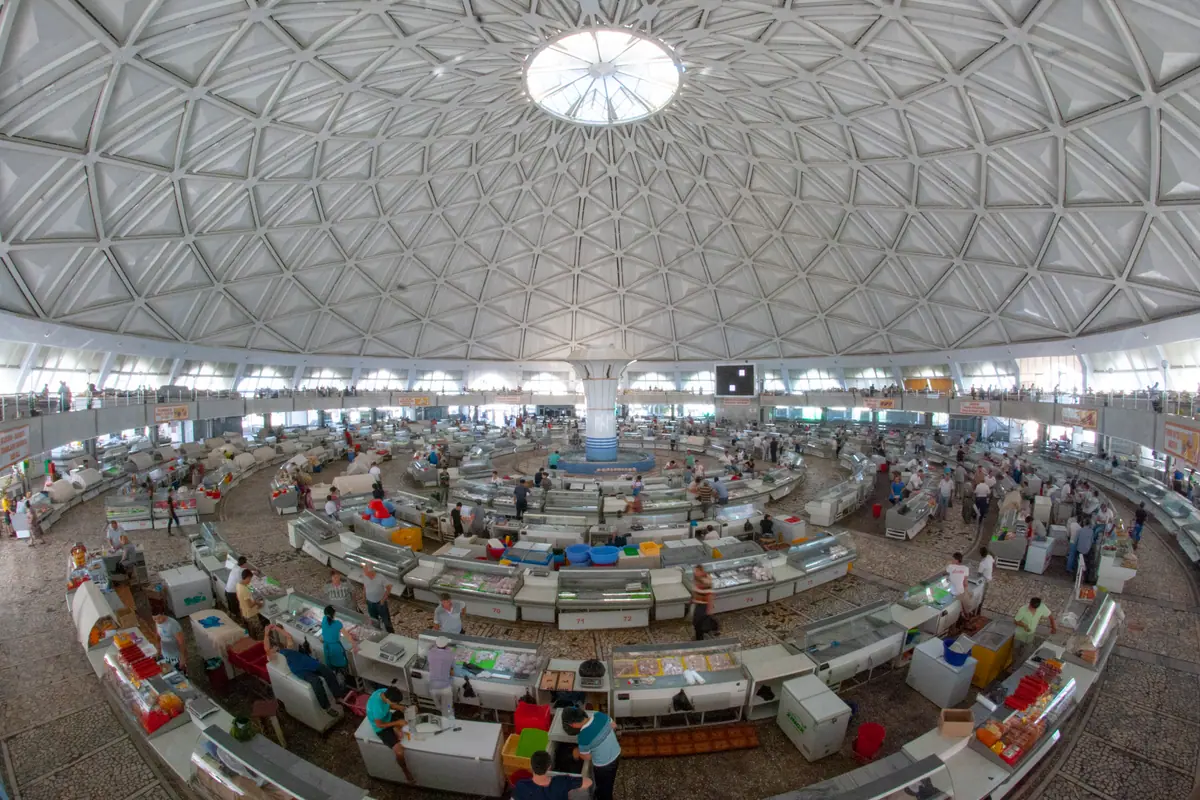
Don't skip Chorsu Bazaar, the vast domed market near the old town, where pyramids of dried fruit, cumin, pomegranates and round non bread fill the air with scent. From there it's a short ride to the Hazrati Imam Complex, home to the Barak-Khan Madrasah and one of the world's oldest surviving Qur'an manuscripts — a genuinely awe-inspiring stop that most casual visitors overlook.
That evening or the following morning, take the flight west to Urgench, the gateway airport for Khiva, roughly 35 kilometres away by road. Flights run most days but often depart very early, so a 4am alarm is part of the bargain. Arriving by mid-morning means you can be inside Khiva's walls before the heat builds and have a full afternoon to wander.
Day 3: Khiva — Inside the Walled City of Itchan Kala
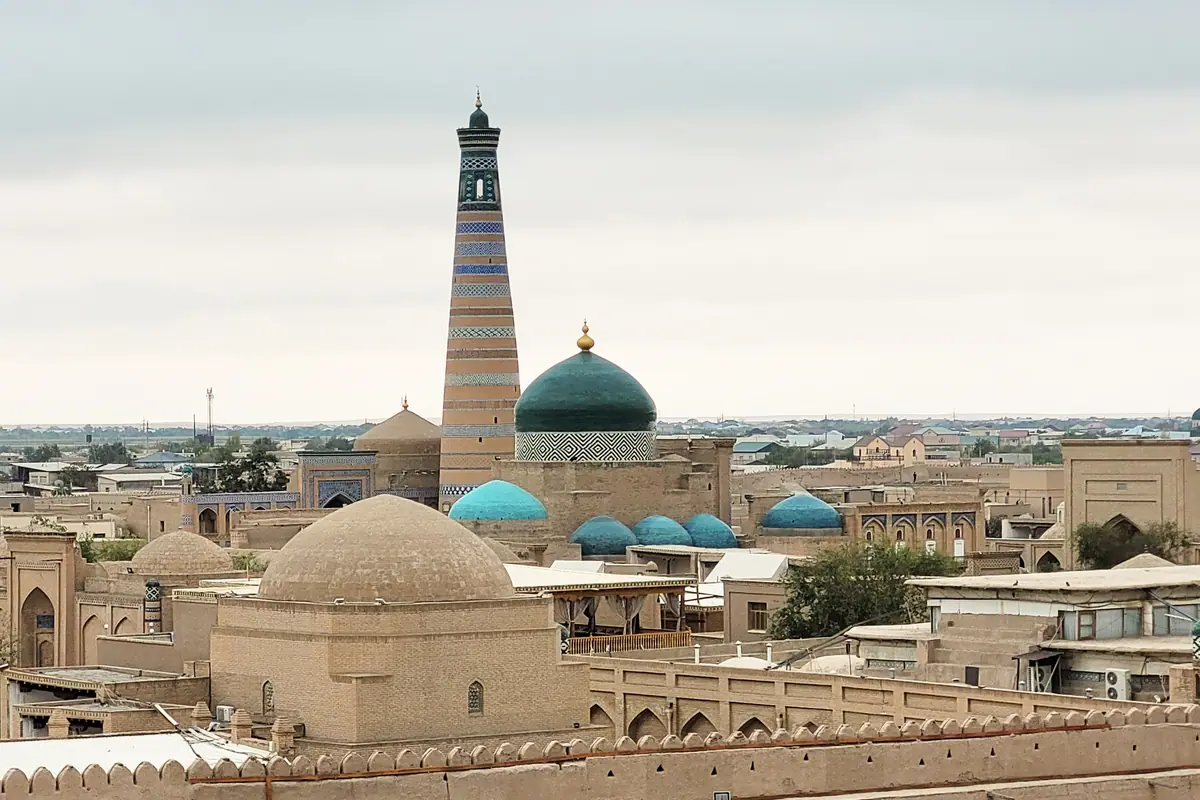
Khiva is the most contained of Uzbekistan's Silk Road cities: the entire historic core, Itchan Kala, sits inside mud-brick walls and can be crossed on foot in twenty minutes. Because it's so compact, one well-planned day covers the highlights. Start at the stubby, turquoise-tiled Kalta Minor Minaret, then climb the Islam Khodja Minaret for the classic rooftop panorama of domes, minarets and desert haze beyond the ramparts.
Work through the Kunya-Ark Citadel, the summer mosque and the Tash Hauli Palace with its labyrinth of blue-tiled courtyards and harem quarters, then rest in the shade of the Juma Mosque, whose prayer hall is held up by more than two hundred carved wooden columns. Late afternoon is for the city walls — walk a section at sunset, when the brick turns amber and the muezzin calls echo off the fortifications.
Sleep inside Itchan Kala if you can. Small guesthouses and courtyard hotels occupy restored merchant houses, and staying within the walls means you get the city at dawn and dusk, when day-trippers have gone and the lanes belong to you. Cash in local currency is useful here; smaller guesthouses and craft stalls rarely take cards.
Days 4–5: Bukhara — Minarets, Courtyards and the Ark
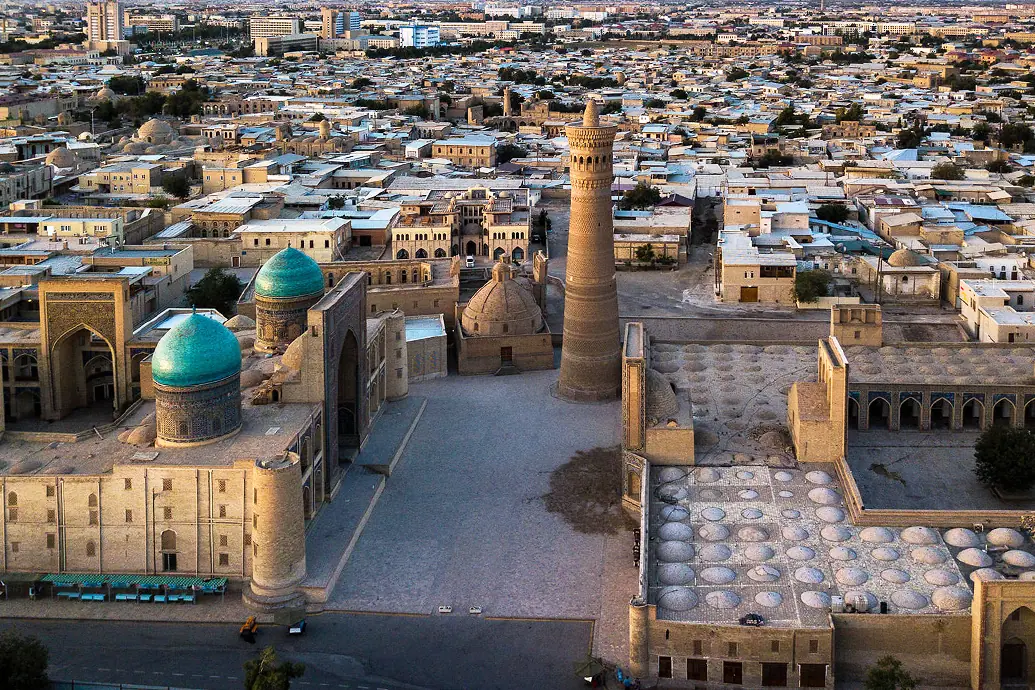
Bukhara's airport handles only a limited domestic schedule, so most travellers make this leg overland — a long but memorable drive across the Kyzylkum Desert, or a slower rail connection. Whichever you choose, arrive with two nights to spare, because Bukhara rewards lingering more than ticking off monuments. The heart of it is the Po-i-Kalyan ensemble, where the 12th-century Kalyan Minaret rises over the mosque and madrasah facing each other across a plaza.
From there, the route unspools easily on foot: the massive Ark Fortress with its royal apartments and throne room, the Bolo Hauz Mosque with its slender painted pillars, and the leafy Lyab-i Hauz square, where teahouses set tables beside a stone pool and old men play chess under mulberry trees. Further out, the Samanid Mausoleum is a masterpiece of intricate brickwork thousands of years old, and the Chor Minor's four cupolas make a favourite photo stop.
If you have an hour spare, take a taxi to the Sitorai Mohi Xosa, the emir's summer palace north of town, where Russian and Central Asian decorative styles collide in mirrored halls and porcelain rooms. On your second evening, catch the high-speed train to Samarkand — about an hour and a half — or continue overland if you've built in extra time.
Days 6–7: Samarkand — The Registan and the Blue City
Samarkand is the emotional climax of the trip, and the Registan is its centrepiece: three vast madrasahs arranged around a square, their portals covered in cobalt and turquoise tilework that shifts colour through the day. Go early for soft light and space, then return after dark when the façades are floodlit and the square empties out. Nearby, the Gur-e-Amir Mausoleum holds the fluted blue dome over Timur's tomb, and the enormous Bibi-Khanym Mosque opposite the bazaar is best seen in late afternoon.
No visit is complete without Shah-i-Zinda, a narrow avenue of mausoleums climbing a hillside, its tiles the most intricate in the country. Continue to the Ulugh Beg Observatory, where a giant stone arc once measured the stars, and finish at Siab Bazaar, buying almonds, apricots and fresh non straight from the ovens. The Hazrat Khizr Mosque, on the rise opposite Shah-i-Zinda, gives the finest wide view of the city.
On your final day, either fly the short hop back to Tashkent to connect onwards, or depart directly from Samarkand's international terminal, which now handles a growing number of overseas routes. Leave a comfortable buffer of several hours between domestic and international departures — afternoon winds and summer thunderstorms occasionally shuffle timetables.
Flight Logistics: Airports, Tickets and Weather Windows
Domestic routes radiate mainly from Tashkent, linking Urgench (for Khiva), Nukus, Bukhara, Samarkand, Termez, Fergana and Namangan. Urgench, Nukus and Samarkand have the most useful schedules for travellers; Bukhara and Termez see thinner service. If the Aral Sea and the remarkable art collection in Nukus are on your list, add two days and fly Tashkent–Nukus, then drive to Khiva — it's a spectacular, if sobering, detour.
Tickets are easiest to arrange through local agencies, hotel desks or carrier sales offices, and it pays to confirm schedules a few days ahead since frequencies change seasonally. Arrive at least 90 minutes before domestic departures with your passport, expect a modest baggage allowance on the smaller aircraft, and keep valuables in hand luggage. Airport taxis are plentiful; agree the fare or use a metered ride before you leave the terminal.
Finally, respect the weather. Winter fog is the single biggest cause of cancellations and delays in Tashkent and the west, so if you're travelling between November and February, favour morning flights and avoid tight onward connections. In summer, book early departures to dodge both the heat and the afternoon instability, and always carry a little slack in your plan — one flexible day turns a lucky trip into a relaxed one.
Frequently asked questions
How many domestic flights do I actually need for a one-week Uzbekistan trip?
Two or three is usually enough. The essential one is Tashkent to Urgench for Khiva; the second is Samarkand back to Tashkent, or an international departure straight from Samarkand. The Khiva–Bukhara and Bukhara–Samarkand legs are often quicker and more comfortable by road or high-speed rail, so save your flights for the genuinely long stretches.
Which Uzbek cities have airports with domestic service?
Tashkent is the main hub, with regular domestic links to Urgench, Nukus, Bukhara, Samarkand, Termez, Fergana and Namangan. Samarkand and Urgench have the most practical schedules for a classic Silk Road loop; Bukhara's airport has a much smaller domestic programme, which is why many travellers cover that section overland.
Is flying better than the train between Tashkent and Samarkand?
For that specific route the high-speed train is usually the better choice — roughly two hours city centre to city centre, with no airport transfers or check-in. Flying makes more sense on the longer western routes, such as Tashkent to Urgench or Nukus, where the alternative is a very long drive or an overnight rail journey.
When is the best time of year to visit Uzbekistan?
April to early June and September to late October offer the best balance of comfortable temperatures, clear light for photography and manageable crowds. Summer heat in Bukhara and Khiva regularly exceeds 40°C, while December and January can bring fog that disrupts flights in Tashkent and the Urgench area.
Can I combine a flight itinerary with the Aral Sea and Nukus?
Yes, if you can stretch the trip by two days. Fly Tashkent to Nukus, visit the extraordinary avant-garde art collection there and the haunting ship graveyard at Moynaq, then drive onward to Khiva. It adds distance but gives the week a striking contrast to the tiled Silk Road cities.
Plan it — flights in Uzbekistan
Live search, booked directly with trusted providers.
Sort the rest of your trip
Everything for Uzbekistan, in one place
Stay in Uzbekistan
Hotels, guesthouses and apartments — compared in one search.
Search hotels
Transfer in Uzbekistan
Private driver waiting on arrival — no queues, no surprises.
Book a transfer
Travel insurance
Medical cover, delays and lost baggage — sorted before you go.
Get covered