Uzbekistan is a country that changes personality with the calendar: the same turquoise domes that shimmer under a punishing July sun feel almost sacred under a thin layer of January snow. Get the timing right and you walk the Registan at golden hour in a light jacket; get it wrong and you wilt in 40°C heat in Khiva with every shutter closed against the afternoon. This guide maps the seasons, the crowds and the hotel logic that goes with them.
Uzbekistan's Seasons at a Glance: Why Spring and Autumn Win
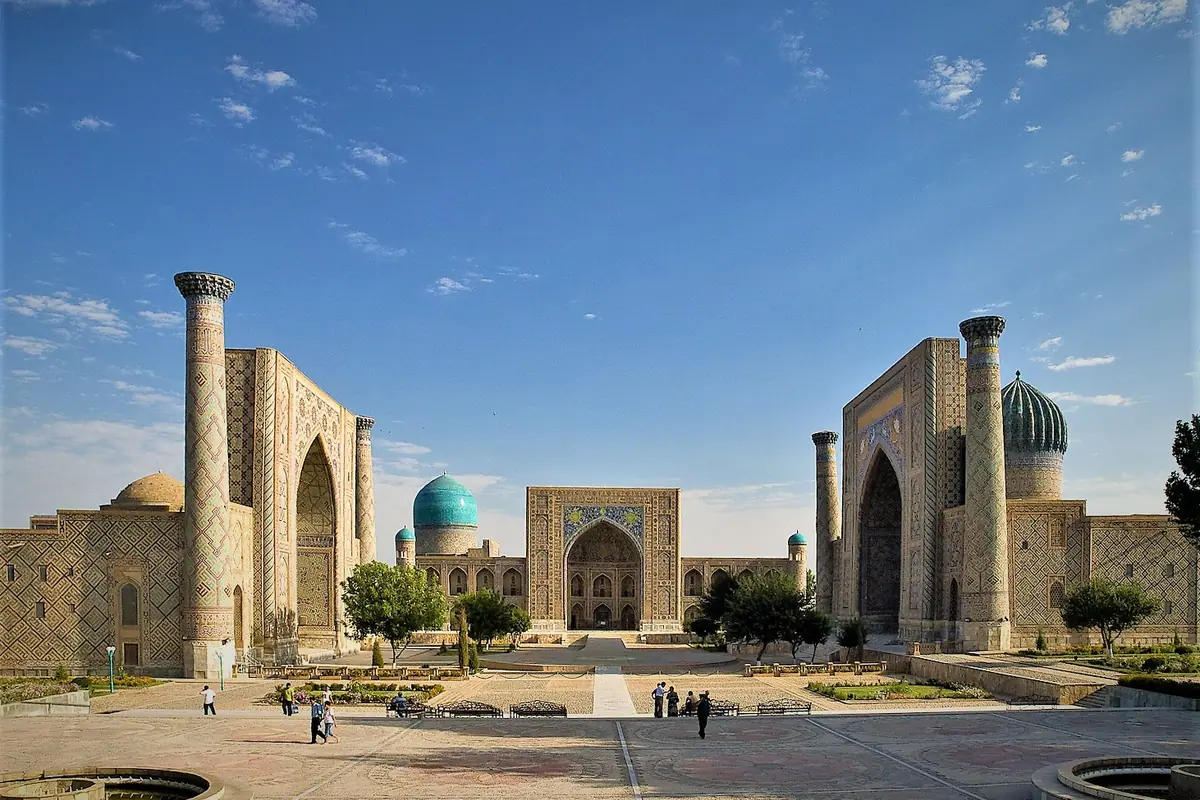
Uzbekistan sits deep in the interior of Central Asia, far from any ocean, which means a sharply continental climate: short, damp springs, long, very dry summers and crisp, sunny winters. The two windows that almost every traveller aims for are mid-April to late May and mid-September to late October, when daytime temperatures settle comfortably between roughly 18°C and 28°C. Those are also the months when the big outdoor monuments — the Registan in Samarkand, the Ark Fortress in Bukhara, the walls of Itchan Kala in Khiva — are pleasant to explore on foot for hours rather than in frantic early-morning bursts.
The catch is that good weather and crowds travel together. Spring and autumn are peak season for the whole country, from Tashkent's wide boulevards to the desert-edge town of Khiva, and the best courtyard guesthouses in Bukhara's old town and hotels overlooking Samarkand's Registan can fill up two to three months ahead. If you have fixed dates in April, May, September or October, book accommodation first and build the itinerary around it, not the other way round.
Shoulder months have their own appeal. Late March and early November are wildly underrated: expect changeable skies, occasional rain, thinner crowds and noticeably lower room rates, with the trade-off of shorter days and some chilly evenings in the mountains around Chimgan.
Spring (March–May): Blossom, Navruz and the First Wave of Travellers
Spring arrives in stages. March is still cool and showery, with temperatures in Tashkent and Samarkand hovering in the low teens and almond and apricot blossom breaking out across the Fergana Valley. Then, on 21 March, the whole country celebrates Navruz, the Persian New Year — a nationwide holiday of sumalak cooking, street music and family gatherings that is genuinely one of the best cultural experiences in Central Asia. Hotels in Samarkand and Bukhara sell out around Navruz well in advance, so treat that week as a fixed, high-demand date and plan accordingly.
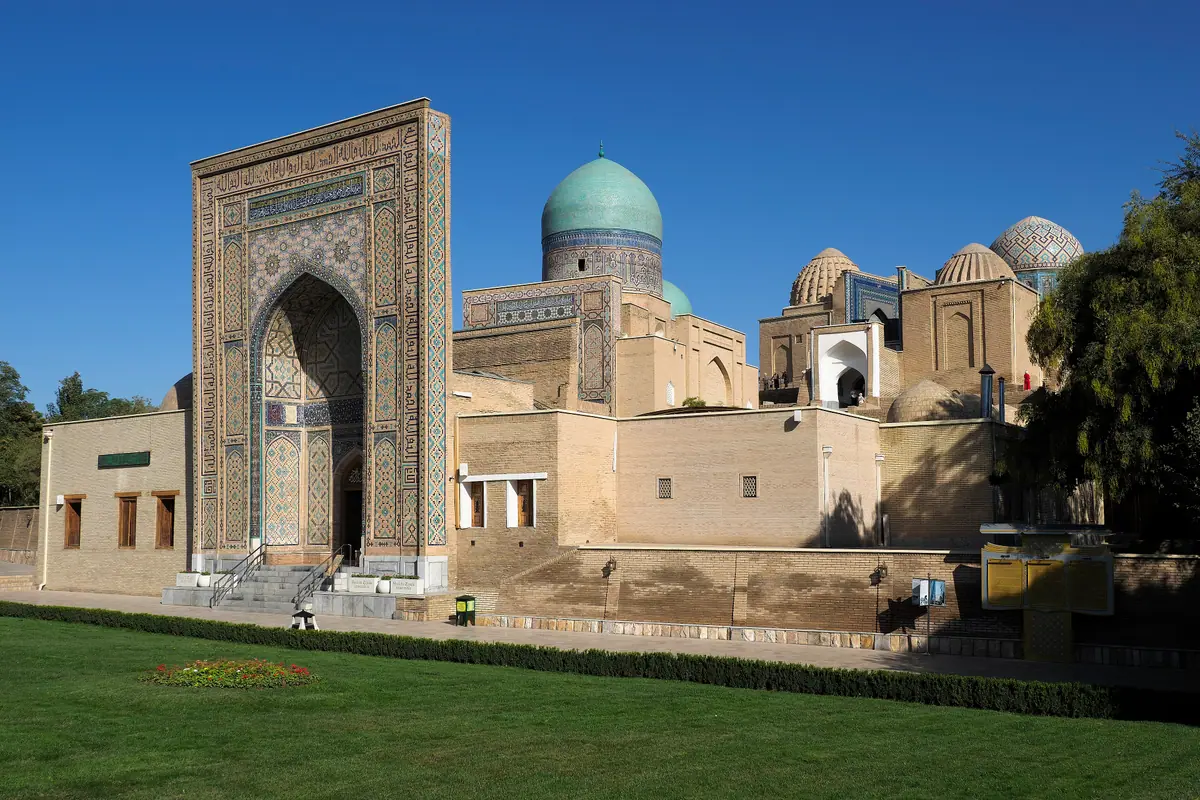
By April the weather turns reliably lovely: warm, dry days, cool nights, and long light that flatters the tilework at Shah-i-Zinda in Samarkand and the mosaic façades of the Po-i-Kalyan complex in Bukhara. This is the month when the desert cities are at their most photogenic, and when day trips into the Nurata Mountains or out to Aydarkul Lake for a night in a yurt camp become genuinely comfortable rather than an exercise in endurance.
May is arguably the single best month of the year: temperatures in the high twenties, jasmine and roses in courtyard gardens, and the high passes and mountain valleys above Tashkent green and blooming. The only real downsides are rising prices, a growing stream of tour groups at the headline monuments, and the need to reserve popular boutique hotels in Samarkand and Bukhara several weeks ahead.
Summer (June–August): Beating the Heat from Tashkent to Termez
Summer in Uzbekistan is hot — properly, unapologetically hot. Tashkent and Samarkand regularly hit the mid-to-high thirties, while Bukhara, Khiva and especially Termez in the far south can push past 40°C in July. The heat is dry rather than humid, which makes it more bearable than it sounds, but it dictates how you travel: sightseeing happens between about 6am and 10am and again after 5pm, with a long siesta in between. Midday is for air-conditioned museums, a shady courtyard, or a cold bowl of okroshka and a plate of the season's legendary melons.
This is also when the mountains come into their own. The Chimgan and Charvak area northeast of Tashkent sits at an altitude that keeps summer temperatures ten degrees cooler than the capital, making it a natural escape for hiking, chairlift rides and lakeside guesthouses. Further east, the Fergana Valley is at its most lush, and the markets in Margilan and Kokand overflow with apricots, cherries and mulberries. Nukus, in the far west, is hot but remains the gateway to the desert fortresses of Karakalpakstan and its remarkable collection of Russian avant-garde art — an excellent midday refuge.
Hotel choice matters more in summer than at any other time. Air conditioning is not universal in older Soviet-era properties or in traditional family guesthouses, so confirm it explicitly before booking. Rooms facing onto a courtyard with a plunge pool or a shaded chaikhana are worth paying extra for, and it is wise to choose accommodation within walking distance of the main sights so you can retreat during the worst of the afternoon.
Autumn (September–November): The Golden Window for Samarkand and Bukhara
If you only have one chance to visit Uzbekistan, aim for the second half of September and the whole of October. Early September still carries summer's heat — expect low thirties in Bukhara and Khiva — but from about the 20th the temperatures slide into a delicious 22–28°C range that lasts well into October. The light turns softer and warmer, the markets fill with pomegranates, figs and the tail end of the melon season, and the cotton harvest brings a golden haze to the fields between the cities.
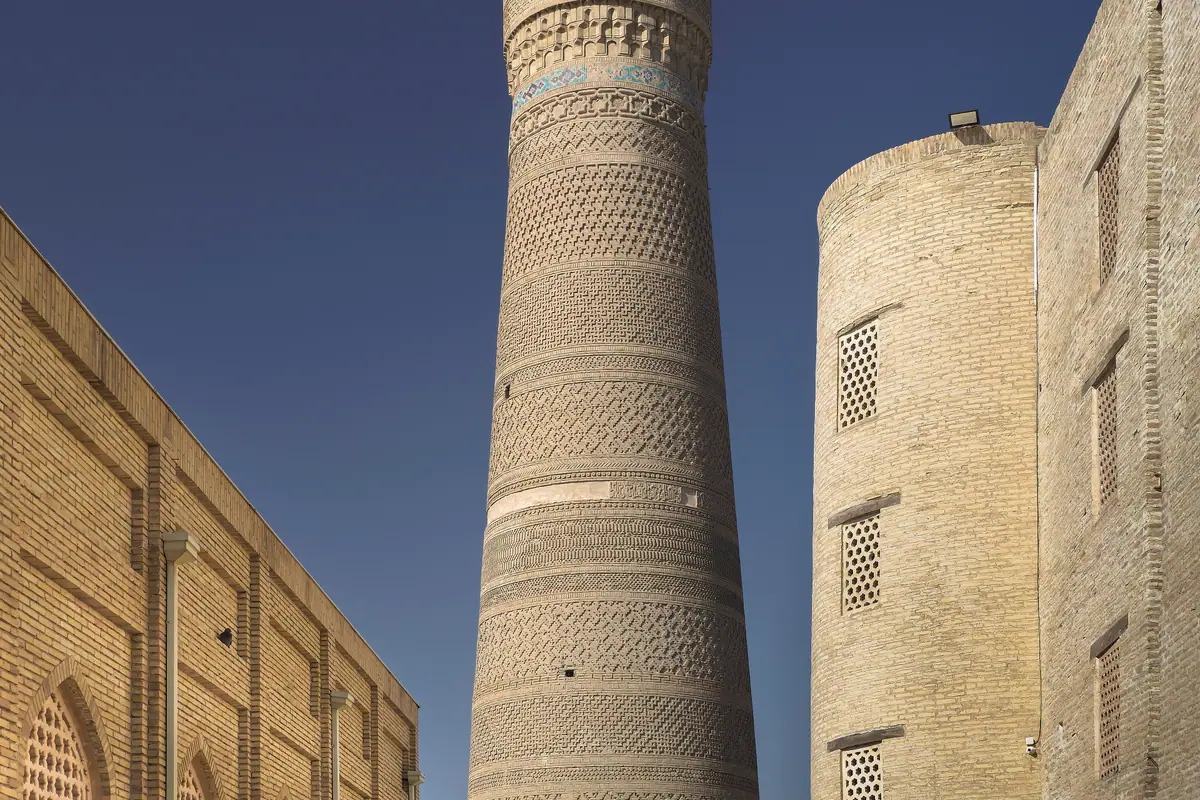
The standout experience of autumn is simply walking. Without the midsummer sun forcing you indoors, you can spend a full day moving between the Kalyan Minaret, the Ark Fortress and the trading domes of Bukhara, or wander Gur-e-Amir and the Bibi-Khanym Mosque in Samarkand at an unhurried pace. Evenings are cool enough for a jacket but still made for rooftop dinners overlooking the floodlit minarets.
This is peak season in every sense, and the last week of September through mid-October is the busiest stretch of the Uzbek travel year. Rooms in Khiva inside the walls of Itchan Kala, and anything with a view of the Registan, are typically gone two to three months out. Book flights and hotels together, and consider reversing the usual route — starting in Khiva and finishing in Tashkent — to stay a step ahead of the biggest tour groups.
Winter (December–February): Cold, Quiet and the Cheapest Rooms of the Year
Winter is Uzbekistan's best-kept secret. Daytime temperatures in Tashkent sit a few degrees above freezing, Samarkand and Bukhara dip lower, and Khiva's exposed streets can feel bitter in the wind — but the skies are frequently brilliant blue, and snow on the blue domes of the Registan or the Islam Khodja Minaret is genuinely spectacular. Crowds vanish almost entirely, guides and museum staff have time to talk, and hotel rates fall to their lowest levels of the year, making this the season for slow, atmospheric travel.
The practical trade-offs are real: daylight runs roughly from 8am to 5pm, some yurt camps and mountain guesthouses close for the season, and heating in older buildings can be uneven. Choose modern hotels or well-reviewed courtyard guesthouses with proper heating rather than the cheapest option, and pack thermal layers, a windproof coat and shoes with grip for icy pavements.
Winter is also the ideal time for the indoor Uzbekistan: the painted metro stations of Tashkent, the state museums of Samarkand, the ceramic workshops of Rishtan and the art collection in Nukus. Combine a few days in the capital with a short high-speed train hop to Samarkand, and you can see the country's greatest hits without sharing a single archway with a tour group.
Where to Stay in Each Season: Hotels, Guesthouses and Yurt Camps
Uzbekistan's accommodation splits neatly into three categories: large Soviet-era hotels with broad corridors and dependable air conditioning; restored merchant houses in the old towns, converted into courtyard guesthouses with carved wooden pillars and plunge pools; and remote yurt camps in the desert near Aydarkul Lake. In Samarkand, staying within a short walk of the Registan or along the pedestrian street toward Gur-e-Amir puts you in the middle of everything. In Bukhara, the magic is inside the old town near Lyab-i Hauz, where you can step out of your door straight into the bazaar. In Khiva, sleeping within the walls of Itchan Kala means you get the caravanserai-lit streets almost to yourself after the day visitors leave.
Season shapes which of these works best. In summer, prioritise shaded courtyards, pools and confirmed air conditioning, and consider basing yourself in the Chimgan mountains for a few nights to break the heat. In spring and autumn, book the atmospheric old-town guesthouses early — these are the first to fill — and don't leave a stay in a desert yurt camp to the last minute, as capacity is tiny and April, May, September and October are booked months ahead.
In winter, favour modern city hotels in Tashkent and Samarkand with reliable heating, then treat yourself to a night or two in a heritage property in Bukhara where thick mud-brick walls keep the cold out. Whenever you travel, ask about breakfast, airport transfers and whether the room faces a noisy street — and remember that in Uzbekistan, hospitality is not a service but a point of pride, so a smaller family-run guesthouse often delivers the most memorable stay of the trip.
Frequently asked questions
What is the best month to visit Uzbekistan?
October is the single best month overall, with warm, dry days around 22–28°C, soft golden light and the melon and pomegranate harvest in full swing. Late April and all of May run a very close second, with spring blossom, green mountains and comfortable temperatures. Avoid July and August unless you plan to spend your days in the mountains or in air-conditioned museums.
Is summer too hot for sightseeing in Uzbekistan?
It is hot but manageable with a shifted schedule. Sightsee from 6–10am and after 5pm, rest during the midday peak, and drink far more water than you think you need. Bukhara, Khiva and Termez are the hottest cities, while the Chimgan and Charvak mountains near Tashkent offer a genuinely cool escape at altitude.
How far in advance should I book hotels in Uzbekistan?
For April, May, September and October, book two to three months ahead — and earlier if you want a courtyard guesthouse in Bukhara's old town or a room near the Registan in Samarkand. Around Navruz on 21 March, demand spikes nationally, so plan four months out. In winter, you can often book just days ahead and still find excellent rooms at low rates.
Is Uzbekistan worth visiting in winter?
Absolutely, if you accept short daylight hours and cold weather. You get snow-dusted monuments, empty sites, the cheapest hotel rates of the year and unhurried time with local guides. Base yourself in well-heated hotels in Tashkent and Samarkand, and check in advance whether desert yurt camps and mountain guesthouses are open.
What should I pack for Uzbekistan depending on the season?
Spring and autumn call for light layers, a jacket for cool evenings and comfortable walking shoes for uneven old-town paving. Summer demands breathable clothing, a hat, sunglasses and high-factor sunscreen. Winter needs thermal layers, a windproof coat, gloves and shoes with grip — plus a scarf if you plan to visit working mosques and madrasas.
Plan it — hotels in Uzbekistan
Live search, booked directly with trusted providers.
Sort the rest of your trip
Everything for Uzbekistan, in one place
Transfer in Uzbekistan
Private driver waiting on arrival — no queues, no surprises.
Book a transfer
Things to do in Uzbekistan
Skip-the-line tickets, guided tours and standout experiences.
See experiences
Stay online in Uzbekistan
Travel eSIM — data the moment you land, no roaming bills.
Get an eSIMMore guides in Uzbekistan
Uzbekistan Tour Guide: Food, Culture and Local Experiences on the Silk Road
Top Things to Do in Uzbekistan: Silk Road Landmarks You Shouldn't Miss
Uzbekistan in One Week by Flight: Tashkent, Khiva, Bukhara and Samarkand
Where to Stay in Uzbekistan: Hotels and Must-See Sights in Samarkand, Bukhara and Khiva