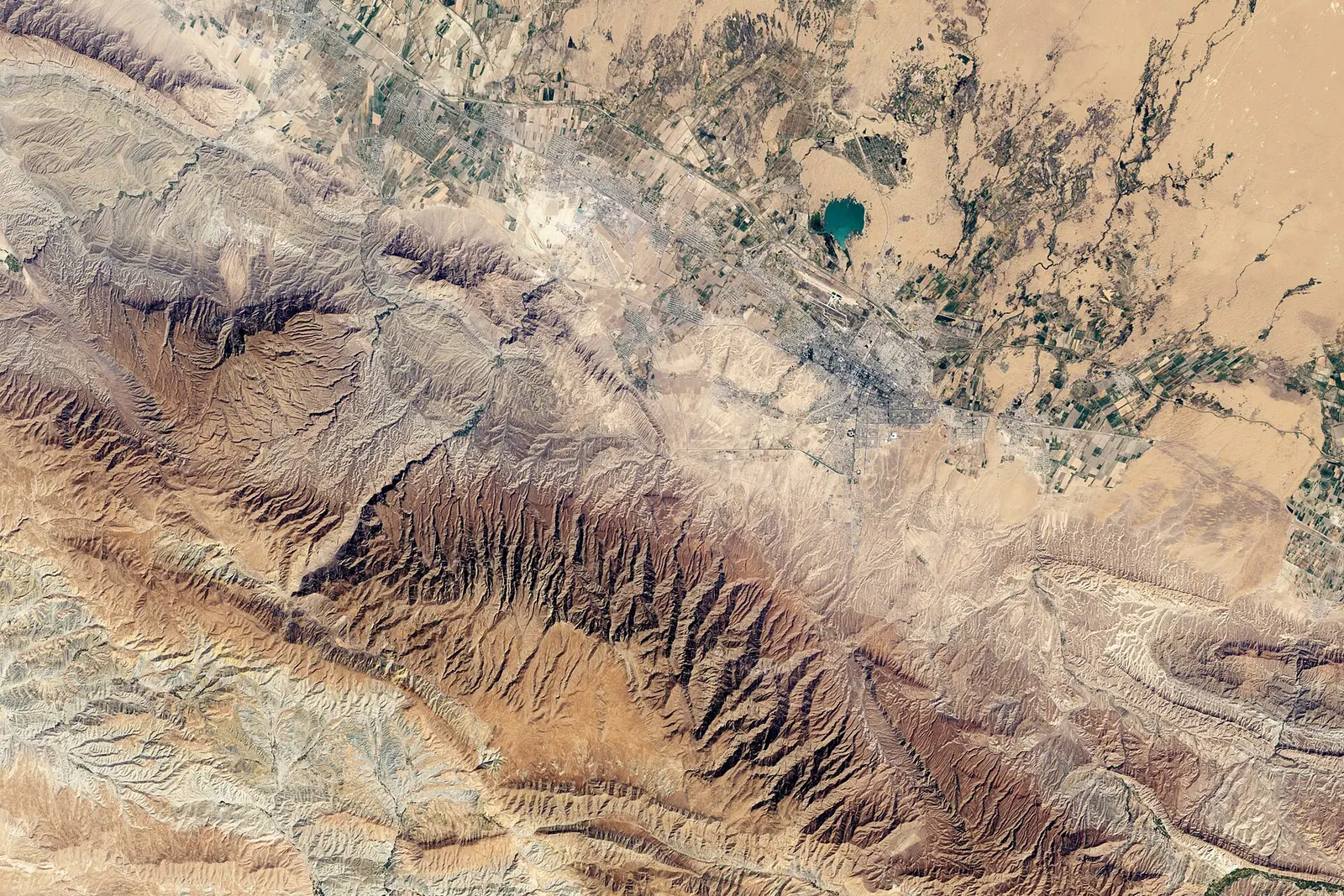
Turkmenistan is a country of extremes stitched together by a handful of short, cheap domestic flights — a white-marble capital, a burning desert crater, and Silk Road cities whose domes and minarets predate most of Europe's cathedrals. This one-week route uses those hops to cover the unmissable sights without losing whole days to the Karakum Desert.
Why a Week in Turkmenistan Is Best Flown, Not Driven
Turkmenistan covers close to 490,000 square kilometres, and the overwhelming majority of it is desert. Ashgabat sits in a green strip along the southern border with Iran, while the country's other great sights fan out in three directions: the Caspian port of Turkmenbashi to the west, the Silk Road ruins around Mary to the east, and the minarets of Konye-Urgench up near the northern border. Doing that overland would mean 40-degree heat, long flat highways and hours of nothing but sand. Domestic hops between Ashgabat, Mary, Dashoguz and Turkmenbashi turn six- to eight-hour drives into 45- to 90-minute flights, leaving more daylight for the actual places.
Almost all foreign visitors travel on a visa arranged through a state-licensed agency, which issues a letter of invitation before you fly. That same agency books your hotels, your internal flights and your guide — and in practice you are expected to move around with that guide, especially outside the capital. Your hotel handles the compulsory registration paperwork; keep your passport on you at all times, since checkpoints on desert roads are routine. Bring clean, unfolded US dollar notes for anything you pay locally, as older or marked bills are frequently refused.
Timing matters enormously. April to May and September to early November give warm days and cool nights, which is exactly what you want for camping beside a gas crater. July and August push past 40°C across the Karakum and make midday sightseeing brutal. Winter is cold and can bring snow to Ashgabat and genuine frost in the north around Dashoguz.
Days 1–2: Ashgabat, the White Marble Capital
You land at an airport terminal shaped like a swooping falcon, and within minutes you understand that Ashgabat is unlike any other city on earth. Almost every government building is clad in white marble, Avenue-neutral boulevards are lined with fountains and palm trees, and the monuments are on a scale that borders on the surreal. Start at the Independence Monument, a column topped with a golden figure, then walk the wide plaza around the Neutrality Monument, whose gilded statue once rotated to face the sun. Nearby, the Alem Cultural and Entertainment Centre houses a giant Ferris wheel inside a white-marble lattice — a strange and unforgettable sight at dusk.
The city's interiors are worth as much as its exteriors. The National Museum of Turkmenistan holds finds from the Bronze Age oasis civilisations of the Kopet Dag, including intricate gold and ivory pieces, and the National Carpet Museum displays what is billed as one of the largest hand-woven carpets in existence alongside antique tribal weavings. The star-shaped Palace of Happiness, where weddings are registered, and the turquoise-and-white Ertogrul Gazy Mosque are quick stops on any city tour.
Use your second afternoon for the two sites just outside town. Old Nisa, the Parthian fortress complex roughly 18 kilometres west of the city, is a UNESCO-listed royal residence from the 3rd century BC — a sprawling mound of mudbrick halls and treasuries that rewards a slow walk with a guide who can explain what once stood there. On the way back, stop at the vast Turkmenbashi Ruhy Mosque at Gypjak, whose marble walls carry Qur'anic verse alongside lines from the country's first president's writings. Both are best in late afternoon light, when the heat has broken.
Day 3: The Darvaza Gas Crater and the Karakum Desert
The single most famous sight in Turkmenistan is a hole in the ground. Roughly 260 kilometres north of Ashgabat, reached in three and a half to four hours by road straight through the Karakum, the Darvaza gas crater burns day and night. It opened in 1971 when a drilling operation collapsed into a cavern of natural gas; the escaping gas was set alight to burn it off, and it has been alight ever since. Up close it is around 70 metres across, edged with crumbling orange rock, and loud — a low roar that you feel in your chest before you see the flames.
Break the drive at Yerbent, a small desert settlement of yurts and low houses where you can see how families live on the edge of the sand. After that the road runs through nothing at all, which is part of the appeal. Most visitors overnight at one of the simple desert camps near the crater, sleeping in yurts or basic cabins with dinner cooked over a fire. There are no showers, no proper toilets and patchy phone signal, but the trade-off is the crater at dusk and again before sunrise, when the flames go from orange to a deep glowing red and there is no one else around.
Nights in the desert swing from pleasantly cool in spring and autumn to near freezing in winter, so pack a fleece, a windproof layer and a headtorch. Bring your own water and any medication you need, and expect the camp to supply bedding but not much else. It is also worth asking your guide to time the arrival for roughly an hour before sunset — the crater is far more dramatic in fading light than at midday.
Days 4–5: Fly to Mary and Walk Through Ancient Merv
A morning flight east to Mary takes under an hour and drops you in the middle of the country's richest archaeological zone. Half an hour from town, Ancient Merv is a UNESCO World Heritage Site and one of the great Silk Road cities — a series of walled settlements that rose, were destroyed and were rebuilt over roughly 2,500 years. The scale is hard to grasp at first: Erk Kala, the oldest core, Gyaur Kala with its long stretches of surviving rammed-earth wall, and the later medieval city that surrounded the tomb of Sultan Sanjar.
That mausoleum, the Mausoleum of Sultan Sanjar, is the showpiece — a cube of brick capped by a dome around 38 metres high, with a gallery of brickwork so intricate it looks woven. Nearby stand the Greater and Lesser Kyz Kala, two extraordinary corrugated fortress buildings known as the maiden's castles, whose fluted walls have survived nearly a thousand years of desert wind. Allow four to five hours on site with a guide, and go early or late, because there is almost no shade.
Back in Mary, the regional museum fills in the gaps with pottery, coins and figurines excavated from Merv and the surrounding oases. If you have a spare half-day and a tolerant driver, the Bronze Age site of Gonur Depe, roughly two hours north across the desert, is one of the most important excavations of the last fifty years — a temple complex and royal tombs from a civilisation that traded with Mesopotamia. Access can require extra permits, so arrange it before you leave Ashgabat.
Day 6: North to Dashoguz and the Minarets of Konye-Urgench
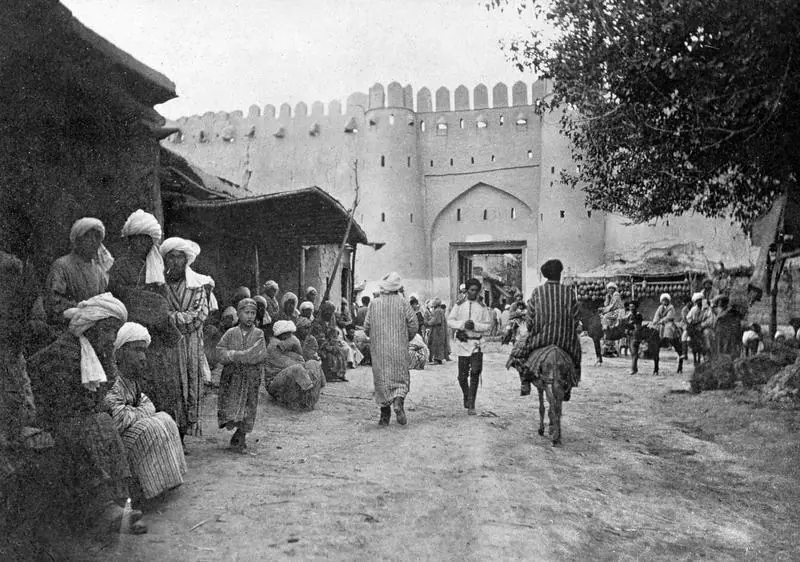
The northern leg is the one most travellers skip, and they are wrong to. Fly from Mary via Ashgabat to Dashoguz, or take the long northbound flight routing if your operator can arrange it, then drive an hour and a half northwest to Konye-Urgench, the abandoned capital of the Khorezm empire and another UNESCO World Heritage Site. Genghis Khan's armies levelled the city in the 13th century, but the monuments that survived are magnificent and almost entirely unvisited.
The landmark that defines the site is the Kutlug Timur Minaret, a soaring brick tower roughly 60 metres tall, its bands of geometric brickwork still legible after eight centuries. Beside it, the Turabek Khanum Mausoleum has an interior dome covered in a mosaic of stars and rosettes that is arguably the finest piece of tilework in Central Asia. The Sultan Tekesh Mausoleum and the shrine of Najm ad-Din Kubra, a Sufi teacher whose tomb is still a place of pilgrimage, complete the circuit. Two to three hours is enough to see everything at a relaxed pace, and a late-afternoon visit gives you the site largely to yourself.
The drive out across the Dashoguz steppe, with camels and cotton fields and the Amu Darya somewhere off to the north, is a landscape few outsiders ever see. Fly back to Ashgabat that evening, or overnight in Dashoguz if the schedule is thinner than expected — domestic timetables change frequently, and your agency will be adjusting them around you as you go.
Day 7: Kow Ata, Nokhur and One Last Look at Ashgabat
Spend your final day in the foothills of the Kopet Dag, southwest of the capital. The centrepiece is Kow Ata, a limestone cave that opens into a warm, faintly sulfurous underground lake roughly 60 metres long. You swim in it by torchlight, the water hovering around 37°C year-round, with bats roosting in the roof above. It is a genuinely odd, genuinely memorable experience and takes about an hour, plus the drive out through arid mountain scenery.
If you have more time, push on to Nokhur, a mountain village of stone houses known for its cemetery of carved wooden posts, each one topped with the horns of a ram — a burial tradition found nowhere else in the country. The drive there is half the point, winding through gorges and past shepherds' camps. Back in Ashgabat, the Sunday bazaar on the city's edge is the place to buy carpets, jewellery and dry fruit, and it is busy, loud and far more colourful than the marble centre.
A few practical points for the last hours: check in early at the airport, photograph nothing near government buildings, airports or military checkpoints, and keep your passport and registration slip accessible. Most guides build in a buffer of a few hours before the international departure, because domestic flights are often reconfirmed the day before and can shift by an hour or two. Pack the warm layers last — you will want them again at the crater if you ever come back.
Frequently asked questions
Do I need a visa and a guide to travel around Turkmenistan?
Yes. Foreign visitors normally need a letter of invitation issued by a state-licensed travel agency before arriving, which is then exchanged for a visa at Ashgabat airport or a consulate. Independent travel is heavily restricted, so the same agency typically arranges your guide, driver, hotels and internal flights, and your hotel handles the mandatory registration within the first few days.
How do domestic flights in Turkmenistan work, and how far ahead should I book?
Domestic services link Ashgabat with Mary, Dashoguz, Turkmenbashi and Turkmenabat, and most depart early in the morning. Seats are generally booked by your tour operator rather than independently, timetables are thin and can change at short notice, and it is wise to reconfirm 24 hours before each departure. Allow two hours at the airport and keep luggage light, as baggage allowances are modest.
When is the best time of year to visit Turkmenistan?
April, May, September and October are the sweet spots — warm days, cool nights and comfortable camping at the Darvaza gas crater. June to August is punishing across the Karakum, with temperatures well above 40°C in the desert, while winter brings cold, wet weather to Ashgabat and real frost in the north around Konye-Urgench.
What is it like to overnight at the Darvaza gas crater?
Expect a simple desert camp within walking distance of the crater, with yurt or cabin accommodation, bedding, and a hot dinner cooked over a fire. There are no showers and only very basic toilets, and mobile signal is unreliable. The payoff is seeing the flames at dusk and again at dawn, when the surrounding desert is completely silent and empty.
What should I pack for a week in Turkmenistan?
Bring layers for extreme temperature swings, a hat and high-factor sunscreen for archaeological sites with no shade, a headtorch for the cave lake at Kow Ata, and comfortable closed shoes for uneven mudbrick ruins. Carry any medication you rely on, dress modestly away from the capital, leave drones at home, and plan on cash — clean, unmarked notes are far more readily accepted than worn ones.
Plan it — flights in Turkmenistan
Live search, booked directly with trusted providers.
Sort the rest of your trip
Everything for Turkmenistan, in one place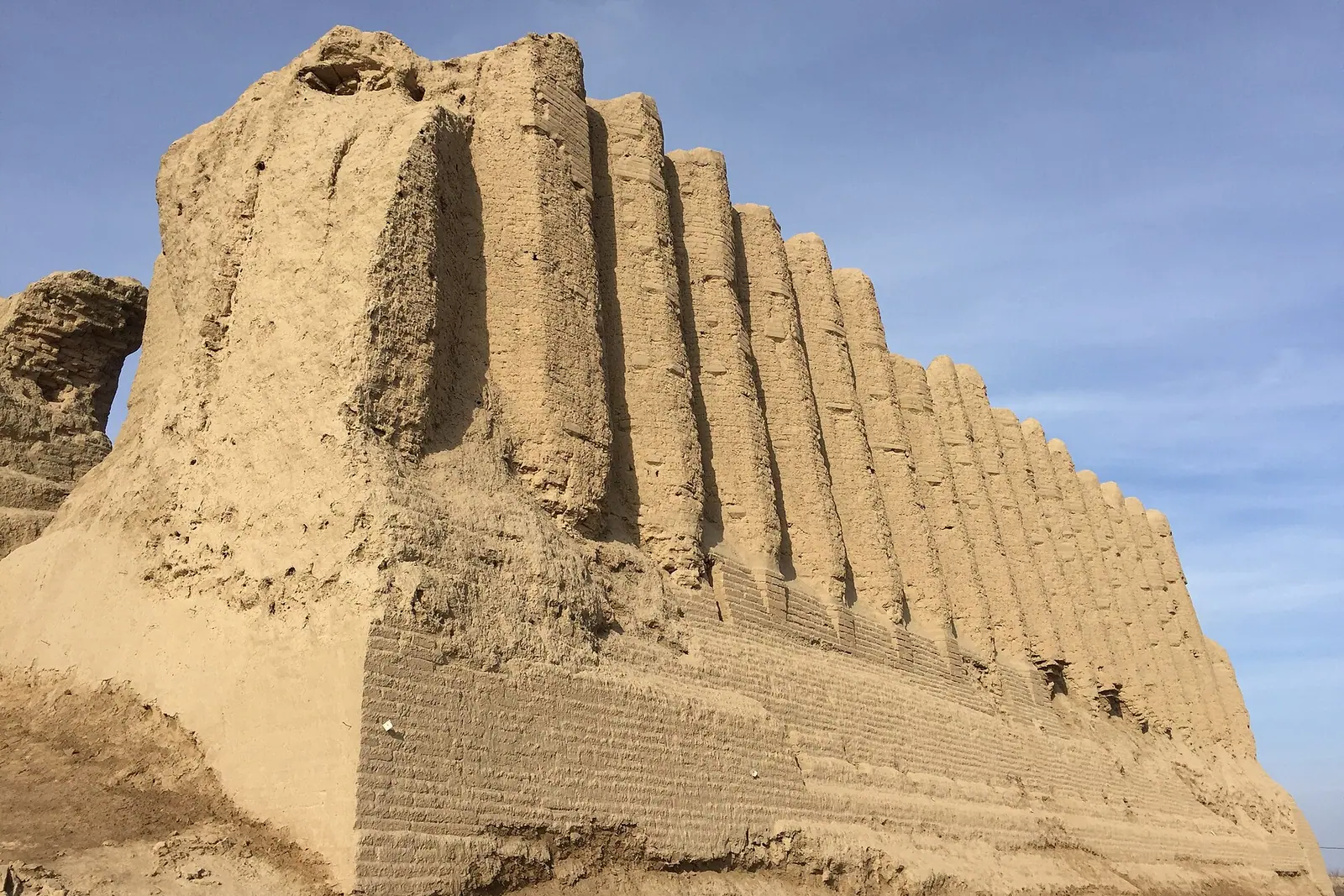
Stay in Turkmenistan
Hotels, guesthouses and apartments — compared in one search.
Search hotels
Transfer in Turkmenistan
Private driver waiting on arrival — no queues, no surprises.
Book a transfer
Travel insurance
Medical cover, delays and lost baggage — sorted before you go.
Get coveredMore guides in Turkmenistan
Tour in Turkmenistan: Food, Culture and Local Experiences Guide
Best Time to Visit Turkmenistan: Seasons, Hotels and Must-See Sights
Top Things to Do in Turkmenistan: Landmarks, Desert Wonders and Silk Road Cities
Things to Do in Turkmenistan: Ashgabat, Darvaza and the Silk Road Ruins