Turkmenistan is the quietest of the Central Asian republics and the most theatrical: a marble capital rising out of the Karakum Desert, a burning gas crater that glows all night, and Silk Road cities whose walls have been melting back into the sand for eight centuries. Travel here is slow, guided and deliberately old-fashioned — which is exactly what makes it unforgettable.
Ashgabat: The Marble Capital and Its Monuments
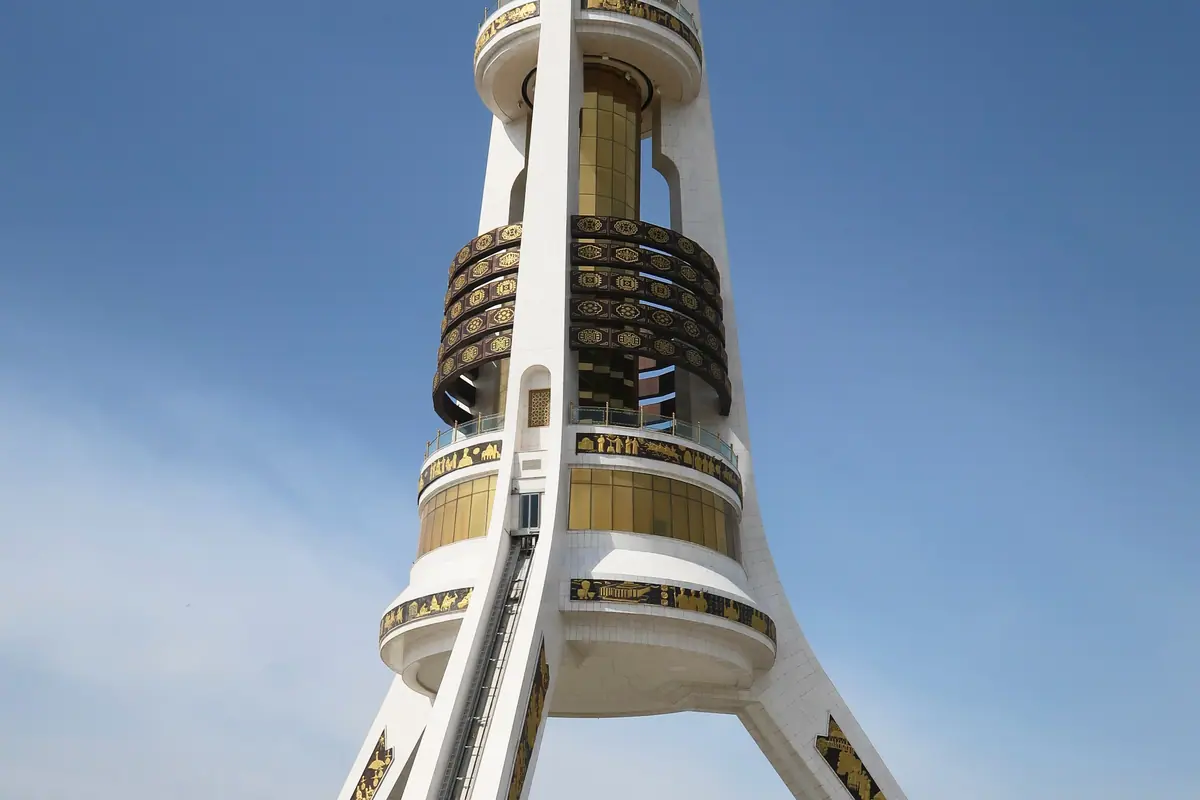
Ashgabat is unlike any other city in the region — a grid of white-marble facades, trimmed lawns and fountains laid over ground that was flattened by a catastrophic earthquake in 1948. The showpieces come thick and fast: the soaring Independence Monument on its landscaped plaza, and the Neutrality Monument, a three-legged arch topped by a gilded figure that turns slowly to face the sun. Nearby, the Alem Cultural and Entertainment Center — a huge white ovoid sheathed in glass — hides an indoor Ferris wheel and a viewing deck looking out toward the Kopet Dag mountains.
The city's museum circuit is genuinely rewarding. The National Museum of Turkmenistan covers everything from Parthian gold to the great carpet-weaving tradition, while the Turkmen Carpet Museum displays a ceremonial carpet so large it takes a whole hall. On Sundays, the sprawling Altyn Asyr bazaar on the edge of town fills with carpets, silver jewellery, melons, and a livestock market where you may spot Akhal-Teke horses — the slender, metallic-coated breed that is a national symbol, also seen at Ashgabat's hippodrome. West of the city at Gypjak stands the vast white-and-gold Turkmenbashi Ruhy Mosque.
Just 18 kilometres west of the capital, Old Nisa is the reason many historians come at all: the fortified ceremonial heart of the Parthian Empire, now a UNESCO-listed ruin of mud-brick halls, a Round Hall, a Square House and storerooms still littered with broken wine-jar shards. New Nisa sits a short drive away. Go in the late afternoon, when the light turns the earth honey-coloured and the mountains glow behind the walls.
The Darvaza Gas Crater and the Karakum Desert
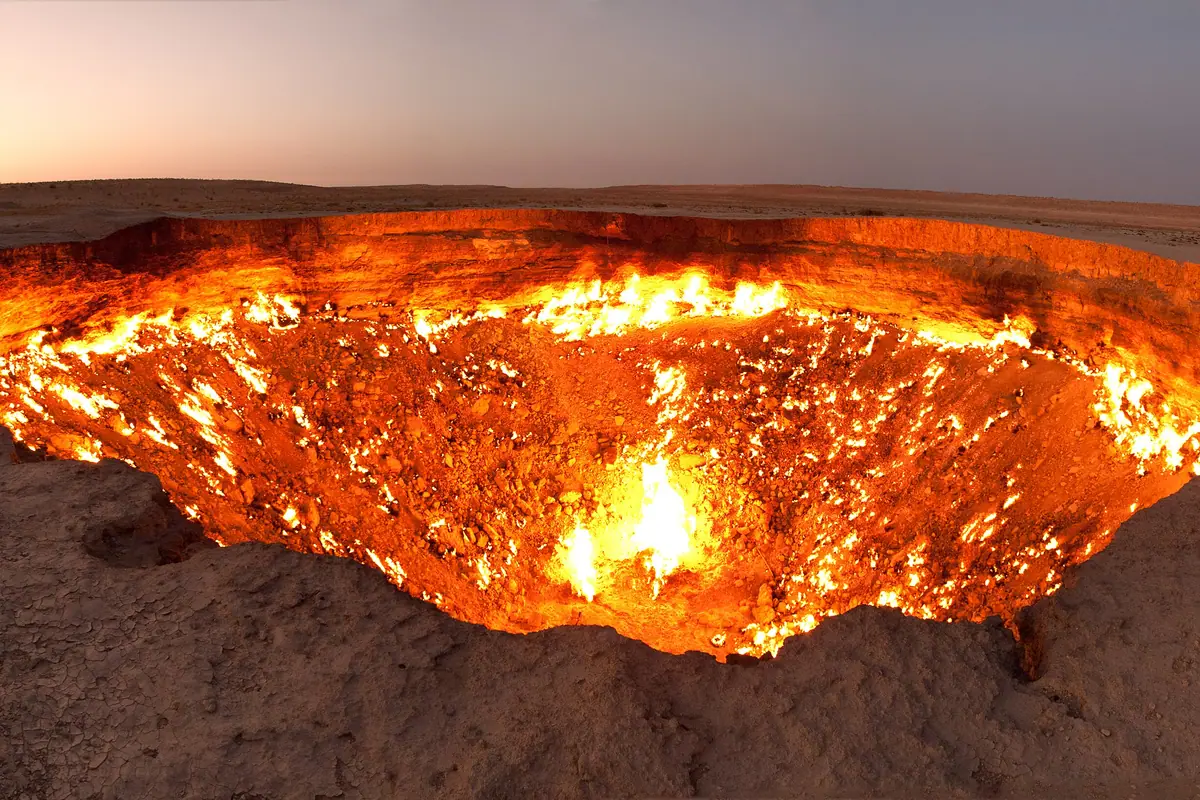
Some 260 kilometres north of Ashgabat, on the road toward Dashoguz, a collapsed gas cavern has been burning since the early 1970s — local lore holds that a drilling rig broke through into a cavern and the escaping gas was set alight to stop it poisoning the air. The result is the Darvaza gas crater, roughly sixty metres across and glowing orange from dusk until dawn. Arriving in daylight is underwhelming; the trick is to stay. Most visitors sleep in yurt camps or simple tents nearby, eat plov by the rim, and watch the flames flare against the black desert sky.
Getting there takes three to four hours by road from Ashgabat, and the drive is half the experience: dunes striped with saxaul bushes, camel herds crossing the asphalt, and the desert village of Erbent, where you can stop for tea. Nights are bitterly cold from November to March, and even in summer the temperature plunges after sunset, so pack a fleece and a headlamp. There are no shops or fuel stops at the crater itself.
Combine the crater with other Karakum stops — the Repetek nature reserve, a sandy desert station where saxaul forest and desert monitors survive on almost no rain, and the long, empty stretches where you can genuinely go hours without seeing another vehicle. It is one of the few places in Turkmenistan where the country's emptiness feels like a feature rather than a logistics problem.
Ancient Merv: The Silk Road's Greatest Oasis City
Fly or take the overnight train east to Mary and you reach the ruin field of Ancient Merv, a UNESCO World Heritage site and once one of the largest cities on earth. The site is a sequence of cities built beside one another over millennia: Erk Kala, the Achaemenid core; Gyaur Kala, the Hellenistic and Buddhist-era city; and Sultan Kala, the sprawling Seljuk capital laid out in the eleventh century. Allow at least half a day — the complex is enormous and the walking is exposed.
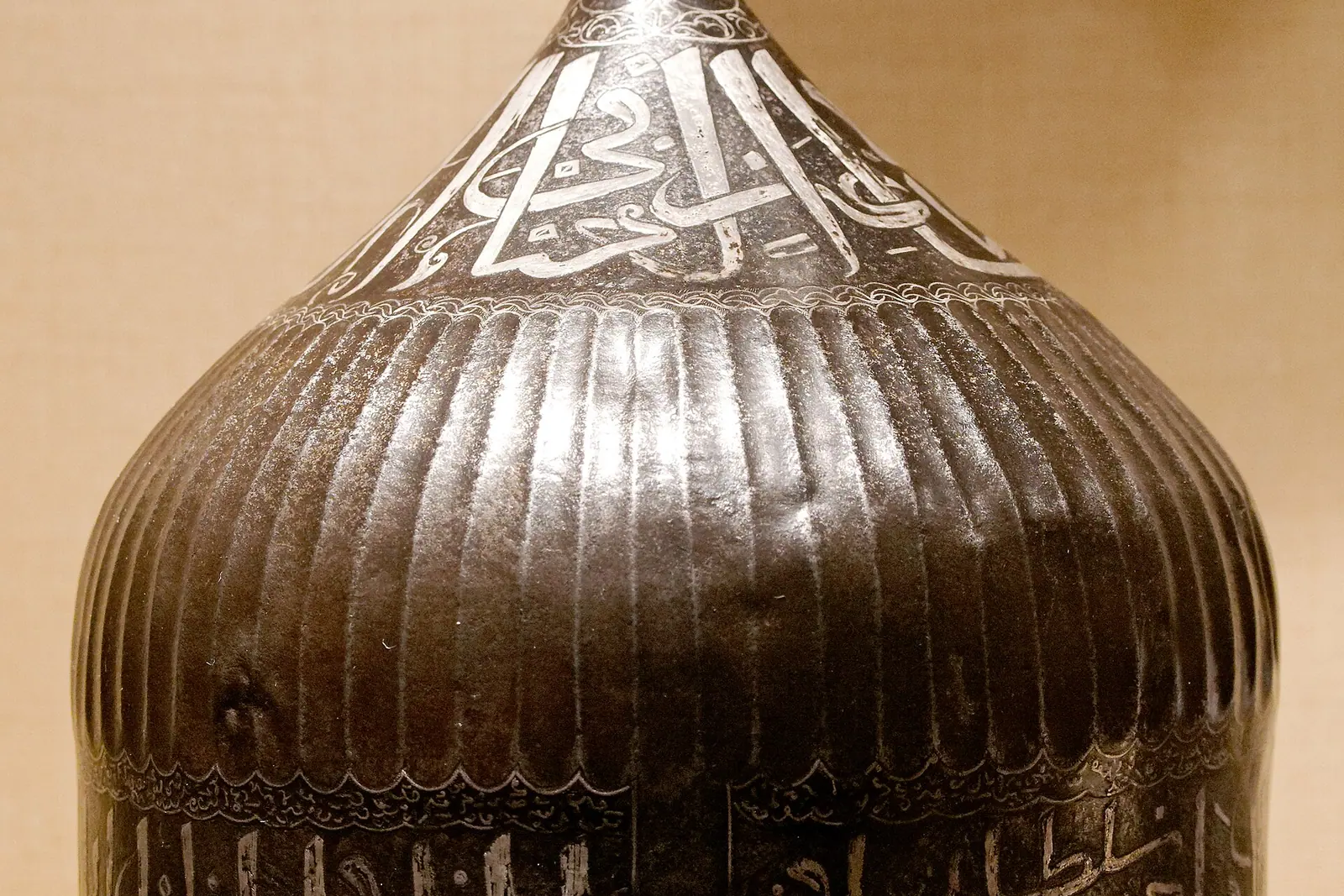
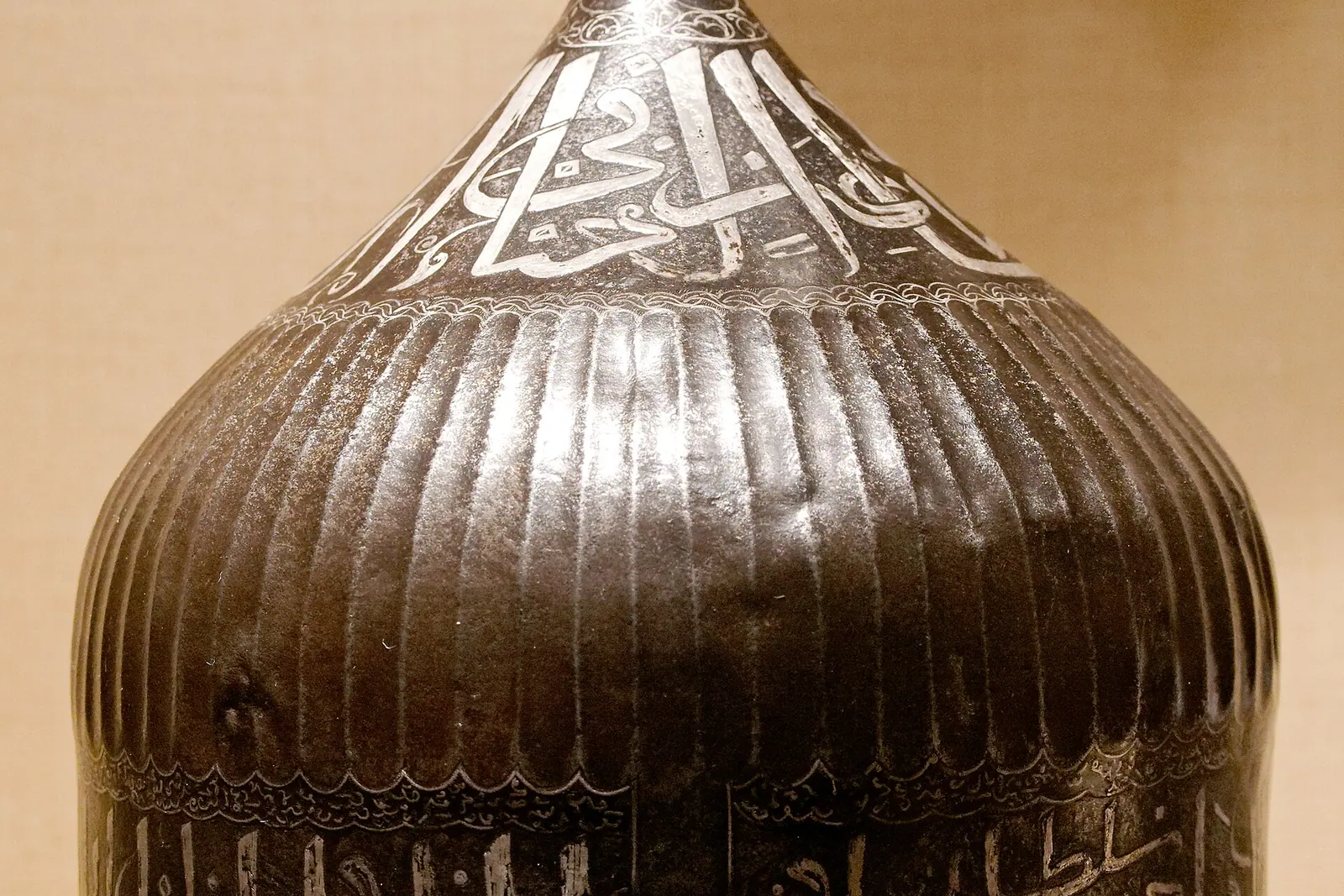
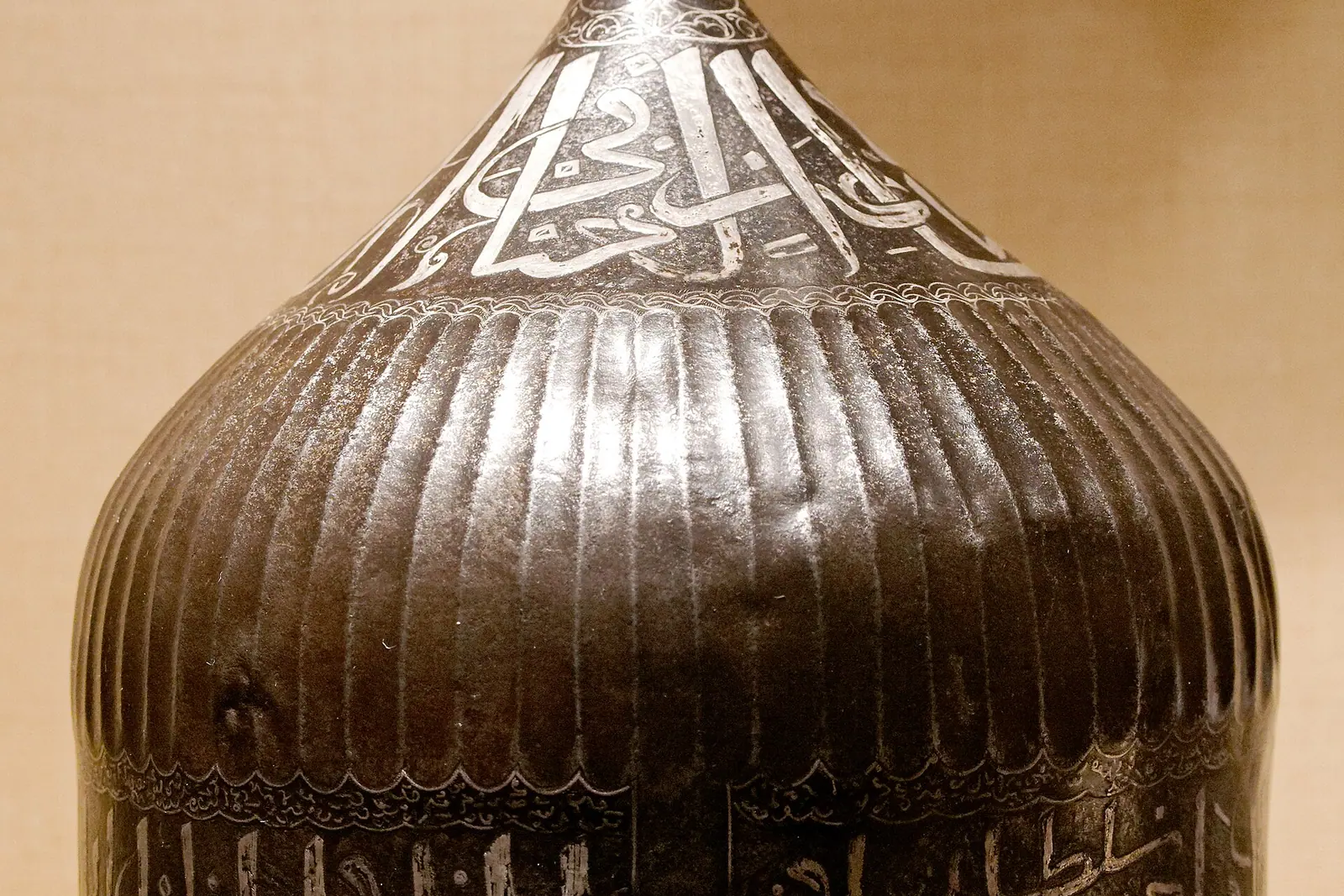
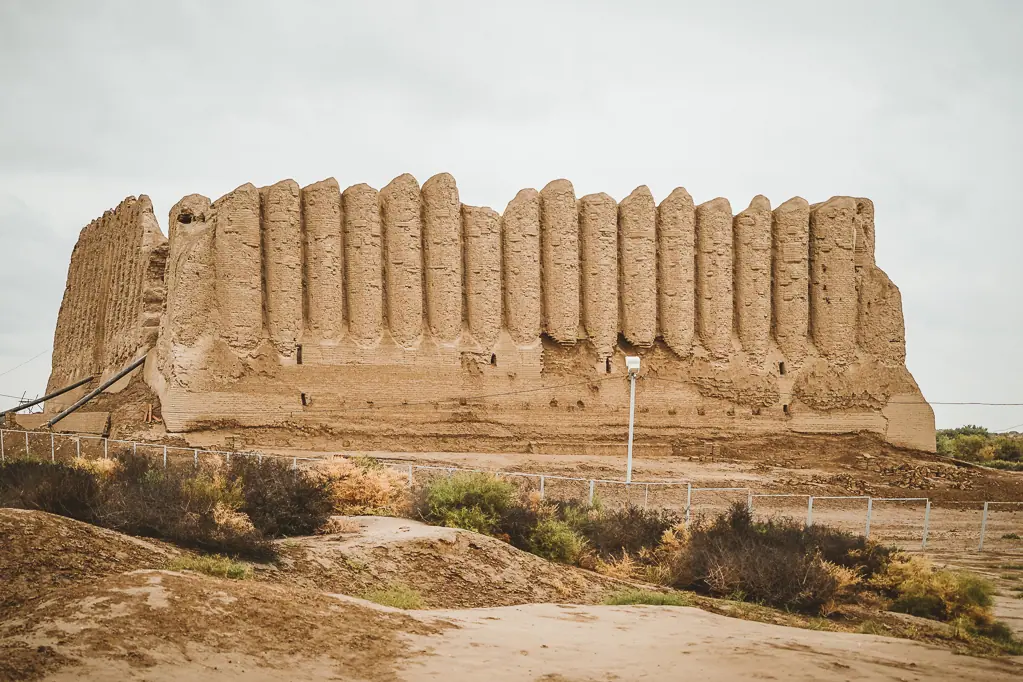
The single unmissable monument is the Mausoleum of Sultan Sanjar, crowned by a ribbed Seljuk dome that still dominates the flat plain. Nearby stand the Great Kyz Kala and Little Kyz Kala, two extraordinary mud-brick fortresses with corrugated walls that look almost modern, and the remains of an ice house once used to store winter ice through the desert summer.
Back in Mary, the regional museum is worth an hour for finds from Gonur Depe, a Bronze Age site in the Karakum that belonged to a sophisticated oasis civilisation trading with Mesopotamia and the Indus. Spring is the best season here, when the oasis turns green and the heat is still bearable; by July the plain shimmers at over 40°C and shade is scarce.
Kunya-Urgench and the Northern Deserts
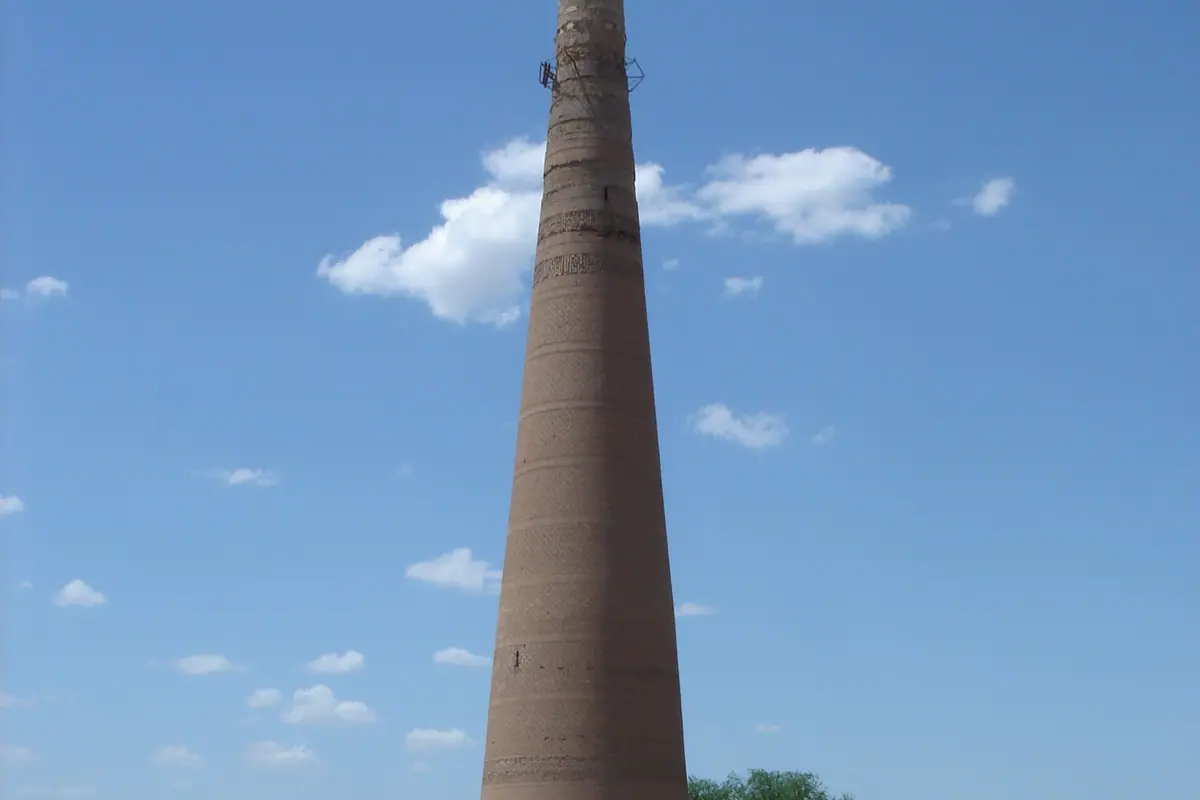
In the far north near Dashoguz, close to the Uzbek border, Kunya-Urgench preserves the bones of the Khorezm empire's old capital. The star of the site is the Kutlug Timur Minaret, a tapering brick column roughly sixty metres high, and beside it the Turabek-Khanum Mausoleum, whose interior is covered in a mosaic of geometric stars and rosettes that rewards a slow look upward. The mausoleums of Il-Arslan and Sultan Tekesh complete the ensemble, all the more moving for standing alone in a dusty plain where the medieval city once sprawled.
Continue east and the landscape changes completely. The Koytendag range in Lebap province, along the Amu Darya, is Turkmenistan's wild corner: limestone plateaus, deep gorges and the Dinosaur Plateau, a sloping slab of rock printed with hundreds of Jurassic dinosaur footprints. The Karlyuk caves nearby shelter colonies of bats, and the drive down from the mountains gives you views across the river toward Afghanistan.
This region requires permits and long, bumpy drives, so it is usually arranged as part of an organised itinerary rather than a spur-of-the-moment trip. If you make it, expect simple guesthouses, generous meals of lamb and flatbread, and almost no other travellers.
Canyons, Underground Lakes and the Caspian Coast
Western Turkmenistan packs in the country's strangest scenery. Yangykala Canyon, the "fire cliffs", is a line of banded ravines — ochre, rose, chalk-white — carved into a remote plateau in the Balkan region. There is no infrastructure, no shade and no fence; you drive in by 4x4, walk along the rim, and stay for sunset, when the colours deepen dramatically. Camping is the only realistic overnight option.
Closer to Ashgabat, at Bäherden, Köw Ata is an underground lake reached by descending a long flight of stone steps into a cavern lit by a shaft of daylight from above. Steam curls off the warm, mineral-rich water year-round — a surreal swim in the middle of the desert. South of here, in the Kopet Dag foothills, the stone village of Nokhur is famous for its walnut and pomegranate orchards, its cemetery posts carved with ram's horns, and the sacred spring of Kyrk Gyz.
Then there is the Caspian. The Avaza resort zone outside Turkmenbashi is a purpose-built strip of white hotels and wide, low-salinity beaches where local families holiday in July and August. Off-season it is eerily quiet, and the wind off the sea is sharp — but the sunsets over the water, with cargo ships and ferries drifting past, are worth the trip alone.
Practicalities: Visas, Seasons and Getting Around
Almost every visitor needs a visa supported by a letter of invitation arranged through a licensed local travel agency, and in practice you travel with a guide or driver-guide for most of the trip. Registration is handled on arrival, and certain areas — border zones, Koytendag, parts of the Balkan region — require additional permits. Apply well ahead, and carry printed copies of everything. Entry by land is possible from Uzbekistan at Farap and Dashoguz, from Iran in the south, and by Caspian ferry at Turkmenbashi.
The best months are April to May and September to October, when days are warm and nights cool; spring brings wildflowers to the Kopet Dag and the Badkhyz reserve. July and August are punishing — Ashgabat regularly passes 40°C — while winter desert nights drop below freezing even when the days are sunny.
Domestic flights link Ashgabat with Mary, Dashoguz and Turkmenbashi, and the old Soviet-era trains are slow but comfortable for overnight legs. Bring plenty of clean US dollars or euros in cash: cards are rarely accepted and ATMs outside the capital are unreliable. Dress modestly, ask before photographing people, and avoid photographing government buildings, airports and border posts.
Frequently asked questions
Do I need a guide to visit Turkmenistan?
Effectively yes. Most travellers enter on a visa supported by a letter of invitation from a licensed local agency, and itineraries are usually accompanied by a guide or driver-guide. Independent wandering is limited, and some regions need extra permits.
What is the best time of year to visit Turkmenistan?
April to May and September to October offer the most comfortable temperatures for Ashgabat, Merv and the desert. July and August are extremely hot, while winter days can be pleasant but desert nights — including at the Darvaza gas crater — are freezing.
How many days do I need in Turkmenistan?
Seven to ten days covers the essentials: two days in Ashgabat with Old Nisa, an overnight at the Darvaza gas crater, a day or two at Ancient Merv near Mary, and a northern leg to Kunya-Urgench. Adding Yangykala Canyon and the Caspian coast needs at least three more days.
Is the Darvaza gas crater still burning?
Yes — the crater has been alight for decades and shows no sign of going out. It is at its most impressive after dark, so plan to camp or stay in a nearby yurt camp rather than visiting as a day trip from Ashgabat.
Can I combine Turkmenistan with neighbouring countries?
Yes. Many itineraries link it with Uzbekistan via the land crossings at Farap or Dashoguz, which sit close to Bukhara and Khiva respectively. There are also border crossings from Iran in the south and a Caspian ferry connection to Baku in Azerbaijan.
Plan it — experiences in Turkmenistan
Live search, booked directly with trusted providers.
Sort the rest of your trip
Everything for Turkmenistan, in one place
Stay in Turkmenistan
Hotels, guesthouses and apartments — compared in one search.
Search hotels
Transfer in Turkmenistan
Private driver waiting on arrival — no queues, no surprises.
Book a transfer
Stay online in Turkmenistan
Travel eSIM — data the moment you land, no roaming bills.
Get an eSIM