Turkmenistan is a country of extremes dressed in white marble and desert dust — a place where the temperature, not the calendar, decides what you will actually see. Choose your month well and you can stand at the lip of the Darvaza gas crater on a mild October evening, wander the silent ruins of Ancient Merv in spring bloom, or swim in a warm underground lake while snow falls above. Choose it badly and you will meet 45°C heat with no shade for 300 kilometres in any direction.
The Short Answer: Aim for March to May or September to November
Turkmenistan has a sharply continental desert climate. The Karakum, which covers roughly seven-tenths of the country, swings from freezing nights in January to furnace-like afternoons in July. The two shoulder seasons — roughly mid-March to late May, and September to early November — are the sweet spots, with daytime temperatures usually between 18°C and 28°C, dry air, and skies that stay clear for days on end. This is when you can comfortably combine the ruins, the desert camps and long drives between regions without feeling wrung out.
Spring arrives early in the south. By late March the Kopet Dag foothills above Ashgabat are green, wild tulips and poppies are out, and the desert is briefly, improbably alive. Autumn is the mirror image: the heat breaks in mid-September, the light turns golden and low, and the ground is still warm enough for comfortable evenings around a fire at a desert camp. Both windows are also when most group departures run, which matters enormously in a country where independent travel is heavily restricted and almost everyone moves on a pre-arranged itinerary.
The practical upshot: if you have one flexible week and want the classic circuit — Ashgabat, Nisa, Darvaza, Merv — book for April, May, September or October. Those four months carry the bulk of visitor demand, so accommodation in Ashgabat and the limited desert camps fill first.
Spring: Nowruz, Mountain Villages and the Kopet Dag
Spring is the season for the south. Nowruz, celebrated around 21 March, is the biggest holiday of the year here, marked by feasting, horse racing and displays of Akhal-Teke horses — the slender, metallic-coated breed that is a national emblem. Travelling in the days around Nowruz gives you a rare window into Turkmen culture, though it also means domestic travel surges and some sites run shorter hours, so build in slack.
The Kopet Dag range south-west of Ashgabat is at its best from April. The village of Nokhur, reached by a rough mountain road, is famous for its stone houses, its distinct tribal traditions and a cemetery of carved wooden posts that is one of the strangest and most affecting sights in the country. Below the mountains, the underground lake at Kow Ata — a vast, warm, mineral-heavy cavern that stays around 35°C year-round — is a memorable swim. In spring the contrast between the cool cave and the sunlit plateau above is perfect.
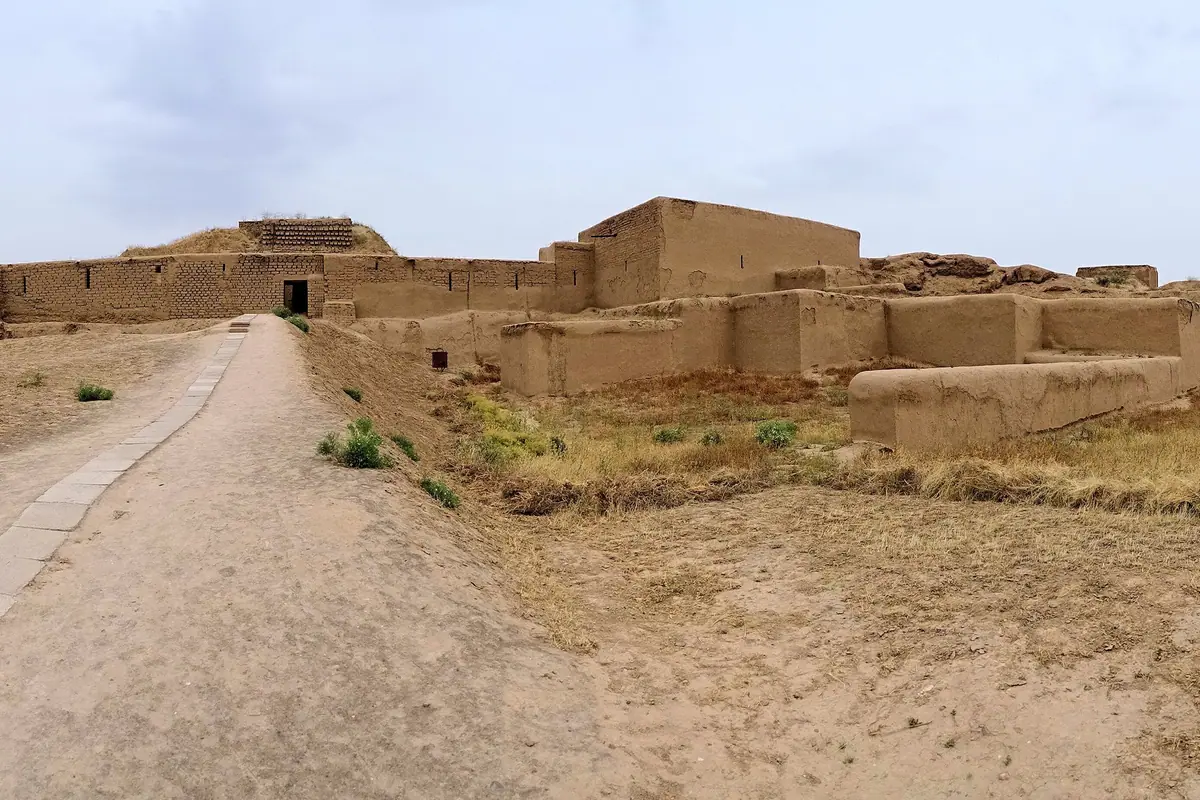
Closer to the capital, Old Nisa, the Parthian fortress that is the country's most celebrated archaeological site, is far more pleasant to explore in April than in July, when the clay walls radiate heat. Pair it with a morning at the bazaars of Ashgabat, where carpets, melons and dried fruit stack in pyramids. Spring melons and early apricots start appearing from May.
Autumn: The Best Season for Ruins, Canyons and the Desert
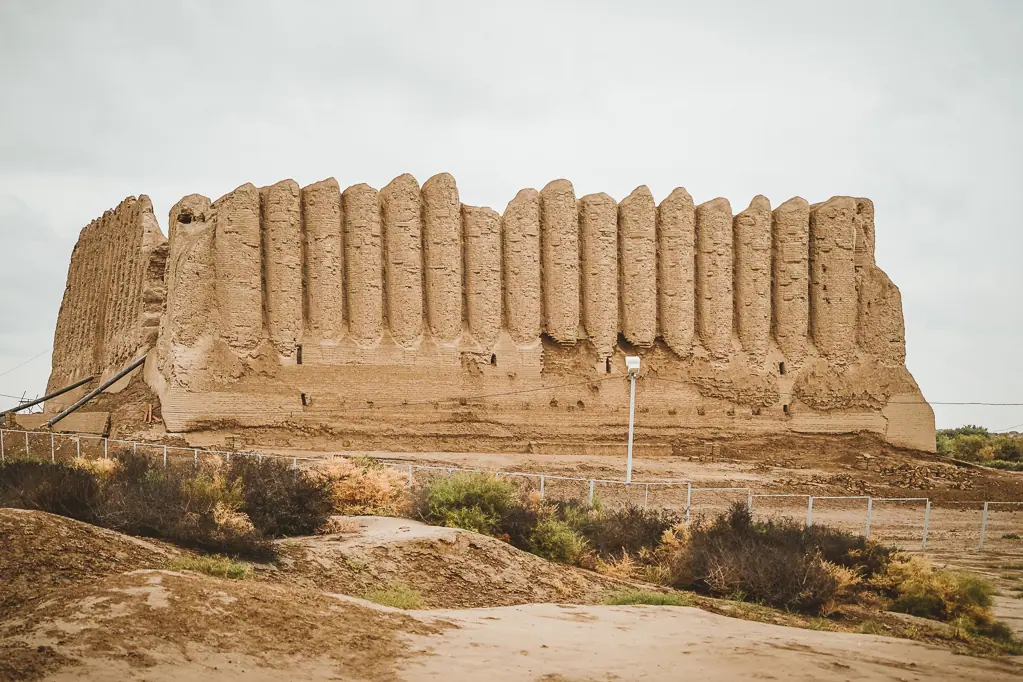
If you can only pick one window, pick October. The haze of summer clears, daytime highs settle around 22–27°C, and the long, punishing drives across the Karakum become genuinely enjoyable. This is the season for the country's two great Silk Road ruins: Ancient Merv, near Mary in the south-east, a sprawling UNESCO-listed complex of eroded citadels, mausoleums and city walls that easily consumes half a day; and Kunya-Urgench in the far north, whose fluted brick mausoleums and towering minaret date to the 11th–14th centuries and stand almost alone on the plain.
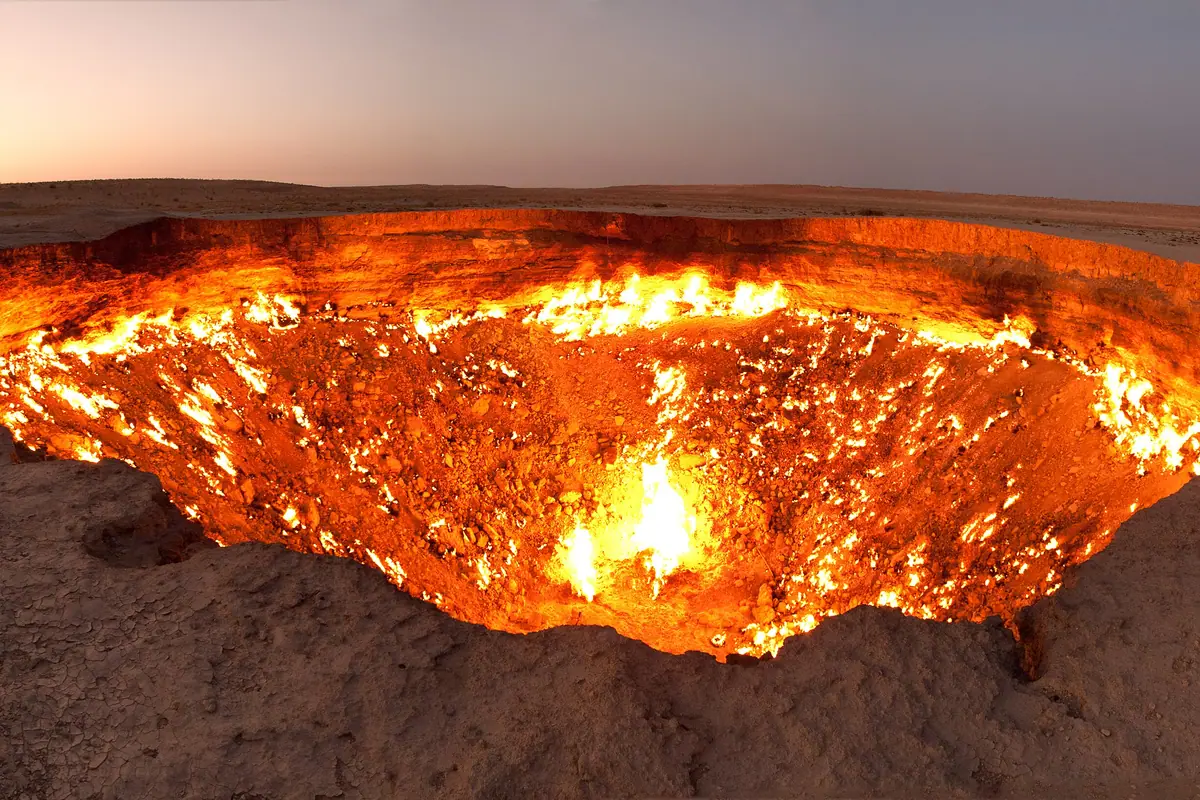
October is also the safest bet for the desert. Nights at the Darvaza gas crater — the collapsed Soviet-era drilling site that has burned continuously for decades — are cold but manageable, and the glow is at its most dramatic in the long darkness. Most visitors stay in a simple yurt camp nearby, with dinner, blankets and a shared fire. Book these places well ahead; capacity is small and the autumn weeks sell out.
If you want landscape rather than architecture, add the Yangykala Canyon in the west, whose banded pink, ochre and white cliffs are best photographed in the low autumn sun, or the Kugitang nature reserve on the eastern border, where dinosaur footprints and limestone plateaux sit at the end of a long, scenic, permit-controlled drive. Both are far more rewarding in September and October than in the blistering midsummer months.
Summer and Winter: Travelling in Turkmenistan's Extremes
Summer, from June to August, is brutal inland. Ashgabat regularly exceeds 40°C, and the Karakum can push past 45°C, which makes daytime sightseeing in the desert inadvisable. The workaround is geographic and temporal: shift to the Caspian coast, where the Avaza resort zone near Turkmenbashi offers a long stretch of beaches, sea breeze and hotel complexes built for domestic holidaymakers, with water temperatures warm from June through September. Start early, rest at midday, and save archaeological sites for the cooler months.
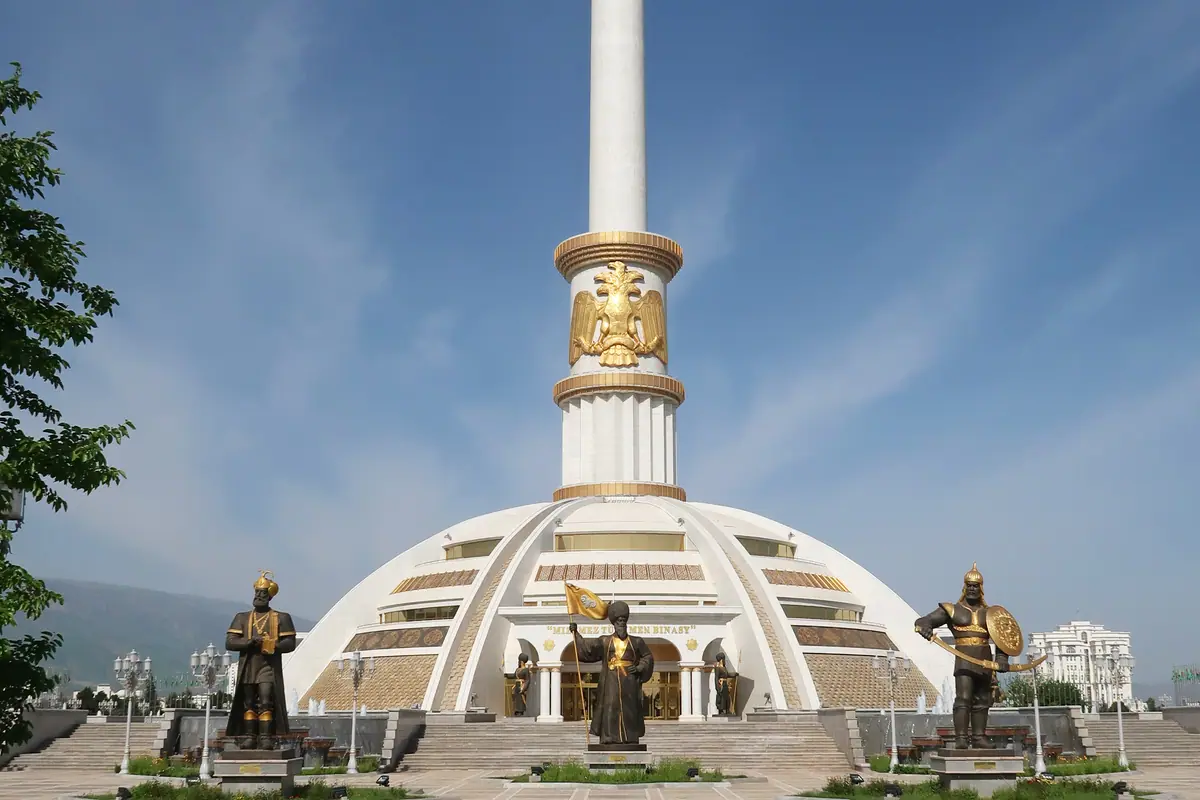
Winter, December to February, is a different proposition. The Caspian shore stays mild and grey, while Ashgabat can be cold, damp and foggy, and the northern regions around Dashoguz see genuine frost and occasional snow. This is not prime sightseeing weather, but it has compensations: the marble monuments of Ashgabat — the Arch of Neutrality, the Independence Monument and the giant Alem cultural centre with its indoor Ferris wheel — look striking under flat winter light, and you will have the museums largely to yourself.
Kow Ata's underground lake is the great winter exception: the water stays warm while the plateau above freezes. Just be aware that mountain roads can close after snowfall, and desert camps at Darvaza operate only sporadically in midwinter, sometimes with snow on the approach tracks.
Where to Stay: Matching Hotels to the Season
Accommodation in Turkmenistan falls into a few clear categories. Ashgabat has the widest choice, from large international-standard hotels with pools and gyms to smaller state-run properties and a handful of guesthouses. Because most visits are arranged through a licensed operator, your hotel list is often fixed in advance — but it is worth asking for alternatives, especially in spring and autumn when the better rooms go to groups that booked months earlier.
Outside the capital, the pattern changes fast. Mary and Turkmenabat have functional business-style hotels that work well as bases for Merv and the eastern Silk Road, and they are rarely full except in the autumn peak. In the west, Avaza is a purpose-built resort strip that only really makes sense between May and September. At Darvaza, accommodation means a yurt camp with shared facilities — comfortable enough in April, May, September and October, less so in the depths of winter.
A few habits make any season easier. Request rooms with reliable air conditioning for summer and effective heating for winter, confirm whether your hotel can register your stay (registration is required and usually handled by the hotel or your guide), and carry cash, since card acceptance is limited outside the biggest properties. If you are sensitive to heat or cold, prioritise Ashgabat hotels with indoor pools or shaded courtyards.
Timing Your Booking Around Festivals and Logistics
Turkmenistan's calendar shapes its hotel demand more than tourism does. Nowruz in late March, the national carpet festival in late May, Independence Day on 27 September and the horse and dog festivals through spring and autumn all pull domestic visitors into Ashgabat and regional capitals. Book two to three months ahead for those dates, and even earlier for the autumn window of late September to late October, which is the single busiest period for foreign visitors.
Visas and permits drive the rest of the planning. Almost all travellers need a letter of invitation arranged through a licensed operator before applying, and many regions — the Darvaza area, Kugitang, parts of the border zones — require additional permits that take time to process. Realistically, allow six to eight weeks from first enquiry to departure, and longer if your dates coincide with a national holiday.
Finally, think about the shape of your days rather than just the month. Turkmenistan rewards slow travel: two nights in Ashgabat, one at Darvaza, a full day at Merv, and enough buffer for the long, hot, occasionally slow road transfers in between. Spread across spring or autumn, that rhythm feels generous. Compressed into a July week, it feels like an endurance test.
Frequently asked questions
What is the best month to visit Turkmenistan?
April, May, September and October are the most comfortable. Daytime temperatures sit roughly between 18°C and 28°C, desert camps are fully operational, and conditions are ideal for Ancient Merv, Old Nisa, Darvaza and long road journeys.
Can you visit the Darvaza gas crater in winter?
Yes, but with caveats. Midwinter nights are well below freezing, yurt camps operate only sporadically, and snow or ice can make the desert tracks difficult. If you go, bring serious cold-weather layers and confirm your camp is open before committing.
How hot does Turkmenistan get in summer?
Ashgabat and the Karakum frequently exceed 40°C from June to August, with peaks above 45°C. The Caspian coast around Avaza is noticeably cooler and swimmable. If you travel in summer, sightsee in the early morning and evening and rest indoors at midday.
Do I need a guide and pre-booked hotels?
In practice, yes. Most visitors enter on a visa supported by an invitation letter from a licensed operator and travel on a fixed itinerary, which means accommodation is arranged in advance. Independent booking is possible in Ashgabat but limited elsewhere.
When should I book hotels for a Turkmenistan trip?
Aim for two to three months ahead, and three to four for late September and October, which is the busiest window for foreign visitors. National holidays such as Nowruz, the carpet festival in late May and Independence Day on 27 September also fill rooms quickly.
Plan it — hotels in Turkmenistan
Live search, booked directly with trusted providers.
Sort the rest of your trip
Everything for Turkmenistan, in one place
Transfer in Turkmenistan
Private driver waiting on arrival — no queues, no surprises.
Book a transfer
Things to do in Turkmenistan
Skip-the-line tickets, guided tours and standout experiences.
See experiences
Stay online in Turkmenistan
Travel eSIM — data the moment you land, no roaming bills.
Get an eSIM