Tunisia squeezes an entire continent into a week: Roman mosaics and blue-and-white alleyways in the north, golden amphitheatres and holy cities in the centre, then salt flats, palm oases and dunes where the Sahara begins. Seven days is tight but perfectly workable if you fly into Tunis and out of the south, treating the country as one long, sunlit line from Mediterranean to desert.
Days 1–2: Tunis Medina, Carthage and Sidi Bou Said
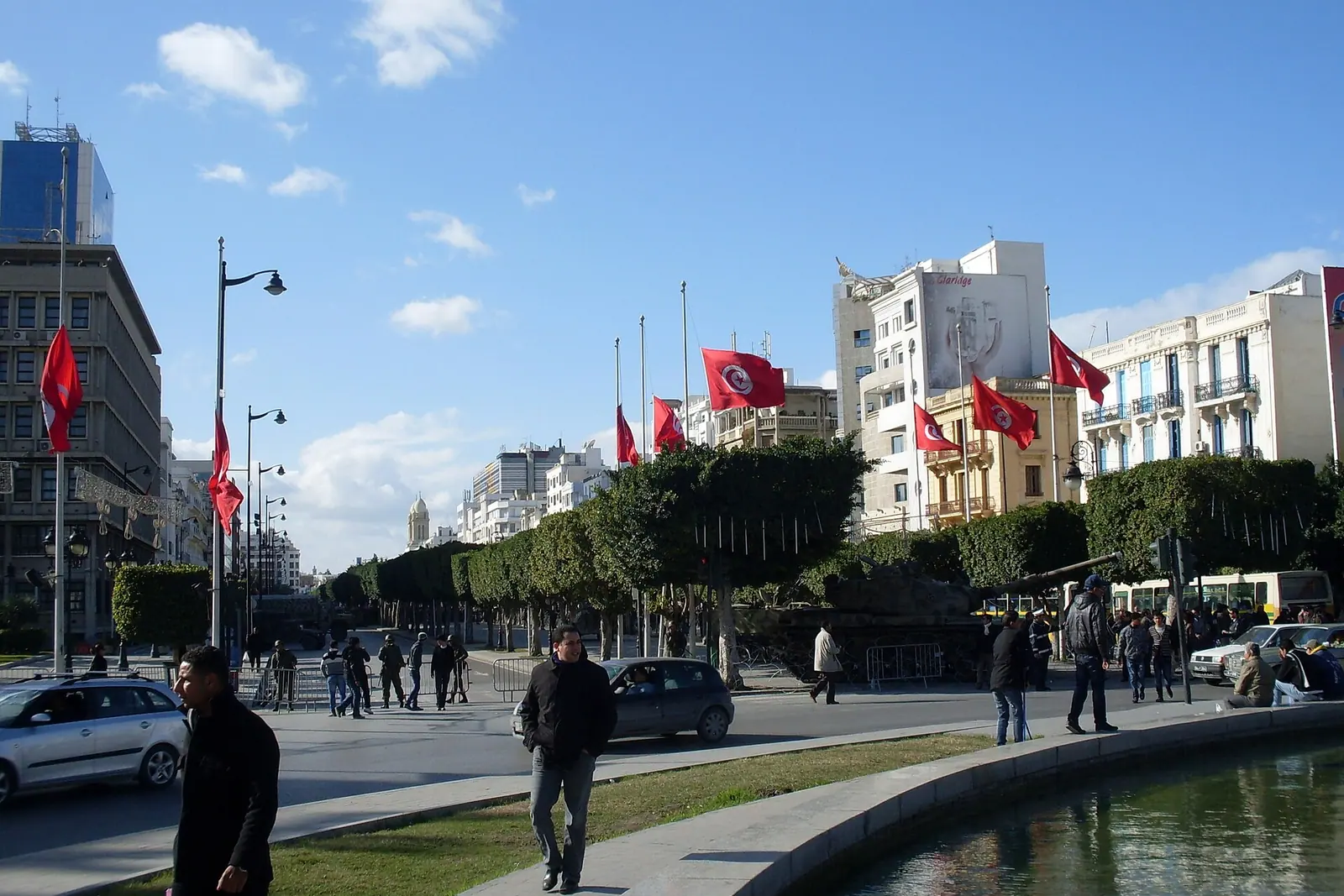
Start in the capital, where most international flights land at Tunis-Carthage airport, barely fifteen minutes from the centre. Give the Medina of Tunis a full half-day: enter through Bab el Bahr, follow the covered souks past perfumers, chechia hat makers and copper beaters, and work your way to the Zitouna Mosque, the spiritual heart of the old city since the 8th century. The Dar Ben Abdallah palace museum, tucked in a quiet side lane, shows how a wealthy Tunis family once lived. Late afternoon, climb to the Kasbah for rooftop views over minarets and satellite dishes, then eat lablabi or a crisp brik in a plain-looking restaurant where the menu is chalked on a board.
Devote the next morning to the Bardo National Museum, housed in a former palace and holding one of the world's great mosaic collections — Roman gods, chariot races and shipwrecks laid out in stone. Two to three hours is enough if you move briskly; longer if you read every panel. Afterwards, take a taxi to Carthage, once Rome's greatest rival. The site is sprawling rather than tidy: Byrsa Hill with its rebuilt columns and sweeping sea view, the Punic ports, the Tophet sanctuary and, best of all, the Baths of Antoninus right on the water, the largest Roman baths in Africa. Budget three hours and wear a hat, because shade is scarce.
Finish the day in Sidi Bou Said, the blue-and-white village on the cliff above the Gulf of Tunis. Every door, window grille and stairway is painted the same vivid cobalt, and the cobbled lanes smell of jasmine and mint tea. Sit on a terrace café wall for sunset, then walk down to La Marsa's corniche for grilled fish. This is also the moment to decide your onward route: either loop north to the Roman sites, or head straight south towards Kairouan.
Day 3: Roman Dougga and the Northern Hills
Rent a car or hire a driver for the day and drive roughly two hours west of Tunis to Dougga, the most complete Roman town in North Africa and a UNESCO World Heritage Site. It sits on a hillside of olive groves, so you walk downhill through it: the Capitol with its three standing columns, the theatre carved into the slope for about 3,500 spectators, the Licinian Baths, the brothel with its cheeky floor mosaic, and a Libyo-Punic mausoleum that predates the Romans entirely. It takes two to three hours at an unhurried pace, and there is almost no shade — go early, carry water, and use the small café by the entrance.
On the way back, stop at Testour, a town of Andalusian refugees whose Great Mosque has a minaret studded with green and yellow tiles and an unusual clock facing the wrong way. If you have energy left, continue to Bulla Regia, where wealthy Romans built villas with rooms sunk below ground level to escape the summer heat; the mosaics down there — hunting scenes, Venus at her toilette — are astonishingly bright. Drive back to Tunis or, more sensibly for the next day, overnight in Hammamet, whose fort and sandy bay make an easy evening stroll.
An alternative Day 3 for beach lovers: the Cap Bon peninsula. Kelibia's hilltop fort, the hot springs at Korbous, the fishing harbour of El Haouaria and the birdlife of Ichkeul National Park fill a pleasant loop, and you can swim at the end of it.

Days 4–5: Kairouan, El Jem and the Sahel
Drive south to Kairouan, Islam's fourth holiest city and the first Arab capital of the region. The Great Mosque of Uqba, founded in the 7th century, is the must-see: a vast sun-bleached courtyard ringed by arcades, a minaret you can climb for a fee, and a prayer hall whose forest of antique columns was recycled from earlier Roman buildings. Nearby, the Aghlabid Basins — enormous circular cisterns from the 9th century — show how cleverly this dry city managed its water. Non-Muslim visitors enter the courtyards but not the prayer halls; shoulders and knees covered, and a scarf for women, is expected. Before leaving, buy makroudh, the local semolina-and-date pastry, from a shop in the medina.
The afternoon belongs to El Jem, an hour's drive away, where a Roman amphitheatre seating around 35,000 people stands almost intact in the middle of a modern town. It is one of the largest ever built, and you can descend into the underground corridors where gladiators and animals waited, then climb to the upper tiers for a view across the plain. The adjoining museum holds superb mosaics and a model of the original structure. Two hours covers it comfortably.
Base yourself overnight in Sousse or Monastir. Sousse's UNESCO-listed medina is compact and rewarding: the ribat, a fortified monastery that predates most of the town, the Great Mosque with its plain, fortress-like walls, and the Dar Essid house museum, preserved exactly as a merchant family left it. Monastir's own ribat is even more photogenic at sunset, and the coastal promenade is good for a slow dinner of grilled sea bream and ojja, a spicy tomato-and-egg stew.
Day 6: Tozeur, Chott el Jerid and the Mountain Oases
The deep south is a long haul — roughly five to six hours by road from Sousse — so either break the journey at Gabès, a market town famous for its dates and its seaside oasis, or take a short domestic hop from Tunis to Tozeur-Nefta airport, which seasonal flights serve. However you arrive, Tozeur itself deserves a wander: the old quarter of Ouled El Hadef, built in honeycomb-patterned yellow brick, is unlike anywhere else in the country, and the vast palmery below town is threaded with irrigation channels and shaded paths. Dates here are the prized deglet nour variety, and the weekly market is worth timing your visit around.
At the edge of town the landscape turns strange. Chott el Jerid, a salt flat covering thousands of square kilometres, shimmers with mirages, and the road across it is lined with white crystal crust and occasional salt-packing operations. Go at sunrise or late afternoon when the light is low and the heat bearable; there is no shade and no facilities, so carry water. North of Tozeur lie the mountain oases of Chebika, Tamerza and Ong Jemal — springs in ravines, ruined hilltop villages, and palm groves wedged between rock walls. Ong Jemal's canyon, with its improbable rock formations and abandoned desert film sets nearby, is the most dramatic.
Sleep in Tozeur rather than pushing on. Guesthouses built in the local brick style, with domed roofs and cool courtyards, make the evening feel like a different country from the coast.
Day 7: Douz, Matmata and Djerba
Wake early and drive south to Douz, the self-styled gateway to the Sahara, where the palm groves end and the Grand Erg Oriental begins. Camel treks of an hour or a full day leave from the edge of town, and four-wheel-drive excursions run out to the big dunes, often with a night in a desert camp under genuinely dark skies. December brings the Festival of the Sahara, a celebration of horsemanship, poetry and camel racing. Even a half-day here gives you the essential experience: sand, silence and a sunset that turns the dunes deep orange.
Loop back north to Matmata, where Berber families carved homes into the soft rock — circular pits open to the sky, with cave rooms around the walls. Several still function as dwellings and welcome visitors for a small fee or a glass of tea. From Matmata it is roughly two and a half hours to Djerba, Tunisia's island in the south, where the trip can end on a beach. Houmt Souk, the island's main town, has a lively market and a Portuguese-era fort; the village of Erriadh contains the El Ghriba synagogue, one of the oldest in the world, and Guellala is known for its pottery. Flamingos feed on the lagoon in winter.
If time allows an extra day, the Roman ruins of Sbeitla, with three temples standing side by side on a single podium, make a fine detour on the inland road towards Kasserine.
Practicalities: Flights, Seasons and Getting Around
Tunisia has five useful arrival points: Tunis-Carthage, the main hub with the widest choice of flights; Enfidha-Hammamet, popular with charter and low-cost carriers serving the resorts; Monastir, close to Sousse; Djerba-Zarzis in the south-east; and Tozeur-Nefta, which is seasonal. Most travellers fly into Tunis and out of Djerba, which saves driving back and turns the week into a clean north-to-south line. Direct flights from European cities take between two and four hours; book two to four months ahead for spring and autumn departures, when seats fill fastest.
The best months are March to May and September to November, when coastal days sit in the low-to-mid twenties and the desert is walkable. July and August are hot and busy on the coast, and genuinely punishing in the south, where temperatures exceed 40°C. Winter is mild and often sunny along the Mediterranean but cold at night in the Sahara, so desert trips are best in March, April, October and November. Ramadan shifts opening hours and restaurant rhythms; it can be a rewarding time to visit, but plan meals around sunset.
On the ground, shared minivans called louages are cheap and fast on main routes, trains link Tunis, Sousse, Sfax and Gabès comfortably, and a rental car makes the Roman sites and the south far easier. Otherwise hire a driver for long legs. Carry Tunisian dinar in cash for souks, small guesthouses and tips; ATMs are reliable in cities but rare in the desert. Dress modestly in medinas and at religious sites, keep shoulders and knees covered, and always accept the offer of mint tea — it is the beginning of most good conversations here.
Frequently asked questions
How many days do you need for Tunis and Carthage?
Two full days is the sweet spot. Spend one day on the Medina of Tunis, the Zitouna Mosque and the Bardo National Museum, and a second on the Carthage ruins — Byrsa Hill, the Punic ports and the Baths of Antoninus — finishing with sunset in Sidi Bou Said.
What is the best time of year for a one-week Tunisia itinerary?
March to May and September to November. Coastal temperatures are pleasant, the Roman sites are manageable and the Sahara is comfortably walkable. Avoid July and August if you plan to go south, and note that winter desert nights near Douz can drop close to freezing.
How do you travel from Tunis to the Sahara in a week?
Either drive south in stages — Kairouan, El Jem, Sousse, Gabès, then Tozeur — or fly from Tunis to Tozeur-Nefta on a seasonal service and rent a car locally. Many travellers fly into Tunis and home from Djerba or Tozeur to avoid retracing the whole route.
Is one week enough to see Tunisia properly?
It is enough for a well-shaped highlights trip: Tunis, Carthage, Sidi Bou Said, Kairouan, El Jem, Sousse and a taste of the desert at Tozeur or Douz. Add three or four days if you also want Djerba's beaches, the northern Roman sites like Dougga and Bulla Regia, or a night in a desert camp.
What should you pack and know before flying to Tunisia?
Bring light cotton clothing, a hat, high-factor sunscreen and a scarf for religious sites, plus a warm layer for desert evenings in winter. Carry cash in Tunisian dinar for markets and small guesthouses, expect modest dress codes in medinas and mosques, and check your passport validity well before departure.
Sort the rest of your trip
Everything for Tunisia, in one place
Stay in Tunisia
Hotels, guesthouses and apartments — compared in one search.
Search hotels
Transfer in Tunisia
Private driver waiting on arrival — no queues, no surprises.
Book a transfer
Travel insurance
Medical cover, delays and lost baggage — sorted before you go.
Get coveredMore guides in Tunisia
Best Places to Visit in Tunisia: Medinas, Roman Ruins and Sahara Oases
Best Time to Visit Tunisia: Seasons, Weather and When to Book Hotels
Tunisia Tours: Food, Culture and Local Experiences Worth Planning Around
Best Things to Do in Tunisia: Roman Ruins, Medinas and the Sahara
Hotels in Tunisia: Where to Stay and What to See, Region by Region