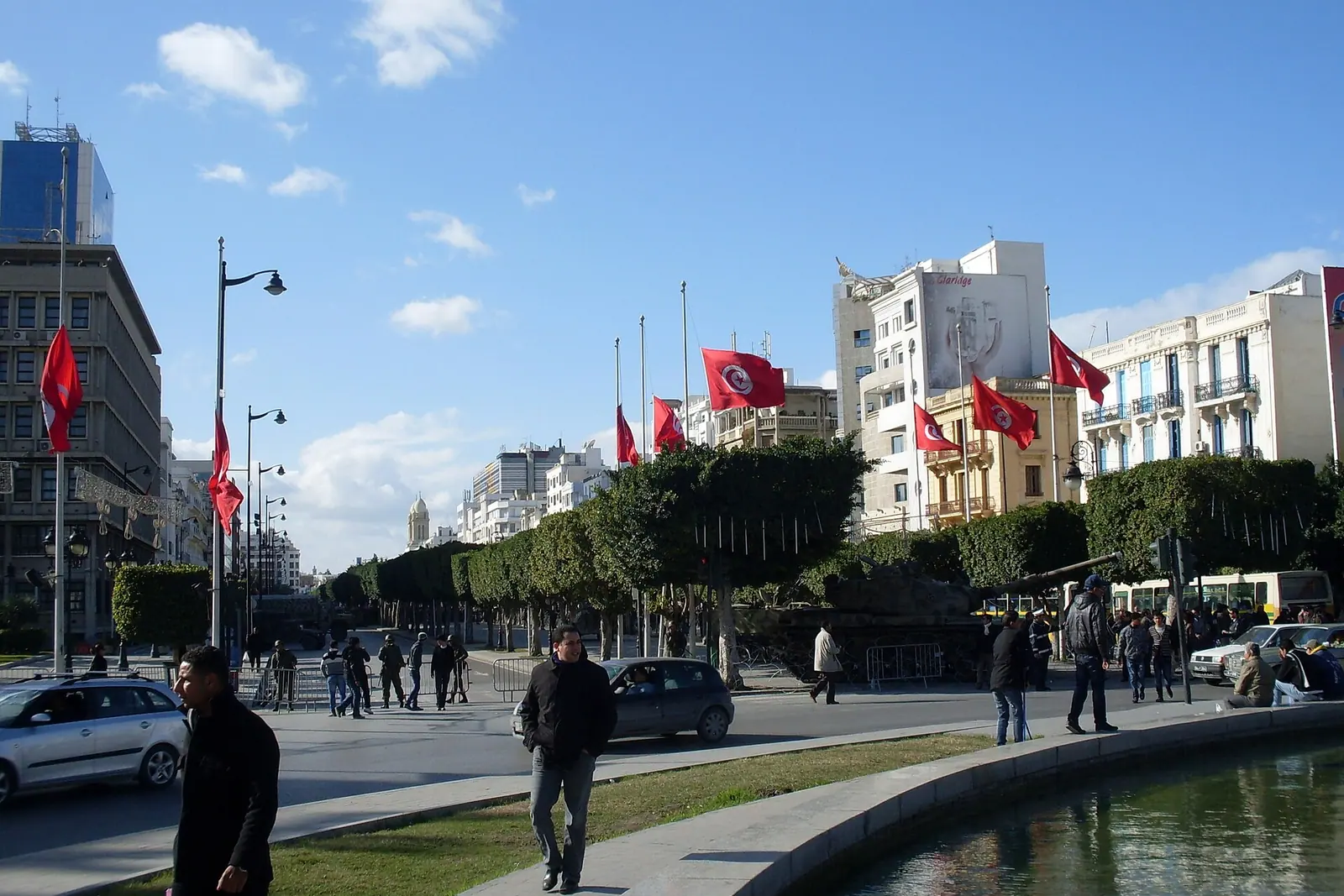
Tunisia packs an improbable amount into a country you can cross in a day: Phoenician harbours, the third-largest Roman amphitheatre ever built, blue-and-white Andalusian villages and salt flats that shimmer into mirage. Plan a loop from the Gulf of Tunis down through the olive plains to the Sahara, and you will move from mosaic floors to sand dunes in a single afternoon's drive.
Tunis and Its Medina: The Country's Compass
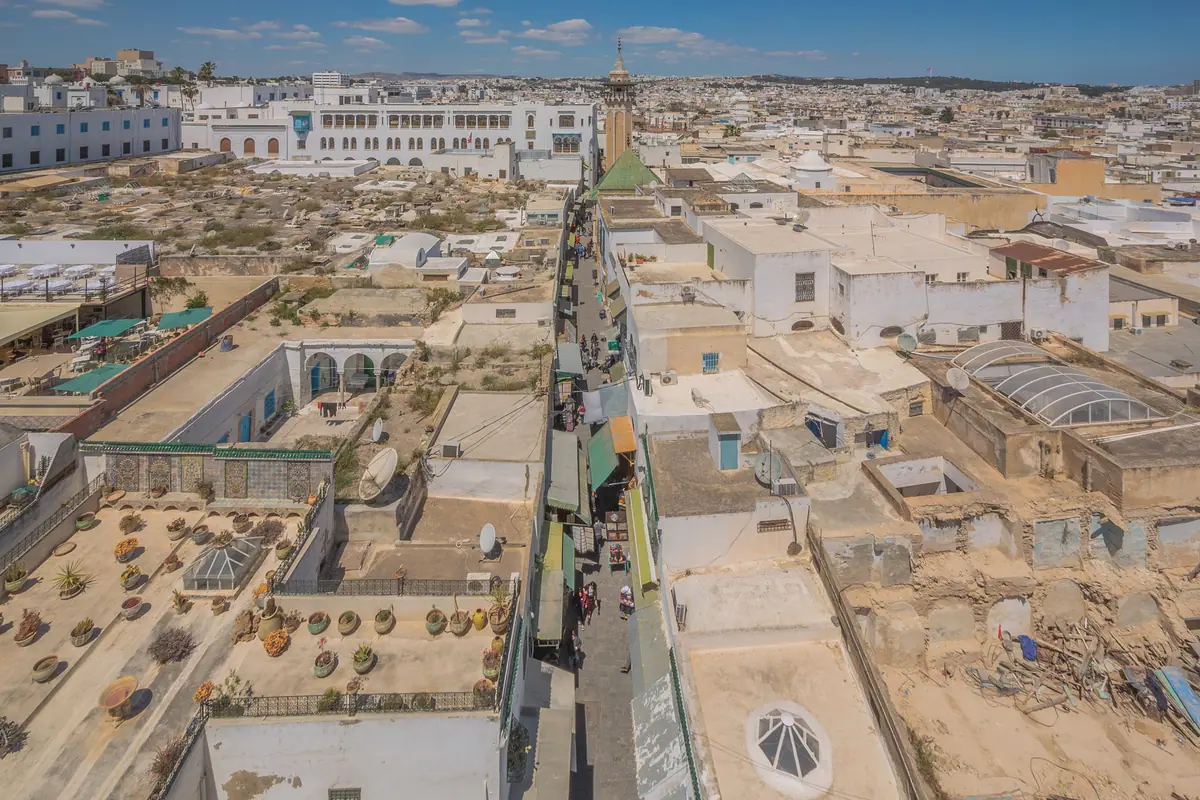
Start in the capital, where the UNESCO-listed Medina of Tunis still works as a living quarter rather than a museum piece. The Great Mosque, the Zitouna, sits at its heart, ringed by souks that each sell one thing well: the Souk el Attarine for perfume oils, the Souk des Chéchias for the knitted red hats that gave Tunisia one of its national symbols, and the Souk el Berka, once the slave market and now a jewellery quarter. Get deliberately lost, climb to a rooftop café near the Zitouna for a view over minarets and satellite dishes, and duck into the Dar Ben Abdallah palace for a glimpse of how a wealthy Tunis family lived. Give the medina a full day; it rewards slow walking, tea and haggling.
Carthage, Sidi Bou Said and the Gulf of Tunis
Twenty minutes by suburban train from the city centre, Carthage spreads across a hillside in fragments rather than a single ruin. The Baths of Antoninus, right on the water's edge, are the largest Roman baths in Africa, and the Punic ports below Byrsa Hill reveal the engineering of the civilisation Rome felt compelled to destroy. A combined ticket covers the main sites, but expect walking between them under strong sun — go early, carry water and set aside half a day.
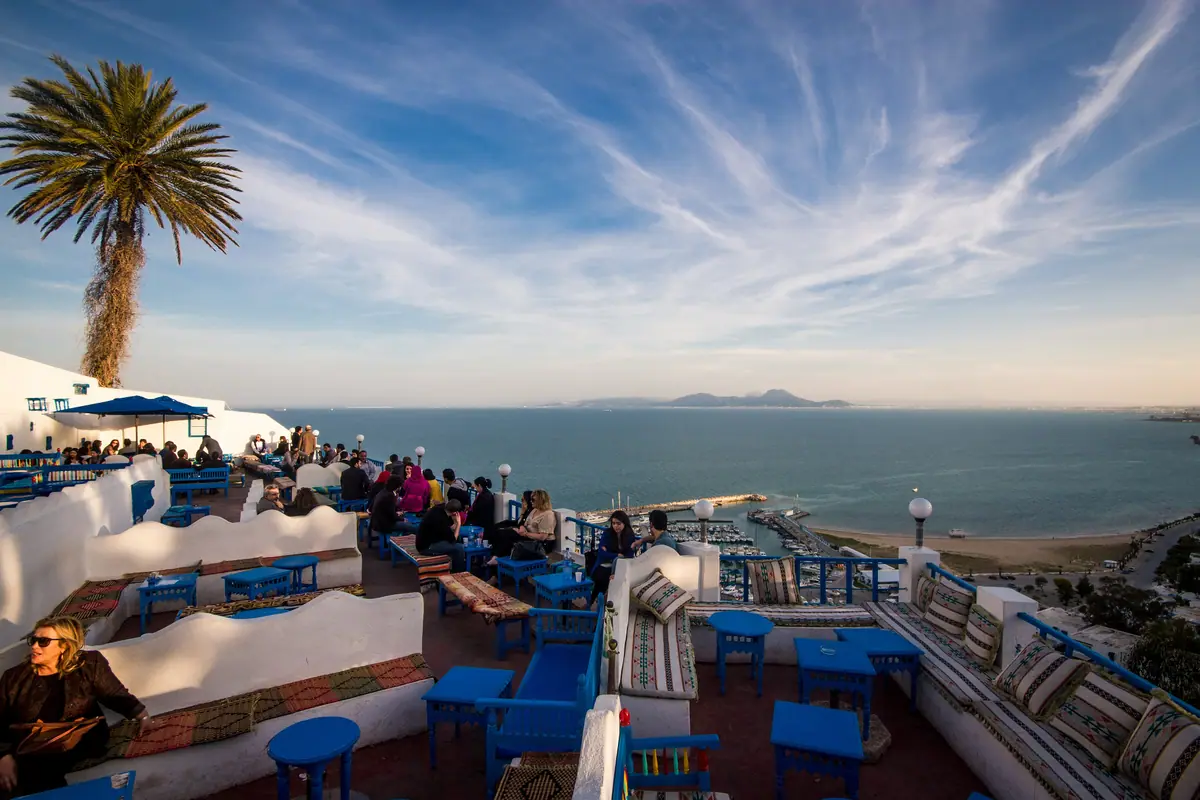
Then head a few stops further to Sidi Bou Said, where every door and window frame is painted a startling cobalt blue. The village's café terraces, the Dar el Annabi house museum and the steep lanes down toward the lighthouse and the cliffs make it the most photographed spot in the country. Stay for sunset, when the whitewashed walls turn pink and the crowds thin out; nearby La Marsa has the best urban beach in the area and a busy evening promenade.
The Roman Trail: El Jem, Dougga and Bulla Regia
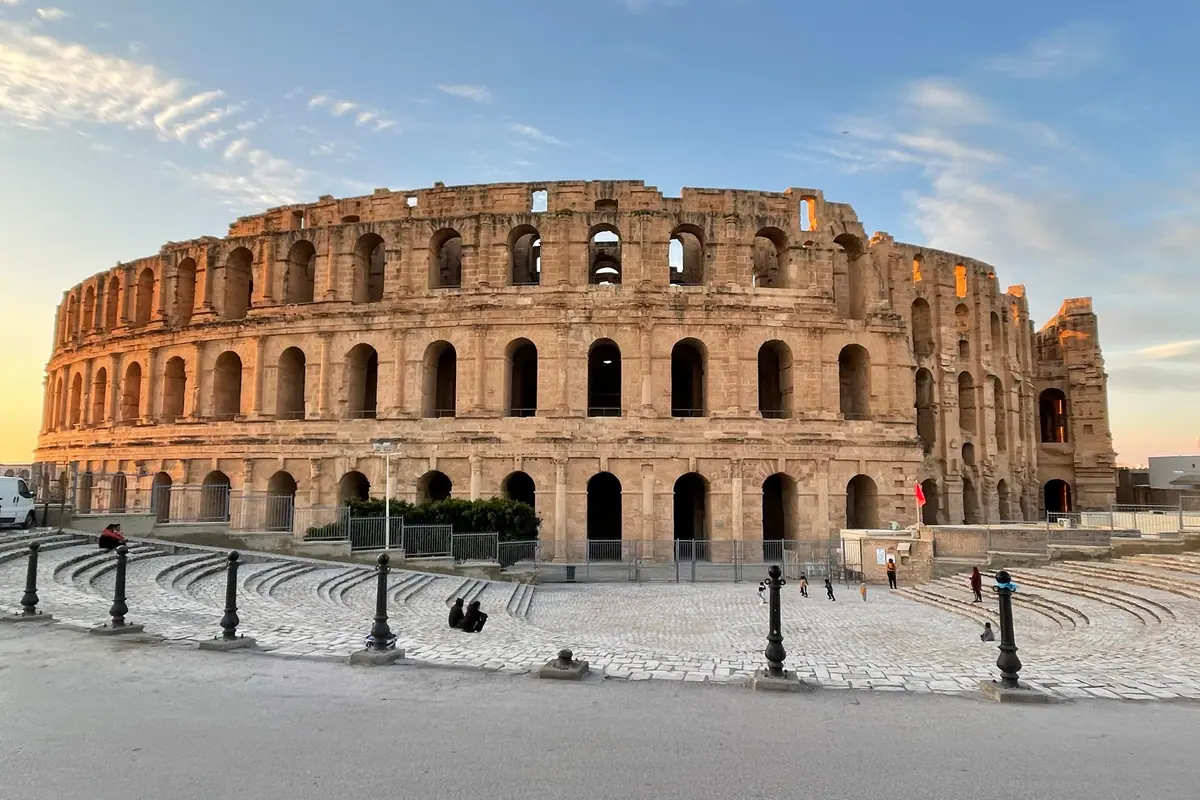
El Jem is the showstopper: an amphitheatre built to hold around 35,000 spectators and so intact that you can descend into the corridors where gladiators waited. It is often described as the third-largest in the Roman world, and standing on the top tier, with the modern town's flat roofs just beyond, is one of Tunisia's great travel moments. The site is about two hours from Tunis and an hour from Sousse by road, and the small on-site museum holds some of the finest mosaics in the country.
Further north, Dougga is the most complete Roman small town in North Africa — a Capitol, a theatre for about 3,000 people, baths, and a Libyo-Punic mausoleum that predates the Romans entirely. Pair it with Bulla Regia, where wealthy residents built their villas underground to escape the summer heat, and whose sunken mosaic floors are still vivid in colour. Sbeitla, inland near Kasserine, is a bare, atmospheric site with the three temples of its Capitol lined up along a single axis; the Temple of the Waters and the long aqueduct at Zaghouan complete the Roman circuit for enthusiasts.
Kairouan, Sousse and the Sahel Coast
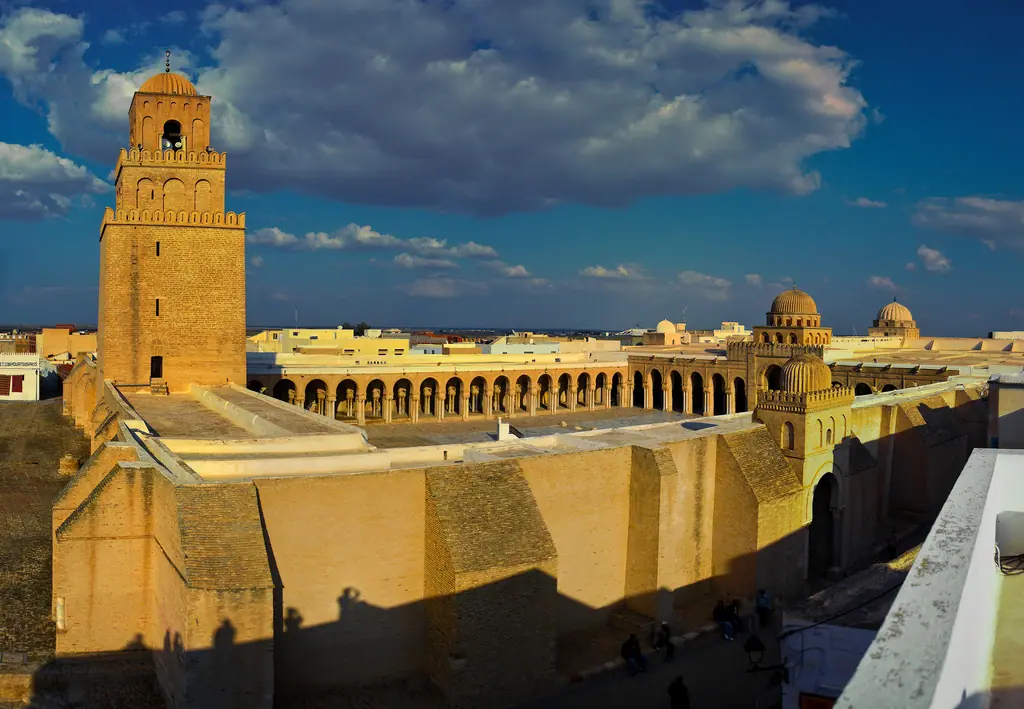
Inland from the coast, Kairouan is Islam's fourth holiest city and the finest place in Tunisia to understand its architectural heritage. The Great Mosque of Uqba, founded in the seventh century, has a vast marble-paved courtyard ringed by reused Roman columns and a square minaret you can look down from over the flat white rooftops. The Mosque of the Three Doors, with its carved facade, the Aghlabid Basins, and the richly tiled zaouia of Sidi Sahab are all within walking distance of each other. Dress modestly, cover shoulders and knees, and women will be asked to cover their hair at several of the sites; visit in the morning, then buy the city's famous makroudh pastries and hand-knotted carpets.
Back on the coast, Sousse's walled medina is a UNESCO site in its own right, with a ninth-century ribat — a fortified monastery — that you can climb for a view over the fishing port, plus a kasbah and a genuinely busy beach. Monastir's ribat has similar sea-facing battlements, and Mahdia, further south, keeps a slow, unpolished charm around its black-stone Skifa Kahla gate and its lantern-lit harbour.
The Sahara: Tozeur, Douz and the Great Dunes
The south is where Tunisia turns cinematic. Tozeur, a town of patterned yellow brickwork, sits beside an immense palm oasis and the Chott el Jerid, a salt lake that throws up mirages as you cross it on the road toward Kebili. Mountain oases such as Chebika, Tamerza and Mides offer cold springs and palm-filled canyons within an hour's drive. Douz, the self-styled gateway to the Sahara, runs the four-wheel-drive and camel trips into the Grand Erg Oriental, and in late December hosts the Festival of the Sahara with horse riders and desert poetry.
Further south, the oasis of Ksar Ghilane has a warm natural spring set against dunes, and the pit dwellings of Matmata and the fortified granaries, or ksour, of Tataouine and Chenini give a sense of how people have lived in this climate for centuries. Plan at least two or three days in the region, and go with a local driver-guide: roads fade quickly into sand tracks. Winter is the season here — days in the twenties, nights genuinely cold, with clear skies for stargazing. Carry cash, since ATMs become rare once you leave the main towns.
Djerba, Cap Bon and the Northern Coast
Djerba, reached by causeway or a short flight, is the relaxed finish to a Tunisian trip. Houmt Souk combines whitewashed domes, a lively market and a waterfront full of fishing boats; the village of Erriadh has become an open-air gallery of murals, and its ancient synagogue remains a pilgrimage site. Elsewhere on the island, Guellala makes pottery from local clay, flamingos gather on the lagoon in winter, and the beaches around Sidi Mahrez are calm and shallow.
Back on the mainland, the Cap Bon peninsula is worth a couple of days: Hammamet's kasbah and orange groves, the market at Nabeul for jewellery and ceramics, the hill town of Korbous with its hot springs, and the Byzantine fort at Kelibia with views across to Sicily on clear days. In the far north, the old port and Spanish fortress of Bizerte feel distinctly Mediterranean, while Tabarka offers Genoese ruins, coral diving and the cork-oak mountains around Ain Draham. Tunisia is roughly a seven-to-ten-day trip for a classic loop of Tunis, Carthage, El Jem, Kairouan, Sousse and one desert or island extension.
Frequently asked questions
When is the best time to visit Tunisia?
Spring (March to May) and autumn (September to November) are ideal everywhere, with pleasant temperatures for ruins and medinas. The coast is warm and swimmable from June to September, though inland cities can exceed 40°C in July and August. For the Sahara, plan between October and April; winter days are mild but desert nights often drop near freezing.
How many days do you need in Tunisia?
A comfortable minimum is seven to ten days. Five days covers Tunis, the medina, Carthage, Sidi Bou Said and a day trip to El Jem or Dougga. Add three or four days for the Sahara around Tozeur and Douz, and another two or three if you want Djerba or the northern coast.
Is it easy to travel around without a car?
Yes, on the main corridor. Trains link Tunis, Sousse, Monastir and Sfax, and shared long-distance taxis fill the gaps to Kairouan, Tozeur and Douz. For the desert, dune routes and oasis circuits, a hired car with a local driver is close to essential, since you cannot rely on self-driving on sand tracks.
What should I wear and pack?
Modest clothing for medinas, mosques and inland towns pays off — covered shoulders and knees, and a scarf for women at religious sites. Bring high-factor sun protection, a hat, sturdy shoes for archaeological sites, and warm layers plus a windproof jacket if you are heading into the desert in winter.
Is Tunisia good for a first trip to North Africa?
It is one of the easiest introductions to the region: short flight times from Europe, a compact geography, well-established coastal resorts and a long tradition of hosting visitors. Tourist areas are generally well policed, but check your own government's current travel advice before booking and avoid remote border zones in the far south and west.
Plan it — experiences in Tunisia
Live search, booked directly with trusted providers.
Sort the rest of your trip
Everything for Tunisia, in one place
Stay in Tunisia
Hotels, guesthouses and apartments — compared in one search.
Search hotels
Transfer in Tunisia
Private driver waiting on arrival — no queues, no surprises.
Book a transfer
Stay online in Tunisia
Travel eSIM — data the moment you land, no roaming bills.
Get an eSIMMore guides in Tunisia
Best Time to Visit Tunisia: Seasons, Weather and When to Book Hotels
Tunisia Tours: Food, Culture and Local Experiences Worth Planning Around
Best Things to Do in Tunisia: Roman Ruins, Medinas and the Sahara
Hotels in Tunisia: Where to Stay and What to See, Region by Region
One Week in Tunisia: Tunis, Kairouan, El Jem and the Sahara