Tunisia packs a continent into a country you can cross in a day: Roman amphitheatres rising from olive plains, blue-and-white villages stacked above the sea, and a Sahara where bread is baked in hot sand. Tour it slowly and the rewards come from the table, the souk and the hammam as much as from the ruins.
Tunis and Its Medina: The First Meal, the First Lesson
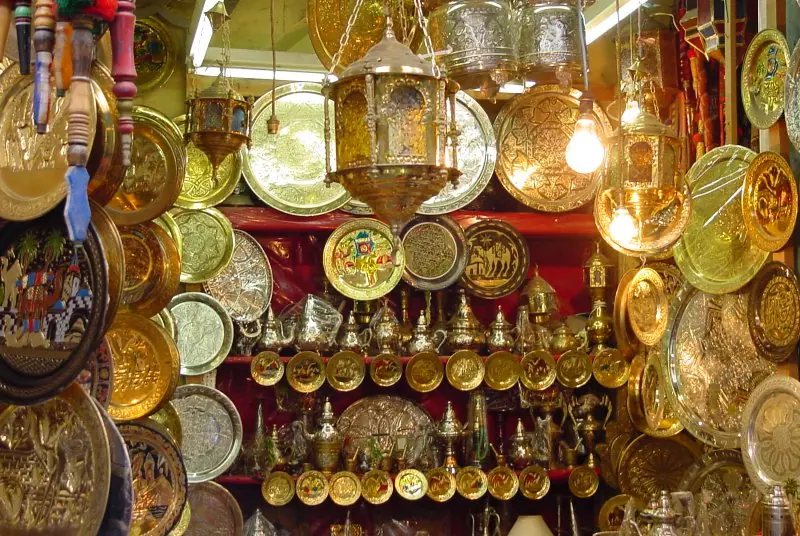
Most tours begin in the capital, and the city teaches you the local rhythm fast. Step through Bab el Bhar into the UNESCO-listed Medina of Tunis, a labyrinth of whitewashed alleys where the Zitouna Mosque anchors a web of specialised souks: Souk El Attarine for perfume, Souk des Chechias for the red felt caps once worn across the Mediterranean, and the covered passages around Tourbet el Bey, the ornate mausoleum of the Husseinid beys. Late morning is the sweet spot — shutters up, bread out of the ovens, and the crowds still thin.
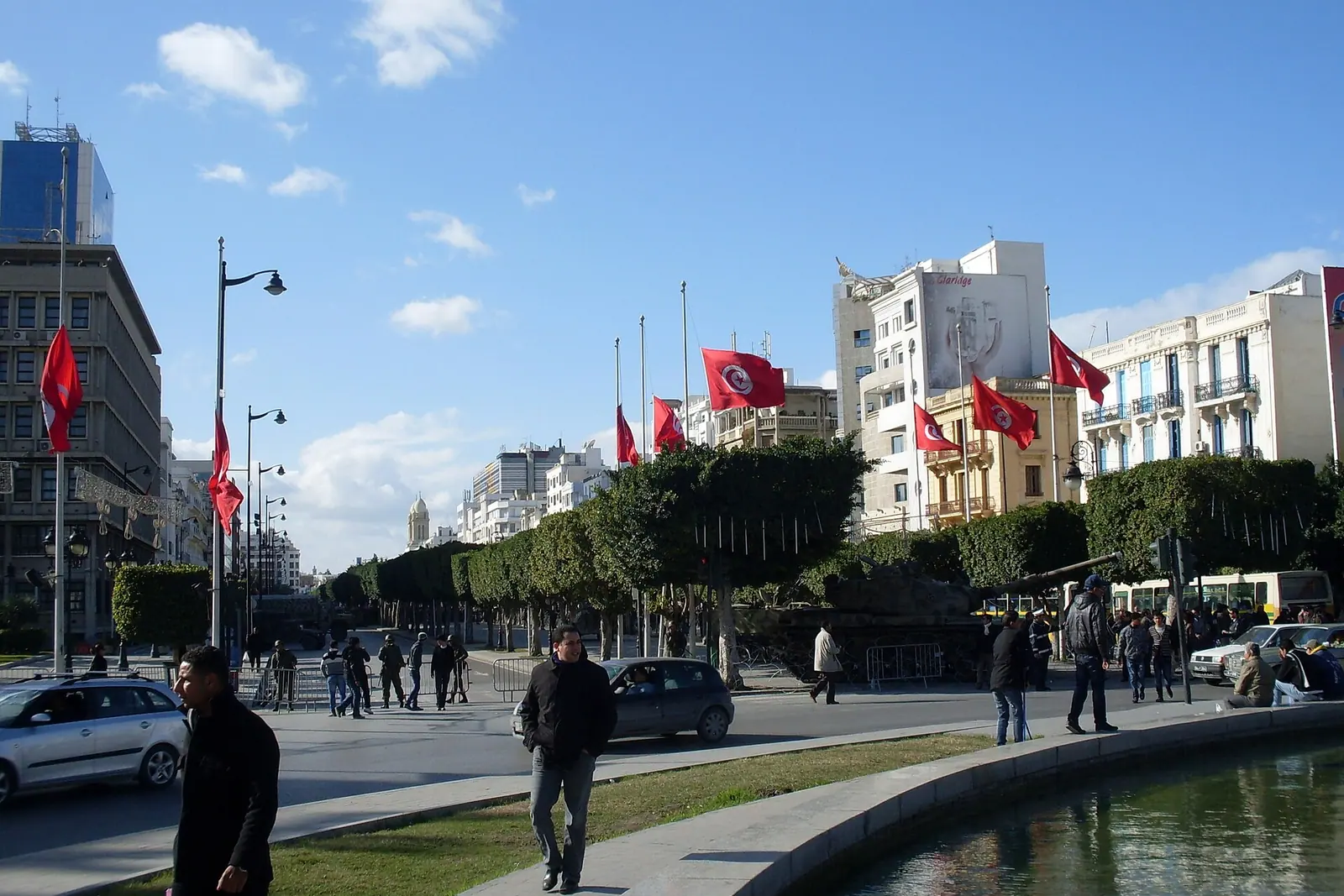
Eat your way in. Tunisian cooking opens with brik, a paper-thin pastry envelope fried around a runny egg, tuna and capers, and harissa — the chilli paste honoured as part of the country's living heritage — served alongside everything. Look for lablabi, a bowl of chickpeas and stale bread ladled with garlicky broth and topped with a poached egg, or kafteji, a chopped tangle of fried vegetables and offal. In the Ville Nouvelle, the Marché Central is worth an hour for its fish, olives, cheeses and spice stalls, and Avenue Habib Bourguiba gives you a café seat to watch it all go by.
Give the Bardo Museum half a day: its mosaic floors, lifted from Roman villas and Carthaginian sites, are among the finest anywhere, and they make the ruins you'll see later legible. Round off the day with mint tea and a pastry in a medina courtyard.
Carthage and Sidi Bou Said: Ruins, Blue Doors and Sweet Fried Dough
Twenty minutes from the centre, Carthage spreads across a hillside of cypresses and villas. The Baths of Antoninus, the largest Roman bathing complex in Africa, sit right on the water, and the Punic ports, the Byrsa hilltop and the national museum fill in the story of the city that once challenged Rome. Come early to beat the heat and the coaches; the site is scattered, so plan on a taxi or a good pair of shoes between clusters.
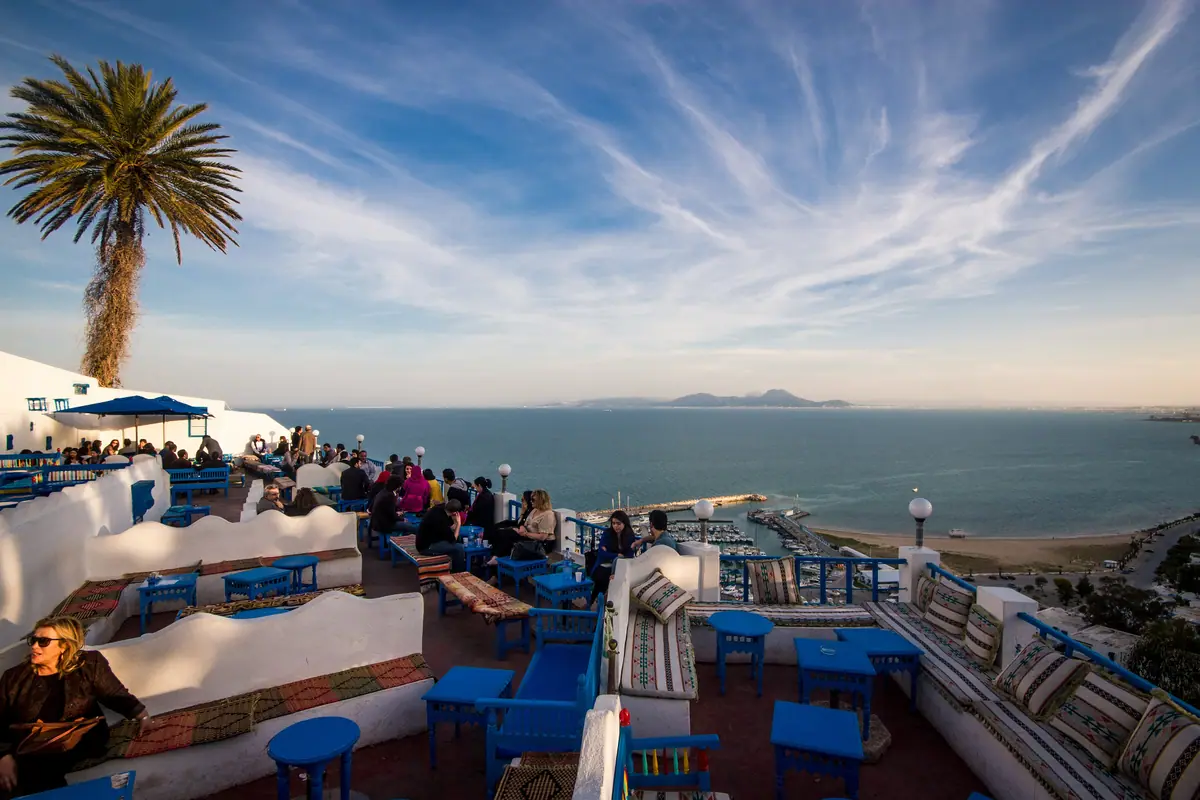
Then climb to Sidi Bou Said, where every door is studded with black nails and painted a fierce cobalt blue. The ritual here is simple: order a bambalouni — a ring of fried dough rolled in sugar — and mint tea at a terrace café, then wander the lanes above the Gulf of Tunis. Nearby La Marsa and La Goulette are where locals go for grilled sea bream, octopus salad and ojja, a bubbling tomato-and-egg skillet that arrives still spitting.
If you have another day, push north to Cap Bon: Nabeul for painted pottery, Kelibia for its fortress and beach, and the vineyards around Mornag and Cap Bon for a taste of Tunisian muscat and reds. Hammamet, further down the coast, pairs a compact medina with long sandy bays.
Kairouan, El Jem and Sousse: The Sacred Heart of the Country
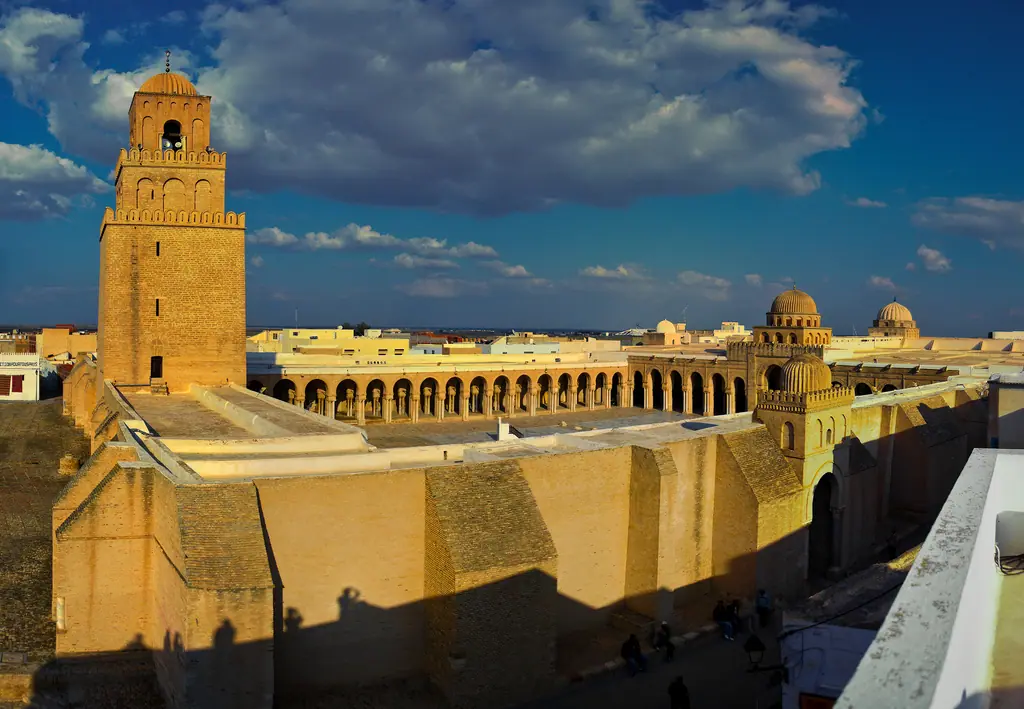
Kairouan, founded in the seventh century, is the spiritual capital and the place to understand how deeply the country's identity runs. The Great Mosque, with its vast courtyard and forest of antique columns, is one of the oldest and most important in the Islamic world; the Aghlabid Basins outside the walls once supplied the city's water, and the mausoleum of Sidi Sahbi glows with tilework. Non-Muslim visitors can enter the courtyard — dress modestly, cover shoulders and knees, and carry a scarf.
Sweet-toothed travellers should make for the pastry stalls: Kairouan is famous for makroudh, semolina diamonds stuffed with dates and fried until they turn deep amber. The carpet souks nearby are a lesson in patience and politeness — ask the price, admire, and don't feel obliged.
From Kairouan, the Roman amphitheatre at El Jem is unmissable: three tiers of arches that once held tens of thousands of spectators, with a small museum of mosaics beside it. Finish on the coast at Sousse, whose ribat, medina and catacombs make an easy, rewarding half-day, or detour inland to the Roman cities of Dougga and Sbeitla if archaeology is your motivation for the trip.
The Saharan South: Oases, Troglodyte Homes and Dates
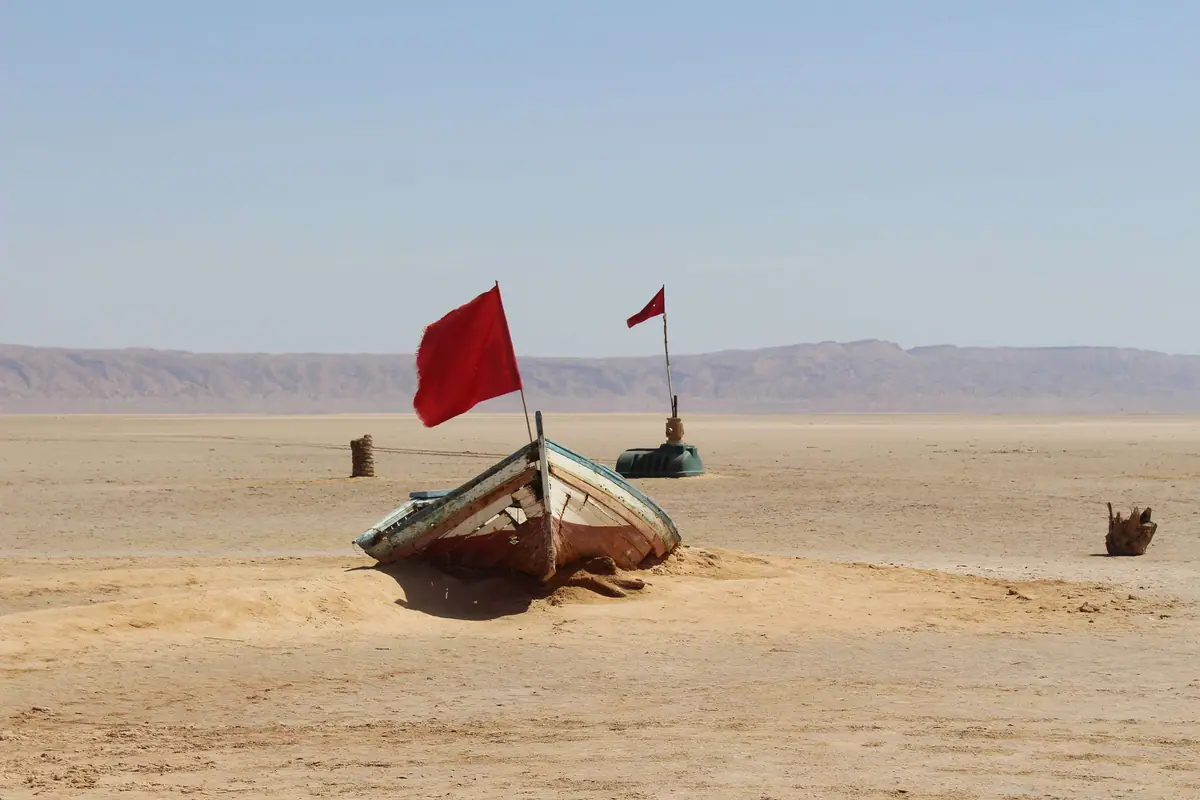
South of the mountains, Tunisia empties into salt and sand. Tozeur is the gateway: a town of honey-coloured brickwork wrapped around a palm oasis, with the Chott el Jerid, a vast shimmering salt flat, stretching beyond it. Cross it in the cool of the morning, when mirages dance on the horizon, and stop at the mountain oasis of Chebika and the dunes around Ong Jemal, where the landscape has stood in for other planets in cult science-fiction films.
At Douz, the self-styled gate of the Sahara, you can ride a camel into the dunes or take a four-wheel-drive trip to a desert camp for a night under extraordinary stars. The town's Sahara festival in December brings camel racing, poetry and traditional music. Local meals here are elemental: lamb roasted over coals, and tabouna bread proved and baked in the embers or buried in hot sand.
Around Matmata, Berber families still live in pit dwellings dug into the soft rock — a few open their courtyards to visitors — while further south the fortified granaries of Ksar Ouled Soltane and the hill village of Chenini above Tataouine show how Amazigh communities stored grain and defended themselves. Tozeur's Deglet Nour dates, sold in garlands and pressed into syrup, are the region's edible souvenir of choice. Winter days are mild but nights bite, so pack layers.
Djerba, Gabès and the Coast: Island Kitchens and Olive Groves
Djerba feels like its own country. In Houmt Souk, the market square mixes fish auctions, jewellery and cafés; the El Ghriba synagogue, one of the oldest in North Africa, draws a pilgrimage after Passover; and at Guellala, potters still throw and paint by hand. Djerban cooking leans on the sea and the lagoon — fish couscous, grilled grouper, octopus stewed with chilli and cumin — and the island's beaches, especially around Sidi Mahrez, are wide and quiet outside high summer.
On the mainland, Gabès is a rarity: an oasis that meets the sea, with market gardens, henna and palm groves running to the sand. Further north, Sfax is a working city with a handsome walled medina and a hinterland of olive groves producing much of the country's oil — a good place to buy a tin, taste a few grades and learn why Tunisian oil is prized. Between Sousse and Sfax, the coastline is punctuated with small fishing ports where lunch is whatever came off the boats that morning.
Local Rituals: Hammams, Mint Tea and the Rhythm of the Day
To tour Tunisia well, adopt its hours. Mornings are for markets and monuments, afternoons for shade and a nap, and evenings for the café — where small glasses of mint tea arrive crowned with pine nuts and a game of cards or backgammon runs long after dark. Public hammams are the social heart of many neighbourhoods: you bring your own towel, soap and a rough scrubbing glove, and pay a little extra for a vigorous gommage that leaves your skin tingling. Women's and men's hours are usually separate; ask at your guesthouse before turning up.
Dress modestly away from the beach, especially in Kairouan and the south, and cover up at mosques and shrines. Bargaining is expected in souks and markets but not in shops with marked prices — keep it friendly and walk away smiling if the number doesn't suit. Small change is useful for tips, and a few words of French or Arabic open doors faster than English alone.
Time your trip around the seasons and the calendar. March to May and September to November are the sweet spots: warm days, cool nights, markets at full tilt. Midsummer is fierce inland but pleasant on the coast, while the desert is best from October to April. Ramadan reshapes the day entirely — restaurants close until sunset and evenings become a feast, which is wonderful to witness if you plan around it. Shared long-distance taxis and the coastal rail line make touring without a car entirely practical.
Frequently asked questions
How many days do you need to tour Tunisia properly?
Ten days to two weeks lets you see the north and the south without rushing: two or three nights in Tunis and its coast, a night in Kairouan, one at El Jem or Sousse, then three or four for Tozeur, Douz and Matmata, finishing on Djerba. A week is enough for either the north or a focused desert-and-oasis loop, but not both.
What Tunisian dishes should I try first?
Start with brik, lablabi, ojja and kafteji in Tunis, then move on to Kairouan's makroudh, Djerba's fish couscous, southern lamb grilled over coals and tabouna bread baked in sand. Harissa appears on every table, mint tea with pine nuts ends most meals, and Deglet Nour dates from Tozeur make the best edible souvenir.
When is the best time to visit Tunisia?
Spring (March to May) and autumn (September to November) offer the best balance of warm days, cool nights and lively markets. The Saharan south is most comfortable from October to April, while July and August are best spent on the northern coast rather than inland, where temperatures climb sharply.
Can I tour Tunisia without renting a car?
Yes. The coastal rail line links Tunis, Sousse, Sfax and Gabès, shared long-distance taxis cover most other routes and leave when full, and day trips to desert camps or mountain oases are easy to arrange locally. Carry identification for roadside checks, and allow extra time for journeys in the south.
What should I know about etiquette and dress?
Cover shoulders and knees at mosques and shrines, and carry a scarf for women. Bargain cheerfully in souks but not in fixed-price shops, ask before photographing people, and keep small change for tips. During Ramadan, avoid eating or drinking openly in the street during daylight, and enjoy the evening meals — they're some of the year's best.
Sort the rest of your trip
Everything for Tunisia, in one place
Stay in Tunisia
Hotels, guesthouses and apartments — compared in one search.
Search hotels
Transfer in Tunisia
Private driver waiting on arrival — no queues, no surprises.
Book a transfer
Stay online in Tunisia
Travel eSIM — data the moment you land, no roaming bills.
Get an eSIMMore guides in Tunisia

Best Places to Visit in Tunisia: Medinas, Roman Ruins and Sahara Oases

Best Time to Visit Tunisia: Seasons, Weather and When to Book Hotels

Best Things to Do in Tunisia: Roman Ruins, Medinas and the Sahara

Hotels in Tunisia: Where to Stay and What to See, Region by Region

One Week in Tunisia: Tunis, Kairouan, El Jem and the Sahara