Tunisia packs an entire continent of experiences into a country the size of England: mosaics that rival anything in Italy, medinas where donkeys still deliver bread, a blue-and-white clifftop village, and a Sahara so vast it swallows the horizon. It is also, quietly, one of the cheapest and easiest places in North Africa to travel independently. Here is where to go, what to see first, and how to shape the days around it.
The Medina of Tunis and the Bardo: Start at the Beating Heart
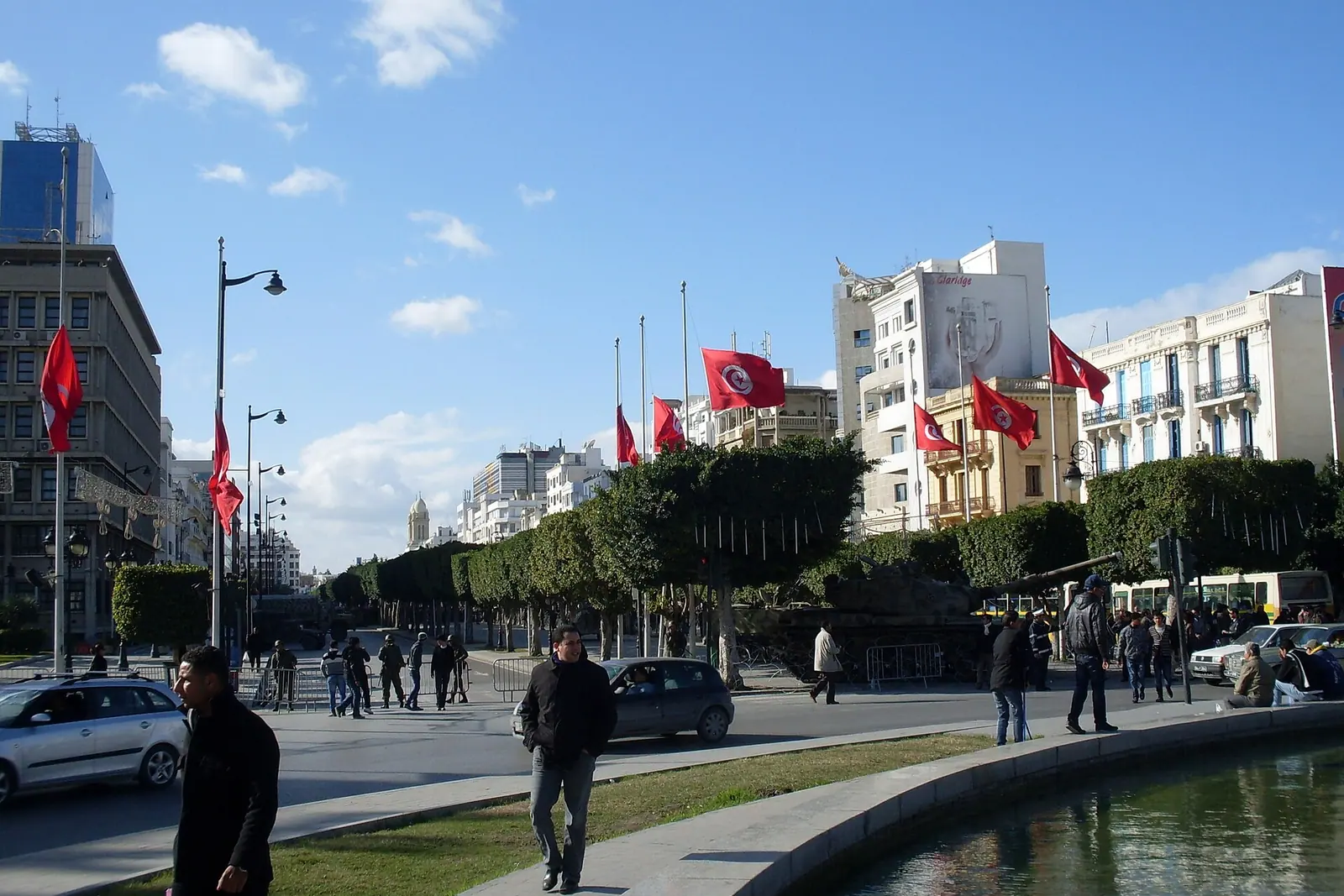
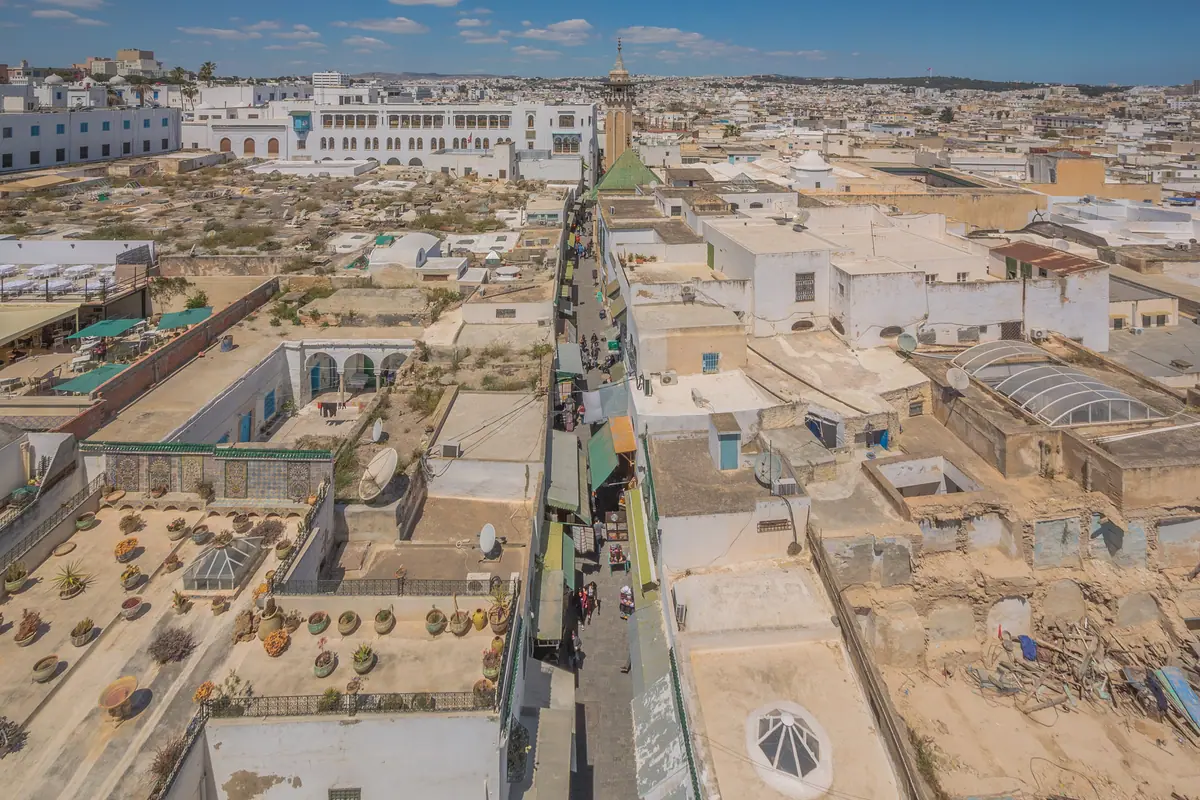
Begin in the capital, where the Medina of Tunis tumbles across seven kilometres of alleyways behind Bab el Bhar, the old French gate at the head of Avenue Habib Bourguiba. This is a UNESCO-listed labyrinth of some 700 monuments, and the natural entry point is the Zitouna Mosque, founded in the 8th century and still the spiritual anchor of the city. Around it radiate the souks, each devoted to a single trade: Souk El Attarine for perfume, Souk des Étoffes for fabric, and the dwindling Souk des Chechias, where craftsmen still press red felt into the traditional chechia hats. Half a day on foot is enough to get pleasantly lost, and a licensed local guide pays for itself within an hour — the medina swallows maps and spits out tourists.
Carthage and Sidi Bou Said: Rome's Greatest Rival, Twenty Minutes Away
A short train ride from central Tunis drops you in Carthage, the Phoenician trading empire that nearly broke Rome and was destroyed for its ambition in 146 BC, then rebuilt as a Roman showpiece. The essential stops are the Antonine Baths, a colossal seaside complex that was once the largest in the Roman world, the hilltop Byrsa with its Punic and Roman layers, and the Carthage National Museum, whose mosaics and tombstones tell the story in sequence. The Roman theatre hosts the Carthage International Festival in July and August, when open-air concerts fill the tiered seating — a genuinely spectacular way to see the ruins after dark.
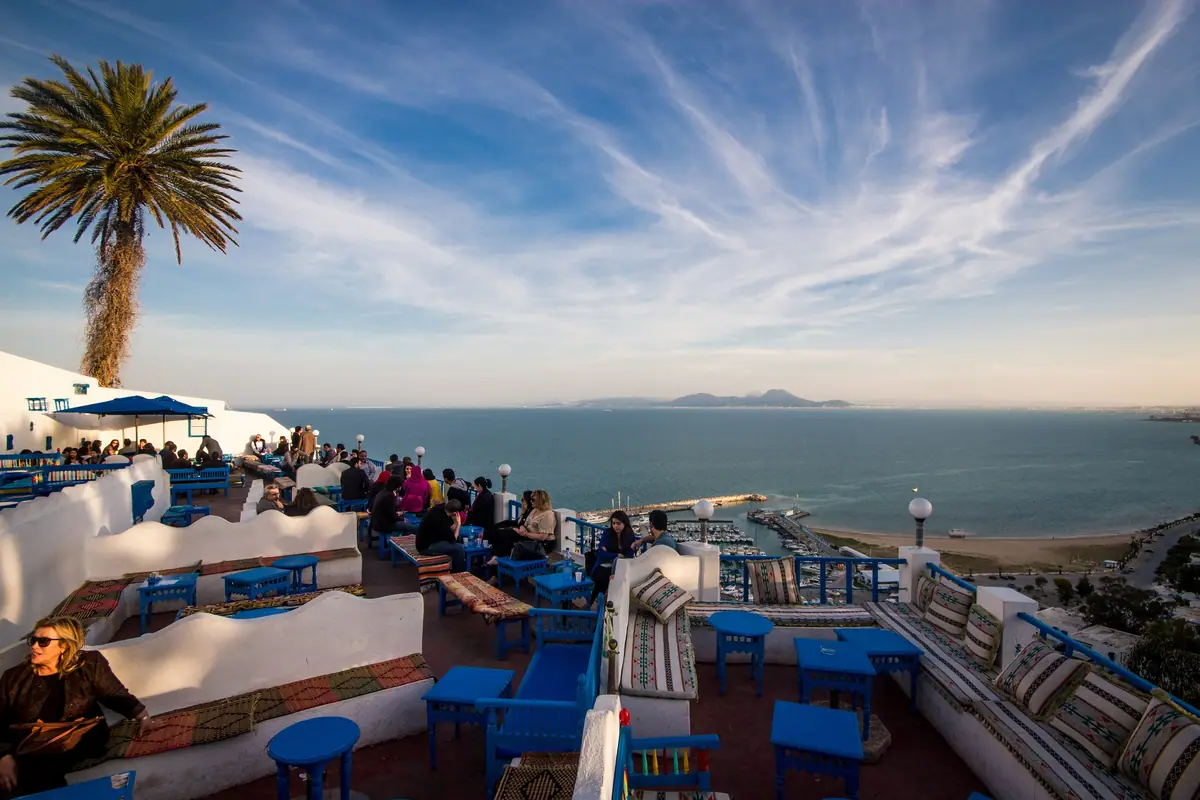
Nearby Sidi Bou Said is the postcard everyone recognises: whitewashed walls, cobalt-blue doors, and bougainvillea spilling over wrought-iron grilles. Come early morning or late afternoon when the light is soft and the day-trippers have thinned out. Climb to the terrace cafés for mint tea and a view across the Gulf of Tunis, and wander into the Ennejma Ezzahra palace and Dar El Annabi, a beautifully preserved traditional house open to visitors. Both sites are easy to combine in one unhurried day.
Kairouan and El Jem: Sacred Architecture and a Roman Colossus
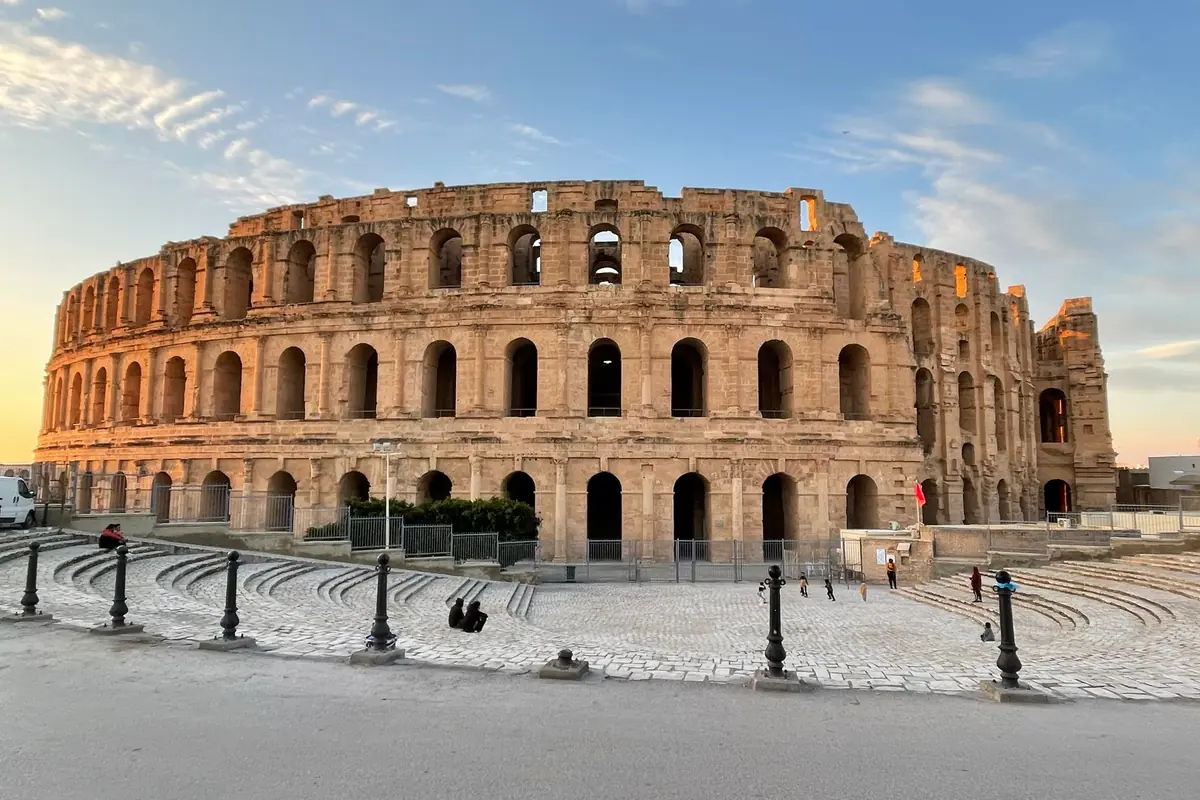
Two hours south of Tunis, Kairouan is the fourth holiest city in Islam and the finest surviving example of an early Islamic capital in the Maghreb. Its Great Mosque of Uqba, founded in 670 AD, is a fortress-like masterpiece with a massive square minaret, hundreds of ancient columns pillaged from Roman sites, and a vast flagstone courtyard. Non-Muslims enter the courtyard but not the prayer hall — dress modestly, cover shoulders and knees. Also worth seeking out are the Mosque of the Three Doors with its carved facade, the Aghlabid Basins, and the Zaouia of Sidi Sahab. The medina is famous for hand-knotted Kairouan carpets; if you buy, expect serious negotiation and a proper carpet show.
Dougga and the Roman North: The Ruins Most Travellers Miss
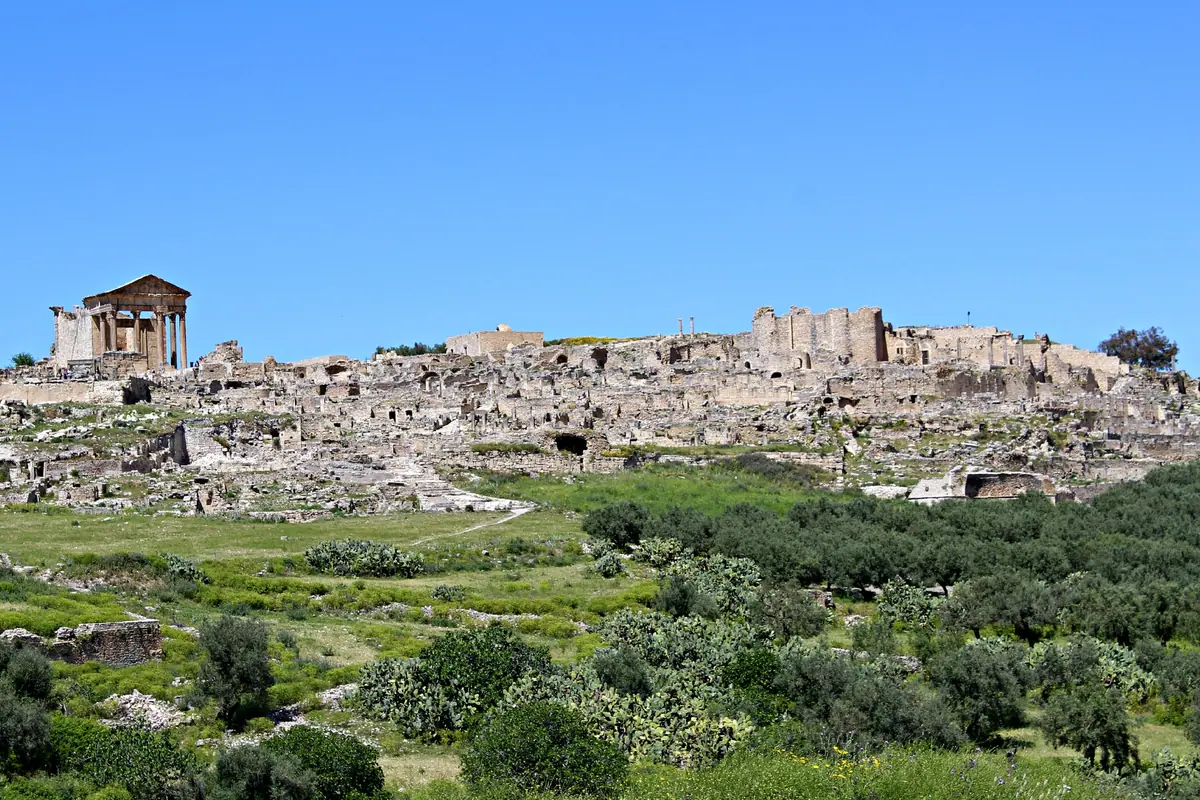
If you see one Roman site in Tunisia, make it Dougga. Perched on a hillside of olive groves about two hours west of Tunis, this UNESCO-listed town is arguably the best-preserved small Roman city in North Africa, and you will often have its Capitol, theatre, temples and bathhouses almost to yourself. The Libyo-Punic mausoleum on the edge of the site predates the Romans by two centuries. Spring is ideal, when wildflowers thread through the stones, but there is almost no shade — carry water and start early.
The north holds more quiet marvels. Bulla Regia is famous for villas built partly underground to escape the summer heat, their floor mosaics still vivid in the cool. Sbeitla's three temples rise in a row against the sky, Chemtou was the source of prized Numidian marble, and Ichkeul National Park, near Bizerte, becomes a haven for hundreds of thousands of migrating waterfowl between November and February. A rental car makes these sites realistic; otherwise, shared louages and a hired taxi for the day are the practical workaround.
The Sahel Coast: Sousse, Monastir, Hammamet and Djerba
Tunisia's eastern seaboard is where beaches and history sit a short walk apart. In Sousse, the 8th-century Ribat — the oldest fortress of its kind in North Africa — rises straight from the medina walls, and the Archaeological Museum below it holds one of the country's finest mosaic collections, including a famous depiction of the seasons. The Grande Mosquée, a short stroll away, is another reminder that this was a frontier port long before it was a resort. Monastir, half an hour south, has its own Ribat with sea views and the marble Bourguiba Mausoleum.
Further north, Hammamet combines a compact kasbah with a long, sheltered beach and the purpose-built marina at Yasmine Hammamet. Offshore, Djerba is a world apart: flat, palm-scattered and unhurried, with the market town of Houmt Souk, the ancient El Ghriba synagogue, and the pottery village of Guellala. Late spring and early autumn give the best swimming without the July and August crowds.
The coastal shoulder seasons are the sweet spot: sea temperatures are still comfortable, prices drop noticeably outside July and August, and the ruins are far more pleasant to wander. Sousse works well as a base for El Jem and Kairouan, while Hammamet and Djerba suit slower beach days.
Into the Sahara: Tozeur, the Salt Flats and the Desert Ksour
The deep south is where Tunisia stops looking Mediterranean and starts looking like another planet. Do
Douz is the classic gateway: a small town on the edge of the Grand Erg Oriental where camel treks range from an afternoon to a full week, and the December Festival of the Sahara fills the sand with riders in traditional dress. From here, four-wheel-drive routes push out to Ksar Ghilane, an oasis with a warm spring surrounded by dunes, and south to Tataouine, Chenini, Douiret and Ksar Ouled Soltane — fortified granaries clinging to ridges that film-makers have borrowed more than once.
Plan the desert between October and April, when days are warm and nights cold enough to want a jacket. Distances are long, roads are good but empty, and a local driver-guide is worth the money for the off-road stretches. Carry cash: ATMs thin out fast beyond Tozeur and Douz.
Frequently asked questions
What is the best time of year to visit Tunisia?
March to May and September to November are ideal: mild temperatures, manageable crowds and good light for ruins and photography. Coastal swimming is pleasant from May through October. The Sahara is best between October and April, when daytime temperatures are comfortable — July and August in the interior are punishingly hot. Winter is mild and often rainy on the northern coast, but still far brighter than most of Europe.
How many days do you need in Tunisia?
Seven to ten days covers the highlights comfortably: two or three nights in Tunis for the medina, Carthage and Sidi Bou Said, a day trip to Dougga, a night in Kairouan combined with El Jem, and three to four days in the south for Tozeur, the oases, Matmata and Douz. A tighter five-day trip is possible if you stick to Tunis, Kairouan, El Jem and the Sahel coast.
Do I need a car to see Tunisia's Roman sites?
For Dougga, Bulla Regia and Sbeitla, a rental car or a hired taxi for the day is the realistic option, as public transport drops you on the main road. For Kairouan and El Jem, comfortable intercity buses and shared louage taxis run frequently from Tunis, Sousse and Monastir. In the far south, guided 4x4 excursions are the norm and often the only way to reach the remote mountain oases.
What should I wear when visiting mosques and medinas?
Cover your shoulders and knees, and carry a light scarf — women will need one for the courtyard of the Great Mosque of Uqba in Kairouan and other religious sites. Non-Muslims are generally welcome in courtyards but not in prayer halls. In coastal resorts, beachwear is fine, but the same rules apply as soon as you step into a medina or a village in the interior.
Is Tunisian food worth planning around?
Absolutely. Seek out brik à l'oeuf, a paper-thin pastry folded around egg and tuna; lablabi, a garlicky chickpea soup eaten at breakfast; ojja, a spicy tomato and egg dish; and slow-cooked lamb with couscous on Fridays. Harissa, the fiery chilli paste, appears on nearly every table, and the dates and oranges from the south taste nothing like the exported versions. In the medinas, small family-run restaurants beat hotel buffets every time.
Plan it — experiences in Tunisia
Live search, booked directly with trusted providers.
Sort the rest of your trip
Everything for Tunisia, in one place
Stay in Tunisia
Hotels, guesthouses and apartments — compared in one search.
Search hotels
Transfer in Tunisia
Private driver waiting on arrival — no queues, no surprises.
Book a transfer
Stay online in Tunisia
Travel eSIM — data the moment you land, no roaming bills.
Get an eSIMMore guides in Tunisia
Best Places to Visit in Tunisia: Medinas, Roman Ruins and Sahara Oases
Best Time to Visit Tunisia: Seasons, Weather and When to Book Hotels
Tunisia Tours: Food, Culture and Local Experiences Worth Planning Around
Hotels in Tunisia: Where to Stay and What to See, Region by Region
One Week in Tunisia: Tunis, Kairouan, El Jem and the Sahara