Two islands, one passport stamp, and a week that swings between steelpan-bright city streets and a reef so shallow you can stand in it. This is how to fly into Trinidad, cross to Tobago, and see the best of both without wasting a day in transit.
Flying In: Piarco, Crown Point and How the Week Fits Together
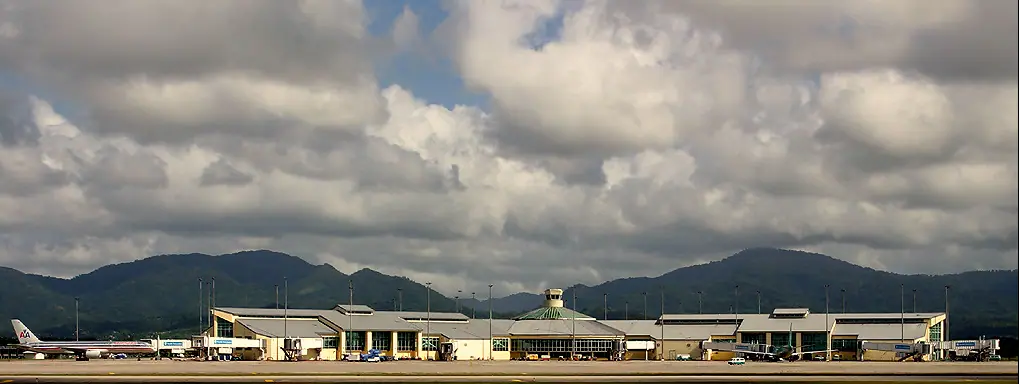
Most long-haul arrivals touch down at Piarco International Airport, spread flat across the cane fields east of Port of Spain. Allow 45 minutes to an hour for the drive into the capital once you clear immigration, longer if you land in the evening rush. Trinidad's international gateway sits on the island's west side, close to the capital, the Northern Range and the Gulf of Paria, which makes it the natural place to start.
Tobago has its own international airport at Crown Point, on the island's southwestern tip, minutes from Store Bay and Pigeon Point. You can fly directly into either island, but the classic week works best one way: land in Trinidad, explore for four days, then take the 20-to-25-minute inter-island flight across to Tobago and fly home from there, or return to Trinidad for a connecting departure. Seats on that short hop sell out around holidays and Carnival, so lock them in with your long-haul tickets rather than leaving them to the last minute.
A ferry also links Port of Spain with Scarborough in Tobago, taking roughly two and a half to three hours on the fast service. It is a scenic, steady option if flights are full, but for a tight seven-day plan the plane buys you an afternoon on the beach instead of a morning at sea. Pack light, breathable clothing, reef-safe sunscreen and a light rain shell — both islands are hot year-round and Trinidad's rainforest does exactly what rainforests do.
Days 1–2: Port of Spain, the Savannah and Maracas Bay
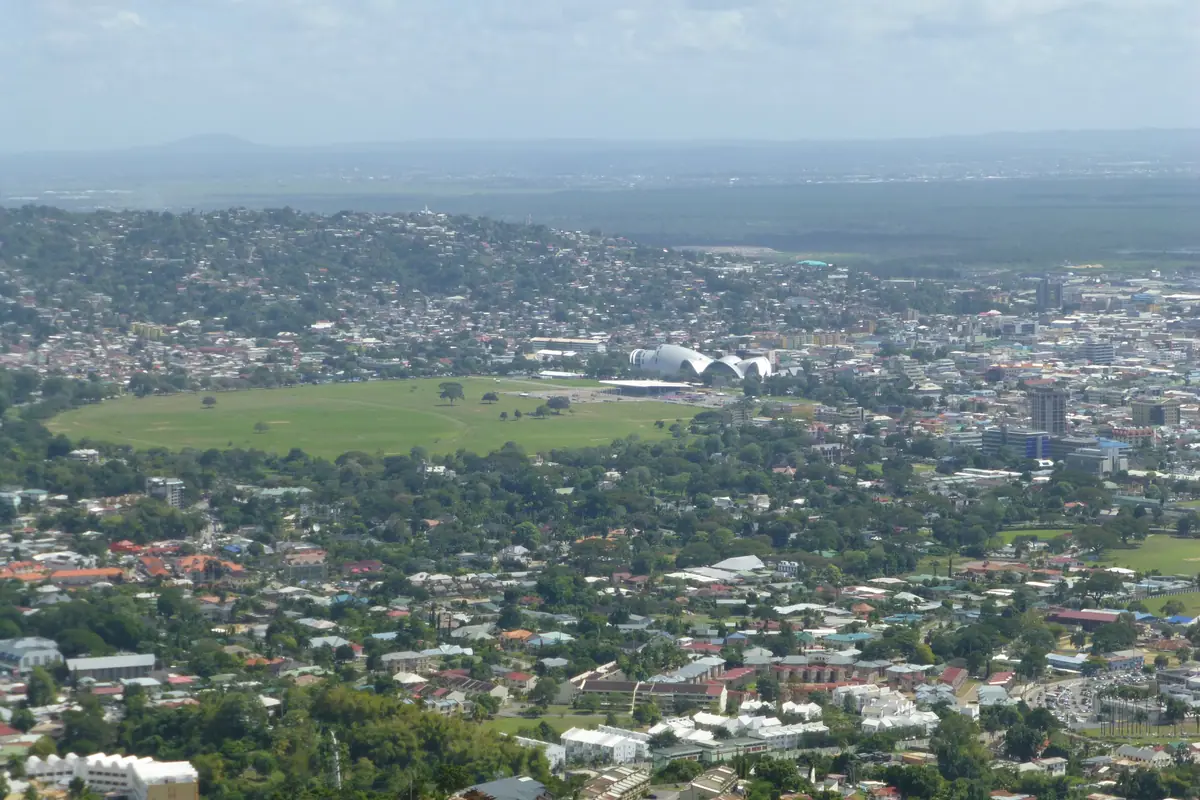
Start in Port of Spain, a city of pastel colonial facades, buzzing markets and a skyline pinned between the hills and the sea. Walk the broad green oval of Queen's Park Savannah, the city's informal living room, where joggers circle at dawn and cricket fans gather on weekends. Along its western edge stands the Magnificent Seven, a row of grand historic mansions in gingerbread, moorish and baroque styles that make for the city's most photographed stroll. Just north, the Royal Botanic Gardens is one of the oldest of its kind in the region, and above it the hilltop Fort George gives you a sweeping view over the harbour and the offshore islands.
Spend your second day on the north coast. The North Coast Road climbs through dripping green ridges before dropping into Maracas Bay, a deep curve of palm-backed sand that is the island's signature beach. Try the local ritual of bake and shark — fried dough stuffed with seasoned shark, piled with tamarind, garlic and pepper sauces — from the row of stalls behind the sand. If Maracas feels busy, push east to quieter Las Cuevas or Blancisseuse for a slower afternoon.
Back in the city, eat like a local: doubles for breakfast, a roti wrapped in paper for lunch, and corn soup or grilled kingfish at a roadside shack after dark. Port of Spain rewards aimless wandering, especially around the Savannah's cafes and the older streets near the waterfront.
Day 3: Caroni Swamp, the Pitch Lake and the Deep South
Day three heads south and west, into the flat wetlands and oil country beyond the capital. Book an evening boat through the Caroni Bird Sanctuary, a maze of mangrove channels where, as the light drops, hundreds of scarlet ibis stream home to roost and turn the treetops crimson. Herons, egrets, tree boas and silky anteaters are all part of the show. Go with a licensed local guide, keep your voice down and bring insect repellent for the dusk.
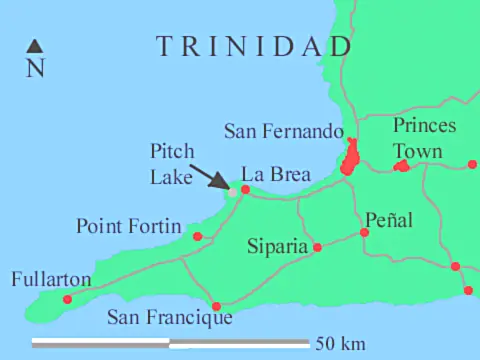
Continue to La Brea on the southwestern coast to see the Pitch Lake, the largest natural asphalt deposit on earth, a black, glassy expanse that looks like a frozen sea and squelches gently underfoot. Guides walk visitors out onto the surface and explain how the lake has been worked for centuries. The surrounding villages are wonderfully unhurried, and the drive back through San Fernando offers a glimpse of Trinidad's industrious second city.
If you have time before dark, swing east towards Manzanilla and the Nariva Swamp, a vast protected wetland of mangroves and palm forest where red howler monkeys roar at dawn and, with luck, manatees drift in the channels. It is a different Trinidad entirely — flat, humid and full of birds.
Day 4: Northern Range Rainforest and Grande Riviere Turtles
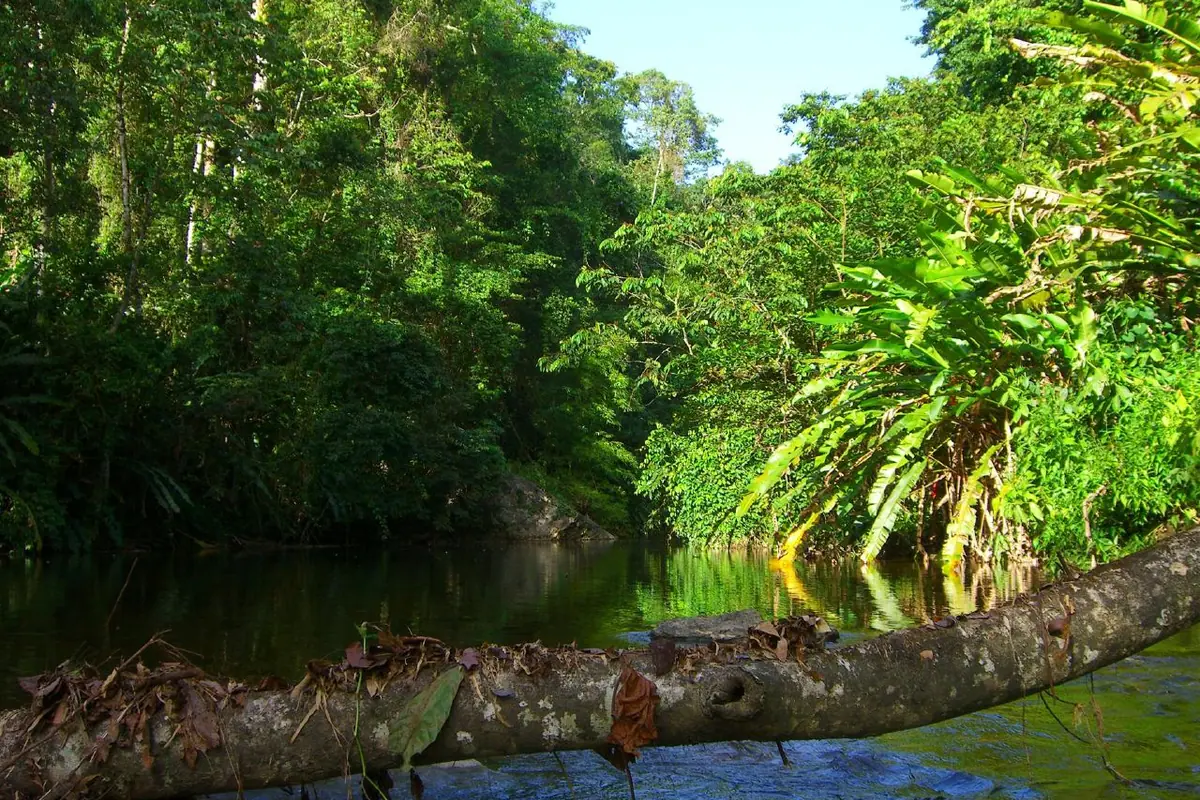
Trinidad's Northern Range is a green spine of mountains that holds some of the most accessible rainforest birding in the Caribbean. The Arima Valley shelters a celebrated nature centre set in old cocoa and coffee estates, where feeders draw hummingbirds, tanagers and the odd, nocturnal oilbird. Arrive early, walk the trails with a guide and listen for the metallic clang of the bearded bellbird.
In the afternoon, take the winding road over the ridge to the north coast and continue east to Grande Riviere. This small village of wooden houses and fruit trees sits beside one of the most important leatherback turtle nesting beaches in the world. Between roughly March and September, and at their peak from May to July, enormous females haul themselves ashore at night to lay eggs. Local community guides organise respectful viewing; keep lights off, stay behind the marked line and never touch the animals.
Even outside turtle season, this stretch of coast is worth the drive — Toco and Galera Point at the island's northeastern tip deliver breezy clifftop views and a lighthouse where the Atlantic and Caribbean currents meet. Book a simple guesthouse in the village and sleep to the sound of the surf.
Days 5–7: Hopping to Tobago — Buccoo Reef, Pigeon Point and the Rainforest
Your short flight lands at Crown Point, and within half an hour you can have your feet in the sand at Store Bay or Pigeon Point, a postcard jetty of thatched huts and turquoise shallows. Tobago runs at half Trinidad's pace: fishing villages, empty coves and water so clear it looks lit from below. Base yourself in the Crown Point area for convenience, or in Castara and Parlatuvier on the north coast for something quieter.
Spend a day on the water. Glass-bottom boats run from Pigeon Point out to the Buccoo Reef and the Nylon Pool, a waist-deep sandbar in the middle of the sea where the water glows pale green. Further along the windward coast, Argyle Falls tumbles through the rainforest in a series of pools you can swim in, while the Main Ridge Forest Reserve — one of the oldest protected forest reserves in the western hemisphere — hides waterfalls, blue-crowned motmots and hiking trails that climb into the clouds.
Save a day for the far end of the island. Drive through Scarborough, past the cannons and views at Fort King George, then follow the coast to Speyside, where boats cross to Little Tobago, a seabird sanctuary with frigatebirds and tropicbirds riding the thermals. Finish at Englishman's Bay or Charlotteville, a curve of sand and rum shops that feels like the end of the road — because it almost is.
Timing, Weather and Practical Flight Notes
The dry season, roughly January to May, brings the steadiest sunshine and the clearest seas; it is also the busiest and priciest window, so book accommodation and inter-island seats early. June to December is wetter and greener, with short, heavy showers and the chance of a storm between June and November. Hurricane season aside, the rainy months are often excellent value, with lush forest, full rivers and fewer visitors.
Carnival falls on the Monday and Tuesday before Ash Wednesday, usually in February or March, and it transforms Port of Spain into two days of costume, soca and street partying. If you want that experience, plan a year ahead for hotels and flights; if you want calm roads and empty beaches, avoid it. Tobago's own October carnival and the Easter regatta at Buccoo are worth planning around if you enjoy a lively village crowd.
On the ground, traffic drives on the left, roads in the Northern Range are narrow and winding, and a rental car is the most flexible way to see Trinidad beyond the capital. Maxi taxis cover many routes cheaply, but they fill up fast. Keep a copy of your onward ticket and accommodation details handy at immigration, carry small notes for markets and village stalls, and respect reef rules — no standing on coral, no feeding fish, and no touching turtles or their nests.
Frequently asked questions
How many days do you need in Trinidad and Tobago?
One week is the sweet spot: about four days in Trinidad for Port of Spain, Maracas Bay, the Caroni Swamp, the Pitch Lake and the northern rainforest, then three days in Tobago for Buccoo Reef, Pigeon Point, the Main Ridge Forest Reserve and the quiet north-coast villages. If you can stretch to ten days, add Nariva Swamp or extra beach time in Tobago.
Do I have to fly between Trinidad and Tobago?
Not necessarily. The inter-island flight takes only 20 to 25 minutes from Piarco to Crown Point, but there is also a ferry between Port of Spain and Scarborough that takes roughly two and a half to three hours on the fast service. Flights are quicker and usually the better choice for a short trip; the ferry is a scenic, cheaper alternative when seats are scarce.
What is the best time of year to visit Trinidad and Tobago?
January to May is the dry season, with the most reliable sunshine and calmest water, though it is also the peak season. June to December is wetter and greener, with occasional storms between June and November. Carnival, held the Monday and Tuesday before Ash Wednesday, is the biggest event of the year and needs to be booked months in advance.
Can I see leatherback turtles during a one-week trip?
Yes, if you travel between roughly March and September. Grande Riviere on Trinidad's north coast and several Tobago beaches host nesting leatherbacks, with the peak from May to July. Go with a licensed community guide, use no white lights or flash photography, keep your distance and never touch a turtle or her nest.
What should I pack and know before flying in?
Pack light, breathable clothing, swimwear, reef-safe sunscreen, insect repellent, a rain shell and comfortable walking shoes for rainforest trails. Driving is on the left, and a rental car gives you the most freedom on Trinidad. Confirm your passport's validity well ahead of travel, check entry requirements for your nationality, and pre-book inter-island flights since that short hop sells out around Carnival and holidays.
Plan it — flights in Trinidad and Tobago
Live search, booked directly with trusted providers.
Sort the rest of your trip
Everything for Trinidad and Tobago, in one place
Stay in Trinidad and Tobago
Hotels, guesthouses and apartments — compared in one search.
Search hotels
Transfer in Trinidad and Tobago
Private driver waiting on arrival — no queues, no surprises.
Book a transfer
Travel insurance
Medical cover, delays and lost baggage — sorted before you go.
Get covered