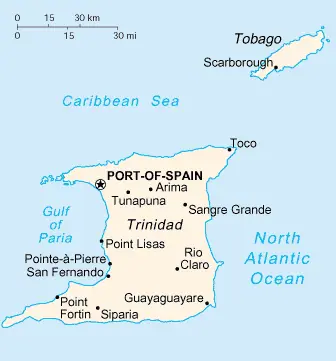
Two islands, one passport stamp, and almost nothing in common beyond the food. Trinidad hums with traffic, steelpan and forested mountains; Tobago runs on reef water, fishing villages and the slowest clock in the Caribbean. Together they make one of the most underrated two-week itineraries in the region.
Port of Spain and the Savannah: The Island's Grand Front Room
Start in Port of Spain, where the city wraps itself around the Queen's Park Savannah, a vast green oval ringed by joggers, cricket practice and vendors selling coconut water. Walk the perimeter and you pass the Magnificent Seven, a row of ornate colonial mansions — Queen's Royal College, the Archbishop's Palace, Mille Fleurs — built in a giddy mix of Moorish, Georgian and French styles when cocoa and sugar money flowed. Just north sit the Royal Botanic Gardens, among the oldest in the world, and the Emperor Valley Zoo next door; both are easy half-day stops with kids in tow.
From the city, climb to Fort George on the hills above St James for the classic panorama over the harbour and, on clear days, the coast of Venezuela. Go late afternoon when the heat breaks. Then head west along the Western Main Road into St James, where the street-food scene ignites after dark — doubles, bake and shark, corn soup, and a rum shop on nearly every corner.
The essential day trip is the North Coast Road over the mountains to Maracas Bay, a deep curve of sand backed by forested cliffs. The drive takes around 45 minutes from the city and the payoff is the island's most famous beach, strong surf and all. Continue a little further to quieter Las Cuevas if you want shade trees and calmer water for swimming.
The Northern Range: Waterfalls, Cloud Forest and the Scarlet Ibis
Trinidad's spine of mountains is a hiker's playground. The trail to Maracas Waterfall is short and steep — roughly an hour return — ending at a 91-metre cascade that thunders after rain. For something tougher, El Tucuche and El Cerro del Aripo are the island's two highest peaks, both wrapped in elfin cloud forest and both requiring a proper early start, sturdy shoes and ideally a local guide.
For wildlife without the sweat, the Asa Wright Nature Centre sits in a valley of old cocoa plantations in the Arima Valley, with verandas overlooking feeders that draw hummingbirds, tanagers and motmots within arm's reach. Book ahead for the guided morning walks. Nearby, the Benedictine monastery of Mount St. Benedict offers sweeping views over the Caroni plain and famously good yoghurt and honey made by the monks.
Do not leave the north without an evening boat trip into the Caroni Bird Sanctuary, a mangrove swamp where hundreds of scarlet ibis fly home to roost at sunset. It is the national bird, and watching that scarlet wave cross an orange sky is the single most memorable hour you can spend in Trinidad. Tours leave from the Caroni area, usually around 4pm, and last roughly two hours.

South and Central Trinidad: Pitch, Temples and a Wild Coast
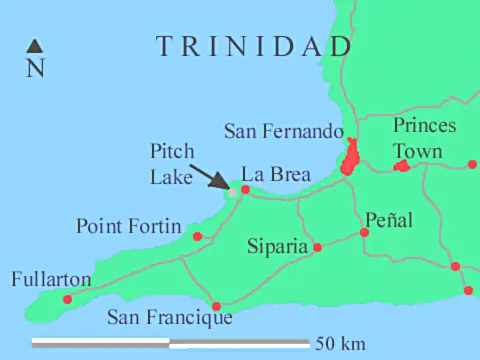
Drive south-west to La Brea and you reach the Pitch Lake, the largest natural asphalt deposit on earth — a black, glassy expanse you can walk on with a guide, complete with bubbling vents and pools of rainwater. It is genuinely strange and quietly beautiful, and the surrounding villages have a distinctive Creole-Spanish feel.
Close by is the Temple in the Sea at Waterloo, built by an indentured labourer who reclaimed land by hand to fulfil a vow, now standing on a causeway you can walk at low tide. Further east, the Dattatreya Yoga Centre near Carapichaima is home to an enormous Hanuman murti, one of the tallest outside India, and a striking landmark visible from the highway. Hindu festivals here — Phagwa and Divali especially — are among the island's most colourful public spectacles.
On the east coast, the Nariva Swamp protects mangroves, manatees and red howler monkeys, best seen on a guided boat trip from the Bush Bush area. Finish on Manzanilla Beach, a long, breezy coconut-fringed strand where the Atlantic shows its teeth; swimming is for confident swimmers only, but the light at sunset is superb.
Tobago's Leeward Coast: Pigeon Point, Nylon Pool and Buccoo
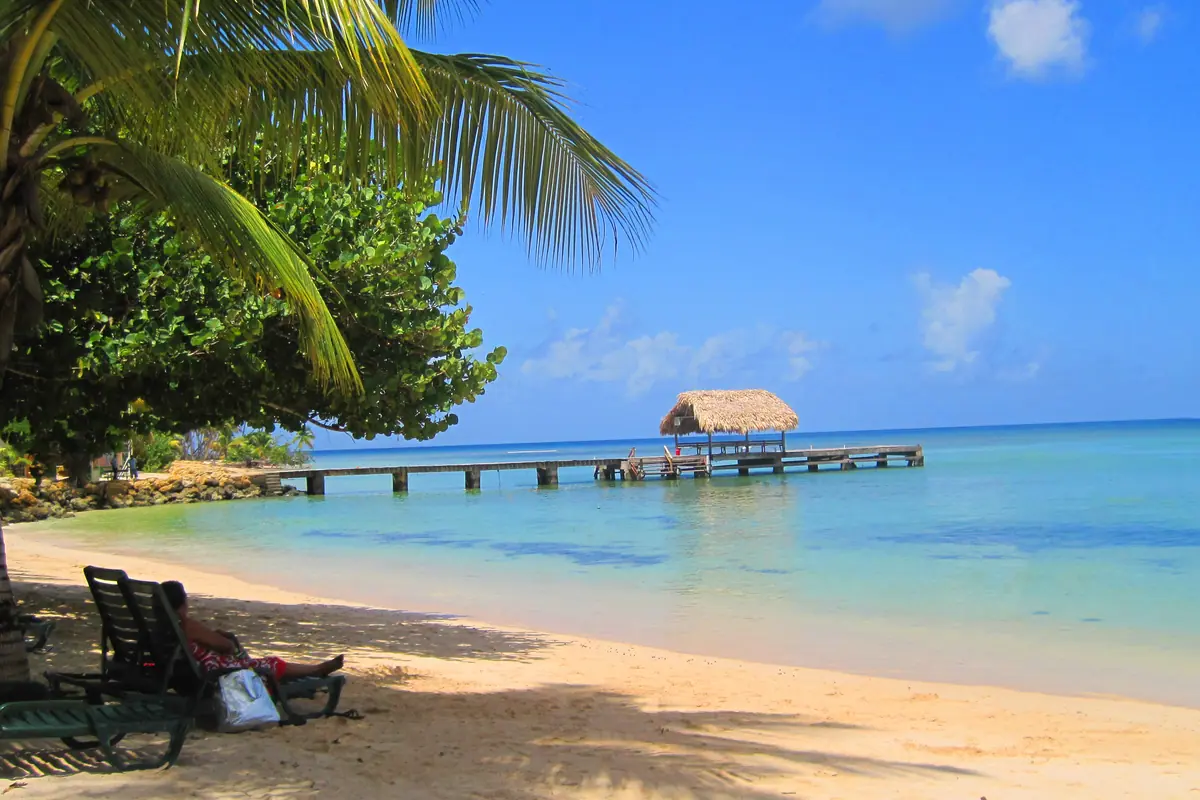
A ferry ride or a 20-minute flight from Trinidad brings you to Tobago, and the mood shifts instantly. Crown Point, near the airport, is the launching point: Store Bay for swimming and a plate of crab and dumpling, and Pigeon Point just beyond, with its jetty, turquoise shallows and the postcard that everyone photographs.
The classic day out is a glass-bottom boat to Buccoo Reef, where you snorkel over coral gardens, then wade waist-deep in the Nylon Pool — a sandbar in the middle of the sea where the water is clear and startlingly shallow. Boats leave from Pigeon Point and Store Bay, typically mid-morning, and most trips run three to four hours.
Buccoo village itself comes alive on Sunday nights with Buccoo Sunday School, an open-air street party of food stalls, music and dancing that has been running for decades. Around Easter, the same village hosts goat racing, a genuinely eccentric island tradition where goats sprint down the main road with their handlers. Book accommodation in Buccoo or Crown Point well in advance for that week.
Tobago's Rainforest and Windward Side: Main Ridge, Argyle and Fort King George
The Main Ridge Forest Reserve, protected since 1776 and often described as the oldest such reserve in the western hemisphere, covers the island's spine in dense green. Walk the Gilpin Trace with a guide at dawn and you have a good chance of white-tailed sabrewing hummingbirds, motmots and, if you are patient, the call of the cocoa thrush. Bring closed shoes; the trail is muddy year-round.
On the Atlantic side, Argyle Waterfall near Roxborough drops in three tiers through rainforest, with a natural pool at the base for a post-hike swim. The walk in takes about 20 minutes. Offshore from Speyside, Little Tobago island is a short boat ride away and a haven for seabirds — boobies, frigatebirds and, with luck, red-billed tropicbirds wheeling above the cliffs.
Round out the island in Scarborough, Tobago's capital, where Fort King George sits on a hill with a small museum, cannons and the best view over Rockly Bay. Afterwards, head north to Englishman's Bay, a near-perfect crescent of sand tucked between forested headlands, with a single small café and no development to speak of.
When to Go, and How to Move Between the Islands
The dry season runs roughly from December to May, with February and March the sweet spot: lower rainfall, steady breezes and the driest trails. This is also Carnival season, with the main parades on the Monday and Tuesday before Ash Wednesday — expect Port of Spain hotel rates to spike and book months ahead. June to November is the wetter, greener half of the year, with short heavy showers rather than all-day rain, and it overlaps with the Atlantic hurricane season; late summer and autumn carry the highest risk.
Getting between the islands is straightforward: a fast ferry from Port of Spain to Scarborough takes around two and a half to three hours, while the short flight takes about 20 minutes. Ferries fill up fast around holidays and Carnival, so reserve early. On Trinidad, a rental car gives you the most freedom, though you drive on the left and Port of Spain traffic can be brutal; maxi taxis cover most major routes cheaply.
Tobago is small enough to explore by car in a day or two, and the main roads are calm and well signposted. Pack light rain gear, reef-safe sunscreen, insect repellent for forest walks and footwear you do not mind getting muddy. Tipping is appreciated but not mandatory, and cash is still king at roadside stalls, so keep small notes handy. Above all, slow down — the pleasure of these islands lies in the gaps between the sights.
Frequently asked questions
What is the best time of year to visit Trinidad and Tobago?
The dry season from December to May offers the most reliable weather, with February and March being ideal for both beach days and rainforest hikes. Carnival, held on the Monday and Tuesday before Ash Wednesday, falls in February or early March and is the busiest and most expensive period, so book accommodation several months ahead. June to November is greener and quieter but wetter, and it overlaps with hurricane season.
How many days do I need in Trinidad and Tobago?
Most travellers give Trinidad three or four days and Tobago four or five, making a comfortable ten days to two weeks. Trinidad rewards a mix of Port of Spain sightseeing, a North Coast beach day and at least one nature excursion such as the Caroni Bird Sanctuary. Tobago works best unhurried, splitting time between the Pigeon Point and Buccoo area and the quieter windward coast around Speyside and Charlottesville.
Do I need a car in Trinidad and Tobago?
In Tobago, a rental car is the easiest way to reach Argyle Waterfall, Englishman's Bay and the Main Ridge trails at your own pace. In Trinidad, a car helps enormously for the Pitch Lake, Nariva Swamp and the North Coast, but Port of Spain traffic is heavy and you drive on the left. Maxi taxis and route taxis cover most major corridors cheaply if you would rather not drive.
What are the must-see attractions in Trinidad and Tobago?
In Trinidad, the headline sights are Maracas Bay, the Queen's Park Savannah and Magnificent Seven in Port of Spain, the Caroni Bird Sanctuary, the Pitch Lake at La Brea, the Temple in the Sea and the Hanuman murti at Carapichaima. In Tobago, do not miss Pigeon Point, the Buccoo Reef and Nylon Pool, the Main Ridge Forest Reserve, Argyle Waterfall, Little Tobago and Fort King George in Scarborough.
Is Trinidad and Tobago safe for visitors?
The vast majority of trips pass without incident, and tourist areas such as Crown Point and Buccoo in Tobago and the main hotel districts of Port of Spain are well used to visitors. As anywhere, take normal precautions: avoid walking alone in unfamiliar urban areas after dark, use licensed taxis rather than hailing strangers, keep valuables out of sight on the beach and check current local advice before you travel.
Plan it — experiences in Trinidad and Tobago
Live search, booked directly with trusted providers.
Sort the rest of your trip
Everything for Trinidad and Tobago, in one place
Stay in Trinidad and Tobago
Hotels, guesthouses and apartments — compared in one search.
Search hotels
Transfer in Trinidad and Tobago
Private driver waiting on arrival — no queues, no surprises.
Book a transfer
Stay online in Trinidad and Tobago
Travel eSIM — data the moment you land, no roaming bills.
Get an eSIM