Trinidad and Tobago is two islands with one passport and two entirely different personalities — one loud, polyglot and perpetually hungry, the other slow, green and cooked in a single pot. This is a guide to eating, celebrating and wandering the way people here actually do it.
Why Trinidad and Tobago Tastes Like Nowhere Else
Trinidad's kitchen is the island's biography. African, Indian, Chinese, Syrian-Lebanese, Venezuelan and European threads were braided together over centuries into something locals simply call Trini food — a Creole cooking that borrows technique from everywhere and answers to nobody. Tobago, twenty minutes away by air, keeps a quieter, more West African rhythm: one pot, coconut milk, breadfruit, and a long Sunday afternoon.
The backbone of flavour is chadon beni, a long-leafed herb sold in fat bunches in every market and worked into green seasoning, pepper sauce and marinades with a fierce, grassy bite. Around it sit pimento peppers, scotch bonnet, turmeric (known here as saffron), burnt-sugar browning, coconut milk and the tamarind that cuts through everything sweet.
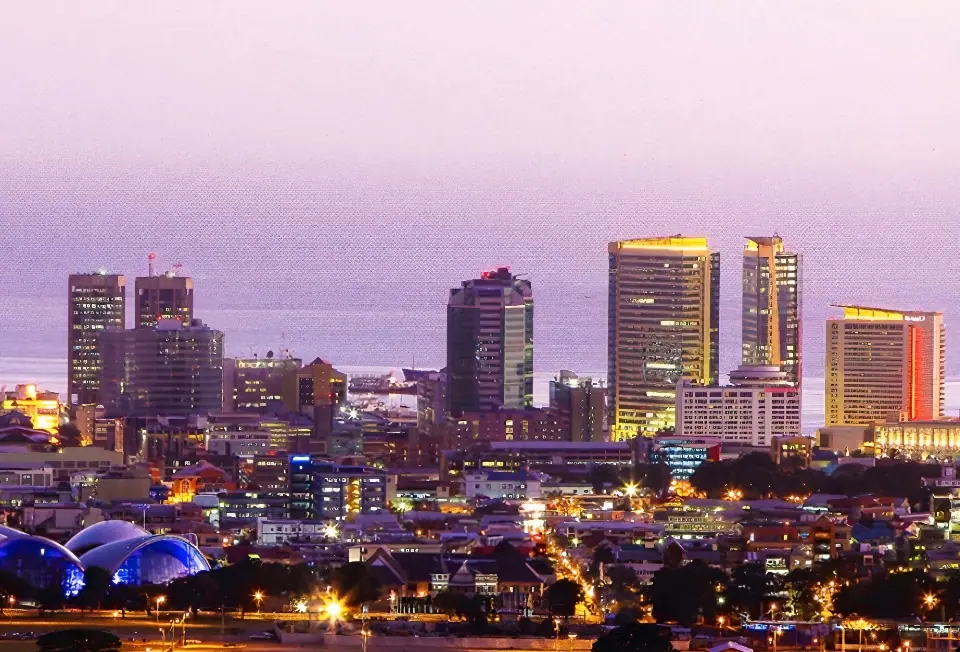
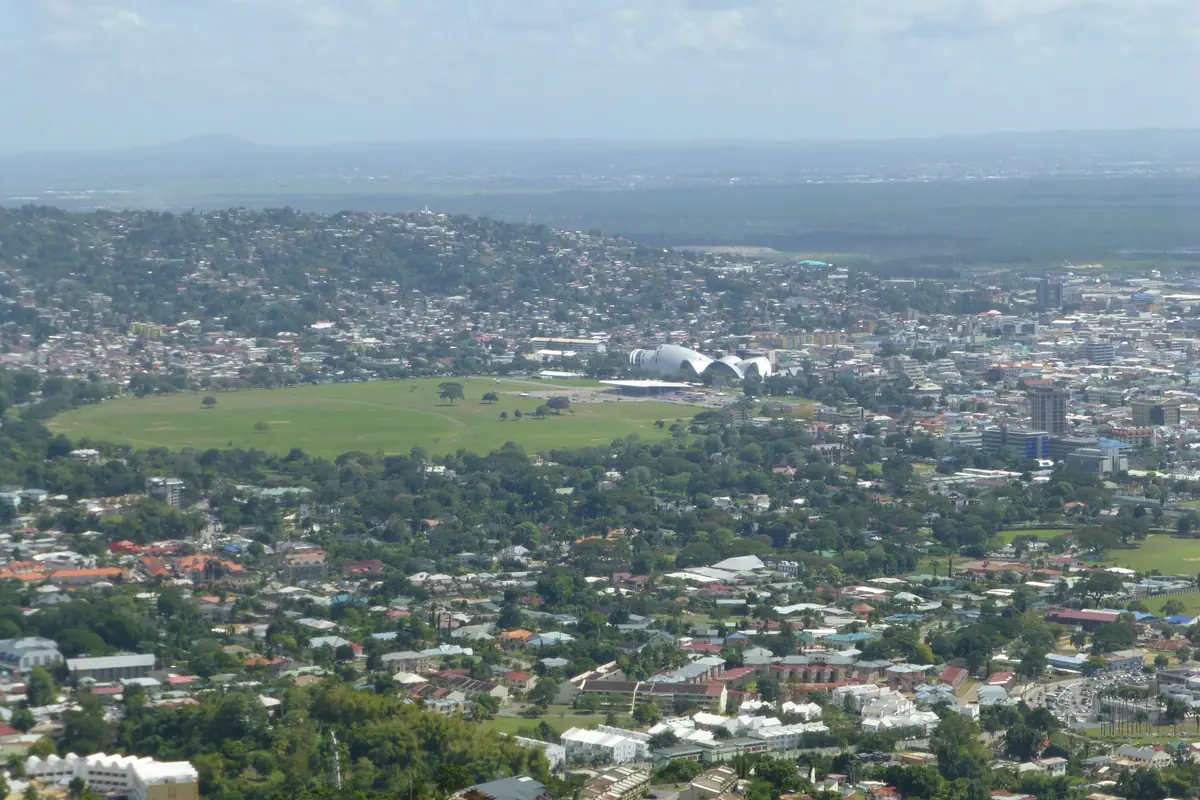
Start your education at Queen's Park Savannah in Port of Spain, the enormous green oval that anchors the capital, ringed by the ornate historic houses known as the Magnificent Seven. Vendors sell coconut water, roasted corn and snow cones under the samaan trees, and it is the perfect place to sit, watch a game of cricket, and get your bearings.

Street Food Trails: Markets, the Savannah and the Deep South
The national breakfast is the double: two soft, turmeric-gold bara folded around curried channa and finished with tamarind, cucumber and as much pepper as you can stand. Ask for a single if you are unsure of your appetite. It was born in the south around Debe and Princes Town, and southerners will still argue — loudly — that their version is the best on the island.
Work your way through the rest of the street menu: pholourie with tamarind chutney, saheena, kachori, aloo pie, souse, geera pork, and corn soup sold from bubbling pots after dark. On Ariapita Avenue in Woodbrook — the strip locals call simply 'the Avenue' — the grills fire up late and the bars stay full until the small hours.
For produce and fish, go early to Port of Spain's Central Market on a Saturday morning, or head to the market in San Juan for herbs, provisions and fruit you will not recognise. Vendors here are overwhelmingly cash-only, doubles are gone by mid-morning, and the best food is always found where the line is longest and the conversation loudest.
Carnival, Steelpan and a Calendar Full of Festivals
Carnival is not an event here; it is a season. Bands are built from autumn onwards in the mas camps of Woodbrook and Port of Spain, and everything detonates on the Monday and Tuesday before Ash Wednesday. J'ouvert begins around four in the morning on Monday, mud-streaked and glorious, before the costumed parade crosses the stage at the Savannah. Grandstand seats sell out months in advance, so plan early if you want to watch rather than jump.
Steelpan was invented on these islands in the twentieth century out of discarded oil drums, and panyards across the city rehearse from November to the Panorama finals on Carnival Saturday. Soca, calypso, chutney soca and extempo battles fill the same venues. Come Sunday night, Dimanche Gras puts the calypso monarchs on the Savannah stage in front of tens of thousands.
The rest of the year is just as crowded. Hosay brings drumming and processions to St. James; Divali lights thousands of deyas around Divali Nagar in Chaguanas; Phagwa splashes colour every March; Emancipation Day on the first of August draws a procession through Port of Spain. In Tobago, the Heritage Festival fills July and August with village re-enactments and ole-time weddings, followed by an October carnival in Scarborough.
Sacred Grounds and the Island's Many Faiths
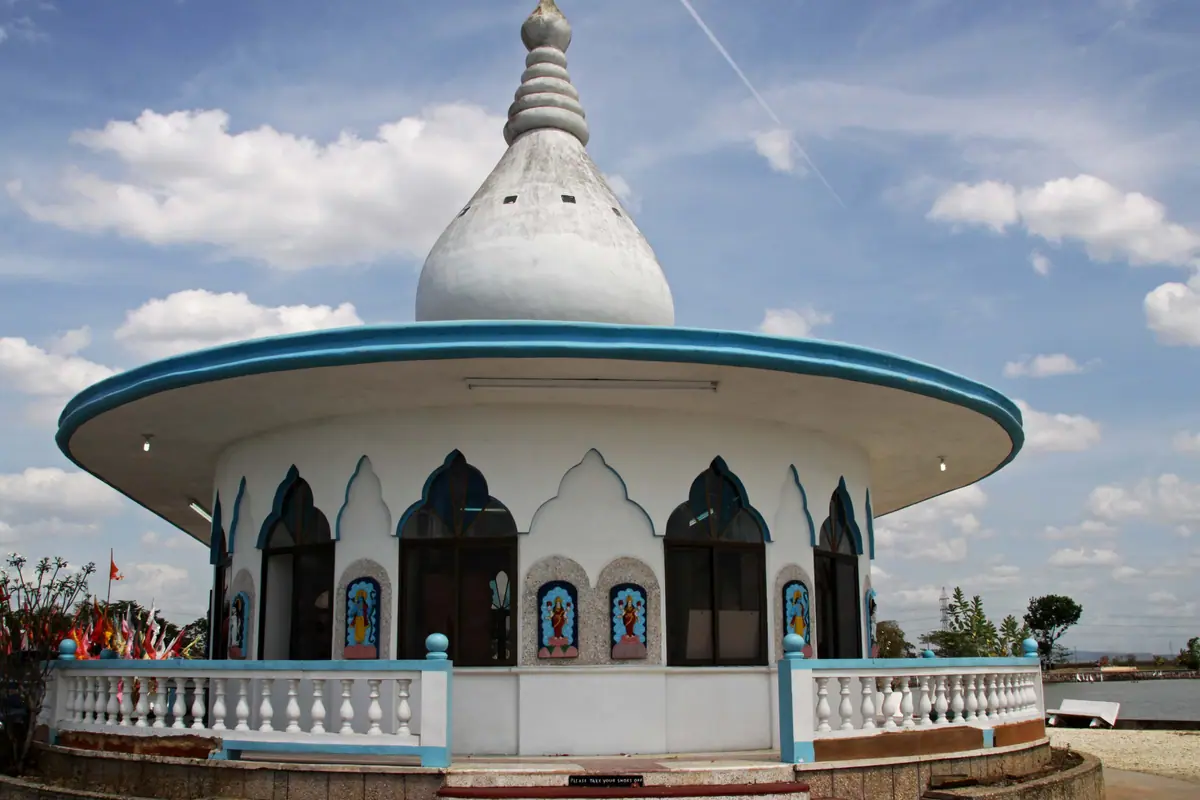
At Waterloo on Trinidad's west coast, the Temple in the Sea rises straight out of the Gulf of Paria — a Hindu shrine built by a farmer named Sewdass Sadhu who, barred from building on the surrounding estate, carried it into the water stone by stone. A short drive inland at Carapichaima stands a towering Hanuman murti, roughly eighty-five feet of orange-washed statue, one of the tallest outside India.
Above Tunapuna, the Benedictine monastery at Mount St. Benedict looks down over the whole Caroni plain, and the monks sell yogurt and preserves from a small shop. Further south, the shrine of La Divina Pastora in Siparia draws both Catholic and Hindu pilgrims each April — a neat illustration of how thoroughly these traditions have borrowed from one another.
In Port of Spain itself, the National Museum and Art Gallery sits on the Savannah and tells the story of the islands with carnival costumes, colonial paintings and archaeology. The Royal Botanic Gardens beside it were laid out in 1818 and remain among the oldest in the hemisphere, while Fort George on the ridge above the city offers the finest free view of the harbour and the Northern Range.
Wild Coasts: Swamps, Asphalt and Rainforest
At dusk, boats leave the jetty near Port of Spain and slip into the Caroni Swamp, mangroves that turn into a theatre when hundreds of scarlet ibis fly home to roost against the sky. Expect tree boas draped in the branches, herons, egrets and the odd caiman. Trips run about two to two and a half hours; bring insect repellent, and go in the dry season between January and May for the cleanest light.
Down in the south-west, the Pitch Lake at La Brea is one of the largest natural asphalt deposits on earth — a strange, grey, gently undulating surface you can walk across with a local guide in about forty-five minutes. On the east coast, the Nariva Swamp is a different world again: red howler monkeys, manatees, and reintroduced macaws, best seen with a guide who knows the waterways.
Between them runs the North Coast Road, forty minutes of hairpin bends and forested ridges linking Port of Spain to Maracas Bay. Further along, Las Cuevas and Blanchisseuse offer quieter sand and freshwater waterfalls, while the trails of the Northern Range climb to El Tucuche, the islands' second-highest peak.
Tobago: Oil Down, Reef Days and Slower Sundays
Tobago is reached by a fast ferry from Port of Spain to Scarborough in roughly two and a half to three hours, or by a twenty-minute flight into Crown Point. Pigeon Point is the postcard, with its thatched jetty and turquoise shallows, while Store Bay next door is where the food is: stalls of curried crab and dumplings, conch, and grilled fish eaten off paper plates.
Glass-bottom boats run from the Pigeon Point and Store Bay area out to Buccoo Reef and the Nylon Pool, a waist-deep sandbar sitting in the middle of the sea a few hundred metres from shore. The round trip takes two to three hours. On Sunday nights, Buccoo's 'Sunday School' street party fills with drums and dancers — an old tradition that has become the island's best free night out.
The dish to seek out is oil down, Tobago's national plate: breadfruit, callaloo, salted pigtail, coconut milk, turmeric and herbs cooked together until the coconut oil settles at the bottom of the pot. Eat it at the Heritage Festival in July and August, then work it off in the Main Ridge Forest Reserve, protected since the eighteenth century and often called the oldest forest reserve of its kind in the hemisphere. Argyle Waterfall, Englishman's Bay, Castara and Charlotteville are all worth a day each. The dry season from December to May is the best window; September and October are quiet, humid and cheap.
Frequently asked questions
What is the best time of year to visit Trinidad and Tobago?
The dry season runs roughly December to May, with temperatures holding between 25°C and 32°C year round. Carnival falls in February or early March, the Tobago Heritage Festival in July and August, and the islands' wettest months are June to November. September and October are the quietest and cheapest, though you should expect afternoon downpours.
Which local dishes should I try first?
Begin with a doubles for breakfast, then bake and shark at Maracas Bay, where the condiment table includes garlic sauce, tamarind and pineapple. Move on to buss up shut roti, pelau, callaloo and souse in Trinidad, and oil down plus curried crab and dumplings in Tobago. For sweets, look for kurma, tamarind balls and sugar cake.
How do I get between Trinidad and Tobago?
You can fly from Piarco near Port of Spain to Crown Point in Tobago in about twenty minutes, or take the ferry from Port of Spain to Scarborough in roughly two and a half to three hours on the fast service, longer on the conventional one. Both fill up fast around Carnival and long weekends, so book ahead.
Is Carnival worth planning a whole trip around?
For many visitors it is the reason to come. The main days are the Monday and Tuesday before Ash Wednesday, with J'ouvert starting around 4am. Accommodation in Port of Spain is booked months in advance, grandstand tickets for the Savannah stage sell out early, and mas costumes are usually reserved well before Christmas.
Do I need cash, and how do I get around?
The currency is the Trinidad and Tobago dollar, and street vendors, maxi taxis and small food stalls are largely cash-only. Driving is on the left. Maxi taxis and route taxis cover most of Trinidad cheaply, but hiring a car gives you the North Coast Road and Tobago's beaches at your own pace. Avoid walking alone in unfamiliar areas after dark.
Plan it — tours in Trinidad and Tobago
Live search, booked directly with trusted providers.
Sort the rest of your trip
Everything for Trinidad and Tobago, in one place
Stay in Trinidad and Tobago
Hotels, guesthouses and apartments — compared in one search.
Search hotels
Transfer in Trinidad and Tobago
Private driver waiting on arrival — no queues, no surprises.
Book a transfer
Stay online in Trinidad and Tobago
Travel eSIM — data the moment you land, no roaming bills.
Get an eSIM