Thailand packs gilded temples, jungle-clad limestone islands and a street-food culture that never really sleeps into a single, endlessly varied country. Whether you ride a longtail down the Chao Phraya at dusk or wake up on a floating raft house in the middle of a rainforest lake, the pace rewards travellers who slow down. Here are the experiences and landmarks worth building a whole trip around.
Bangkok's Grand Palace and the Riverside Temples
Every first visit to Thailand should start at the Grand Palace, the walled royal compound on the east bank of the Chao Phraya River. Inside sits Wat Phra Kaew, the Temple of the Emerald Buddha, where a small jade figure wrapped in seasonal gold robes is treated with near-reverent silence by crowds that can run into the thousands. Arrive at opening time in the morning, both to escape the worst of the heat and to see the gilded spires and mirrored mosaics before the tour groups fill the courtyards. The dress code is strictly enforced: shoulders and knees covered, no transparent fabric, no flip-flops on some days, and shoes off before entering the temple halls.
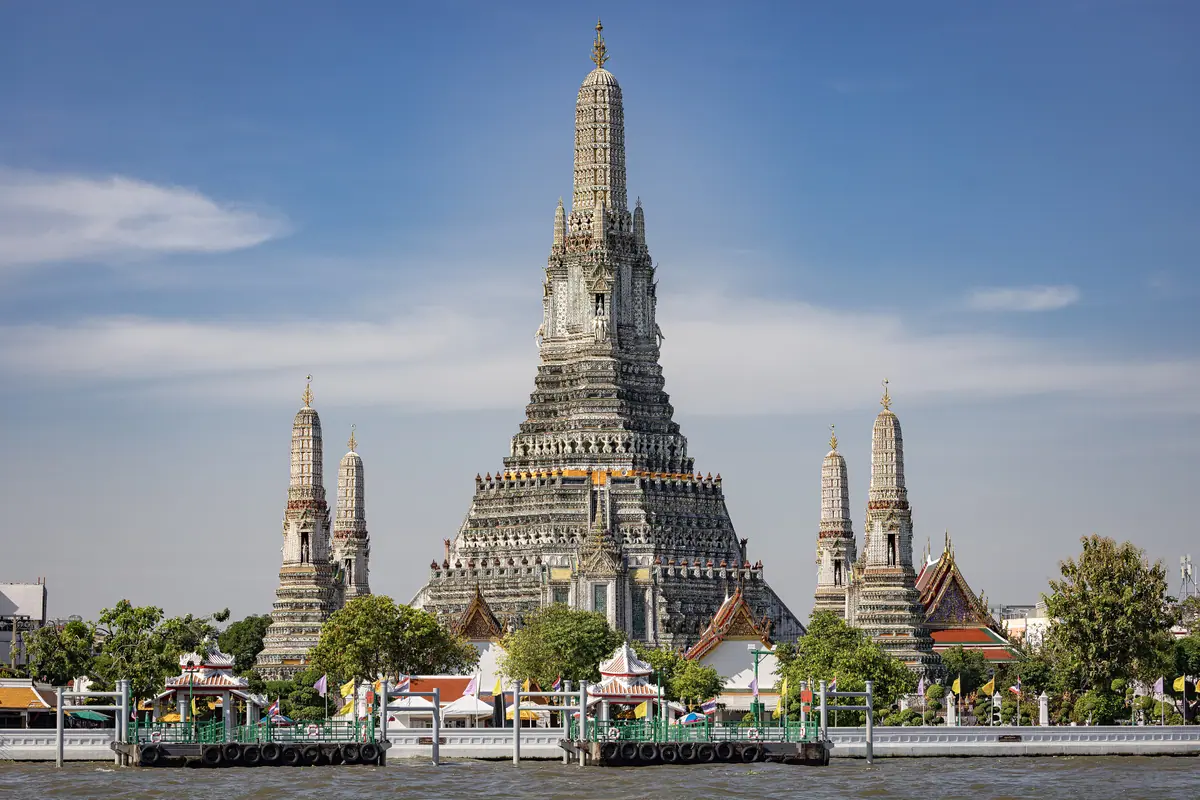
A short walk south brings you to Wat Pho, home to a 46-metre reclining Buddha whose soles are inlaid with mother-of-pearl, and to the country's best-known school of traditional massage. It's worth an hour simply to wander the cloisters and the garden of stone plaques that once served as an open-air anatomy textbook. From Tha Tien pier, a tiny ferry crosses for a few baht to Wat Arun, the Temple of Dawn, whose steep, porcelain-encrusted prang you can actually climb partway. Sunset from the far bank, with the spire turning amber against the river, is one of the classic Bangkok views.
Between temples, use the river itself as your transport. The public boat network along the Chao Phraya is fast, cheap and far more pleasant than sitting in traffic, and it links the palace district with Chinatown, the flower market and the modern skyscraper side of the city. A late-afternoon loop of Wat Pho, Wat Arun and a riverside dinner covers more ground than most people manage in a full day on the roads.
Ayutthaya and Sukhothai: Thailand's Ancient Capitals
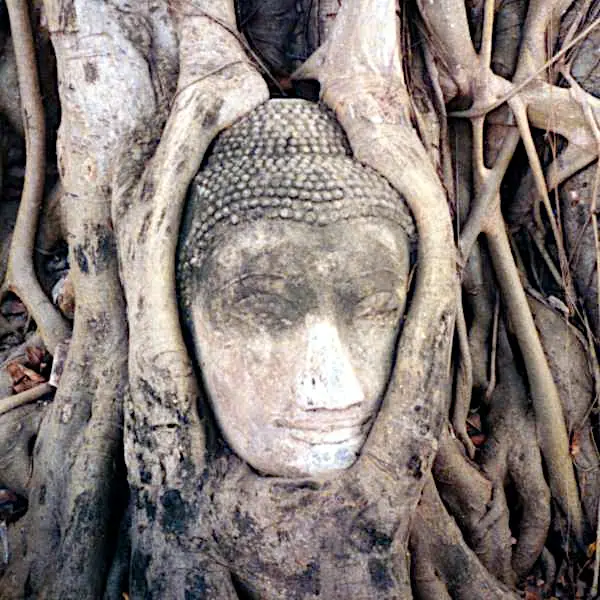
About 80 kilometres north of Bangkok, Ayutthaya was once one of the largest and wealthiest cities on earth, and its ruins now form a historical park that is easy to explore by bicycle. The single most photographed sight is Wat Mahathat, where a serene Buddha head has been cradled for centuries by the roots of a bodhi tree. Beyond it lie the three bell-shaped stupas of Wat Phra Si Sanphet, the riverside silhouette of Wat Chaiwatthanaram, and dozens of brick prangs and crumbling cloisters scattered among ponds and palm trees. Allocate a full day, or two if you want to include the quieter outlying temples.
Further north, Sukhothai is where Thai script, art and architecture arguably crystallised, and its historical park has a calmer, more pastoral feel than Ayutthaya. Cycle between Wat Mahathat with its lotus-bud towers, Wat Si Chum with a massive seated Buddha glimpsed through a narrow brick slit, and the moats and reservoirs that once fed a whole kingdom. The nearby satellite town of Si Satchanalai is often nearly empty, and the sunrise light through the ruins there is worth the early alarm.
Time your visit between November and February, when the cool, dry season brings lower humidity and a clearer sky. Whatever month you choose, start at dawn, carry water, wear a hat and remember that these are active religious sites: a sarong over shorts, shoes off at the platforms, and quiet voices are expected everywhere.
Chiang Mai, Doi Suthep and the Far North
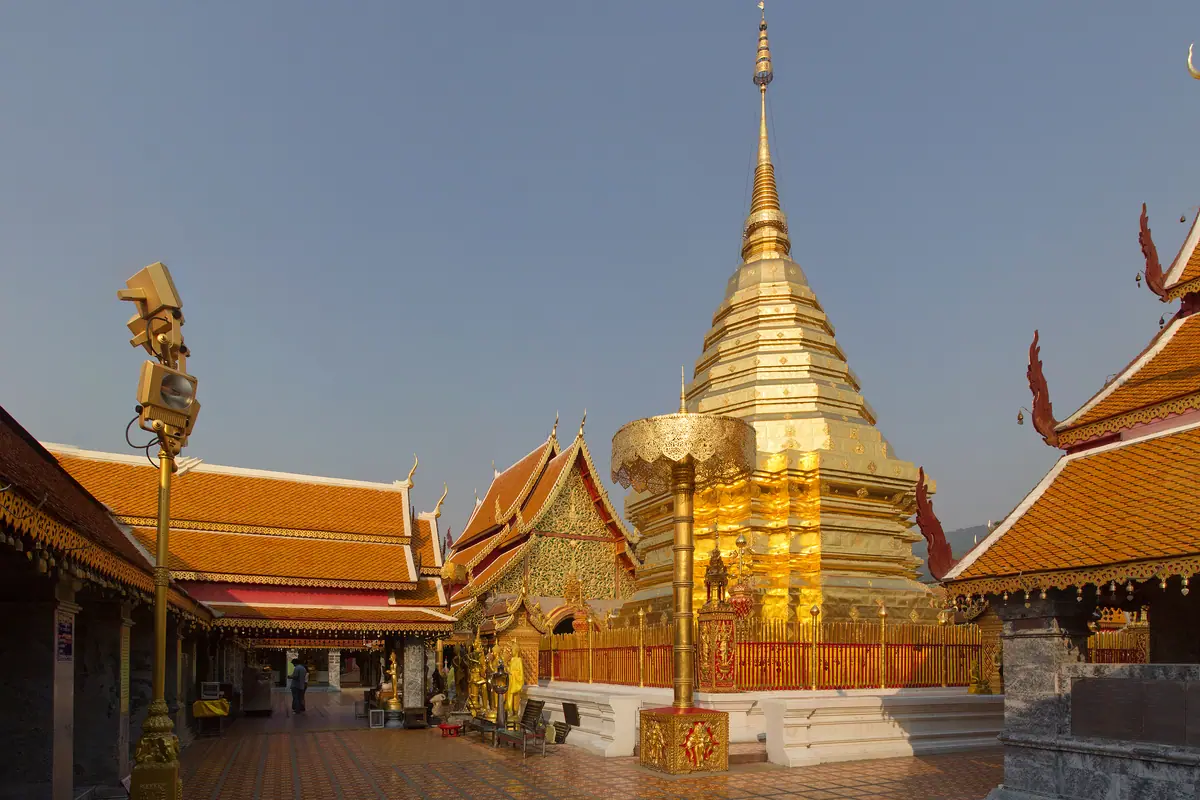
Chiang Mai rewards travellers who linger. Inside the square moat of the Old City, temple-hopping on foot takes you past Wat Chedi Luang's enormous ruined chedi and Wat Phra Singh's intricate Lanna-style carvings, while the Sunday Walking Street turns the whole district into a market. Above the city, a winding road climbs to Wat Phra That Doi Suthep, reached by a staircase of 306 steps flanked by nagas. The golden chedi and the terrace view over the city are the standard pilgrimage, but the forest monastery of Wat Umong and the royal gardens at Bhubing Palace, further up the mountain, are quieter rewards.
North of Chiang Mai, Chiang Rai makes an easy base for a cluster of unusual sights. Wat Rong Khun, the White Temple, is a dazzling, half-finished meditation on desire and rebirth, with a bridge over a pit of sculpted hands and murals that mix traditional figures with unexpected pop-culture references. The deep blue interior of Wat Rong Suea Ten nearby is a startling contrast of sapphire walls and white Buddha. From the riverside viewpoint at Sop Ruak in the Golden Triangle, you can look across the Mekong to Laos and Myanmar at once.
Nature is the other draw here. Doi Inthanon is the country's highest peak, ringed by cloud forest, twin royal chedis and the thundering Wachirathan waterfall. And the region is the heartland of ethical elephant care, where sanctuaries focus on observation, feeding and walking with rescued animals rather than riding them. Book well ahead in the cool months, when demand peaks.
Andaman Islands, Beaches and Limestone Bays
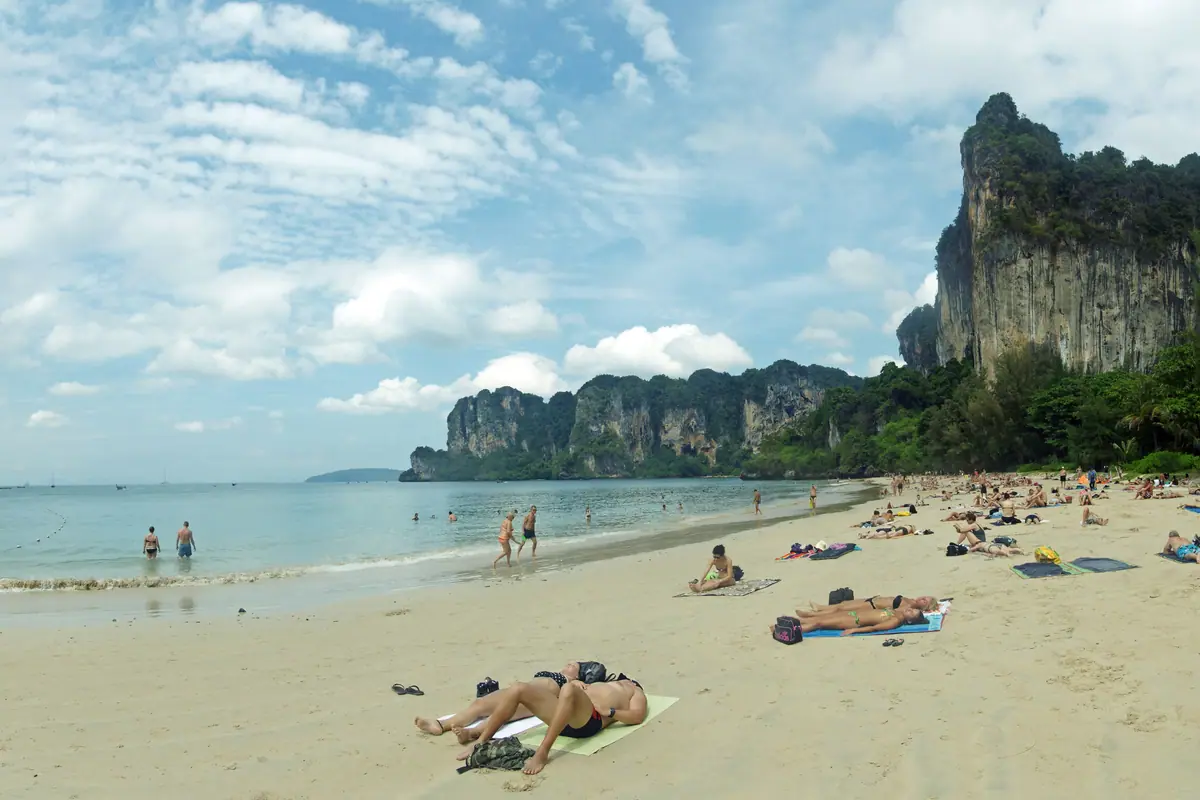
The west coast is a landscape of vertical limestone cliffs rising straight out of green water. Railay, reachable only by boat, is the poster child: four beaches cut off from the mainland by karsts, with Phra Nang Cave Beach at its southern tip, climbers dangling from the walls and longtail boats ferrying day-trippers from Ao Nang. Just offshore, the Phi Phi Islands deliver the classic postcard view from the viewpoint between Tonsai and Loh Dalum Bays, plus world-class snorkelling around Bamboo Island and the cliffs of Maya Bay, which now operates under seasonal closure and visitor limits to let its coral and blacktip reef sharks recover.
Phang Nga Bay, east of Phuket, is best seen from a kayak or a longtail: paddle through sea caves and hidden lagoons, past mangrove channels and the leaning pinnacle of Ko Tapu, the so-called James Bond Island. For diving, the Similan Islands and Ko Bon are the prize, open only from roughly mid-October to mid-May, when visibility can stretch beyond 30 metres. Koh Lipe and the Tarutao archipelago, down near the Malaysian border, stay quieter and are reached by speedboat from Pak Bara.
Timing matters more here than anywhere else in Thailand. The Andaman side is at its best from November to April, when seas are calm and skies clear; the southwest monsoon from May to October brings big swell, some ferry cancellations and lower prices. The Gulf islands, including Ko Samui, Ko Pha Ngan and Ko Tao, follow a slightly different pattern — they tend to be wettest in November and December and driest from February to August — so plan your coast around your travel dates rather than the other way round.
Rainforest Lakes and National Parks
Khao Sok National Park in southern Thailand protects one of the oldest evergreen rainforests on the planet, and its centrepiece is Cheow Lan Lake, a drowned valley of emerald water studded with towering karst towers. Staying overnight in a floating raft house is the highlight of many trips: you swim off your own deck, paddle a kayak into misty inlets at dawn, and listen to gibbons calling across the water. Day visits are possible from Khao Sok village, but the lake only really reveals itself after the day boats have gone.
Closer to Bangkok, Khao Yai is a UNESCO-listed forest of waterfalls, grasslands and wildlife corridors where hornbills, macaques and the occasional elephant are spotted on guided night safaris. Near Kanchanaburi, Erawan National Park protects a seven-tiered waterfall of milky turquoise pools that you can climb tier by tier, each one a natural swimming hole; go on a weekday morning in the dry season and you may have the upper tiers almost to yourself.
Kanchanaburi itself carries heavier history: the bridge over the River Kwai, the adjacent war cemeteries and the cutting known as Hellfire Pass along the old railway line. Pair a morning at the falls with an afternoon at the bridge and the museums, and you have one of the most affecting day trips in the country. For the parks, bring insect repellent, quick-dry clothing and a dry bag, and check leech and rain conditions if you visit between June and October.
Markets, Street Food and Festivals
Thai food is the country's greatest attraction, and the best of it is eaten on plastic stools. Bangkok's Chatuchak Weekend Market sprawls across thousands of stalls selling everything from vintage denim to orchids, while Yaowarat in Chinatown turns into a neon-lit open-air dining room after dark, with charcoal grills, oyster omelettes and crab curries. For something less chaotic, the covered Or Tor Kor market nearby is where chefs do their shopping. Outside the capital, Damnoen Saduak and Amphawa floating markets are worth the early start, and every provincial town has a night market where you can eat exceptionally well for very little.
Festivals are worth planning a trip around. Songkran in mid-April turns the whole country into a water fight for three days and is best experienced in Chiang Mai or Bangkok. In November, Loy Krathong sees candlelit banana-leaf baskets floated onto rivers and canals, while Chiang Mai's northern counterpart, Yi Peng, fills the sky with thousands of paper lanterns. In the northeast, the masked Phi Ta Khon procession in Dan Sai is one of the strangest and most joyful spectacles in Southeast Asia.
Round off the trip with the more hands-on side of Thai culture. A half-day cooking class usually starts in a local market and ends with you pounding your own curry paste, and a traditional massage at a temple-affiliated school is the real thing rather than an airport spa imitation. In the evening, a Muay Thai bout at one of Bangkok's historic stadiums delivers an atmosphere that no highlight reel captures. Two practical notes: temple etiquette applies everywhere — cover shoulders and knees, remove shoes, never point your feet at a Buddha image — and cash still rules at markets and small eateries, so keep small notes handy.
Frequently asked questions
What is the best time of year to visit Thailand?
The cool, dry season from November to February is the most comfortable nationwide and the best window for the Andaman coast, Chiang Mai and the ancient capitals. March to May is hot and hazy, with temperatures often above 35°C. The southwest monsoon runs roughly June to October, bringing short, heavy afternoon downpours, lush landscapes and lower prices; it rarely rains all day. Note that the Gulf islands follow a different pattern and are often wettest in November and December.
How many days do you need in Thailand?
Two weeks lets you combine Bangkok, one northern base such as Chiang Mai or Chiang Rai, and one beach region without constant transit. If you only have a week, pick a single region — Bangkok plus the Andaman coast, or Bangkok plus the north — because internal flights and overnight trains eat into short trips fast.
Which landmarks should a first-time visitor not miss?
The Grand Palace and Wat Phra Kaew, Wat Pho and Wat Arun in Bangkok; the ruins of Ayutthaya and Sukhothai; Doi Suthep above Chiang Mai; the White Temple in Chiang Rai; the limestone cliffs and beaches of Railay, Phi Phi and Phang Nga Bay; and the floating raft houses of Cheow Lan Lake in Khao Sok National Park.
What should I know about temple etiquette?
Cover your shoulders and knees, remove your shoes before entering temple buildings and never point your feet toward a Buddha image or a monk. Women should not touch monks or hand them objects directly. Speak quietly, don't climb on ruins, and always ask before photographing people who are praying.
How do I get around Thailand without wasting time?
Short domestic flights link Bangkok with Chiang Mai, Chiang Rai, Phuket, Krabi and Surat Thani in about an hour, which is usually worth the cost on a tight itinerary. Overnight sleeper trains are comfortable on northern and southern routes, and ride-hailing apps work well in cities. On the islands, longtail boats, songthaews and rented scooters handle the last stretch — but only ride a scooter if you are licensed and insured.
Plan it — experiences in Thailand
Live search, booked directly with trusted providers.
Sort the rest of your trip
Everything for Thailand, in one place
Stay in Thailand
Hotels, guesthouses and apartments — compared in one search.
Search hotels
Transfer in Thailand
Private driver waiting on arrival — no queues, no surprises.
Book a transfer
Stay online in Thailand
Travel eSIM — data the moment you land, no roaming bills.
Get an eSIMMore guides in Thailand
One Week in Thailand by Flight: A Bangkok, Chiang Mai and Andaman Coast Itinerary
Best Places to Visit in Thailand: Temples, Islands and Ancient Capitals