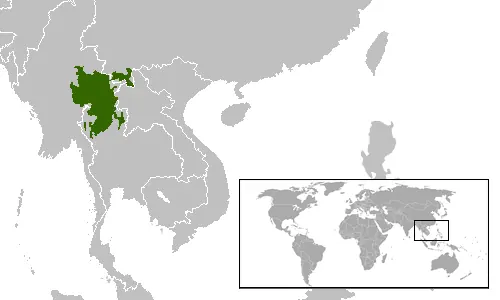
Thailand is never really off-season — it simply changes character. One month you are watching lanterns rise over Chiang Mai's old city, the next you are sheltering from a warm afternoon downpour in a beach bar on Ko Lanta. Knowing which Thailand you are flying into is the difference between a hotel that feels like a bargain and one that feels like a compromise.
How Thailand's Seasons Shape Where You Sleep
Thailand runs on a tropical rhythm of three broad seasons: cool and dry from November to February, hot from March to May, and green — the monsoon months — from June to October. What complicates the picture, and what makes blanket advice useless, is that the country has two coastlines working on different weather systems. The Andaman Sea side, home to Phuket, Krabi, Ko Phi Phi and Ko Lanta, takes the southwest monsoon from roughly May to October. The Gulf side, where Ko Samui, Ko Phangan and Ko Tao sit, stays drier through that same window and instead catches its heaviest rain between October and December. Ask which coast, then ask which month.
This matters most when you are choosing a room, because Thailand's accommodation map rearranges itself with the weather. During the cool, dry months, beachfront properties on the Andaman coast and hillside resorts in the north fill up months in advance and set their highest rates of the year, with a sharp spike over Christmas and New Year. In the green season the same rooms can be had for a fraction of the price, often with free upgrades and generous cancellation terms, in exchange for humidity, choppy crossings and the occasional washed-out afternoon. Most first-time visitors spend ten days to two weeks here, splitting two or three nights in Bangkok with time in the north and a single island or beach base — and that shape of trip works in almost every season.
Even the geography of a city changes with the calendar. Bangkok's temples and markets are far more pleasant on foot in December than in April, when the concrete radiates heat well past sunset. Chiang Mai is lovely in the cool months and hazy during the agricultural burning season that often settles over the north from February into April. Build your itinerary around the season rather than against it, and Thailand feels effortless.
Cool and Dry: November to February, Thailand at Its Most Photogenic
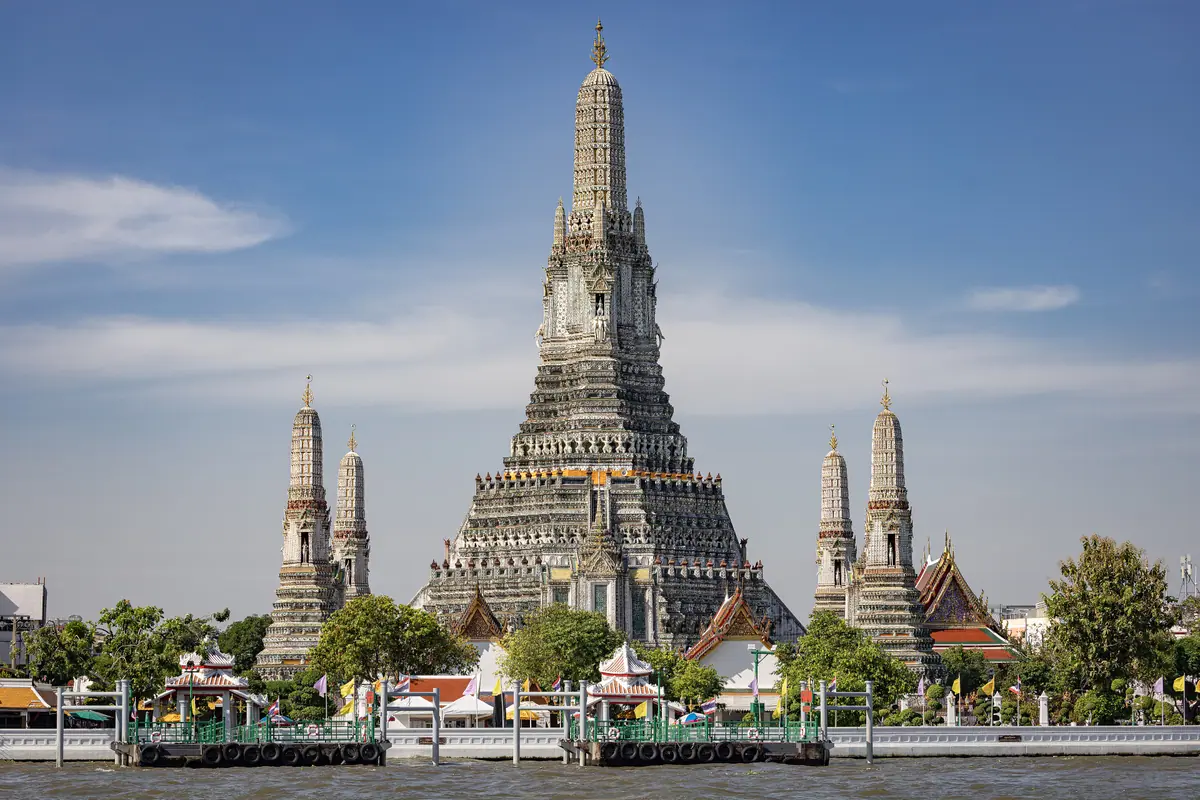
This is the window most people picture when they imagine Thailand: cloudless skies, daytime temperatures around 30 to 32 degrees Celsius in Bangkok, low humidity and a sea calm enough for longtail boats to reach bays that are unreachable in July. It is the ideal time to walk the Grand Palace and its Wat Phra Kaew, to stand beneath the gold reclining Buddha at Wat Pho, and to cross the Chao Phraya by ferry for sunset at Wat Arun. Weekend visitors should not miss Chatuchak, the sprawling weekend market, and anyone with an extra day can day-trip to the ruined temples of Ayutthaya, an easy train ride north of the capital.
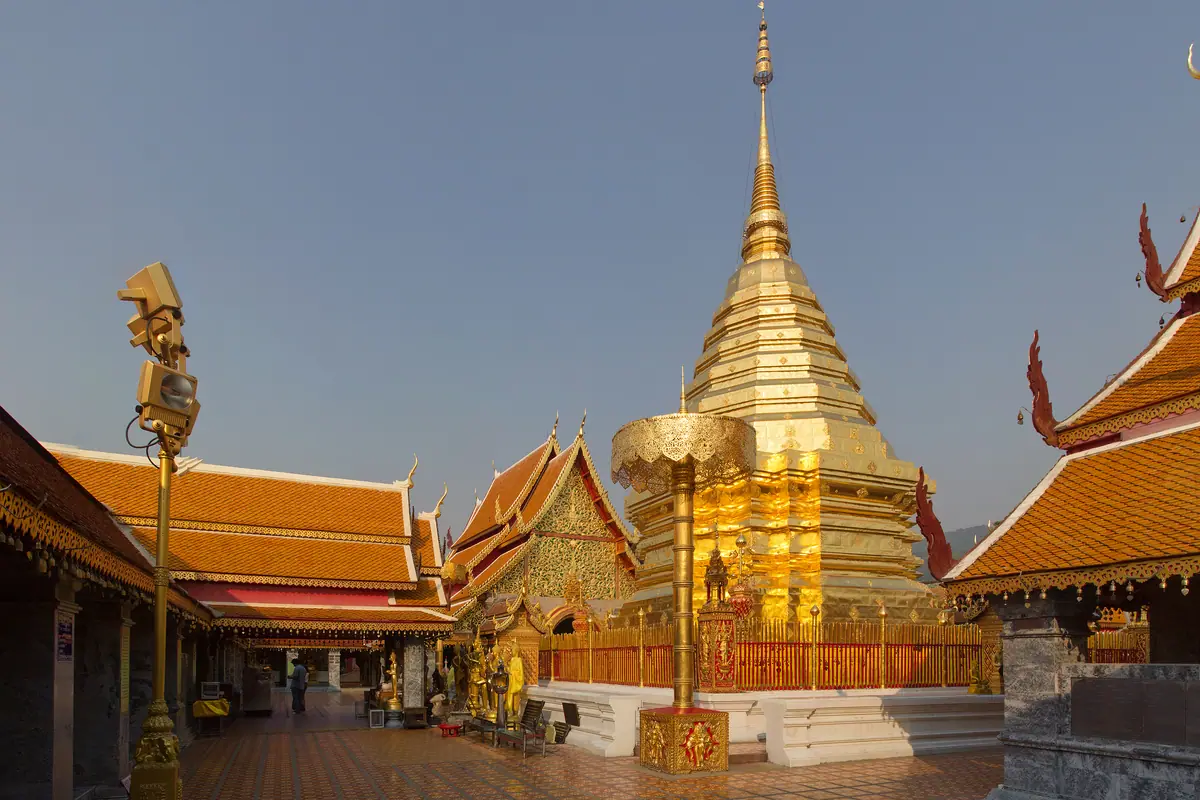
The north comes into its own now. Chiang Mai turns cool enough that mornings need a light jacket, and the 300-step climb to Wat Phra That Doi Suthep rewards you with haze-free views over the valley. Down in the old city, Wat Chedi Luang and the brick lanes between the moats are made for slow walking, and further afield rises Doi Inthanon, Thailand's highest peak, and Chiang Rai's wat Rong Khun, the White Temple, an easy day out from the city. December and January evenings in the hills can dip close to 15 degrees, so a fleece is not wasted luggage.
On the Andaman coast this is peak season in every sense. Phuket, Ko Phi Phi, Railay near Krabi and the diving sites of the Similan Islands — usually accessible from around mid-October to mid-May — run at full capacity. Ko Lipe off the far southwest is at its best, and the sea off Ko Lanta is glassy. The catch is demand: book three to four months ahead for December to February, and expect the last week of December and the first days of January to be the single most expensive and most crowded stretch of the Thai year.
Hot Season: March to May, Songkran and Shoulder-Season Bargains
By March the heat is building and April is the hottest month, with Bangkok often climbing into the mid-thirties and humidity that makes midday sightseeing a test of stamina. Paradoxically, it is also one of the best times for the Andaman Sea: the water is at its warmest and calmest, the crowds have thinned, and island-hopping out of Krabi or Phuket feels unhurried. Plan temples early, retreat to a pool or a museum in the middle of the day, and save long walks for after five in the afternoon.
April brings Songkran, the Thai New Year water festival, celebrated nationwide on the 13th to 15th and at its most exuberant in Chiang Mai and Bangkok. Expect streets turned into cheerful water fights, many shops and restaurants closed or running holiday hours, and hotels booked out well in advance. It is enormous fun, but it is not the trip to book if you want quiet temple mornings. Those who would rather watch the water than be doused should head for the green hills instead.
The rewards of the hot months come in the water and in the room rate. Kanchanaburi's Erawan Falls, a seven-tiered cascade of turquoise pools, is at its most inviting before the rains arrive, and Khao Yai National Park, a few hours from Bangkok, offers cool forest trails and the chance of spotting wild elephants and gibbons. Meanwhile, rates at city hotels and island resorts slide after Songkran and stay soft through May and early June — the sweet spot for travellers who want a good room at a moderate price and do not mind a little heat.

Green Season: June to October, Monsoon Logic and Serious Value
The rains do not arrive everywhere at once. From roughly May to October the southwest monsoon soaks the Andaman coast — Phuket, Krabi, Ko Phi Phi and Ko Lanta — usually in short, heavy bursts rather than all-day drizzle, with long sunny gaps in between. Some island boat services to Maya Bay and remote bays are curtailed, and Ko Lipe largely shuts down. Across on the Gulf side, Ko Samui, Ko Phangan and Ko Tao stay considerably drier in this period, which is why the Gulf is the smart choice for a July or August beach holiday.
What the wet months give you is a Thailand that is green to the point of extravagance. Rivers run full, rice paddies glow, and national parks such as Khao Sok, with its limestone karsts and jungle-clad lake, are at their most dramatic. Elephant sanctuaries around Chiang Mai and Kanchanaburi are quieter, waterfalls are thundering, and dive conditions off Ko Tao — one of the region's most popular places to learn — are generally good in the middle of the year. Phuket's Vegetarian Festival in October and the Gulf's monthly Full Moon gatherings on Ko Phangan pull their own crowds regardless of the forecast.
Commercially, this is the season to be a flexible traveller. Room rates on the Andaman coast can fall dramatically, upgrades are common, and long-stay discounts are easy to negotiate. Choose a hotel with a decent pool, covered outdoor areas and a good restaurant, and treat the rain as a scheduled break in the day rather than a disaster. October is the transitional month: still wet on the Andaman side, beginning to clear, and often excellent value just before the December rush begins.

Matching Region to Month: A Practical Way to Plan
Think of Thailand as four travel zones rather than one country. Bangkok and the central plains are at their most comfortable from November to February, when you can combine the city's temples and markets with day trips to Ayutthaya or the bridge over the River Kwai at Kanchanaburi without wilting. The north, including Chiang Mai, Chiang Rai and the slow mountain town of Pai, is best from November to February; from February into April, smoke from seasonal field burning can dull the views and the air, so plan any trekking or viewpoint ambitions for the cooler, clearer weeks.
The Andaman coast — Phuket, Ko Phi Phi, Railay, Ko Lanta and Ko Lipe — has its reliable season from November to April, with December to February the most dependable and the busiest. The Gulf islands run on a different clock: Ko Samui, Ko Phangan and Ko Tao are generally at their best from December through to late summer, with their wettest stretch falling between October and December. That inversion is the single most useful fact in Thai trip planning: if your holiday falls in July or August, fly to the Gulf, not to Phuket.
Travellers with fixed dates should also check the festival calendar before locking in a hotel. Loi Krathong and the lantern-lighting Yi Peng celebrations light up Chiang Mai and Sukhothai each November, Songkran floods the streets in April, and the Christmas and New Year period pushes every beach resort to its annual peak. A day or two either side of these dates can mean a noticeably calmer stay for the same room.
When to Book, and Which Base Suits Which Season
Booking windows in Thailand are dictated almost entirely by high season. For stays between mid-December and the end of February, and especially over Christmas and New Year, reserve three to four months ahead — beachfront rooms on Phuket, Krabi and Ko Samui sell out first, followed by the riverside and old-quarter properties in Bangkok and Chiang Mai. For November, April and the Songkran holiday, two to three months is usually enough. In the green season you can often book two to four weeks out, or even leave it to the last minute and pick up a discount, provided you are not fussy about which resort.
Where you base yourself should shift with the season too. In cool, dry weather a riverside hotel in Bangkok puts the Grand Palace, Wat Pho and Wat Arun within a ferry ride, while a guesthouse inside Chiang Mai's moated old city lets you walk to temples at dawn. In the hot months, prioritise shade: a hotel with a large pool, a garden and air-conditioned public areas is worth more than a balcony view. And in the green season, look at the Gulf islands and choose somewhere with covered communal space, a good kitchen and easy access to a town, so a rainy afternoon never becomes a wasted one.
Finally, do not overlook the small practicalities that separate a smooth trip from a frustrating one. Domestic flights between Bangkok, Chiang Mai, Phuket and Samui fill up around festivals, ferry timetables shrink on the Andaman side in low season, and transfers on Ko Samui or Ko Phangan can eat half a day. Book flexible rates when you travel in the shoulder months, keep one buffer day before an international departure, and let the weather decide the rest.
Frequently asked questions
What is the single best month to visit Thailand?
December and January offer the most reliable combination of dry, comfortable weather on both coasts and in the north, which is why they are also the most expensive and crowded. If you want those conditions with slightly more breathing room, the second half of November and the whole of February are excellent compromises.
When are hotels in Thailand cheapest?
The green season, roughly May to September on the Andaman coast and September to early December on the Gulf side, brings the lowest room rates of the year, along with frequent upgrades and flexible cancellation policies. October and early November are also good value just before demand surges.
Which part of Thailand has the best weather in July and August?
The Gulf islands — Ko Samui, Ko Phangan and Ko Tao — stay noticeably drier in mid-year, while the Andaman coast around Phuket, Krabi and Ko Phi Phi is in the thick of the southwest monsoon. If your dates are fixed in midsummer, head east rather than west.
How far ahead should I book hotels for peak season in Thailand?
For stays between mid-December and the end of February, and particularly over Christmas and New Year, aim to reserve three to four months in advance, as beach resorts and central Bangkok hotels fill quickly. For Songkran in April or the lantern festivals in November, two to three months is generally sufficient.
Is it worth visiting during the rainy season?
Yes, if you plan for it. Rain usually arrives as intense but brief afternoon downpours, landscapes are lush, national parks and waterfalls are at their best, and rates drop sharply. Choose a hotel with a pool and covered spaces, keep a spare day in your itinerary, and consider the Gulf coast rather than the Andaman between June and September.
Sort the rest of your trip
Everything for Thailand, in one place
Transfer in Thailand
Private driver waiting on arrival — no queues, no surprises.
Book a transfer
Things to do in Thailand
Skip-the-line tickets, guided tours and standout experiences.
See experiences
Stay online in Thailand
Travel eSIM — data the moment you land, no roaming bills.
Get an eSIMMore guides in Thailand
Thailand Food and Culture Guide: Temples, Street Kitchens and Local Life
One Week in Thailand by Flight: A Bangkok, Chiang Mai and Andaman Coast Itinerary
Best Places to Visit in Thailand: Temples, Islands and Ancient Capitals
Top Things to Do in Thailand: Must-See Landmarks, Temples and Islands