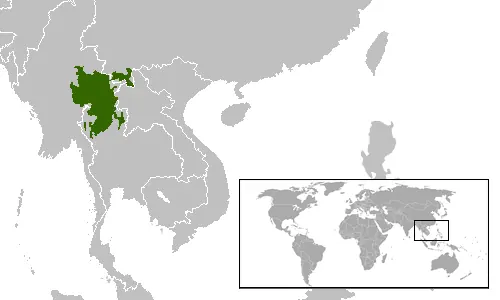
Thailand packs gilded temple cities, limestone islands and jungle lakes into a country you could spend months crossing and still barely scratch. The trick is knowing which corner suits which season — and which landmarks genuinely earn their place on a first trip.
Bangkok: The Grand Palace, Wat Pho and the River
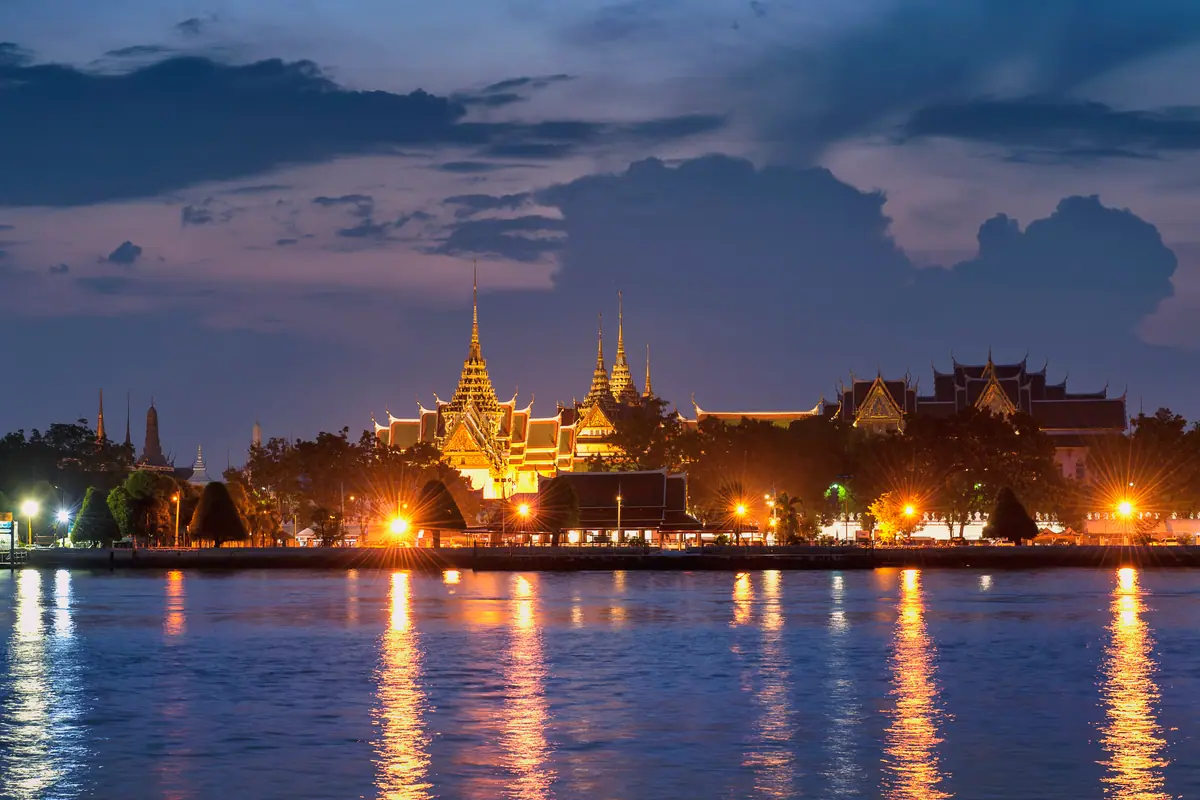
Almost every journey starts here, and Bangkok rewards more than a rushed overnight stop. The essential trio clusters along the Chao Phraya River: the Grand Palace with Wat Phra Kaew, home to the revered Emerald Buddha and the most ornate architecture in the kingdom; Wat Pho next door, where a 46-metre reclining Buddha lies beneath a ceiling of painted stars; and Wat Arun on the far bank, a porcelain-studded prang best photographed from the water at sunset. Give these three a full day, starting at opening time to beat both the heat and the tour groups, and dress modestly — shoulders and knees covered for everyone.
Beyond the royal quarter, Bangkok unfolds in layers. Ride the river boats and the Skytrain rather than sitting in traffic, and break up temple fatigue with the Jim Thompson House, a teak compound of Southeast Asian art, or the weekend-only Chatuchak Market, one of the largest open-air markets anywhere. Chinatown's Yaowarat Road turns into a open-air kitchen after dark, while the canals of Thonburi side offer a slower, stilt-house view of a city that most visitors never see.
Two or three nights is the realistic minimum. If you have more, add a half-day trip to the ruins at Ayutthaya or the floating markets west of the city, both easily reached without a car.
Ayutthaya and Sukhothai: Thailand's Ancient Capitals
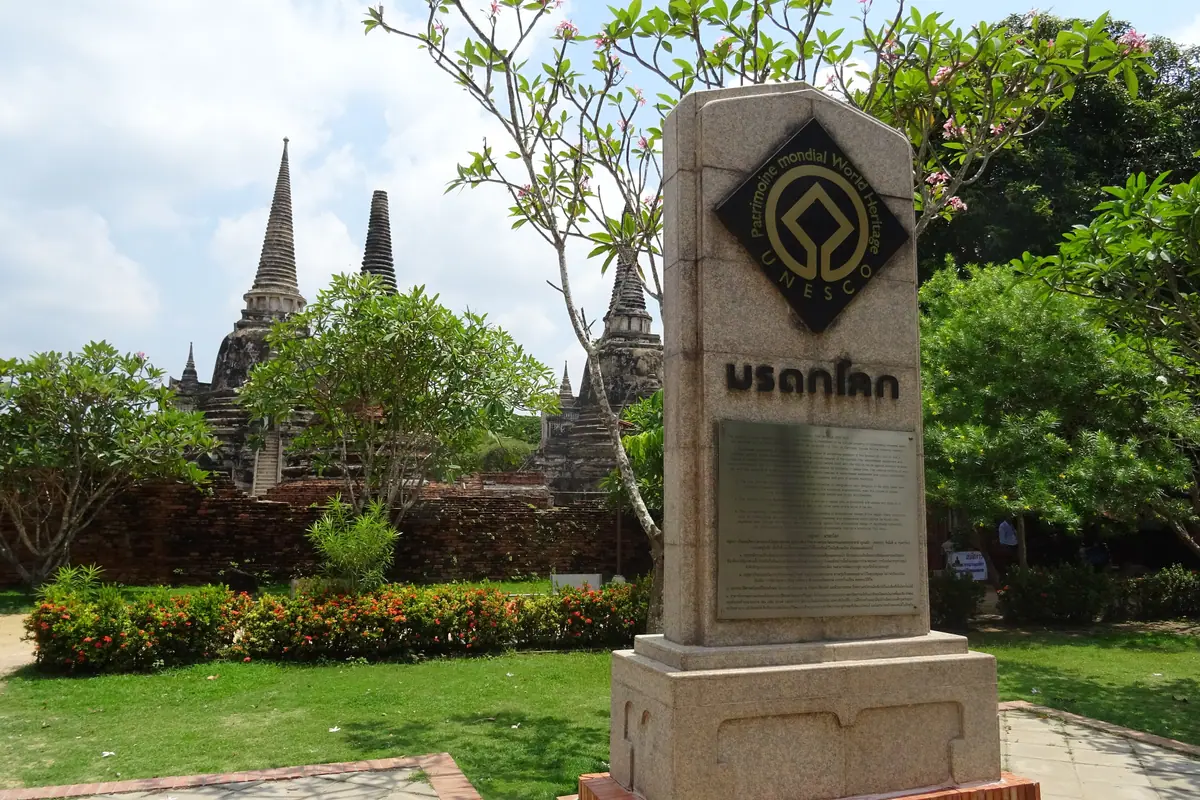
About 80 kilometres north of Bangkok, Ayutthaya Historical Park preserves the brick-and-stucco bones of a capital that ruled a vast empire for four centuries before being sacked in 1767. The signature image — a serene Buddha head cradled in the roots of a bodhi tree at Wat Mahathat — is instantly recognisable, but the site is far bigger than one photo. Wat Chaiwatthanaram's Khmer-style towers rise above the river, Wat Phra Si Sanphet's three slender chedis mark the old royal chapel, and the whole park is flat enough to explore by bicycle in a leisurely day.
Sukhothai, roughly five hours further north, feels quieter and more pastoral, and many travellers rate it the more atmospheric of the two. Its central zone holds Wat Mahathat, a lotus-bud stupa surrounded by ponds, while Wat Si Chum shelters a seated Buddha so large it seems to fill the brick enclosure. Add the satellite town of Si Satchanalai, set among tamarind trees, and you have a UNESCO-listed landscape that rewards an overnight stay rather than a whistle-stop tour.
Both sites are wide, shadeless and punishing at midday. Go early, carry water, and consider renting a bicycle or hiring a local tuk-tuk driver for the day. November to February brings the most comfortable temperatures; by April the stone radiates heat.
Chiang Mai, Doi Suthep and the Northern Loop
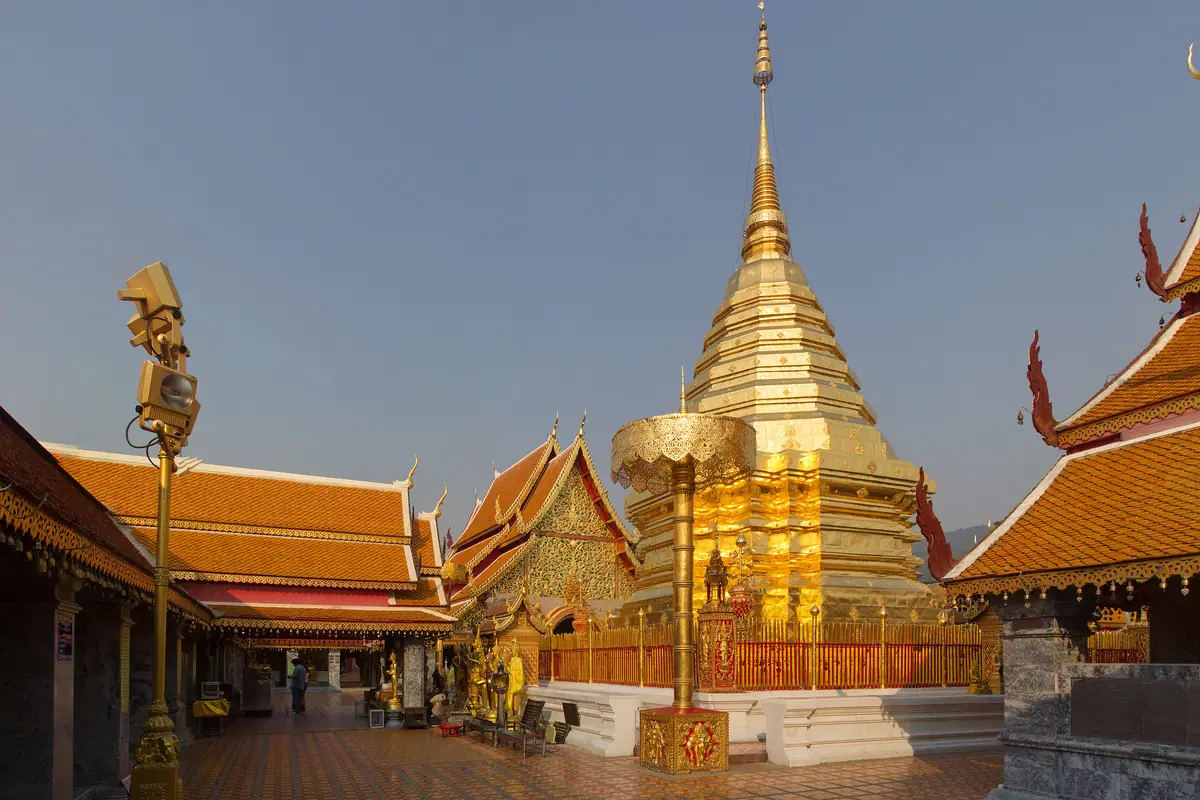
Chiang Mai is the cultural counterweight to Bangkok: a walled old city of crumbling chedis, leafy lanes and cafés, ringed by mountains. Wat Chedi Luang's massive ruined stupa dominates the centre, Wat Phra Singh glitters with Lanna craftsmanship, and the Sunday Walking Street turns the old town into a river of crafts and street food. Above it all, on the shoulder of the mountain, Wat Phra That Doi Suthep is the north's most sacred temple — climb the 306-step naga staircase or take the cable car, and time your visit for late afternoon when the city spreads out below in a haze of gold.
From Chiang Mai, the north opens up. Doi Inthanon, Thailand's highest peak, offers waterfalls, cloud forest trails and the twin royal chedis; further afield, Chiang Rai's White Temple is a dazzling, contemporary take on Buddhist iconography, with the deep-blue Wat Rong Khun counterpart nearby. The sleepy town of Pai, reached by a famously winding mountain road, attracts a slower, longer-staying crowd.
November to February is cool and clear here, with temperatures that can drop to single digits on the summits — pack a layer. March and April bring smoke from agricultural burning, so plan mountain viewpoints for the cooler months if you can.
The Andaman Coast: Phuket, Phi Phi and Krabi
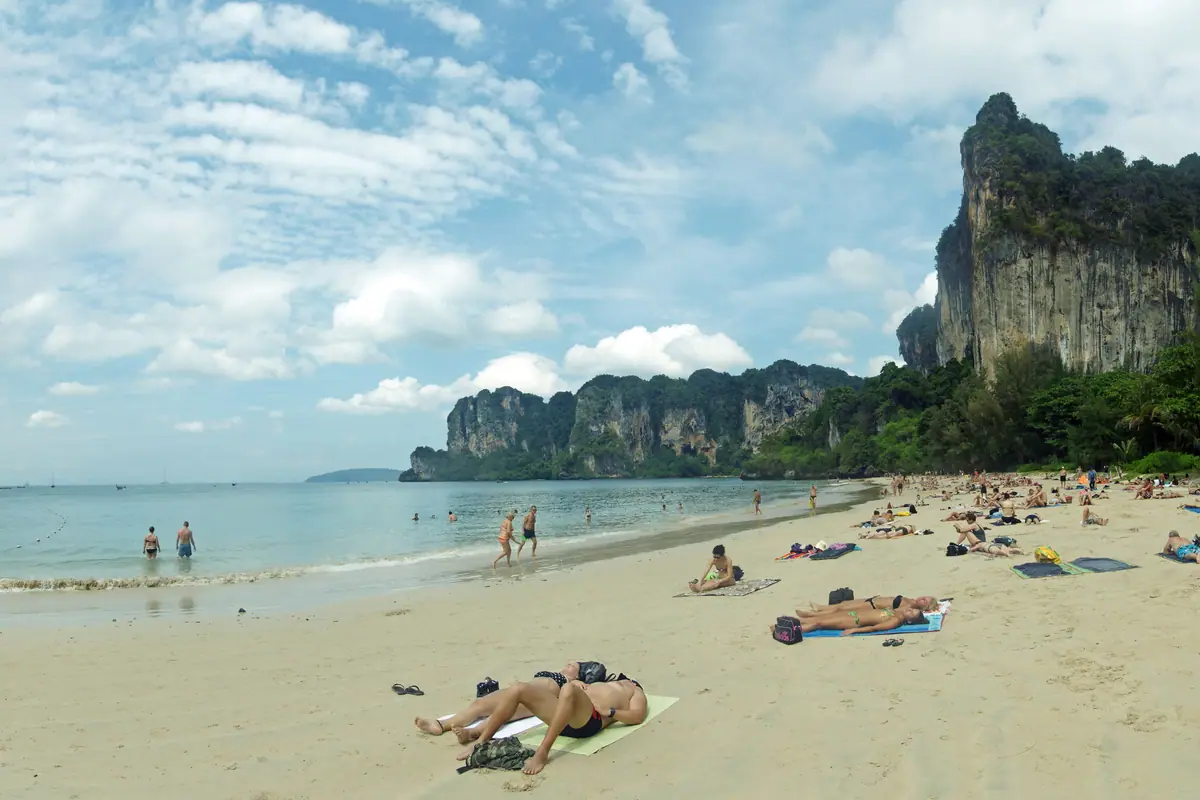
Thailand's west coast delivers the postcard: sheer limestone karsts rising from green water. Phuket is the gateway and the busiest island, with the hilltop Big Buddha, the Sino-Portuguese shophouses of Phuket Old Town, and beaches ranging from the packed sands of Patong to quieter stretches in the north. From here, day boats run to Phang Nga Bay, where James Bond Island's needle-like rock juts from the sea, and to the Phi Phi Islands, whose Maya Bay — famously closed for several years to allow coral recovery — remains the region's most photographed cove.
Krabi Province is arguably the better base for scenery. Railay Beach, reachable only by longtail boat, is walled in by cliffs and has become one of Southeast Asia's premier climbing destinations, while the four-island boat circuit and Hong Islands offer snorkelling, lagoons and sandbars. Inland, the Tiger Cave Temple's 1,260-step climb ends in a summit shrine with a panorama across the mangrove flats, and the Emerald Pool's turquoise water makes an easy jungle stop.
The diving season shapes everything here: the Similan and Surin Islands are only accessible roughly from late October to mid-May, and the Andaman side as a whole is at its best from November through April. Monsoon months bring heavy swell, red flags and cancelled boats.
The Gulf Islands: Samui, Koh Tao and the East
Thailand's other coast runs on a different calendar. Koh Samui, the largest Gulf island, mixes palm-lined beaches with the Big Buddha temple and easy access to Ang Thong National Marine Park, a protected archipelago of limestone islands and hidden lagoons that makes for one of the country's best day trips. Koh Pha Ngan, next door, is known for its full-moon gatherings but hides quiet northern bays, while tiny Koh Tao has built a global reputation as a place to learn to dive, with shallow, warm water and dependable visibility for much of the year.
Further east, near the Cambodian border, Koh Chang and its smaller neighbour Koh Kood offer a greener, rainforested alternative with far fewer flights and far more waterfalls. Hua Hin, on the mainland's western Gulf shore, is the traditional seaside escape for Bangkok residents and pairs well with a visit to Khao Sam Roi Yot's cave shrine.
This side of the country peaks from roughly January to April, while the northeast monsoon drenches Samui from October to December — exactly when the Andaman coast is drying out. Choosing your coast by season matters more here than almost anywhere else in Thailand.
Rainforest, Waterfalls and National Parks
Thailand's interior and parks deserve more than a footnote. Khao Sok National Park, in the south, protects one of the oldest rainforests on earth; its centrepiece is Cheow Lan Lake, where longtail boats weave between limestone cliffs to floating bungalows that run on generator power and quiet. Overnight stays there, with jungle walks and nocturnal wildlife spotting, are among the most memorable experiences in the country.
Near Kanchanaburi, west of Bangkok, the seven-tiered Erawan Falls tumble into milky-turquoise pools that are perfect for swimming, usually paired with the Bridge over the River Kwai and the wartime railway route. Khao Yai, a few hours northeast of the capital, is a UNESCO-listed forest with wild elephants, gibbons and excellent birdwatching, while the far south's Hala-Bala and the northern parks reward anyone willing to trade beaches for leeches and leech-free trails alike.
Practicalities matter in the parks: hire a licensed local guide for wildlife, expect basic accommodation inside protected areas, and avoid the monsoon on steep trails. The cool season from November to February is the safest bet across nearly every region.
Frequently asked questions
When is the best time to visit Thailand overall?
November to February is the sweet spot across most of the country — dry, cooler and comfortable. March to May is hot, with temperatures often above 35°C and Songkran water festival in mid-April. The monsoon runs roughly May to October on the Andaman coast and October to December on the Gulf islands, so you can often dodge rain simply by switching coasts.
How many days do you need for a first trip to Thailand?
Ten to fourteen days lets you combine Bangkok, one ancient capital such as Ayutthaya or Sukhothai, and either the north around Chiang Mai or a beach region — without spending your holiday in transit. Trying to cover Bangkok, the north and two island coasts in a week usually means losing a day to every internal flight.
Should you visit the north or the islands first?
Match it to the season. If you're travelling between November and February, either works. If you're coming between June and October, head north and to the Gulf islands, since the Andaman coast is at its wettest. From January to April, the west coast and its diving sites are at their finest.
What are the absolute must-see sights in Thailand?
The Grand Palace and Wat Pho in Bangkok, Wat Arun across the river, the ruins of Ayutthaya and Sukhothai, Wat Phra That Doi Suthep above Chiang Mai, Railay Beach and Phang Nga Bay in the south, and Ang Thong National Marine Park in the Gulf. Khao Sok's Cheow Lan Lake is the standout natural experience.
How do you get around Thailand between regions?
Domestic flights are inexpensive and cut long journeys dramatically, while overnight sleeper trains link Bangkok with Chiang Mai and the south. On the ground, buses, songthaews and longtail boats cover most destinations, and app-based ride-hailing works well in cities. For islands, ferries and speedboats run frequent seasonal schedules — book ahead around holidays.
Plan it — experiences in Thailand
Live search, booked directly with trusted providers.
Sort the rest of your trip
Everything for Thailand, in one place
Stay in Thailand
Hotels, guesthouses and apartments — compared in one search.
Search hotels
Transfer in Thailand
Private driver waiting on arrival — no queues, no surprises.
Book a transfer
Stay online in Thailand
Travel eSIM — data the moment you land, no roaming bills.
Get an eSIMMore guides in Thailand
One Week in Thailand by Flight: A Bangkok, Chiang Mai and Andaman Coast Itinerary
Top Things to Do in Thailand: Must-See Landmarks, Temples and Islands