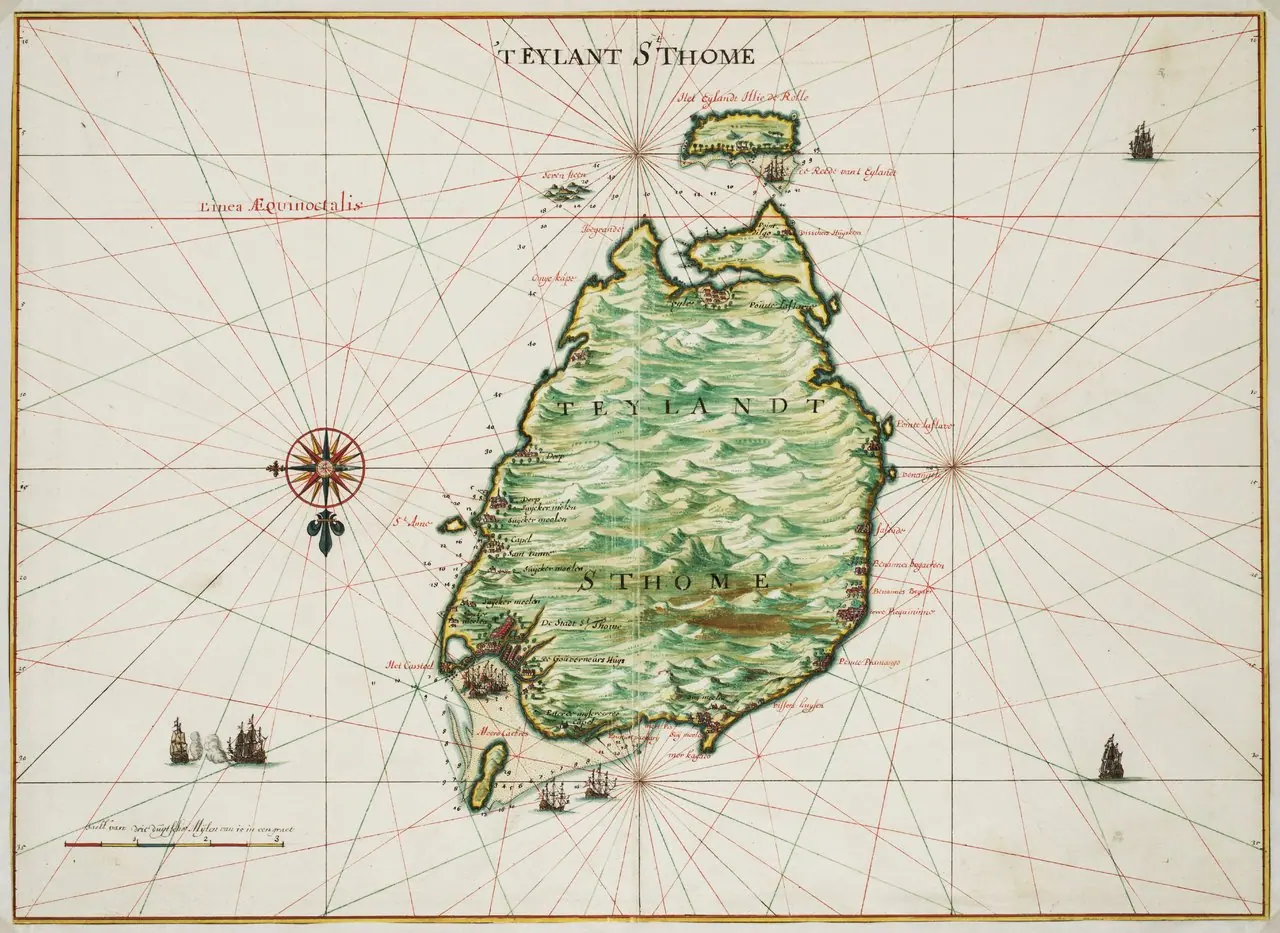
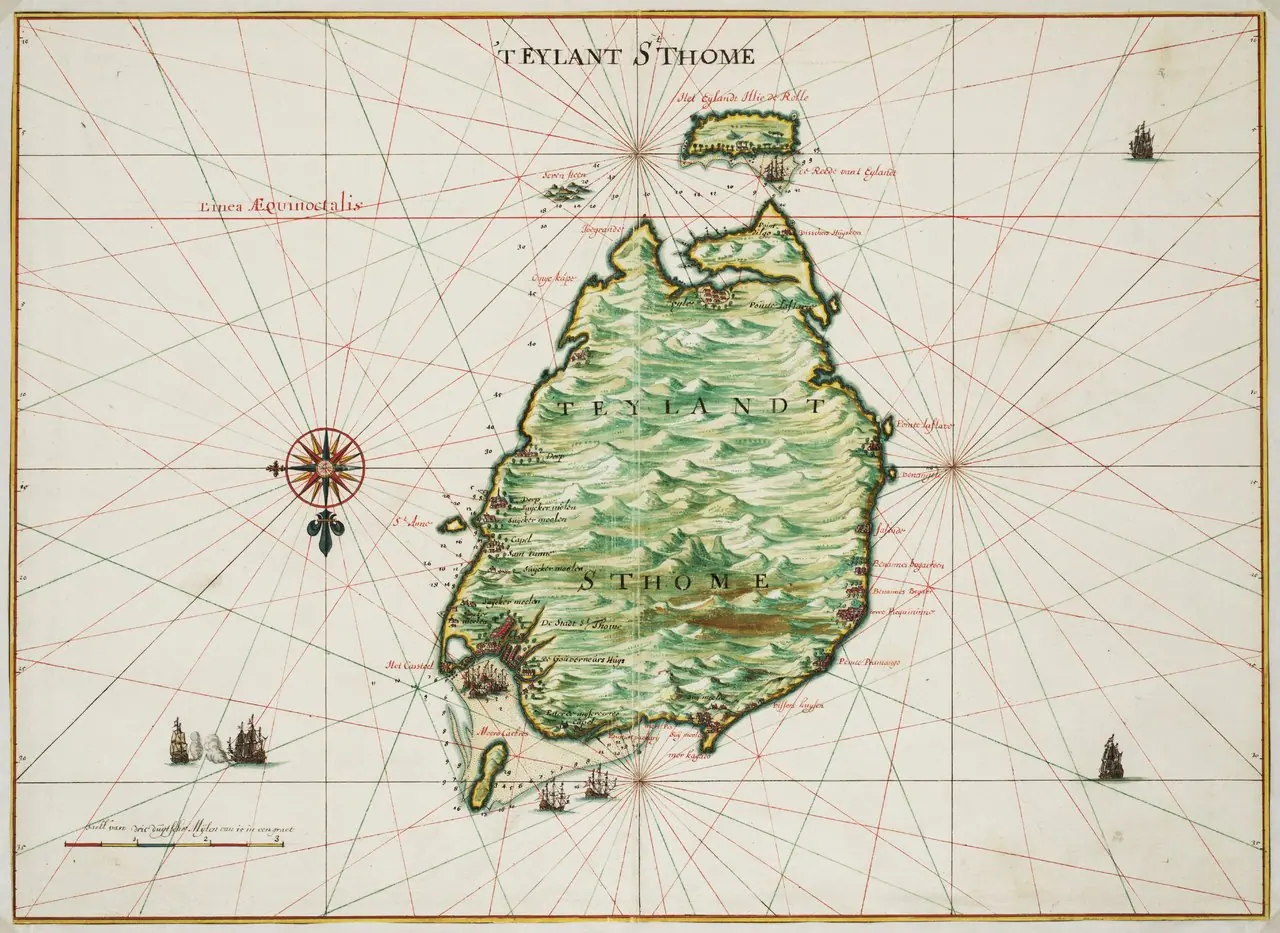
Two volcanic islands rise out of the Gulf of Guinea where the equator slips past their southern tip, and the first thing that hits you is the green — rainforest pouring down the slopes, cocoa trees sweating in the mist, and water the colour of bottle glass. São Tomé and Príncipe is one of Africa's smallest and least-visited countries, which is exactly the point: empty sand, plantation ruins under the vines, and a volcanic spire that looks drawn by hand.
Pico Cão Grande and the Cloud Forest of Ôbo Natural Park
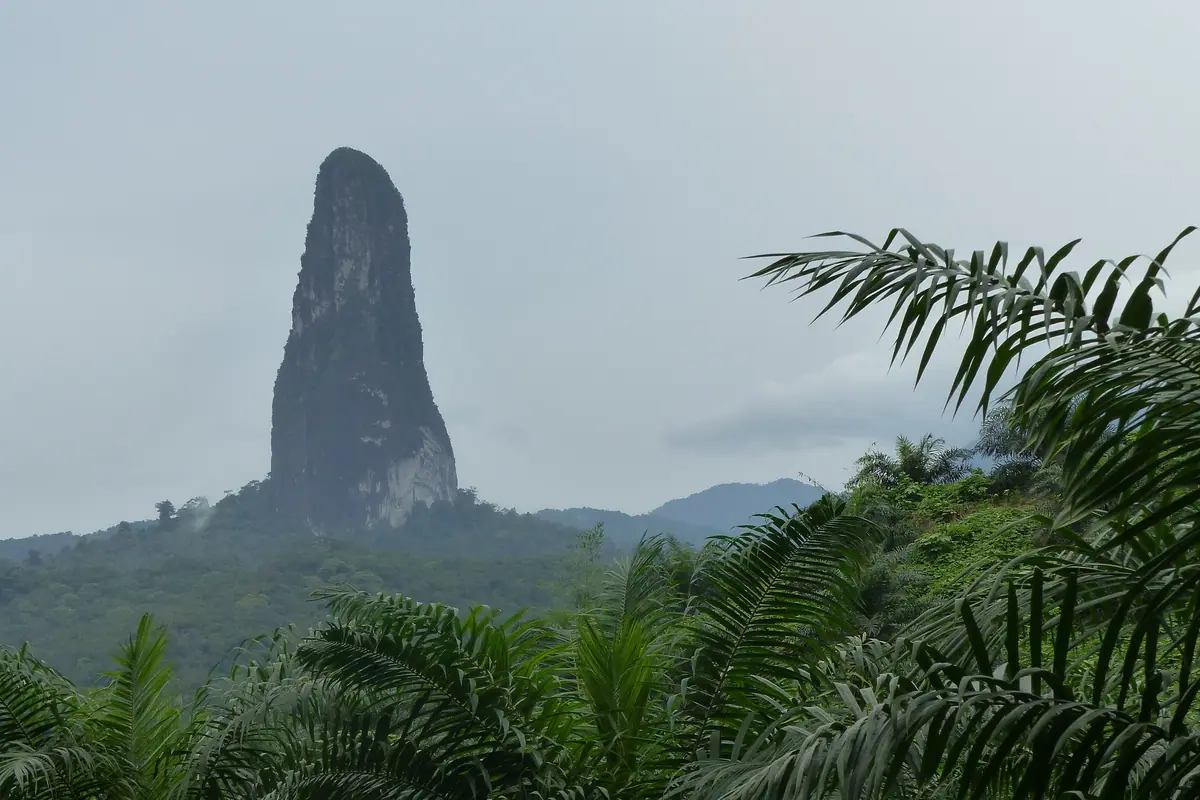
The pin-up of São Tomé is Pico Cão Grande, a 663-metre volcanic plug that shoots out of the southern rainforest like a needle, usually with a wisp of cloud caught on its tip. You don't casually climb it — the rock needs ropes, experience and a local guide — but you can walk the trails around its base, where the light comes through the canopy in shafts and the noise is nothing but insects and water. The drive down past Vila Malanza to see it from the roadside plantation is one of the island's essential photographs.
Most of the interior falls inside Ôbo Natural Park, a protected block that covers a huge share of São Tomé and stretches across to Príncipe. The signature walk is up to Lagoa Amélia, a crater lake in the central massif reached on a muddy, root-clogged trail from Bom Sucesso — plan four to six hours and start early, while the cloud is still below you. Around it grows genuine cloud forest: giant begonias, tree ferns, orchids clinging to every branch.
This is birding country. The islands hold dozens of species found nowhere else on earth, including the São Tomé giant sunbird, the dwarf ibis, the maroon pigeon and the São Tomé scops owl. Trails are unmarked, leeches exist, and guides are not optional — hire one through a local operator in the capital and take long sleeves, sturdy shoes and more water than you think you need.
The Equator, Lagoa Azul and the Southern Beaches
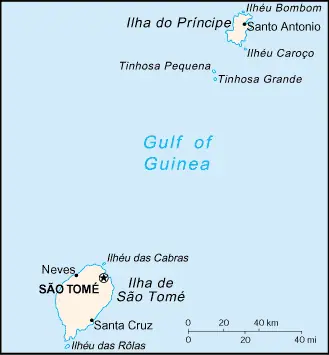
São Tomé is one of the few places where you can stand on the actual zero-degree line without squinting at a signboard: the equator crosses Ilhéu das Rolas, a small islet off the southern tip, marked by the Ponta do Equador monument. Boats run across from the Porto Alegre area, and the crossing alone is worth it — the water shifts from cold green to swimming-pool blue in a few hundred metres.
Back on the main island, Lagoa Azul on the north-west coast is the classic swimming spot, a sheltered inlet of absurd turquoise water hemmed in by black volcanic rock, calm enough for snorkelling and lazy enough for a whole afternoon. Carry on south and you reach Praia Jalé, where hawksbill and green turtles come ashore to nest between roughly November and March, and Praia Piscina, a natural rock pool that refills with each wave. Nearby, Boca do Inferno — 'mouth of hell' — is a blowhole that erupts through a lava tube when the swell is right.
Cocoa, Roças and a Plantation Past
São Tomé and Príncipe was once one of the world's great cocoa producers, and the roças — the old plantation estates — are the country's most haunting monuments. Roça Água Izé on the east coast is the biggest and most atmospheric: a whole colonial town going quietly back to jungle, with a chapel, a hospital and vast silk-cotton trees standing over the shells of warehouses. People still live and work there, so walk respectfully and ask before photographing.
Higher in the hills above Trindade, Roça Monte Café sits among coffee terraces and still produces beans, with a small museum in the old drying house. On the south-east coast, Roça São João dos Angolares has been restored and now hosts long communal dinners and evenings of local music — a rare chance to eat Angolar cooking, built on fish, palm oil and smoked flavours, rather than hotel food.
You'll see cocoa everywhere: beans drying on roadside racks or in wooden 'bombas' trays, pods split open with machetes. Small-batch dark chocolate made on the islands is the souvenir worth carrying home, and several producers around Trindade and the north let you watch the whole bean-to-bar process.
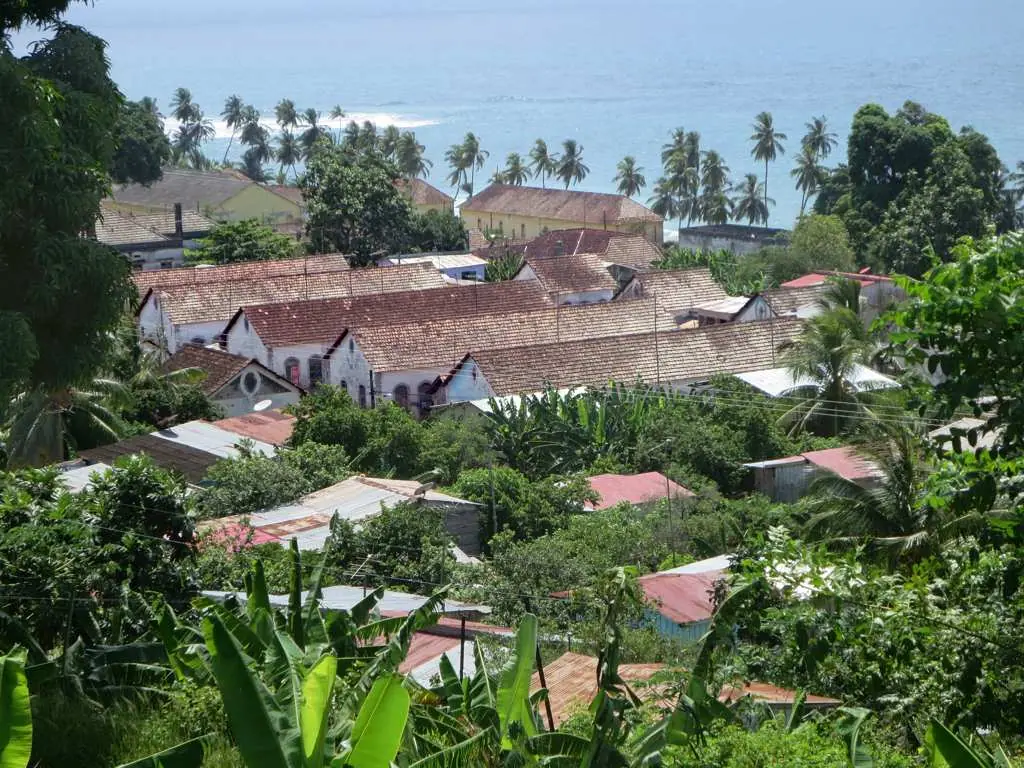
São Tomé City: Forts, Markets and Faded Colonial Squares
The capital is small enough to cover on foot in half a day, and it wears its history openly. Fort São Sebastião, a squat 16th-century fortress on the waterfront, holds the national museum — a compact, affecting collection of colonial-era religious art, furniture and material on the country's plantation and slave-trade history. Just along the bay, the Sé Cathedral anchors Independence Square, rebuilt so many times over the centuries that it reads like a layered record of everything the island has been through.
The Mercado Municipal is where the city actually lives: fish, mangoes, breadfruit, huge bunches of herbs and the small fiery chillies locals call pimenta. Nearby, the Igreja de Conceição is one of the oldest surviving religious buildings in the islands, plain and whitewashed, and the waterfront promenade fills with families and football games at dusk.
Use the capital as a base rather than the whole trip. From here you can reach the northern beaches at Praia das Conchas and Praia Sete Ondas in under an hour, and the market in Trindade — the island's second town, in the cool highlands — is a good stop on the way to the roça country.
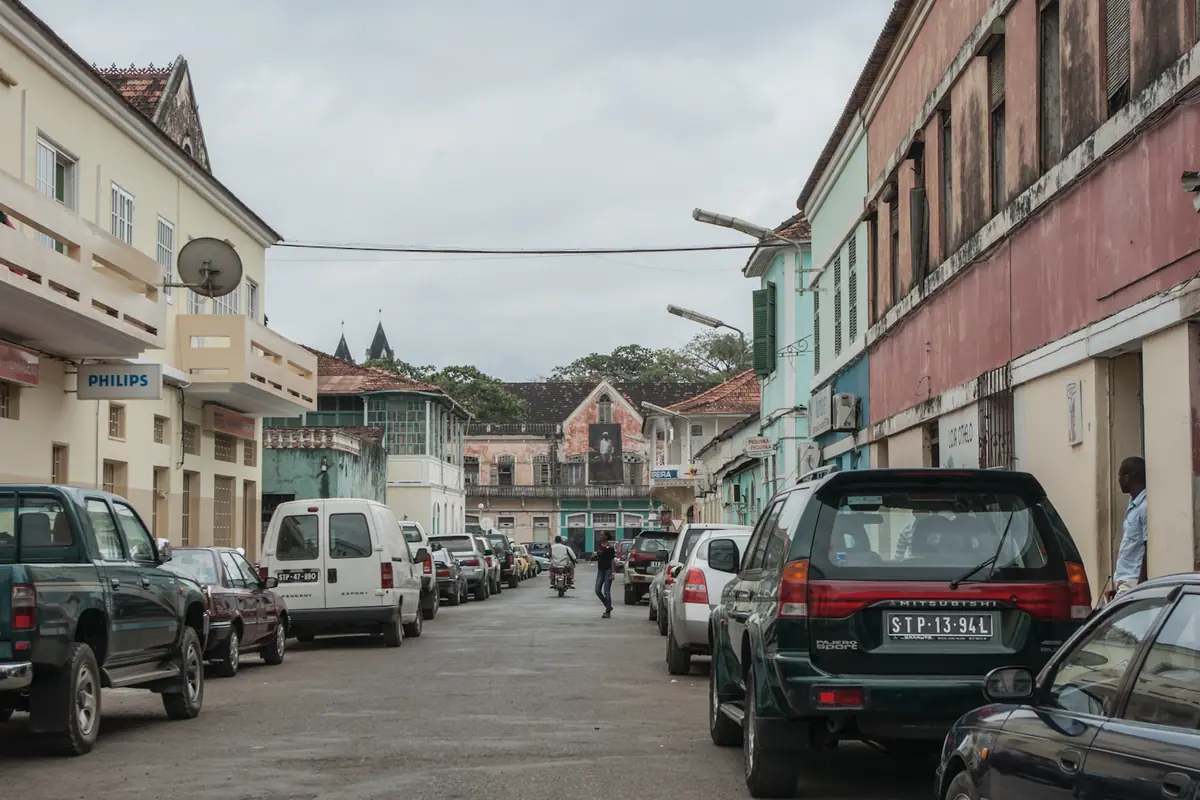
Príncipe: Santo António, Roça Sundy and Praia Banana
Príncipe is the smaller, older, sleepier island, and its capital Santo António is often called the smallest capital city in Africa — a few thousand people, a bay full of fishing canoes, pastel Portuguese houses and a market that wraps up by late morning. The whole island is protected as a biosphere reserve, which means the forest runs unbroken from the shoreline to the 947-metre Pico do Príncipe, home to the Príncipe kingfisher, the Príncipe thrush and the golden weaver.
History sits oddly in the jungle here. Roça Sundy is the plantation where, during the solar eclipse of 1919, observations helped confirm Einstein's theory of general relativity — a fact that still feels improbable standing among the palms. Inland, the old roça buildings at Belo Monte and around the island's northern edge give the same crumbling-empire atmosphere as São Tomé's estates, only quieter.
The beaches are the reason many people never leave. Praia Banana is a perfect curve of sand framed by palms and named for its shape; Praia Boi and Praia Abade are broader and emptier; the islet of Bom Bom offers calm snorkelling just offshore. On Praia dos Ovos — 'beach of eggs' — sea turtles haul themselves up to nest, and guided night walks let you watch without disturbing them.
On the Water: Diving, Humpback Whales and When to Go
The diving is volcanic and largely untrafficked: lava ridges, boulder fields and steep drop-offs with groupers, morays, stingrays and the occasional manta, plus reef fish found only in this part of the Atlantic. There are dive operations around the capital and near Ilhéu das Rolas, but snorkellers lose nothing — Lagoa Azul, the Rolas shoreline and Bom Bom all offer clear, sheltered water. Big-game anglers come for sailfish and marlin, and a morning out with local line fishermen, hand-lining off a wooden canoe, is one of the cheapest, most memorable half-days you can book.
Between roughly July and October, humpback whales move through the Gulf of Guinea on their migration, and dolphin pods are common year-round. Boat trips out of Neves or the southern coast give the best odds; go early, when the sea is flat.
For weather, aim for the gravana, the dry season from June to September, when the air is cooler, the trails hold up and the rainforest is at its most walkable. December to February is a shorter, hotter dry window; March to May and October to November bring heavy, if usually brief, downpours and slippery hiking. Temperatures sit around 24–30°C all year. Give the country five to seven days — three of them on Príncipe, reached by a short hop of around 35 minutes from São Tomé — and bring cash, since ATMs outside the capital are scarce.
Frequently asked questions
When is the best time to visit São Tomé and Príncipe?
The dry season known locally as the gravana, from June to September, is the most comfortable window: less rain, cooler air and firmer hiking trails. December to February is a shorter dry spell with higher humidity. March to May and October to November are the wettest months, with heavy but often short downpours. Temperatures stay between roughly 24°C and 30°C year-round.
How long do I need, and how do I get to Príncipe from São Tomé?
Five to seven days lets you see both islands without rushing. The two are linked by a short flight of about 35 minutes or a much longer ferry crossing, and the flight is the practical choice. Plan at least three nights on Príncipe, because the island rewards slow days on empty beaches and forest walks rather than ticking off sights.
Do I need a guide to hike Pico Cão Grande or Ôbo Natural Park?
Yes. The forest trails are unmarked, frequently muddy and easy to lose in cloud, and the rock spire itself is a technical climb for experienced climbers only. Local guides, arranged in advance through operators based in São Tomé city, are essential — and they're also the ones who will find you the endemic birds.
Is São Tomé and Príncipe safe and easy to travel around?
It's a calm, low-crime destination and travel between towns is straightforward, though roads are narrow and slow and driving is on the right. The main frustrations are practical rather than dangerous: limited ATMs and card acceptance outside the capital, patchy internet, and scarce public transport. Bring euros or local dobras in cash.
What language is spoken, and what should I pack?
Portuguese is the official language, with Portuguese-based local creoles also widely spoken; English and French are limited outside hotels and guides. Pack light long sleeves and trousers for forest walks, sturdy closed shoes, strong insect repellent, a rain shell even in the dry season, and reef-safe sunscreen. A torch is useful for turtle walks on Praia Jalé and Praia dos Ovos.
Plan it — experiences in Sao Tome and Principe
Live search, booked directly with trusted providers.
Sort the rest of your trip
Everything for Sao Tome and Principe, in one place
Stay in Sao Tome and Principe
Hotels, guesthouses and apartments — compared in one search.
Search hotels
Transfer in Sao Tome and Principe
Private driver waiting on arrival — no queues, no surprises.
Book a transfer
Stay online in Sao Tome and Principe
Travel eSIM — data the moment you land, no roaming bills.
Get an eSIM