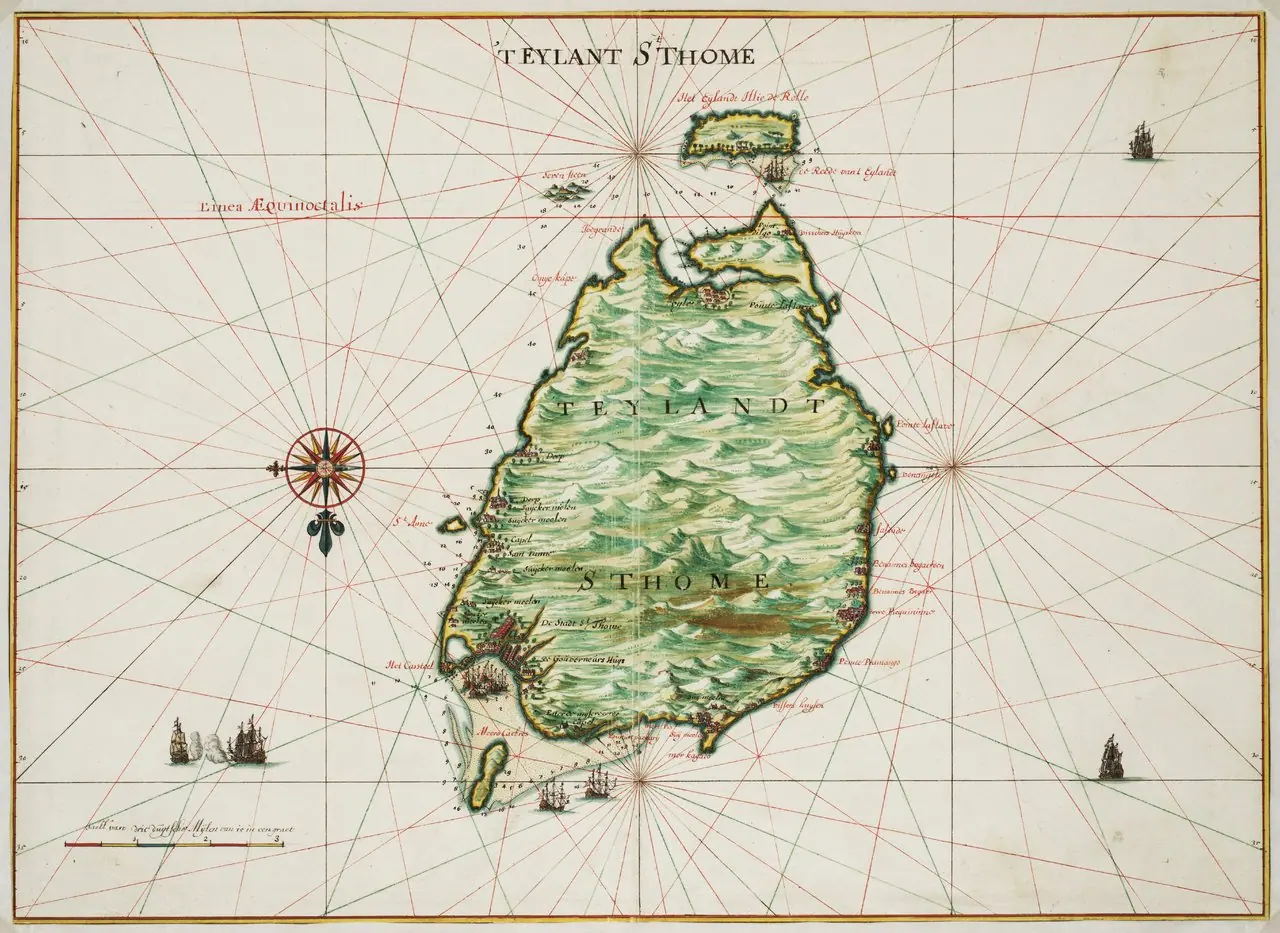
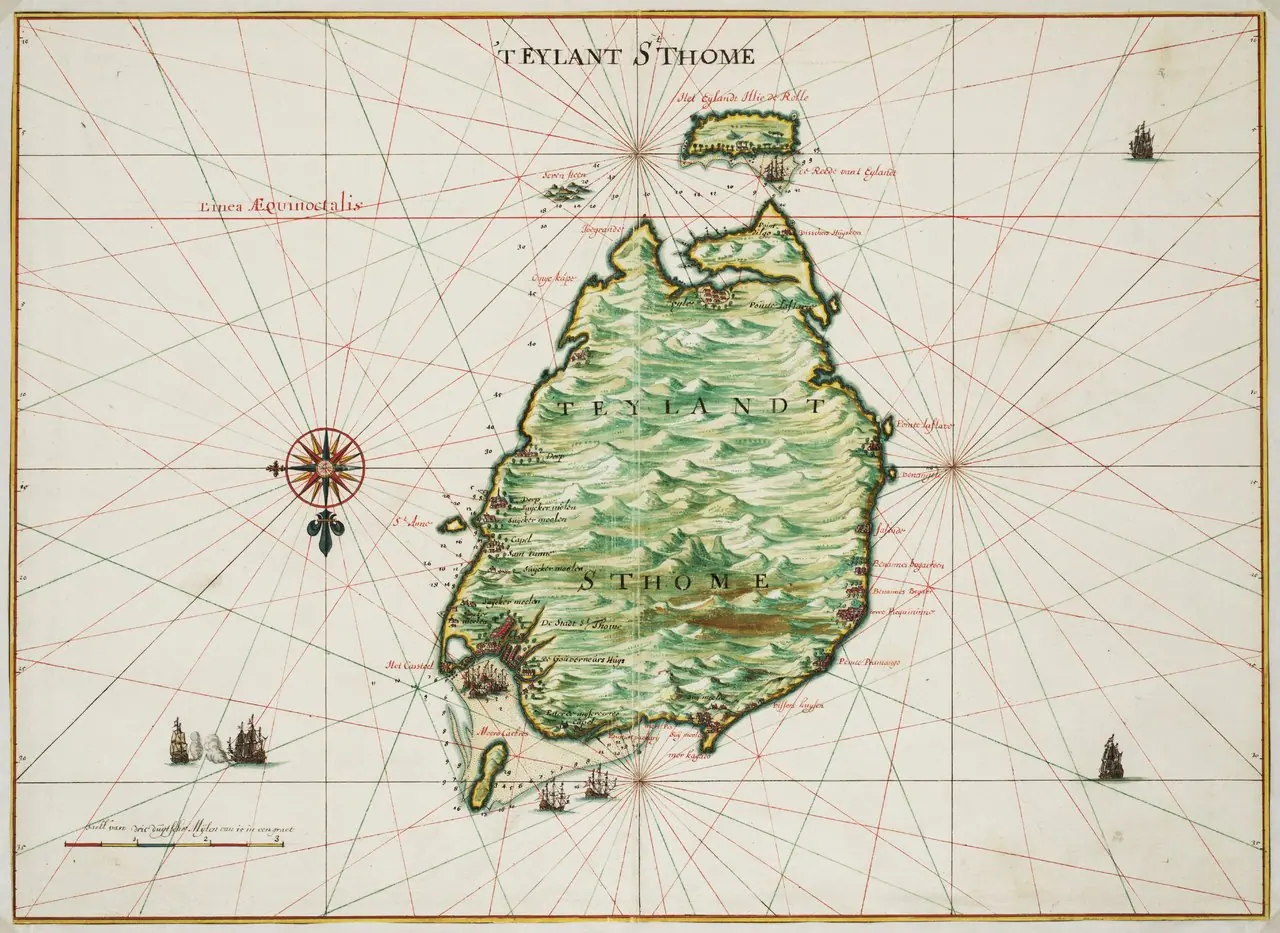
Two volcanic islands adrift in the Gulf of Guinea, where cocoa roças crumble into rainforest and the Atlantic crashes against black rock — São Tomé and Príncipe rewards travellers who move slowly but plan sharply. One week is enough for both islands if you fly between them rather than lose days to the sea. Here is how to spend seven days well.
Days 1–2: Land in São Tomé City and Find Your Feet
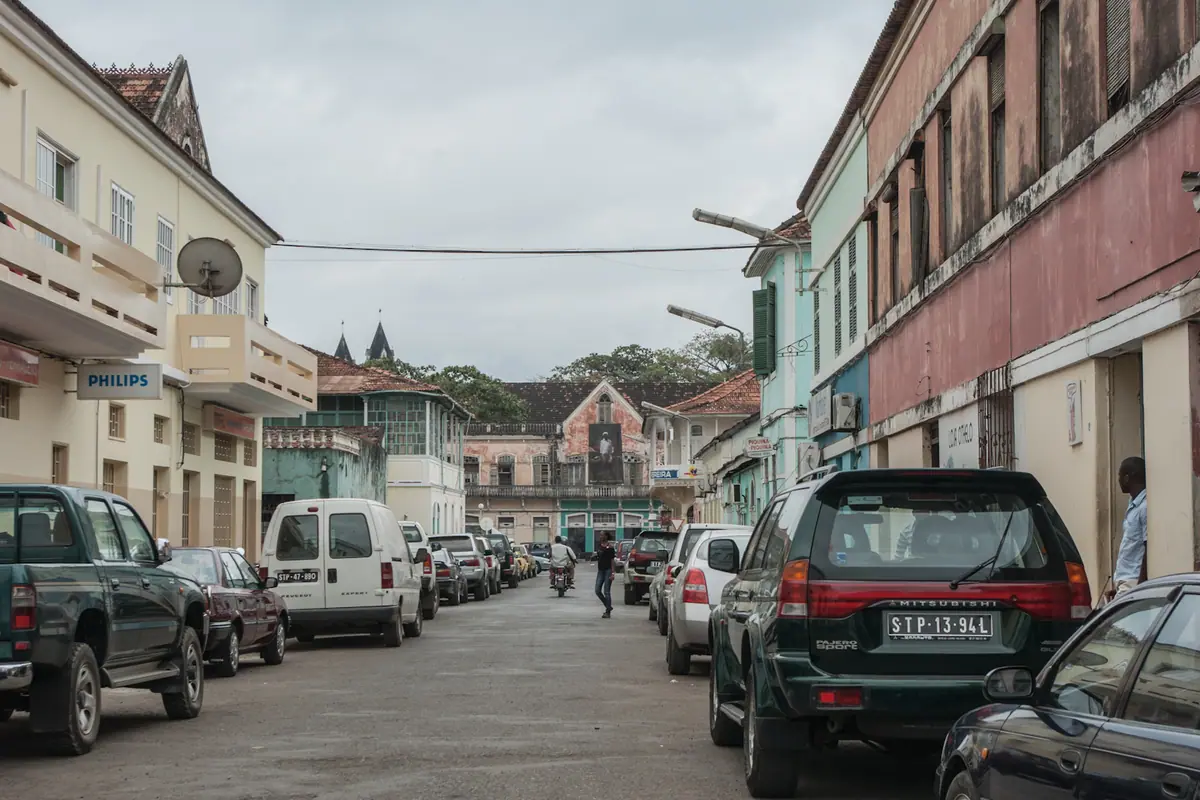
Most long-haul arrivals touch down at São Tomé International Airport in the evening, after roughly six hours in the air from Lisbon, so treat your first night as a soft landing. Base yourself in or just outside the capital and wake early to the sound of the city's market — the Mercado Municipal is a swirl of smoked fish, tropical fruit, palm oil and cinnamon bark, and it is the best introduction to how the islands eat. From there, walk the Avenida Marginal 12 de Julho along the bay, past colonial arcades fading in the humidity, to the Cathedral of São Tomé, a sturdy 16th-century survivor of Dutch and French raids.
Spend the afternoon at Fort São Sebastião, the star-shaped fortress on the waterfront, which now houses the national museum and tells the story of Portuguese settlement, sugar, and the cocoa boom that followed. Two hours there is plenty, leaving time for a swim at Praia Gamboa or a boat hop out to the Ilhéu das Cabras, the twin islets just offshore. Eat dinner late, as locals do, and order calulu — a rich stew of fish or meat with greens and palm oil — before an early night.
Day two is your city-and-forest warm-up. Hire a driver for the half-day climb up to Lagoa Amélia in the misty highlands, a crater lake ringed with giant tree ferns and begonias; the walk in takes about 90 minutes each way and is muddy even in the dry season. On the way back, stop at the Botanical Garden near Bom Sucesso and get your first taste of the island's extraordinary orchids.
Day 3: Cocoa Roças and the Northern Coast
Head north and inland on day three, where the island's plantation past is most visible. Monte Café, a hillside roça at around 600 metres, still has its old drying terraces and a coffee museum, and the air up there is cool enough to need a light layer. Continue to Roça Água Izé on the coast, once the largest cocoa estate in the archipelago — its hospital, chapel and vast warehouses stand roofless among cocoa trees, and walking through them takes under an hour but lingers far longer.
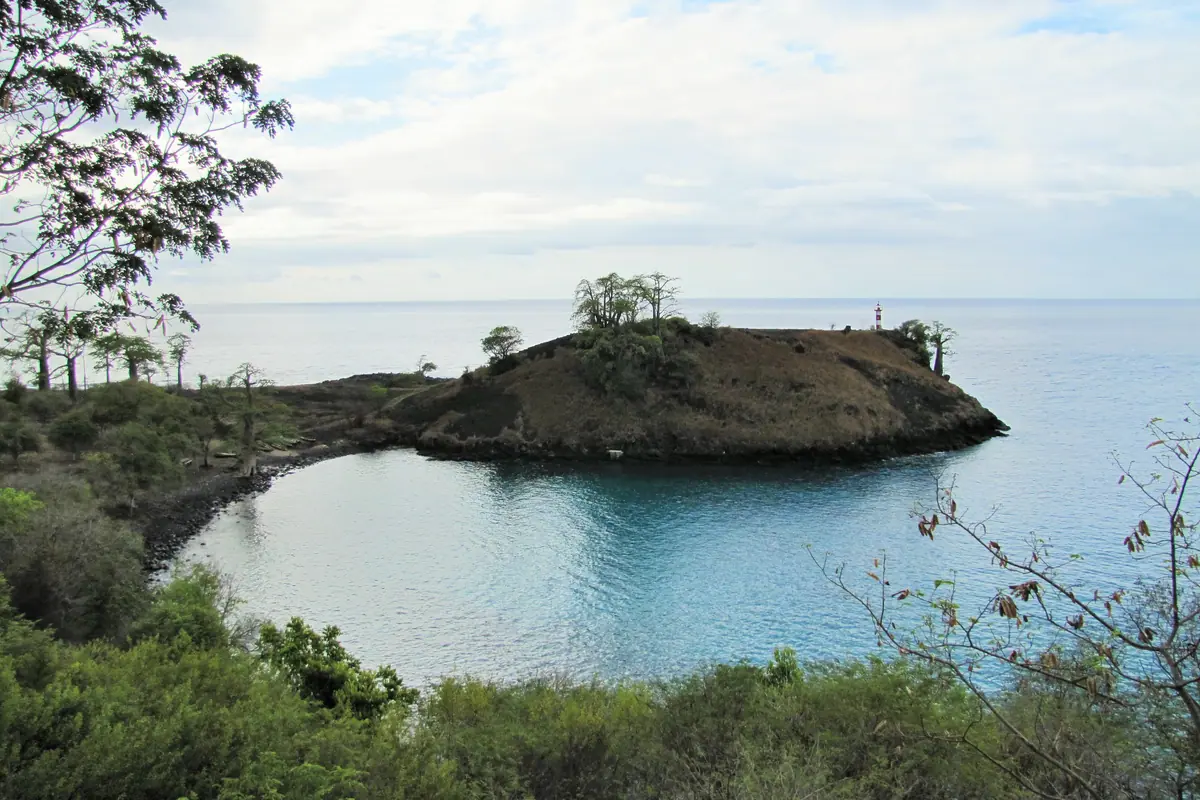
Then go west for the coast's showpieces. Lagoa Azul is a glass-clear inlet of turquoise water sheltered by black volcanic rock, ideal for snorkelling and easily one of the most photographed spots in the country. A short drive further brings you to Boca do Inferno, a blowhole where swell explodes through a lava tube with a roar you hear before you see. Around Morro Peixe, fishing canoes still come in at dusk, and you can pick up grilled fish straight off the beach.
If cocoa is your interest, arrange a visit at a working estate in the north-west, where fermenting boxes and drying platforms are still in daily use and the chocolate made from these beans is among the most prized in the world. The drive back to the capital takes about two hours on paved road, longer if rain has chewed the edges.
Day 4: Pico Cão Grande and the Wild South
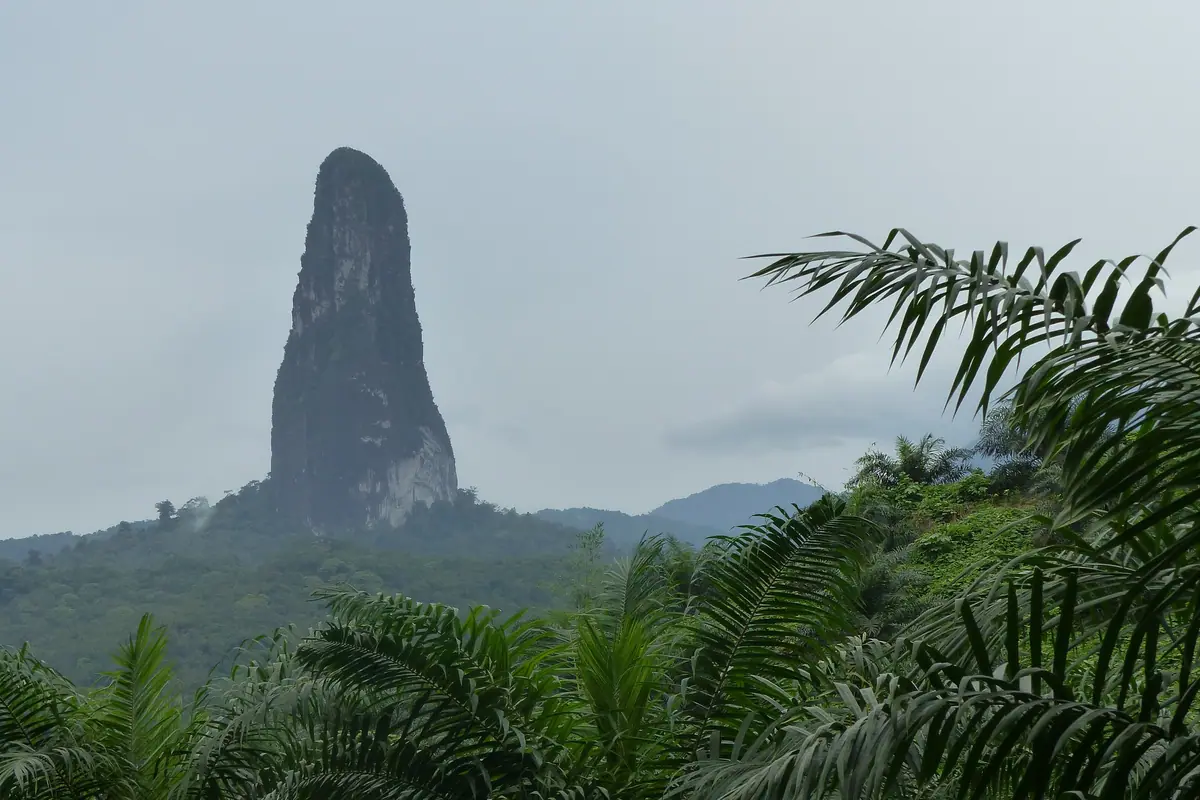
The south is the island at its most dramatic. Drive down the coast to the viewpoint over Pico Cão Grande, a 300-metre volcanic needle that punches out of the forest and is the emblem of São Tomé — it is best photographed in morning light before cloud wraps the summit. Nearby lies Ôbo Natural Park, the protected rainforest that covers much of the south, where trails lead to waterfalls, hidden swimming holes and, if you are patient and quiet, sightings of the islands' endemic birds such as the São Tomé grosbeak and dwarf ibis.
Push on to São João dos Angolares, a fishing town with a relaxed restaurant-and-guesthouse culture, then to Praia Jalé and Praia Piscina, where a natural rock pool fills and drains with the tide. Between November and March, Praia Jalé is one of the Atlantic's most reliable turtle-nesting beaches; guided night walks are the only responsible way to see it, and hatchlings usually emerge about two months later.
Stay the night in the south rather than driving back in the dark — roads are unlit, potholed in places and often crossed by dogs and motorbikes. A simple guesthouse in São João dos Angolares or near Porto Alegre costs little and puts you within reach of the sunrise.
Days 5–6: Fly to Príncipe, the Quieter Island
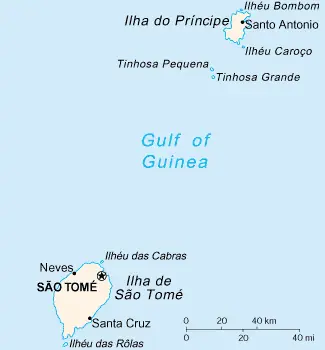
Príncipe is a 35- to 45-minute hop from São Tomé in a small twin-prop aircraft, and the flight itself is a highlight — you cross open water before the second island rises green and mountainous beneath you. Book seats well in advance, expect a strict baggage allowance of around 15 kilograms in soft bags, and accept that afternoon weather can delay departures. On arrival in Santo António, the tiny colonial capital, nothing moves fast: the cathedral, the old roça buildings and the market take an hour to walk, and that is the point.
Spend your full day on Príncipe in the north and the interior. Praia Banana, a curve of pale sand backed by palms, is the island's signature beach and was named for its shape. Nearby Roça Belo Monte offers a window into plantation life, while a boat trip to the Bom Bom islet gives you snorkelling over shallow reef. Inland, the trail up Pico do Príncipe climbs through mist forest that has barely been touched, and the abandoned roça of Nova Estrela, half-swallowed by vegetation, is a haunting detour on the way to the southern beaches.
Príncipe's whole island and its islets form a UNESCO biosphere reserve, so expect low-key tourism, few vehicles and long empty stretches of sand. Two nights is the minimum; three is better if the weather turns.
Day 7: The Equator at Ilhéu das Rolas, Then Home
Fly back to São Tomé in the morning and use your last day for the equator. A short boat ride from Porto Alegre reaches Ilhéu das Rolas, a small island straddling the zero-degree line, where a monument marks the exact spot and you can genuinely stand with one foot in each hemisphere. The surrounding reef is calm and clear, good for an easy final snorkel, and the beaches on the islet are quiet even in high season.
If time is short before your flight, swap Rolas for Cascata São Nicolau, a cool waterfall a short walk from the road in the south, or a last wander through the capital's craft stalls for woven baskets and island chocolate. Allow three hours at the airport before an international departure — check-in is slow, and the terminal fills quickly on the two or three days a week when long-haul flights leave.
The dry gravana season runs roughly from June to September, with a shorter dry window from December to February and heavy rain in March to May and October to November. Pack light cottons, reef-safe sunscreen, a rain shell for the highlands and sturdy shoes for mud. Bring euros to change into dobras, as ATMs are scarce and unreliable outside the capital, and arrange antimalarial advice before you travel.
Frequently asked questions
How do I get to São Tomé and Príncipe?
Most travellers fly from Lisbon, a flight of about six hours that usually arrives in the evening. There are also connections through West African hubs and occasional regional services, but options are limited and schedules change, so book early. If you are coming from North America, expect at least one overnight stop in Europe.
How do I get between São Tomé and Príncipe?
A small aircraft covers the 150-odd kilometres in 35 to 45 minutes. Seats are limited, baggage allowances are tight (around 15 kilograms, soft bags only), and afternoon cloud can cause delays or cancellations. Book well before your trip and keep a flexible final day.
When is the best time to visit?
June to September is the driest and coolest stretch, known locally as the gravana, with the clearest roads for the south. December to February brings a second, shorter dry spell. March to May and October to November are wettest, with heavy downpours and slippery forest trails.
Is one week enough for both islands?
Yes, if you fly rather than take the ferry. Four days on São Tomé and two on Príncipe works well, though three nights on Príncipe is more relaxing. Trying to add more islands or long multi-day treks will leave you rushed.
Should I bring cash, and is it safe?
Bring euros in cash and change them into dobras locally — card acceptance is patchy and ATMs outside the capital are unreliable. The islands are generally calm and welcoming, but take the usual precautions in markets, avoid walking unlit roads at night, and use a registered guide for forest hikes and turtle walks.
Plan it — flights in Sao Tome and Principe
Live search, booked directly with trusted providers.
Sort the rest of your trip
Everything for Sao Tome and Principe, in one place
Stay in Sao Tome and Principe
Hotels, guesthouses and apartments — compared in one search.
Search hotels
Transfer in Sao Tome and Principe
Private driver waiting on arrival — no queues, no surprises.
Book a transfer
Travel insurance
Medical cover, delays and lost baggage — sorted before you go.
Get covered