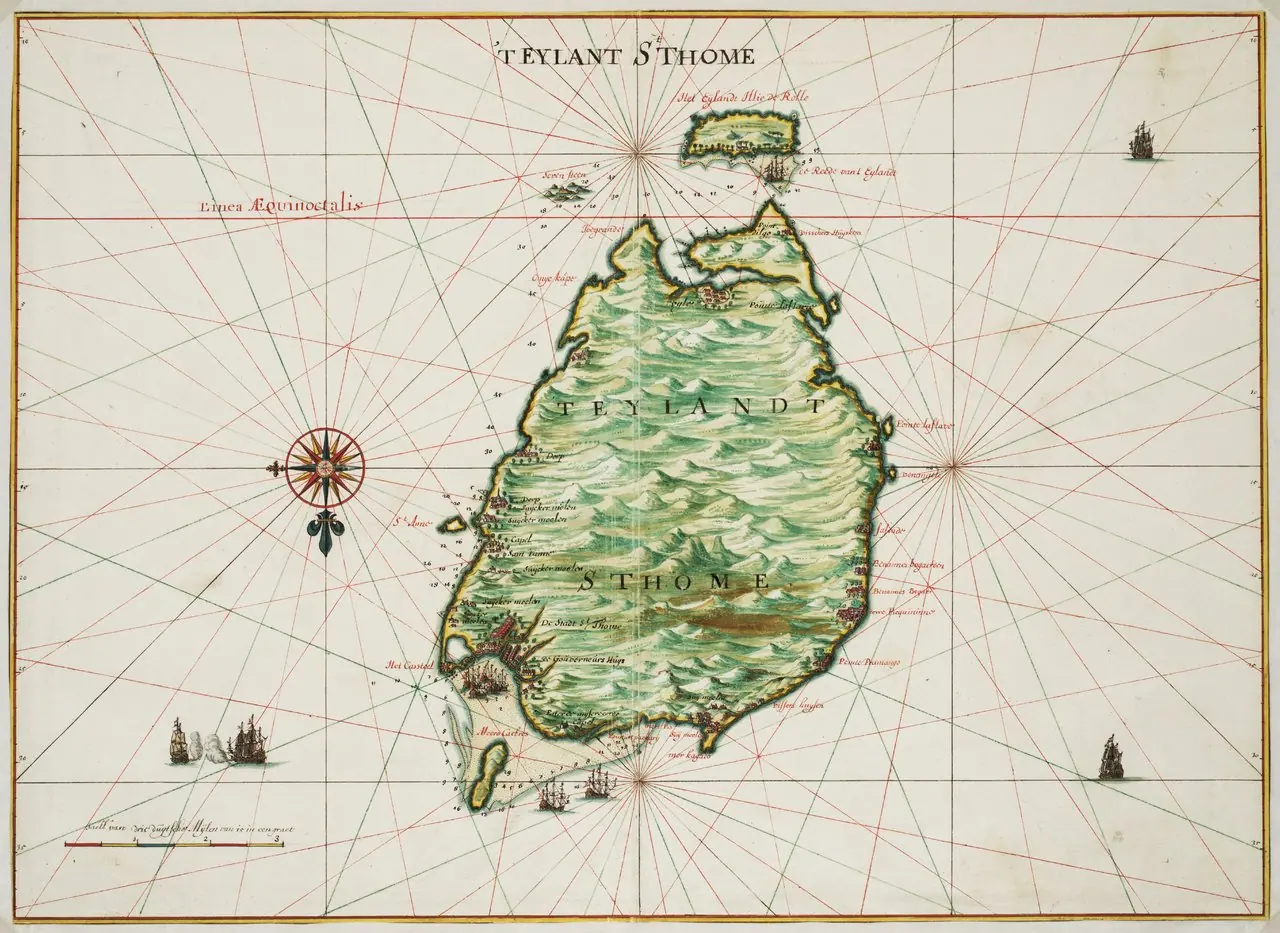
São Tomé and Príncipe sits almost exactly on the equator, so its year is not divided into summer and winter but into two dry windows and two wet ones. Choosing the right one decides whether you spend your days on the summit trail of Pico de São Tomé or under a beach umbrella at Praia Jalé — and whether the island lodge you want still has a room.
The Shape of the Year: Two Dry Seasons on the Equator
These two volcanic islands lie in the Gulf of Guinea roughly 300 kilometres off the coast of Gabon, close enough to the equator that daylight barely shifts and temperatures hardly move. Daytime highs hover between 27°C and 32°C on the coast all year, nights in the hills drop to around 18°C, and the sea stays warm enough for a long swim in any month. What changes dramatically is rain — and rain here means short, heavy, tropical downpours rather than grey drizzling days.
The yearly rhythm runs like this: a cool, dry season known locally as the gravana from roughly June to September; a hot, dry window from December to February; the long rains from March to May; and a shorter wet spell in October and November. The dry months are not identical twins. The gravana, blown in by cooler South Atlantic air, brings overcast mornings in the highlands, a stiff breeze on exposed coasts and the most comfortable hiking weather of the year. December to February is hotter and stickier but delivers reliably bright skies over the northern beaches and the offshore islets.
Because the islands are mountainous, the interior writes its own weather. You can leave a sunlit guesthouse on the north coast, climb into the mist and drizzle around Lagoa Amélia within an hour, and come back down to a warm, dry beach. Packing a light rain shell is good advice in every single month.
June to September: The Gravana, Prime Time for Hiking and Endemic Birds
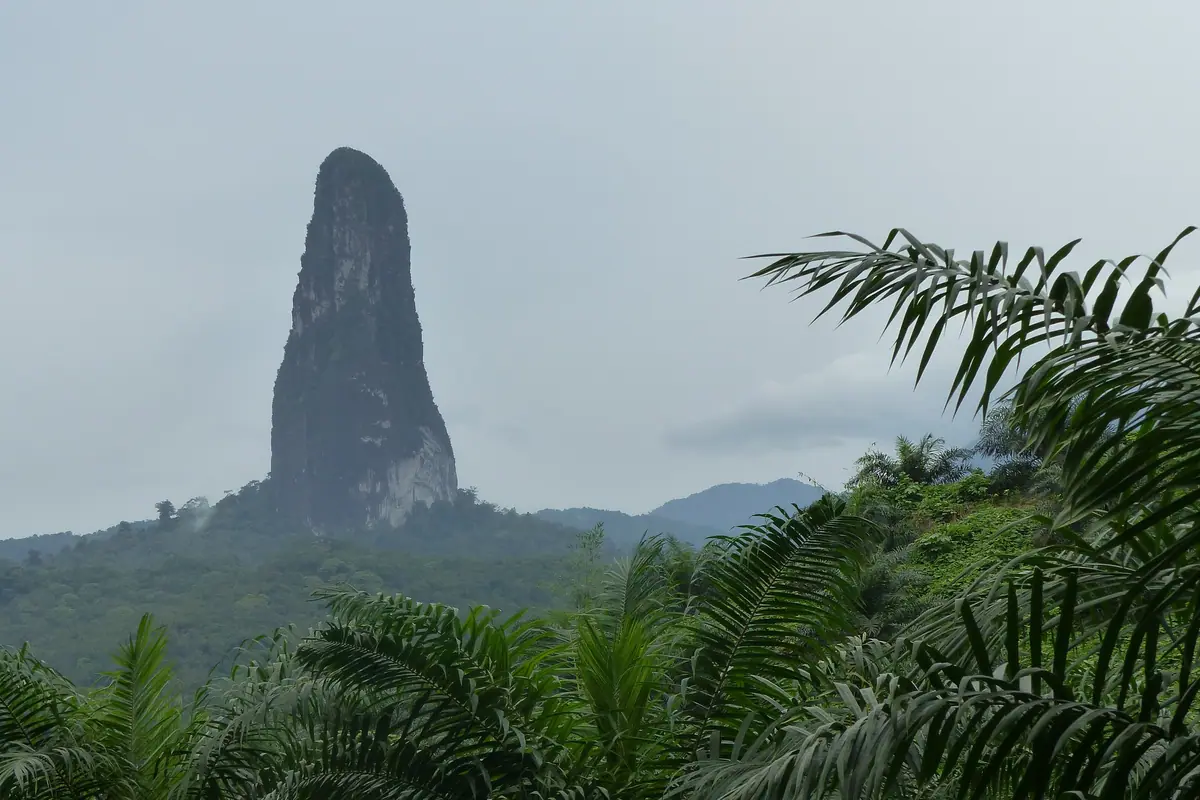
If your trip revolves around trails rather than sun loungers, this is the window to aim for. The forest inside Ôbo Natural Park — which covers a huge share of São Tomé's interior — is at its most walkable now, with firmer footing on the mud-heavy paths and clearer, cooler air on the climbs. Guides lead day hikes to the dramatic spire of Pico Cão Grande, the 663-metre volcanic needle that has become the country's signature silhouette, and longer expeditions to the 2,024-metre summit of Pico de São Tomé, usually tackled as a demanding full day or an overnight camp.
Birders favour the same months, when the forest drips and rustles with more than two dozen endemic species: the São Tomé grosbeak, the dwarf olive ibis, the maroon pigeon and the fis cal shrike, among others. Mornings in the mist forest around Lagoa Amélia are the classic time to listen for them. August and September also coincide with the annual humpback whale migration through these waters, so boat trips occasionally turn into impromptu wildlife watches.
The trade-off is crowds — modest by global standards but real, because European holidaymakers arrive in force from late July through August and the islands have a very small number of beds. Plan several months ahead for these weeks, and expect lodge availability on Príncipe, in particular, to vanish first.
Late in the dry season some waterfalls, such as the roadside Cascata de São Nicolau on the southern route, thin to a trickle rather than a torrent — worth knowing if cascades are a priority for you.
December to February: Hot, Bright Days for Beaches, Islets and the Equator Line
This is the postcard version of the country. The northern coast is at its most inviting, with calm, clear water at Lagoa Azul, the blue-green lagoon fringed by black volcanic rock, and long pale strands like Praia dos Tamarindos, where green turtles haul themselves ashore to nest between roughly November and March. The blowhole at Boca do Inferno, on the same stretch of coast, puts on its best show when the swell cooperates.
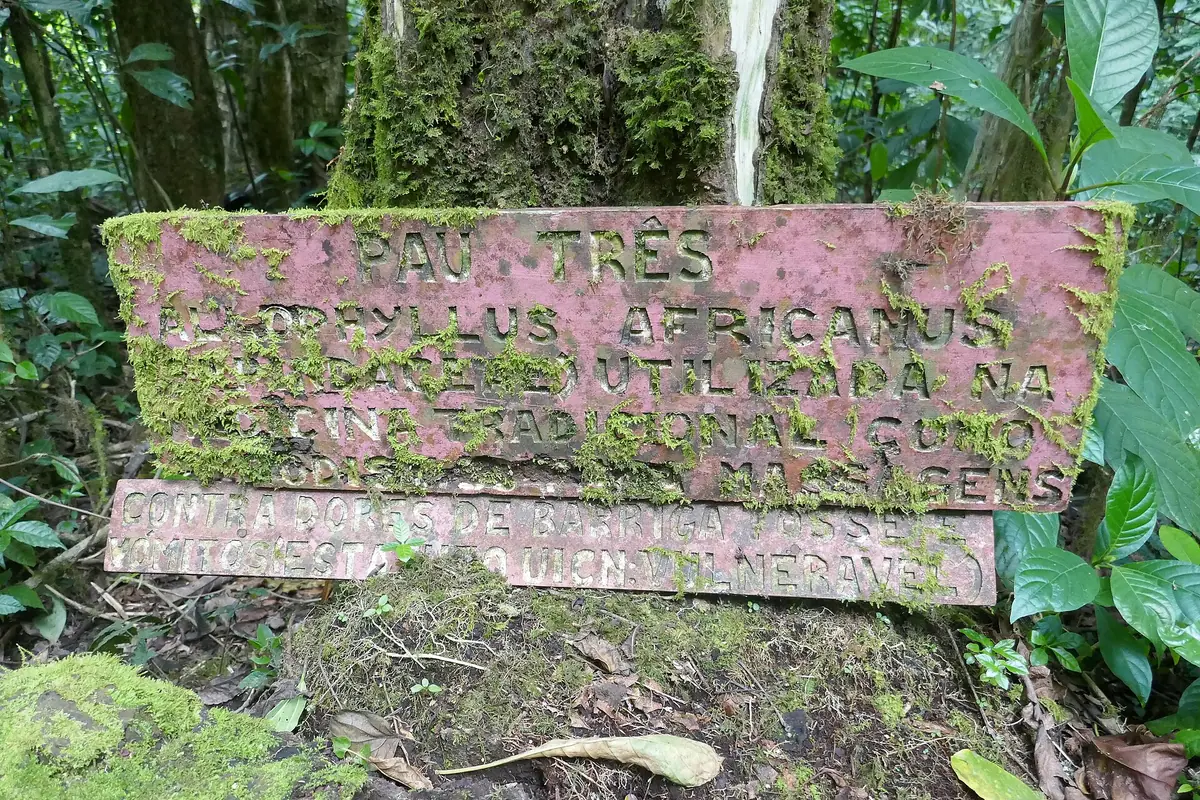
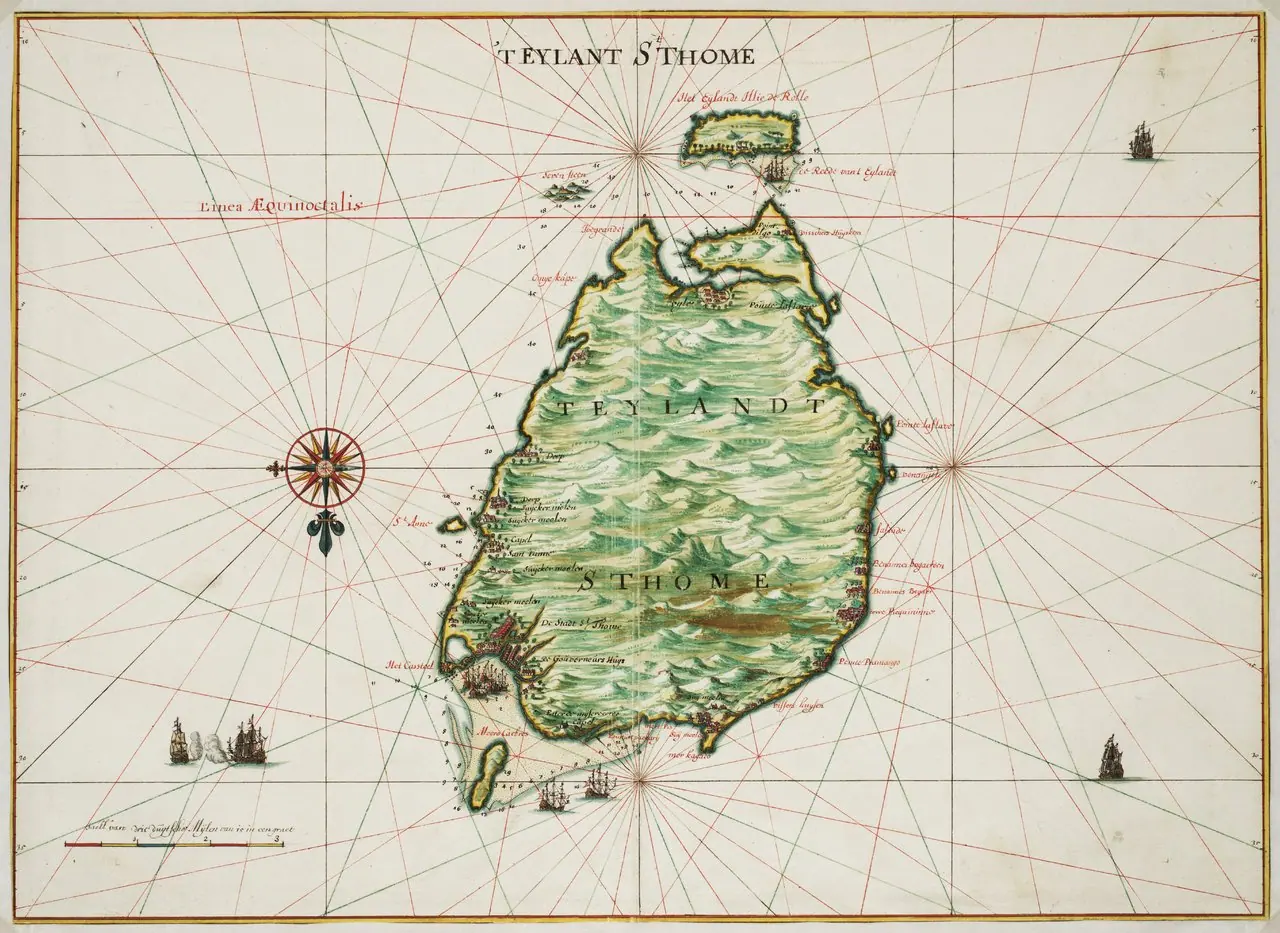
South of the capital, Praia Jalé and neighbouring Praia Inhame offer some of the easiest beach access on the island, and the islet of Ilhéu das Rolas — reached by boat from the southern tip — has the distinction of being sliced by the equator itself, marked by a small monument you can stand astride. On Príncipe, 150 kilometres to the north-east, the same months suit boat hops to Bom Bom islet and the picture-perfect curve of Praia Banana, which you may recognise from a certain old advertising campaign.
Visibility for snorkelling and diving is generally at its best in these drier, calmer weeks, and the sea temperature rarely dips below a bath-like 26°C. Do bear in mind that this is also the hottest and most humid stretch of the year, so build in a siesta and drink far more water than you think you need.
The Wet Months: March to May and October to November
March, April and May bring the heaviest rain of the year, with May typically the wettest of the lot, followed by a second, shorter wet phase in October and November. Tracks in the interior turn to slick clay, some forest trails become genuinely risky, and a handful of beach lodges shut or scale back for maintenance during the deepest part of the rains. River crossings can rise quickly, and the road down the wild south-east coast sometimes takes a battering.
What you gain is the country at its most extravagantly green. Waterfalls run full, the plantation-era houses and cocoa forests around historic roças such as Água Izé glow with new growth, and photographers get the dramatic skies and saturated colour that the dry months rarely deliver. Rains here tend to arrive as intense afternoon or overnight bursts rather than all-day drizzle, and mornings are often gloriously clear — so a wet-season itinerary is perfectly workable if you plan outdoor excursions early and keep afternoons flexible.
The other draw is value. Room rates soften, the few flights into Príncipe are easier to secure, and you may have a whole beach to yourself. Travellers who are comfortable with humidity and a little unpredictability often rate the shoulder weeks of late May and early June, or late September into early October, as the sweet spot: green landscapes, quiet trails and gentler prices.
Where to Base Yourself, and How the Calendar Changes Where You Book
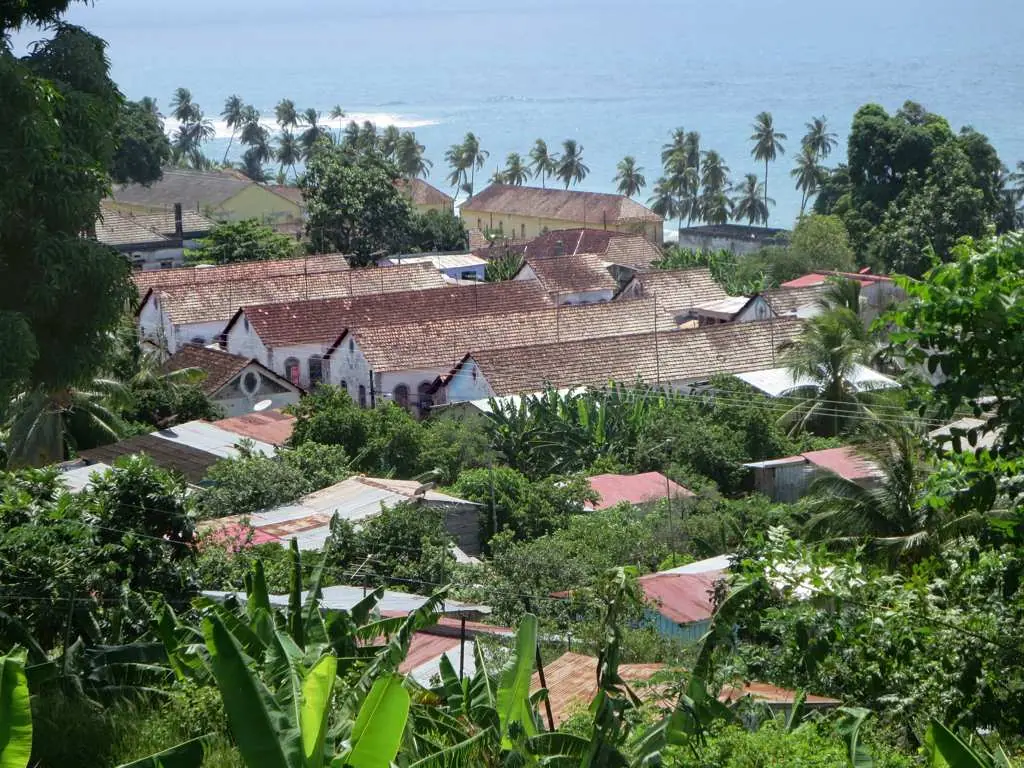
Most first-time visitors split their stay. In São Tomé city, the logical base for a night or two is the old waterfront quarter, where the 16th-century Fort São Sebastião houses the national museum, the cathedral and the presidential palace frame the main square and the municipal market spills over with cocoa, bananas and smoked fish. From there, the north coast resort strip around Lagoa Azul and Praia dos Tamarindos suits beach-focused travellers, while the south, near Praia Jalé and Porto Alegre, rewards those willing to drive further for quieter sand and turtle nesting.
Príncipe is a different proposition entirely. The whole island is a protected biosphere reserve, its capital Santo António is a small, sleepy town of pastel houses and a single main street, and the accommodation consists largely of converted plantation houses and a handful of small lodges with strict minimum stays. Flights from São Tomé take around 35 to 40 minutes, and seats are limited — book both the flight and the bed well in advance, especially for the dry-season months.
Timing your booking matters as much as timing your trip. Inventory across both islands is tiny, so Christmas and New Year, and the late July to August peak, can fill three to six months out. For the January–February window, aim for at least two to three months' notice if you want a specific room type. The heaviest rain months and the shoulder weeks either side are the only periods when you can reasonably decide late — and even then, the best small properties on Príncipe rarely sit empty for long.
Festivals, Flights and Practical Timing
Two dates are worth building a trip around. Independence Day on 12 July turns São Tomé city into a parade of music, drumming and flag-waving, and sits neatly at the start of the dry gravana. A month later, on 15 August, the coastal town of Neves stages the Auto de Floripes, a centuries-old street theatre re-enactment of a medieval Christian–Moorish battle performed by local families in elaborate costume — one of the most singular cultural events in the Gulf of Guinea. Accommodation near Neves and in the capital books up around both, so treat them as peak-season dates.
Getting here is straightforward but not cheap: most travellers arrive on direct flights from Lisbon, supplemented by connections through West and Central African hubs. Internal flights to Príncipe run several times a week and are the only practical way to link the two islands. Health preparation deserves early attention too — yellow fever documentation is commonly requested on arrival, and malaria prophylaxis is usually advised, so speak to a travel clinic at least a month before departure.
Finally, think about what you actually want from the trip. Hikers, birders and anyone planning to sleep in the misty highlands should target June to September. Beach lovers, divers and travellers chasing turtle hatchlings should aim for December to February. And if you want green valleys, quiet guesthouses and the lowest rates, accept a few spectacular downpours in March to May or October to November.
Frequently asked questions
What is the best month to visit São Tomé and Príncipe?
June to September is the most comfortable all-round window, thanks to the dry, breezy gravana that suits hiking and birdwatching. December to February is the better choice for beach time, diving and turtle nesting, though it is hotter and more humid.
When is the cheapest time to travel to São Tomé and Príncipe?
The long rains of March to May and the shorter wet spell in October and November bring the lowest room rates and the easiest availability. Expect heavy but usually brief downpours, muddy forest trails and some lodges reducing services or closing for maintenance.
How far in advance should I book hotels?
Further than you would expect. Both islands have very few beds, and Príncipe's lodges often impose minimum stays. Book three to six months ahead for Christmas, New Year and the late July to August peak, and two to three months ahead for January and February.
Can I visit both São Tomé and Príncipe in one trip?
Yes — a flight of roughly 35 to 40 minutes links the two islands several times a week. Allow at least three or four nights on Príncipe to justify the journey, and book flights and accommodation together, as seats and rooms are limited.
Is the rainy season a dealbreaker?
Not necessarily. Rain usually arrives in intense bursts rather than persisting all day, mornings are often clear, and the landscape is at its most dramatic. Just plan hikes and boat trips for the morning, expect slippery trails and check whether your chosen lodge stays open.
Plan it — hotels in Sao Tome and Principe
Live search, booked directly with trusted providers.
Sort the rest of your trip
Everything for Sao Tome and Principe, in one place
Transfer in Sao Tome and Principe
Private driver waiting on arrival — no queues, no surprises.
Book a transfer
Things to do in Sao Tome and Principe
Skip-the-line tickets, guided tours and standout experiences.
See experiences
Stay online in Sao Tome and Principe
Travel eSIM — data the moment you land, no roaming bills.
Get an eSIMMore guides in Sao Tome and Principe
Where to Stay in São Tomé and Príncipe: Hotels, Plantation Stays and Must-See Sights
Best Places to Visit in São Tomé and Príncipe: Rainforest Peaks, Cocoa Roças and Empty Atlantic Beaches
Top Things to Do in São Tomé and Príncipe: Landmarks, Beaches and Wild Rainforest
São Tomé and Príncipe in One Week: A 7-Day Island Itinerary