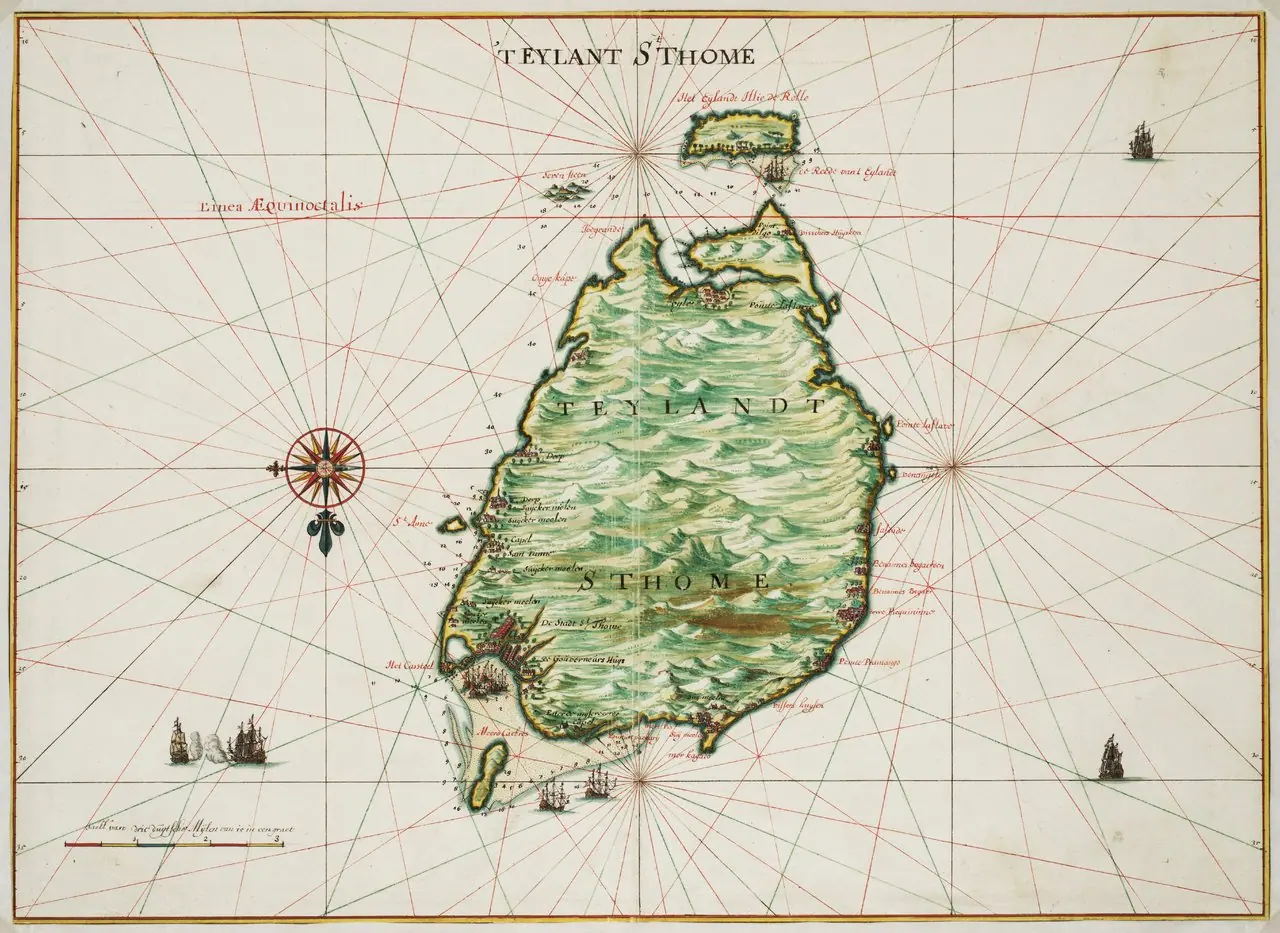
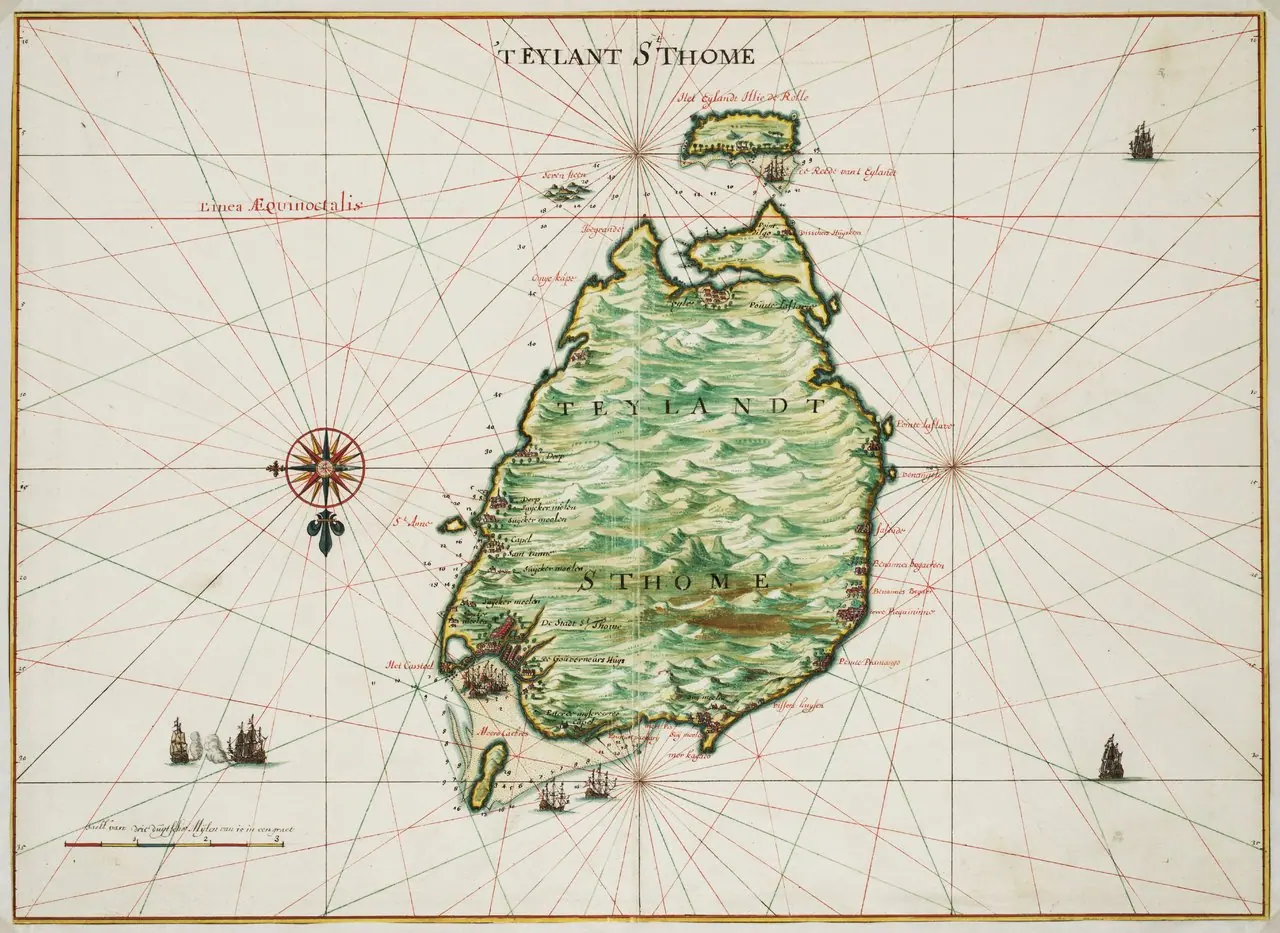
Two volcanic islands in the Gulf of Guinea, where cocoa still dries on century-old plantation terraces and the national dish simmers for hours in palm oil. This is a guide to eating, listening and travelling slowly through São Tomé and Príncipe — the roças, the rum shops, the drumming, and the forests that swallow the middle of both islands.
What São Tomé and Príncipe Tastes Like: Calulu, Palm Oil and Slow Cooking
The cooking here follows the land rather than a recipe book. Breadfruit (fruta-pão), plantain, taro (matabala), coconut, cassava and red palm oil form the base of nearly every plate, and the sea fills in the rest. The defining dish is calulu — layers of smoked fish or dried meat cooked down with greens, okra, aubergine and tomato in dendê palm oil, usually served with funge, a dense, silky mash of breadfruit or corn. It is not fast food: in small kitchens it can take an hour or more to reach the table, so order it at lunch and settle in.
Alongside calulu you will meet moqueca, a gentler fish stew with tomato, onion and coconut milk; grilled flying fish; búzio, sea snails simmered with garlic and chilli; and on Príncipe, the sweet spider crab known as santola, pulled from the rocks around the islets. Chicken braised with cocoa and a little palm oil is another local signature, as are banana fritters, corn papas and coconut sweets sold from doorways in the late afternoon.
To eat well, start where the cooks start. The Mercado Municipal in São Tomé city is the island's pantry — pyramids of cocoa pods, vanilla, cinnamon bark, dried fish, smoked prawns, peppercorns and bundles of leafy greens you will not find named in any language you know. Nearby, the waterfront fish market sets the tempo of the day: boats in by mid-morning, everything sold by noon. Small guesthouse kitchens, roadside grill stands and the roça restaurants in the interior all do their own versions of the same repertoire, and asking what is fresh today is always the best ordering strategy.

Roças, Cocoa and Coffee: The Plantation Heart of Both Islands
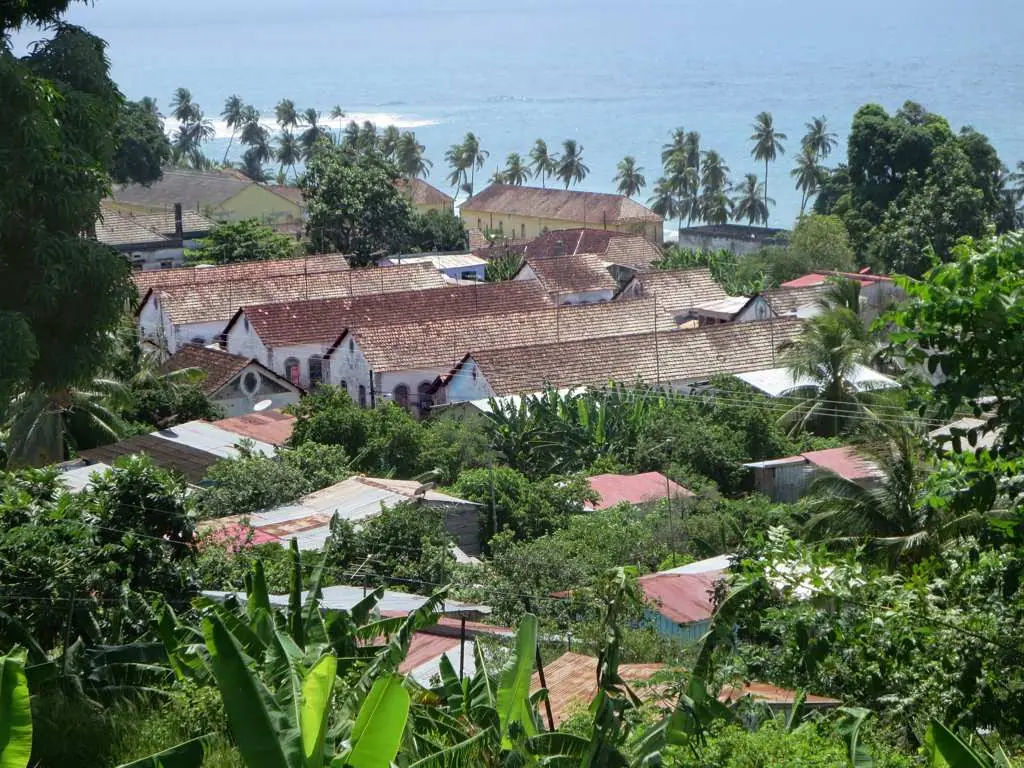
For roughly a century, these islands were among the largest cocoa exporters on earth, and the plantation estates — roças — they left behind are the archipelago's most haunting architecture. Roça Água Izé, on the flat coastal plain east of São Tomé city, is the most atmospheric: an avenue of mango trees, a vast hospital block, a chapel, drying sheds and chimney stacks, all quietly going green. Roça Agostinho Neto, Roça Bombaim near Batepá, and the smaller estates along the northern coast each have their own faded charm, and a walk through any of them is a lesson in how the cocoa economy shaped daily life here.
Coffee grows higher up, in the misty hills above Trindade. Monte Café, one of the oldest plantations on the island, still has its terraces, drying patios and processing buildings, and a small interpretation space explaining how arabica arrived and why it thrived at these altitudes — roughly 600 to 1,000 metres, where nights are cool and the rain is relentless. Buy beans directly from the growers or a roça shop; they are roasted dark and taste of the volcanic soil.
On the chocolate side, the revival is real. Small bean-to-bar workshops in and around São Tomé city ferment, roast and grind single-estate cocoa, and most will happily walk you through a tasting of two or three origins in under an hour. Príncipe's cocoa, grown on estates such as Roça Sundy and Terreiro Velho, is widely considered the finest in the country. A farm visit — watching pods split, beans ferment in wooden boxes, then dry in the sun — takes one to two hours, and it is the single best way to understand why this crop still matters.
Drums, Theatre and the Calendar of Celebration
São Toméan culture is loud, communal and endlessly theatrical. The most extraordinary expression is tchiloli, a dance-drama performed in Portuguese verse that recounts the court of Charlemagne and the tragedy of the Marquis of Mântua, staged by costumed village companies with drums, banners and an intensity that has nothing to do with museum theatre. It surfaces especially around 15 August and at Christmas, often in Batepá, Trindade and Neves. Around it sit danço-congo, the elegant salon-turned-street dance ússua, socopé, and the hypnotic friction-drum rhythm of puita — ask at any community centre and someone will tell you where the next rehearsal is.
On Príncipe, the great public ritual is the Auto de Floripes, staged in the streets of Santo António around 15 August, when costumed companies reenact battles between Christian and Moorish forces with swords, horses and a great deal of noise. The island's own rhythms — dêxa among them — are softer and slower, and the colonial mansions and pastel facades of Santo António make an easy, beautiful backdrop for an afternoon of walking and listening.
The secular calendar matters too. On 3 February, Batepá Martyrs' Day commemorates the 1953 uprising and its victims; on 12 July, Independence Day fills São Tomé city with parades, music and food stalls. Fishing villages hold their own saints' festivals throughout the year, and turning up politely — asking before photographing, buying a drink, dressing modestly — will get you further than any itinerary. Learning a few words of Forro on São Tomé or Lung'ie on Príncipe is received as a small gift.
Must-See Landmarks: Pico Cão Grande, Ôbo Forest and the Equator Line
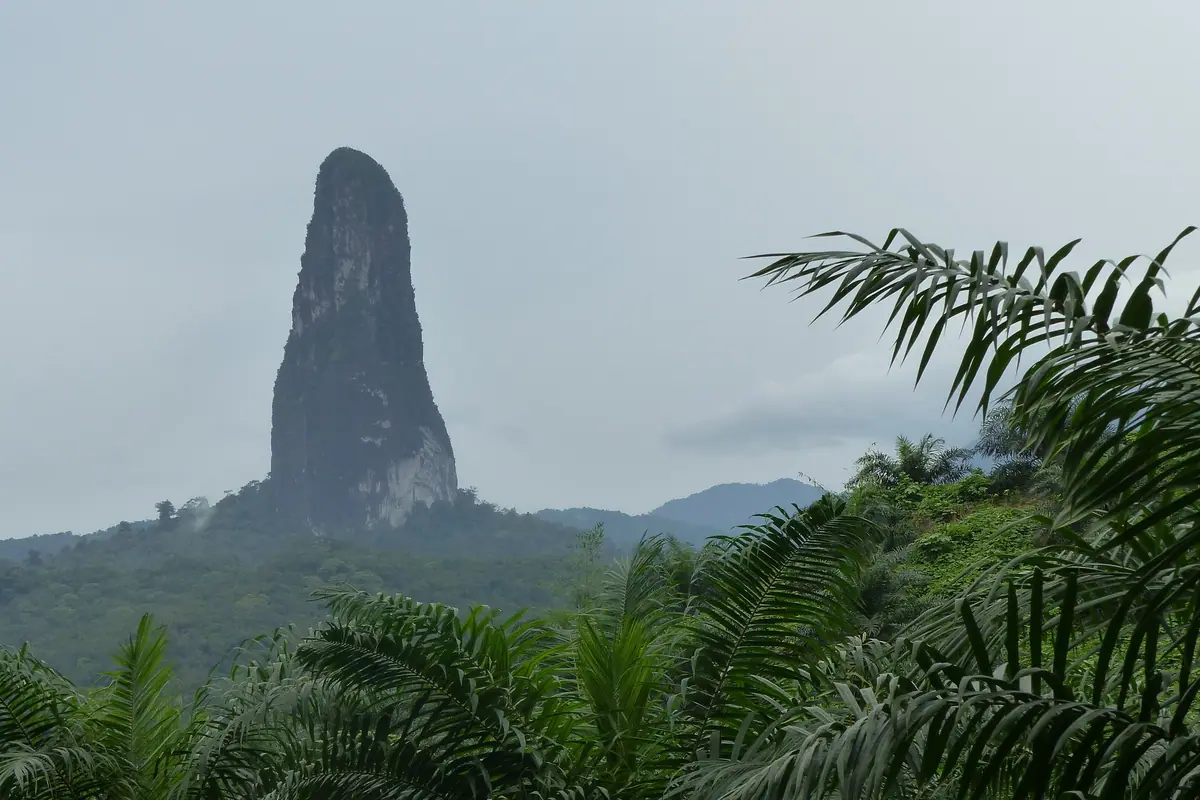
Start with the image on every postcard: Pico Cão Grande, a 663-metre volcanic needle that erupts vertically out of the forest in the far south of São Tomé, near Vila Malanza. You can admire it from the road on the drive down, but climbing it requires a licensed guide, permits and a full day. Broader and wilder is Ôbo Natural Park, which protects roughly a third of both islands. Its signature trek is the ascent of Pico de São Tomé, 2,024 metres, usually done over two days with a guide and a camp; shorter and just as rewarding is the walk to Cascata São Nicolau near Trindade, where a cool waterfall and pools sit a short scramble from the trailhead.
The coastline supplies the other essential sights. Lagoa Azul, on the northern shore, is a glassy turquoise cove that is perfect for a swim; Boca do Inferno, near Água Izé, is a blowhole that fires spray skyward when the swell is right. Further south, Praia Piscina hides natural rock pools at low tide, and Praia Jalé is one of the island's key turtle beaches. Off the southern tip, boats run from Porto Alegre to Ilhéu das Rolas, where the Marco do Equador marks the line of the equator — the rare place you can stand in both hemispheres at once.
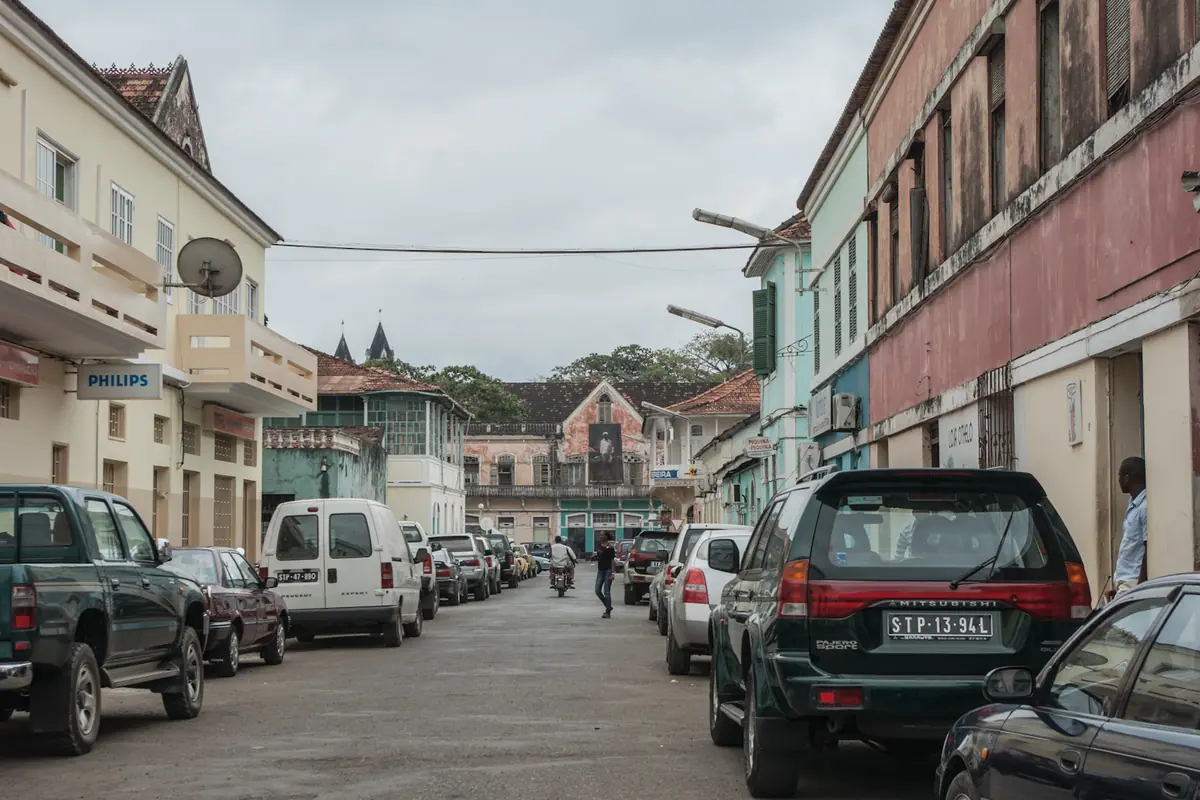
In São Tomé city itself, do not skip Fort São Sebastião, a 16th-century fortress on the waterfront that now holds the national museum, with its collection of colonial-era artefacts and religious art. The cathedral and the arcaded streets around the old town reward an unhurried morning, and the market district gives you the island's sensory overload in one block. Together these are the places that explain the country — the forest, the fort, the equator and the roça.
Príncipe: Roça Sundy, Praia Banana and Baía das Agulhas
Príncipe is a 30- to 40-minute flight from São Tomé and feels a generation removed — a UNESCO biosphere reserve of around 140 square kilometres, with fewer than ten thousand people and almost no traffic. Santo António, the capital, is a single sleepy grid of pastel colonial houses, a market, a small cathedral and a waterfront where fishermen mend nets in the afternoon heat. Give it a morning; the rest of your time belongs to the forest and the sea.
Roça Sundy is the island's historical anchor: a cocoa estate whose open grounds were used for the 1919 solar eclipse expedition that helped confirm the theory of relativity, and whose machinery, warehouses and great house still stand among the palms. From there, the road runs north to Praia Banana, a curve of sand so photogenic it has starred in advertising campaigns, and on to Baía das Agulhas, where black spires of rock stand in clear water and the swimming and snorkelling are excellent.
Inland, the half-day climb of Pico Papagaio takes you through primary forest loud with parrots and monkeys, with views back over the whole island. Boat trips reach the islets — Bom Bom, Boné de Jóquei and others — for diving, and between roughly October and March the southern beaches such as Praia Grande become nesting grounds for green and hawksbill turtles. Humpbacks pass offshore from July to October, often close enough to spot from a clifftop.
When to Go and How to Travel Well
The islands sit almost on the equator, so heat and humidity are constants, but the rain has a rhythm. The gravana, the drier and slightly cooler season, runs roughly June to September and is the best window for hiking, road trips and the Pico de São Tomé trek. Short rains fall around March to May, heavier rains from October to December, and the south of São Tomé is noticeably wetter than the north at any time of year. Wildlife adds its own calendar: humpback whales offshore from July to October, turtle nesting from about October to March, and the great festivals on 12 July and 15 August.
Getting around São Tomé means shared taxis and moto-taxis in and around the capital, and a hired car or driver for the south, where the road to Porto Alegre is slow and sometimes rough. Príncipe flights are limited and fill quickly in high season, so book early and plan at least three nights there — it is not a day trip. Any serious hiking in Ôbo Natural Park or on Pico Cão Grande should be done with a licensed local guide, both for safety and because permits are required.
Practicalities are simple but firm: the currency is the dobra, cash is king, ATMs are scarce and Príncipe has essentially none, so bring euros to change. Portuguese is the official language, with Forro, Lung'ie and Angolar spoken day to day. Take malaria precautions, use the mosquito net, carry a refillable water bottle, and remember that village life is conservative — cover up away from the beach and always ask before pointing a camera. Eight to twelve days lets you see São Tomé properly and still slow down on Príncipe.
Frequently asked questions
What is calulu and where should I try it?
Calulu is the national dish: smoked fish or dried meat slow-cooked with leafy greens, okra, aubergine and red palm oil, served with funge or rice. Try it at small guesthouse kitchens, roadside restaurants in Trindade and Neves, or the roça restaurants in the interior. Order at lunchtime and allow an hour — it is cooked properly, not quickly.
What is the best time of year to visit São Tomé and Príncipe?
The drier gravana season from roughly June to September is best for hiking, the Pico de São Tomé trek and long drives. December to February is also reasonably dry. Expect heavy rain from October to December and shorter rains around March to May; the south of São Tomé stays wetter year-round.
Do I need a guide to hike in Ôbo Natural Park or climb Pico Cão Grande?
Yes. Both require a licensed local guide, and Pico Cão Grande also needs permits and a full day. The Pico de São Tomé summit is normally a two-day trek with a camp, while shorter walks such as Cascata São Nicolau can be done in a few hours with a guide arranged in Trindade or São Tomé city.
How long should I spend on Príncipe?
At least three nights. The flight from São Tomé takes 30 to 40 minutes and seats are limited, so book ahead in peak season. That gives you time for Santo António, Roça Sundy, Praia Banana, Baía das Agulhas and the Pico Papagaio hike without rushing.
What should I know about money, language and health before going?
The currency is the dobra and cash is essential — ATMs are few in São Tomé city and effectively absent on Príncipe, so bring euros to exchange. Portuguese is official, with Forro and Lung'ie spoken locally. Take malaria precautions, sleep under a net, and pack a reusable water bottle.
Plan it — tours in Sao Tome and Principe
Live search, booked directly with trusted providers.
Sort the rest of your trip
Everything for Sao Tome and Principe, in one place
Stay in Sao Tome and Principe
Hotels, guesthouses and apartments — compared in one search.
Search hotels
Transfer in Sao Tome and Principe
Private driver waiting on arrival — no queues, no surprises.
Book a transfer
Stay online in Sao Tome and Principe
Travel eSIM — data the moment you land, no roaming bills.
Get an eSIM