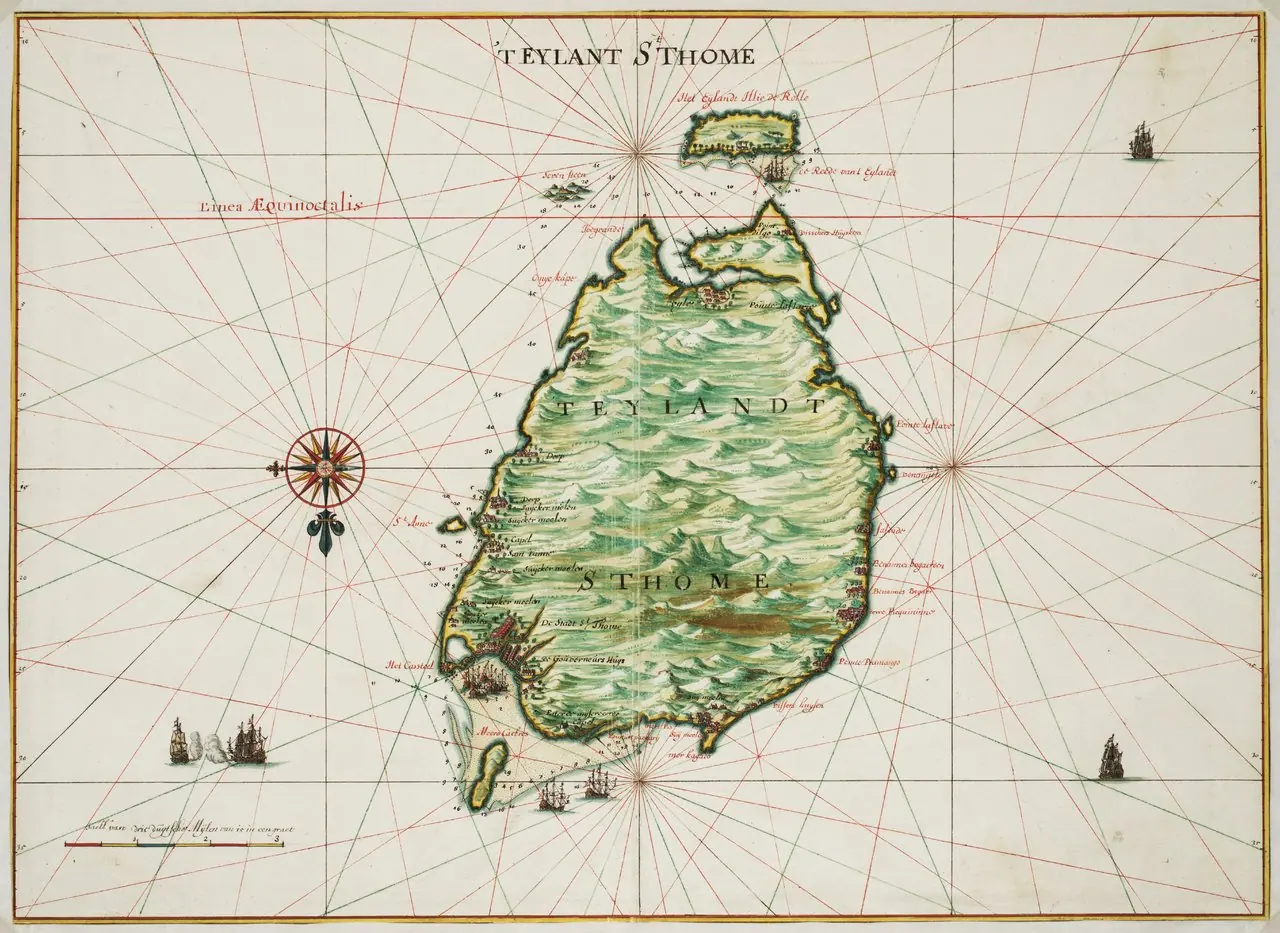
Two volcanic islands rise out of the Gulf of Guinea, wrapped in mist-heavy rainforest and ringed by black-sand coves that you will often have entirely to yourself. São Tomé and Príncipe is Africa's second-smallest country and one of its least visited, which is precisely the point. What it lacks in infrastructure it repays in volcanic drama, colonial ruin, birdsong and chocolate.
São Tomé City and the Northern Coast
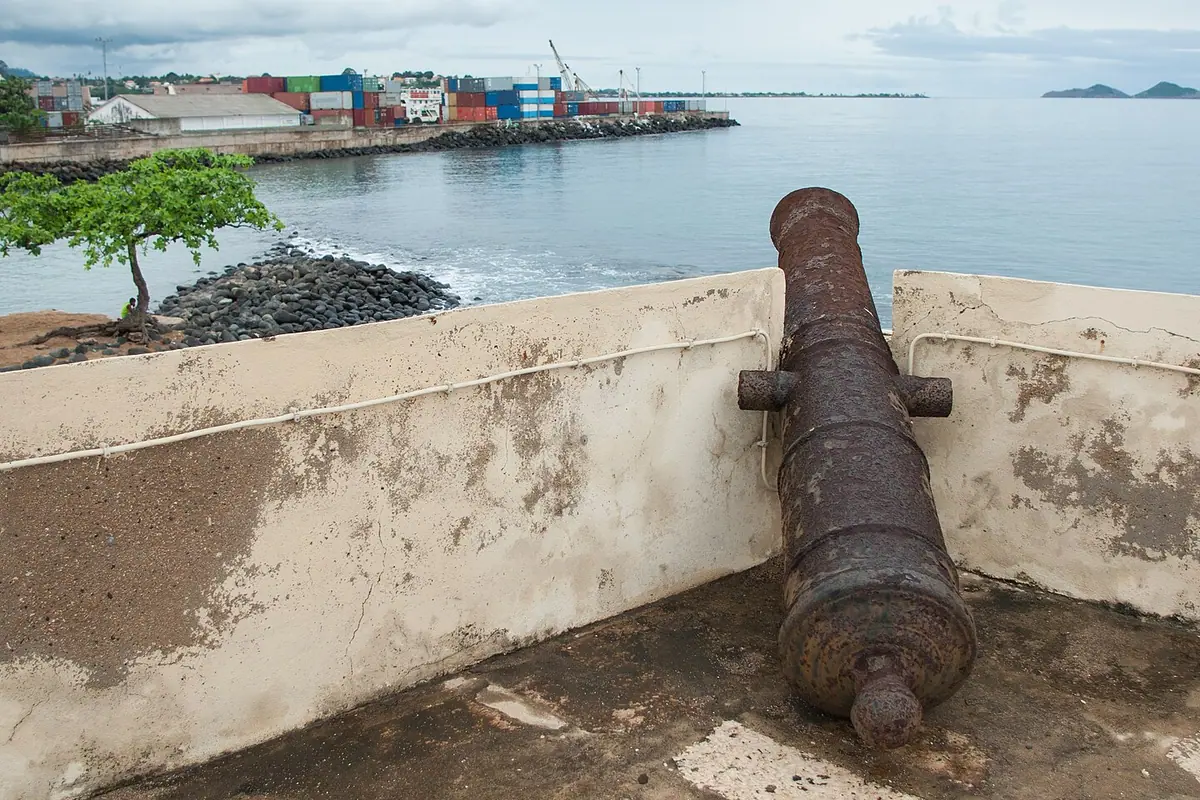
The capital is a low, salt-bleached town of pastel facades, palm-shaded squares and a pace that makes a half-day of wandering feel generous. Start at Praça do Povo, the main square, and walk to the Sé Catedral, a simple 16th-century church rebuilt several times and still the anchor of the old town. The Mercado Municipal is the sensory heart of the city, selling smoked fish, giant avocados, bundles of herbs and locally grown cocoa. From Ana Chaves Bay the waterfront curves away toward the Forte de São Sebastião, a sturdy Portuguese fort at the tip of the promontory that now houses the national museum, with its collection of colonial-era artefacts and a cannon-lined courtyard overlooking the sea. Entry is cheap and the view alone justifies the walk.
Head east or west along the coast road and the island starts showing off. The Jardim Botânico on the edge of town is a sleepy, semi-wild garden of breadfruit, cinnamon and towering ceiba trees, good for an hour of shade. Further along the north coast near the fishing village of Neves lies Lagoa Azul, a sheltered turquoise inlet where calm water makes it one of the easiest places on the island to swim and snorkel. Just beyond it, Praia das Sete Ondas — Beach of Seven Waves — is a long sweep of pale sand popular for picnics, and at Boca do Inferno the Atlantic is forced up through a volcanic blowhole with a boom you feel in your chest.
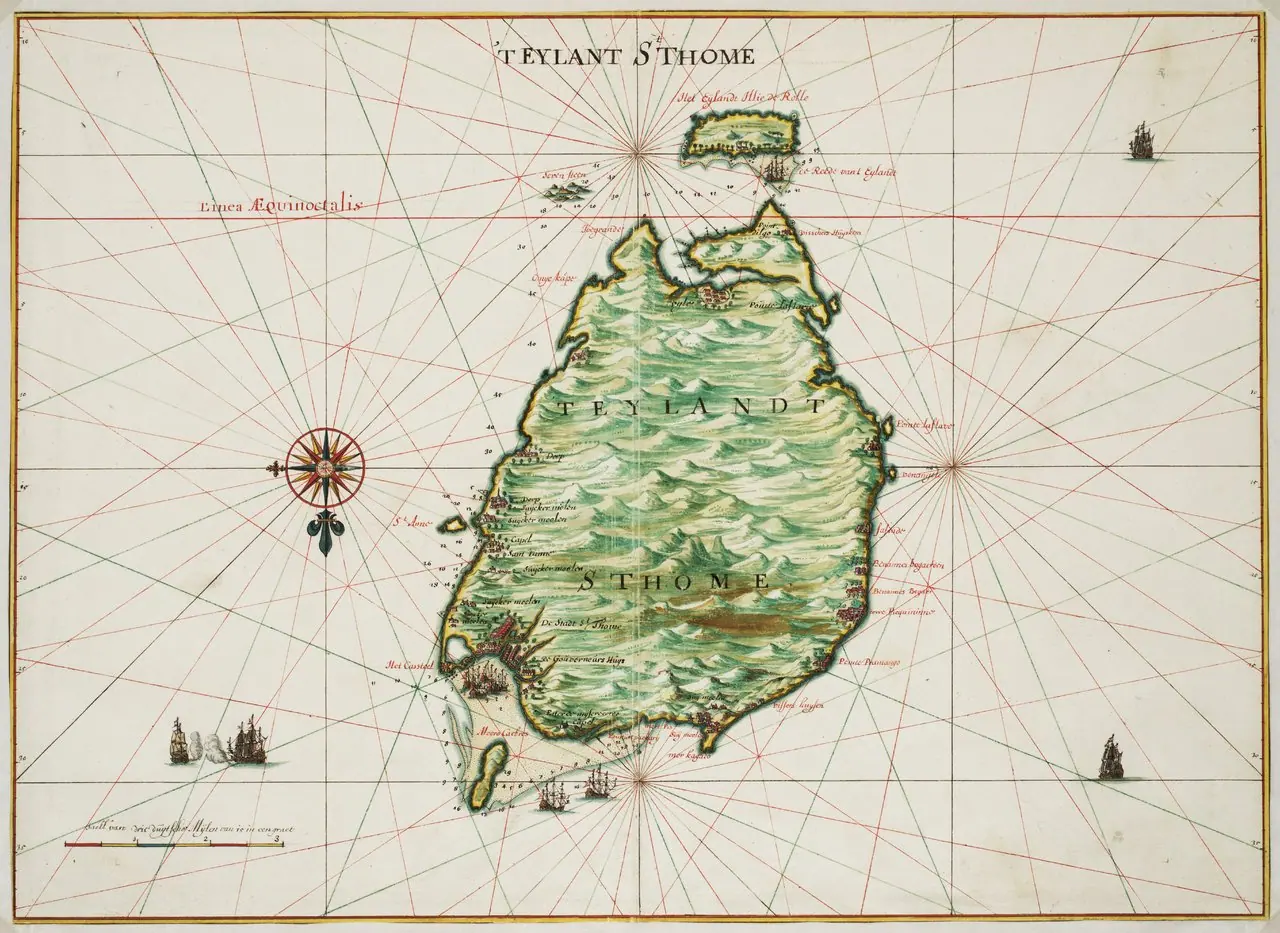
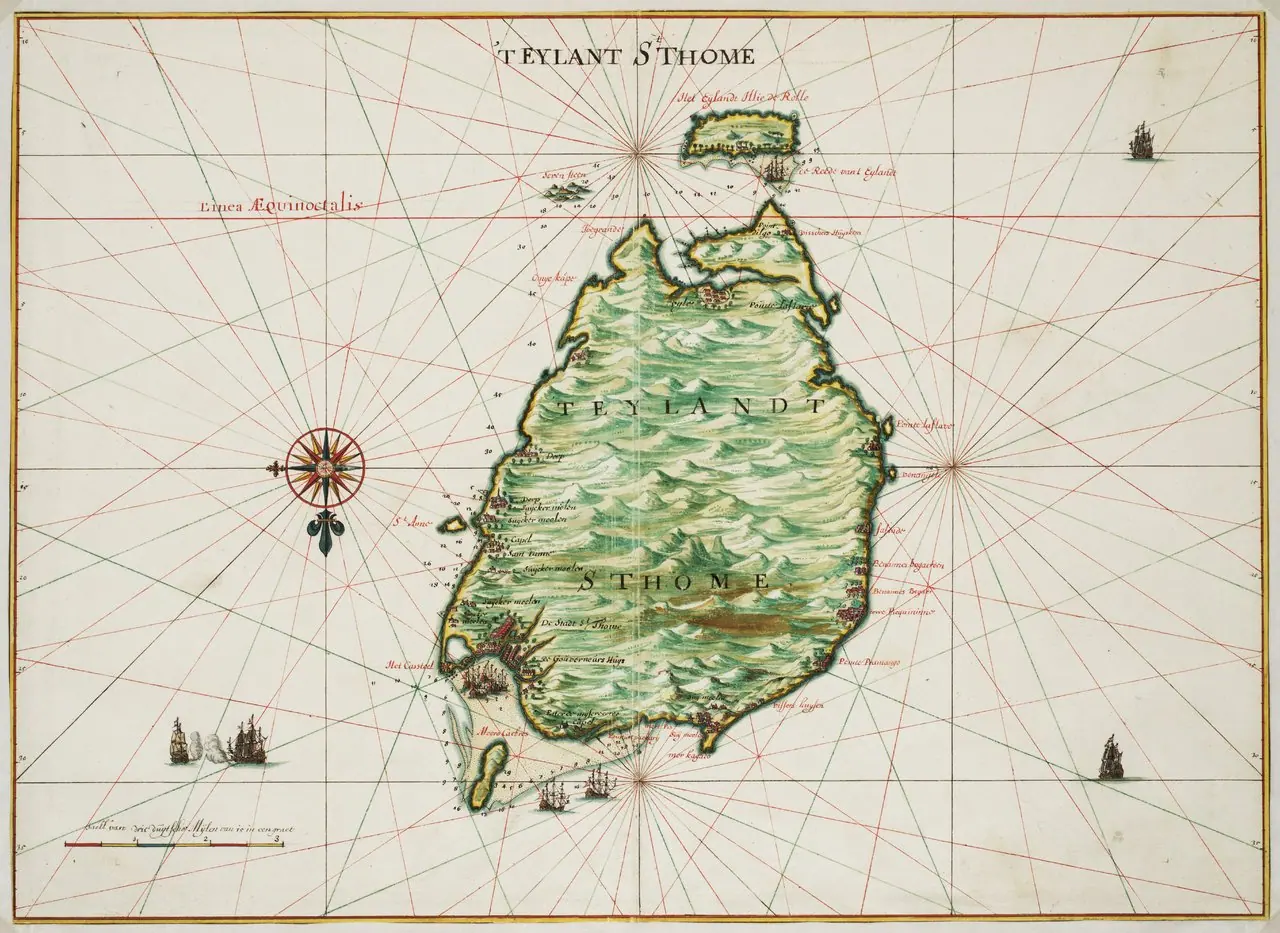
Distances on São Tomé look tiny on a map — the island is only around 50 kilometres long — but the roads twist and slow, so plan on two to three hours to cover what looks like forty minutes. Hiring a car with a driver for the day is the standard approach, and it lets you stop at roadside stalls for grilled fish, bananas and cold drinks without worrying about the potholes.
Obô Natural Park and the Volcanic Needle of Pico Cão Grande
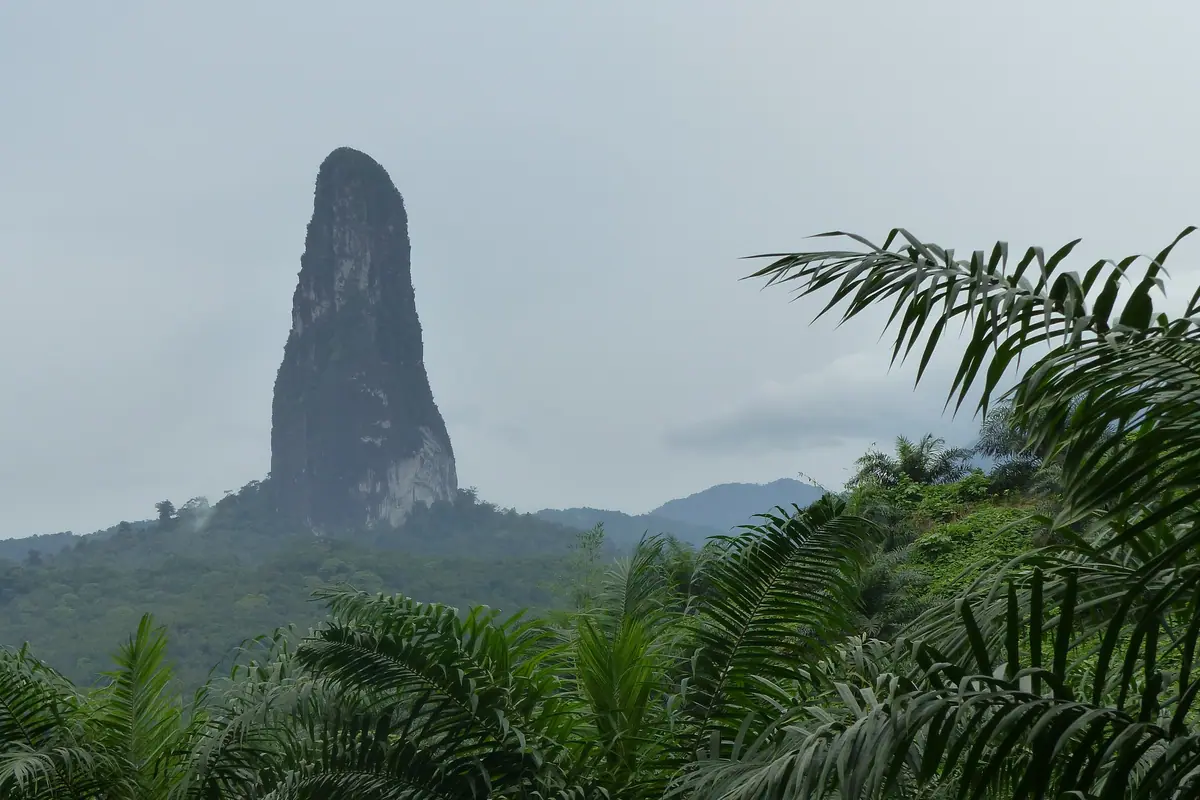
Roughly a third of São Tomé is protected as Obô Natural Park, a cloud-draped expanse of primary rainforest that climbs from the coastal plain to the island's spine. Its most photographed feature is Pico Cão Grande, a 663-metre volcanic plug that juts out of the canopy like a green fang, often wreathed in mist that burns off by mid-morning. The classic view is from the southern road near Vila Malanza, where the plug rises almost vertically above the palms — photographers should aim to be there early, before the clouds close in.
The park's high point is Pico de São Tomé at 2,024 metres, a serious full-day or overnight ascent through mossy, leech-heavy forest that rewards the effort with views across the entire island and, on clear days, the ocean on both sides. You will need a licensed guide and an early start. Even if you never leave the lower trails, the birdlife is extraordinary: the São Tomé grosbeak, dwarf olive ibis, giant sunbird and several endemic scops owls live here and nowhere else on earth.
The Wild South and the Equator at Ilhéu das Rolas
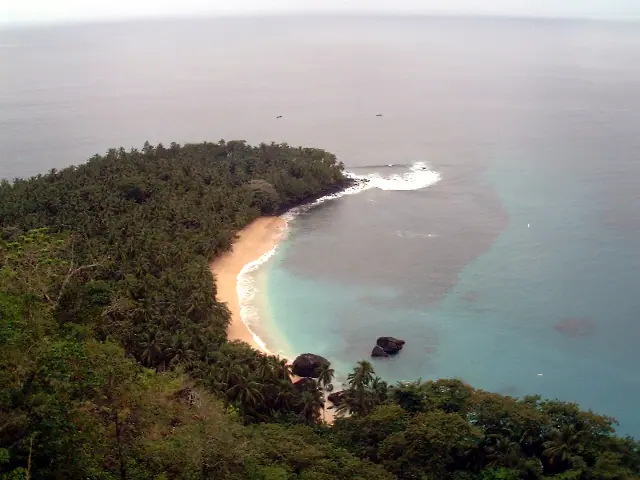
The south coast is where São Tomé feels genuinely remote. The road runs through São João dos Angolares, a relaxed fishing town built around Roça São João, an old plantation house that has become one of the country's most celebrated places to eat and hear live angolar music. Continue south and the beaches change character: Praia Jalé is a dark-sand crescent backed by forest where sea turtles come ashore to nest between roughly September and March, and neighbouring Praia Inhame is a quieter, softer-sanded alternative with basic guesthouses.
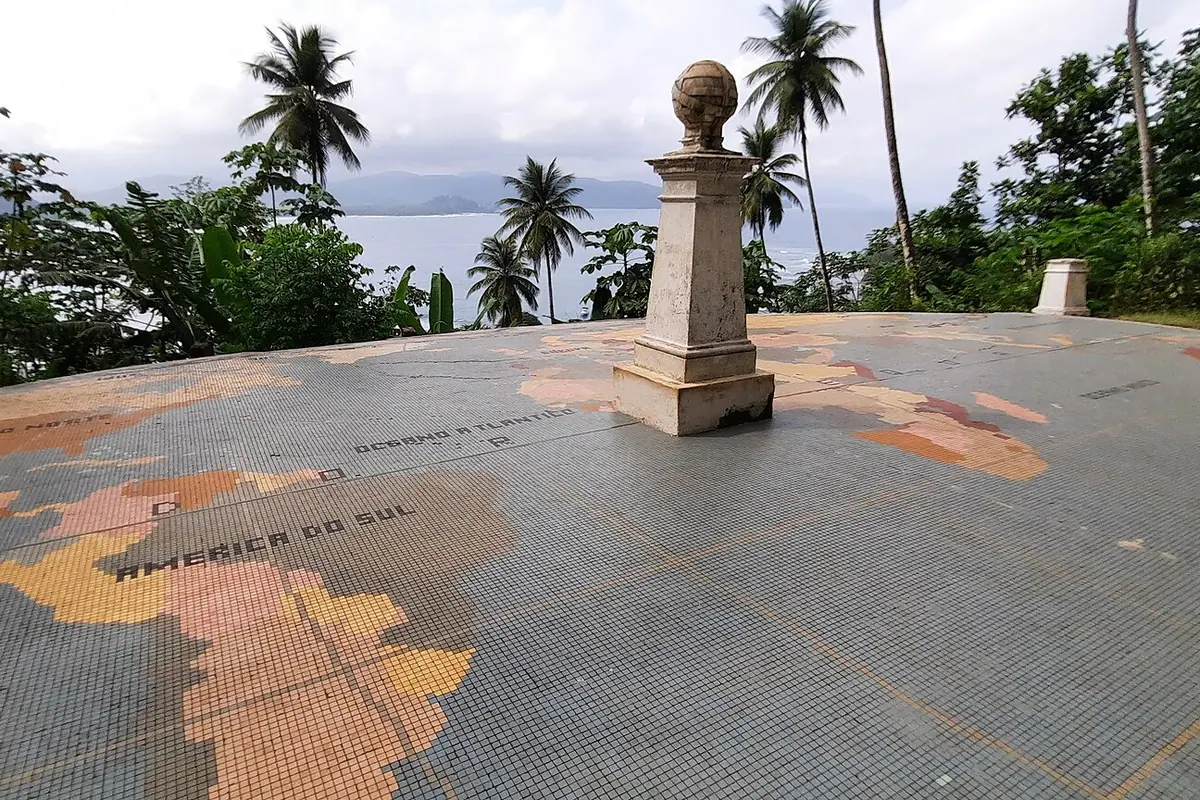
At the very southern tip lies Ilhéu das Rolas, a small islet that the equator slices straight through. A modest monument marks the line, and standing with one foot in each hemisphere is a genuinely satisfying, slightly silly photo. Boats run from the village of Porto Alegre; the crossing is short and the water is glass-clear, making the islet as good for snorkelling as it is for geography. Combine it with lunch on the mainland and you have a full, unhurried day.
Príncipe: The Quieter Island
Príncipe sits about 150 kilometres north-east of São Tomé and is reached by a short light-aircraft flight of roughly 40 minutes. It is smaller, older geologically and far less developed, its entire landmass and surrounding waters designated a UNESCO biosphere reserve. Santo António, the capital, is a single sleepy street of colonial buildings, a small market and a harbour where children dive off the quay — you can see the whole town in an hour and will probably want to stay for three days.
The island's landmarks are scattered and require a 4x4 or a boat. Roça Sundy is the most historically loaded: it was from here that astronomers photographed the 1919 solar eclipse that helped confirm Einstein's theory of relativity, and the old plantation buildings still stand among the palms. Praia Banana is the postcard beach, a curve of golden sand and leaning palms with good swimming, while Praia Abade to the north is wilder and often empty. The hour-long climb up Pico Papagaio gives you the full sweep of the island's forested ridges and the blue water beyond.
Roças, Cocoa and Coffee: The Plantation Heartland
São Tomé was once one of the world's largest cocoa producers, and the roças — sprawling plantation estates with hospitals, chapels, drying sheds and workers' quarters — are the country's most atmospheric ruins. Roça Água Izé on the east coast is the most accessible, with its long warehouse arcades and monumental ceiba trees. Monte Café in the cool highlands is a working coffee estate with a small museum and a tasting room where you can buy beans roasted on site. Roça São João dos Angolares, on the south coast, has been converted into a guesthouse and restaurant that serves multi-course tasting menus built around local fish, fruit and chocolate.
On Príncipe, Roça Sundy and the old estate houses around it tell the same story. Many roças are still inhabited, and wandering through them is a privilege rather than a tourist attraction — ask before photographing people, and expect a warm, curious welcome in return. Buying cocoa, coffee or chocolate directly from the estates is one of the most satisfying souvenirs you can bring home.
Beaches, Wildlife and When to Go
The best window is the gravana, the dry season running roughly from June to September, when skies are clearer, trails are firmer and the south coast is at its most walkable. A second, shorter dry spell usually arrives in December and February. The heaviest rains fall from March to May and again in October and November, when roads can turn slick and flights are more likely to be delayed. Temperatures hover between 25°C and 30°C all year with high humidity, so pack light, fast-drying clothing and a rain shell regardless of season.
Marine life is a major draw. Humpback whales pass through the Gulf of Guinea between roughly July and October, and boat trips from the capital or Príncipe can put you within respectful distance of mothers and calves. The clear, sheltered water at Lagoa Azul, around Ilhéu das Rolas and off the Bom Bom islet in Príncipe makes for easy snorkelling, while divers come for volcanic drop-offs, turtles, rays and reef fish. Note that sea conditions vary sharply by season, so arrange water activities locally rather than far in advance.
Practicalities matter here more than in most destinations. Portuguese is the language, the currency is the dobra, and cards are accepted in very few places — bring more cash than you think you need, because ATMs outside the capital are rare and frequently empty. Fuel stations are sparse in the south. Malaria is present, so take medical advice before travelling. And build in slack: a ten-day trip covering both islands, with three or four nights on Príncipe, is far more rewarding than trying to sprint through São Tomé in a long weekend.
Frequently asked questions
What is the best time of year to visit São Tomé and Príncipe?
The dry season known locally as the gravana, from roughly June to September, offers the clearest skies, the firmest hiking trails and the best beach conditions. December to February is usually a shorter, less predictable dry spell. March to May and October to November bring the heaviest rain, which can affect road travel and boat trips.
How do you get to Príncipe from São Tomé?
Príncipe is served by a short light-aircraft flight from São Tomé that takes around 40 minutes. Seats are limited and demand is high in peak season, so book well ahead. There is no regular ferry service suitable for visitors.
Do you need a guide to hike in Obô Natural Park?
Yes. Trails are unmarked, often muddy and cross dense rainforest, and a licensed local guide is essential for anything beyond the shortest walks. Ascents such as Pico de São Tomé and the approaches to Pico Cão Grande require a full day, an early start and a guide arranged in advance.
How many days do you need for São Tomé and Príncipe?
Ten days is a comfortable minimum: four to five days based in or around São Tomé city to cover the north coast, the south and the rainforest, plus three to four nights on Príncipe. Trying to combine both islands in under a week means spending most of your time in transit.
What should you know about money and safety?
The local currency is the dobra and cash is king — cards work in only a handful of places, and ATMs outside the capital are unreliable. Bring sufficient cash, plus some euros or dollars to exchange. The islands are generally very safe for travellers, but take standard malaria precautions and avoid swimming on exposed south-coast beaches where currents are strong.
Plan it — experiences in Sao Tome and Principe
Live search, booked directly with trusted providers.
Sort the rest of your trip
Everything for Sao Tome and Principe, in one place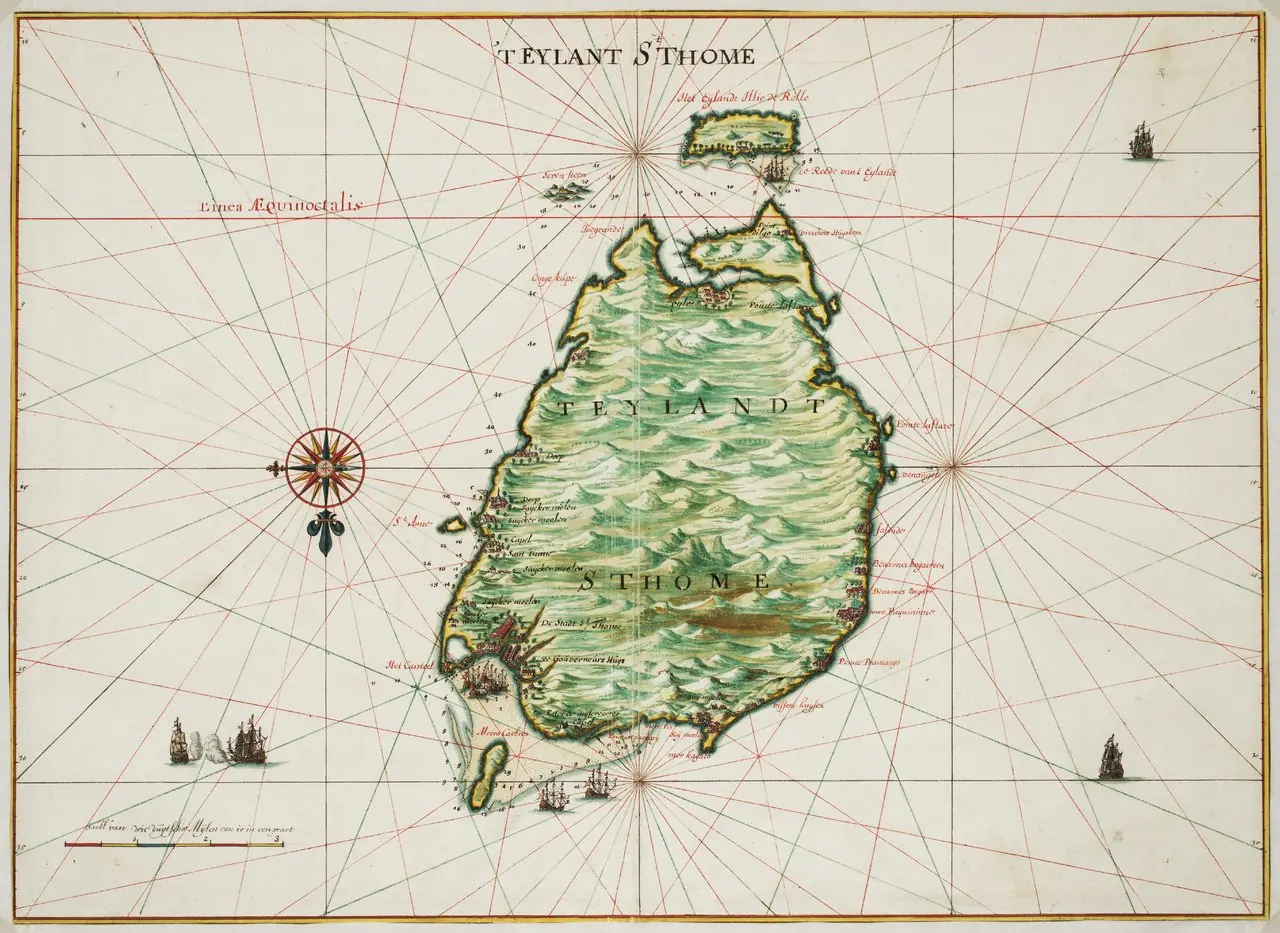
Stay in Sao Tome and Principe
Hotels, guesthouses and apartments — compared in one search.
Search hotels
Transfer in Sao Tome and Principe
Private driver waiting on arrival — no queues, no surprises.
Book a transfer
Stay online in Sao Tome and Principe
Travel eSIM — data the moment you land, no roaming bills.
Get an eSIMMore guides in Sao Tome and Principe
Where to Stay in São Tomé and Príncipe: Hotels, Plantation Stays and Must-See Sights
Best Time to Visit São Tomé and Príncipe: Seasons, Weather and When to Book
Top Things to Do in São Tomé and Príncipe: Landmarks, Beaches and Wild Rainforest
São Tomé and Príncipe in One Week: A 7-Day Island Itinerary