Paraguay is the quiet heart of South America — a landlocked country of pink presidential palaces, gaucho plains, red-earth roads and some of the most haunting Jesuit ruins on the continent. Most travellers pass through in a hurry; those who linger find river beaches, humming markets, tereré shared in the shade and a Chaco wilderness that feels genuinely far from anywhere.
Asunción's Historic Core: Panteón, Palacio de López and the Riverside
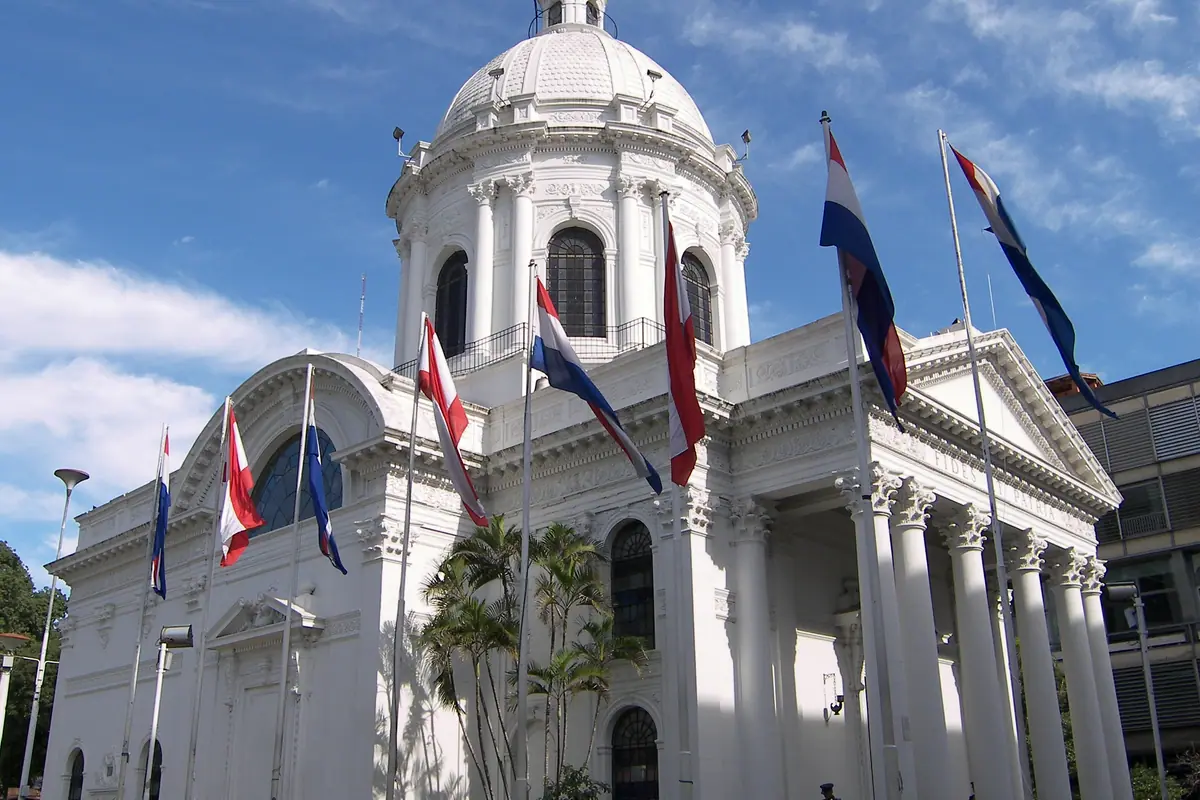
Almost every journey starts in Asunción, one of the oldest continuously inhabited cities in South America, founded in 1537. Its emotional centrepiece is the Panteón Nacional de los Héroes, a colonnaded neoclassical shrine guarded around the clock by soldiers and glowing amber after dark. Inside rest national heroes and an unknown soldier, and the ceremonial changing of the guard is worth timing your visit around. Entry is free and the plaza in front hums with vendors, couples and kids until late.
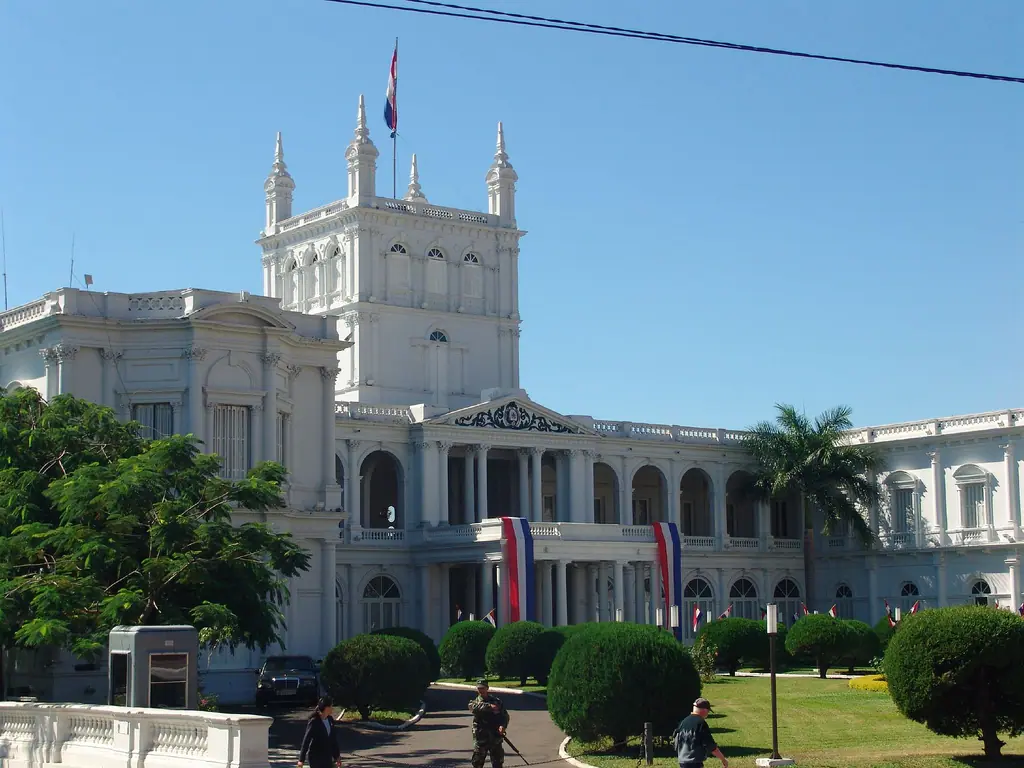
A few blocks toward the river stands the Palacio de López, the white-and-ochre presidential palace whose illuminated façade is the city's signature postcard, best admired from the Costanera de Asunción — a long riverside promenade of bike paths, food stalls and sunset crowds looking across the Bahía de Asunción. Pair it with the Casa de la Independencia, a low colonial house where Paraguay's independence was declared in 1811, now a small museum of period furniture, maps and documents.
Do your sightseeing early or after 5pm: Asunción's summer heat (December to March) regularly tops 35°C. For a wide-angle view of the whole city, climb or drive to the Cerro Lambaré lookout on the southern edge of town, where the river bends and the skyline stacks up behind the trees.
Museums, Markets and the Loom of Paraguayan Culture
Paraguay's craft traditions are extraordinary and best understood at the Museo del Barro in Asunción, which weaves together indigenous art, popular folk carving and contemporary work under one roof. Look for ñandutí, the spiderweb lace from Itauguá, and ao po'i, the fine open-weave embroidered cotton used in everything from blouses to tablecloths. Combine it with the sprawling Mercado 4, a chaotic, wonderful bazaar of fruit, herbs for tereré, cheap electronics and sizzling food counters — go with an appetite and keep bags zipped.
On the city's northern edge, the Jardín Botánico y Zoológico spreads across a large green estate of native trees, lagoons and birds, and the old Estación del Ferrocarril railway museum keeps vintage steam locomotives and carriages in the shade. Also worth a detour is Loma San Jerónimo, a hillside neighbourhood painted in bright murals and home to small cafés with a view over the rooftops.
Asunción also makes an easy base for day trips. Ride northwest to Areguá, a lakeside pottery town with strawberry fields and the odd volcanic hill of Cerro Kõi, or continue to San Bernardino on Lago Ypacaraí for a breezy afternoon by the water. Inland, the Basílica de Caacupé draws the country's largest pilgrimage each December, and the lakes and waterfalls of Parque Nacional Ybycuí, including the plunging Salto Cristal, reward anyone willing to trade the highway for a dirt road.
The Jesuit Missions of Trinidad and Jesús de Tavarangue
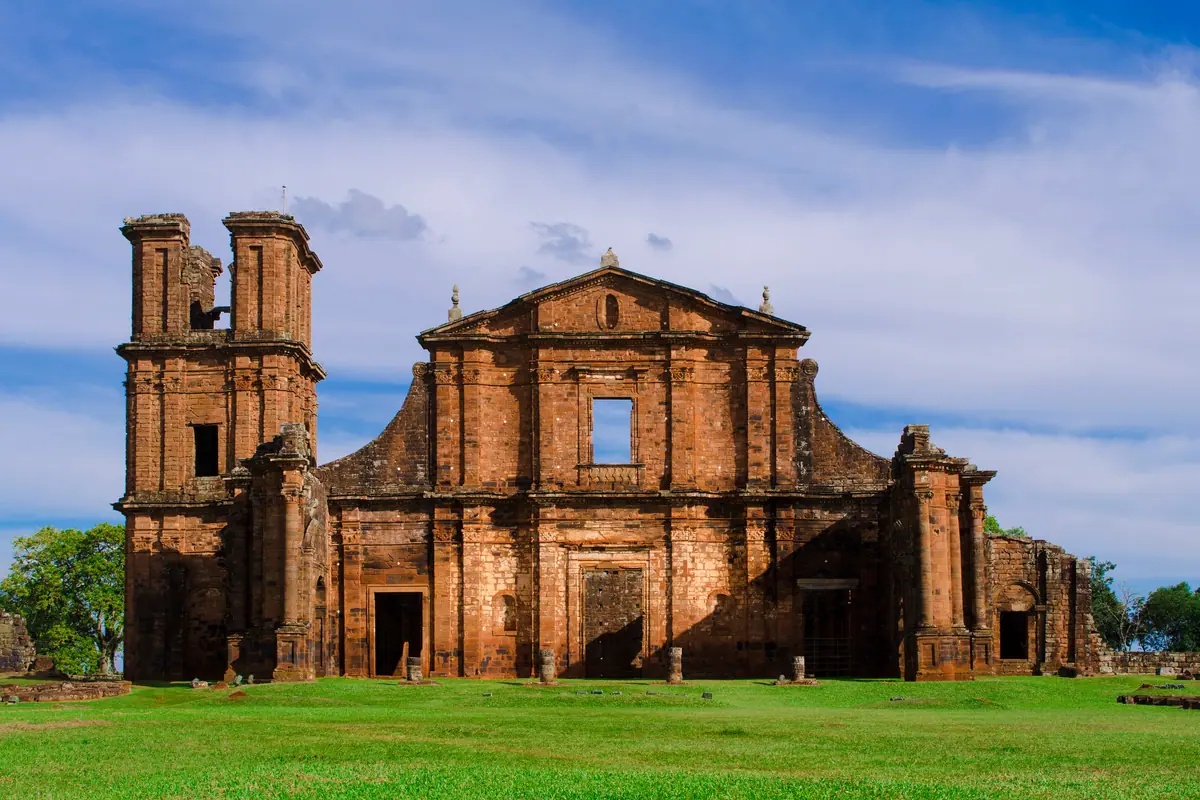
Paraguay's single greatest historic sight lies just outside Encarnación, in the south of the country. The ruins of Trinidad, founded in the early 1700s, are the best preserved of the old Jesuit reductions: a vast stone plaza, roofless church walls, the sacristy, the bell tower base and long rows where Guaraní families once lived, worked and sang. Walking through the red-earth nave with swallows wheeling overhead is quietly unforgettable.
A short drive away, the mission of Jesús de Tavarangue was never finished, leaving a grand, ghostly church shell and a famous bell tower that still frames the sunset. Together they form a World Heritage-listed route that continues southeast to San Cosme y Damián, where a small solar observatory recalls the Jesuits' astronomical obsessions. Local buses run from Encarnación to Trinidad in under half an hour, but a taxi or hired car lets you link the sites comfortably.
Plan half a day for Trinidad and Jesús de Tavarangue and a full one if you add San Cosme. Arrive at opening time or in the late afternoon — midday sun here is punishing and there is almost no shade. Bring water, a hat and cash for entry, and sturdy shoes for the uneven stonework; the ruins are quieter on weekdays and magical in the golden hour before closing.
Encarnación: River Beaches, Costanera and Carnival
Encarnación has reinvented itself as Paraguay's summer playground, strung along the Paraná River with sandy beaches such as Playa San José and Playa Mboi Ka'e, a tree-lined costanera for cycling and a restaurant scene that leans heavily on river fish. From December to February the water is warm, the days are long and the whole city seems to live outdoors after dark.
That same season brings the Carnaval Encarnaceno, one of the region's biggest carnival celebrations: weeks of corsos along the avenue, feather-and-sequin comparsas, drumming that shakes your ribs and floats that take months to build. If you want carnival, book accommodation well ahead; if you want calm, come in spring (September to November), when temperatures are gentler and the beaches are still pleasant.
The city is also the natural base for the Jesuit mission route, and its railway heritage, riverside parks and barbecue culture make it worth at least two nights. Winter (June to August) turns mild and sometimes genuinely chilly when a surazo blows up from the south, so pack a jacket even in the tropics.
Itaipú Dam, Saltos del Monday and the Triple Frontier
East of Ciudad del Este, the Itaipú Dam is an engineering spectacle on a staggering scale — one of the mightiest hydroelectric plants on earth, straddling the Paraná between Paraguay and Brazil. Visitor circuits run by bus take you along the crest, past the spillways and into the machine halls; book in advance, bring ID, and allow half a day. The sheer noise and scale when the floodgates open are worth the trip alone.
Nearby in Presidente Franco, the Saltos del Monday send a broad curtain of water over a cliff edge, reached by a network of walkways and viewpoints that make for a breezy, easy excursion. Ciudad del Este itself is a frenetic duty-free shopping city, and the Triple Frontera viewpoint marks the point where Paraguay, Brazil and Argentina meet at the meeting of two great rivers.
This corner of the country is hot and humid year-round, with the most comfortable months between May and September. Visit the dam and falls on weekdays to dodge the crowds, keep an eye on your belongings in the shopping district, and give yourself two nights if you want to add a border-crossing look at the Brazilian side of the falls region.
Into the Chaco and Paraguay's Wild Interior
West of the river, the Gran Chaco is a thorny, semi-arid expanse the size of a small country, and it is where Paraguay gets truly wild. Start in Filadelfia, the tidy Mennonite town of red-earth streets, cooperative bakeries and a small museum explaining the colonies' remarkable history, then head to Laguna Capitán for sunset over the water, flocks of birds and the occasional capybara drifting past.
Further northwest lies the enormous Parque Nacional Defensores del Chaco, rising to the granite ridges of Cerro León — jaguar, giant anteater, tapir and armadillo country, visited only with a guide, permits and a properly equipped 4x4. Even further out, Bahía Negra and the Río Negro wetlands offer some of the finest birdwatching in South America, with jabiru storks, herons and macaws in a landscape that looks borrowed from the Pantanal.
Travel in the dry season, roughly May to September, when tracks are passable and mosquitoes are less ferocious; in the rains, roads turn to soup and many routes become impossible. Carry more water, fuel and cash than you think you need, tell someone your plans, and pair the Chaco with a stop at Cerro Corá National Park in the north-east, where rolling hills and shallow caves mark the site of the final battle of the War of the Triple Alliance in 1870.
Frequently asked questions
When is the best time to visit Paraguay?
April to June and September to November are the sweet spots, with warm days, cooler nights and manageable humidity. Summer (December to February) is hot and sticky, often above 35°C, but that is also carnival and beach season in Encarnación. Winter (June to August) is mild to cool, with occasional cold southern winds called surazos.
How many days do you need in Paraguay?
Five to seven days covers Asunción, the market and museum circuit, and the Jesuit missions around Encarnación. Allow ten days to two weeks if you want to add the Itaipú Dam, the eastern border region and the Chaco, where long drives and rough roads eat into your time.
Is Paraguay safe for travellers?
It is generally calm and welcoming, with far less tourist pressure than its neighbours. Take the usual precautions in busy markets and border cities — zipped bags, no flashing valuables, licensed taxis at night — and treat remote Chaco travel seriously by going with a guide, carrying spare fuel and water, and checking road conditions before setting out.
How do you get around Paraguay?
Long-distance buses are the backbone of travel, linking Asunción with Encarnación, Ciudad del Este and most regional towns at reasonable prices. Domestic flights shorten the longest hops, taxis and ride-hailing apps work well in cities, and a hired car with a driver is the most practical way to link the Jesuit ruins or explore the Chaco.
What should I eat and drink in Paraguay?
Try sopa paraguaya (a dense, savoury cornbread), chipa, chipa guazú, mbejú and grilled river fish, then drink tereré — cold yerba mate infused with herbs, sipped through a shared metal straw and offered everywhere as a gesture of friendship. Accept it when offered; it is the closest thing to a national handshake.
Plan it — experiences in Paraguay
Live search, booked directly with trusted providers.
Sort the rest of your trip
Everything for Paraguay, in one place
Stay in Paraguay
Hotels, guesthouses and apartments — compared in one search.
Search hotels
Transfer in Paraguay
Private driver waiting on arrival — no queues, no surprises.
Book a transfer
Stay online in Paraguay
Travel eSIM — data the moment you land, no roaming bills.
Get an eSIMMore guides in Paraguay
Hotels in Paraguay: Where to Stay in Asunción, Encarnación and Beyond
Best Time to Visit Paraguay: Seasons, Festivals and Where to Stay
Best Places to Visit in Paraguay: From Asunción to the Chaco
Paraguay Tours: A Food, Culture and Local Experiences Guide