Paraguay is South America's quiet middle — a landlocked country of red-earth roads, Guarani greetings and horizons that keep unspooling long after you think they should stop. Because the distances are big and the roads are few, the smartest week here mixes short flights with slow overland miles, stitching the colonial river capital to Jesuit ruins, a monstrous hydroelectric dam and a thorn-scrub wilderness where the nearest tarmac is a dirt runway.
Days 1–2: Asunción, the Air Gateway on the Paraguay River
Almost every trip to Paraguay begins at Silvio Pettirossi International Airport, set about 15 kilometres northeast of downtown Asunción and reached in roughly half an hour outside rush hour. Most long-haul travellers arrive via a connection in Buenos Aires, São Paulo, Lima, Santiago or Panama City, so the first evening is usually a soft landing: check into a guesthouse in the Villa Morra or Las Carmelitas districts, eat a plate of chipa guazú or a surubí fillet, and let the subtropical humidity do its work.
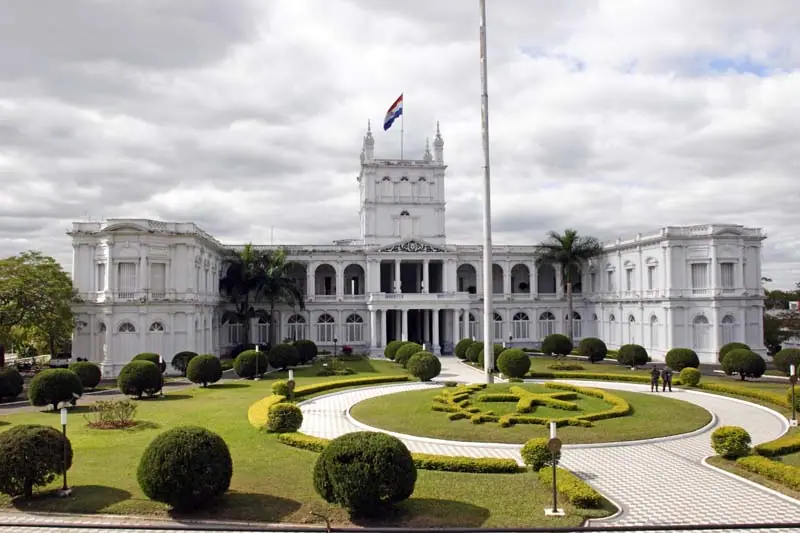
Give the capital two full days, because it rewards walking far more than its low profile suggests. Start along the Costanera, the riverside promenade where families gather at sunset and the floodlit Palacio de los López — the ornate presidential palace — glows across the water. Walk inland to the Panteón Nacional de los Héroes, a domed shrine where soldiers stand guard over the country's heroes, then thread through the sloping, colour-washed lanes of Loma San Jerónimo, whose murals and tiny bars make it the friendliest corner of the old city.
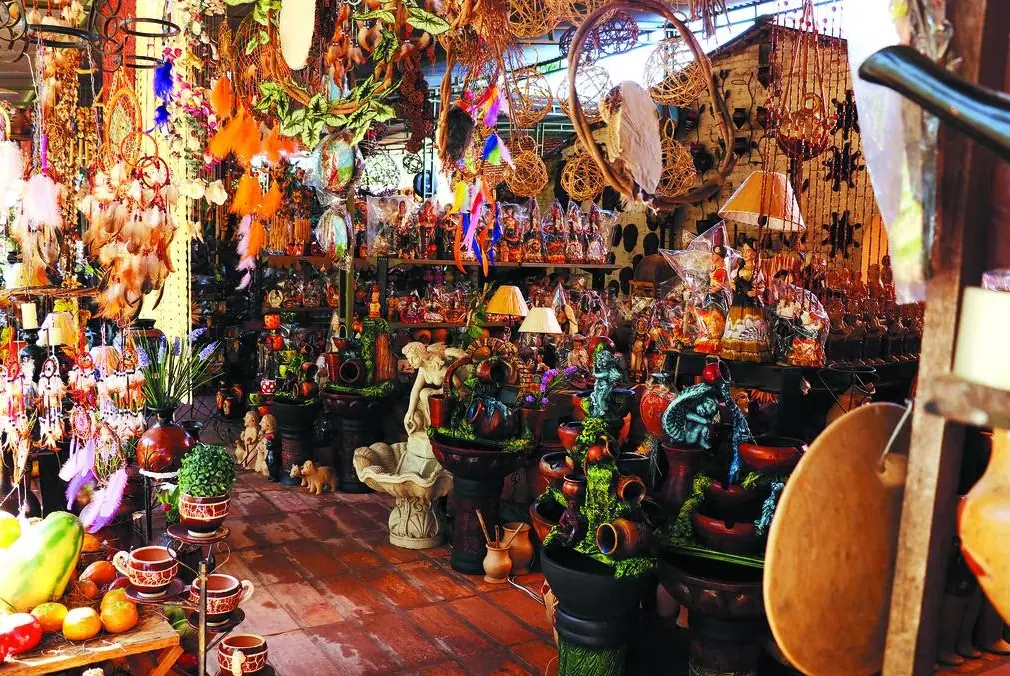
Round out the stay with the Casa de la Independencia, a modest colonial house that tells the story of the 1811 break from Spanish rule, and the Museo del Barro, an unexpectedly rich collection of indigenous and popular art. For a sense of scale, climb or drive up to Cerro Lambaré, the hill that looks back over the entire city and the brown sweep of the Paraguay River. Bargain-hunters should carve out an hour for Mercado 4, a sprawling, noisy market where you can buy everything from tereré gourds to bootleg electronics.
Day 3: Lake Ypacaraí, Areguá and the Basilica of Caacupé
About an hour east of the capital, the land lifts into low green hills around Lake Ypacaraí, a shallow, reed-fringed sheet of water that has been the country's favourite weekend escape for generations. Base yourself in Areguá, a drowsy arts town of cobbled slopes, ceramic studios and strawberry stalls, where the hill known as Cerro Kõi rises above whitewashed houses and the lake glitters below. The pace is deliberately slow: mornings are for browsing pottery workshops and buying jars of honey or guava paste, afternoons for sitting on a lakeside terrace with a cold drink.
Push on to San Bernardino, an old German-founded resort town on the northern shore, where sailing clubs and summer houses give the lake a faintly European air, and then to Caacupé, home to the Basilica of Our Lady of Miracles, Paraguay's most important pilgrimage site. On 8 December, hundreds of thousands of the faithful walk here from Asunción and beyond; on any ordinary weekday you will have the plaza, the votive chapel and the surrounding stalls of religious trinkets largely to yourself.
If you are travelling with a car, this whole loop — Asunción, Areguá, San Bernardino, Caacupé and back — is comfortable in a single day, and there are also frequent local buses between the towns. It is a good introduction to the countryside before you commit to a longer haul south or east.
Days 4–5: Encarnación and the Jesuit Missions of Trinidad and Jesús de Tavarangue
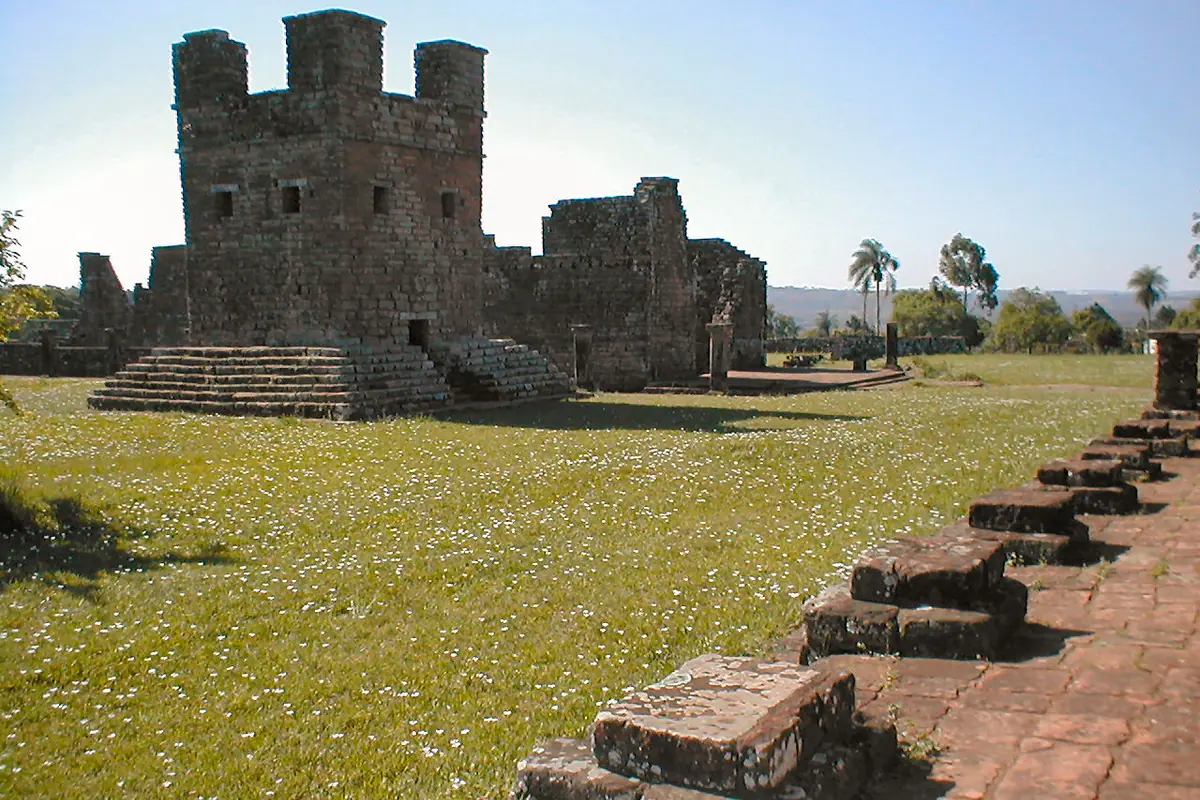
Head south to Encarnación, roughly 370 kilometres from Asunción and about four to five hours by car on the paved highway; most travellers make the run overland, since scheduled air links on this corridor are thin and unreliable. The reward is one of South America's most underrated UNESCO World Heritage sites: the Jesuit reductions of Trinidad and Jesús de Tavarangue, built in the seventeenth and eighteenth centuries and abandoned when the order was expelled. At Trinidad, red sandstone walls, carved angels and a vast plaza stand open to the sky among palms, and a small museum explains how the Guarani communities lived, worked and made music here.
Encarnación itself has reinvented its riverfront as a long costanera with beaches, bike paths and food trucks, and in the southern summer it fills with Argentine visitors crossing from across the Paraná. Give yourself an afternoon for the San José beach and the riverside market, and a morning for the ruins — Trinidad is around 30 kilometres out of town, and the two mission sites are easily combined in one loop.
Late afternoon is the best light for photography at both sites, and the heat between December and February is genuinely punishing, so start early and carry far more water than you think you need. Sunset back on the Encarnación waterfront, with the river turning orange and the bells of the old station chiming, is a fine way to close this leg.
Day 5–6: Ciudad del Este, Itaipú Dam and Saltos del Monday
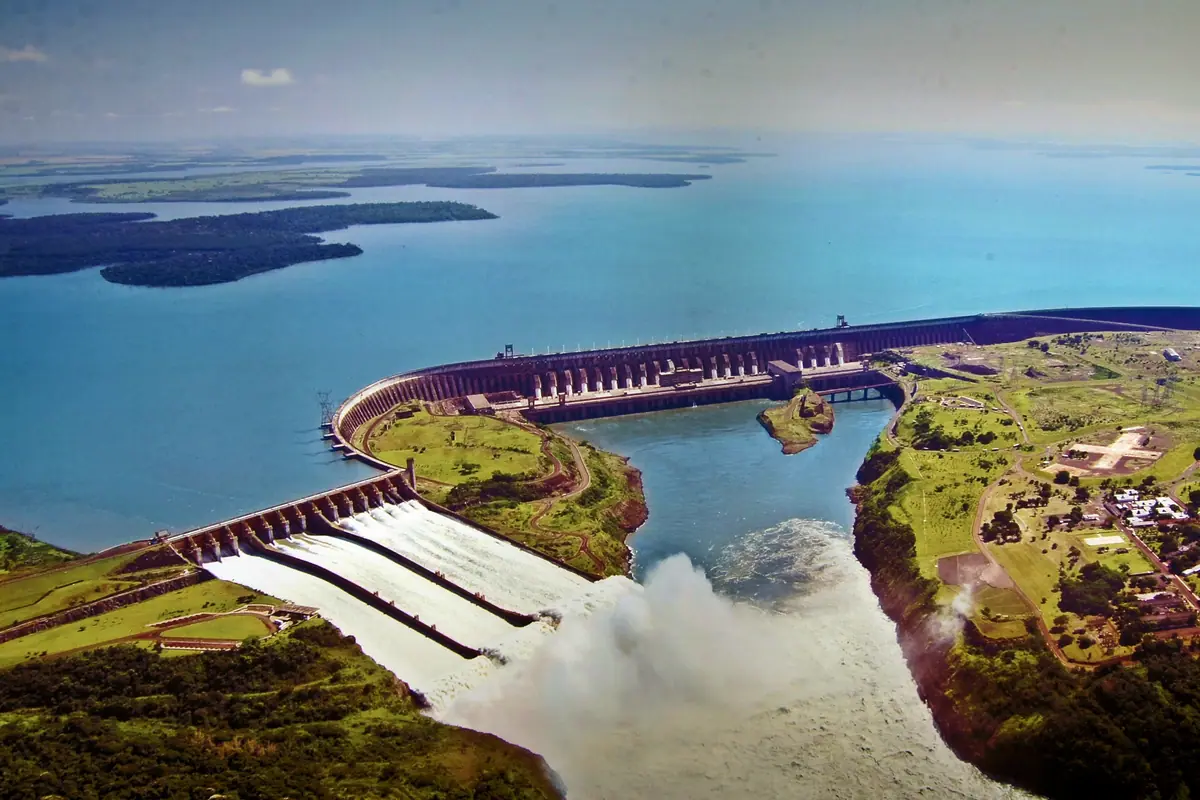
From Encarnación, cross east towards the Triple Frontier, where Paraguay, Brazil and Argentina meet at the confluence of the Paraná and Iguaçu rivers. Ciudad del Este is a frenetic commercial city, but its surroundings are what earn the detour. The Itaipú Dam is the headline act: one of the largest hydroelectric installations on earth, a concrete wall almost eight kilometres long holding back an artificial lake the size of a small sea. Guided visits run most days and take two to three hours, including a drive across the crest of the dam — a genuinely humbling piece of engineering.
A short hop away, in Presidente Franco, the Saltos del Monday plunge roughly 40 metres over a wide basalt ledge into a green gorge, with walkways and viewing platforms that let you stand close enough to feel the spray. It is far quieter than the famous waterfalls just across the Brazilian border, and you can see it properly in about 90 minutes.
If schedules allow, this eastern leg is the one place where a short domestic flight genuinely saves a day — Guaraní International Airport serves the Ciudad del Este area, though frequencies are limited and you should build in slack. Otherwise the drive from Encarnación takes four to five hours, all on paved road.
Day 6–7: The Chaco by Light Aircraft
For the final stretch, trade the highway for a wing and a dirt strip. The Paraguayan Chaco — the vast, semi-arid plain that covers the western half of the country — is best reached by small charter aircraft from Asunción, landing at Filadelfia or further north at Mariscal Estigarribia. Flights take one to two hours instead of the ten-plus hours of rough-road driving, and the view from the window alone is worth the fare: a mosaic of thorn scrub, cattle ranches, salt pans and Mennonite fields laid out in improbable straight lines.
Down here, the sights are landscapes rather than monuments. Defensores del Chaco National Park protects dry forest and the isolated massif of Cerro León, a cluster of low peaks rising from flat bush country and one of the best places in the country to spot Chacoan wildlife — tapirs, peccaries, anteaters and, with luck, the tracks of a jaguar. Near the Paraguay River, the wetlands around Bahía Negra brush against the northern Pantanal, and boat trips at dawn produce clouds of jabiru storks, herons and caimans.
Stay in a simple estancia or a Mennonite-run guesthouse in or around Filadelfia, where German-derived cooperatives sell cheese, cured meat and cold beer in the middle of nowhere. This is a place of enormous skies and very few people; two nights is enough for a first taste, and the dry months from May to September are the only sensible window, since the summer heat here regularly tops 40°C and the unpaved tracks turn to soup after rain.
Flying and Getting Around: Seasons, Baggage and Timing
Paraguay's domestic air network is small and lightly trafficked, so build your week around Asunción as a hub and treat every internal flight as a bonus rather than a guarantee. April to September is the sweet spot nationwide: mild, mostly dry days in the south and tolerable heat in the Chaco. From October to March the country is hot, humid and storm-prone, and afternoon thunderstorms can delay or cancel short flights — always keep a full day of slack before an international departure.
On light aircraft, baggage is the great constraint. Expect soft bags only and limits in the region of 10–15 kilograms per person, with anything heavier left in storage in the capital. Domestic terminals are small and informal, check-in is quick, and cash in local guaraníes is essential once you leave the cities; cards work in Asunción and Ciudad del Este but rarely in the Chaco.
Distances surprise first-timers. Asunción to Encarnación is a half-day drive, Encarnación to Ciudad del Este another half-day, and the Chaco is a different world entirely. If you have only seven days, pick two of the three — the southern missions route or the eastern dam-and-falls route, plus the Chaco — and leave the rest for a return trip. Yellow fever vaccination is recommended for the Chaco and the northern river areas, and mosquito repellent belongs in your day bag year-round.
Frequently asked questions
What is the best time of year to visit Paraguay?
April to September offers the most comfortable conditions: dry, mild days in Asunción, Encarnación and the Jesuit missions, and bearable temperatures in the Chaco. October to March is hot, humid and stormy, with heavy rain that can wash out unpaved roads and delay short flights. If the Chaco is on your list, aim for the dry season between May and September.
Do I need to fly between destinations in Paraguay?
Not necessarily, but it helps. Asunción's Silvio Pettirossi International Airport is the main gateway, and limited domestic services connect to the Ciudad del Este area and a few regional airstrips. The southern route to Encarnación is normally done overland, while the Chaco is far more practical by small charter aircraft than by road.
How many days do I need for this Paraguay itinerary?
Seven days is enough for two solid regions plus the capital. A realistic split is two days in Asunción, two to three days south at the Jesuit missions around Encarnación, and two days in the Chaco. Trying to add Ciudad del Este and Itaipú as well will make the week feel rushed.
Is Paraguay expensive and do I need cash?
Paraguay is one of the more affordable countries in South America, with inexpensive guesthouses, meals and bus travel. Cards are widely accepted in Asunción and Ciudad del Este, but the Chaco, small towns and rural markets run on cash in guaraníes, so withdraw a generous amount before heading west.
What should I pack for a week in Paraguay?
Light, breathable clothing for the subtropical heat, a hat, strong sun protection and insect repellent for the Chaco and river areas. Pack in a soft bag: light aircraft used for Chaco charters typically cap baggage at around 10–15 kilograms per person. A light rain jacket is useful from October to March.
Sort the rest of your trip
Everything for Paraguay, in one place
Stay in Paraguay
Hotels, guesthouses and apartments — compared in one search.
Search hotels
Transfer in Paraguay
Private driver waiting on arrival — no queues, no surprises.
Book a transfer
Travel insurance
Medical cover, delays and lost baggage — sorted before you go.
Get covered