Paraguay is the country South America forgot to put on the itinerary — a landlocked nation of red earth, harp music and cold terere passed hand to hand in the shade. Travel here slowly and it hands you Jesuit ruins without the crowds, a capital that still feels like a small city, and a wilderness river that rivals anything on the continent.
Asunción: A Riverside Capital That Invites You In Slowly
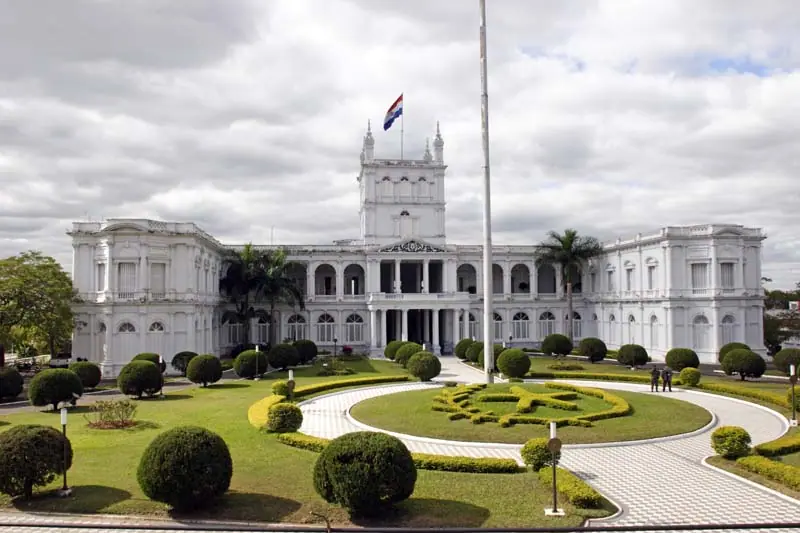
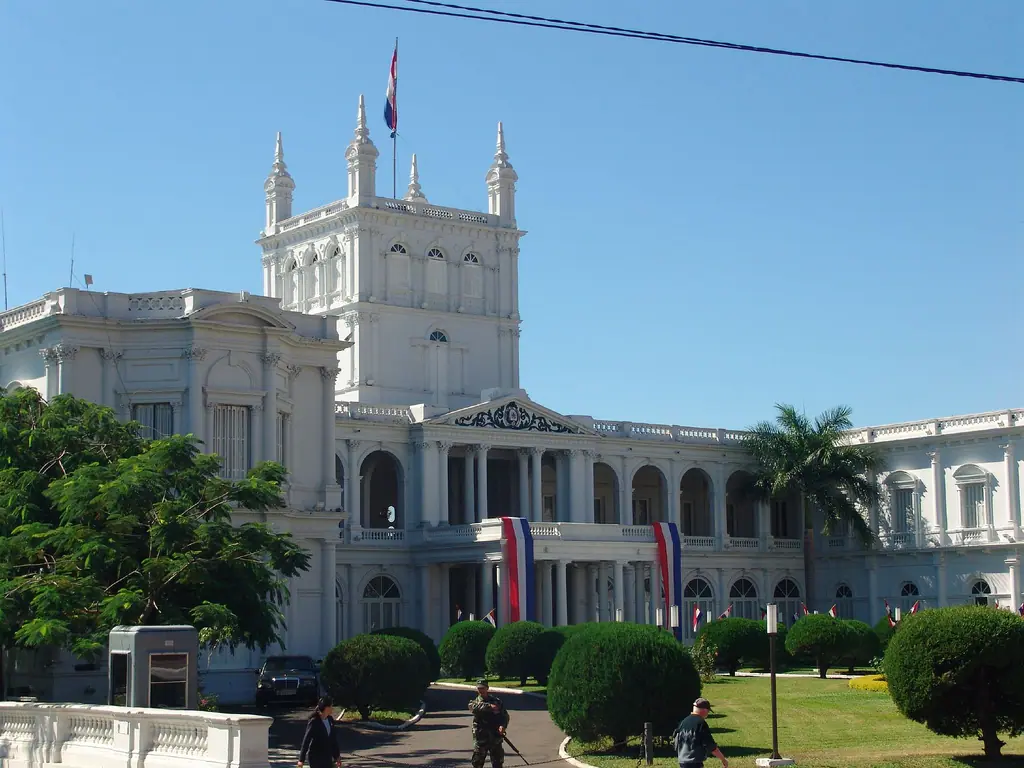
Most Paraguayan journeys begin in Asunción, and the city rewards a guided wander rather than a checklist sprint. Start along the bay, where the Palacio de los López — the peach-and-white presidential palace — glows after dark and reflects in the river. A few blocks inland, the Panteón Nacional de los Héroes holds the country's war dead beneath a domed shrine, guarded by soldiers in ceremonial dress; time your visit around the changing of the guard for a genuinely moving few minutes. Nearby, the Casa de la Independencia is a low, tile-roofed colonial house where the country's break from Spain was plotted in 1811.
Climb Cerro Lambaré for the classic view over the city and the Paraguay River, then head to the Museo del Barro, one of the region's best collections of folk art, indigenous craft and contemporary work — a single stop that explains the country's cultural mix better than a dozen history books. In the late afternoon, walk the painted stairways and murals of Loma San Jerónimo, a hillside neighbourhood that turned itself into an open-air gallery and small bar scene.
For the sensory version of the capital, spend a morning in Mercado 4, a sprawling, noisy market where vendors sell everything from motorcycle parts to medicinal herbs. Two or three days in Asunción is a comfortable base, with enough time for a day trip south to the forest trails and waterfalls of Ybycuí National Park or the clear cascades of Salto Cristal.
What Paraguayans Eat — and How to Eat It With Them
Paraguayan cooking is built on mandioca (cassava), corn, cheese and fire. Chipa — small, chewy rings of cassava starch and cheese — is the national snack, sold from baskets at bus terminals and roadside stalls; buying a bag for a long bus ride is a local ritual, not a tourist novelty. Sopa paraguaya sounds like soup but arrives as a dense, savoury cornbread with onion and cheese, and mbejú is a lacy cassava-and-cheese flatbread cooked on a hot griddle. A market food tour in Asunción is the easiest way to taste all three before noon.
The real social glue is terere: cold yerba mate poured over ice and medicinal herbs in a guampa, sipped through a metal bombilla and passed around a circle. Accept it when offered, drink the whole serving, and hand it back — say "gracias" when you are finished and the gourd will stop coming your way. Breakfast often means cocido, a burnt-sugar and mate brew, sometimes with milk. If you want to learn the etiquette properly, ask a guide; Paraguayans are delighted to explain the difference between terere, mate and mate cocido.
For a main meal, look for vori vori and bori bori — broths thickened with cornmeal-and-cheese dumplings — or a parrilla platter of grilled beef, chorizo and mandioca, with surubí river fish as the lighter alternative. Finish with a glass of caña, the sugarcane spirit, or a fruit-heavy clericó. Skip the polished chain restaurants in favour of a family-run parrilla or a Sunday asado invitation, which is the finest meal a visitor can be handed.
The Jesuit Missions of Itapúa: A Heritage Detour Worth the Bus Ride
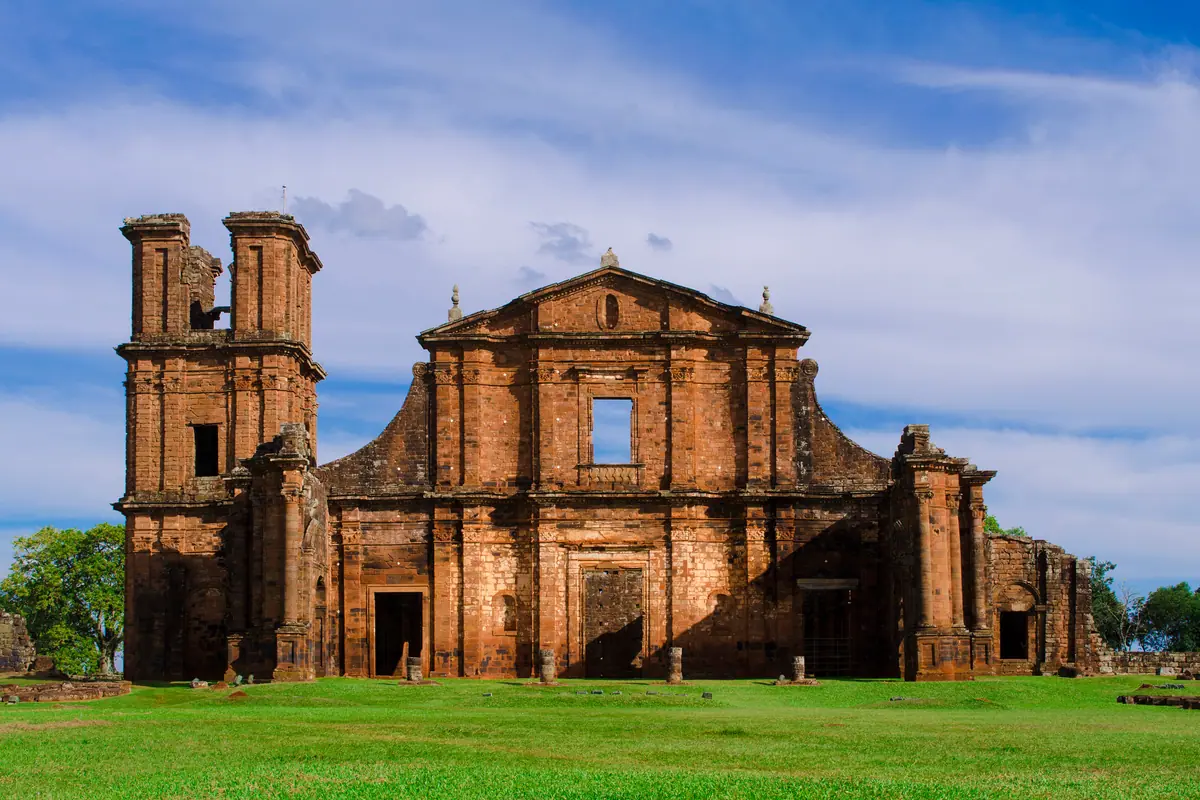
In the green hill country of Itapúa department, near the city of Encarnación, stand the ruins of the reductions the Jesuits and Guaraní built in the 17th and 18th centuries. Trinidad and Jesús de Tavarangue are the showpieces, recognised together as a World Heritage site and still largely free of the tour-bus crush you would find at comparable ruins elsewhere. At Trinidad, red sandstone walls, a colonnaded plaza and intricately carved angels emerge from the grass; at Jesús, the vast unfinished church is a shell of arches and stonework. Take a local guide — the story of the Guaraní musicians, artisans and the mission economy is what makes the stones speak.
Further south, San Cosme y Damián combines a smaller mission complex with an astronomical observatory, an unexpectedly lovely pairing of colonial ruins and stargazing. Base yourself in Encarnación, a laid-back border city on the Paraná River with a long costanera, sandy river beaches and a February carnival that fills the waterfront with comparsas and drumming.
The ruins sit roughly four to five hours by bus from Asunción, or a short hop from Encarnación, and they are hot and humid for much of the year. Go early in the morning, carry water and insect repellent, and plan your visit between April and October for the most comfortable walking conditions.
Itaipú, Saltos del Monday and the Tri-Border Buzz
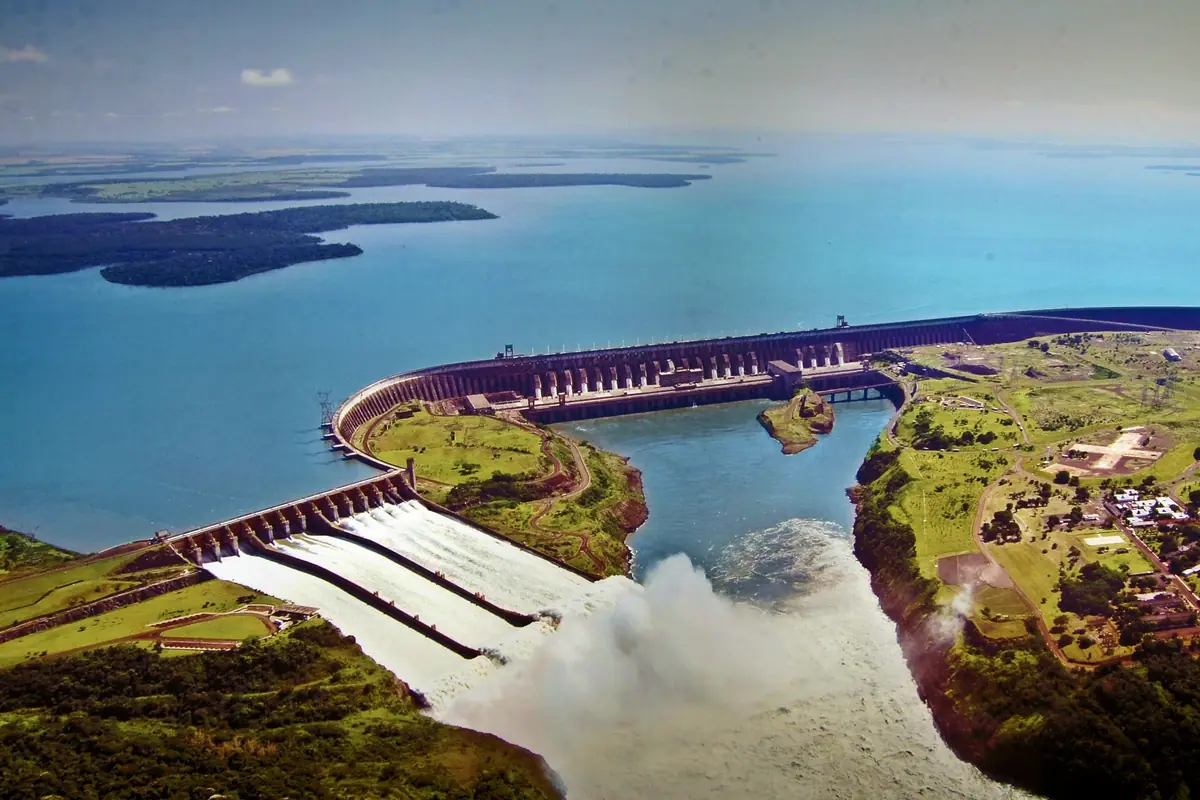
East of Encarnación, near Ciudad del Este, the Itaipú Dam spans the Paraná as one of the largest hydroelectric projects on earth. Guided visits take you along the crest and into the visitor complex, with explanations of how the turbines work and how the reservoir reshaped the river and its wildlife. Bring your passport, book ahead, and expect a slick, industrial-scale tour rather than a wilderness experience — the sheer size is the attraction.
The natural counterpoint is Saltos del Monday, a thundering set of waterfalls near Presidente Franco where the Monday River drops about forty metres into a green gorge. Walkways and viewing platforms get you close, and boat trips run to the base of the falls when water levels allow. Just downriver, the Hito Tres Fronteras marks the point where Paraguay, Argentina and Brazil meet, with obelisks painted in each national colour and a riverside park that is at its best at sunset.
Ciudad del Este itself is a loud, chaotic shopping city, but it makes a convenient base for the falls and for the Monumento Científico Moisés Bertoni, a riverside estate and nature reserve preserving the home and gardens of a Swiss naturalist who spent decades studying Paraguayan plants and animals. The Refugio Biológico Tatí Yupí offers easy forest trails nearby if you want birds and butterflies between the concrete.
The Chaco and the Pantanal: Paraguay's Wildest Tour
Cross the Paraguay River and the country changes completely: flat, thorn-scrub Chaco, home to Mennonite colonies founded in the 1920s that still sell cheese, cured meats and sturdy cakes in cooperative shops. In Filadelfia, the Museo Jakob Unger explains the region's natural history and indigenous cultures in a single, absorbing collection, and the tidy grid of streets is a surprisingly comfortable base for a few days of wildlife watching.
This is big-sky country. Capybaras graze the verges, jabiru storks stalk the ponds, and armadillos, anteaters, caimans and howler monkeys turn up on almost any drive with a good spotter. Push further north towards Bahía Negra and the edge of the Pantanal, where multi-day boat trips on the Paraguay River take you into one of the least-visited wetland wildernesses in South America — a serious draw for birders and photographers who want jaguars, tapirs and hyacinth macaws without the crowds.
The dry season from May to September is the time to go: roads are passable, mosquitoes are fewer and animals concentrate around water. Distances are long, fuel stops are sparse and dirt roads turn treacherous after rain, so a guided 4x4 or river expedition is money well spent. Pack sun protection, long sleeves and cash, and expect temperatures to swing hard between day and night.
Crafts, Harps and Festivals: Timing Your Paraguayan Tour
Paraguay's handmade traditions are best met where they are made. Itauguá is the home of ñandutí, the spiderweb lace worked in circles and stars, and you can watch women stretch the patterns across wooden frames before buying directly. Areguá, on the shore of Lake Ypacaraí, is a ceramics town of kilns and studios, and its strawberry festival in late winter fills the streets with jam, liqueurs and cakes. In Luque, silversmiths still practise filigree jewellery, and the Paraguayan harp — a 36-string instrument at the heart of the country's guarania and polka music — is played live in peñas around Asunción most weekends.
If you can, plan a trip around a festival. San Juan Ára in June is the most distinctly Paraguayan celebration, a night of fire-walking, toro candil effigies and food stalls in towns across the country. The pilgrimage to the Basílica de Caacupé on 8 December draws hundreds of thousands of walkers, and Encarnación's carnival in February is the loudest party on the Paraná. Time any of these right and you will see Paraguay at full volume rather than politely on its best behaviour.
Weather-wise, the sweet spot is May to September, when days are mild, skies are clear and the Chaco is accessible. December to February is punishingly hot and humid, with temperatures that routinely push past 35°C and afternoons best spent indoors. April and October are good shoulder months. A few words of Guaraní — "mba'éichapa" for hello, "aguyje" for thanks — go a long way, and will get you a warmer welcome than any tour booking ever will.
Frequently asked questions
What is the best time of year to visit Paraguay?
May to September offers the most comfortable conditions: mild, mostly dry days and passable roads for the Chaco and Pantanal. December to February is extremely hot and humid, with temperatures often above 35°C, while April and October are decent shoulder months. Wildfire smoke and heavy spring rains can occasionally disrupt travel, so build some flexibility into longer itineraries.
Is Paraguay safe for visitors?
Paraguay is generally calm and low-key for travellers, and violent crime against tourists is rare. The usual precautions apply: keep phones and wallets out of sight in busy markets like Mercado 4, be alert around the tri-border area at Ciudad del Este, and use registered taxis or ride-hailing at night. In the Chaco and Pantanal, travel with local guides — the risks there are distance, heat and rough roads rather than crime.
Do I need to speak Spanish to travel in Paraguay?
It helps enormously. Spanish is widely spoken, and English is uncommon outside hotels and tour offices. Paraguay is bilingual, with Guaraní spoken by the majority of the population, so learning a few phrases like "mba'éichapa" (hello) and "aguyje" (thank you) is appreciated. Hiring a local guide for a day in Asunción or at the Jesuit missions transforms what you understand and what you get to taste.
How many days do I need in Paraguay?
Around seven to ten days works well. Allocate three to Asunción for the historic centre, Museo del Barro and a market food tour, two nights around Encarnación for the Jesuit ruins of Trinidad and Jesús de Tavarangue, and two to three days for the Chaco or a river trip towards the Pantanal. Add a night near Ciudad del Este if you want the Itaipú Dam, Saltos del Monday and the tri-border viewpoint in one sweep.
What should I eat and drink first in Paraguay?
Start with chipa and mbejú from a market stall, then order sopa paraguaya to understand why a "soup" arrives as cornbread. Say yes to terere when it is offered, and remember that drinking the whole serving and saying "gracias" means you are finished. For a main meal, try vori vori or grilled surubí, and finish with caña or a fruit-filled clericó.
Sort the rest of your trip
Everything for Paraguay, in one place
Stay in Paraguay
Hotels, guesthouses and apartments — compared in one search.
Search hotels
Transfer in Paraguay
Private driver waiting on arrival — no queues, no surprises.
Book a transfer
Stay online in Paraguay
Travel eSIM — data the moment you land, no roaming bills.
Get an eSIM