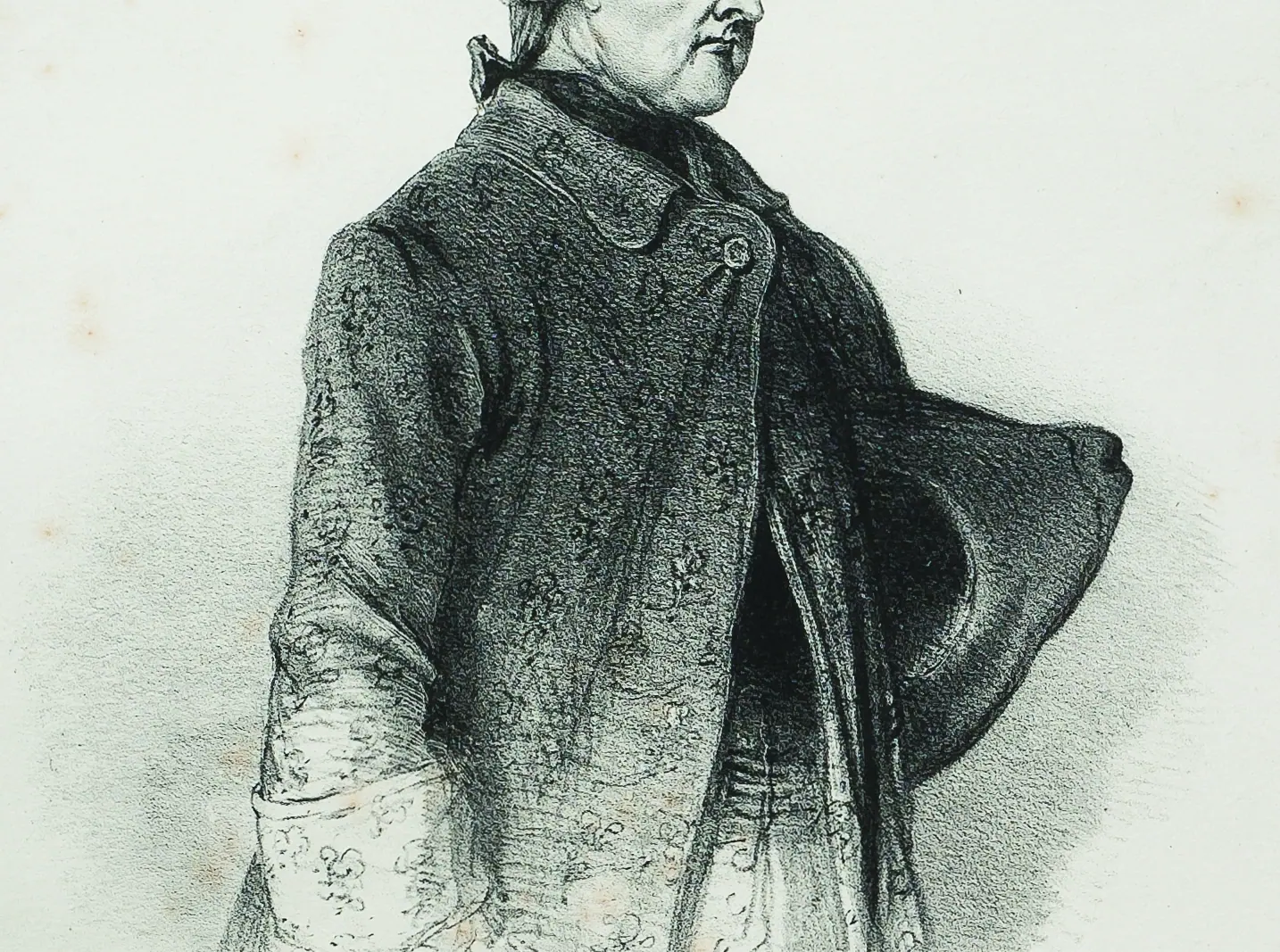
Paraguay is the South American country travellers keep forgetting to visit, and that is precisely its charm: colonial squares without crowds, Jesuit ruins you can have almost to yourself, and a hotel scene that ranges from riverfront towers to working cattle estancias. This guide maps where to sleep across the country and which landmarks justify each stop.
Why Paraguay Rewards the Slow Traveller
Paraguay sits in the middle of South America with no coastline and no marquee icon like Machu Picchu or Iguazú to sell it, which means the visitor economy has grown around local demand rather than international tour buses. That shapes the accommodation: outside the capital you'll find small family-run guesthouses, riverside apartment blocks and estancia rooms where the owner cooks dinner, not chain hotels. Inside Asunción, by contrast, there's a genuine business-hotel sector serving a city that hosts regional summits and a busy commercial class.
The result is a country where your choice of hotel effectively chooses your holiday. Base yourself in the capital and you get museums, markets and day trips to colonial towns. Stay near Encarnación and you're sleeping twenty minutes from UNESCO-listed Jesuit missions. Head into the Chaco and the lodging is part of the adventure — wooden lodges, ceiling fans, and howler monkeys at dawn.
Two practical notes before you book. Almost everywhere accepts payment in guaraníes, and it's worth carrying cash for smaller guesthouses and rural stays where card terminals are unreliable. Spanish is the language of business, but Guaraní is spoken everywhere and a simple "aguyje" (thank you) goes a long way with hosts.
Asunción: The Best Base for a First Visit
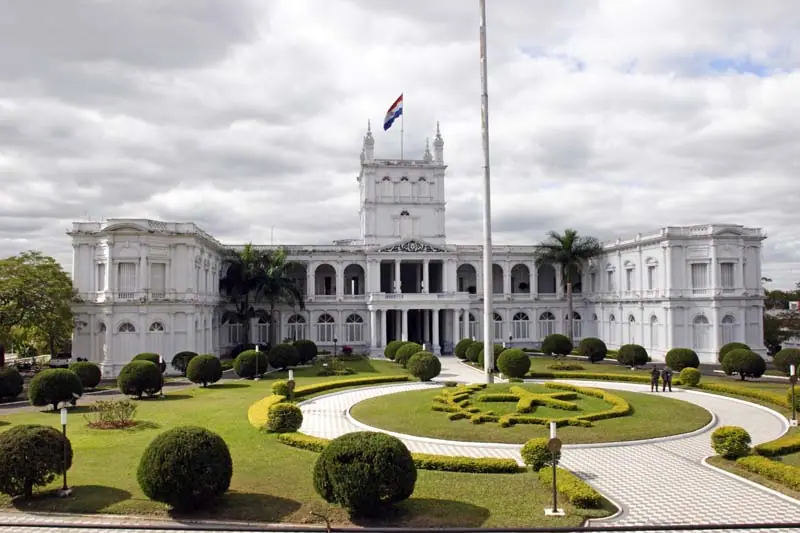
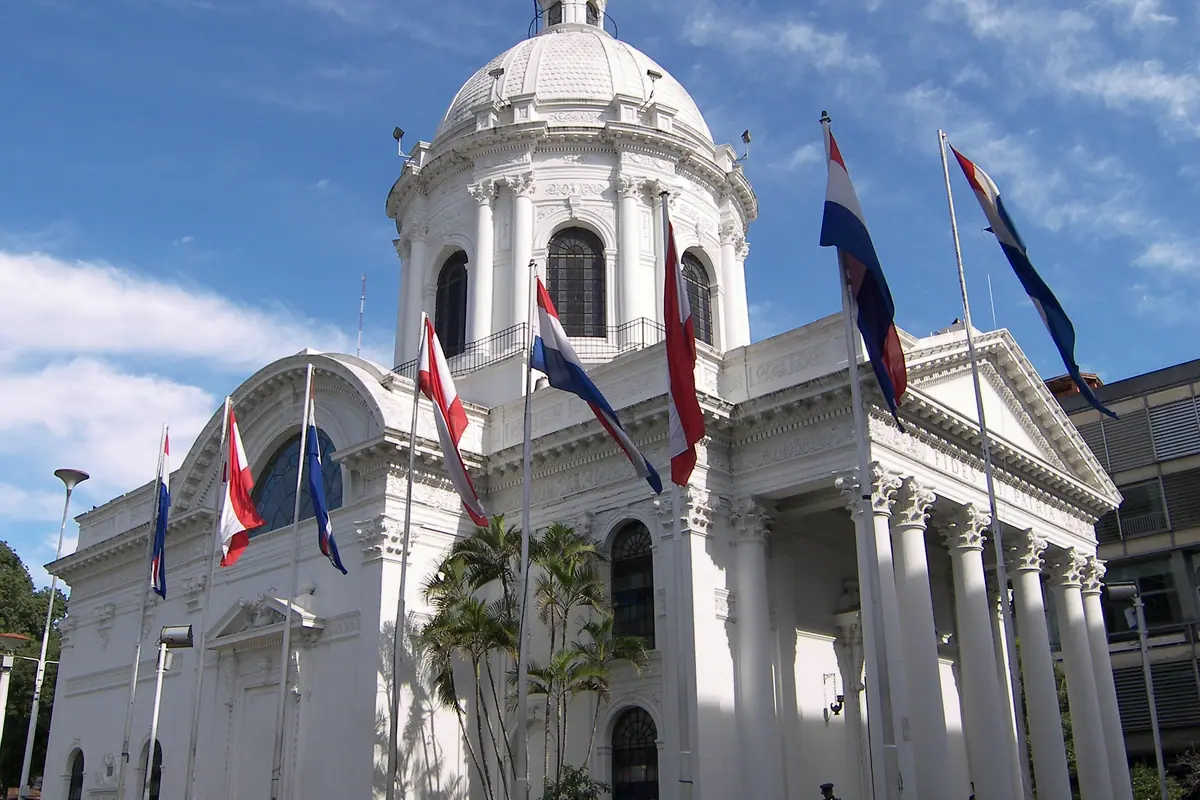
Most trips begin and end in Asunción, and the city's hotel geography is easy to read. The historic centre clusters around the waterfront and holds the headline sights: the neoclassical Palacio de los López overlooking Bahía de Asunción, the Panteón Nacional de los Héroes with its eternal flame and honour guard, and the Casa de la Independencia, a low colonial house where independence was declared in 1811. Staying within walking distance of these means older, characterful hotels and a quieter evening scene.
For restaurants, bars and the best range of mid-range and upscale rooms, look to the Villa Morra and Recoleta districts, a short taxi ride from the centre. This is where you'll find modern high-rise hotels with pools and gyms, and it's convenient for the Museo del Barro — an outstanding collection of Paraguayan and Latin American popular art and ceramics — and for shopping along Avenida Mcal. López.
Whichever district you pick, build in time for the panoramic view from Cerro Lambaré, the wooded hill that gives you the whole city and the Paraguay River in one sweep, and for a wander through Mercado 4, the chaotic market where you can eat chipa, sip tereré and buy just about anything. Asunción also makes an easy base for day trips: the ceramics and strawberry stalls of Areguá on Lake Ypacaraí, the pilgrimage basilica at Caacupé, and the waterfalls and forest trails of Ybycuí National Park.
Encarnación and the Jesuit Missions
Encarnación, in the south on the Paraná River, has quietly become the country's most pleasant short stay. The city rebuilt itself around a riverside promenade with beaches, and its summer Carnaval is the biggest in Paraguay — if you're coming for it, book weeks ahead, because hotels in the centre and along the costanera fill completely. Outside carnival season, a riverfront hotel here is affordable and relaxed, with sunset walks and a cluster of good fish restaurants.
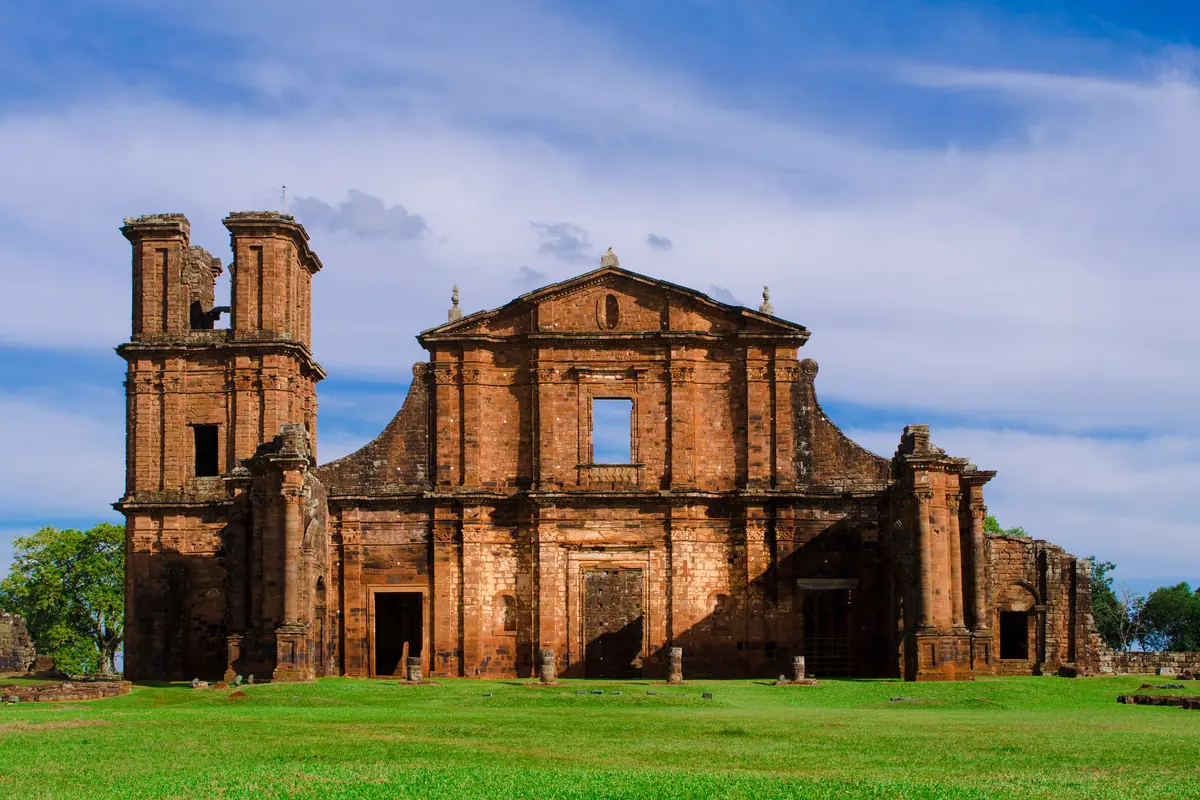
The real reason to stay, though, is the Jesuit Missions of La Santísima Trinidad de Paraná and Jesús de Tavarangue, both UNESCO World Heritage Sites and both within an hour's drive. Trinidad is the larger and more atmospheric, with the remains of a vast church, a plaza, workshops and living quarters laid out in red sandstone; Jesús de Tavarangue has an unfinished church whose walls still stand against the sky. Go early in the morning for cooler temperatures and softer light.
Many visitors stay in Encarnación and visit both missions in a single day, but there are simple guesthouses in the mission villages themselves if you want the ruins at golden hour without the drive back. Note that the border town opposite, across the river, is a different country — handy for a change of scene but worth checking current crossing requirements before you set out.
Ciudad del Este, Itaipú and the Triple Frontier
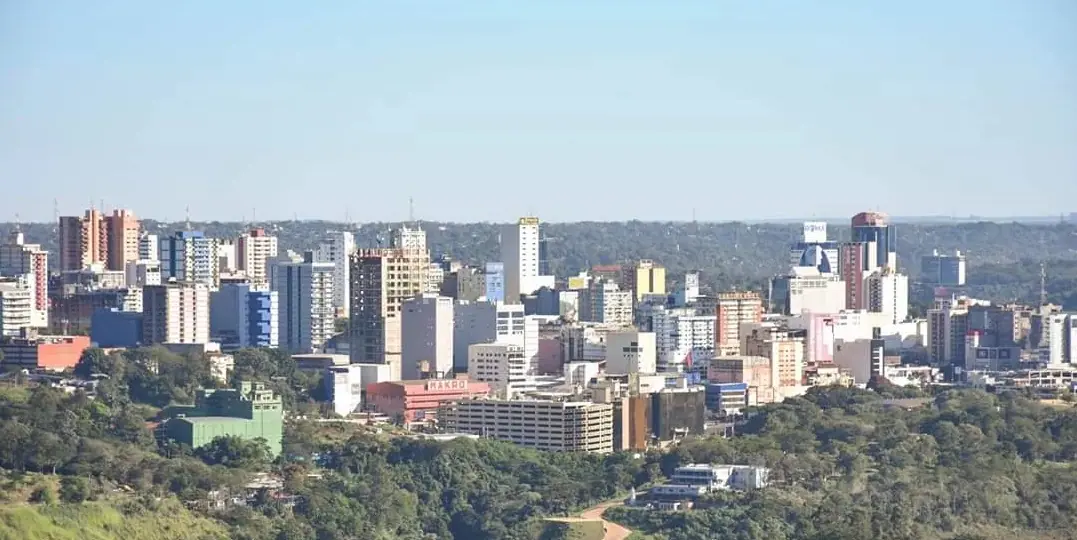
Ciudad del Este is a shopping city first and a tourist city second, but it sits next to one of the engineering wonders of the world. The Itaipú Dam, built jointly with Brazil, is among the largest hydroelectric plants on the planet, and guided visits take you along the crest of the dam and into the turbine halls — genuinely impressive even if dams aren't usually your thing. Hotels here are functional and business-oriented, with the better options clustered away from the noisiest commercial streets.
Nearby, the Saltos del Monday in Presidente Franco are a thundering set of waterfalls reached by walkways and viewing platforms, far quieter than the famous falls further east. Many travellers use Ciudad del Este as an overnight stop before crossing to see Iguazú Falls on the Brazilian or Argentine side, which is roughly a short drive away — a sensible way to split a long journey.
If you'd rather not stay in the shopping bustle, consider basing yourself in the leafy suburbs of Hernandarias, closer to the dam, where larger hotels have green grounds and pools. The Guaraní International Airport serves the region, so you can fly in or out without returning to Asunción.
The Chaco, Wildlife and Working Estancias
West of the Paraguay River, the Chaco is a vast, semi-arid plain of thorn forest, palm savannah and cattle country — a world away from the capital, reachable by the long Transchaco highway. Accommodation here is deliberately simple: estancia guesthouses on working ranches, eco-lodges on the edge of protected areas, and basic rooms in small towns. Expect fans rather than air conditioning in some places, big home-cooked meals, and hosts who know the wildlife.
This is the Paraguay for birders and photographers. Laguna Blanca, a Ramsar-listed wetland near Bahía Negra in the far north, draws jabiru storks, caimans and capybaras, while the immense Parque Nacional Defensores del Chaco protects dry forest and the big cats that live in it. Access is rough and distances are enormous, so plan on multi-day stays and arrange transport through your lodge rather than improvising.
If you want nature without the remoteness, look east instead: Cerro Corá National Park in Amambay combines forest trails, a river and the historic site where Paraguay's long nineteenth-century war ended, with simple lodging in nearby Pedro Juan Caballero. Either way, the trade-off is the same — fewer comforts, far more wildlife.
When to Go, What to Book and How to Get Around
Paraguay's seasons shape both comfort and price. April, May, September and October are the sweet spots: warm days, cool evenings, manageable humidity. Summer from December to February is punishing, with temperatures pushing past 35°C in Asunción and the Chaco — if you travel then, prioritise hotels with real air conditioning and a pool. Winter, June to August, is mild and pleasant in most of the country, though cold fronts known locally as surazos can drop temperatures sharply for a few days, so pack a jacket.
Book ahead for Carnaval in Encarnación in February, for the pilgrimage to the Basílica de Caacupé around 8 December, and for Asunción during major events. Elsewhere, rooms are usually available at short notice, and walk-in rates are often better than online ones in small towns. Note that a 10% value-added tax may or may not be included in quoted rates — ask before you commit.
Getting around is straightforward but slow. Long-distance buses connect Asunción with Encarnación, Ciudad del Este and the Chaco, ranging from basic to fully reclining overnight services; domestic flights cut the longest journeys. In cities, taxis and ride-hailing are cheap, and renting a car makes sense if you plan to reach the missions, national parks or estancias on your own schedule. Allow at least a week to combine the capital, the south and one natural area without rushing.
Frequently asked questions
Which part of Paraguay is best for a first-time visitor?
Asunción is the natural starting point, with the Palacio de los López, Panteón Nacional de los Héroes and Casa de la Independencia all in or near the historic centre. From there, add Encarnación for the Jesuit missions of Trinidad and Jesús de Tavarangue, or Ciudad del Este for the Itaipú Dam. A week lets you link the capital with one other region comfortably.
What is the best time of year to visit Paraguay?
April, May, September and October offer the most comfortable weather. December to February is extremely hot, especially in Asunción and the Chaco, while June to August is mild but can bring brief cold snaps. Book well ahead for Carnaval in Encarnación in February and the Caacupé pilgrimage in early December.
What kinds of hotels can I expect in Paraguay?
Asunción has modern business and upscale hotels, particularly in Villa Morra and Recoleta, plus older properties near the historic centre. Elsewhere you'll find riverside hotels and apartments in Encarnación, functional commercial hotels in Ciudad del Este, and simple family guesthouses, eco-lodges and ranch stays in the Chaco and around the national parks.
Do I need cash for hotels in Paraguay?
It's wise to carry guaraníes. Larger city hotels accept cards without trouble, but smaller guesthouses, estancias and rural lodges may have unreliable terminals or prefer cash. ATMs are common in cities and larger towns but scarce in the Chaco, so withdraw before heading west.
How do I reach the Jesuit missions and national parks?
The missions near Encarnación are reachable by taxi, hired car or organised day trips from the city. National parks such as Ybycuí, Cerro Corá and Defensores del Chaco are best visited with your own vehicle or through a lodge that arranges transport, since public connections are limited and distances are long.
Sort the rest of your trip
Everything for Paraguay, in one place
Transfer in Paraguay
Private driver waiting on arrival — no queues, no surprises.
Book a transfer
Things to do in Paraguay
Skip-the-line tickets, guided tours and standout experiences.
See experiences
Stay online in Paraguay
Travel eSIM — data the moment you land, no roaming bills.
Get an eSIMMore guides in Paraguay
Top Things to Do in Paraguay: Landmarks, Jesuit Ruins and Wild Chaco
Best Time to Visit Paraguay: Seasons, Festivals and Where to Stay
Best Places to Visit in Paraguay: From Asunción to the Chaco
Paraguay Tours: A Food, Culture and Local Experiences Guide