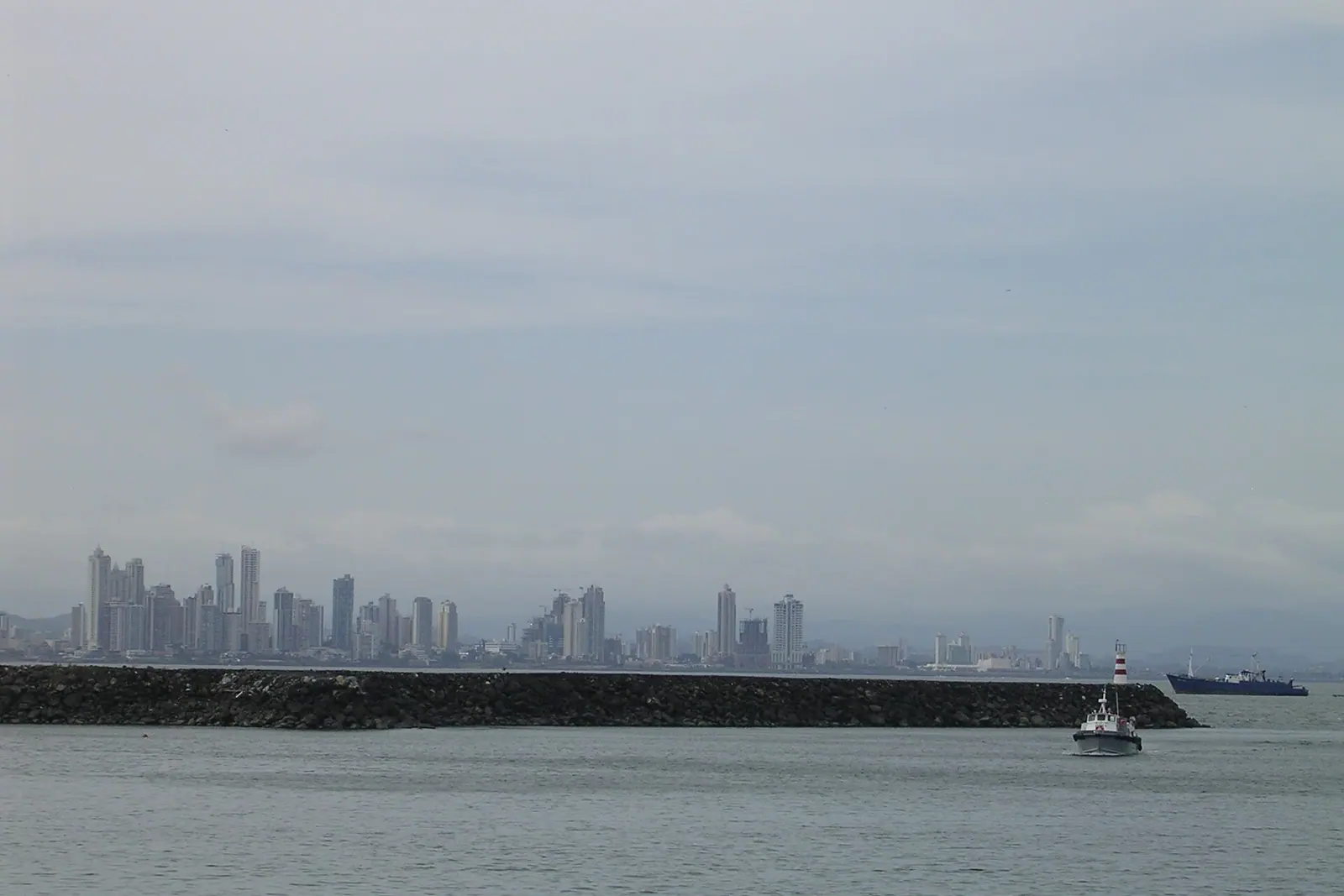
Panama City crams a 500-year-old colonial quarter, a rainforest and one of the modern world's great engineering spectacles into a single skyline of glass towers. Ships still climb the locks at Miraflores, cobblestones still ring underfoot in Casco Antiguo, and howler monkeys call from a hilltop park twenty minutes from downtown.
Watching Ships Climb at the Miraflores Locks
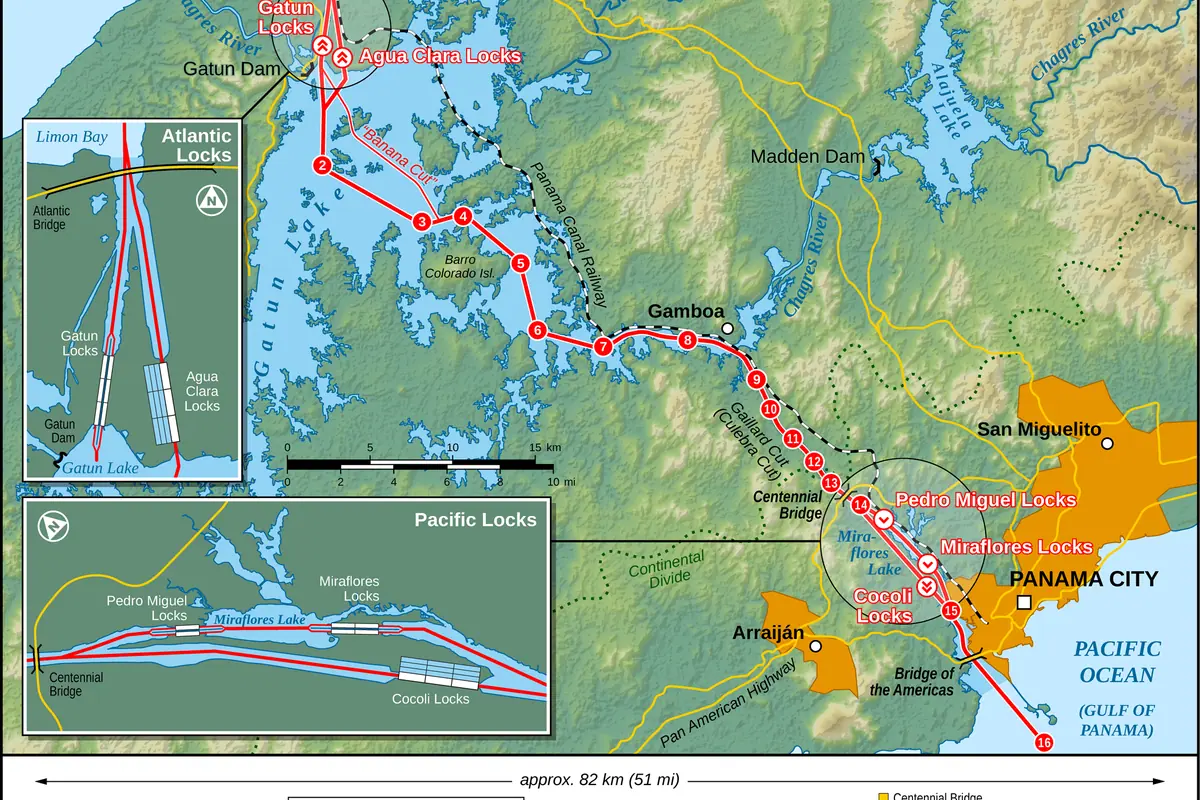
The Panama Canal is the reason Panama City exists in its present form, and the closest place to see it working is the Miraflores Locks, a 20 to 30-minute drive west of the centre. From tiered outdoor viewing decks you watch container ships and bulk carriers nose into the first chamber, get nudged into place by electric towing locomotives running on rails, and then rise roughly 26 metres towards the level of Gatun Lake. It is slow, mechanical and completely mesmerising — the whole process takes about half an hour per vessel.
A four-storey visitor complex sits beside the locks, with a large-format film on the canal's construction, exhibits on the failed French attempt and the later American build, and a restaurant overlooking the water. Plan on one and a half to two and a half hours. The trick is timing your visit to a scheduled transit rather than arriving at random; early mornings and late afternoons tend to be busier with ship traffic, and midday gaps are common.
If you want more than a spectator's view, partial transit boat trips run through the Pacific locks and into Gatun Lake, while full coast-to-coast transits take roughly eight to ten hours and usually start before dawn. On the Atlantic side, the Agua Clara locks handle the enormous neopanamax ships and are far less crowded — worth the two-hour drive if you are staying longer.
Casco Antiguo: Plazas, Cathedrals and Rooftop Evenings
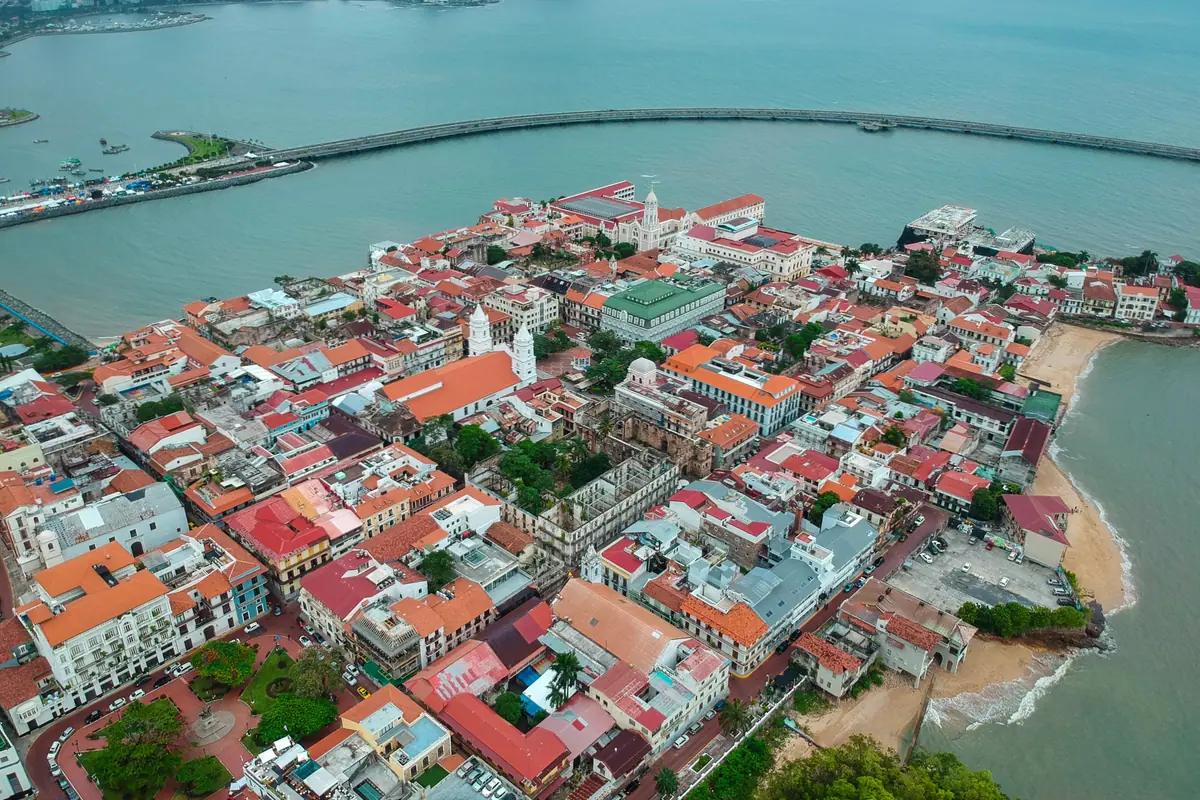
Casco Antiguo is the old walled city, and its compact grid of restored colonial houses, wrought-iron balconies and crumbling facades is the most atmospheric place in Panama. Start at Plaza de la Independencia, flanked by the Metropolitan Cathedral with its twin white towers, then wander to the Iglesia de San José to see the famous golden altar — legend holds it was painted black to escape the attention of passing buccaneers.
From there, the route naturally leads along Paseo Esteban Huertas, a bougainvillea-draped walkway built on the old city wall, past Las Bóvedas — the vaulted dungeons now used by artisans — to Plaza de Francia, where an obelisk honours the French engineers who first attempted the canal. Nearby, the Arco Chato, a flat brick arch that survived centuries of earthquakes, still frames a slice of sky above the Church of Santo Domingo.
Casco is genuinely walkable: two to three hours covers the landmarks, but it rewards lingering. Come back for dinner on a rooftop, live jazz in a small bar, or a coffee in a courtyard. Mornings are coolest and quietest for photographs; Sunday afternoons empty out as shops close; the cobblestones are uneven, so wear something with grip.
Panama Viejo: The Original City, Sacked and Abandoned
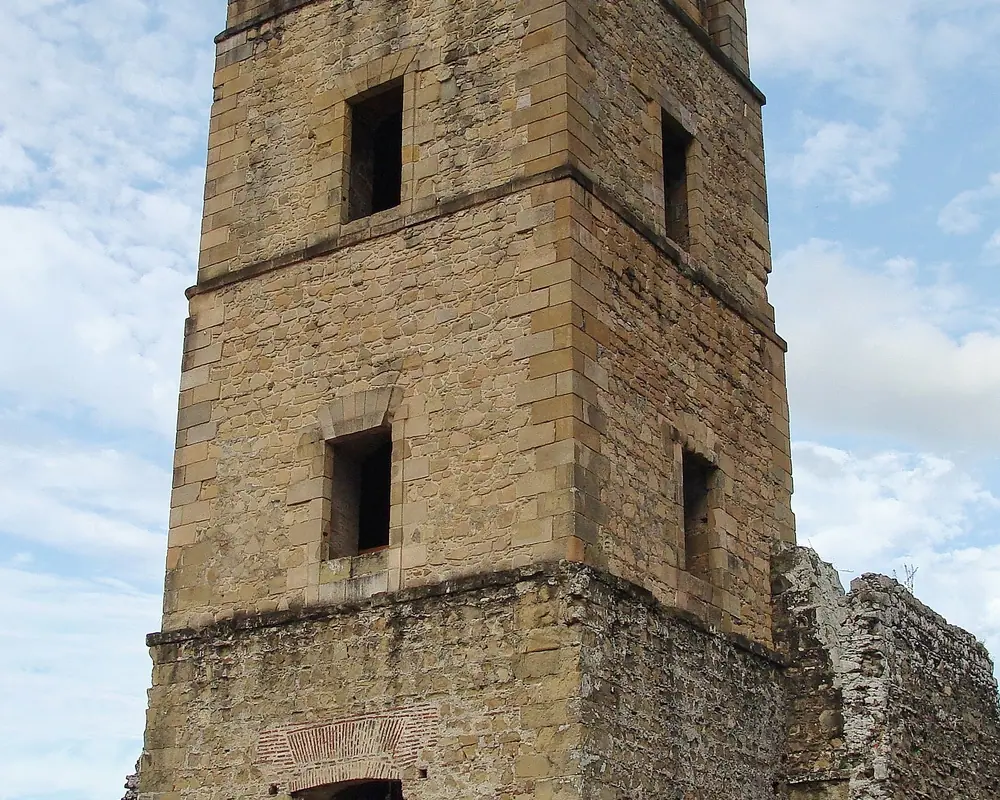
Before Casco Antiguo there was Panama Viejo, founded in 1519 and for a century and a half the launching point for Spanish expeditions along the Pacific coast of the Americas. In 1671 the pirate Henry Morgan stormed and burned it, and the survivors rebuilt on the peninsula where Casco Antiguo now stands. What remains is a haunting field of stone walls, convents and the hollow tower of the old cathedral, standing alone above the grass.
The site sits about fifteen minutes east of the city centre and takes roughly one and a half to two hours to explore properly, including the small on-site museum that explains the city's role in the silver trade. There is almost no shade, so go at opening time or in the late afternoon; midday heat here is punishing, and the ruins are far more photogenic in low, slanting light.
Because Panama Viejo and the Miraflores Locks sit on the same side of the city, many visitors pair them into a single half-day, doing the ruins first and the canal afterwards. If you have a spare hour, the coastal walkway back towards town offers a good sense of how far the modern city has spread around its own history.
Biomuseo and the Amador Causeway
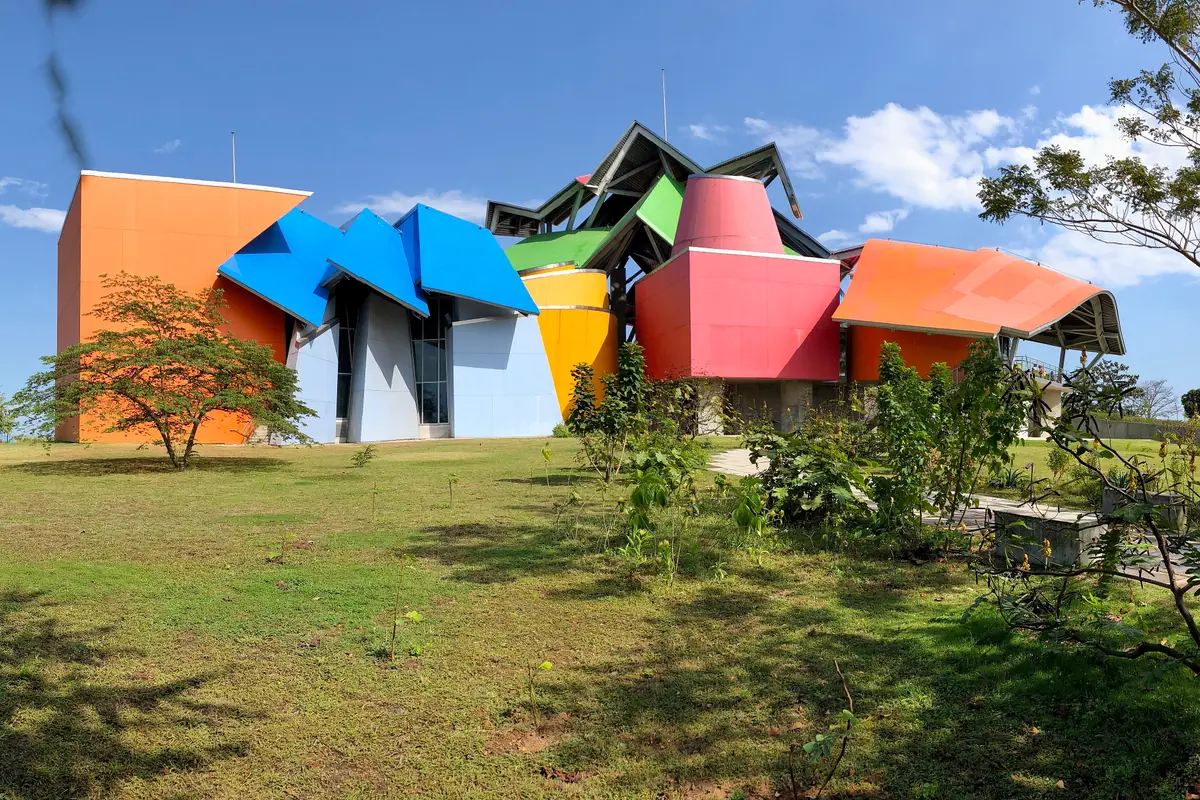
The Biomuseo is the city's unmissable modern building — a jumble of vivid blue, red, yellow and green steel canopies designed by Frank Gehry, sitting where the Amador Causeway meets the Pacific entrance to the canal. Inside, the story is the one that explains everything else about Panama: how the rise of this narrow isthmus three million years ago rearranged ocean currents, joined two continents and triggered a cascade of evolution across the Americas.
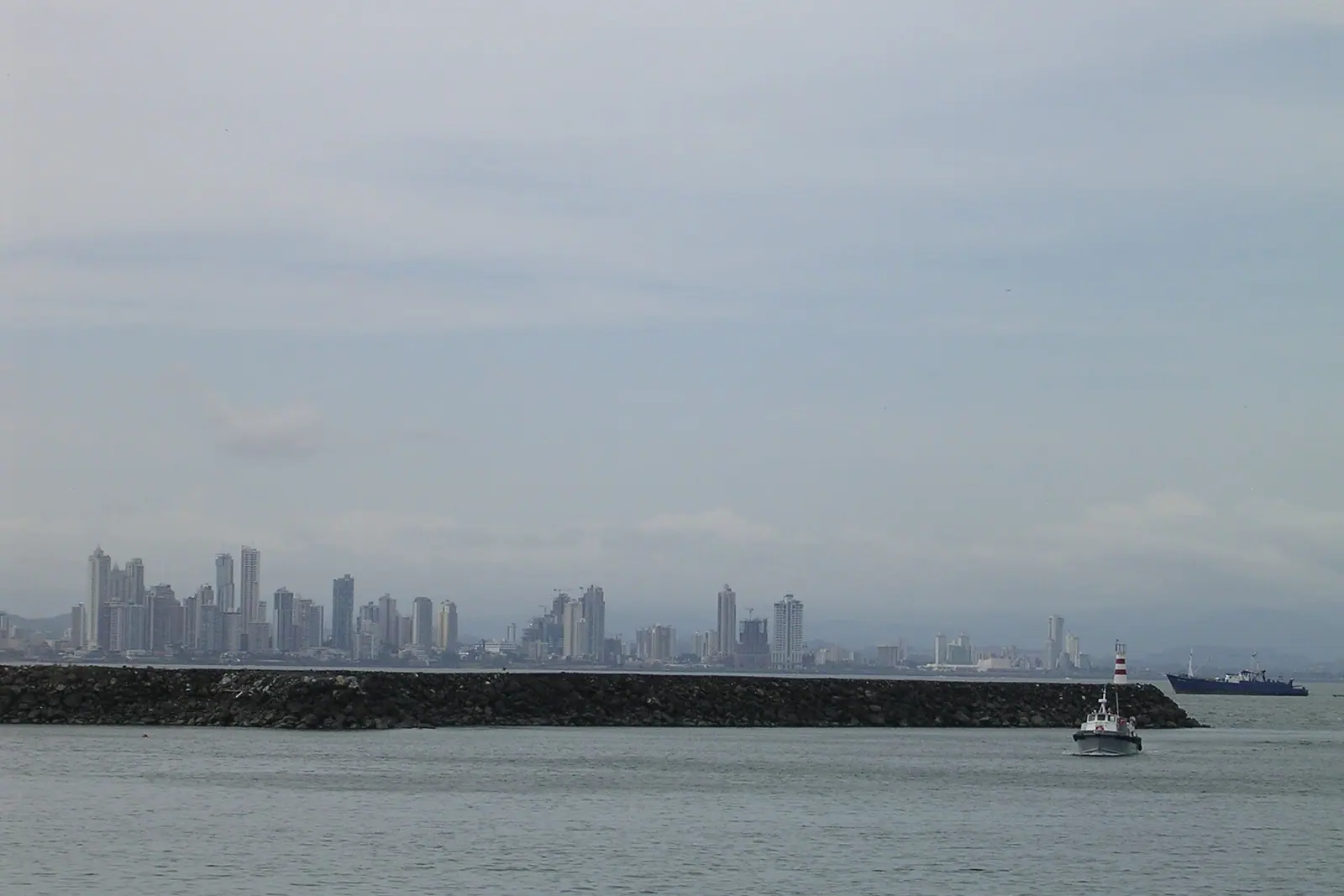
The museum anchors the Causeway itself, a four-kilometre strip of land built from rock excavated during the canal's construction, linking four small islands. Locals come here to jog, cycle and rollerblade at sunset, when the skyline glitters across the bay and the Bridge of the Americas arches away to the north. Marinas, seafood restaurants and ice-cream carts line the route, making it an easy, breezy evening.
From the Causeway's ferry terminals you can also escape the city entirely. Boats to Taboga Island take around half an hour to forty-five minutes, landing at a village of painted houses with a couple of quiet beaches and a walking trail over the ridge. It makes a satisfying half-day or lazy full-day break from urban sightseeing.
Rainforest Inside and Around the City
One of Panama City's oddest pleasures is that you can be in primary forest before your coffee gets cold. The Metropolitan Natural Park protects a few hundred hectares of dry tropical forest just north of the centre, with looping trails, a small lookout over the canal and, if you arrive early enough, a decent chance of Geoffroy's tamarins, sloths, toucans and trogons. Go at 6.30am to 8am; by ten the birds have gone quiet and the humidity is serious.
For the classic panorama, walk up Ancon Hill, the roughly 200-metre ridge crowned with Panama's flag that separates the old city from the canal. The paved road up takes about 45 minutes at a stroll, and the reward is a full sweep of skyline, causeway and locks. Go early, carry water, and take the same road down — paths branching off into the brush are not for casual wanderers.
If you have a full day and any interest in wildlife, head an hour north to Soberanía National Park and Pipeline Road, one of the most celebrated birding routes in the tropics, with hundreds of species recorded along a single track. Guided half-day and full-day trips from the city are standard, and the rainy season's green, misty mornings are often the most productive of all.
Seafood, Sancocho and the City's Everyday Rhythm
Panama eats well, and much of it starts at the Mercado de Mariscos, the working fish market at the edge of Casco Antiguo. Downstairs, fishermen unload corvina, shrimp and octopus in the morning; upstairs, simple counters serve ceviche by the cup, usually with a stack of crackers, for a fraction of what you would pay in a restaurant. Get there before noon, when the best of the catch and the busiest energy are both still around.
Beyond the market, look for sancocho, the hearty chicken-and-root-vegetable soup ladled out at family-run fondas; patacones, twice-fried green plantain discs; hojaldres, the flaky fried dough eaten with breakfast; and ropa vieja, slow-cooked shredded beef. Panama also grows some of the world's most prized coffee, so a cup brewed from local beans is worth seeking out in the cafés of the Via Argentina and El Cangrejo districts.
Two practical notes shape any itinerary. Panama uses the US dollar alongside its own balboa coins, so there is no currency maths to do. And the seasons matter: the dry window from mid-December to April brings reliable sunshine and the clearest canal views, while May to November is greener, cheaper and wetter, with heavy afternoon showers that usually clear by evening. Either way, three or four days is enough to see the canal, both old cities, the Causeway and at least one patch of jungle.
Frequently asked questions
How many days do I need in Panama City?
Three days covers the essentials — the Miraflores Locks, Panama Viejo, Casco Antiguo and the Amador Causeway. Add a fourth or fifth day for a rainforest morning in Soberanía National Park, a ferry to Taboga Island, or a full canal transit.
What is the best time of year to visit Panama City?
The dry season runs from mid-December to April, with sunny days and the clearest views over the canal. May to November is the rainy season: expect heavy but usually short afternoon downpours, lush green landscapes and lower hotel rates.
Can I visit the Panama Canal without booking a tour?
Yes. The Miraflores Locks visitor centre on the Pacific side is a short taxi or rideshare ride from downtown and can be visited independently; the Agua Clara locks on the Atlantic side are also open to the public. Only partial and full transits need to be booked in advance.
Is Panama City safe for tourists?
Casco Antiguo, the Cinta Costera, Amador Causeway and the main hotel districts are comfortable to walk by day and generally lively in the evening. Use normal city caution after dark, avoid unlit side streets, and take registered taxis or ride-hailing services rather than hailing strangers.
How do I get around Panama City?
The metro covers much of the modern city and is cheap and quick. Taxis and ride-hailing apps are plentiful and inexpensive for short hops, while Casco Antiguo, the Causeway and Panama Viejo are best reached by car or taxi.
Plan it — experiences in Panama
Live search, booked directly with trusted providers.
Sort the rest of your trip
Everything for Panama, in one place
Stay in Panama
Hotels, guesthouses and apartments — compared in one search.
Search hotels
Transfer in Panama
Private driver waiting on arrival — no queues, no surprises.
Book a transfer
Stay online in Panama
Travel eSIM — data the moment you land, no roaming bills.
Get an eSIMMore guides in Panama
Best Time to Visit Panama: Dry Season, Green Season and Where to Stay
One Week in Panama: The Perfect 7-Day Itinerary with Domestic Flights
Panama Food, Culture and Local Experiences: What to Eat, See and Do

Best Places to Visit in Panama: Canal Locks, Cloud Forests and Caribbean Islands