New Zealand packs an entire continent's worth of scenery into two long, skinny islands — fjords carved by ice, volcanoes still steaming, glaciers that tumble toward rainforest, and golden bays where the sand squeaks underfoot. Whether you have ten days or a month, these are the landmarks and experiences that define a first trip.
Milford Sound and Fiordland: The Wildest Edge of the Country
Fiordland National Park is the reason many travellers fly halfway around the world. The headline act is Milford Sound, where Mitre Peak rises 1,692 metres almost straight out of black water, and waterfalls such as Stirling Falls and Bowen Falls drop hundreds of metres after rain. Rain is not a problem here — it is the point. This corner of the country receives more than six metres of rain a year, and the cliffs come alive with temporary cascades within minutes of a shower. Boat cruises typically run one and a half to two hours out to the Tasman Sea and back, and kayaking or a small-boat trip gets you closer to the sheer walls where fur seals haul out.
Most visitors base themselves in Te Anau, a two-hour, roughly 120-kilometre drive from the sound along the Milford Road, which passes the mirror-still Eglinton Valley, the Chasm, and the Homer Tunnel. Allow a full day even if you only cruise, and carry insect repellent — the sandflies are legendary and enthusiastic. The famous Milford Track, a 53.5-kilometre, four-day walk from Lake Te Anau to Sandfly Point, is one of the country's Great Walks and sells out months ahead for the late-October-to-April season. Quieter alternatives include the Routeburn and Kepler tracks, both accessible from the same region.
The best window for Fiordland is November through March, when daylight stretches past 9pm and the alpine sections of the trails are clear of snow. Book transport and cruises well in advance for the peak weeks around Christmas and New Year, and build in a spare day: road closures from slips or snow are a genuine possibility at any time of year.
Queenstown and the Southern Lakes: Adventure Capital
Queenstown sits on the shore of Lake Wakatipu with the Remarkables mountain range as a backdrop, and it has turned adrenaline into an industry. The Skyline Gondola climbs to Bob's Peak for the classic panorama, and from there fit hikers can continue up the Ben Lomond Track for a half-day climb to a 1,748-metre summit. The world's first commercial bungee site, at the Kawarau Bridge, still operates just outside town, while the Nevis jump offers a 134-metre drop. Jet boating through the Shotover River canyons, paragliding over the lake and white-water rafting round out the menu.
Not everything here requires a harness. Arrowtown, twenty minutes away, is a preserved gold-rush village of wooden storefronts and a Chinese miners' settlement, and the Gibbston Valley wine trail produces excellent pinot noir. In winter, from roughly June to early October, Coronet Peak and the Remarkables draw skiers and snowboarders, while the Routeburn Track — a 32-kilometre, two-to-three-day walk through beech forest and alpine basins — runs from late October to April and is one of the finest hikes in the country.
Queenstown is compact and walkable, but a rental car makes the surrounding lakes — Wanaka, Hawea, and the road over the Crown Range — far easier to explore. Summer days are long and warm but the lakes are cold year-round; winter brings crisp, clear skies and short daylight. Accommodation prices spike during school holidays, so shoulder months like May and September offer the same landscapes with far more breathing room.
Rotorua and the Central North Island: Geysers, Craters and Māori Culture
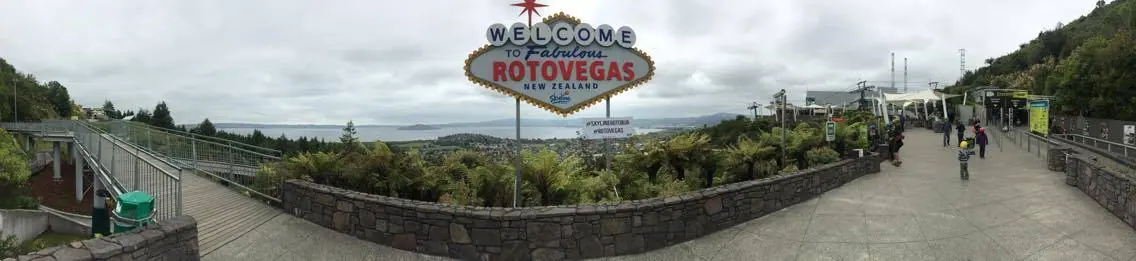
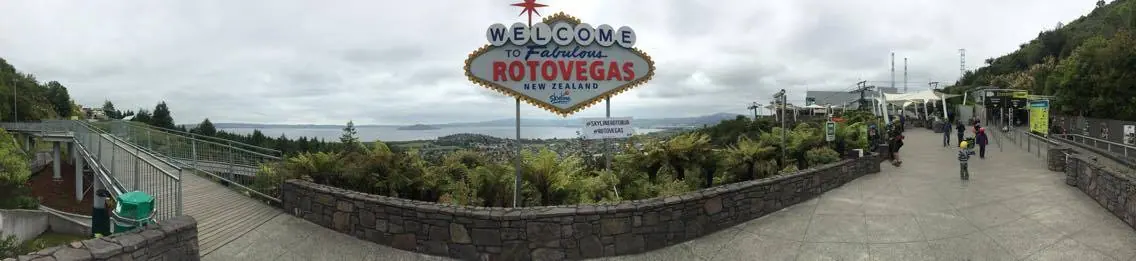
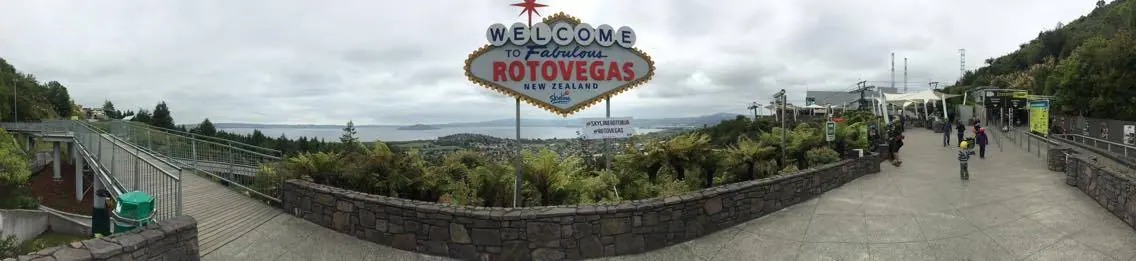
The North Island's volcanic heartland begins around Rotorua, where sulphur drifts across the streets and hot pools bubble in public parks. At Te Puia, the Pohutu Geyser erupts up to twenty times a day, sometimes reaching thirty metres, and the site also houses a living Māori arts and carving school. Nearby Wai-O-Tapu is a surreal circuit of neon-green pools, the champagne-coloured Champagne Pool and collapsed craters, while the redwood forest at Whakarewarewa has become one of the southern hemisphere's best mountain-biking networks.
An hour south lies Lake Taupō, a caldera so large it shapes the weather, with the Huka Falls thundering through a narrow rock chute just north of town. Beyond it is Tongariro National Park, New Zealand's oldest, where three active volcanoes — Ruapehu, Ngauruhoe and Tongariro — dominate the plateau. The Tongariro Alpine Crossing is the country's most popular day walk: 19.4 kilometres across volcanic scree, past the steaming Red Crater and the vivid Emerald Lakes, taking most people seven to eight hours.
Rotorua is a year-round destination, though the crossing is safest and busiest from November to April, when snow and ice no longer require crampons and an ice axe. Conditions change fast at altitude — windproof layers, water and sun protection are essential even in midsummer. If you would rather not tackle the full crossing, shorter walks to Taranaki Falls and Tama Lakes still deliver the volcanic scenery with far less commitment.
Aoraki/Mount Cook and the Mackenzie Country: Under an Alpine Sky
The road inland from the Canterbury Plains leads into the Mackenzie Country, a basin of turquoise glacial lakes ringed by golden tussock and snow-capped peaks. Lake Tekapo is the postcard: the Church of the Good Shepherd sits alone on its shore, built from local stone in the 1930s with an altar window framing the lake and mountains. This whole region forms part of a dark sky reserve, and the stargazing after dusk — especially from the summit of Mount John — is among the clearest on earth.
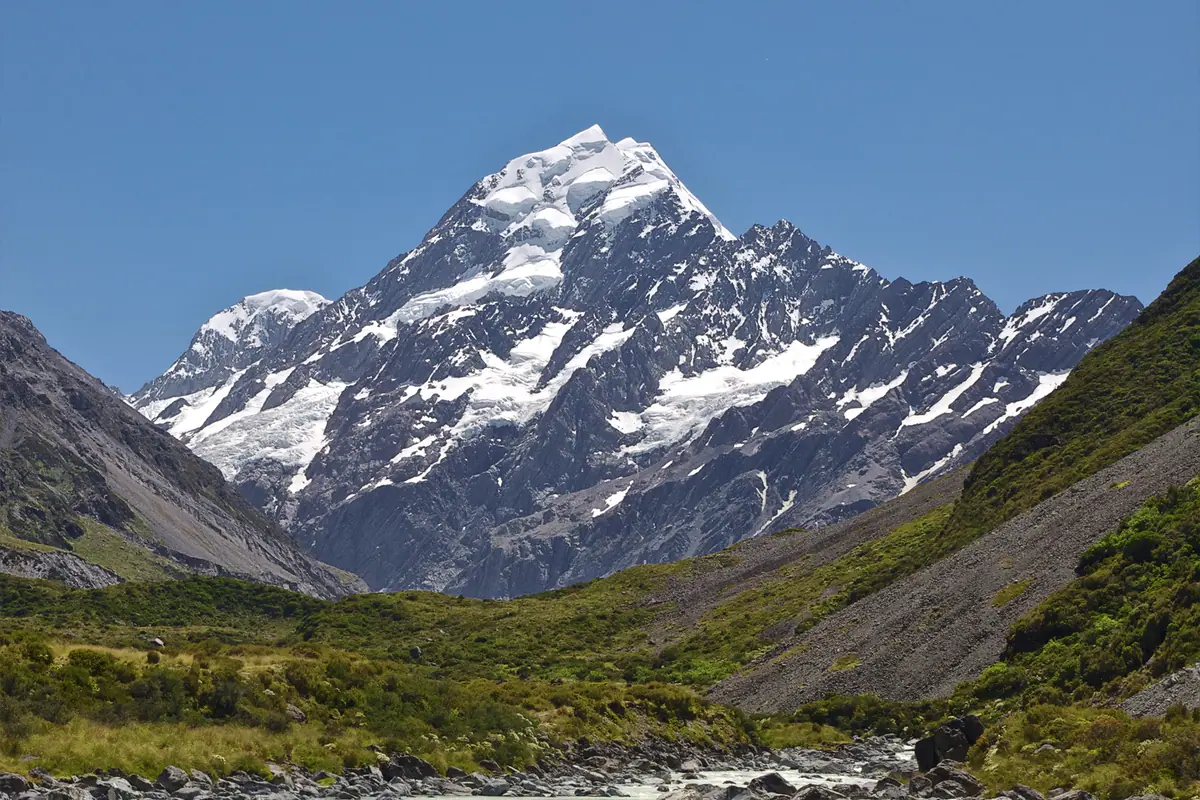
Continue north and Lake Pukaki funnels you toward Aoraki/Mount Cook, at 3,724 metres the highest mountain in New Zealand. The Hooker Valley Track is the most rewarding easy walk in the country: ten kilometres return, roughly three hours, across three swing bridges to a glacial lake where icebergs float beneath the summit. For something grander, guided trips land on the Tasman Glacier by ski plane or helicopter, and the Tasman Lake itself can be explored by boat among floating ice.
Summer, from December to March, brings the most reliable weather and the longest days; spring and autumn are quieter and often beautifully clear. Winter transforms the basin into a ski destination with club fields and commercial resorts nearby. Whatever the season, the mountains make their own weather — carry a warm layer and expect the temperature to fall sharply the moment the sun drops behind a ridge.
The West Coast and Abel Tasman: Glaciers, Pancake Rocks and Golden Bays
On the South Island's west coast, the Southern Alps wring out so much rain that temperate rainforest grows within walking distance of two glaciers. Franz Josef and Fox Glaciers both descend from the high snowfields, and guided walks, heli-hikes and scenic flights get visitors onto the ice itself. Further north, the Punakaiki Pancake Rocks are layered limestone stacks with blowholes that fire spray into the air at high tide, and the Hokitika Gorge glows an improbable shade of blue-green beneath its suspension bridge.
At the top of the South Island, Abel Tasman National Park is a sweep of golden sand, granite headlands and sheltered coves — quite unlike the rugged coast further south. The Abel Tasman Coast Track runs 60 kilometres over three to five days, but sea kayaking from Kaiteriteri or Marahau lets you cover the same coastline in a day or two, paddling past Split Apple Rock and stopping at beaches where the only footprints are your own.
The west coast is wettest from May to September, when the glaciers are still impressive but tracks can be muddy and flights cancelled; October to April offers more settled weather. Abel Tasman is at its best in summer, when the water is warm enough for swimming and the tides allow the coastal track's estuary crossings. Distances along this coast are long and the roads slow, so plan fewer stops than you think you need.
Auckland, Wellington and the Bay of Islands: Cities and the Subtropical North
Auckland spreads across a volcanic field between two harbours, and its Sky Tower gives the best orientation — 328 metres up, with views across the Hauraki Gulf to Rangitoto Island, a symmetrical cone you can hike in a half day. A short ferry ride reaches Waiheke Island, where vineyards, olive groves and quiet beaches make an easy day trip. South of the city, the Waitomo Glowworm Caves are toured by boat through a limestone cavern ceiling lit by thousands of tiny blue-green lights, and near Matamata the Hobbiton Movie Set remains a working sheep farm with its hobbit holes intact.
Wellington, the compact capital at the bottom of the North Island, is built around a harbour and famous for its café culture, the national museum Te Papa, and the cable car up to the Botanic Garden. From Mount Victoria you can look out over the Cook Strait, and on a clear day across to the Marlborough Sounds — home to the country's best-known sauvignon blanc vineyards.
Further north, the Bay of Islands is a warm, scattered archipelago of 144 islands where dolphin-watching, sailing and the Hole in the Rock at Cape Brett are the main draws. Russell was the country's first European settlement and still has the feel of a small historic town, while further up the coast Cape Reinga and Ninety Mile Beach mark the top of the country. The far north is mildest from November to April, but it is a year-round destination — just bring layers, because four seasons in one day is not a cliché here.
Frequently asked questions
How many days do I need in New Zealand?
Two weeks is the practical minimum for a comfortable first trip. That allows roughly a week on each island, with three or four nights in Queenstown or Fiordland, a couple of days around Rotorua and Tongariro, and time in Auckland or Wellington. If you only have ten days, pick one island and travel it slowly — the driving distances are longer than they look on a map.
What is the best time of year to visit New Zealand?
December to March offers the warmest weather, longest daylight and access to alpine hikes such as the Tongariro Alpine Crossing and the Milford Track. Shoulder months — October–November and March–April — bring fewer crowds and lower prices with generally settled conditions. June to August is ski season in the Southern Alps, with crisp days and short daylight in the south.
Do I need to book Great Walks in advance?
Yes. Huts and campsites on the Milford, Routeburn, Kepler and Abel Tasman tracks are limited and often sell out months ahead for the October-to-April season. Bookings open on a rolling basis, so check dates early and be flexible about which direction or day you start. Guided options exist on several of these tracks if you miss out on independent spots.
Is it easy to drive around New Zealand?
Self-driving is the most flexible way to see the country, and roads are generally well maintained, though often narrow, winding and single-lane on bridges. Driving is on the left. Allow more time than mapping suggests — a 300-kilometre route through the mountains can easily take five hours — and avoid planning long drives after a full day of hiking.
North Island or South Island — which should I choose?
The South Island wins for dramatic landscapes: fjords, glaciers, the Southern Alps and Queenstown's adventure scene. The North Island is stronger for geothermal scenery, Māori cultural experiences, volcanic hiking and city life in Auckland and Wellington. If you can, do both; if not, choose the South for scenery and the North for variety and shorter travel distances.
Plan it — experiences in New Zealand
Live search, booked directly with trusted providers.
Sort the rest of your trip
Everything for New Zealand, in one place
Stay in New Zealand
Hotels, guesthouses and apartments — compared in one search.
Search hotels
Transfer in New Zealand
Private driver waiting on arrival — no queues, no surprises.
Book a transfer
Stay online in New Zealand
Travel eSIM — data the moment you land, no roaming bills.
Get an eSIMMore guides in New Zealand
Where to Stay in New Zealand: Hotels, Regions and Must-See Attractions
New Zealand Food, Culture and Local Experiences: A Tour Guide to Aotearoa
The Best Time to Visit New Zealand for Hotels: A Season-by-Season Booking Guide
The Best Places to Visit in New Zealand: Fiords, Volcanoes and Alpine Peaks